
Reviewed · 1-DAY TOURS
A Day Trip to Kep Beach and Kampot from Phnom Penh
Cambodia’s southern coast rewards an early start. This private day trip links Kampot’s colonial streets with salt fields, a cave temple, a pepper farm, Kep’s seafood, and a short spell by the sea. I like the range: you get countryside, food, local trade, architecture, and coastal scenery in one long day. I also like the private format, since a car or minivan gives you more control than a large coach.
The trade-off is simple: 11.5 hours is a very full day, with roughly three to four hours each way between Phnom Penh and Kampot. You will see a lot, but you will spend plenty of time on the road. The $135 price can be fair for a private vehicle, English-speaking driver, hotel pickup, and several included visits, but you should confirm exactly which entrance fees are covered before paying.
In This Review
- Key points to know before booking
- Why this long southern Cambodia day works
- The 3.25-hour road to Kampot
- Kampot’s fish market and riverfront sights
- Salt fields and Cambodia’s working countryside
- Phnom Chhngok Cave Temple and its quiet setting
- La Plantation and the story behind Kampot pepper
- Kep seafood and the short ride to the beach
- Is $135 a fair price for a private day?
- The guide can shape the whole day
- Who should book this trip?
- Should you book the Kampot and Kep day trip?
- FAQ
- How long does the day trip last?
- Where can pickup and drop-off take place?
- Is the tour private?
- Is lunch included in the price?
- When are the salt fields most visible?
- What should I bring for the tour?
Key points to know before booking
- Kampot’s fish market and Seahorse Statue give you two different introductions to town, one rooted in daily trade and the other in riverfront scenery.
- Salt fields are seasonal, with the clearest production activity generally visible from December through May.
- Phnom Chhngok Cave Temple combines a short cultural visit with quiet natural surroundings and scenic views.
- La Plantation explains how Kampot pepper is grown and includes a tasting, making this more than a simple photo stop.
- Kep seafood is not included, so keep money aside for lunch, especially if you want crab or other fresh catch.
- Driver Vannak received especially warm praise for giving detailed explanations throughout the day, a useful sign for anyone who wants more than transportation.
Why this long southern Cambodia day works
Kampot and Kep are close enough to combine, but not close enough to make the trip casual from Phnom Penh. The road time is the main cost of the day, both in comfort and in sightseeing hours. Still, the route has a clear rhythm: town, working countryside, temple, farm, food, and beach.
I would choose this trip if you have limited time in Cambodia and want to reach the coast without arranging several separate transfers. It also suits you if you prefer a private outing and want an English-speaking driver who can explain what you are seeing.
I would not choose it for a slow beach holiday. Kep Beach receives only part of the afternoon, and the visit is framed by a tight schedule. Think of this as a broad introduction to the Kampot and Kep area, not a restful day beside the water.
The private format matters. You can travel with your own group, avoid waiting for strangers, and keep the vehicle to yourself. Pickup is available in Phnom Penh or at Techo International Airport, also known as KTI, with return to Phnom Penh or the airport. If you are flying later that day, allow plenty of extra time beyond the stated return because traffic can affect the roughly three-hour trip home.
A few more trips worth weighing up
- Visit 11 Places in One Day including S21 & Killing Field
★ 5.0 · 361 reviews - From Phnom Penh: Angkor Wat, Bayon, and Ta Prohm Day Trip
★ 4.9 · 104 reviews - A day Trip Sightseeing Phnom Penh – Siem Reap – Private English Speaking Driver
★ 5.0 · 67 reviews
The 3.25-hour road to Kampot
The day starts early, with pickup at your hotel lobby or selected airport meeting point. You are asked to wait 15 minutes before the scheduled pickup. Since the drive to Kampot takes about 3.25 hours in the planned transfer, bring water, sunscreen, and something to occupy you during the ride.
Your vehicle may be a car or minivan. The trip is private, and the driver speaks English. That combination is useful on a route with several stops, since you can ask for explanations about the salt fields, pepper plants, and temple rather than simply being dropped at each place.
The schedule gives you around six to seven hours in the Kampot and Kep area. That sounds generous, but it includes several separate stops, lunch, beach time, and the return drive. You should expect a brisk day rather than long, unhurried visits.
A practical tip: wear shoes that handle uneven ground and clothing suited to walking. Bring a hat, sunglasses, sunscreen, and a refillable water bottle. Biodegradable sunscreen is requested, and swimwear is useful if you plan to enter the water at Kep Beach.
Kampot’s fish market and riverfront sights
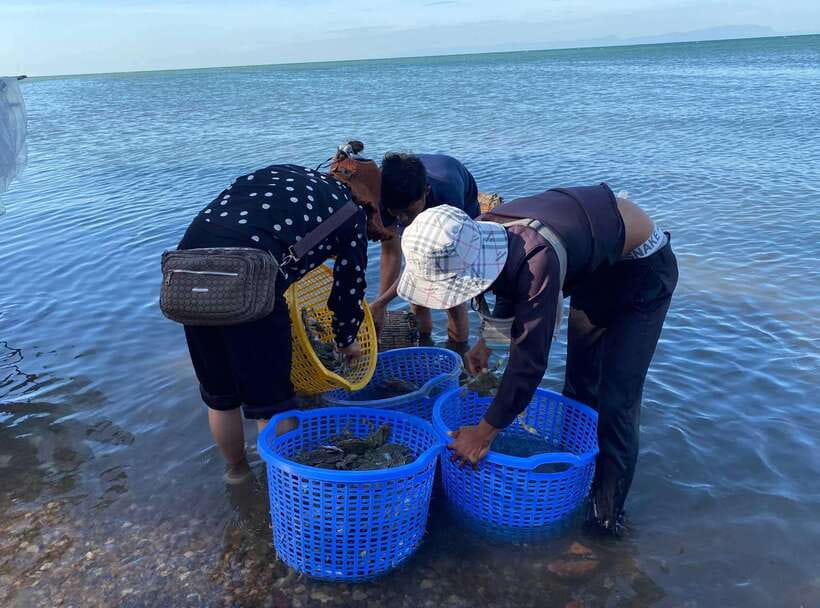
The Fresh Fish Market in Krong Kampot is planned as a 35-minute stop. This is a good first look at the town’s working side. You can walk, take photographs, and watch the flow of local trade rather than seeing Kampot only through its old facades.
Keep your expectations sensible. Thirty-five minutes is enough to get your bearings and take in the setting, but not enough for a long market study. The value here comes from contrast: after the long drive, you begin with an active local stop before moving toward the town’s more polished historic center.
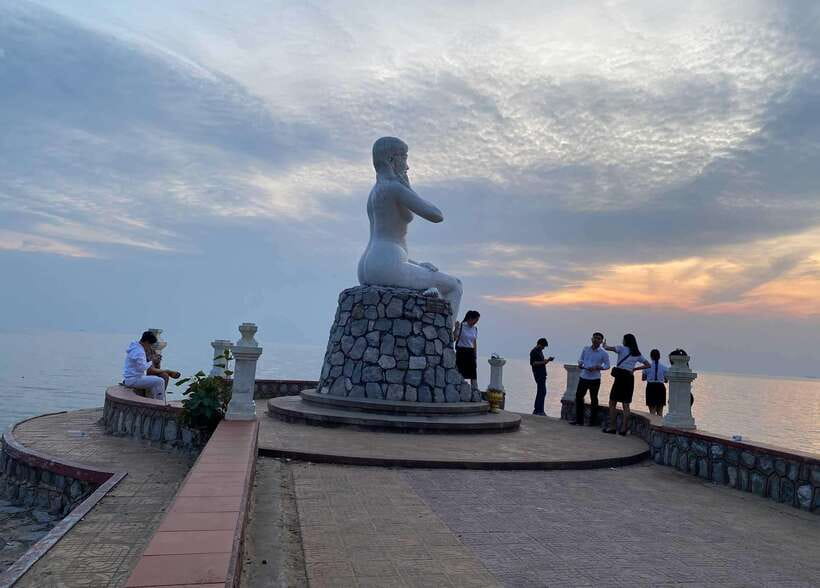
The next listed stop is the Seahorse Statue, with about 30 minutes for photographs, walking, shopping, and views along the way. The statue gives the outing a recognizable photo point, while the surrounding riverfront helps you connect the town with its waterway setting.
Kampot is known for its well-preserved colonial buildings, and time is set aside to walk around town and admire them. Do not expect a museum-style architectural tour unless your driver provides one. The pleasure is in strolling, looking up at the older details, and seeing how the buildings fit into present-day Cambodian life.
The colonial architecture is one of the strongest reasons to include Kampot. It gives the town a distinct look without requiring a long formal visit. You can enjoy it at street level, with the freedom to stop for photographs and notice small details that would be easy to miss from a vehicle.
Salt fields and Cambodia’s working countryside
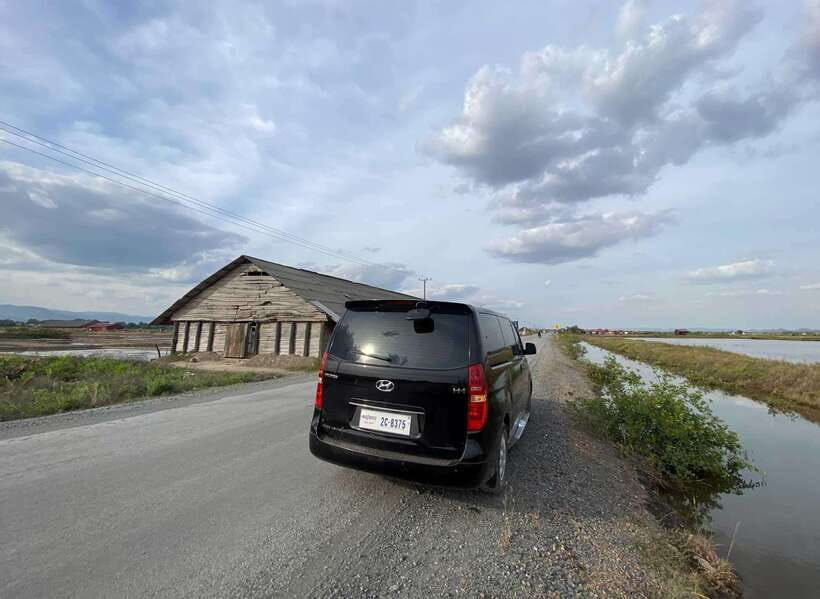
The salt fields offer one of the most unusual stops on the route. Flat expanses, reflective water, and geometric rows create a striking setting for photographs. More important, you get a look at a local production process rather than another purely scenic viewpoint.
Salt production is most visible from December through May. Outside that period, you might still see the fields, but the active process may be less apparent. If this stop matters to you, ask about current conditions before booking, especially if your visit falls outside those months.
The fields can feel open and exposed, so sun protection is not optional. A hat, sunglasses, and sunscreen will make the stop more comfortable. You should also wear shoes that can handle walking near working agricultural areas.
This part of the day adds useful context to Kampot. The region is not only about old buildings and restaurants. Salt, pepper, seafood, and farming all help explain why the area has its own food culture and identity.
A completely different kind of day out from Phnom Penh:
- The Killing Field and Toul Sleng Genocide Museum (S21) Tour
★ 5.0 · 1,977 reviews - Phnom Penh: Sunset Cruise with Unlimited Beers & BBQ Buffet
★ 4.5 · 727 reviews - Aroma Therapy Massage, Relaxation therapeutic aromatherapy oil massages.
★ 5.0 · 645 reviews - Killing field and Toul Sleng genocide museum Tour
★ 5.0 · 610 reviews
Phnom Chhngok Cave Temple and its quiet setting
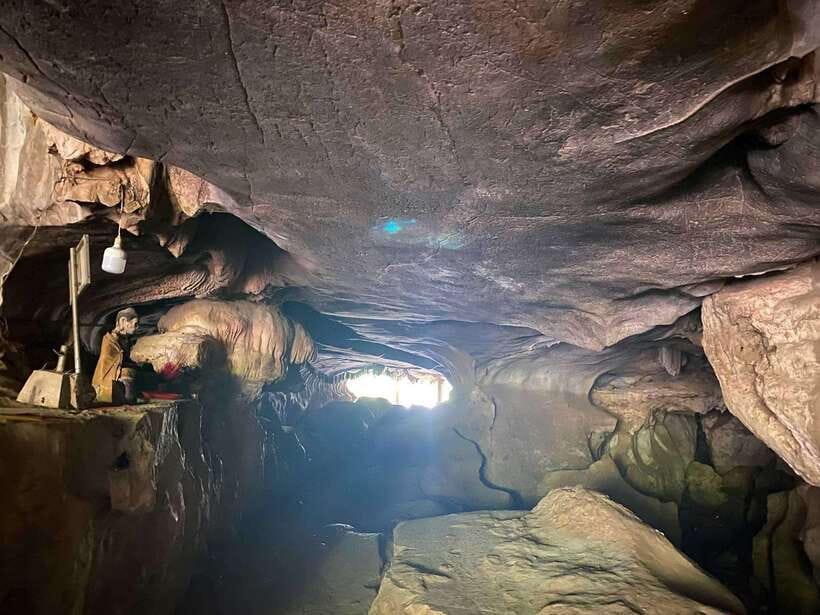
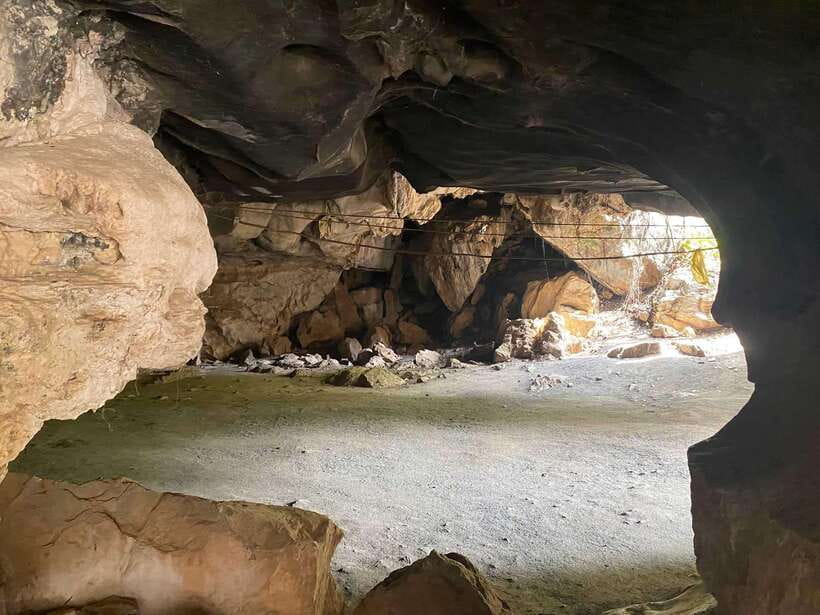
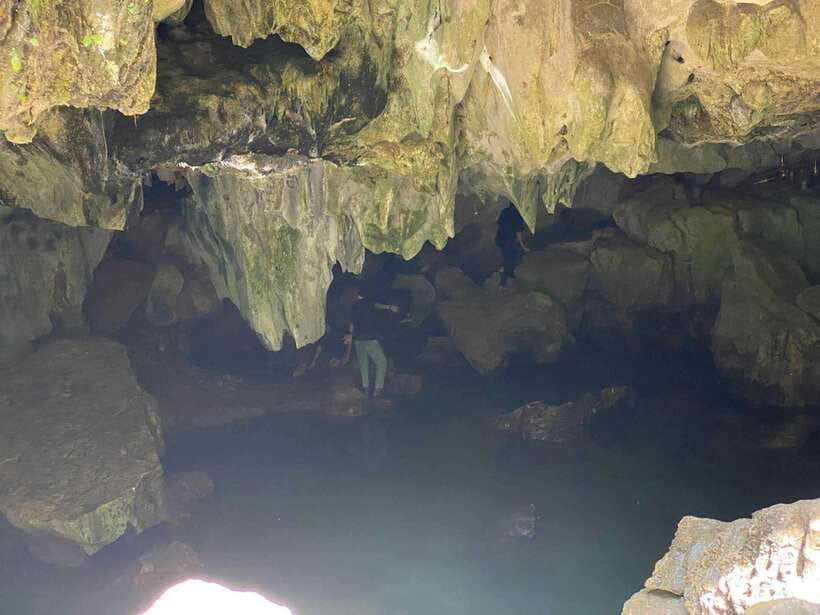
Phnom Chhngok Cave Temple is the cultural centerpiece of the inland portion of the trip. The temple is set in a natural cave environment, giving the visit a different feel from a freestanding shrine in town. You can expect a scenic approach, a walk, and time to take in both the sacred site and its surroundings.
The cave setting is the main appeal. It adds a sense of quiet and gives you a chance to see how religious places can be closely tied to Cambodia’s natural features. The visit also breaks up the road and market stops with something more contemplative.
Comfortable shoes are important here. The tour information specifically advises suitable clothing and footwear for walking and exploration. Be respectful at the temple, keep your voice low, and follow local customs around sacred areas.
The tour is not suitable for people with altitude sickness, and it is not recommended for people over 95. The information provided does not give a precise climb length or detailed accessibility conditions, so ask before booking if stairs, uneven ground, or cave access could be a concern.
La Plantation and the story behind Kampot pepper
La Plantation is one of the most valuable stops for understanding the region’s famous pepper. You meet a local farmer and learn how Kampot pepper is cultivated, then take part in a tasting session.
I like this stop because it turns a familiar ingredient into a local story. Pepper on a restaurant table can seem ordinary. Seeing where it grows and learning about its cultivation gives you a better reason to pay attention when it appears in your meal later.
The farm also provides quieter scenery after the busier town stops. You can take your time with the explanation, look over the growing area, and sample the pepper. The tour information describes the views as peaceful and scenic, so this is likely to be one of the calmer moments of the day.
There is one scheduling point to watch. The route describes lunch at Kep Market, but it also says you will order seafood at a local restaurant in Kep, known for fresh crab. Those may be connected stops, but the wording is not perfectly clear. Ask your operator where lunch will take place and confirm that the meal is not included in the $135 price.
Kep seafood and the short ride to the beach
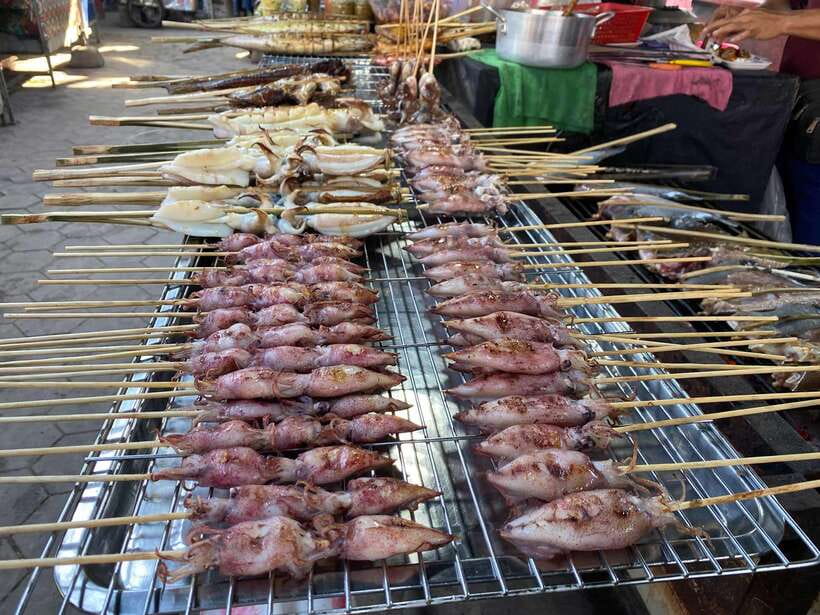
From La Plantation, the drive to Kep Beach takes about 25 minutes. Before or around the beach visit, you have lunch in Kep, with seafood as the main attraction. Fresh crab is specifically highlighted, and Kep is a sensible place to try it.
Lunch is not included, so your final cost depends on what you order. A simple meal will cost less than a large seafood spread. If you want crab, several dishes, or drinks, budget accordingly and ask whether prices are listed before ordering.
The best part of the meal is its connection to place. This is not just a standard roadside lunch. Kep’s coastal setting and seafood trade give the meal a local focus, and it provides a welcome pause after the temple and plantation visits.
The phrase at travelers deal appears in the supplied details, but it does not explain a fixed menu or guaranteed price. Treat lunch as an additional personal expense, not as a promised discount. Confirm the restaurant and menu with the driver when you arrive.
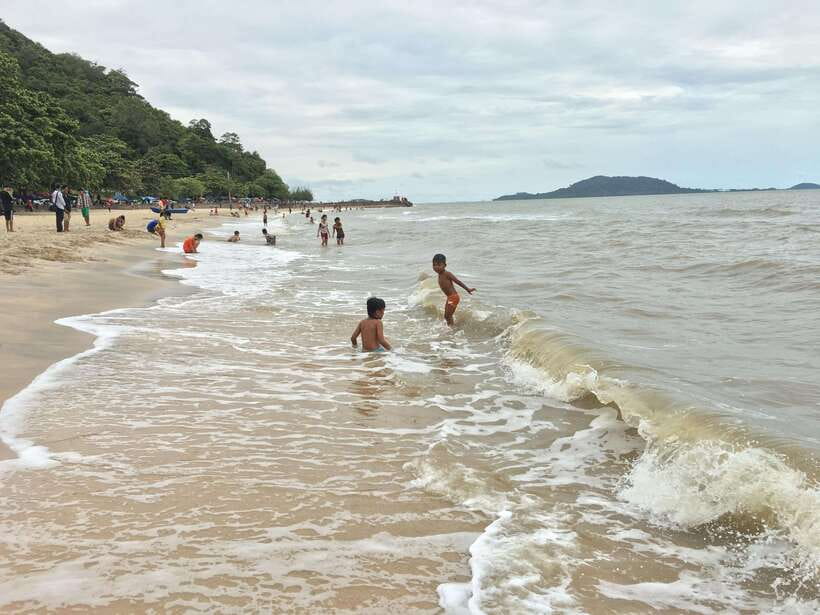
After lunch, Kep Beach gives you time to slow down. You can walk along the shore, enjoy the view, sit by the water, or swim. Bring swimwear if you want to enter the sea, as it is not practical to count on having time to return to your hotel and change.
Beach time is pleasant but limited by the full route. The schedule does not state an exact number of minutes at the shore, and the return journey still takes about three hours. If your priority is swimming and lounging, you may wish you had more time. If you simply want to see the coast after visiting Kampot, this stop fills the gap well.
Is $135 a fair price for a private day?
At $135 per person, the value depends heavily on group size. For one or two people, the price is a larger outlay, but you are paying for a full private day, vehicle, pickup and drop-off, an English-speaking driver, and a route that would be difficult to cover independently in one day.
For a small private group, the price becomes easier to justify. You avoid arranging separate transport to Kampot, the salt fields, Phnom Chhngok, La Plantation, Kep, and Phnom Penh. You also save the effort of negotiating several local rides and watching the clock yourself.
The information gives conflicting details about entrance fees. One section says all tickets and entrances are included, while another says entrance fees are not included. This is the most important point to clarify before booking. Ask for a written list of included admissions, and confirm whether the cave temple and pepper plantation have any separate charges.
Seafood lunch, personal expenses, and drinks are not included. Add those costs to the advertised price when comparing this tour with a private driver arranged on your own.
The guide can shape the whole day
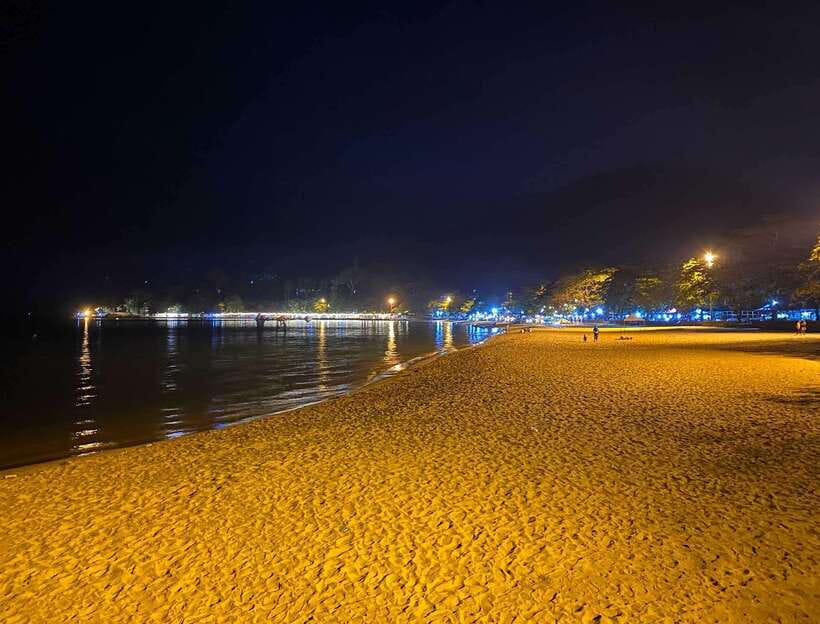
The driver is not simply a person behind the wheel. The tour is presented as an English-guided trip, and one named driver, Vannak, was praised for professional service and detailed explanations of the sights along the way.
That detail matters on a route with several short stops. At a market, salt field, temple, or pepper farm, a few clear explanations can make the stop feel purposeful rather than rushed. You should still confirm whether your booking specifically includes Vannak, since the available information does not promise that every departure uses the same driver.
The private group setup also gives you a chance to ask questions. If the salt fields are quiet, ask what you can still see. At the pepper farm, ask about the tasting and cultivation process. At the temple, ask about the site’s religious role. A curious approach will make the day more rewarding.
Who should book this trip?
I would recommend it for you if:
- You are staying in Phnom Penh and have only one day for southern Cambodia.
- You want to combine Kampot and Kep instead of choosing one.
- You prefer a private car or minivan to a large group.
- You enjoy food, local agriculture, architecture, and short cultural visits.
- You are comfortable with an early start and a long return drive.
- You want a driver who can provide explanations in English.
I would be more cautious if you want a slow itinerary, extensive beach time, or long visits at each attraction. The route covers a lot, but each stop has a set place in the day. You should also check the entrance-fee issue and lunch arrangements before committing.
Free cancellation up to 24 hours before departure and reserve-now, pay-later booking make it easier to keep plans flexible. Still, flexibility does not change the basic fact that this is a demanding day. Pack lightly, protect yourself from the sun, and do not schedule an important evening flight without a generous buffer.
Should you book the Kampot and Kep day trip?
Book it if you want the widest possible taste of the area in one day. Kampot’s old buildings, salt fields, Phnom Chhngok Cave Temple, Kampot pepper, Kep seafood, and the beach each offer something different. The route has real variety, and the private format makes the long day more manageable.
Skip it if you value slow travel above all else. You will spend many hours in the vehicle, and Kep Beach is a short stop rather than the main event.
My practical advice is to book after confirming three things: the exact entrance fees included, the location and cost of lunch, and the amount of beach time planned. With those details clear, $135 per person can be a reasonable price for a private introduction to Kampot and Kep, especially for a small group.
FAQ
How long does the day trip last?
The stated duration is 11.5 hours. The drive from Phnom Penh to Kampot takes about 3.25 hours, and the return journey takes about three hours, depending on traffic.
Where can pickup and drop-off take place?
Pickup and drop-off options include Phnom Penh and Techo International Airport, known as KTI. You should wait in the hotel lobby 15 minutes before the scheduled pickup time.
Is the tour private?
Yes. The group type is private, and transportation is provided by car or minivan with an English-speaking driver.
Is lunch included in the price?
No. Seafood lunch in Kep is not included, and personal expenses are also separate. Fresh crab is highlighted as a local specialty, so bring money for the meal and drinks.
When are the salt fields most visible?
Salt production is generally most visible from December through May. Outside those months, you might see the fields without as much active production.
What should I bring for the tour?
Bring sunglasses, a sun hat, sunscreen, biodegradable sunscreen, comfortable walking shoes, suitable clothing, a water bottle, and swimwear if you plan to swim at Kep Beach. Pets and smoking in the vehicle are not allowed.
Just added around Phnom Penh
- Private Van Phnom Penh To Siem Reap English Speaking Driver★ 5.0 · 3 reviews
- Private Taxi Phnom Penh – Kampot Overland Transfer★ 5.0 · 3 reviews
- Half Day – Phnom Penh Food Tour★ 4.5 · 3 reviews
- Full-Day Amazing Phnom Penh City Tours★ 5.0 · 3 reviews
- Phnom Penh to Koh Rong/Koh Rong Sanloem by Car or Minivan & Boat★ 5.0 · 3 reviews
- Private Transfer From or to Phnom Penh <=> Sihanoukville★ 5.0 · 3 reviews
- Riverside Walking Tour with Snack, Drinks & Local Ferry Ride★ 5.0 · 3 reviews
- Day Tour In Phnom Penh With Bophany★ 5.0 · 3 reviews
1-Day Tours, compared.
Visit 11 Places in One Day including S21 & Killing Field
Read our review →
1-Day Amazing Angkor Wat Tour with Sunset & All Interesting Major Temples
Read our review →
Angkor Wat one Day Private Tour for All Highlight Angkor Temples
Read our review →
1-Day private Angkor Temple Tour from Siem Reap
Read our review →
1-Day Angkor Wat Sunrise & All Interesting Temples Private Tour
Read our review →
Angkor Wat Sunrise Small-Group 1-Day Tour from Siem Reap
Read our review →
Browse the lists this tour appears in