
Reviewed · KAMPOT PEPPER FARM TOURS
Kampot: Pepper Farm Tours, Salt, Lake & Phnom Chhngok Temple
Kampot’s best stories grow from the soil. This 5.5-hour tuk-tuk trip connects pepper farms, rice fields, salt flats, and Khmer villages in one easy outing, then adds a cave temple and a quiet water dam. I like the mix of food, farming, scenery, and history. I also like that the guides, including Nak, Micki, Ali, Ly, and others, are praised for clear English, patience, humor, and flexibility. The main catch is that the cave requires a climb of about 200 concrete steps, and the salt fields are not producing salt during the wet season.
You pay $23 per person, including transport, entrance fees, water, soft drinks, and hotel pickup within 3 kilometers of central Kampot. That is strong value for a half-day, especially if you want to see rural Cambodia without arranging several separate rides. Closed-toe shoes are essential, and the cave visit is not allowed during the wet season.
In This Review
- The best parts at a glance
- Why this half-day route works so well
- Salt Farm Coffee and Cambodia’s wide salt fields
- Phnom Chhngok Cave and the ancient shrine
- Brotek Krola, the peaceful Secret Lake stop
- La Plantation and the taste of Kampot pepper
- What the tuk-tuk rides add to the day
- Guide quality is the tour’s biggest strength
- Is $23 good value for Kampot?
- Who should book this trip?
- Should you book the Kampot countryside tour?
- FAQ
- How long does the Kampot countryside tour last?
- What is included in the $23 price?
- Is food included?
- Can I visit the salt fields during the wet season?
- Is the cave visit available during the wet season?
- How difficult is the Phnom Chhngok Cave visit?
- Is hotel pickup available?
The best parts at a glance
- Pepper tasting at La Plantation: Learn how Kampot pepper is grown, sorted, and processed, then taste different varieties and unusual treats such as pepper ice cream.
- A seventh-century cave temple: Climb roughly 200 steps and enter Phnom Chhngok Cave to see an ancient Hindu shrine inside limestone.
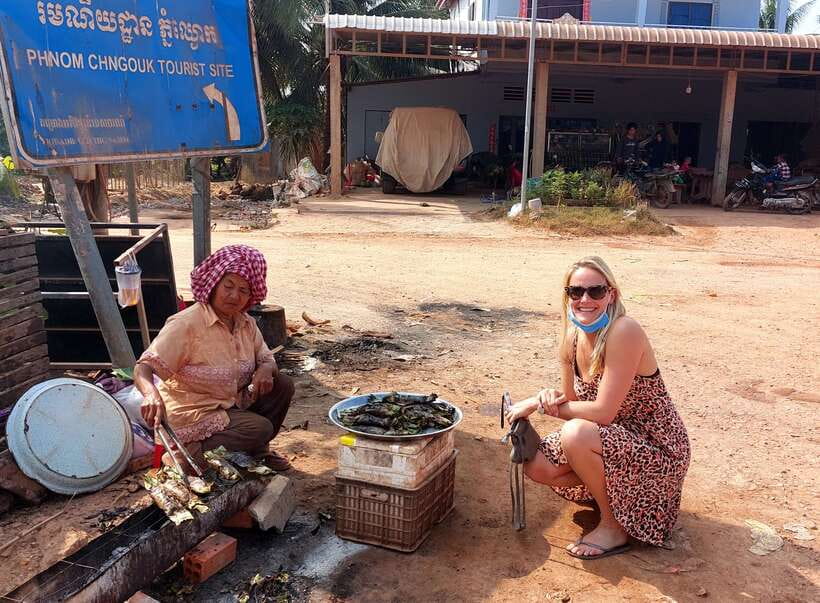
- The countryside between stops: Tuk-tuk rides pass rice fields, vegetable farms, traditional villages, and rural roads where daily life is part of the view.
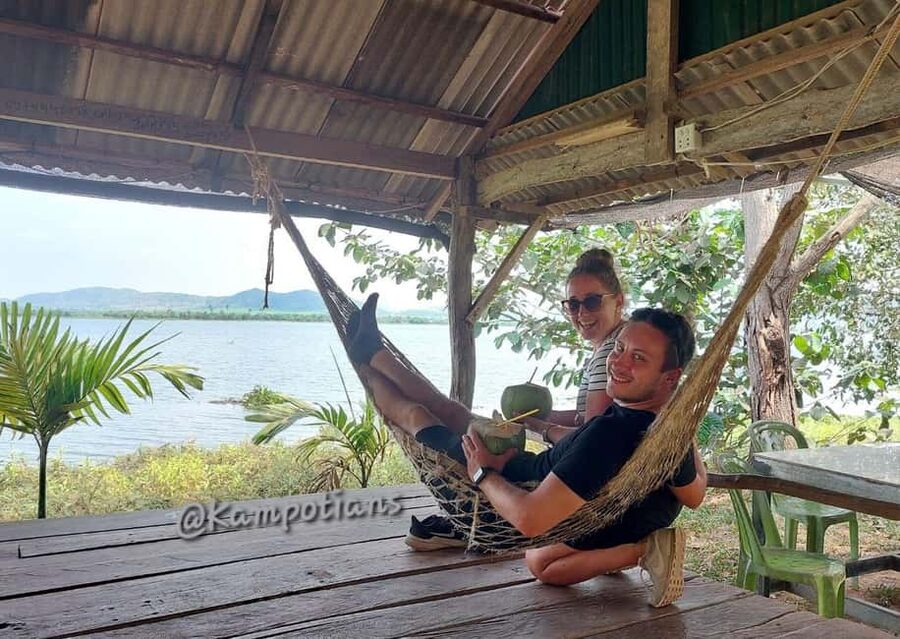
- Secret Lake pause: Brotek Krola, also called the Secret Lake, offers a calm break beside greenery, with a soft drink included.
- Salt fields with seasonal limits: Cambodia’s largest salt fields are interesting, but active salt production depends on dry weather.
- Flexible local guiding: Guides such as Micki and Nak have adjusted timing for rain, answered questions about farming and Cambodian history, and helped with photographs.
Why this half-day route works so well
Kampot is often introduced through its famous pepper, but the province makes more sense when you see how many kinds of work share the same countryside. Salt, rice, fruit, vegetables, water management, and pepper all fit into this route. Instead of spending the afternoon at one attraction, you get a moving picture of the area.
The order may shift. Rain, road conditions, and opening arrangements can affect the timing, and that is not necessarily a problem. Several guides, including Micki, have adjusted the schedule during heavy rain while still covering the main stops. That flexibility matters in Cambodia, where a short shower can change a dirt road quickly.
The outing normally begins with pickup from your hotel in central Kampot. Be ready in the lobby about 10 minutes early. The driver waits no longer than 10 minutes, so this is one tour where casual Cambodian timing should not be confused with a late departure.
Transport is by tuk-tuk for much of the route, with listed transfer periods of about 15 to 45 minutes. You will feel the weather, hear the countryside, and see more than you would through a closed vehicle window. The tradeoff is exposure to sun, dust, and rain. If you prefer air-conditioning and a very smooth ride, this is not the right style of outing.
More Pepper Farm Tours in Kampot
- Kampot: Full-day Countryside Tour with Pepper Farm and Kep
★ 4.9 · 245 reviews - Kampot: Tuk Tuk Trip to Pepper Farm, Kep, Crab Market & More
★ 4.9 · 143 reviews - Kampot Countryside include Pepper farm, Salt field & Lake
★ 4.9 · 100 reviews
Salt Farm Coffee and Cambodia’s wide salt fields
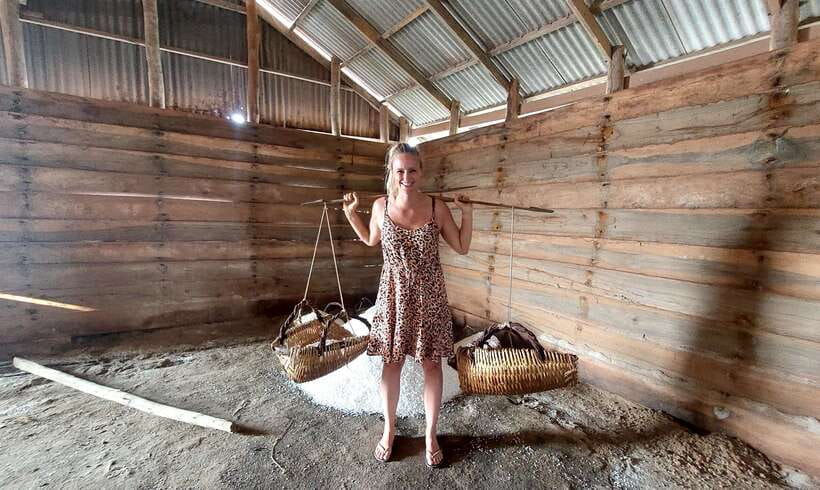
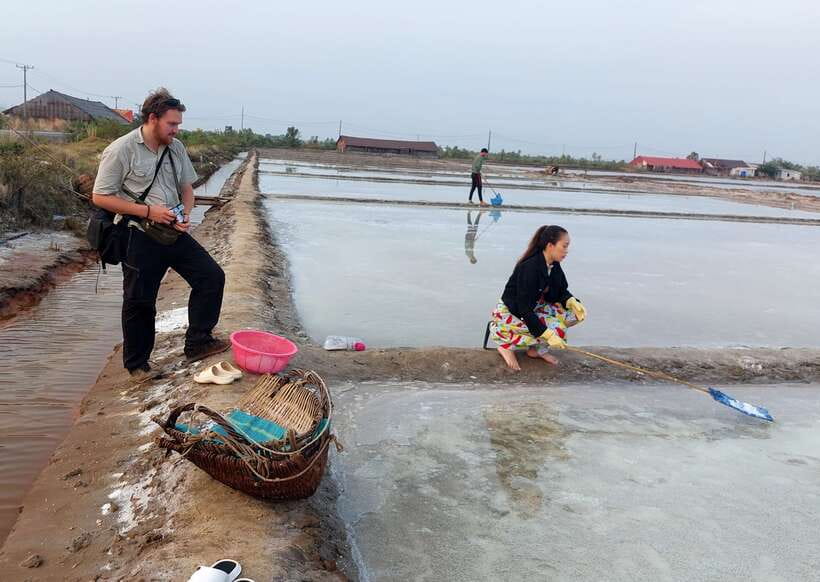
The first stop, Salt Farm Coffee, is planned as a 30-minute break, photo stop, and guided visit. The name suggests a café setting, but the main interest is the salt-producing area around it. Here you begin to see how Kampot’s coastal plain supports work that looks simple from a distance but depends heavily on the season and weather.
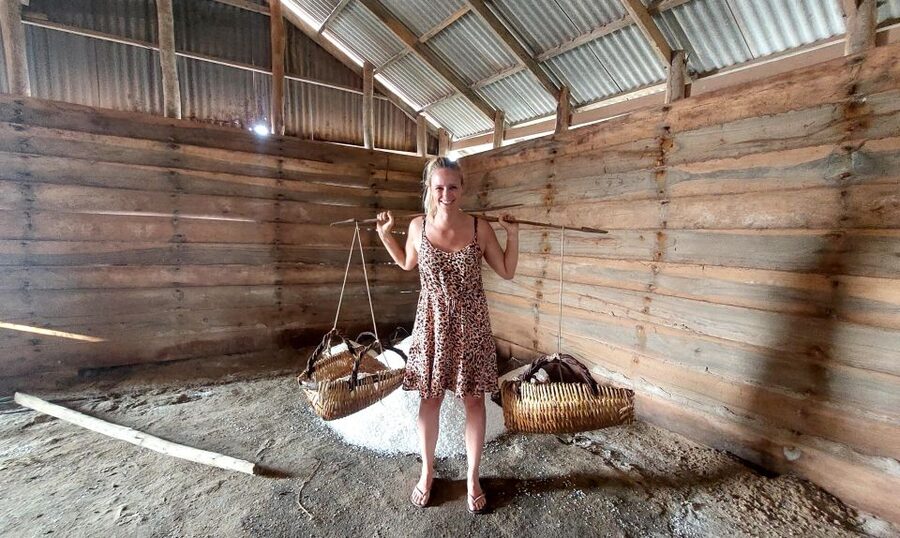
In the dry season, the salt fields can be active and visually striking. The large, flat plots and pale surfaces make good photographs, especially when the light is soft. You can also ask your guide about salt production and how local agriculture fits together. Guides such as Pheary have explained rice and salt production alongside Cambodian history, turning what could be a quick photo stop into a useful introduction.
You need to set your expectations carefully during the wet season. The fields do not produce salt then, so you may see the area without the working process. That is the clearest seasonal weakness of the tour. Still, the stop can remain worthwhile if you enjoy seeing rural production areas and hearing how the local economy works.
Bring sunscreen. There is little reason to expect shade across an open salt area, and Cambodia’s sun can feel strong even on a cloudy day.
Phnom Chhngok Cave and the ancient shrine
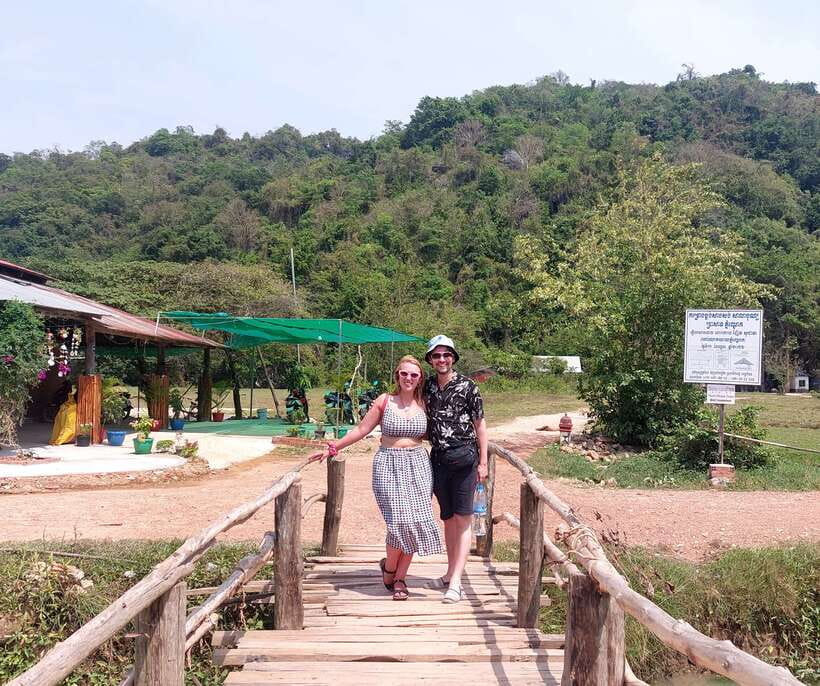
After roughly 30 minutes of driving, the route reaches Phnom Chhngok Cave. You get about 45 minutes here for the visit, photographs, guided explanation, and walking. The cave is the most physically demanding stop, but also one of the most memorable.
The climb involves about 200 concrete steps. It is not a technical hike, yet the stairs can feel demanding in heat or humidity. Take your time, use proper footwear, and keep your hands free where possible. The tour is not suitable for people over 70, and anyone with limited mobility should think carefully before booking.
Inside the limestone cave is a seventh-century Hindu temple. The setting gives the shrine its power. Rather than approaching an isolated monument in a formal complex, you enter the rock itself and find an old place of worship within it. The cave’s shapes, shadows, and openings also make it a strong stop for photography.
The cave section can be slippery or unsafe during wet conditions, and caving is not allowed in the wet season. This is another reason to check conditions before you set out. You may still visit the area or see the exterior, but the full cave experience depends on weather and safety.
A good guide makes a real difference here. Several guides have been praised for helping with photographs and guiding people carefully through the cave. Micki, in particular, has been described as calm and attentive during the climb. That kind of care is useful when you are concentrating on uneven ground and trying not to miss the shrine.
Brotek Krola, the peaceful Secret Lake stop
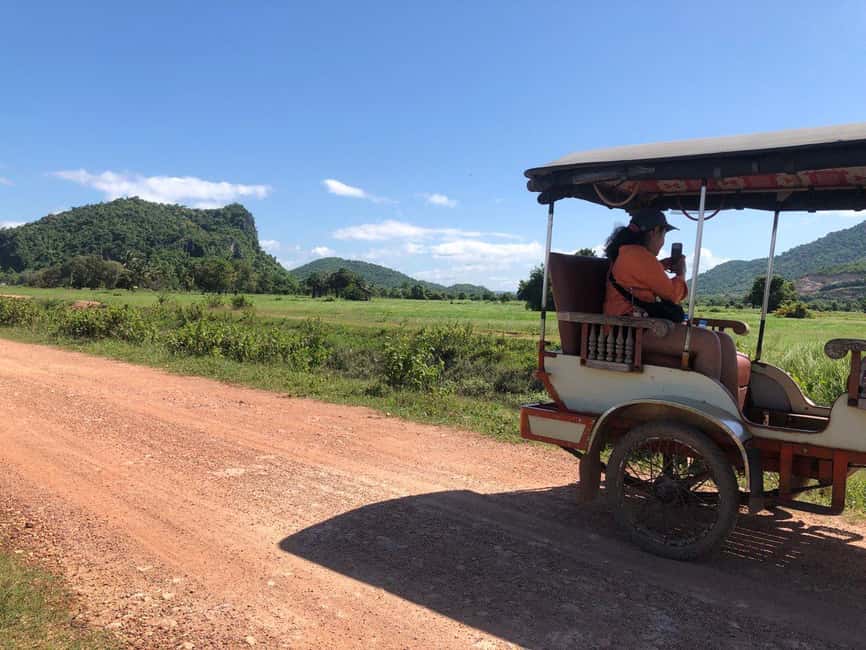
The next section takes about 30 minutes by tuk-tuk and leads to Brotek Krola water dam, widely called the Secret Lake. You get around 45 minutes to rest, walk, take photographs, and hear the story behind the name.
This is the quietest stop on the route. The value is not a major monument or an organized attraction. It is the chance to sit beside the water, look across the greenery, and let the pace slow down after the cave. Hammocks are available at the area mentioned in the tour information, and a soft drink is included.
The lake also gives you one of the better chances to notice the rural setting without a schedule pressing you forward. You might see open greenery and local surroundings rather than a heavily developed sightseeing site. That simplicity is precisely the appeal.
Several guides have added personal touches here. One guide brought durian and mangoes grown at home for a break by the lake. That is not a guaranteed part of the tour, but it shows how the local guiding can feel personal rather than mechanical.
Do not expect a large resort or a long list of activities. This stop works best if you want quiet time, a drink, and a pleasant place to rest.
More pepper farm visits:
- Kampot’s Countryside & Kayak Tour, Pepper Farm include Lunch
★ 4.8 · 74 reviews - Kampot Pepper & Kep/Crab Market Tours: Salt, Secret lake
★ 4.7 · 33 reviews - Kampot Pepper Farm, Salt Fields, Crab Market from Phnom Penh
★ 4.8 · 21 reviews - Kampot Pepper Farm Tour: Salt Fields, La Plantation & Cave
★ 4.8 · 18 reviews
La Plantation and the taste of Kampot pepper
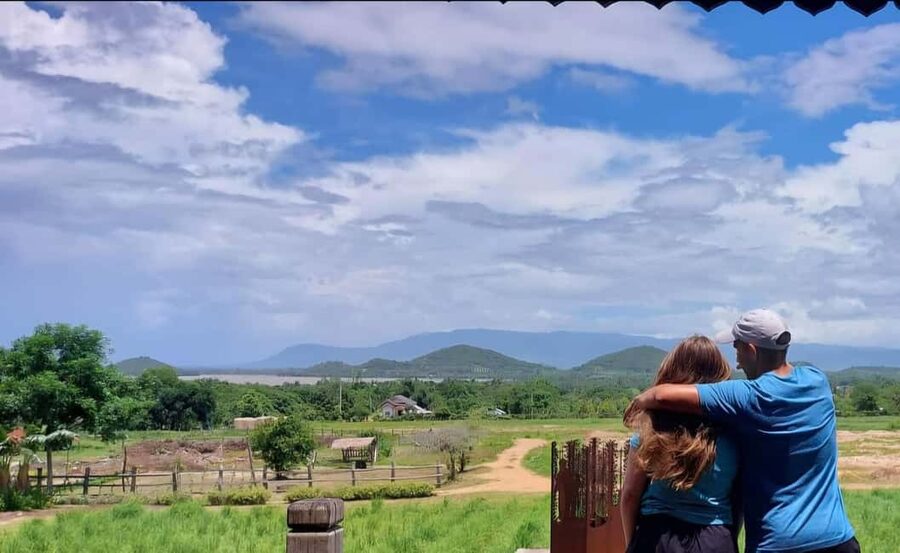
The final major stop is La Plantation, with about 105 minutes for a guided visit, walking, free time, shopping, and tasting. This is the longest stop and, for many people, the most rewarding.
Kampot pepper is not just a souvenir label. At the plantation, you can see how pepper plants are grown and learn about cultivation and processing. The guided walk gives context before the tasting, so the different flavors have a clearer connection to the crop and the work behind it.
The tasting is a major reason to allow plenty of time here. You may try several types of pepper and compare their character. Fresh pepper has impressed visitors who had only used dried pepper before. The plantation also offers unusual food combinations, including pepper ice cream. If you enjoy food tourism, this is the moment that turns the tour from a sightseeing circuit into a sensory experience.
There is time to browse and shop, which can be useful if you want to take Kampot pepper home. Shopping is optional, so you are not forced to buy anything. Some people could happily spend longer here, especially if they want to linger over food or drinks. The schedule gives you a good introduction, but serious food fans may wish the plantation portion were even longer.
The stop also helps you understand why pepper is so closely tied to Kampot’s identity. You see the plants, hear about production, taste the result, and then decide if you want to purchase some. That is more useful than simply being shown a shop shelf.
What the tuk-tuk rides add to the day
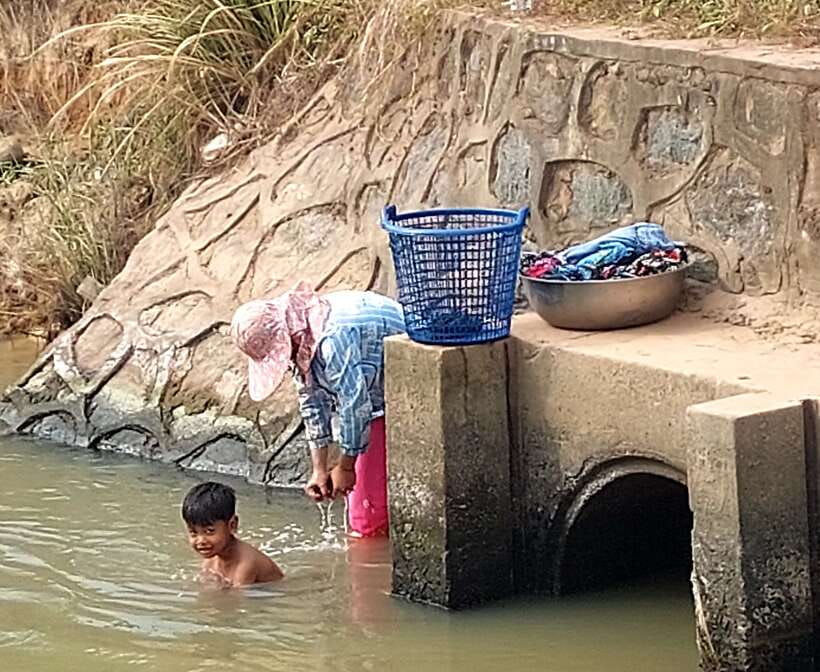
The rides between stops are not dead time. They are part of the experience. You pass Khmer-style villages, rice paddies, vegetable farms, and stretches of countryside that you would probably miss on a quick trip between named attractions.
The tuk-tuk keeps you connected to the sounds and smells of the road. You may also notice that rural Cambodia is not a single postcard scene. Some areas are cultivated, some are wooded or open, and some show the practical infrastructure that supports farming.
The ride can be bumpy. Dirt roads may hold water after rain, and the weather can change quickly. Guides such as Rany have handled wet roads confidently, but you should still protect phones and cameras. A light cover for your bag is sensible, even if the forecast looks friendly.
Group size can vary. Some departures feel small or semi-private, and occasional late cancellations have resulted in a private outing. You should not assume a private tour, but a smaller group makes it easier to ask questions and move at a comfortable pace.
Guide quality is the tour’s biggest strength
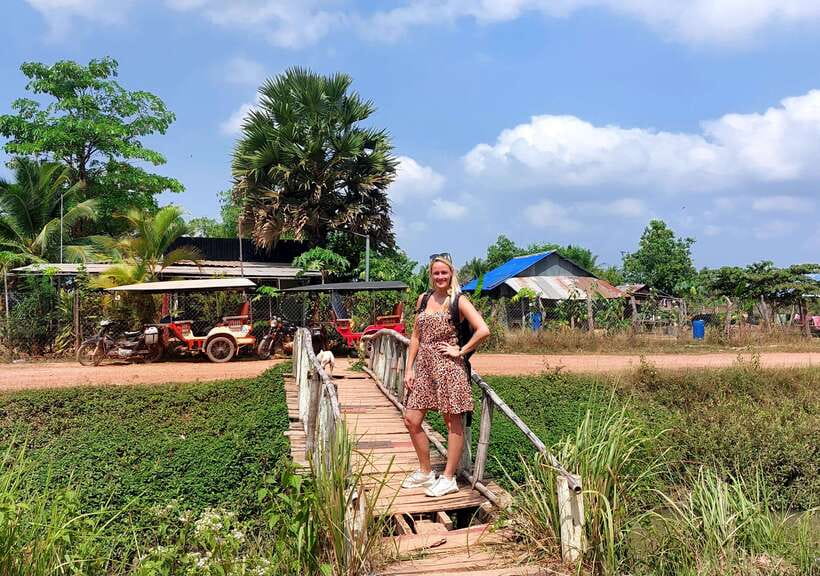
The route is good, but the guide is what gives it meaning. The strongest feedback centers on guides who explain local agriculture, Cambodian history, village life, and the stops themselves without rushing.
Names that have received especially warm praise include Nak, Micki, Ali, Ly, Dak, Rany, Kary, Vandy, Chiet, and Jason. The exact guide depends on the departure, but the repeated pattern is useful: clear English, friendly service, safe driving, and a willingness to answer questions.
Nak has been praised for clear English and broad explanations about Cambodia. Micki has received repeated approval for humor, warmth, patience, and adapting the plan around rain. Ali has been described as both a strong driver and an effective guide. Ly has helped people understand local places and even offered extra Kampot suggestions after the tour.
That does not mean every departure will feel identical. A guide’s personality shapes the day, and some people prefer more commentary while others want more quiet time. The good sign is that the format allows questions and does not appear built around rushing everyone from one photo to the next.
Is $23 good value for Kampot?
At $23 per person, the tour offers a lot for a half-day. The price covers the driver-guide, entrance fees, drinking water, soft drinks, and pickup and drop-off within 3 kilometers of Kampot’s center. You also visit four distinct types of place: salt fields, a cave temple, a dam and lake, and a pepper plantation.
Meals are not included. That is easy to manage because the outing lasts 5.5 hours rather than a full day, but you should eat beforehand or plan food afterward. Some people have stopped at local markets with help from their guide, though that is not listed as a standard part of the route.
Pickup beyond 3 kilometers costs an additional $2 or more. If you are staying farther out, you can go to the Kampot Tourist Information Center instead, or request hotel pickup for the extra fee.
The value is strongest if you want an overview of Kampot Province and do not want to negotiate separate tuk-tuk rides. It is less compelling if you only want a long, quiet visit at La Plantation or a dedicated cave trip.
Who should book this trip?
I would recommend it to first-time visitors with one free half-day in Kampot. It gives you a clear sense of the province beyond the town center and combines culture, food, scenery, and a little physical activity.
It suits couples, solo visitors, and small groups who enjoy local stories and changing scenery. The small-group feel reported on some departures is also helpful for solo visitors, since the day does not have to feel like a large bus excursion.
You should think twice if you dislike open-air transport, have difficulty with 200 stairs, or are visiting during a wet spell and consider the cave and salt production essential. The salt fields may not be active, and cave access may be closed in wet weather.
Bring sunscreen, water-friendly protection for your belongings, and closed-toe shoes. Alcohol and drugs are not allowed, and baby strollers or carriages are not suitable for the route.
Should you book the Kampot countryside tour?
Book it if you want a well-priced, varied introduction to Kampot Province rather than a single attraction. The pepper tasting at La Plantation, the cave temple, and the peaceful Secret Lake create a satisfying rhythm, while the tuk-tuk rides show you the farming country in between.
I would make the booking with the season in mind. In dry weather, you have the best chance of seeing active salt production and entering the cave. In wet weather, the tour may still be enjoyable, especially with a flexible guide, but you should accept that conditions can change the plan.
For $23, this is an easy recommendation for most able-bodied visitors who want local scenery, food, and history in one half-day. Its 4.8 rating from 432 ratings fits the strongest qualities of the outing: warm guides, reliable transport, and a surprisingly broad look at life around Kampot.
FAQ
How long does the Kampot countryside tour last?
The tour lasts 5.5 hours, including transportation between Kampot and the countryside stops.
What is included in the $23 price?
The price includes a driver-guide, entrance fees, drinking water, soft drinks, and hotel pickup and drop-off within 3 kilometers of Kampot city center.
Is food included?
No. Meals are not included in the tour price.
Can I visit the salt fields during the wet season?
You can visit the salt fields, but salt is not produced there during the wet season.
Is the cave visit available during the wet season?
Caving inside the bat cave is not allowed during the wet season. Conditions may affect access.
How difficult is the Phnom Chhngok Cave visit?
You climb about 200 concrete steps before entering the cave. Closed-toe shoes are required, and the activity is not suitable for people over 70.
Is hotel pickup available?
Hotel pickup and drop-off are included for hotels within 3 kilometers of central Kampot. Locations farther away may require an extra charge of $2 or more, or you can meet at the Kampot Tourist Information Center.
More Farms
- Trip with Local tuk tuk to Country side & Pepper farm…
★ 5.0 · 13 reviews - Kep town: Local tuk tuk to Countryside & Pepper farm
★ 4.6 · 8 reviews - Kep: Discover kampot pepper farm/lake & Salt fields…more
★ 5.0 · 5 reviews - Kampot-Phnom Penh include Pepper farm Tour, Salt field, Lake
★ 4.8 · 5 reviews
Just added around Kampot
- Countryside tours include pepper plantations★ 5.0 · 3 reviews
- Kampot: Cultural Bike Experience – Local Life & Countryside★ 5.0 · 3 reviews
- Kampot Countryside include Pepper farm,Kep crab market beach★ 5.0 · 4 reviews
- Kep: Discover kampot pepper farm/lake & Salt fields…more★ 5.0 · 5 reviews
- Kampot-Phnom Penh include Pepper farm Tour, Salt field, Lake★ 4.8 · 5 reviews
- Bokor mountain, Pepper plantation and Man-made lake★ 5.0 · 6 reviews
- Khmer Food Culture Cooking Class in Kampot★ 5.0 · 7 reviews
- Kep town: Local tuk tuk to Countryside & Pepper farm★ 4.6 · 8 reviews
Kampot Pepper Farm Tours, compared.
Full-day Countryside Tour with Pepper Farm and Kep
Read our review →
Tuk Tuk Trip to Pepper Farm, Kep, Crab Market & More
Read our review →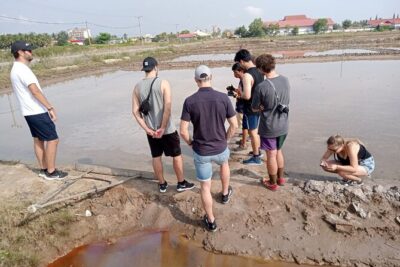
Kampot Tour Pepper Plantation, Salt Field, Cave, Secret Lake
Read our review →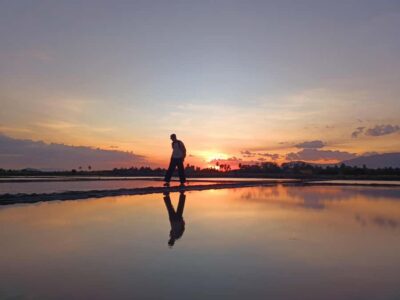
Kampot Countryside include Pepper farm, Salt field & Lake
Read our review →
La Plantation tour (discovering Kampot Pepper) + Lunch
Read our review →
KAMPOT TRAVEL-Pepper farm. Cave.Secret lake-Crab market & Salt…
Read our review →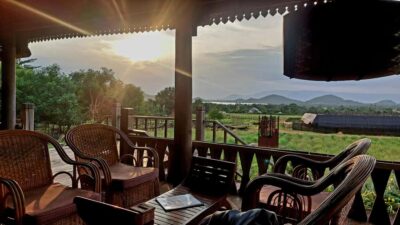
Kampot’s Countryside & Kayak Tour, Pepper Farm include Lunch
Read our review →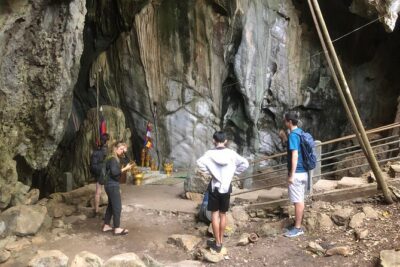
Kampot Countryside Tour – Pepper Farm, Salt Lake, Caves, and more
Read our review →Browse the lists this tour appears in