
Reviewed · NATIONAL PARKS
Phnom Penh & Kirirom National Park Birds Tour
Cambodia’s best birding starts before sunrise. This two-day trip links Phnom Penh’s rural wetlands with Kirirom National Park, giving you a useful mix of lotus fields, rice country, woodland, cultivation, and tropical moist forest. I like the small group limit of eight and the chance to look for 50 to 80 species rather than ticking off only a few easy birds. I also like that the trip supports local ecotourism through a Chambok homestay.
The main drawback is the schedule. Each day runs about nine hours, with a 5:30 a.m. start, and birding is rated moderate, with some species proving very hard to locate. You should also budget for the $7 Chambok Ecotourism Community entrance fee, dinner, tips, and personal costs.
The guide, Thong, receives especially strong praise for his English, passion, and ability to find birds by their calls. The trip suits a beginner who wants an introduction to Cambodian birds, but it also offers enough specialist targets to keep a keen birder interested.
In This Review
- Key points at a glance
- Why this two-day route works for birders
- The 5:30 a.m. start and Mekong crossing
- Lotus fields, lake edges, and rice country
- Staying overnight at Chambok Community Ecotourism
- Sunrise in Kirirom National Park
- The bird list and what you may actually see
- Weather, comfort, and the level of effort
- What the $350 price includes
- Why the local guide matters
- Who should book this birding trip
- Should you book the Phnom Penh and Kirirom bird tour?
- FAQ
- Where does the birding tour take place?
- How long does the tour last?
- What time does the tour begin?
- Is hotel pickup offered?
- What is the maximum group size?
- How many bird species might I see?
- What habitats does the tour cover?
- Is the birding physically difficult?
- What is included in the $350 price?
- What extra costs should I expect?
- Can I cancel for a full refund?
Key points at a glance
- Sunrise departure at 5:30 a.m.: Early starts give you the best chance of hearing and seeing active birds before the heat builds.
- A ferry crossing adds local flavor: Day one begins with a Mekong River crossing before the road leads into rural birding country.
- Two very different birding settings: Lotus fields and rice paddies come first, followed by the forest trails and upland habitats of Kirirom National Park.
- A target list of 50 to 80 species: Possible sightings include Cambodian Tailorbird, Oriental Pratincole, Blue-bearded Bee-eater, White-rumped Shama, and Greater Racket-tailed Drongo.
- Local lodging is part of the experience: You spend one night at the Chambok Community Based Ecotourism homestay rather than returning to Phnom Penh.
- Good value for a specialist two-day trip: At $350 per person, the cost covers transport, guides, lodging, two lunches, and two breakfasts, though some extras remain separate.
Why this two-day route works for birders
Phnom Penh is not only a city starting point. Within a short tour, you can move from lowland farmland and lotus-growing areas to the cooler forest setting of Kirirom National Park. That variety matters because different birds favor different habitats.
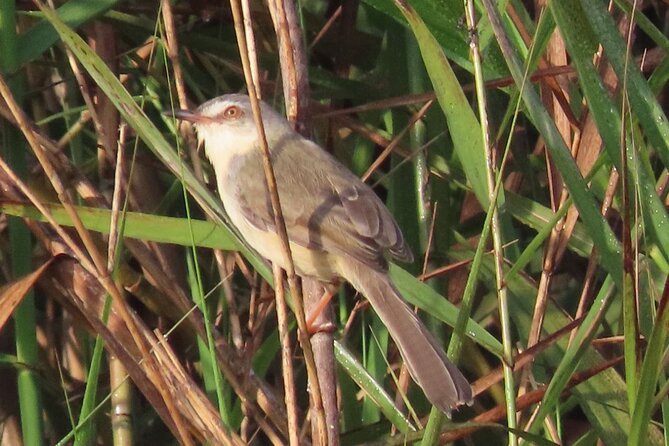
The first day focuses on open country and wetlands. You may look for birds around a natural lake, lotus fields, rice paddies, vegetable plots, and cultivated ground. These areas can produce species such as Oriental Pratincole, Brown Shrike, Green Bee-eater, Collared Kingfisher, and Cambodian Tailorbird.
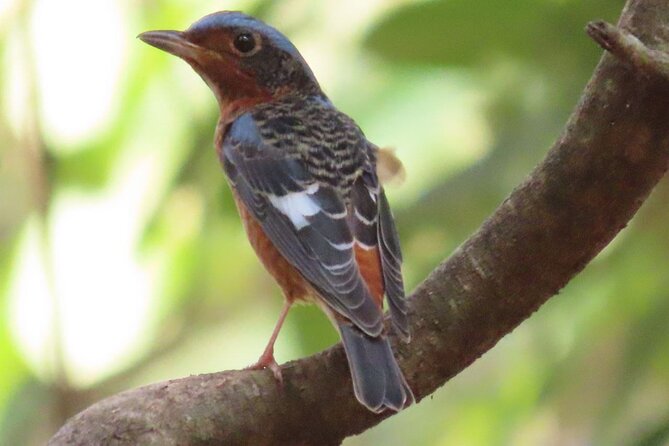
The second day shifts toward forest species. Kirirom offers broad-leaved woodland and tropical moist forest, where the list includes Greater Racket-tailed Drongo, Forest Wagtail, White-rumped Shama, Red-whiskered Bulbul, Puff-throated Babbler, and White-crested Laughingthrush.
The range is a real strength. You are not spending both days beside one pond hoping for one famous species. At the same time, the long drives and early starts mean this is not a relaxed sightseeing outing with occasional bird stops. You need to be happy spending much of the day outside and paying close attention to calls.
A few more trips worth weighing up
- Kirirom National Park Private Day Tour from Phnom Penh
★ 5.0 · 4 reviews - Bokor National Park & Kampot Private Day Trip from Phnom Penh
★ 5.0 · 4 reviews - Kampot Day Tour “Bokor National Park”
★ 5.0 · 82 reviews
The 5:30 a.m. start and Mekong crossing
Pickup begins at 5:30 a.m., so you should have your clothes, binoculars, and water ready the night before. The early hour is not a nuisance added for effect. Birds are generally easier to hear and observe in the cooler part of the morning, while Cambodia’s lowlands can become humid and warm later in the day.
Day one includes a ferry crossing over the Mekong River, followed by a drive toward the birding area. The crossing gives the trip a more local rhythm than a direct ride between hotel and nature reserve. It also marks the change from Phnom Penh’s urban setting to agricultural Cambodia.
Transport is in an air-conditioned vehicle, which is important during long transfers. The tour lasts about nine hours on day one, and that includes travel as well as time in the field. If you are prone to motion sickness, tiredness, or difficulty with early mornings, this is worth considering before you book.
The group maximum is eight people. That is small enough to keep the guide’s attention useful, especially when a bird is calling from dense cover or appears for only a few seconds. It is also large enough that you may need to share the best viewing position, so patience helps.
Lotus fields, lake edges, and rice country
The first major birding area is a natural lake where local farmers grow lotus, rice, and vegetables. This is a practical working countryside setting, not a manicured park. The farming activity is part of what makes the stop interesting, since birds use the edges of water, fields, shrubs, and cultivated plots in different ways.
Open habitat can be good for spotting birds at a distance. Oriental Pratincoles may be found in suitable open areas, while Green Bee-eaters often draw attention with their shape and flight. Brown Shrikes, Collared Kingfishers, and various flycatchers add variety around trees and field margins.
The list also includes Asian Brown Flycatcher, Grey-headed Canary-flycatcher, Black-naped Oriole, Ashy Drongo, and Dark-necked Tailorbird. Some of these are easier to identify once you have a clear view, while others may be detected first by sound or a brief movement in cover.
This is where Thong’s reported skill with bird calls can make a practical difference. A good bird guide does more than point at obvious birds. He can help you stop at the right moment, listen for a faint call, and work out where to look. That is particularly valuable for tailorbirds, babblers, and flycatchers that may stay hidden.
Photography should be good, but you should keep your expectations sensible. The tour description rates photographic opportunities as good, not guaranteed. Open fields may offer clearer views, while birds in woodland can be quick, distant, or partly hidden.
Staying overnight at Chambok Community Ecotourism
Instead of returning to Phnom Penh after day one, you spend the night at a Chambok Community Based Ecotourism homestay. This makes the trip more than a long series of roadside stops. You have a chance to stay within the community that benefits from nature-based tourism.
The homestay also makes the early Kirirom start more practical. You are not beginning the second day with another long transfer from Phnom Penh. The accommodation is simple community lodging rather than a luxury hotel, so you should choose this tour for the setting and birding access, not for resort comforts.
The $7 entrance fee to the Chambok Ecotourism Community is not included. Dinner is also separate, so carry enough cash for those costs and for small personal purchases. Two breakfasts and two lunches are included, which helps keep the main price easier to judge.
One useful point is that the homestay supports the local economy in a direct way. The trip’s value is not only the number of species on your list. It also helps keep a community-based nature program connected to the surrounding forest and countryside.
A completely different kind of day out from Phnom Penh:
- The Killing Field and Toul Sleng Genocide Museum (S21) Tour
★ 5.0 · 1,977 reviews - Phnom Penh: Sunset Cruise with Unlimited Beers & BBQ Buffet
★ 4.5 · 727 reviews - Aroma Therapy Massage, Relaxation therapeutic aromatherapy oil massages.
★ 5.0 · 645 reviews - Killing field and Toul Sleng genocide museum Tour
★ 5.0 · 610 reviews
Sunrise in Kirirom National Park
Day two begins with sunrise birdwatching in Kirirom National Park. The pace is described as easy, but the overall birding level is moderate. Those two points can both be true: you may walk without a hard physical push, yet still need sharp eyes and patience to locate birds.
Kirirom’s woodland and tropical moist forest provide a different setting from the first day’s open fields. Greater Racket-tailed Drongo is one of the notable targets, along with Forest Wagtail, White-rumped Shama, Red-whiskered Bulbul, Puff-throated Babbler, and White-crested Laughingthrush.
The wider target list includes Common Flameback, Blue-eared Barbet, Black-naped Monarch, Mountain Imperial-pigeon, Blue-bearded Bee-eater, and White-throated Rock Thrush. Some are eye-catching when seen clearly. Others can be tricky, and the tour itself warns that certain species may be difficult to find.
A forest morning often rewards listening as much as looking. Drongos, barbets, babblers, monarchs, and laughingthrushes may reveal themselves through calls before you see them. Thong’s ability to follow calls is especially useful here, and beginners can learn a great deal simply by matching a sound to a bird.
The walk is not presented as strenuous, but you still need a moderate level of physical fitness. You will be outside for a long morning, likely standing quietly, walking at a slow pace, and moving between viewing points. Comfortable walking shoes and light clothing suited to humid conditions are sensible choices.
The bird list and what you may actually see
The advertised range is 50 to 80 species. Treat that as a realistic target range rather than a promise. Bird numbers vary with weather, season, local conditions, and how quickly particular species reveal themselves.
Possible birds include:
- Cambodian Tailorbird
- Oriental Pratincole
- Brown Shrike
- Collared Kingfisher
- Asian Brown Flycatcher
- Green Bee-eater
- Grey-headed Canary-flycatcher
- Blue-bearded Bee-eater
- White-throated Rock Thrush
- Ashy Drongo
- Chinese Francolin
- Common Flameback
- Black-naped Oriole
- Greater Racket-tailed Drongo
- Forest Wagtail
- White-rumped Shama
- Red-whiskered Bulbul
- Puff-throated Babbler
- White-crested Laughingthrush
- Dark-necked Tailorbird
- Blue-eared Barbet
- Black-naped Monarch
- Mountain Imperial-pigeon
This mix gives you a good introduction to Cambodian bird families. You can encounter bee-eaters, kingfishers, drongos, barbets, babblers, shrikes, flycatchers, pigeons, and tailorbirds across two days.
For a beginner, the wide variety helps keep the experience rewarding even if a difficult forest bird stays hidden. For an experienced birder, the Cambodian Tailorbird, Chinese Francolin, Greater Racket-tailed Drongo, and other regional targets give the trip a more focused purpose.
You should bring binoculars if you have them. The provided information does not say that optical equipment is supplied, so do not assume a scope or binoculars will be available. A camera with a long lens may produce good results, but fast-moving woodland birds can test even experienced photographers.
Weather, comfort, and the level of effort
The lowlands are humid, with occasional rain showers expected. That means light, breathable clothes, sun protection, insect protection, and a rain layer are sensible additions to your day pack. The need for rain preparation is especially important because the experience may be canceled in poor weather.
The tour requires moderate physical fitness. The walks are described as easy-paced, but the two days are long, and the start time is demanding. You should be comfortable with extended time outdoors and with stopping often to listen.
There is no promise of a fully accessible route, and the supplied information does not give details about trails, toilets, or specific mobility arrangements. If you have a mobility concern, ask Vana Adventure Travel before booking rather than guessing.
The maximum of eight people is helpful in the field. It limits crowding around a bird and gives the local guide a better chance to explain what you are hearing. It does not remove every challenge, though. Birds can appear high in trees, behind leaves, or for only a short time.
What the $350 price includes
The price is $350 per person. That is not a cheap add-on to a city visit, but it covers the parts that usually make a private or specialist birding trip expensive: an air-conditioned vehicle, a local birding guide, a local guide, one night of homestay lodging, two lunches, and two breakfasts.
The value is strongest if you want a planned route across several habitats. Organizing the ferry crossing, rural lake area, homestay, and Kirirom visit independently would take time and would not necessarily give you the same help with bird calls.
The price is less attractive if you only want a short morning in the countryside or if you are not especially interested in birds. You also need to add the $7 Chambok entrance fee, dinner, tips, personal expenses, and travel insurance.
Group discounts are offered, though no discount amount is specified. Pickup is also offered, and confirmation is received at booking. Since the tour begins at 5:30 a.m., confirm the pickup details carefully before the day starts.
Why the local guide matters
The strongest part of this experience is the guiding. Thong is praised for professional conduct, strong English, clear enthusiasm for birds, and the ability to locate species by following their calls. Those qualities matter far more than a long printed species list.
A beginner can feel lost when several birds call at once. Thong’s role is to turn that confusion into a useful lesson by helping you connect calls, habitat, and behavior. You are not just being driven to birding sites. You are being shown how to notice what is already around you.
The local guide and community stay add another layer. Cambodia’s forests face pressure from forest loss and poaching, so choosing a local ecotourism service gives your money a more responsible path than simply visiting a developed attraction. The tour cannot solve those problems, but it offers a practical way to support local conservation-linked income.
The experience has earned a five-star overall rating from three published assessments. That is a small sample, so I would not treat it as statistical proof. Still, the same themes are clear: strong guiding, a good beginner introduction, plenty of bird sightings, and a satisfying countryside setting.
Who should book this birding trip
I would recommend it most strongly to:
- Birders who want a focused introduction to Cambodia
- Beginners who would like help identifying birds by sight and sound
- Photographers who accept that some birds will be distant or hidden
- People who prefer rural settings and community lodging to city sightseeing
- Experienced birders seeking a broad species list across several habitats
- Small groups who value a maximum of eight people
I would hesitate if you dislike early mornings, humid weather, long days, or simple accommodation. This is also not the best choice if you want a flexible schedule with late breakfasts and lots of free time.
Free cancellation is available when you cancel at least 24 hours before the start time. A cancellation inside that period receives no refund, and changes made within 24 hours are not accepted. Poor weather or failure to reach the minimum group size can lead to a different date, another experience, or a full refund.
Should you book the Phnom Penh and Kirirom bird tour?
Book it if you want to see more than Phnom Penh and you care about how the countryside is visited. The combination of lotus fields, rice country, a community homestay, and Kirirom forest gives you a much broader picture of Cambodian bird habitat than a short city outing.
The best reason to choose it is Thong’s guiding. His reported skill with calls and his clear English can help both beginners and serious birders get more from every stop. The main caution is to respect the schedule: this is a demanding two days in practical terms, even if the walking pace stays easy.
At $350, it is a fair specialist-tour price when you use the transport, meals, guides, and homestay. Add the extra costs, pack for humidity and rain, and arrive ready for a 5:30 a.m. start. If that sounds appealing, this is a useful and locally grounded way to explore Cambodia’s birdlife.
FAQ
Where does the birding tour take place?
The experience begins in Phnom Penh and visits rural areas around Chambok before continuing to Kirirom National Park.
How long does the tour last?
The tour lasts approximately two days. Each listed day lasts about nine hours.
What time does the tour begin?
Pickup and the tour start at 5:30 a.m.
Is hotel pickup offered?
Yes, pickup is offered.
What is the maximum group size?
The maximum group size is eight people.
How many bird species might I see?
The tour lists an expected range of 50 to 80 species.
What habitats does the tour cover?
Habitats include lotus fields, woodland, cultivated areas, rice fields, lowland broad-leaved forest, and tropical moist forest.
Is the birding physically difficult?
The experience requires moderate physical fitness. The Kirirom birdwatching walk is described as taking place at an easy pace.
What is included in the $350 price?
The price includes a local birding guide, a local guide, an air-conditioned vehicle, one night at the Chambok Community Based Ecotourism homestay, two lunches, and two breakfasts.
What extra costs should I expect?
The $7 entrance fee to Chambok Ecotourism Community, dinner, personal expenses, tips, and travel insurance are not included.
Can I cancel for a full refund?
Yes. You can receive a full refund if you cancel at least 24 hours before the experience start time. Cancellations within 24 hours are not refunded.
Just added around Phnom Penh
- Private Van Phnom Penh To Siem Reap English Speaking Driver★ 5.0 · 3 reviews
- Private Taxi Phnom Penh – Kampot Overland Transfer★ 5.0 · 3 reviews
- Half Day – Phnom Penh Food Tour★ 4.5 · 3 reviews
- Full-Day Amazing Phnom Penh City Tours★ 5.0 · 3 reviews
- Phnom Penh to Koh Rong/Koh Rong Sanloem by Car or Minivan & Boat★ 5.0 · 3 reviews
- Private Transfer From or to Phnom Penh <=> Sihanoukville★ 5.0 · 3 reviews
- Riverside Walking Tour with Snack, Drinks & Local Ferry Ride★ 5.0 · 3 reviews
- Day Tour In Phnom Penh With Bophany★ 5.0 · 3 reviews
National Parks, compared.

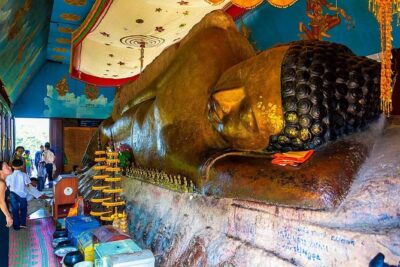
Phnom Kulen Waterfall National Park from Siem Reap
Read our review →

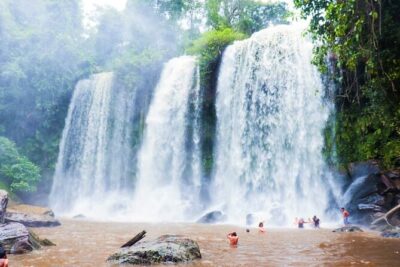
Jungle Trekking Tour at Phnom Kulen National Park from Siem Reap
Read our review →
Angkor Wat Private 2 day tour including National Park Phnom Kulen
Read our review →
Exploring Bokor National Park Full-Day Tour from Sihanoukville
Read our review →Browse the lists this tour appears in