

Reviewed · SILK FARM & CRAFT WORKSHOPS
Phnom Penh to Silk Island By Tuk-Tuk with local Expert
The countryside starts sooner than you expect. This half-day Phnom Penh tour trades traffic and tall buildings for tuk-tuk rides, ferry crossings, village roads, Buddhist temples, and small family workshops. I like the close look at silk production, and I like the easy hotel pickup and drop-off. The main drawback is that the outing visits only a few main stops, so you may want more time for independent exploring.
I also like the small-group size, capped at 12 people, and the way local guides such as Tin Tin, Kim, Sok, Lee, Tina, Samanag, Lucky, and Nuth add personal stories and humor. Bring comfortable shoes, though. You may walk between several craft and food stops, and the afternoon can feel full even though the pace is relaxed.
In This Review
- Key points to know before you book
- Why Silk Island makes a good half-day escape
- Leaving Phnom Penh by tuk-tuk
- Crossing the Mekong to Silk Island
- Temples, markets, and village life
- Inside Heng Naysim’s silk-weaving house
- Snacks, drinks, and the value of $29
- What the four-and-a-half-hour schedule feels like
- The guide can shape the whole experience
- Weather, comfort, and useful preparation
- Who should book this Silk Island tour?
- FAQ
- How long does the Silk Island tour last?
- Does the tour include hotel pickup and drop-off?
- Is the ferry ride included in the price?
- What is included besides transport and the guide?
- How large is the tour group?
- Is the tour suitable for most people?
- What is the cancellation policy?
- Should you book it?
Key points to know before you book
- Silk Island by tuk-tuk and ferry: Leave Phnom Penh by open-air tuk-tuk, then cross by ferry toward a quieter rural setting.
- Traditional silk weaving: See how silk moves from raw material to woven goods at Heng Naysim Traditional Cambodian Weaving House.
- Local food production: A tofu-skin workshop shows the hard manual work behind a familiar Cambodian food.
- Small-group setting: The tour accepts a maximum of 12 people, which allows room for questions and conversation.
- Strong guide element: Guides including Tin Tin, Kim, Sok, Lee, Tina, Samanag, Lucky, and Nuth have been praised for clear English, warmth, and personal insight.
- Good practical value: For $29 per person, you get hotel transport, ferry trips, a guide, water, snacks, and a four-and-a-half-hour outing.
Why Silk Island makes a good half-day escape
Silk Island, also called Koh Dach, gives you a look at the rural side of the Phnom Penh area without requiring a full day away from the capital. The journey itself is part of the appeal. You ride out of the city by tuk-tuk, cross the Mekong by ferry, and continue through farming areas and small villages.
This is not a sightseeing trip built around grand monuments. It is about ordinary life: homes, markets, workshops, temple grounds, food making, and the rhythm of work. If you have already seen Phnom Penh’s major sights, the change of pace can be welcome.
I especially like that the tour connects several parts of local life. Silk production is the headline attraction, but tofu making, market scenes, village roads, and temples give the visit more range. You do not simply arrive at a shop, buy a scarf, and leave. The guide helps explain how the products are made and how families keep these skills going.
The experience lasts about four hours and 30 minutes. That is long enough to get outside the city and see several locations, but short enough to fit around other Phnom Penh plans. A morning or afternoon departure is available according to the booking details.
More Craft Workshops in Phnom Penh
- Phnom Penh Silk Island Bike Tour/ E-Bike or Tuk Tuk
★ 5.0 · 495 reviews - Silk Island Cycling Adventure & lunch with locals
★ 5.0 · 246 reviews - Phnom Penh Silk Island Vespa Tour / Tuk Tuk Available
★ 5.0 · 102 reviews
Leaving Phnom Penh by tuk-tuk
Pickup is offered from your Phnom Penh hotel, and the city departure takes about 30 minutes. That matters in Phnom Penh, where arranging separate transport to a ferry point can take time and bargaining can become a chore.
The tuk-tuk provides the right sort of transport for this trip. You are not sealed away behind glass. You can watch the city thin out, feel the air change, and see the roadside scene as you move toward the river. The trade-off is comfort. Tuk-tuks are open to traffic, dust, heat, and weather, so light clothing and sun protection make sense.
The group limit of 12 keeps the tour from becoming a large convoy. Some departures may be smaller, and one person even received a private outing. Do not count on that, but the small maximum is still useful if you want to ask questions without shouting across a crowd.
English ability appears to be one of the tour’s strengths. Tin Tin has been praised for his clear English, humor, and warmth. Kim is described as attentive, while Sok has been especially good at explaining each stop and sharing views about Cambodian life and family. Other guide names connected with strong experiences include Lee, Tina, Samanag, Lucky, and Nuth.
The guide matters here because much of what you see is easy to miss without context. A market is just a market if nobody explains what is being sold. A weaving room can look like a collection of wooden frames until someone shows you how many stages are involved.
Crossing the Mekong to Silk Island
The ferry crossing changes the mood of the trip. You leave Phnom Penh’s dense streets behind and move toward open countryside, farms, village homes, and quieter roads. The ferry fare is included, so you do not need to arrange or pay separately for this part.
The route can include several ferry crossings. One account describes three ferry rides at different points, while the central plan includes a crossing to Silk Island. The exact route may depend on the day’s conditions and local arrangements, but you should expect the river journey to be an important part of the outing.
Give yourself a little patience here. A ferry is practical local transport, not a polished sightseeing boat. That is part of the charm, but it also means you should not expect a long narrated cruise or formal seating. You are crossing to reach the island and its communities.
Once on the island, the road trip continues through countryside, farming villages, and local areas that feel far removed from Phnom Penh’s main tourist streets. The pace is not rushed. You have time to look around, take photos, and listen to the guide explain what you are seeing.
Temples, markets, and village life
The island portion includes a Buddhist temple, a local market, and a scenic ride through the countryside. One stop is described as a Golden Temple. These places give the tour useful balance because the focus is not only on buying silk.
At the temple, your guide can explain what you are seeing and help you approach the site respectfully. The stop is not presented as a major architectural tour, so keep your expectations in check. Its value is the chance to see a local religious place as part of daily community life.
The market adds another layer. You may see fresh fruit and local products, and the tour includes small snack breaks along the way. Fresh fruit, rice snacks, coffee, cold drinks, and local treats have been part of past outings. Cold water is included, which is welcome in Cambodia’s heat.
One of the more unusual stops is a tofu-skin workshop. This is not a staged cultural performance with a quick demonstration and a photo opportunity. The work is manual and demanding, and the stop shows how much labor goes into producing a simple food item.
I like this part because it broadens the meaning of the tour. Silk is attractive and easy to take home, but tofu production connects you with everyday food and work. You may also find the setting less polished than a purpose-built visitor center. That is precisely why the visit feels useful, though some people may prefer a cleaner, more formal presentation.
More Tuk Tuk Tours in Phnom Penh
- Ultimate Phnom Penh Food Tour by Tuk Tuk: 20 Tastings and Drinks
★ 5.0 · 409 reviews - Phnom Penh’s Culinary Underground: Local Food Tour by Tuk-tuk
★ 5.0 · 234 reviews - Phnom Penh’s Morning Market and Street Art Tour by Tuk tuk
★ 5.0 · 128 reviews - Phnom Penh Evening Foodie Vespa Tour / Tuk Tuk Available
★ 5.0 · 99 reviews
Inside Heng Naysim’s silk-weaving house
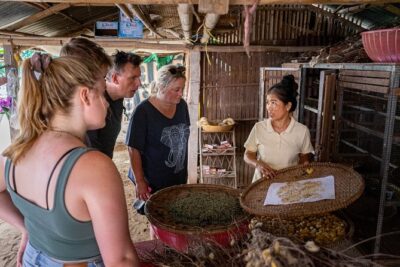
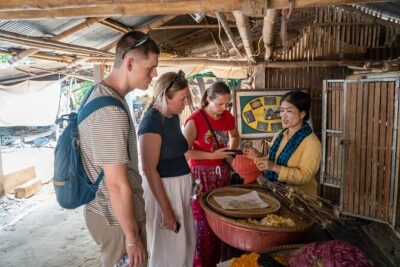
The main craft visit takes place at Heng Naysim Traditional Cambodian Weaving House. Here you learn about silk production and watch the weaving process in a family-run setting.
The family tradition has continued for seven generations, which gives the visit a strong personal element. You can hear how the work has been passed from one generation to the next, rather than receiving only a general explanation about Cambodian silk.
The process covers more than the final fabric. You may see how silk is prepared and woven, and the guide helps connect each step. The wooden looms and careful handwork show why handmade silk costs more than factory-made fabric.
The workshop also gives you a chance to buy silk goods. The prices have been described as fair, but purchases are optional. The tour does not require you to buy anything, and personal expenses are not included. If you do shop, ask questions about the material and production process before deciding.
This is the stop where a good guide can make the biggest difference. Tin Tin, Sok, Lee, Tina, Samanag, and Nuth have all been praised for explaining the craft in clear English. You can ask how long pieces take to make, what makes natural silk different, and how the family keeps the work going.
Be prepared to spend real time here. The weaving visit can last around two hours as part of the scheduled plan, though the exact timing may vary. That is enough time to understand the work, but it also means the outing is not a rapid checklist of sights.
Snacks, drinks, and the value of $29
At $29 per person, this tour offers solid value if you want transport and local interpretation in one package. The price includes hotel pickup and return, an English-speaking guide, tuk-tuk transport, ferry trips, cold water, and snacks.
The included food is not a full meal. Past outings have included fruit from a market, rice snacks, coffee, drinks, and local treats. Think of these as tasting breaks rather than lunch. If you need a substantial meal, plan around the tour.
The cost is also paying for convenience. You do not need to find the ferry point, negotiate a tuk-tuk for a rural route, or work out how to connect the island stops. That convenience is especially useful if you have limited time in Phnom Penh.
One direct comparison from the experiences shared is worth noting: a similar afternoon trip may cost slightly less, but this one can justify the extra amount through hotel pickup and drop-off. There are no required extra charges mentioned. You may choose to tip workshop workers or buy drinks and silk goods, but those are optional personal expenses.
For a private car and luxury treatment, $29 is not the right comparison. For a guided half-day with rural transport, ferry crossings, snacks, and several cultural stops, the price is reasonable.
What the four-and-a-half-hour schedule feels like
The tour is structured around three main sections: leaving Phnom Penh, exploring Silk Island and its surroundings, and visiting the silk-weaving house. The wider route adds temples, a market, a tofu workshop, snack breaks, and countryside rides.
That sounds like a lot, but the schedule seems to work because the stops are not all long formal visits. Some are short pauses to see a process, stretch your legs, or get a drink. The ferry rides also break up the road travel.
The main limitation is variety. One person felt the tour could include more because it had only three principal stops. If you want a packed day of monuments, museums, and many named attractions, this will feel modest.
I see that as a matter of travel style. The tour is better for slowing down and seeing how people work than for collecting a long list of sights. The guide’s explanations and the family workshops carry much of the experience.
You should also expect some walking. A Spanish-language note specifically cautioned that the route involves quite a lot of walking between families of artisans and producers. Another experience described a guide making sure a person using a cane could participate, which is encouraging, but the tour information says most people can take part rather than promising full accessibility.
The guide can shape the whole experience
This tour depends heavily on the person leading it. The strongest guides are not simply giving directions. They explain the stops, answer questions, make conversation, and connect the workshops to Cambodian life.
Tin Tin receives especially strong praise for excellent English, humor, and passion for Cambodia. Sok has been described as friendly, genuine, and good at sharing personal views. Kim is attentive and professional, while Nuth brings humor and solid local knowledge.
Your guide may be someone else from the team, but the repeated pattern is clear: the human side of the tour is a major reason to book it. You get more than a driver and a route. You get help understanding what the work means to the people doing it.
That said, guide quality can vary on any small-group outing. The tour description promises a professional English-speaking guide, but it cannot promise a particular person unless arranged separately. I would treat the named guides as examples of the team’s strengths, not a guarantee of assignment.
Weather, comfort, and useful preparation
Cambodia can be hot, and the tuk-tuk is open-sided. Wear breathable clothing, use sun protection, and bring shoes suitable for village roads and workshop visits.
Rain is possible. One outing continued through nearly monsoon-level rain and still worked well, but wet weather can affect comfort and ferry crossings. A small rain layer would be sensible, especially during the rainy season.
Water and snacks are provided, which reduces the need to pack much. You should still keep personal spending money if you might buy silk goods, drinks, or offer a tip at a workshop.
The booking confirmation arrives at the time of booking. Most people can participate, and the group has a maximum of 12. You receive a full refund if you cancel at least 24 hours before the start time. Cancellations or changes within 24 hours are not refunded or accepted, and the minimum group requirement can affect whether a departure runs.
Who should book this Silk Island tour?
I would choose this trip if you want to see a quieter side of Phnom Penh without giving up the comfort of organized transport. It suits you if you enjoy food production, family crafts, local markets, temples, and conversations more than major attractions.
It is also a good fit for first-time visitors who want help reaching Silk Island. The ferry crossings and village roads are much easier when someone else handles the route.
You may want another kind of outing if you dislike open-air transport, walking, workshops, or shopping opportunities. The trip is not designed as a high-speed sightseeing tour, and the silk house naturally includes a chance to purchase handmade goods.
FAQ
How long does the Silk Island tour last?
The experience lasts approximately four hours and 30 minutes.
Does the tour include hotel pickup and drop-off?
Yes. Pickup and return to your hotel in Phnom Penh are included.
Is the ferry ride included in the price?
Yes. Ferry trips to the island are included.
What is included besides transport and the guide?
The tour includes cold water and local snacks. Past outings have included fruit, rice snacks, coffee, and drinks.
How large is the tour group?
The maximum group size is 12 people.
Is the tour suitable for most people?
The tour information says most people can participate. It also involves walking between artisan and food-production stops, so comfortable footwear is useful.
What is the cancellation policy?
You can cancel at least 24 hours before the start time for a full refund. Cancellations or changes made within 24 hours are not accepted and are not refunded.
Should you book it?
Book this tour if authentic local work matters more to you than a long list of sights. The ferry rides, tofu workshop, temple, market, and seven-generation silk tradition create a useful picture of life beyond Phnom Penh’s center.
At $29, the combination of pickup, guide, ferry transport, water, snacks, and a four-and-a-half-hour route is good value. Just allow for heat, walking, open-air tuk-tuk travel, and a fairly focused itinerary. If that sounds like your kind of afternoon, Silk Island is an easy and worthwhile choice.
More Island Trips
- Mekong Silk Island Cruise – Unlimited Beer, Soft Drinks & Fresh Fruit Platter
★ 4.5 · 95 reviews - From Phnom Penh: Oudongk Mountain and Koh Chen Island Tour
★ 4.8 · 68 reviews - Silk Island & countryside of Phnom Penh by Tuk Tuk
★ 5.0 · 68 reviews - Phnom Penh: Silk Island Sunset Tour by Tuk Tuk
★ 5.0 · 21 reviews
Just added around Phnom Penh
- Private Van Phnom Penh To Siem Reap English Speaking Driver★ 5.0 · 3 reviews
- Private Taxi Phnom Penh – Kampot Overland Transfer★ 5.0 · 3 reviews
- Half Day – Phnom Penh Food Tour★ 4.5 · 3 reviews
- Full-Day Amazing Phnom Penh City Tours★ 5.0 · 3 reviews
- Phnom Penh to Koh Rong/Koh Rong Sanloem by Car or Minivan & Boat★ 5.0 · 3 reviews
- Private Transfer From or to Phnom Penh <=> Sihanoukville★ 5.0 · 3 reviews
- Riverside Walking Tour with Snack, Drinks & Local Ferry Ride★ 5.0 · 3 reviews
- Day Tour In Phnom Penh With Bophany★ 5.0 · 3 reviews
Silk Farm & Craft Workshops, compared.
Phnom Penh Silk Island Bike Tour/ E-Bike or Tuk Tuk
Read our review →
Siem Reap Lotus Silk Farm Discovery tour & Lake experience
Read our review →
Silk Island Cycling Adventure & lunch with locals
Read our review →
Phnom Penh Silk Island Vespa Tour / Tuk Tuk Available
Read our review →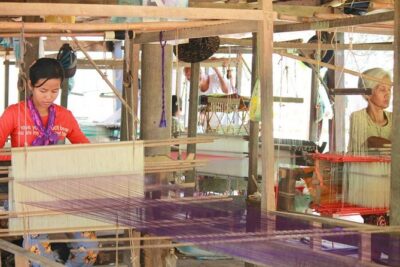
Mekong Silk Island Cruise – Unlimited Beer, Soft Drinks & Fresh Fruit Platter
Read our review →
Browse the lists this tour appears in