
Reviewed · BANTEAY SREI TOURS
3-Days Discovery Of Angkor: Waterfalls,Floating Village and Banteay Srei temple
Angkor is best seen in stages. This three-day private tour links the major temples around Siem Reap with Phnom Kulen’s waterfalls, Banteay Srei, and a boat trip through Kampong Phluk. I like the smart mix of famous sights and wider Cambodian life, and I like having a private guide and driver who can adjust the pace.
The strongest part is the personal service. Guides such as Sam, Seila, Saroun, and Samath are praised for clear explanations, useful photo advice, and patience. Drivers provide cold water and cool towels after long walks. The main drawback is the pace: three days of temples, early starts, heat, and long drives can wear you down.
In This Review
- What makes this three-day tour worth considering
- The three-day plan at a glance
- Day one: Angkor Thom, Bayon, Angkor Wat, and sunset
- Bayon and the smiling stone faces
- Baphuon, the terraces, and the royal square
- Lunch inside the archaeological park
- Angkor Wat in the afternoon
- Phnom Bakheng sunset, if conditions allow
- Day two: Kulen waterfalls, Banteay Srei, and Tonle Sap
- Phnom Kulen National Park
- Banteay Srei and its delicate carvings
- Kampong Phluk and Tonle Sap
- Day three: sunrise, jungle-covered ruins, and the outer circuit
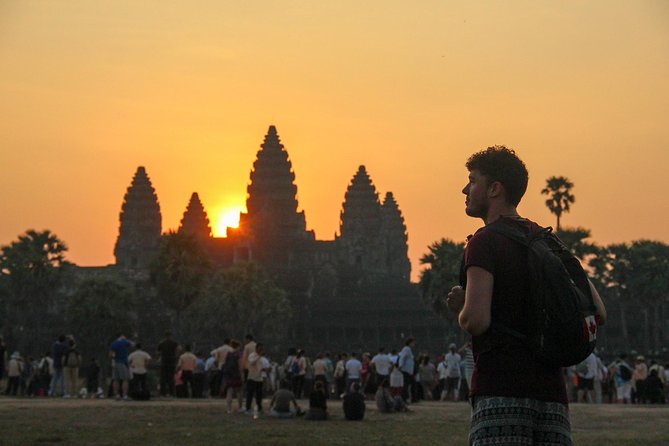
- Angkor Wat before sunrise
- Pre Rup and Ta Som
- Neak Pean and Preah Khan
- The guide and driver can make or break the experience
- What the $183.08 price really covers
- Heat, clothing, and practical preparation
- Who should book this tour?
- Should you book the three-day Angkor discovery?
- FAQ
- Is this a private tour?
- Does the tour include hotel pickup and return?
- Is the Angkor admission pass included?
- Is breakfast included every day?
- How much does the Tonle Sap boat ride cost?
- What extra fees apply at Phnom Kulen?
- Can you swim at the Phnom Kulen waterfalls?
- What should you wear at the temples?
What makes this three-day tour worth considering
- Sunrise and sunset at Angkor Wat and Phnom Bakheng: You get two different light shows on separate days, although the sunset stop depends on your energy and the weather.
- A private car or minivan for your group: Hotel pickup, air-conditioning, cold water, and cool towels make hot temple days easier.
- Phnom Kulen adds nature to the temple schedule: The waterfall offers a change of pace, but water levels are low from March through July.
- Banteay Srei brings fine stone carving: This smaller temple is far from the main Angkor circuit but rewards the extra drive.
- Kampong Phluk and Tonle Sap broaden the experience: The floating village shows how local life responds to the lake’s changing water levels.
- The price is attractive, but not all major costs are included: At $183.08 per person, you still need to budget for several passes, the boat, meals, and most temple admission.
The three-day plan at a glance
This is a private experience operated by Asean Angkor Guide in Siem Reap. A guide and driver collect you from your hotel, then return you there after each day. That simple arrangement matters in Cambodia, where a cool vehicle and a reliable pickup are welcome after several hours outside.
The tour costs $183.08 per person and is often reserved well ahead of time, with an average booking lead time of 51 days. Group discounts are offered, so the value improves when several people share the private vehicle and guide.
The schedule covers the core Angkor sites, the outlying temples, Kulen National Park, a waterfall, and Tonle Sap. It is not a slow, single-temple experience. You will see a great deal, but you should expect early mornings, plenty of walking, stairs at some temples, and hot conditions.
More Banteay Srei trips:
- Full-Day Banteay Srei & 4 Temples – Grand Tours Join-in Tour
★ 5.0 · 1,155 reviews - Siem Reap Tour: Angkor Wat Sunrise, Bayon, Ta Prohm, Banteay Srei
★ 5.0 · 931 reviews - 2-Day Angkor Wat With Small, Big Circuit and Banteay Srei Tour
★ 5.0 · 545 reviews
Day one: Angkor Thom, Bayon, Angkor Wat, and sunset
Pickup begins at 8:00 am. The first stop is the South Gate of Angkor Thom, where your guide helps you get oriented before entering the archaeological park. The Angkor pass is not included, so you will need to buy it before the temple visits begin.
Angkor Thom was a walled royal city, and the South Gate provides a strong first impression. Allow about 15 minutes here. It is mainly an introduction to the monumental entrance rather than a long standalone visit.
Bayon and the smiling stone faces
The Bayon gets about 45 minutes. This is one of the most memorable stops in Angkor Thom, with its towers covered in large carved faces. Your guide can help connect the temple to King Jayavarman VII and the Mahayana Buddhist period.
The Bayon is visually crowded with towers and carvings, so a guide adds real value. Without help, it is easy to walk past reliefs without understanding what you are seeing. If you enjoy photography, the changing angles between the towers are especially useful.
Baphuon, the terraces, and the royal square
Next comes Baphuon, a three-tiered temple mountain built in the mid-11th century. The visit lasts about 35 minutes. Its raised design gives you a different sense of scale from the Bayon, though the steps and exposed setting may feel demanding in the heat.
The Terrace of the Elephants and Terrace of the Leper King each receive about 15 minutes. These are shorter stops, but they help explain how Angkor Thom functioned as a royal center. The Elephant Terrace was used as a viewing platform for royal ceremonies and victories. The Terrace of the Leper King has detailed carvings that are easy to miss if you are moving too quickly.
More Tonle Sap floating village trips:
- From Siem Reap: Kampong Phluk Floating Village Tour by Boat
★ 4.9 · 6,979 reviews - Sunset tour of Kampong Phluk stilts home village on the Tonle Sap
★ 5.0 · 4,865 reviews - Siem Reap: Kampong Phluk Floating Village Tour with Boat
★ 4.9 · 3,843 reviews - Siem Reap Floating Village Kampong Phluk Sunset with Boat
★ 5.0 · 1,962 reviews
Lunch inside the archaeological park
Lunch lasts about an hour at a local restaurant inside Angkor Park. Food and drinks are at your own expense. This is useful because you do not have to leave the park, but you should not treat lunch as included in the tour price.
A vegetarian concern is worth noting. One negative account described limited vegetarian choices, so tell the guide about dietary needs before the day begins. Another private-tour experience included adjustments for special food requests, but the safest approach is to state your needs clearly in advance.
Angkor Wat in the afternoon
After lunch, you spend about 90 minutes at Angkor Wat. This is the largest religious monument in the world, and its scale can be hard to grasp until you walk through the galleries and courtyards.
An afternoon visit gives you time to study the bas-reliefs and architectural layout without making the first day another pre-dawn start. Still, the temple is vast, and 90 minutes goes quickly. If you want a slow look at every gallery, this schedule may feel brief.
Phnom Bakheng sunset, if conditions allow
The final stop is Phnom Bakheng, with about two hours set aside. The climb normally begins around 4:00 pm, and the sunset visit depends on the weather and how tired you are after Angkor Wat.
That flexibility is sensible. Phnom Bakheng involves an uphill walk, and the first day already includes extensive temple walking. You may enjoy the view from the hilltop, but you should not feel obliged to force the sunset stop if you are exhausted. The tour description makes clear that this part can be skipped or adjusted.
Day two: Kulen waterfalls, Banteay Srei, and Tonle Sap
Day two begins at 8:00 am and changes the mood completely. Instead of spending the whole day among monumental ruins, you head toward Phnom Kulen National Park, then continue to Banteay Srei and Kampong Phluk.
Phnom Kulen National Park
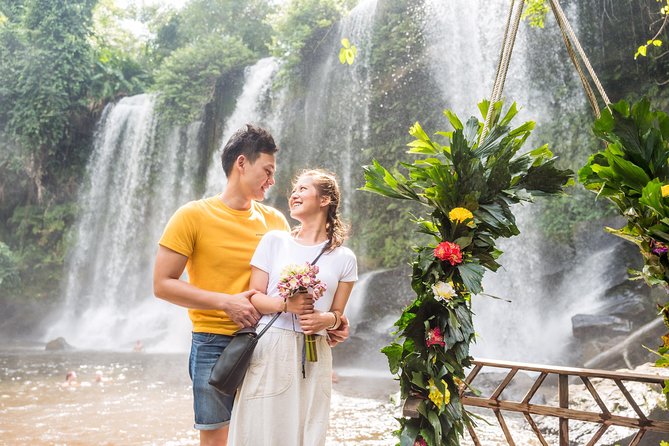
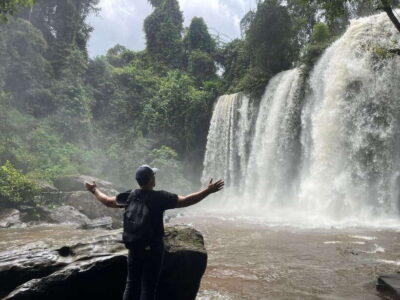
The drive to Phnom Kulen leads to the longest stop of the day, about three hours. The park visit includes the waterfall area and the riverbed lingas, carvings associated with Hindu religious imagery.
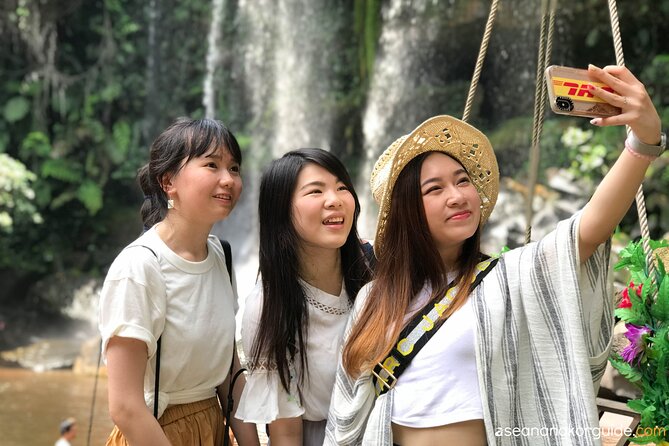
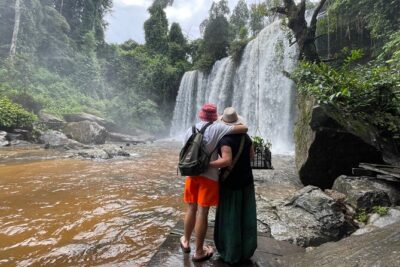
The waterfall provides a welcome chance to cool off, and swimming is allowed. Water levels are not constant, however. From March through July, the falls may have much less water, so do not book this day expecting a powerful cascade in the dry season.
The park also adds extra costs. The Phnom Kulen National Park admission is listed at $20 per person, and a separate Kulen Mountain pass is also listed at $20 per person. Confirm how these charges are handled when booking, since they add $40 per person beyond the advertised tour price.
The road and driving time are part of the tradeoff. This is not a quick stop near central Siem Reap. The private vehicle makes the journey more comfortable, especially with air-conditioning and scheduled pickup, but the day still involves a substantial amount of time on the road.
Banteay Srei and its delicate carvings
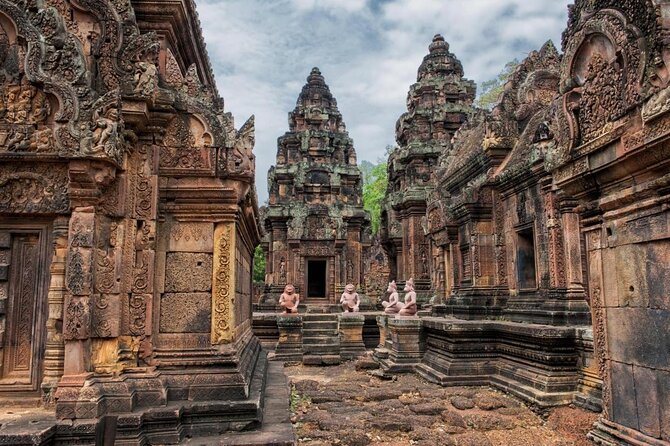
Banteay Srei receives about 45 minutes. This 10th-century temple is dedicated to Shiva and is known for unusually fine sculpture. Compared with Angkor Wat or Bayon, it is smaller and more detailed, with decoration that rewards close looking.
The extra drive is worthwhile if you care about carving. I would pay special attention to the doorways, lintels, and small figures rather than rushing around the whole site for photographs. Forty-five minutes is enough for a good visit, but not for a leisurely study of every detail.
Kampong Phluk and Tonle Sap
The final stop is Kampong Phluk, a flooded village connected to Tonle Sap, Southeast Asia’s largest freshwater lake. A private boat ride lasts about an hour and costs $15 per person, separate from the tour price.
This is one of the tour’s most useful additions because it moves beyond ancient monuments. You see a community shaped by the lake and its seasonal water changes. The boat ride is not simply another photo stop. It gives you a look at a way of life tied closely to fishing, waterways, and fluctuating lake levels.
The quality of this part can depend on water conditions and timing. Still, it offers a needed change after the stone temples and long drive through Kulen. If you want only Angkor temples, this stop may feel less essential. If you want a broader picture of the Siem Reap area, it earns its place.
Day three: sunrise, jungle-covered ruins, and the outer circuit
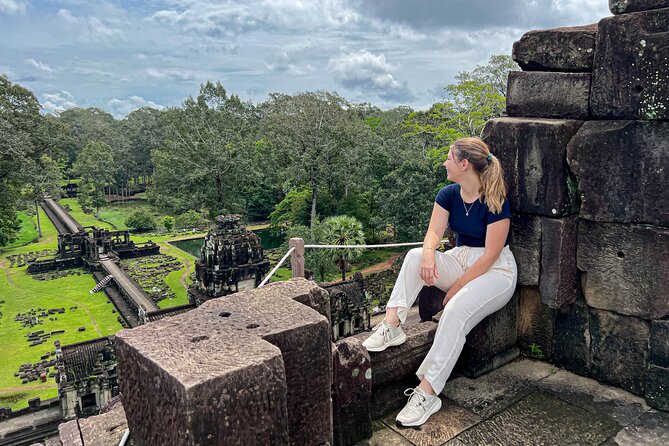
The final day starts very early. Pickup is at 4:40 am for sunrise at Angkor Wat. Breakfast is included on this day only, so plan carefully for the first two mornings. The breakfast detail should be clear before you book, especially if you expect food each day.
Angkor Wat before sunrise
The sunrise visit lasts about an hour. The early start is tough, but it lets you see Angkor Wat in a completely different mood from the first afternoon.
Your guide may help you choose a good viewing position and organize the walk through the grounds. Sam is repeatedly praised for finding useful photo angles and timing visits to reduce crowd pressure. Keep expectations realistic: sunrise is popular, and no guide can guarantee an empty view.
After the sunrise, you continue to Ta Prohm. This temple is famous for its appearance in Tomb Raider, but its appeal does not depend on the film. Trees and roots grow through parts of the structure, creating a powerful example of how the forest and the ruins have become linked over time.
You get about an hour here. Ta Prohm can be one of the busiest stops, so following the guide’s route may help you avoid some of the worst congestion. Wear shoes with a good grip, since temple paths can be uneven.
Pre Rup and Ta Som
Pre Rup receives about 35 minutes. This pyramid temple was dedicated to Shiva and built as the state temple of King Rajendravarman in 961 or early 962. It gives you a strong example of the temple-mountain form, with steep levels and broad views over the surrounding area.
Ta Som also receives about 35 minutes. Built at the end of the 12th century for Jayavarman VII, it is smaller and quieter in feel than the headline temples. The most memorable detail is the tree growing over one of its gates.
These two stops work well together. Pre Rup gives you height and structure, while Ta Som gives you intimate details and a more enclosed setting. The schedule is brisk, but the contrast helps prevent the day from becoming one long series of similar stone towers.
Neak Pean and Preah Khan
Neak Pean is a short 20-minute visit on an artificial island with a Buddhist temple in a circular setting. It was associated with the Jayatataka baray, a large reservoir connected with Preah Khan.
The approach and water setting make Neak Pean different from the other temples, but 20 minutes is a limited window. You will get the main view and explanation rather than a long exploration.
Preah Khan receives about an hour and is a fitting final temple. Built in the 12th century by Jayavarman VII to honor his father, it combines long corridors, courtyards, carvings, and partially restored spaces. It has enough variety to hold your attention at the end of a demanding three days.
The guide and driver can make or break the experience
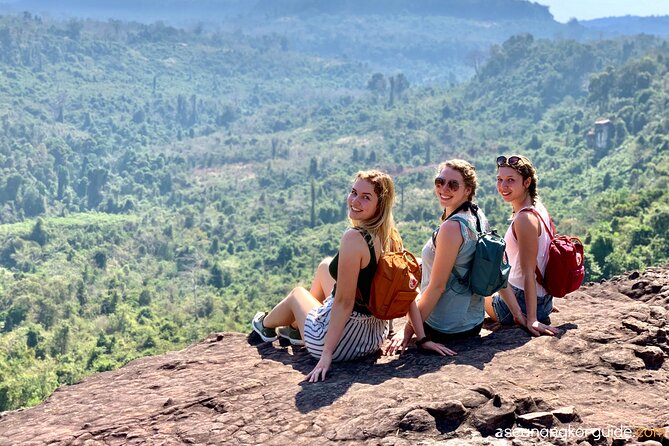
The itinerary is strong, but the people delivering it matter just as much. The most praised guides include Sam, Seila, Samath, Saroun, Sareik, and Sunny. Their reported strengths are clear temple explanations, flexibility, photo help, and the ability to adjust the pace for older members of a group.
Sam is noted for explaining history during the drive, which can save time once you reach the temple. Seila is praised for helping with photos, including taking pictures on his own phone when a visitor’s phone battery failed. Samath is described as especially good with mythology and scripture, a useful quality if you want more than basic dates and names.
Drivers such as Tha, Leap, Sophat, Kim, Samady, and May receive warm praise for safe driving, punctual pickups, and small comforts. Cold water and cool towels are provided during the tour. A power bank, umbrellas, or extra photo help may sometimes be available, but these should not be treated as guaranteed inclusions.
Because this is private, you can ask for breaks, adjust timing, and move at your group’s pace. That is a major advantage over a large group with fixed stops. It also means you should communicate clearly. Tell the guide if you need a slower walk, more time at a particular temple, or help with food choices.
What the $183.08 price really covers
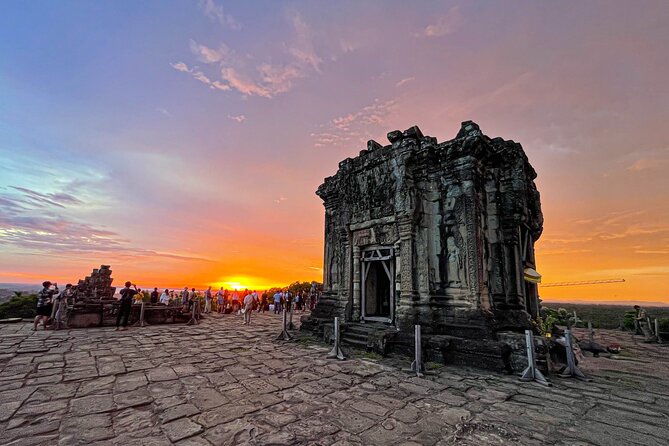
At $183.08 per person, the tour offers solid value for anyone who wants transport, guiding, and a wide three-day route without arranging each part separately. The private vehicle is especially useful for Kulen and Banteay Srei, which are not simply linked by a quick city shuttle.
The base price includes:
- English-speaking guide and driver
- Hotel pickup and return
- Private air-conditioned car or minivan
- Cool water and cool towels
- Breakfast on day three only
You should add the following to your budget:
- Angkor admission pass
- $15 Tonle Sap pass and private boat ride
- $20 Phnom Kulen National Park admission
- $20 Kulen Mountain pass
- Lunches, dinners, snacks, and soft drinks
The listed extras alone total $55 per person, before Angkor admission and food. That does not make the tour poor value, but it does mean the advertised price is not the final trip cost.
Heat, clothing, and practical preparation
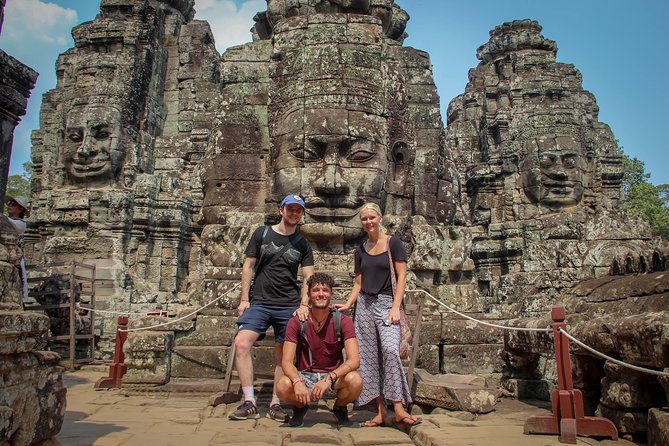
You need clothing that covers your shoulders and knees at the temples. Loose, light clothing is the best compromise between respect and comfort. The park authority can refuse entry to areas if clothing is considered immodest.
Bring water, sun protection, mosquito spray, and comfortable shoes. The tour supplies cool water, but you will still spend long periods walking in strong heat. Sunscreen is particularly important on the open terraces and at Phnom Kulen.
The schedule suits most people, but it is not effortless. Day one combines several Angkor Thom stops, lunch, Angkor Wat, and a possible sunset climb. Day two includes a long drive. Day three begins before sunrise and continues through several temples.
The private format helps older people and families because the pace can be adjusted. Still, anyone with limited mobility should ask about the walking and steps before booking. The information states that most people can participate, but it does not promise that every route is step-free.
Free cancellation is available up to 24 hours before the start time. Changes or cancellations made inside that window are not refundable.
Who should book this tour?
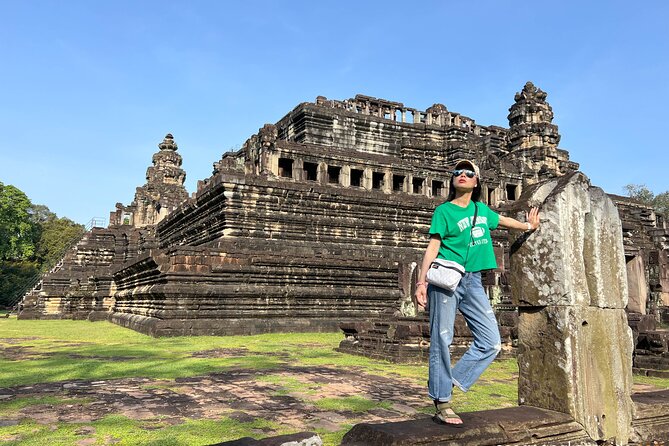
I would choose this tour if you have three days in Siem Reap and want the main Angkor temples plus two very different experiences: Kulen’s waterfall area and Tonle Sap’s floating village. It is also a good fit if you value a private guide who can explain the carvings, help with photos, and change the pace when the heat catches up with you.
Families, couples, and small groups gain the most from the private setup. The tour also suits people who want to see a lot without spending hours planning drivers, routes, and temple order.
I would hesitate if you want slow, quiet temple visits or if you dislike pre-dawn starts. I would also check the season before booking if Phnom Kulen’s waterfall is your main reason for going. In the dry months from March through July, there may not be much water.
Should you book the three-day Angkor discovery?
Yes, if your priority is variety and efficient sightseeing. The route covers Angkor Thom, Bayon, Baphuon, the terraces, Angkor Wat, Ta Prohm, Preah Khan, and several smaller temples, then adds Banteay Srei, Phnom Kulen, and Tonle Sap.
Book it with clear expectations about extra fees, meals, heat, and the early morning. Ask which guide and driver are assigned, since the strongest personal service is a major part of the experience. If you do that, this is a well-planned way to see far more than Angkor Wat alone.
FAQ
Is this a private tour?
Yes. Only your group participates, with private transport and an English-speaking guide and driver.
Does the tour include hotel pickup and return?
Yes. Pickup and drop-off at your hotel are included on all three days.
Is the Angkor admission pass included?
No. The guide takes you to buy the Angkor pass before entering the park, but the admission ticket is not included.
Is breakfast included every day?
No. Breakfast is included on day three only. Food and drinks on the other days are not included.
How much does the Tonle Sap boat ride cost?
The Tonle Sap pass and private boat ride cost $15 per person, paid separately.
What extra fees apply at Phnom Kulen?
The listed additional charges are $20 per person for Phnom Kulen National Park admission and $20 per person for the Kulen Mountain pass.
Can you swim at the Phnom Kulen waterfalls?
Yes, swimming is allowed. Water levels can be low from March through July, particularly during the dry season.
What should you wear at the temples?
Wear clothing that covers your shoulders and knees. Loose, lightweight clothing and comfortable shoes are recommended.
Just added around Siem Reap
- Private Battambang Full-Day Guided Tour★ 4.5 · 3 reviews
- Kulen Mountain, Beng Mealea and Banteay Srei Full Day Tour★ 5.0 · 3 reviews
- Kompong Pluk Tour★ 5.0 · 3 reviews
- Private 3 Day Tour to Discover the ancient temples★ 5.0 · 3 reviews
- Cambodia: Absolute Traditional Dance Show with Buffet Dinner★ 5.0 · 3 reviews
- Kulen National Park Ticket -Waterfall & 1000 Lingas★ 5.0 · 3 reviews
- Border Transfer (Siem Reap to Laos/Laos to Siem Reap)★ 3.5 · 3 reviews
- Best Taxi Siem Reap to Battambang – English Speaking Driver★ 4.5 · 3 reviews
Banteay Srei Tours, compared.
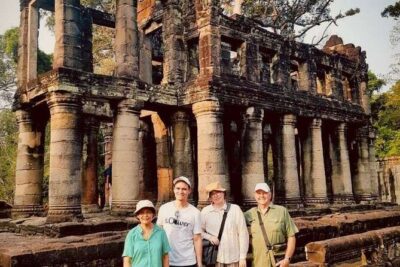
Full-Day Banteay Srei & 4 Temples – Grand Tours Join-in Tour
Read our review →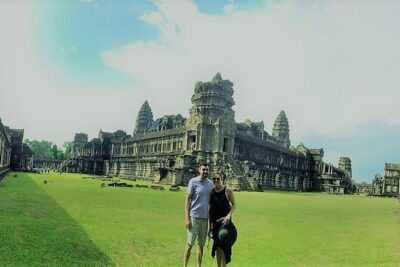
Siem Reap Tour: Angkor Wat Sunrise, Bayon, Ta Prohm, Banteay Srei
Read our review →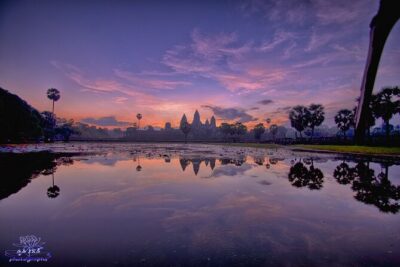
2-Day Angkor Wat With Small, Big Circuit and Banteay Srei Tour
Read our review →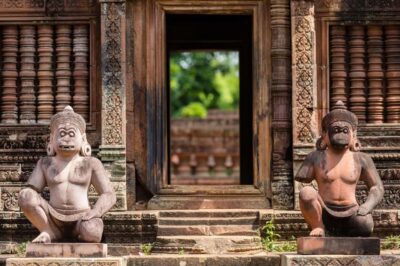
Banteay Srei, Kulen Waterfall & Beng Mealea Exploration
Read our review →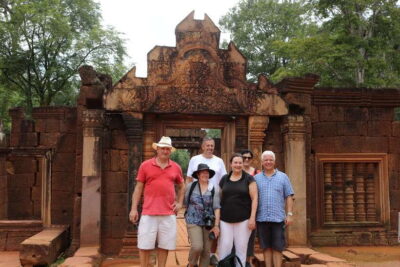
Kulen Waterfall, Banteay Srei, and Beng Mealea Tour
Read our review →
Banteay Srei and Grand Circuit Heritage Tour from Siem Reap
Read our review →Browse the lists this tour appears in