
Reviewed · 3-DAY EXPERIENCES
Private 3 Day Tour to Discover the ancient temples
The temples here reward a slower pace. This private three-day tour combines Cambodia’s major Angkor sites with quieter ruins, a floating village, and a local arts workshop. I like the private transport and English-speaking guide, which make long temple days easier to manage. I also like the range of places covered, from the finely carved pink sandstone of Banteay Srei to the giant faces of Bayon and the tree-covered stones of Ta Prohm.
The main drawback is the extra cost of admission. The $110 tour price does not include the $62 temple pass, the $15 Tonle Sap boat fee, or meals and drinks. You should also confirm whether the advertised price applies to your whole group or to one person, since that changes the value considerably.
In This Review
- Key points at a glance
- Why three days works well at Angkor
- Day one: Banteay Srei and the quieter northern temples
- Banteay Srei, the finely carved opening act
- Ta Som, a compact Bayon-style temple
- Neak Pean, a small temple on an island
- Preah Khan, the day’s most explorable ruin
- Day two: Angkor Thom, Ta Prohm, and Angkor Wat
- Angkor Thom South Gate and the bridge of gods
- Bayon, where faces watch from the towers
- Baphuon and Phimeanakas
- Ta Prohm, the jungle temple
- Angkor Wat, the three-hour centerpiece
- Day three: Tonle Sap and Cambodian craft
- Chong Kneas floating village
- Artisans Angkor
- What the $110 price really covers
- Who should book this private tour?
- Practical advice before you reserve
- Should you book it?
- FAQ
- How long is the tour?
- Where does the tour take place?
- Is hotel pickup and drop-off included?
- Is transportation private?
- Is an English-speaking guide included?
- Are temple admission tickets included?
- Is the Tonle Sap boat fee included?
- Are meals and drinks included?
- Is Artisans Angkor included?
Key points at a glance
- Four northern temples on day one: Banteay Srei, Ta Som, Neak Pean, and Preah Khan give you a quieter introduction to Angkor.
- The major Angkor sights on day two: Angkor Thom, Bayon, Ta Prohm, and Angkor Wat form the emotional center of the tour.
- A private vehicle with air conditioning: Hotel pickup and drop-off reduce the need to arrange separate transport in Siem Reap.
- A guide can make the carvings readable: One past participant gave special praise to guide Buth Chansip for explaining the 14 temples visited over three days.
- Day three changes the subject: Chong Kneas floating village and Artisans Angkor add present-day Cambodian life and craft to the temple visits.
- Budget for about $77 in required extras: The temple pass and boat fee are separate from the $110 tour price, before meals.
Why three days works well at Angkor
Angkor Archaeological Park is not one compact monument. It contains the remains of several Khmer capitals built between the ninth and fifteenth centuries, spread across a large area outside Siem Reap. Trying to see only Angkor Wat can leave you with a famous photograph but little sense of the wider place.
This tour gives you three different kinds of days. Day one is a route through four temples, with more time for carved details and wooded ruins. Day two focuses on the celebrated monuments and requires more stamina. Day three leaves the temple zone for Tonle Sap and a working arts center.
I consider that a sensible shape. The first day helps you get used to the scale of Angkor before the busier second day. The final day provides a change of scenery after long hours among stone galleries and courtyards.
The private format matters here. You are not tied to a large group’s pace, and your group has its own air-conditioned vehicle. The provided information does not specify the vehicle size, exact departure times, or how much flexibility the guide allows, so ask about those details before booking if they matter to you.
A few more trips worth weighing up
- From Siem Reap: Angkor Wat and Floating Village 3-Day Trip
★ 5.0 · 100 reviews - 3-Day Angkor Wat with All Interesting Major Temples, Banteay Srei & Beng Mealea
★ 5.0 · 70 reviews - 3-Day Angkor Wat & All Interesting Major Temples & Kulen Mount Waterfall
★ 5.0 · 63 reviews
Day one: Banteay Srei and the quieter northern temples
Banteay Srei, the finely carved opening act
Your guide picks you up at your hotel and takes you to Banteay Srei, a tenth-century temple often called the jewel of classical Khmer art. Its pinkish sandstone and unusually detailed carvings make it different from the larger monuments you visit later.
The scheduled visit is about one hour. That is enough to appreciate the temple’s scale and decoration, but it is not a long stop. Pay attention to the carved surfaces rather than expecting a vast complex. Banteay Srei is valued for precision, ornament, and color, not for massive towers or broad avenues.
Because admission is not included at this stop, you will use the same temple pass required for the other Angkor monuments. The $62 pass is listed as a separate expense for each person, so include it in your budget from the start.
Ta Som, a compact Bayon-style temple
Ta Som was built in the late twelfth century under Jayavarman VII and follows the Bayon style associated with his Buddhist building program. The planned visit lasts about 40 minutes.
That shorter stop gives the day some variety. You are not spending every hour in one enormous complex, and Ta Som can help you notice how architectural ideas repeat across Angkor. Ask your guide to point out the elements that connect it with Bayon and the reign of Jayavarman VII.
The tradeoff is simple: 40 minutes leaves limited time for lingering or careful photography. If you like to study carvings at length, the private setup may allow some adjustment, but the supplied details do not promise changes to the schedule.
A completely different kind of day out from Siem Reap:
- Angkor Wat Sunrise or Sunset Tour with Guide from Siem Reap
★ 5.0 · 12,109 reviews - Siem Reap: Angkor Wat: Small-Group Sunrise or Sunset Tour
★ 5.0 · 9,444 reviews - From Siem Reap: Kampong Phluk Floating Village Tour by Boat
★ 4.9 · 6,979 reviews - Sunset tour of Kampong Phluk stilts home village on the Tonle Sap
★ 5.0 · 4,865 reviews
Neak Pean, a small temple on an island
Neak Pean is a small island temple in the middle of the last baray, or reservoir, built by a Khmer king in the Angkor area. The visit lasts about 30 minutes.
This is a welcome pause from the heavy stonework of larger sites. The setting around water gives the stop a different feel, and its compact form makes it easy to understand in a short visit. I would not expect the same scale as Angkor Wat or Preah Khan. The appeal is the unusual placement and the sense of a temple designed as part of a wider water system.
Preah Khan, the day’s most explorable ruin
After lunch, you visit Preah Khan, a large monastic complex built by Jayavarman VII in the late twelfth century. The planned visit is one hour before returning to your hotel.
Preah Khan is a strong finish to day one because it rewards exploration. Its corridors, courtyards, and surviving details give you a better feeling for how extensive an Angkor religious complex could be. One hour will introduce the site, but its size means you may wish you had longer.
Lunch is not included, and no meal stop is specified. Plan to pay separately and ask your guide how the day’s lunch timing works. After four temple visits, a proper break matters more than it might appear on paper.
Day two: Angkor Thom, Ta Prohm, and Angkor Wat
Day two is the demanding one. It includes Angkor Thom’s central monuments, Ta Prohm, and three hours at Angkor Wat. You will want water, comfortable walking shoes, and enough energy for repeated stone steps and open courtyards.
Angkor Thom South Gate and the bridge of gods
The first stop is the South Gate of Angkor Thom, scheduled for about 15 minutes. At the moat, 54 devas, or guardian gods, pull one side of the serpent while 54 asuras, or demons, pull the other.
This is a quick stop, but it introduces the visual language of Angkor Thom. Look along both sides of the approach rather than focusing only on the gate itself. The paired figures make the entrance feel ceremonial, even before you reach the inner monuments.
Fifteen minutes is enough for an overview and photographs. It is not enough for a detailed examination of every figure, so listen closely while your guide explains what you are seeing.
Bayon, where faces watch from the towers
Bayon receives about one hour. More than 2,000 large faces are carved on its 54 towers, giving the temple its famous character. Its bas-reliefs also show ordinary scenes such as markets, fishing, festivals, cockfights, and jugglers, along with historical events.
This is where a good guide earns the fee. Without explanation, Bayon can seem like a maze of towers and narrow passages. With context, the faces and daily-life scenes become easier to read.
Buth Chansip is the guide name specifically praised in the available feedback. One participant credited his educational background with bringing strong insight to a three-day visit covering 14 temples. You cannot assume Buth will lead every booking, so request him by name if the operator can accommodate that request.
Baphuon and Phimeanakas
Baphuon follows Bayon, with about 30 minutes planned. King Udayadityavarman II built it in 1060 and dedicated it to Shiva. Its earlier date and Hindu purpose help show that Angkor was not built in one single period or for one single faith.
Phimeanakas comes next, also for about 30 minutes. It was built in the late tenth or early eleventh century under Jayavarman V and Udayadityavarman I and was dedicated to Hindu worship.
These two stops are brief, so I would treat them as essential context rather than full visits. They help you see the changing religious and political story of Angkor, but anyone who wants extended time at each structure may find the schedule tight.
Ta Prohm, the jungle temple
Ta Prohm receives about one hour. Dense jungle surrounds the temple, while fig, banyan, and kapok trees send large roots over the stonework.
This is one of the most atmospheric stops on the tour. The roots are striking, but do not let them become the whole story. Look at the galleries, doorways, and carved surfaces too. The trees are memorable because they show how the site was reclaimed by nature, while the temple itself remains a serious architectural work.
The popularity of Ta Prohm can make the hour feel short. You will likely want photographs, but also take time to look beyond the best-known root-covered corners.
Angkor Wat, the three-hour centerpiece
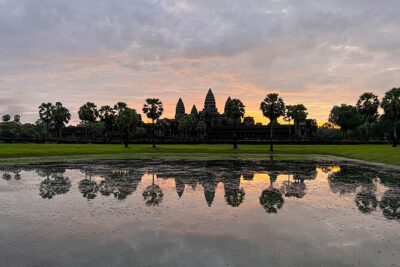
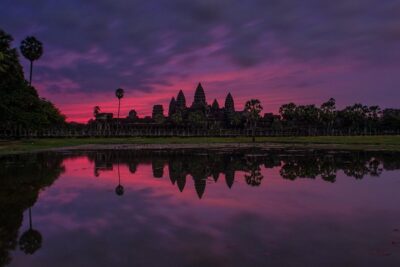
The final major stop is Angkor Wat, with about three hours scheduled in the afternoon. Built by Suryavarman II in the early twelfth century, it began as a Hindu temple complex and later became Buddhist. It is the largest religious monument in the world.
Three hours is the most generous single temple period in the tour, and rightly so. Angkor Wat has a scale that needs time. You can study its galleries, bas-reliefs, towers, courtyards, and changing views across the complex without rushing from one photo stop to the next.
The afternoon timing may suit you if you prefer to avoid making the day start and end with the same enormous monument. Still, exact light and heat conditions depend on the date and weather. The tour information does not promise sunrise or sunset access, so do not book it expecting either.
Day two packs in six stops, including three hours at Angkor Wat. That is efficient, but it is also tiring. The private vehicle and hotel return are useful here because you can cool down between long walks.
Day three: Tonle Sap and Cambodian craft
Chong Kneas floating village
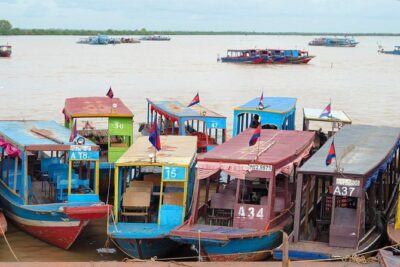
On the final day, the tour leaves the temples for Tonle Sap lake and Chong Kneas floating village. You take a boat for about two hours to see the way three communities, Cambodian, Cham, and Vietnamese, live around the water.
This stop adds a human and present-day side to a trip otherwise focused on monuments. The boat fee is not included and is listed at $15 per person. Confirm the payment method and exact arrangements with the operator before you go.
The experience is different from a temple visit. You are viewing life connected to the lake, not walking through an archaeological ruin. Keep your expectations grounded: the tour promises a boat visit and a look at community life, but it does not specify the type of boat, the route, or particular onboard activities.
Artisans Angkor
The last stop is Artisans Angkor, a fine arts school and workshop. The visit lasts about one hour and is included in the tour price.
You can see work connected with wood carving, stone carving, lacquering, silver plating, and silk painting. This is a useful final stop because it connects Cambodia’s present craft skills with the carved stonework you have seen during the previous two days.
The tour then returns you to your hotel. Since meals and drinks are not included, plan for those costs throughout the day.
What the $110 price really covers
The advertised price is $110, but it is not the complete cost of the three-day experience. You must add:
- $62 per person for the temple ticket
- $15 per person for the Tonle Sap boat
- Meals and drinks
That makes at least $77 per person in listed extras before food. If the $110 price is for one person, the total begins at $187 per person. If it covers a private group, the value improves as you share the transport and guide cost across more people. Confirm the pricing basis before paying.
What you receive for the tour price is practical: private air-conditioned transportation, hotel pickup and drop-off, a private English-speaking guide, drinking water, and travel insurance. For a small group that wants a dedicated guide rather than a large coach, that can be fair value.
The strongest value comes from the guide. Angkor’s carvings and religious changes are easier to understand with clear explanations. The praise for Buth Chansip is especially useful, though you should request him directly rather than assume he is assigned.
Who should book this private tour?
I would recommend this tour to you if you want the major Angkor temples but also want smaller sites, Tonle Sap, and a craft workshop in one organized package. It suits first-time visitors who prefer hotel pickup and a private vehicle over arranging transport for each day.
It also works well for families or small groups that want to keep together. Most people can participate, and the booking information says the activity is private, with only your group taking part.
You may want a different plan if you dislike full sightseeing days. Day two includes six stops and three hours at Angkor Wat, while day one covers four temples. The schedule is broad rather than leisurely.
This is not the best match if your sole goal is temple photography at one or two sites. You will spend part of day three away from Angkor, and the visit to Chong Kneas includes an extra boat charge. It is better suited to someone who wants several sides of Siem Reap in one trip.
Practical advice before you reserve
Ask three questions before booking. First, is the $110 price for the entire private group or for each person? Second, can you request Buth Chansip as your guide? Third, how are meals and the Tonle Sap boat handled during the day?
Remember that every temple stop requires the separate $62 temple ticket. Carry drinking water, even though water is included, because day two involves a lot of walking and outdoor time.
The provider offers free cancellation when you cancel at least 24 hours before the experience begins. Changes or cancellations inside that window are not accepted for a refund, and all cut-off times use local time in Cambodia.
Should you book it?
Book this tour if you want a well-packed private introduction to Angkor, with strong coverage of both famous and less familiar temples. The combination of Banteay Srei, Preah Khan, Bayon, Ta Prohm, and Angkor Wat gives you a fuller picture than a single-day highlights visit.
I would book it with two conditions: confirm the price basis and request your preferred guide, especially Buth Chansip if available. Add the $77 in required admissions and boat fees to your budget, then decide if the three-day pace suits you. If it does, this is a practical way to see the monuments, the lake communities, and modern Cambodian craft without arranging each piece yourself.
FAQ
How long is the tour?
The experience lasts approximately three days.
Where does the tour take place?
The tour is based in Siem Reap, Cambodia, and visits Angkor Archaeological Park, Tonle Sap lake at Chong Kneas, and Artisans Angkor.
Is hotel pickup and drop-off included?
Yes. Hotel pickup and drop-off are included.
Is transportation private?
Yes. The tour includes private transportation with air conditioning, and only your group participates.
Is an English-speaking guide included?
Yes. A private English-speaking tour guide is included.
Are temple admission tickets included?
No. The temple ticket costs $62 per person and is not included in the tour price.
Is the Tonle Sap boat fee included?
No. The boat fee for Chong Kneas is listed as $15 per person and must be paid separately.
Are meals and drinks included?
Meals and beverages are not included. Drinking water is included.
Is Artisans Angkor included?
Yes. The visit to Artisans Angkor is included in the tour price.
Just added around Siem Reap
- Private Battambang Full-Day Guided Tour★ 4.5 · 3 reviews
- Kulen Mountain, Beng Mealea and Banteay Srei Full Day Tour★ 5.0 · 3 reviews
- Kompong Pluk Tour★ 5.0 · 3 reviews
- Kulen National Park Ticket -Waterfall & 1000 Lingas★ 5.0 · 3 reviews
- Cambodia: Absolute Traditional Dance Show with Buffet Dinner★ 5.0 · 3 reviews
- Border Transfer (Siem Reap to Laos/Laos to Siem Reap)★ 3.5 · 3 reviews
- Beng Melea, Rolous Group & Kompong Phluk Floating Village★ 5.0 · 3 reviews
- Best Taxi Siem Reap to Battambang – English Speaking Driver★ 4.5 · 3 reviews
3-Day Experiences, compared.
3-Day Angkor Wat with All Interesting Major Temples, Banteay Srei & Beng Mealea
Read our review →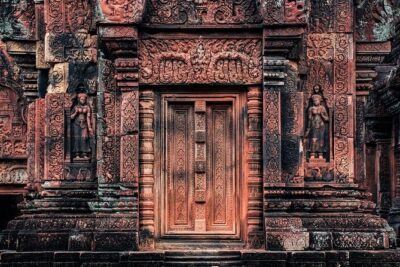
3-Day Angkor Wat & All Interesting Major Temples & Kulen Mount Waterfall
Read our review →
Best of Siem Reap 3-Day Private Tour to Angkor Wat & Tonle Sap
Read our review →
Private Siem Reap 3 Day Tour Discover All Highlight Angkor Temple
Read our review →
Private 3-Day Mekong Delta River Tour from Phnom Penh to Ho Chi Minh City
Read our review →Browse the lists this tour appears in