
Reviewed · CYCLING TOURS
Cultural Cycling Tour – half day (8:00-11:30)
Battambang is best seen at bicycle speed. This four-hour morning ride takes you beyond the city center to family-run food workshops, a Khmer prahok market, Wat Samrong Knong, and the Ek Phnom area. I like the mix of ordinary village life and serious Cambodian history, and I like that a local Khmer guide helps you speak with artisans rather than simply pointing at their work.
The price is another strong point: $16 includes the bicycle, guide, bottled water, food tastings, and entrance fees. The main drawback is the early start and outdoor setting. You will be riding in Cambodian heat, and the tour requires good weather. Bring suncream, sunglasses, and a willingness to share the road with everyday traffic.
In This Review
- Key Things to Know Before You Ride
- Why This Four-Hour Ride Works So Well
- Wat Samrong Knong and Battambang’s Dark Chapter
- The Khmer Prahok Market and the Smell of Fermentation
- Ek Phnom: Rice Wine, Rice Paper, and Banana Chips
- Kralan Cooked in Bamboo at Samrong Knong
- The Guide Makes the Difference
- What the Cycling Is Like
- Is $16 Good Value?
- Who Should Book This Battambang Experience?
- Practical Tips for a Better Morning
- Should You Book It?
- FAQ
- How long does the Cultural Cycling Tour last?
- Where does the tour take place?
- What food products can I see being made?
- What is Kralan?
- Is Wat Samrong Knong included?
- Is food tasting included in the price?
- Is bicycle use included?
- Can someone join if they cannot ride a bicycle?
- How many people can join the tour?
- What happens if the weather is poor?
- What is the cancellation policy?
Key Things to Know Before You Ride
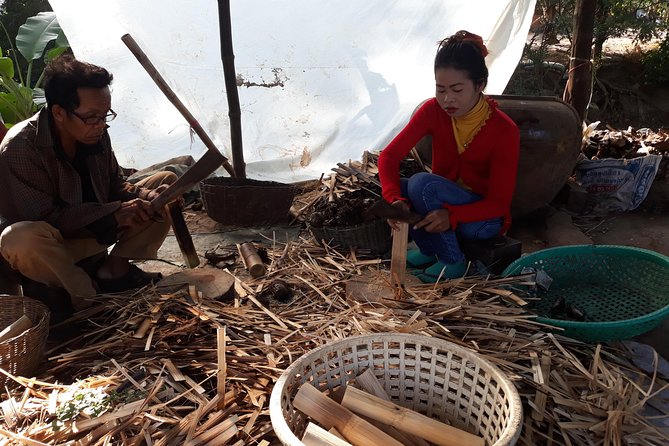
- Rice paper is made by hand: You can watch local women, known as Ming, steam and dry the thin discs used for spring rolls.
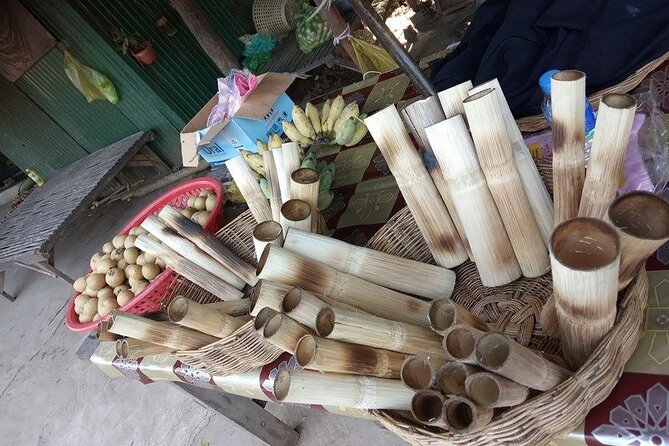
- Kralan is the standout snack: At Samrong Knong, sticky rice, black beans, coconut milk, and salt are cooked inside bamboo over charcoal.
- The history is not softened: Wat Samrong Knong includes a memorial connected with the Killing Fields, giving the morning a more serious turn.
- Small groups keep it personal: The maximum group size is 10, and private-feeling rides may be possible when numbers are low.
- The guide matters: Paov and Sothea have been praised for friendly English-language explanations, while Raksa is also associated with helpful, trustworthy service.
- A tuk tuk can help: If someone in your group cannot cycle, the operator says a tuk tuk can be included.
Why This Four-Hour Ride Works So Well
Battambang has plenty of sights that you can visit by car or tuk tuk, but a bicycle gives the morning a different rhythm. You move slowly enough to notice food being prepared beside the road, smoke rising from charcoal, jars of fermenting fish, and small workshops that would be easy to miss from a vehicle.
I like that this is not only a sightseeing ride. The food is a useful doorway into local life. Rice paper, prahok, rice wine, banana chips, and bamboo-cooked sticky rice are not random tasting stops. They show how Cambodian families preserve food, use local ingredients, and earn money through small-scale production.
Your guide also acts as an interpreter. That matters because the interaction with artisans would otherwise be limited. You can watch a process, but a Khmer guide can explain what you are seeing and help bridge the gap between a short visit and a real conversation.
The route lasts from about 8:00 a.m. to 11:30 a.m., with the published duration listed as approximately four hours. That timing is sensible. You get the cooler part of the day, and the tour finishes before the worst afternoon heat. Still, this is not an indoor activity. Wear light clothing, use suncream, and carry the bottled water provided.
More bike tours:
- Local Livelihood Half Day Bike Tour in Battambang
★ 5.0 · 287 reviews - Customs and Culture Half Day Walk and Bike Tour in Battambang
★ 5.0 · 23 reviews - Explore local livelihood & countryside (Half-Day Cycling Tour)
★ 5.0 · 19 reviews
Wat Samrong Knong and Battambang’s Dark Chapter
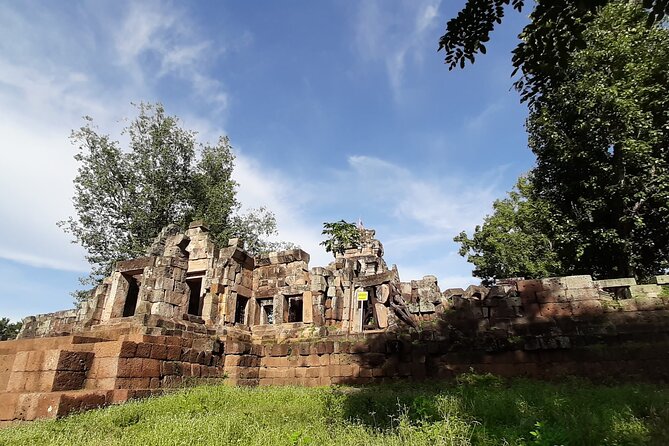
The first stop is Wat Samrong Knong, described as Battambang’s oldest pagoda. You have about 20 minutes here, and admission is included.
The pagoda gives the tour a cultural and religious beginning, but the site also carries painful modern history. It is associated with the Killing Fields, so this is not simply a decorative temple stop. Your guide can provide context about the Khmer Rouge period and the suffering connected with Battambang.
That contrast is important. Cambodia’s rural sights can look peaceful, yet many communities still live with memories of the 1970s. A good guide helps you understand that the temple is part of both everyday religious life and a place of remembrance.
Twenty minutes is enough for a short visit and explanation, though it will not allow for a slow architectural study. If you want a long temple stop, detailed photography, or extended reflection, you may find this portion brief. For a half-day food and cycling tour, the shorter visit keeps the route moving.
I would pay attention to the guide here. Several guides connected with this operator have been praised for explaining Khmer Rouge history clearly and respectfully. Sothea, in particular, has been described as offering strong English explanations of Cambodian history, culture, and daily life.
The Khmer Prahok Market and the Smell of Fermentation
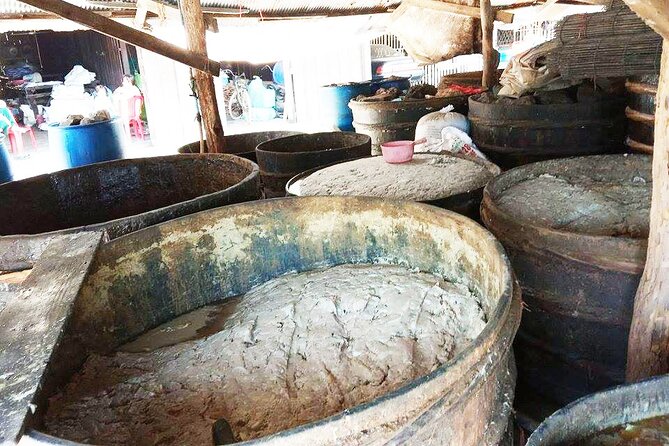
The second stop takes you to a Khmer prahok market for around 20 minutes. Prahok is fermented fish, a major part of Cambodian cooking, and the process involves fish being salted and fermented in jars.
This may be the most challenging stop for some people. Fermented fish has a powerful smell, and the market is about seeing food production as it really happens, not receiving a polished demonstration designed for tourists. If you enjoy understanding how local food works, it is fascinating. If strong odors bother you, prepare yourself.
The short stop is well judged. You can see the jars and learn how prahok is prepared without making the market the entire morning. The guide’s interpretation is especially useful because the visual details alone may not explain the food’s role in Cambodian meals.
This is also where the tour earns its cultural value. You are not only tasting familiar snacks. You are seeing an ingredient that can be central to Khmer cooking but may be unfamiliar to many foreign visitors. The stop asks you to look beyond restaurant menus and understand how food is made, stored, and sold.
Ek Phnom: Rice Wine, Rice Paper, and Banana Chips
The longest stop is in the Ek Phnom area, with about one hour devoted to traditional food production. This is the heart of the tour.
You can see rice wine being made, watch rice paper production, and observe the preparation of dried banana chips. The work is carried out by local artisans, including women who make the thin rice paper discs used to wrap spring rolls.
Rice paper production is the sort of activity that rewards patience. The finished product looks simple, but making uniform discs by hand requires skill and repetition. Your guide can interpret the process and help you understand how this small food business fits into local life.
Rice wine adds another layer. You will see a traditional product made from rice, rather than simply buying a bottle from a shop. The tour also includes tasting from roadside vendors, although the information does not specify how much alcohol is offered or whether every participant must try it. If you do not drink, you can focus on the preparation and other snacks.
Banana chips are a lighter stop and an easy way to see how fruit is preserved for sale. Together, the three products show different ways rice and local crops become household food or income.
I would not expect a large cooking school or a staged cultural show. This is a look at working food businesses. That means the pace and amount of interaction may depend on what the artisans are doing when you arrive. The upside is that the visit feels connected to real production. The trade-off is that conditions may be simple.
A few more trips worth weighing up
- Half-day swing bridge, bamboo train, batcave & Killing cave
★ 4.9 · 24 reviews - half day morning tour by Tuk-Tuk
★ 5.0 · 20 reviews - Full/Half Day Tuk TuK: Handicrafts Bambootrain Killing&Bat Caves
★ 5.0 · 14 reviews - Explore the Village &Countryside By Bicycle-Half Day Morning
★ 4.8 · 13 reviews
Kralan Cooked in Bamboo at Samrong Knong
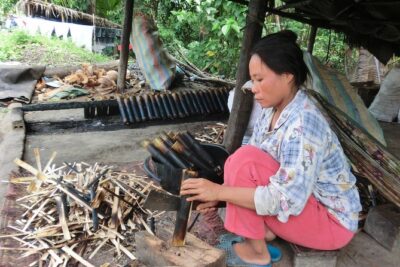
One of the most distinctive tastings is Kralan, sticky rice cooked with black beans, coconut milk, and a little salt inside a bamboo tube over charcoal.
The bamboo tube is part of the cooking method, not just attractive packaging. The ingredients cook slowly in the tube, producing a dense, filling snack with a sweet and savory character. You may also see the food prepared at roadside stalls.
This is the kind of tasting I value most on a cultural tour because it connects flavor with technique. You are not merely sampling a finished product. You are learning how a simple combination of rice, beans, coconut milk, and salt becomes a portable local food.
The tour also offers other traditional products, including rice wine and banana chips. Bottled water is included, which is useful during a morning ride, but you should still bring suncream and sunglasses. Beer, personal shopping, and those sun protection items are not included.
The Guide Makes the Difference
The operator uses local experienced guides, and the strongest part of the experience appears to be the human side of the tour. Guides such as Paov and Sothea have been praised for being friendly, funny, and able to explain Cambodian history and daily life in good English.
That combination matters. You want someone who can discuss difficult subjects at Wat Samrong Knong, explain unfamiliar food at the prahok market, and keep a relaxed tone while you cycle between stops.
Raksa is also associated with the company and has been praised for kind, trustworthy service. You should not assume that a particular guide will lead your tour unless the booking confirms it, but the names are useful if you want to ask about guide availability.
The guide also helps manage the pace. One account describes a ride that continued even with only one participant, creating a more personal morning. A small group can make it easier to ask questions and speak with artisans. The stated maximum is 10 people, so this is not designed as a large coach-style outing.
What the Cycling Is Like
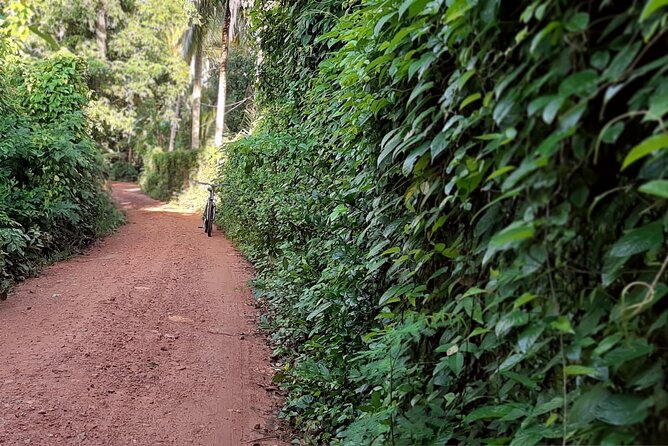
The ride is described as relaxed and moderate rather than demanding. That makes it suitable for many people who can manage a morning bicycle ride, but you should not treat it as a completely effortless sightseeing loop.
You will be outdoors for several hours, and the roads may not feel as controlled as a dedicated cycle path. The information provided does not give a total distance, bicycle type, or detailed road conditions, so ask the operator if you need those specifics before booking.
The tour is a good choice if you want to get away from the crowd and see parts of Battambang at a slower speed. Cycling also gives you time to notice small details between the scheduled stops. You are less sealed off from the surroundings than you would be in a vehicle.
If someone in your group has a problem that makes cycling difficult, the operator says a tuk tuk can be included. That is a valuable option for mixed-ability groups, although you should arrange it in advance rather than assume it will appear automatically.
Is $16 Good Value?
At $16, this is an unusually full half-day for the price. You receive bicycle use, a local guide, bottled water, snack tastings, entrance fees, and taxes. The tour also combines several types of activity: cycling, food production, market visits, temple culture, and historical interpretation.
The value is strongest if you were already planning to hire a bicycle or arrange several short visits around Battambang. The tour removes the need to organize transport between scattered stops and gives you someone who can interpret conversations with local producers.
The price does not include suncream, sunglasses, beer, or personal purchases. Those are reasonable exclusions, but remember to budget for them. The food tasting is included, yet you should not expect a large meal. Think of the snacks as samples that support the cultural focus.
For a solo visitor, the tour can still work well. A small group or even a one-person departure may give you more time with the guide. For a couple, the combination of food and cycling makes the price particularly attractive.
Who Should Book This Battambang Experience?
I would recommend this ride to you if you want local food production, quiet roads, and direct cultural explanation rather than a checklist of major sights.
It suits:
- Couples who enjoy cycling and small food discoveries
- Solo visitors who want an easy way to meet a local guide
- Curious eaters willing to encounter strong flavors and smells
- History-minded visitors who want context for Cambodia’s recent past
- People with a half-day free in Battambang
- Small groups looking for a more personal outing
I would think twice if you dislike bicycles, struggle in heat, or want a polished, air-conditioned sightseeing trip. The prahok market may be uncomfortable for anyone sensitive to fermented-food odors, and the temple’s Killing Fields connection gives the morning an emotionally serious moment.
The activity requires good weather. If poor weather forces cancellation, you can receive a different date or a full refund. You can cancel for a full refund up to 24 hours before the local start time. Cancellations or changes made within 24 hours are not refunded or accepted.
Practical Tips for a Better Morning
Arrive ready to ride at 8:00 a.m. The tour is short enough that delays can reduce time at the food stops, so do not treat the start time casually.
Wear breathable clothing and bring suncream and sunglasses. Bottled water is included, but sun protection is not. You may also want a small amount of cash for personal purchases, since beer and shopping are excluded.
Keep an open mind at the prahok market. The smell is part of the lesson. Ask your guide how the fish is used in Khmer cooking, how long it ferments, and how the finished product is sold.
At the artisan stops, watch before rushing to take photographs. The most valuable part may be the explanation of how the food is made and who depends on that work. Your guide is there to interpret, so use that help.
Finally, tell the operator before the tour if someone needs a tuk tuk. The stated maximum group size is 10, and pickup is offered, but the exact pickup arrangement should be confirmed when you book.
Should You Book It?
Book this tour if you want Battambang’s everyday side, especially traditional food production and local conversation. For $16, the inclusion of a bicycle, guide, tastings, water, and admission fees makes it a strong value.
I would choose it over a generic city loop if you have already seen the main center and want more context. The best reason to book is the mix of simple pleasures and serious history: Kralan cooked in bamboo, handmade rice paper, fermented fish, and a sobering visit to Wat Samrong Knong.
Skip it if you need a guaranteed private vehicle, dislike outdoor heat, or prefer famous monuments over working food traditions. For everyone else, this is a friendly, useful morning that shows why Battambang rewards slow travel.
FAQ
How long does the Cultural Cycling Tour last?
The tour runs in the morning from about 8:00 a.m. to 11:30 a.m. The approximate duration is four hours.
Where does the tour take place?
The tour is based in Battambang, Cambodia, and visits Wat Samrong Knong, a Khmer prahok market, and the Ek Phnom area.
What food products can I see being made?
You can see traditional rice paper, rice wine, and dried banana chips being made. You can also sample Kralan, rice wine, and banana chips from local producers and roadside vendors.
What is Kralan?
Kralan is sticky rice cooked with black beans, coconut milk, and a small amount of salt inside a bamboo tube over charcoal.
Is Wat Samrong Knong included?
Yes. Wat Samrong Knong is part of the tour, and the admission fee is included.
Is food tasting included in the price?
Yes. Tastings of traditional food products made by the artisans visited are included.
Is bicycle use included?
Yes. The tour includes use of a bicycle, along with bottled water, a local experienced guide, all fees, and taxes.
Can someone join if they cannot ride a bicycle?
The operator says a tuk tuk can be included if someone in your group has a problem that prevents them from cycling. Arrange this with the operator before the tour.
How many people can join the tour?
The maximum group size is 10 people.
What happens if the weather is poor?
The tour requires good weather. If it is canceled because of poor weather, you will be offered another date or a full refund.
What is the cancellation policy?
You can cancel at least 24 hours before the local start time for a full refund. Cancellations or changes made less than 24 hours before the start are not accepted, and the amount paid is not refunded.
Just added around Battambang
- Bamboo Train, Banann Temple, Fruit Bat, Bat Cave, Sunset★ 4.2 · 3 reviews
- Morning Tour Bamboo Train, Ancient House, Local, Countryside★ 5.0 · 3 reviews
- Private Boat from Battambang to Siem Reap via Tonle Sap Lake★ 4.5 · 3 reviews
- Battambang Private afternoon tour bamboo train bat cave & village★ 5.0 · 3 reviews
- Battambang Private Full-Day Tour★ 5.0 · 3 reviews
- From Siem Reap: Battambang Day Trip Bamboo Train & Bat Cave★ 5.0 · 4 reviews
- Private Taxi Transfer From Battambang – Siem Reap City★ 5.0 · 4 reviews
- Battambang City and Country side Full day Tour★ 5.0 · 4 reviews
Cycling Tours, compared.
Siem Reap Countryside Bike Tour / E-Bike or Tuk Tuk
Read our review →
Phnom Penh Silk Island Bike Tour/ E-Bike or Tuk Tuk
Read our review →
Angkor Wat Sunrise Bike Tour & Jungle Breakfast
Read our review →
Local Livelihood Half Day Bike Tour in Battambang
Read our review →Browse the lists this tour appears in