
Reviewed · CYCLING TOURS
Siem Reap: Bike the Angkor Temples – Full-Day 30km Tour
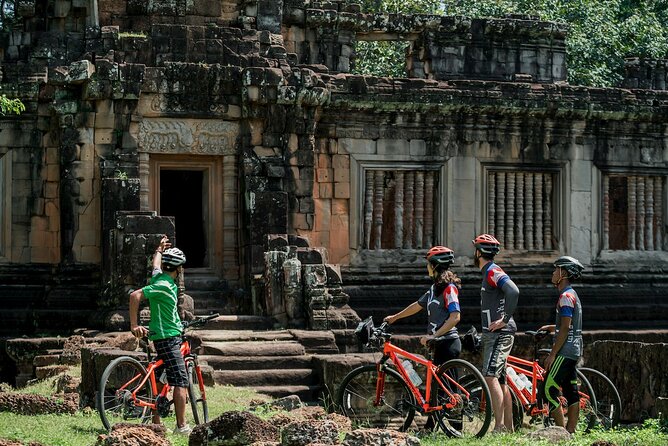
Angkor is best seen at bicycle speed. This full-day ride gives you the famous temples, including Angkor Wat, Bayon, and Ta Prohm, while also taking you onto forest tracks, village lanes, and quieter roads that most tuk-tuk tours skip. I especially like the small-group feel and the chance to see daily life beyond the temple gates.
I also like the practical care built into the day: a fitted mountain bike, helmet, cold water, fruit, snacks, lunch if selected, and guides who manage the road crossings and pace. The main caution is simple: 25 to 30 kilometers in Cambodian heat is a real workout. The route is mostly flat, but sand, bumps, and dirt trails can make the final stretch feel longer than expected.
In This Review
- The best parts of the ride at a glance
- Why cycling changes your Angkor day
- Starting at 7:30 am with a proper bike fitting
- Angkor Wat first, with time to look beyond the postcard
- Bayon and Angkor Thom, stone faces and royal monuments
- Lunch, fruit, and a cool-down before the afternoon
- Srah Srang and the quieter side of Angkor
- Ta Prohm, where the jungle takes over
- The village return and what the 30 kilometers feel like
- Guides, group size, and the human side of the tour
- Is USD 35 good value?
- Who should book this Angkor cycling tour?
- Should you book it?
- FAQ
- What time does the tour start?
- Where do I meet the guide?
- Where does the tour finish?
- How far do we cycle?
- Is the route suitable for beginners?
- Are bicycles and helmets included?
- Is lunch included?
- Does the tour include the Angkor Pass?
- What clothing is required at the temples?
- Can children use a child seat?
The best parts of the ride at a glance
- A full Angkor sampler: Visit Angkor Wat, Bayon, the Elephant Terrace, the Terrace of the Leper King, and Ta Prohm in one active day.
- Back roads instead of only paved roads: Ride through wooded tracks, small villages, farms, and rural lanes around the archaeological park.
- Small groups capped at 10: The format leaves room for questions, photo stops, and help with the bikes.
- Strong guide support: Guides such as Chen, Moon, Wich, Mun, Meun, Pat, Samnang Chan, Samie, Sunchen, and Sam have been praised for their temple explanations and calm road guidance.
- Food and water are part of the plan: Bottled water, fruit, snacks, and a Khmer lunch are provided when you choose the lunch option.
- A sensible choice for active first-time visitors: You get an overview of Angkor without spending the whole day inside a vehicle.
Why cycling changes your Angkor day
Angkor Archaeological Park covers a huge area, roughly half the size of New York City according to the tour description. You need transport, and a bicycle gives you a much more direct connection with the setting than a sealed car or tuk-tuk.
The ride is not only about getting from one temple to the next. You pass through forest, pedal beneath large trees, and follow smaller paths where the sounds and views change from one turn to the next. You might see homes, farms, and ordinary rural activity close to the park. That contrast matters because Angkor is not an isolated museum. It sits within a living community.
I like the relaxed pace here. You stop often to walk through the temples, take photographs, drink water, and listen to the guide. The group is not racing from one photo stop to another. Still, a leisurely pace does not make the day effortless. Heat, uneven trails, and several hours in the saddle demand moderate fitness.
The experience suits you if you enjoy cycling, walking through ruins, and being outside for most of the day. It is less suitable if you want air-conditioning, very short transfers, or a purely comfortable sightseeing schedule.
More Bike Tours in Siem Reap
- Siem Reap Countryside Bike Tour / E-Bike or Tuk Tuk
★ 5.0 · 935 reviews - Angkor Sunrise Bike Tour / E-Bike or Tuk Tuk
★ 5.0 · 615 reviews - Siem Reap: Angkor Wat Sunrise Bike Tour & Jungle Breakfast
★ 5.0 · 415 reviews
Starting at 7:30 am with a proper bike fitting
You meet at ផ្ទះគ្រូ Café in Siem Reap at 7:30 am. Hotel pickup and return are not included, so you need to arrange your own way to the meeting point. The activity ends back there.
At the bike shop, you receive a safety briefing and are fitted with a mountain bike and helmet. The bicycles are described as well maintained, and details from the experience include bikes adjusted to each rider’s height. Some riders also found the mountain bike suspension helpful on bumpy paths.
The setup is one of the tour’s quiet strengths. A bike that fits properly can make a long day much easier on your knees and back. Guides also explain cycling signals and road etiquette before the group sets off. On larger departures, one guide may ride at the front and another at the back, which adds useful protection on public roads.
You then cycle toward the Angkor complex. The entrance process includes help purchasing your Angkor Pass, but the pass itself costs extra. A one-day entry fee is listed at USD 37, so add that to the USD 35 tour price when working out your budget.
Angkor Wat first, with time to look beyond the postcard
Angkor Wat is the logical first stop. Its towers, galleries, carved walls, and long approach give you the grand opening most first-time visitors want.
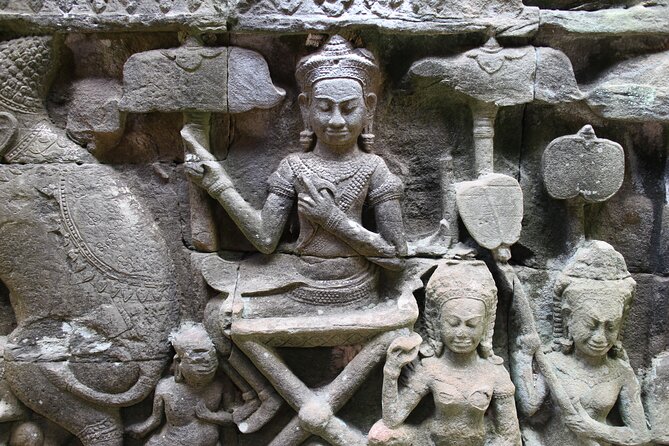
The temple dates to the 12th century and includes scenes connected with the Hindu epic Ramayana. Your guide can help explain the carvings and the design rather than leaving you to identify every figure on your own. Guides including Chen, Wich, and Sunchen have been praised for connecting temple history with the wider story of Cambodia and the region.
Plan on about an hour at Angkor Wat, though the cycling schedule allows the day to breathe around that visit. You can walk through the galleries, study the bas-reliefs, and take photographs before returning to your bike.
There is one practical clothing rule to remember. Sleeveless shirts and see-through shirts are not allowed, and pants or shorts must reach at least the knee for temple entry. Dress for heat, but choose clothing that meets the temple requirements. A hat, sunscreen, sturdy shoes, and practical cycling clothes will serve you better than delicate holiday outfits.
Bayon and Angkor Thom, stone faces and royal monuments
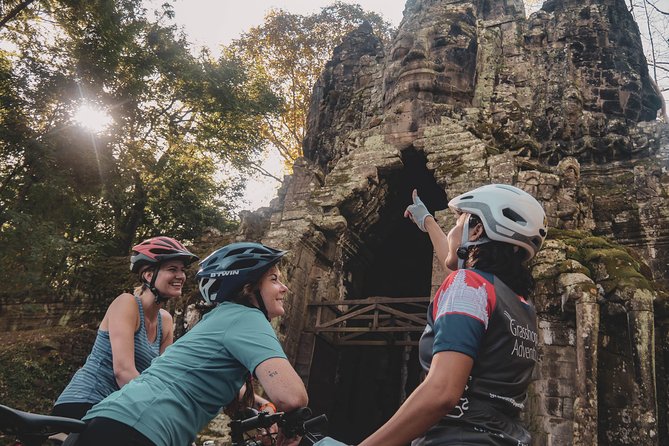
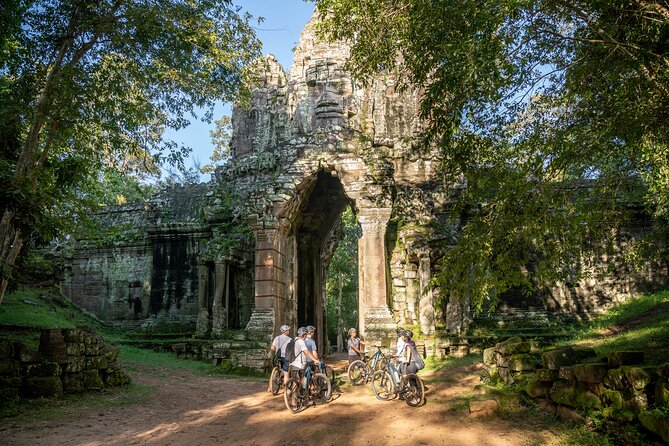
From Angkor Wat, the route continues toward Angkor Thom on the main road. The approach takes you through monumental gates lined with stone figures of divinities and demons. Cycling through these gateways is one of the memorable parts of the route because you experience their scale from ground level, not through a vehicle window.
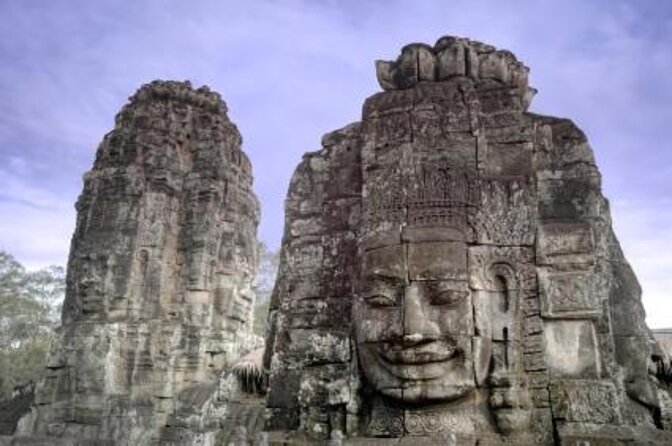
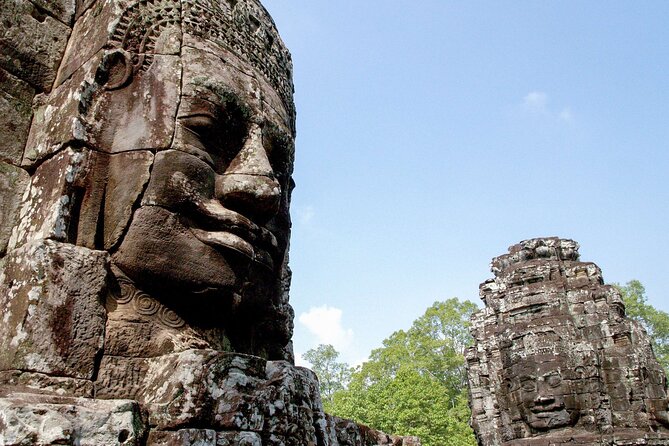
Bayon is the emotional center of the Angkor Thom visit. Its towers carry serene stone faces, often described as smiling bodhisattva faces. The temple is more compact and visually confusing than Angkor Wat, with corridors, towers, and carved surfaces arranged in a way that rewards a guide’s explanation.
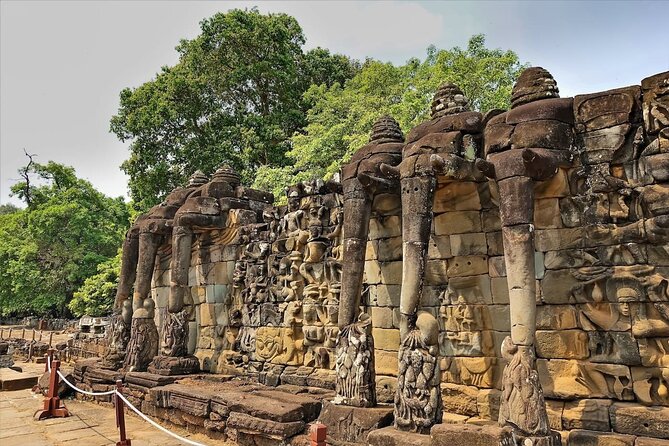
You also visit the Terrace of the Leper King, the Terrace of the Elephants, and the Royal Enclosure. These sites help fill out the picture of Angkor Thom as an ancient capital, not just a collection of separate ruins.
The schedule allows roughly an hour at Bayon, with further time around the Angkor Thom monuments and the lunch break. The guide’s role is important here. Without context, you might admire the faces and move on. With a good explanation, you begin to understand how the temples related to power, faith, ceremony, and city life.
A completely different kind of day out from Siem Reap:
- Angkor Wat Sunrise or Sunset Tour with Guide from Siem Reap
★ 5.0 · 12,109 reviews - Siem Reap: Angkor Wat: Small-Group Sunrise or Sunset Tour
★ 5.0 · 9,444 reviews - From Siem Reap: Kampong Phluk Floating Village Tour by Boat
★ 4.9 · 6,979 reviews - Sunset tour of Kampong Phluk stilts home village on the Tonle Sap
★ 5.0 · 4,865 reviews
Lunch, fruit, and a cool-down before the afternoon
The middle of the day includes a substantial break for lunch, snacks, and local food. The exact timing helps because the Cambodian heat can build quickly, especially after several hours of cycling and temple walking.
If you select the lunch option, a Khmer meal is arranged in advance. Food quality has been a major strength of the experience, with generous portions and plenty of choice described by riders. Lunch is associated with the area around the Elephant Terrace and Srah Srang, and the schedule allows about two hours for food, fruit, and cultural explanation.
Water is supplied throughout the ride, and fruit arrives at a useful point in the day. That matters more than it might sound. On a hot route, waiting until you feel thirsty or weak is a mistake. Drink regularly, use the fruit stop, and tell the guide if you need a slower pace.
The tour also includes bottled water, snacks, and fruit even if you do not select the lunch option. At the end, some departures have included fresh coconut water and a cold towel back at the shop. These small touches are especially welcome after riding through heat and dust.
If you have dietary requirements, advise the operator when booking. The supplied details also note that child seats are available by request for children weighing up to 14 kilograms.
Srah Srang and the quieter side of Angkor
Srah Srang adds a calmer stop to a day otherwise centered on major monuments. The area gives you time to eat, rest, and take in the setting rather than treating lunch as a quick roadside pause.
This is also where the tour’s mix of culture and outdoor activity works well. You are not simply counting temples. You are learning about the area while moving through it, with the guide explaining aspects of Cambodian culture and history along the way.
I would not choose this trip for a strict checklist of every major temple. The ride gives you a strong selection, but the time is shared between cycling, temple walks, meals, and rural routes. That balance is the point. If you want the broadest possible temple count, a vehicle-based itinerary may cover more ground.
Ta Prohm, where the jungle takes over
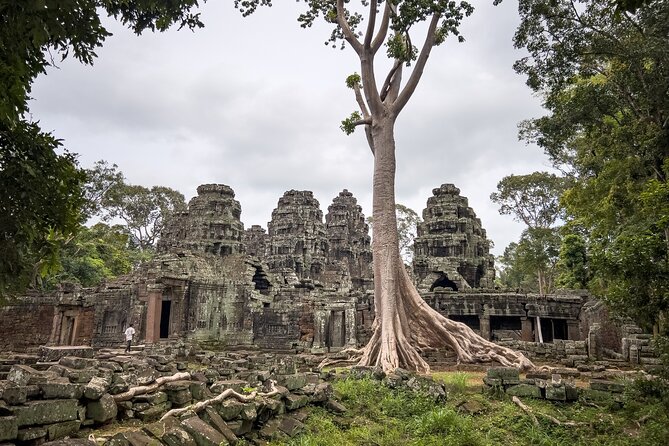
Ta Prohm is the afternoon highlight. The temple is famous for tall trees, mossy stones, and large roots spreading across the ruins. The setting feels different from Angkor Wat’s open grandeur and Bayon’s carved faces.
The approach is part of the pleasure. You pedal through forest corridors and quieter tracks before reaching the temple. That gradual arrival gives Ta Prohm a stronger sense of place than simply parking beside it and walking straight in.
Allow about an hour for the temple. Your guide shares stories, history, and symbolism while you move through the ruin. The route is not rushed, so you can stop for photographs and examine the way stone and tree have grown together.
Ta Prohm can be crowded, especially around its most recognizable root-covered sections. A guide who knows the paths and timing may help the group avoid the worst congestion, though no tour can guarantee an empty temple.
The village return and what the 30 kilometers feel like
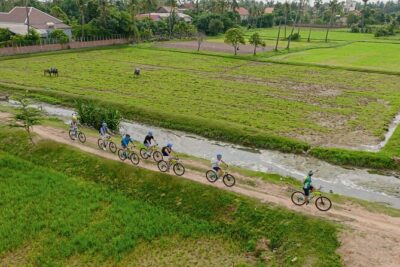
After the temple visits, the return route passes through small villages and rural areas before ending at the café. This is where cycling earns its keep. You can notice houses, farms, roads, and local movement at a pace that allows you to look around.
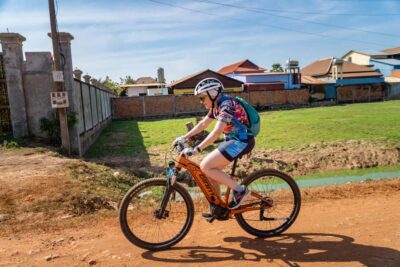
The route covers about 15 to 18 miles, or 25 to 30 kilometers. Much of it is flat, but the surface varies. Expect paved roads as well as dirt paths, sand, and uneven wooded tracks. Some sections are not ideal for a beginning cyclist.
You do not need to be an athlete, but you should be comfortable riding for much of a day. A family with children aged 11 and 13 completed the ride enjoyably, while other riders specifically warned that moderate fitness is important. The difference comes down to heat tolerance, cycling experience, and how your body handles rough ground.
Use a water bottle, apply sunscreen before departure, and wear shoes that can handle both pedals and temple walking. Consider bringing a small amount of extra clothing protection for dust and sun. Pants bought cheaply in Cambodia have reportedly torn on the trails, so choose durable, practical clothing.
Guides, group size, and the human side of the tour
The maximum group size is 10 people, and you can book a small-group or private version. That gives the guide room to answer questions and adjust the pace more easily than a large bus excursion.
The guides receive unusually strong praise for both history and care. Chen is repeatedly singled out for making the temples easier to understand and for giving the day a personal feel. Moon is praised for sharing information while keeping lunch organized. Pat is noted for steering around crowds, and Samnang Chan for combining temple storytelling with countryside cycling.
Safety is another recurring strength. Guides explain hand signals, keep an eye on riders, and may position one person at the front and another behind the group. That does not remove the need to watch traffic, but it makes the public-road portions feel more controlled.
Names and guide assignments can change, so do not book on the promise of one particular guide. The useful point is the type of service the tour aims to provide: local explanation, practical support, and a pace built around the whole group.
Is USD 35 good value?
At USD 35 per person, the tour is reasonably priced for an eight-and-a-half-hour guided activity. You receive the bike, helmet, English-speaking guide, water, snacks, and fruit. Lunch is included only when you select that option, and the Angkor Pass costs an additional USD 37.
That means your basic day can come to USD 72 before lunch, depending on the option you choose. It is still fair value if you want a fitted bike, route planning, temple guidance, food, and support on unfamiliar roads.
The price is less attractive if you already have transport, want only one or two temples, or dislike spending a full day outdoors. The value lies in combining famous monuments with rural cycling and local interpretation. You are paying for the structure and access, not only for the bicycle.
Group discounts may be available, and a private upgrade costs more. A private trip could make sense if you have specific fitness needs, family requirements, or many historical questions.
Who should book this Angkor cycling tour?
I would choose it for an active first visit, especially if you want more than the standard vehicle route. It works well for couples, families with older children, solo visitors who would enjoy company, and history-minded people who like asking questions.
You should think twice if you are not comfortable cycling 25 to 30 kilometers, have difficulty with sand or rough tracks, or are visiting during a period when heat is a serious concern. The tour is mostly flat, but flat does not mean easy when the sun is strong.
The activity is wheelchair inaccessible based on the cycling format, although the supplied information says most people can participate and service animals are allowed. Public transportation is nearby, and confirmation is provided at booking.
Free cancellation is available if you cancel at least 24 hours before the start time. Changes or cancellations inside that window are not accepted for a refund.
Should you book it?
Book this tour if you want Angkor with exercise, forest paths, village views, and a guide who can connect the ruins to Cambodian culture. The strongest parts are the well-managed bikes, regular refreshments, thoughtful route, generous lunch option, and personal attention in a group of no more than 10.
Skip it if your ideal temple day means minimal exertion and maximum air-conditioning. For everyone else, this is a rewarding way to see the major monuments while also experiencing the roads and communities around them. Bring stamina, sun protection, knee-length clothing, and a willingness to get dusty. The temples will handle the grandeur. The bicycle supplies the adventure.
FAQ
What time does the tour start?
The tour starts at 7:30 am.
Where do I meet the guide?
You meet at ផ្ទះគ្រូ Café, located at 9VH7+X7G, Krong Siem Reap, Cambodia.
Where does the tour finish?
The activity ends back at the meeting point in Siem Reap.
How far do we cycle?
The ride covers approximately 15 to 18 miles, or 25 to 30 kilometers.
Is the route suitable for beginners?
The route is mostly flat, but some dirt, sandy, and bumpy trails are unsuitable for beginning riders. Moderate fitness is recommended.
Are bicycles and helmets included?
Yes. A mountain bike and helmet are included, and the bike is fitted before departure.
Is lunch included?
Lunch is included only if you choose the lunch option. Bottled water, snacks, and fruit are included.
Does the tour include the Angkor Pass?
No. The Angkor temple entrance fee is separate and listed as USD 37 for one-day entry.
What clothing is required at the temples?
Sleeveless and see-through shirts are not allowed. Pants and shorts must reach at least the knee.
Can children use a child seat?
A child seat is available on request for a child weighing up to 14 kilograms.
More Full-Day
- Siem Reap: Full-Day Angkor Wat Guided Tour with Sunset
★ 4.9 · 3,803 reviews - Full-Day Angkor Wat Sunrise Private Tour with Guide from Siem Reap
★ 5.0 · 2,920 reviews - Siem Reap: Angkor Wat Sunrise and Full-Day Sightseeing Tour
★ 4.9 · 2,828 reviews - Full-Day Guided Sunset Tour of Angkor Wat
★ 5.0 · 1,507 reviews
Just added around Siem Reap
- Private Battambang Full-Day Guided Tour★ 4.5 · 3 reviews
- Kulen Mountain, Beng Mealea and Banteay Srei Full Day Tour★ 5.0 · 3 reviews
- Kompong Pluk Tour★ 5.0 · 3 reviews
- Private 3 Day Tour to Discover the ancient temples★ 5.0 · 3 reviews
- Cambodia: Absolute Traditional Dance Show with Buffet Dinner★ 5.0 · 3 reviews
- Kulen National Park Ticket -Waterfall & 1000 Lingas★ 5.0 · 3 reviews
- Border Transfer (Siem Reap to Laos/Laos to Siem Reap)★ 3.5 · 3 reviews
- Best Taxi Siem Reap to Battambang – English Speaking Driver★ 4.5 · 3 reviews
Cycling Tours, compared.
Siem Reap Countryside Bike Tour / E-Bike or Tuk Tuk
Read our review →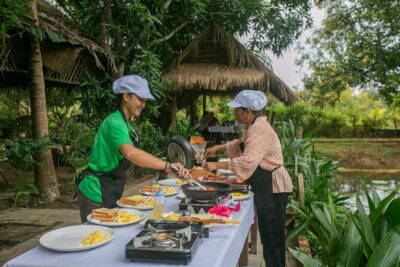
Phnom Penh Silk Island Bike Tour/ E-Bike or Tuk Tuk
Read our review →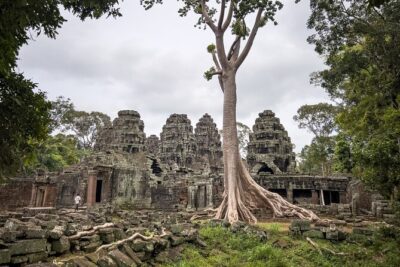
Angkor Wat Sunrise Bike Tour & Jungle Breakfast
Read our review →
Local Livelihood Half Day Bike Tour in Battambang
Read our review →
Browse the lists this tour appears in