
Reviewed · COUNTRYSIDE TOURS
East Corner of Siem Reap – Roluos Group & Countryside
Trade traffic for temple trails. This seven-hour ride takes you from Siem Reap into rice fields, village lanes, and a quiet nature reserve before reaching Hariharalaya, the early Khmer capital now known as the Roluos Group. I like the mix of exercise and archaeology, and I also like the small maximum group of 10, which should make it easier to speak with the guide and keep a comfortable pace. The main catch is practical: the $37 temple pass is not included, and you must reach the meeting point yourself.
I also like that the day is not limited to stone temples. You stop at a local market for fruit and Khmer snacks, meet villagers, receive coconut water, and eat a Khmer meal. The cycling is a real part of the experience, so this suits you best if seven hours on a mountain bike sounds appealing rather than tiring.
In This Review
- Key points at a glance
- Leaving Siem Reap by bicycle at 7:30 am
- Rice fields, village life, and a quieter side of Siem Reap
- Hariharalaya, the early Khmer capital
- Preah Ko and the sacred bulls
- Bakong, the first large mountain temple
- Lolei, the island temple
- Lunch, coconut water, and a proper midday pause
- What the $50 price really covers
- Who will enjoy this ride most?
- Practical tips before you reserve
- Should you book the Roluos countryside ride?
- FAQ
- Where does the bike tour start?
- What time does the experience begin?
- How long does the tour last?
- Is the temple admission fee included?
- Is hotel pickup and drop-off provided?
- What equipment is supplied?
- Are food and drinks included?
Key points at a glance
- Three early Khmer temples: Visit Preah Ko, Bakong, and Lolei, each with a different design and religious purpose.
- A countryside route: Ride past rice fields, local plants, wildlife, and village homes beyond central Siem Reap.
- A small group: The tour accepts no more than 10 people, useful for questions and guide attention.
- Good bike support: Premium TREK mountain bikes, helmets, and a bike mechanic are provided. Guide Seng and mechanic Nguey are named in the experience details.
- Food and drinks included: Lunch, pure drinking water, and fresh coconut water are supplied. A local market stop adds fruit and Khmer snacks.
- Plan for extra cost and effort: The temple pass costs $37 for one day, hotel transport is not included, and the start time is 7:30 am.
Leaving Siem Reap by bicycle at 7:30 am
The morning begins at Angkor Cycling Tour on Taphul Road in Siem Reap. You do not receive hotel pickup or drop-off, so you need to arrange your own way to the starting point. The activity finishes there as well, which makes the return simple once you have completed the ride.
Starting early is a smart choice for a cycling day. You get out of the city before the heat becomes a bigger concern, and the timing gives the ride enough room for village stops, food, and temple visits. The full outing lasts about seven hours, so this is not a quick spin around town.
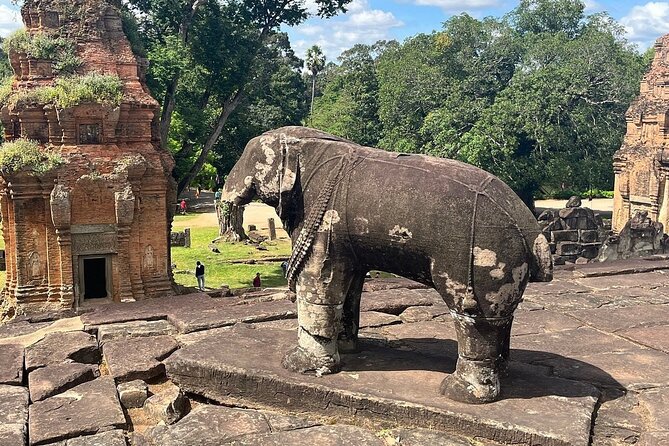
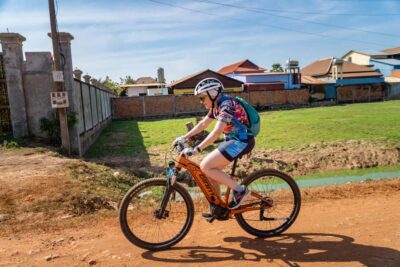
You receive a premium TREK mountain bike and helmet. The available feedback gives useful detail here: guide Seng and mechanic Nguey prepared bikes that fit well and felt new and well maintained. That matters more than it may sound. A poorly adjusted saddle can turn a pleasant ride into a long complaint, while a sound bike lets you focus on the road, fields, and temples.
You should still bring sunscreen, sunglasses, and a camera. Specific road conditions are not provided, so I would treat this as a proper countryside cycling activity rather than assume a fully paved, flat route from start to finish. If you are unsure about your cycling stamina, ask about the expected pace before setting out.
More Countryside Tours in Siem Reap
- Siem Reap Countryside Bike Tour / E-Bike or Tuk Tuk
★ 5.0 · 935 reviews - Siem Reap Countryside Quad Biking Tour
★ 5.0 · 322 reviews - Siem Reap: Guided Countryside Bike Tour
★ 4.9 · 294 reviews
Rice fields, village life, and a quieter side of Siem Reap
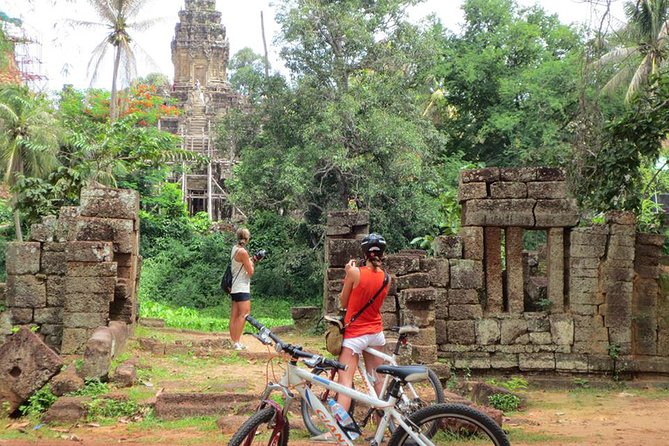
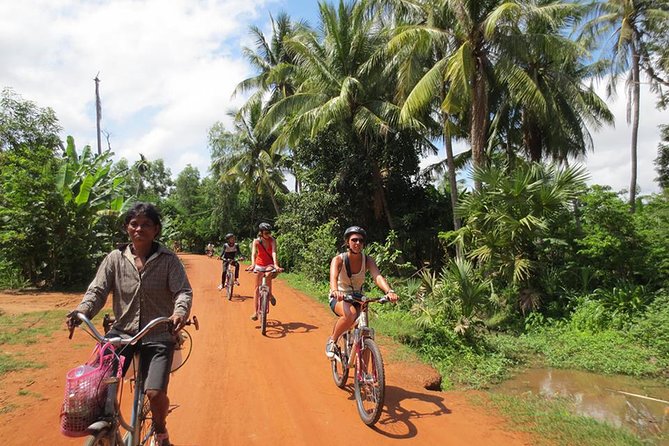
The route heads away from the city toward the Roluos area. You cycle through rural Cambodia, with rice fields, local plants, and the chance to see wildlife along the way. The value here is not only the scenery. The ride shows you how much of daily life continues outside Siem Reap’s hotel streets and temple crowds.
The tour also makes contact with local communities part of the day. You may receive a warm welcome from villagers and interact with rural children. That can be a memorable part of the ride, but it is best to approach it with respect. You are entering working communities, not visiting a staged cultural show. Observe first, follow your guide’s lead, and ask before taking close-up photographs.
A nature reserve forms part of the route toward Hariharalaya. The information does not promise a specific animal sighting, so you should not book this as a wildlife trip. Instead, think of the reserve as a calm stretch that adds plants, open space, and a change of pace before the temple stops.
The local market adds another useful layer. You can look at exotic fruit, Khmer snacks, and local delicacies, with your guide helping explain what you are seeing. This is a better way to encounter food than simply ordering familiar dishes at a hotel. If you have dietary needs, tell the operator when booking, since lunch is included and the meal is described as authentic Khmer food.
Hariharalaya, the early Khmer capital
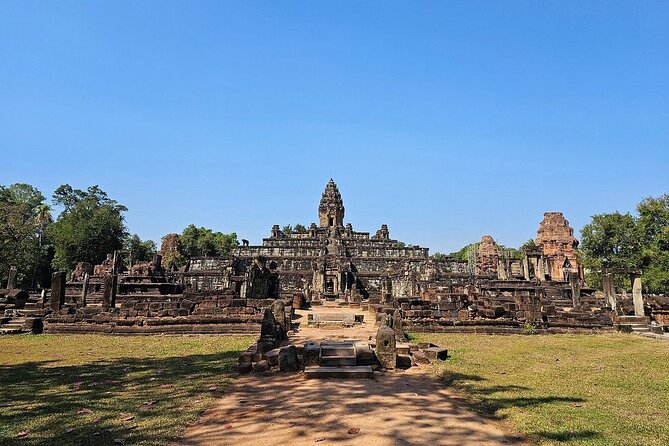
The main historical reason to take this route is Hariharalaya, an early capital of the Khmer Empire. The site is often called the Roluos Group, and it contains three important temples: Preah Ko, Bakong, and Lolei.
These temples predate the best-known central Angkor monuments. That gives the visit a useful sense of sequence. You are not only seeing famous ruins. You are looking at an earlier stage in Khmer temple design and state building, before later Angkor sites reached their greatest scale.
Your guide is especially important here. A good explanation can connect the three sites, point out differences in layout, and help you understand why this corner of Siem Reap matters. The experience includes an English-speaking guide, and guide Seng is identified by name in the tour information.
Preah Ko and the sacred bulls
Preah Ko means sacred bull in Khmer. The temple was dedicated to the Hindu god Shiva, giving the site a clear religious purpose rather than making it simply another old pile of stones.
For you, Preah Ko is a good first temple stop because its name and dedication provide an easy entry point into Khmer Hindu beliefs. Look for the temple’s bull connection and ask your guide how the site fits into the larger Roluos group.
The supplied details do not give a precise visit length or a full architectural description, so do not expect a formal lecture with a fixed sequence. The benefit is the setting and explanation: you can see an early temple in its rural context, then compare it with Bakong and Lolei later in the ride.
Since you are arriving by bicycle, you will also experience the transition from open countryside to an archaeological site in a direct way. That contrast is part of the appeal. You do not spend the entire day moving between monuments by vehicle.
A completely different kind of day out from Siem Reap:
- Angkor Wat Sunrise or Sunset Tour with Guide from Siem Reap
★ 5.0 · 12,109 reviews - Siem Reap: Angkor Wat: Small-Group Sunrise or Sunset Tour
★ 5.0 · 9,444 reviews - From Siem Reap: Kampong Phluk Floating Village Tour by Boat
★ 4.9 · 6,979 reviews - Sunset tour of Kampong Phluk stilts home village on the Tonle Sap
★ 5.0 · 4,865 reviews
Bakong, the first large mountain temple
Bakong is described as the first large mountain temple of Angkor. Of the three stops, it is likely to feel the most imposing in form because the mountain-temple idea gives the site a strong vertical focus.
This is where your guide can help you read the design. Rather than glance at the stones and move on, pay attention to the way the temple rises and how its form expresses a sacred mountain. The experience does not provide a detailed list of stairs, walking distances, or access conditions, so ask on the day if you need specific guidance before climbing or exploring.
Bakong also makes a useful comparison with Preah Ko. Preah Ko gives you the Shiva connection and sacred bull reference, while Bakong lets you consider the larger architectural idea. Seeing both on the same morning gives the Roluos Group more meaning than visiting a single isolated ruin.
Bring water even though pure drinking water is included. The cycling, temple walking, and warm conditions can add up. Coconut water is also provided, a welcome refreshment during a day built around physical activity.
Lolei, the island temple
Lolei is described as an island temple built by King Yasovarman I. That setting gives the final temple a different character from the first two stops.
The island detail is worth asking about, since it helps explain how water and temple design worked together. Your guide can also place King Yasovarman I within the development of the Khmer capital system. The supplied information does not promise that the original island form remains unchanged, so focus on the historical idea rather than expecting a preserved water setting exactly as it was centuries ago.
Lolei completes the trio well. Preah Ko is linked to Shiva and the sacred bull, Bakong is the large mountain temple, and Lolei brings in the island-temple setting and the rule of Yasovarman I. Together, they offer a compact introduction to early Khmer religious architecture.
You will have opportunities for photographs at the key historical sites, with help from the guide. That is useful when you are cycling with a small group and want a picture that includes the temple without rushing through your visit.
Lunch, coconut water, and a proper midday pause
Lunch is included, along with coconut water and pure drinking water. That makes the $50 price easier to assess, especially since the day combines equipment, a guide, food, and access to three historic sites.
The meal is described as authentic Khmer food. Specific dishes are not listed, so you should not book expecting a particular menu. If you have dietary requirements, give that information when you reserve. It is much easier for the operator to prepare in advance than to solve the problem at lunchtime.
The local market stop adds to the food side of the experience. You can see fruit, snacks, and delicacies in the setting where local people buy and eat them. Some food may be unfamiliar, and your guide can help you decide what to try. This is one area where the tour offers more than a standard temple transfer.
What the $50 price really covers
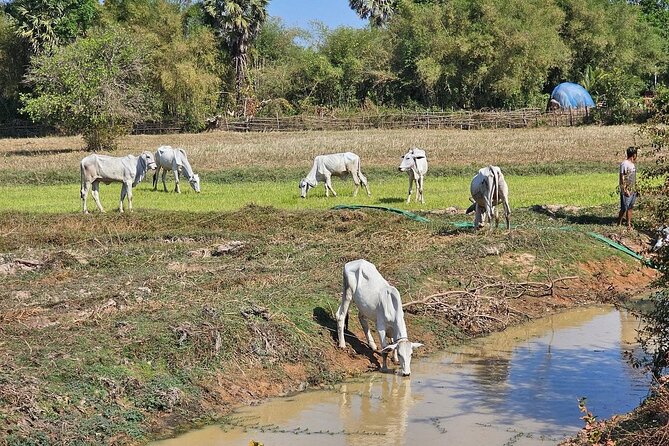
The listed cost is $50 per person. Included are the English-speaking guide, TREK mountain bike, helmet, lunch, coconut water, and drinking water. For a seven-hour outing with a small group limit, that is a fair package if you value active transport and local contact.
The major extra is the temple pass, priced at $37 for one day. Add that before comparing the tour with other ways of seeing the Roluos temples. The combined cost is $87 per person before you account for getting to the meeting point.
Hotel pickup and drop-off are also excluded. That is not a serious problem if you are staying near Taphul Road or can reach the start easily, but it does add planning. The mobile ticket is convenient, and booking confirmation is provided at the time of reservation.
You are paying for a guided route and bicycle support, not just admission to ruins. If you only want to see the temples, a separate visit may offer more flexibility. If you want to connect the monuments with rice fields, village roads, food, and exercise, the price makes better sense.
Who will enjoy this ride most?
I would recommend this for active visitors who want more than a temple checklist. You should be comfortable cycling for much of the day and walking around ancient sites. The route also suits people who like small groups, local food, and direct contact with rural life.
It is a good choice if you have already seen central Siem Reap and want a change of pace. The countryside route gives you a different view of the area, while the Roluos temples provide solid historical content without requiring a full day at the largest Angkor sites.
This may be less suitable if you dislike heat, prefer air-conditioned transport, or want a slow temple visit with no physical effort. It is also not the easiest pick for anyone who needs hotel transport, since you must arrange your own arrival and return.
The group maximum of 10 is a real advantage. You have a better chance to ask questions, stay connected to the guide, and receive help with your bike. The positive feedback about Seng and Nguey, especially the careful bike fitting and maintenance, gives the equipment side of the day extra confidence.
Practical tips before you reserve
Wear light clothing that allows movement, and use sunscreen before you arrive. Sunglasses will help with glare on open roads, and a camera is worth carrying for the countryside and temple stops.
Ask about your bike fit at the start. Tell the mechanic if the saddle, handlebars, or frame do not feel right. The tour already emphasizes bike preparation, so it makes sense to use that support before leaving.
Bring a little patience for the social side of the route. Village interactions are part of the experience, but they should not be treated like a performance arranged for your camera. Your guide can help you understand what is appropriate.
Check the temple pass cost when planning your total budget. You need a one-day pass at $37, and it is not included in the tour price. Also confirm how you will reach Taphul Road for the 7:30 am start.
Free cancellation is available if you cancel at least 24 hours before the local start time. Changes or cancellations made inside that window are not accepted for a refund, so check your plans before the cutoff.
Should you book the Roluos countryside ride?
Book it if you want to combine cycling, early Khmer temples, and rural Cambodia in one organized day. The route gives you more than a ride between monuments, with a market, Khmer meal, village contact, and nature reserve included in the flow.
I would be cautious only if you are counting on hotel transport, want to avoid extra admission fees, or do not enjoy sustained exercise. For everyone else, the well-supported bikes, small group size, named guide and mechanic, and clear mix of countryside and archaeology make this a strong choice for seeing the east side of Siem Reap at a human pace.
FAQ
Where does the bike tour start?
It starts at Angkor Cycling Tour on Taphul Road, Krong Siem Reap 17252, Cambodia.
What time does the experience begin?
The start time is 7:30 am.
How long does the tour last?
The tour lasts approximately seven hours and finishes back at the meeting point.
Is the temple admission fee included?
No. The one-day temple pass costs $37 and is not included in the tour price.
Is hotel pickup and drop-off provided?
No. Hotel pickup and drop-off are not included, so you need to reach the meeting point yourself and return from there after the tour.
What equipment is supplied?
A premium TREK mountain bike and helmet are included. The tour also provides an English-speaking guide, and bike mechanic support is identified in the experience details.
Are food and drinks included?
Yes. Lunch, refreshing coconut water, and pure drinking water are included. You should advise the operator about dietary requirements when booking.
Just added around Siem Reap
- Private Battambang Full-Day Guided Tour★ 4.5 · 3 reviews
- Kulen Mountain, Beng Mealea and Banteay Srei Full Day Tour★ 5.0 · 3 reviews
- Kompong Pluk Tour★ 5.0 · 3 reviews
- Private 3 Day Tour to Discover the ancient temples★ 5.0 · 3 reviews
- Kulen National Park Ticket -Waterfall & 1000 Lingas★ 5.0 · 3 reviews
- Cambodia: Absolute Traditional Dance Show with Buffet Dinner★ 5.0 · 3 reviews
- Border Transfer (Siem Reap to Laos/Laos to Siem Reap)★ 3.5 · 3 reviews
- Beng Melea, Rolous Group & Kompong Phluk Floating Village★ 5.0 · 3 reviews
Countryside Tours, compared.
Siem Reap Countryside Bike Tour / E-Bike or Tuk Tuk
Read our review →
Afternoon tour by tuk tuk to bamboo train,bat cave,killing cave,countryside.
Read our review →
Full-day Countryside Tour with Pepper Farm and Kep
Read our review →
Siem Reap Countryside Vespa Tour / Tuk Tuk Available
Read our review →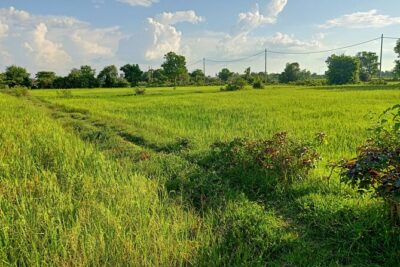
Full Day tour .City tour.Countryside.Bamboo Train.Secret Bat Cave
Read our review →Browse the lists this tour appears in