
Reviewed · BENG MEALEA TOURS
From Siem Reap: Koh Ker and Beng Mealea Temples Tour
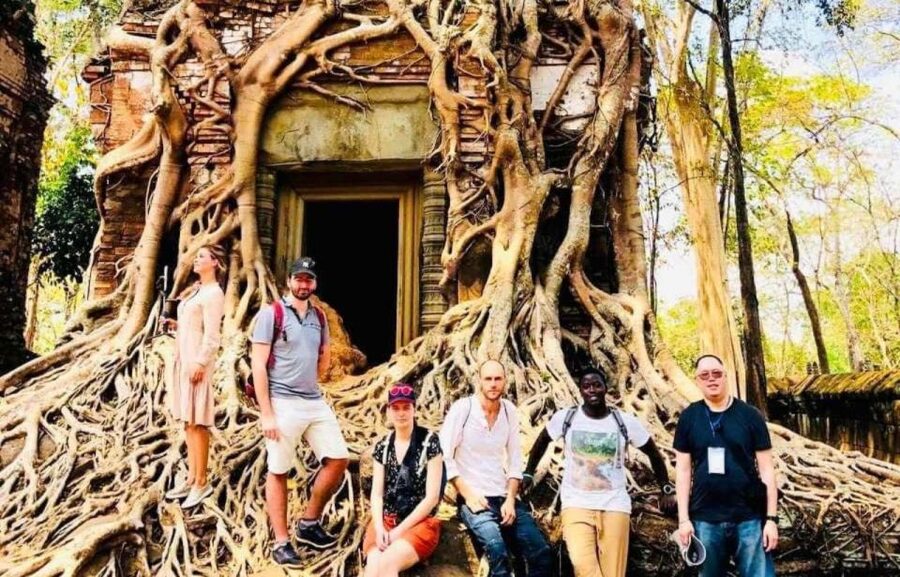
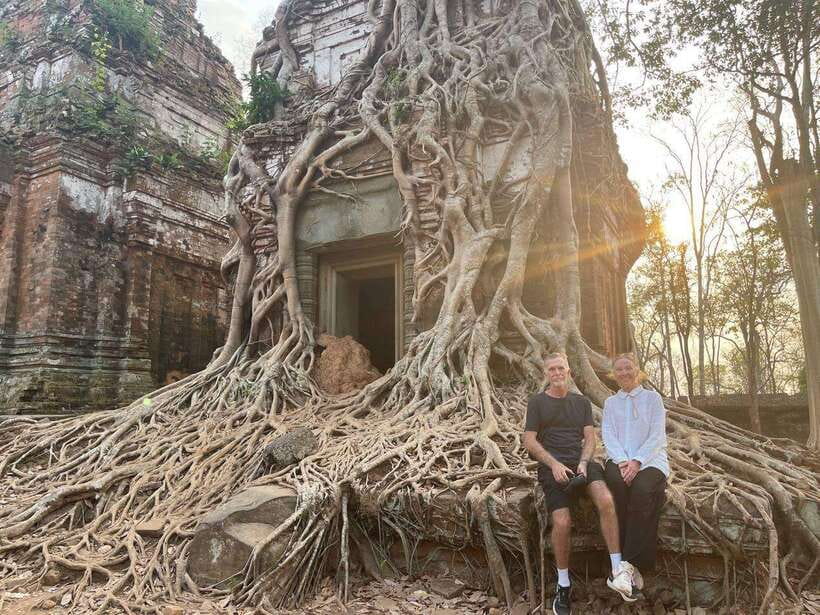
The quiet temples are the reward. This eight-hour trip from Siem Reap takes you beyond the main Angkor circuit to Beng Mealea and the former royal center of Koh Ker, where jungle, broken towers, and empty courtyards create a very different mood. I especially like the small groups of up to 10 and the chance to see Prasat Pram, where a large tree grows through the ruins.
I also like the guides’ strong personal touch. Guides such as Pheap, Kim, Tola, Nara, Lok, and Chenda are praised for explaining Khmer religion and architecture in clear English, answering wider questions about Cambodian life, and taking excellent photos. The main drawback is the long road time, plus extra costs for the temple tickets and lunch.
In This Review
- Key points at a glance
- Why these two temples make a smart second day
- The early pickup and road into rural Cambodia
- Beng Mealea: sandstone, jungle, and fallen courtyards
- The road to Koh Ker and a lunch break
- Koh Ker and the seven-tiered pyramid
- What the guide adds to the day
- Price, tickets, and what the $50 covers
- Who should book this tour?
- Should you book the Koh Ker and Beng Mealea tour?
- FAQ
- How long does the Koh Ker and Beng Mealea tour last?
- Is hotel pickup included?
- What entrance fees are extra?
- Is lunch included?
- How large is the group?
- Is the tour suitable for wheelchair users?
Key points at a glance
- Prasat Thom gives you Koh Ker’s big moment: Climb the pyramid’s staircase for broad views over the forest and countryside.
- Beng Mealea feels wonderfully untidy: Sandstone towers, courtyards, and fallen blocks sit among thick vegetation.
- The journey is part of the tour: You pass villages, fields, and rural Cambodia far from Siem Reap’s temple crowds.
- Guide quality is a major strength: The best guides explain architecture, Hindu and Buddhist beliefs, local customs, and modern Cambodia.
- Small groups make the long day easier: Some departures have had only four people, or even one person.
- Budget for extras: Beng Mealea requires an Angkor ticket, Koh Ker costs $15, and lunch is paid separately.
Why these two temples make a smart second day
If you have already seen Angkor Wat, Bayon, and Ta Prohm, Koh Ker and Beng Mealea give you a useful change of scale and mood. The main Angkor temples can feel grand and crowded. Here, you get more silence, more forest, and a clearer sense of how widely the Khmer Empire spread.
Beng Mealea was built from sandstone in the 12th century as a Hindu temple. It stood along an ancient royal road leading toward Preah Khan Kompong Svay. That location matters because the temple was not an isolated shrine. It formed part of a wider network of roads, religious sites, and royal projects.
Koh Ker was once a royal center, then was abandoned to the forest. The remains include several sacred sites, including Prasat Thom, Prasat Pram, and Prasat Chrap, along with linga shrines reclaimed by nature. You are not simply seeing one famous monument. You are moving through the remains of a former center of power.
The tour earns a 4.9 rating from 293 reviews, and the praise is remarkably consistent: quiet temple sites, good organization, safe driving, and guides who bring the stones to life. That does not remove the physical effort or the long drive, but it suggests the tour delivers what it promises.
More Koh Ker trips:
- Koh Ker Temple Group & Beng Mealea Full-Day Join-in Tour
★ 5.0 · 710 reviews - Preah Vihear: Full-Day Preah Vihear and Koh Ker Temple Tour
★ 4.9 · 263 reviews - Full-Day Preah Vihear, Koh Ker and Beng Mealea Private Tour
★ 4.4 · 101 reviews
The early pickup and road into rural Cambodia
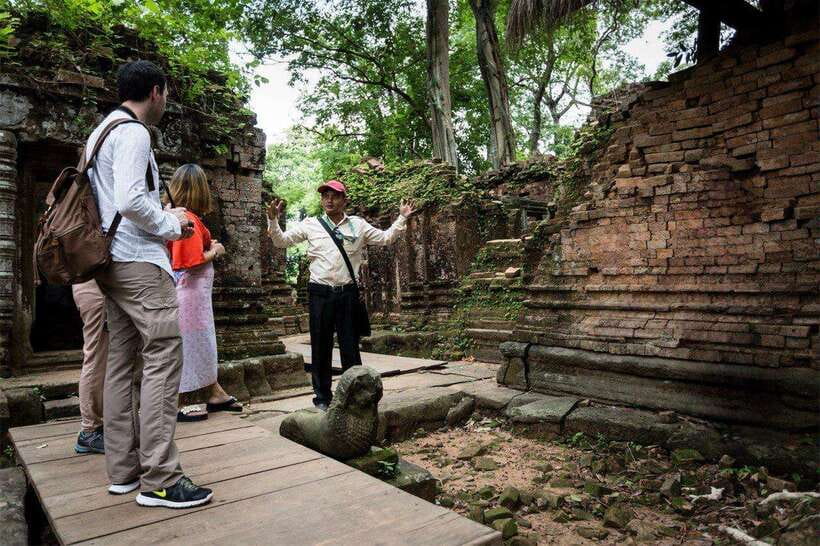
Pickup is included from hotels and accommodations in Siem Reap City. You need to be in your hotel lobby at least 40 minutes before departure, and the guide will call out your name when arriving. That is a little old-fashioned, but it is simple enough if you are awake and waiting in the right place.
The first part includes a short vehicle ride of about 20 minutes, followed by a 20-minute stop at a local café. The schedule describes this as a hop-on hop-off stop, so you should treat it as a brief comfort and refreshment break rather than a major sightseeing visit.
Then comes a longer drive of about 70 minutes toward Beng Mealea. The journey is not dead time. You see Cambodian countryside, villages, farms, and roadside life, and the guides often use the drive to explain agriculture, customs, and everyday life. Several guides have been praised for talking about Cambodia beyond the temples, which gives the day more depth.
Transportation is one of the strongest practical features. The tour uses a clean, air-conditioned vehicle, with bottled water and cold towels provided. Names vary by departure, but drivers such as Satya, Sim, Sarai, Long, Bunthorn, and Tanger have been praised for safe, comfortable driving.
The trade-off is clear: these temples are far from Siem Reap. You spend a substantial part of the day in the vehicle. I would not choose this trip if you dislike long road journeys or want a packed schedule of many small monuments.
Beng Mealea: sandstone, jungle, and fallen courtyards
Beng Mealea receives about two hours, which is enough time to explore without turning the visit into a race. The temple is partly reclaimed by nature, with towers and courtyards appearing through thick brush and piles of fallen sandstone.
The appeal is not perfect restoration. Beng Mealea feels fragmented and atmospheric. Blocks lie where they fell, vegetation pushes into the old structure, and the remaining walls suggest the original design without giving you every answer. You get a stronger sense of age because the ruins have not been polished into a tidy museum piece.
Your guide helps you read what you are seeing. Look for the surviving lines of the courtyards, the arrangement of towers, and the way the sandstone was used to create a large religious complex. The tour focuses on the temple’s Hindu background, Khmer beliefs, architecture, and the wider role of the ancient road.
The site can be especially appealing in the wet season, when the vegetation may look fuller. At the same time, Cambodia’s weather is unpredictable, and the tour runs in all conditions. Bring sunscreen, insect repellent, and shoes with a good grip. Uneven surfaces are part of the attraction, but they also demand care.
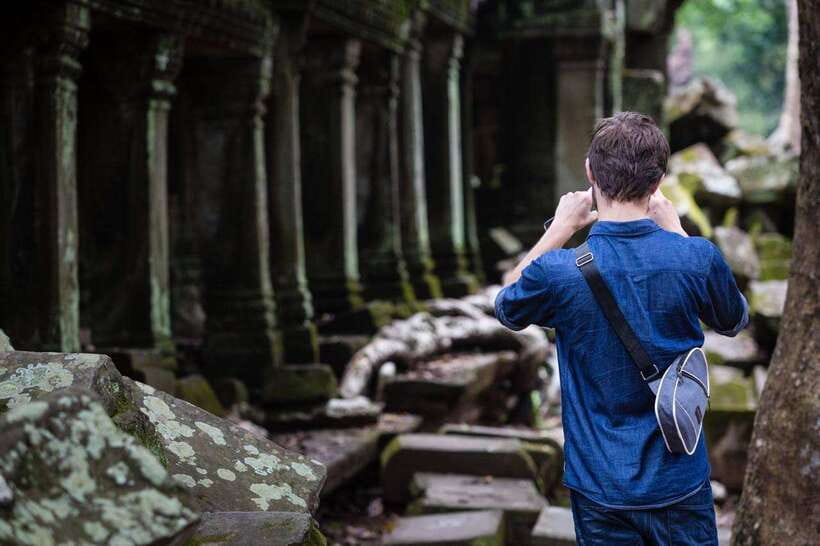
Beng Mealea is a good place for photographs, especially if you enjoy textures, trees, broken stone, and partial views rather than only formal temple fronts. Guides often help with photos. Pheap, Chenda, Ry, and Lok have been singled out for finding good angles and taking pictures for their groups.
The road to Koh Ker and a lunch break
After Beng Mealea, you continue for about 80 minutes toward Koh Ker. This is where the tour’s value becomes most obvious. Koh Ker is not an easy local stop from Siem Reap, and arranging transport, navigation, and site visits yourself takes more effort.
Lunch is scheduled at a local restaurant for about an hour. Curries, soups, and stir-fries are available at your own expense. The meal is not included, so carry cash and ask your guide about the choices and prices before ordering.
The lunch stop is practical rather than central to the tour. One useful warning is that the restaurant may not suit every taste. If you are particular about food, packing a takeaway meal from Siem Reap is a sensible option, as long as you do not bring large luggage or bags onto the tour.
This pause also gives you time to escape the vehicle, cool down, and prepare for more walking. In Cambodia’s heat, that matters. The cold towels supplied after major temple visits are a small but welcome comfort.
More Beng Mealea trips:
- Siem Reap: Kulen Mountain, Beng Mealea and Tonle Sap Tour
★ 5.0 · 1,483 reviews - Kulen Mountain with Beng Mealea and Tonle Sap Small Group Tour
★ 5.0 · 780 reviews - Banteay Srei, Kulen Waterfall & Beng Mealea Exploration
★ 5.0 · 185 reviews - Siem Reap: Kulen Waterfall, Banteay Srei, and Beng Mealea Tour
★ 5.0 · 148 reviews
Koh Ker and the seven-tiered pyramid
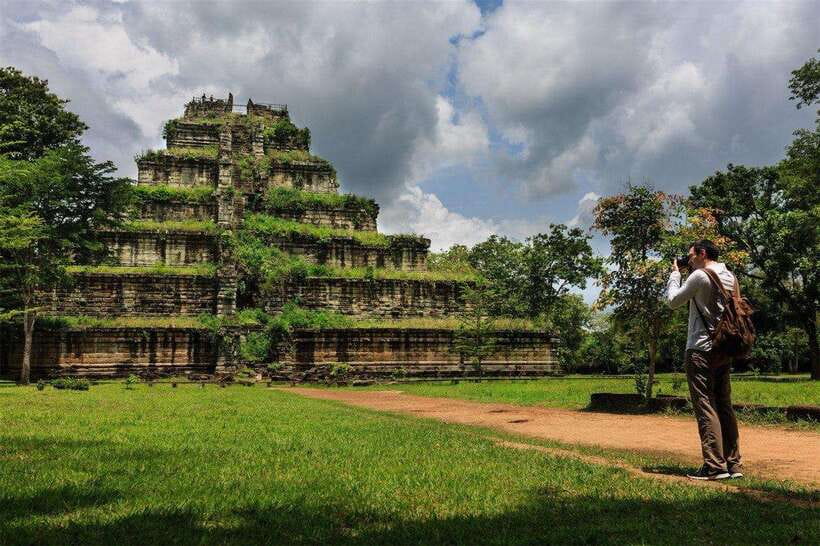
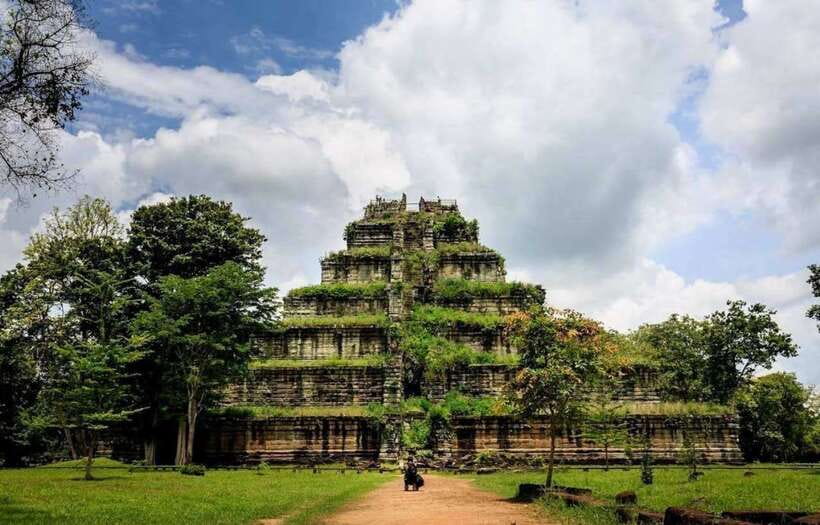
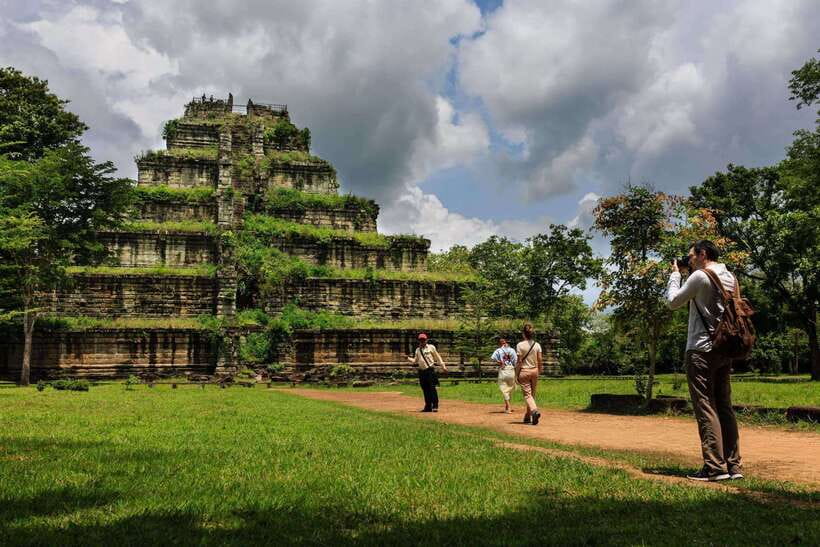
Koh Ker is the day’s grand visual payoff. The site includes several ruins, but Prasat Thom, the seven-tiered pyramid, is the monument most likely to stay with you.
A staircase allows you to climb to the top, where you can look over the surrounding forest and countryside. The view gives you a better understanding of Koh Ker’s setting than ground-level ruins alone. It also makes the pyramid feel like a powerful statement, not just a pile of old stone.
Take care on the steps. The tour involves a moderate amount of walking over uneven ground, and the activity is not suitable for people with mobility impairments or wheelchair users. Comfortable casual clothing is fine, but shoulders must be covered and trousers or shorts should reach at least the knee because these are ancient religious sites.
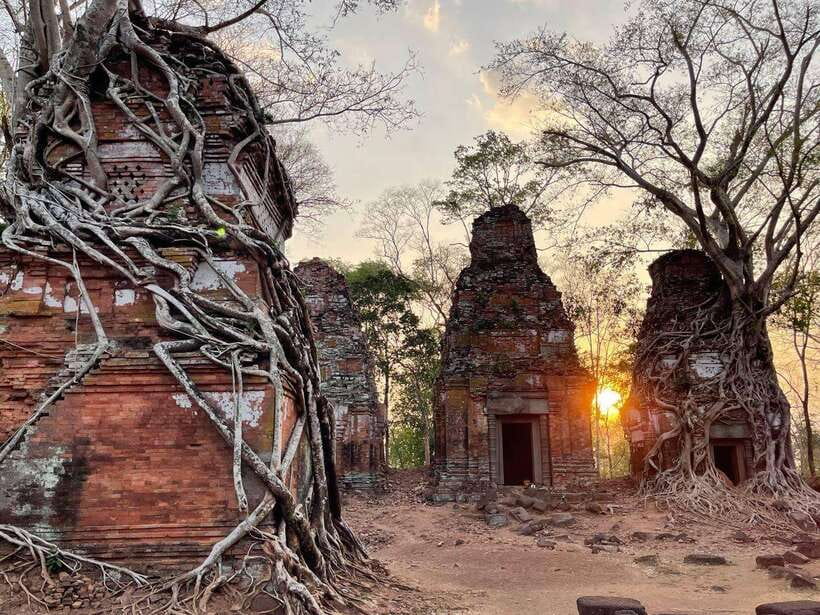
The other Koh Ker temples make the visit more than a single photo stop. Prasat Pram is known for its trees growing through the structure, an image that captures the tension between human construction and the forest. Prasat Chrap and the area’s linga shrines add smaller, quieter points of interest.
Guides explain the religious purpose of the sites and the beliefs connected to them. Chenda, who has archaeological experience and can draw maps of the ruins, has been praised for showing how different parts of the site connect. That sort of explanation can turn a scattered group of stones into a place with a plan and purpose.
You should expect a quieter visit than at the best-known Angkor monuments. Some departures have been small enough to feel almost private, while others have included only four people. If you are alone on the booking, the tour may still operate, with a private vehicle and guide.
What the guide adds to the day
The quality of the guide matters greatly here. These are remote sites, and a casual walk through broken walls will not tell you much. A good guide gives you the story, points out details you might miss, and explains how Hindu and Buddhist ideas shaped the temples.
The strongest guide reports mention clear English, humor, patience, and a willingness to discuss both ancient and modern Cambodia. Tola, Kim, Nara, Pip, Ra, Sophea, and Lok are among the guides praised for making the day friendly and easy to follow.
You can also expect practical help. Guides often take photographs, suggest poses, and find better angles. That is useful for solo visitors and couples who would otherwise have to rely on strangers. Chenda has even edited videos for some participants, although you should not assume every departure includes that service.
A small group gives you more room to ask questions and more flexibility with photographs. Still, stay aware of where the group is. One account describes a participant getting separated while taking pictures. At a spread-out ruin, it is wise to tell the guide when you need extra time and agree on where to meet.
Price, tickets, and what the $50 covers
The advertised price is $50 per person for eight hours. That is a fair price for the distance, air-conditioned transport, hotel pickup and drop-off, an English-speaking guide, bottled water, cold towels, and local taxes.
The price is not all-inclusive. Beng Mealea requires an Angkor ticket, and Koh Ker has a separate $15 entrance fee. Lunch is also extra. These charges can change your final budget, so check your ticket situation before departure and carry cash.
The value is strongest if you are traveling alone, do not want to arrange a private car, or prefer having a guide interpret the sites. A shared tour that runs with only one or four participants can offer very good value. Private transportation without a guide is also possible in some arrangements, but the guide is not included unless booked as an add-on.
You can cancel up to 24 hours before departure for a full refund, and the reserve-now, pay-later option keeps your plans flexible. Those policies are useful when your Siem Reap schedule depends on weather or other temple visits.
Who should book this tour?
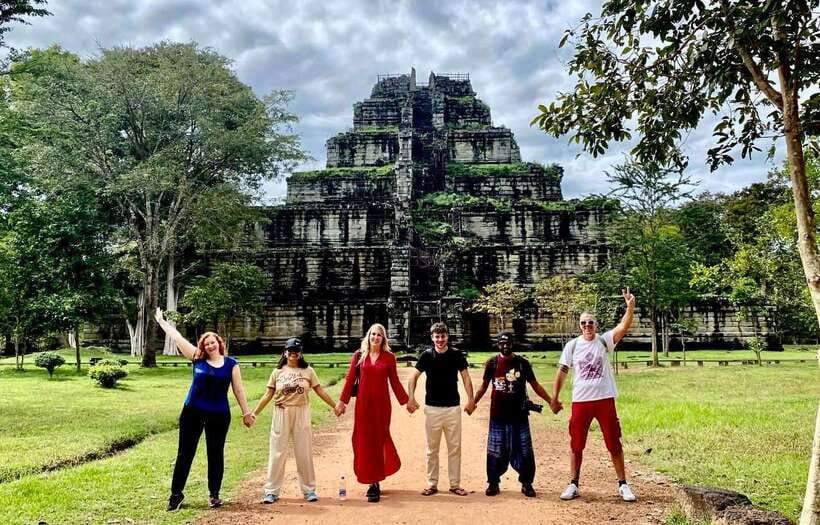
I would recommend it to anyone who has extra time after the central Angkor circuit and wants quieter ruins with a strong sense of place. It suits history fans, photographers, solo visitors, couples, and people who value a guide’s explanations more than a quick tick-box visit.
It is also a good choice if you are uneasy about arranging a long trip to Koh Ker yourself. Pickup, navigation, driving, and site interpretation are handled for you.
I would hesitate if you have limited time in Siem Reap and have not yet visited the main Angkor temples. I would also think twice if you have difficulty walking, dislike uneven ground, or want a leisurely day with very little time in a vehicle. Children under 12 are not accepted.
Wear light, respectful clothing with covered shoulders and knees. Bring a camera, sunscreen, insect repellent, hiking shoes, and cash. Leave pets, smoking materials, luggage, and large bags behind.
Should you book the Koh Ker and Beng Mealea tour?
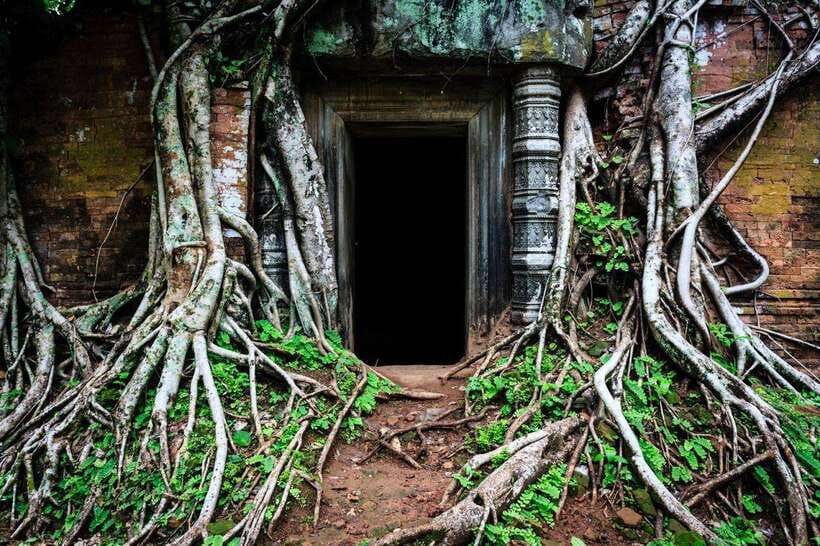
Book it if you want Cambodia beyond the famous postcard temples. Beng Mealea gives you jungle-covered sandstone and quiet courtyards. Koh Ker adds the striking seven-tiered pyramid, smaller shrines, and wide countryside views.
The long drive and extra entrance fees are the main costs. In return, you get a well-organized day, a small group, safe transport, and guides who are repeatedly praised for their history, cultural insight, humor, and photography help. For a second or third temple day from Siem Reap, this is one of the better ways to trade crowds for space and a little adventure.
FAQ
How long does the Koh Ker and Beng Mealea tour last?
The tour lasts about eight hours, including transport from Siem Reap, temple visits, a café stop, and lunch.
Is hotel pickup included?
Yes. Pickup and drop-off are included from hotels or accommodations in Siem Reap City. You should wait in your hotel lobby at least 40 minutes before departure.
What entrance fees are extra?
Beng Mealea requires an Angkor ticket, and Koh Ker has a separate entrance fee of $15. Neither is included in the tour price.
Is lunch included?
No. Lunch is taken at a local restaurant and must be paid for separately. Traditional curries, soups, and stir-fries are available.
How large is the group?
The tour is described as a small-group experience with a maximum of 10 participants. Some departures may have only a few people, or even one participant.
Is the tour suitable for wheelchair users?
No. A moderate amount of walking over uneven surfaces is involved, and the tour is not recommended for people with mobility impairments or wheelchair users.
Just added around Siem Reap
- Private Battambang Full-Day Guided Tour★ 4.5 · 3 reviews
- Kulen Mountain, Beng Mealea and Banteay Srei Full Day Tour★ 5.0 · 3 reviews
- Kompong Pluk Tour★ 5.0 · 3 reviews
- Private 3 Day Tour to Discover the ancient temples★ 5.0 · 3 reviews
- Kulen National Park Ticket -Waterfall & 1000 Lingas★ 5.0 · 3 reviews
- Cambodia: Absolute Traditional Dance Show with Buffet Dinner★ 5.0 · 3 reviews
- Border Transfer (Siem Reap to Laos/Laos to Siem Reap)★ 3.5 · 3 reviews
- Best Taxi Siem Reap to Battambang – English Speaking Driver★ 4.5 · 3 reviews
Beng Mealea Tours, compared.
Kulen Mountain, Beng Mealea and Tonle Sap Tour
Read our review →
Kulen Mountain with Beng Mealea and Tonle Sap Small Group Tour
Read our review →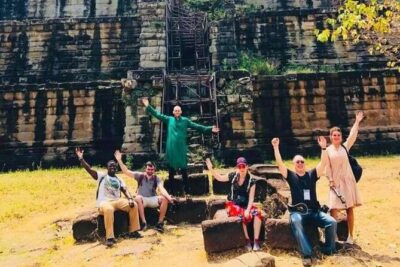
Koh Ker Temple Group & Beng Mealea Full-Day Join-in Tour
Read our review →
Banteay Srei, Kulen Waterfall & Beng Mealea Exploration
Read our review →
Kulen Waterfall, Banteay Srei, and Beng Mealea Tour
Read our review →
Banteay Srei, Beng Mealea and Kulen Mountain with Picnic
Read our review →Kulen Mountain, Beng Mealea, and Tonle Sap Tour
Read our review →
Private Beng Mealea and Floating Village Tour with Sunset
Read our review →Browse the lists this tour appears in