
Reviewed · HISTORICAL TOURS
Guided Phnom Penh Heritage Tour
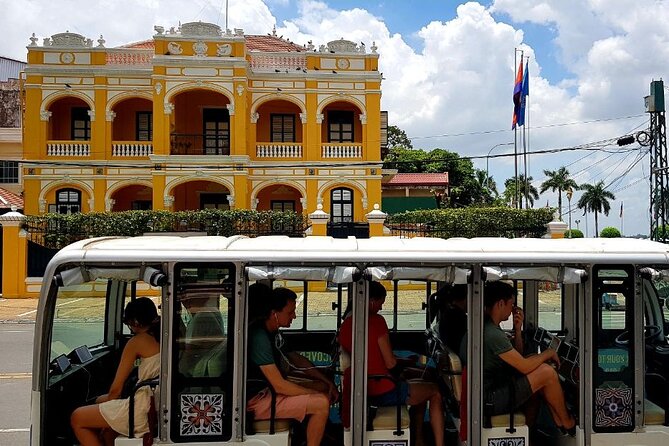
Phnom Penh’s past is hiding in plain sight. This compact heritage tour links 22 historic sites across the city, using tablet videos, old photographs, and short films to show how a fishing village became Cambodia’s capital. I like the clever use of visual history, and I like that the route includes overlooked buildings such as the former police station, Chinese house, and old Indochina Bank. The main drawback is that most stops are viewed from the vehicle, so this is an introduction rather than a full walking tour.
The experience costs $24.36 per person and lasts about two and a half hours. Guide Oliver is praised for his friendly help and French and English commentary, while the tablet offers 10 languages. On a hot day, the vehicle-based route is a real advantage, but you should not expect long visits inside the Royal Palace, National Museum, or Wat Phnom.
In This Review
- Key points to know before booking
- Why this short Phnom Penh tour works
- Starting at the Post Office on Streets 102 and 13
- Hotels, police, and the former governor’s house
- Chinese homes, a Hokkien temple, and the old Naga Bridge
- Wat Phnom and the former country club
- The National Library and Raffles Hotel Le Royal
- The No Problem Villa and the Royal University of Fine Arts
- The National Museum, FCC, and UNESCO house
- The Royal Palace and Street 240 finish
- What the tablet guide adds
- Is $24.36 good value?
- Who should book this Phnom Penh experience?
- Should you book the Phnom Penh Heritage Tour?
- FAQ
- How long does the Phnom Penh Heritage Tour last?
- How many sites does the tour cover?
- What languages are available on the tablet?
- Is admission to the Royal Palace included?
- Are the National Museum and Wat Phnom included?
- Where does the tour start and finish?
Key points to know before booking
- 22 sites in one short route: See the Post Office, Central Market, Royal Palace, National Museum, Raffles Hotel Le Royal, and lesser-known colonial buildings in one outing.
- Old photographs bring the city back: The audiovisual guide shows how places looked in earlier periods, making today’s streets easier to understand.
- Oliver adds a human touch: The guide welcomes you, answers questions, and helps identify the meeting point in a busy part of town.
- A small group keeps it manageable: The maximum is 10 people, useful when boarding, viewing the tablet, and asking questions.
- Several interiors are not included: Entrance to Wat Phnom, the National Museum, and Royal Palace is extra, while access to some other buildings depends on whether they are open.
- Best taken early in your stay: Use the tour to choose which places deserve a second, longer visit.
Why this short Phnom Penh tour works
Phnom Penh can feel difficult to read at first. Streets, monuments, French-era buildings, modern hotels, markets, government offices, and royal sites sit close together, but their connections are not always clear. This tour gives you a framework before you set off on your own.
You receive a tablet and headphones with an audiovisual guide. The program uses films, vintage images, and historical anecdotes to explain each location. That matters because many buildings have changed purpose, been altered, or are closed to the public. A photograph of an earlier facade can reveal what you would otherwise miss from the street.
The route covers 19 stops and 22 major sites, with 24 audiovisual sections. Some presentations last only a few minutes, while the Royal University of Fine Arts receives about 25 minutes and the opening Phnom Penh introduction takes about nine minutes. The format keeps the pace moving, though it also means you need to listen while looking around rather than linger at every location.
I see this as a city orientation with real historical value. You get the broad story of French protectorate-era planning, Art Deco fashion, Chinese and French commercial life, royal institutions, elite residences, and the damage caused by the Khmer Rouge period. You do not get a detailed museum visit at each site.
More historical sites:
- Oudong Mountain History and Pagoda Tour
★ 5.0 · 39 reviews - Phnom Penh Historical Tour
★ 5.0 · 13 reviews - Udong Historical Site Tour
★ 5.0 · 8 reviews
Starting at the Post Office on Streets 102 and 13
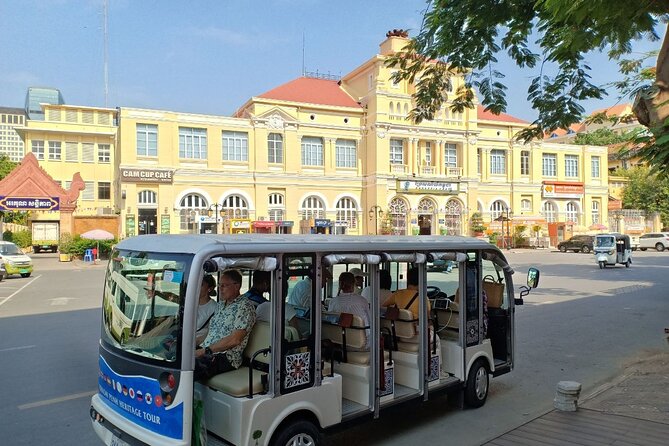
The meeting point is Phnom Penh Heritage Tour at the corner of Street 102 and Street 13, near the Cambodia Post Office. This is a practical starting place because the first part of the route focuses on the old commercial and administrative heart of the city.
Guide Oliver welcomes you and provides initial stories and anecdotes. A useful detail from the experience is that he helps identify participants in the busy square and leads them to the vehicle. That small bit of assistance can save time in a crowded central area.
The first three audiovisual sections explain Phnom Penh’s rise from a fishing village to a capital, then turn to the Post Office and the former Bank of Indochina. The old bank is especially useful for understanding the French colonial system and the money that flowed through the city.
You may be able to enter the old bank if it is open, but access is not guaranteed. Treat the exterior and video presentation as the dependable part of this stop.
Hotels, police, and the former governor’s house
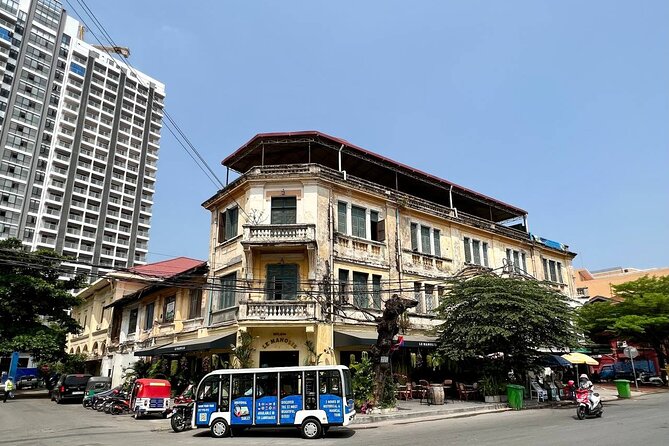
The route continues to Le Manolis, described as Phnom Penh’s first hotel, followed by the former municipal police station. These locations show a city developing practical institutions for business, administration, and public order.
The next stop is the Council for the Development of Cambodia, formerly the governor’s house. The audiovisual guide explains the building’s earlier role and gives you a sense of how authority was organized under French administration.
This section is one of the tour’s strongest features because it moves beyond the standard list of royal buildings and major museums. You see places that can look ordinary from the street but once had important roles in the city’s daily life.
The presentations are short, generally around five minutes. That keeps the route within its advertised two and a half hours, but it also limits detailed architectural discussion. If you are passionate about colonial buildings, take notes and return later on foot.
Chinese homes, a Hokkien temple, and the old Naga Bridge
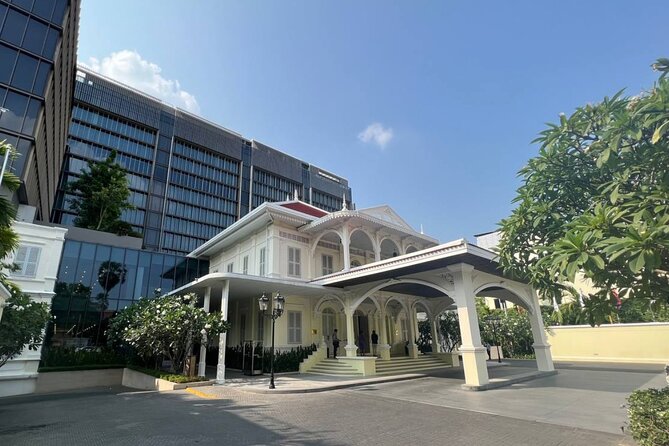
The Chinese house and Hokkien temple add a different side of Phnom Penh’s past. These stops point to the Chinese communities that helped shape trade, neighborhood life, and the city’s social structure.
The Hokkien temple may be open for an interior visit. If it is closed, the tablet material still gives you context that is difficult to pick up from a quick exterior view. The Chinese house presentation also helps explain how homes could serve family, commercial, and community purposes.
The Naga Bridge follows, with a short presentation on the old bridge. It is a quick stop, but it helps connect the city’s past transport routes with the growing capital described earlier in the tour.
I like the mix here. You are not seeing only official French or royal buildings. The route also gives space to Chinese religious and residential life, which makes the city story more complete without turning the tour into a lecture.
A few more trips worth weighing up
- The Killing Field and Toul Sleng Genocide Museum (S21) Tour
★ 5.0 · 1,977 reviews - Phnom Penh: Sunset Cruise with Unlimited Beers & BBQ Buffet
★ 4.5 · 727 reviews - Aroma Therapy Massage, Relaxation therapeutic aromatherapy oil massages.
★ 5.0 · 645 reviews - Killing field and Toul Sleng genocide museum Tour
★ 5.0 · 610 reviews
Wat Phnom and the former country club
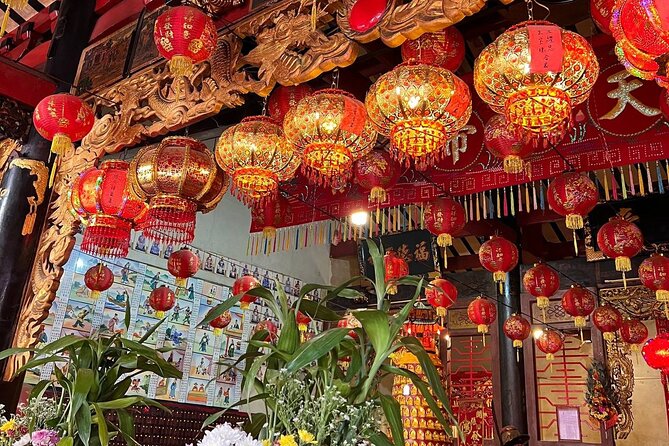
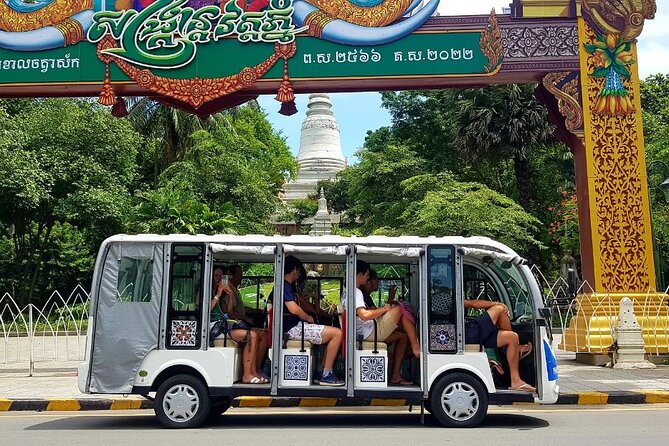
Wat Phnom is one of the best-known landmarks on the route. You have time to take photographs, but entry to the temple on the hill is not included. The audiovisual section explains its place in Phnom Penh’s story, while the visit itself remains optional and separate.
This distinction is important. The tour lets you see the site, but you should budget extra time and the admission cost if you want to go inside. Since the overall route continues, you should not expect a full temple visit during the guided experience.
Another stop covers the former country club, located where the present United States Embassy is found. Photography is not allowed at this location. The presentation is therefore the main way to learn about the site, and you should respect the restrictions rather than try to record it.
These two stops show the tour’s practical limits. Some locations are meaningful but cannot be entered, photographed, or explored at length. The tablet helps fill that gap, though it cannot replace standing inside a historic building.
The National Library and Raffles Hotel Le Royal
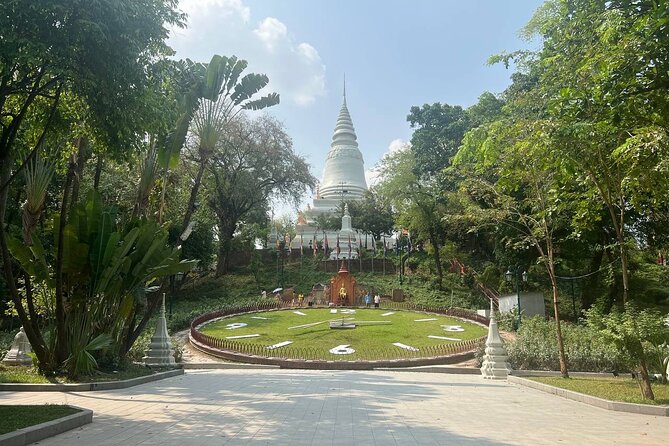
The National Library offers another possible interior visit if it is open. The audiovisual guide explains the building, and the short stop gives you a useful reason to return later if you want more time with its architecture or collections.
Raffles Hotel Le Royal follows. The presentation treats it as one of Cambodia’s leading hotels and uses its story to explain the lifestyle of the city’s elite during the early 20th century. Even if you do not plan to stay there, the hotel helps show how Phnom Penh presented itself to colonial officials, business people, and wealthy residents.
The route then reaches the railway station and Central Market. These are valuable city markers because they connect formal colonial planning with everyday movement, trade, and shopping.
You will get enough time to see the places and take photographs from the vehicle, but not enough for a proper market visit. If Central Market interests you, mark it as a return stop. The same advice applies to the railway station, where the presentation supplies historical context that a quick pass might not provide.
The No Problem Villa and the Royal University of Fine Arts
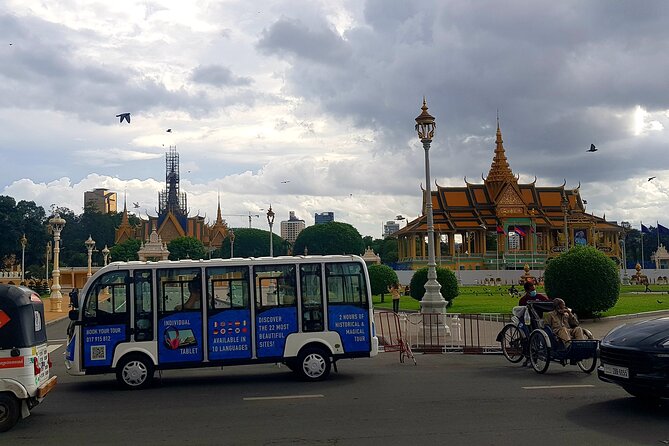
The former No Problem Villa, now associated with the Hyatt Regency Phnom Penh, adds another look at old private life and high-status architecture. The name alone hints at a more personal side of the city, away from government offices and public monuments.
The longest and most hands-on part of the route is the Royal University of Fine Arts. The audiovisual material explains the university, followed by a guided visit with stories and anecdotes. At many times, you may see students practicing their art.
This is a welcome change of pace. Most stops involve watching a short presentation and looking at the site from outside. Here, the tour can offer a closer look at an active institution and the continuation of Cambodian artistic traditions.
The university visit lasts about 25 minutes, so it receives more attention than the old bridge, hotel, or police station. If you are interested in architecture, sculpture, painting, or Cambodia’s cultural life, this may be the most rewarding part of the tour.
The National Museum, FCC, and UNESCO house
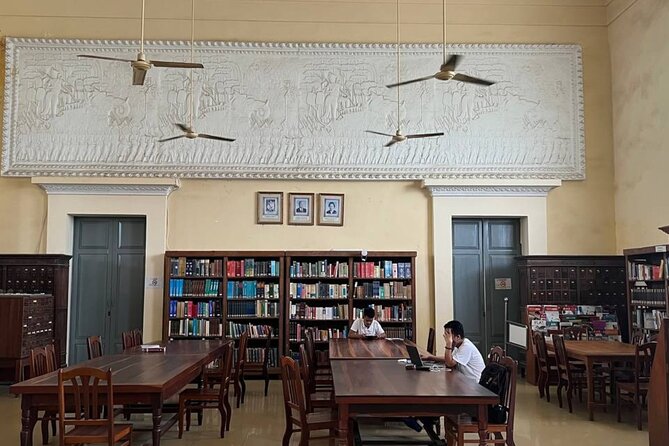
The National Museum receives a short audiovisual presentation, but museum admission is not included. This is another place where the tour provides orientation rather than a full cultural visit.
That arrangement can work well. You learn why the museum matters, then decide if you want to return with enough time to see its collections properly. Trying to combine a full museum visit with 21 other sites would make the tour far too long.
The route also passes FCC Phnom Penh, an old mansion that is under renovation and covered during 2024 and 2025. The presentation explains the building’s past, but the current condition may reduce what you can see from outside.
The UNESCO house follows. This stop adds an international preservation angle to the route and helps connect Phnom Penh’s local buildings with wider efforts to protect cultural places. Each presentation is short, so listen closely. The information moves on quickly.
The Royal Palace and Street 240 finish
The Royal Palace is one of Phnom Penh’s essential sights, but its admission is not included in this tour. You receive an audiovisual explanation of the palace and see the area from the route, then can return separately for a full visit.
This is a sensible design. The palace needs time, security checks, and a proper walk through its grounds. Adding that visit to a two and a half hour city circuit would force every other stop into a hurried glimpse.
The tour ends along Oknha Chhun Street, also called Street 240, near the Royal Palace and Wat Botum Square. The final sections cover the street, the residence of the British ambassador, and an epilogue.
Finishing here is convenient if you want to continue around the palace area or return to Wat Phnom. It also gives you a chance to use the information from the tour immediately, choosing one or two sites for a longer visit while the details are still fresh.
What the tablet guide adds
A tablet and headphones may sound less personal than a walking guide, but they serve a clear purpose here. The old photographs show former facades, earlier street scenes, and buildings before changes in ownership or use. That visual comparison can make a plain-looking building suddenly important.
The guide includes 10 languages, which makes the experience accessible to a wider range of visitors. Oliver remains available for questions and adds live help around the route. The strongest balance comes from using both: the tablet supplies researched visual material, while the guide handles timing, orientation, and personal questions.
The technology also allows a virtual look inside buildings that are not open to the public. This is useful for the old bank, former residences, and other places where the exterior tells only part of the story.
Still, the screen can compete with the city outside. If you focus only on the video, you may miss the streets and buildings passing by. I would listen first, then pause to look carefully at the site when possible.
Is $24.36 good value?
At $24.36 per person, the tour offers a reasonable deal for a first look at Phnom Penh. You receive bottled water, an in-person guide, the tablet, and access to a route covering 22 major sites. The small maximum of 10 people also gives it a more manageable feel than a large city bus circuit.
The value is highest if you have limited time, dislike walking long distances in the heat, or want historical context before exploring alone. One five-star assessment specifically praised the tour as a smooth introduction and a source of ideas for coffee stops and longer visits. Another noted that it covered a lot without feeling rushed.
The price does not cover private transport, and key admission fees are extra. You also pay for an overview, not extended time inside the National Museum, Royal Palace, or Wat Phnom. If your main goal is a detailed museum or palace visit, spend the money on those entries and allow several hours.
The tour is typically booked about 21 days ahead, so reserve early if your dates are fixed. Confirmation arrives within 48 hours, subject to availability. Free cancellation is allowed until 24 hours before the start time, while cancellations or changes inside that period are not refunded or accepted.
Who should book this Phnom Penh experience?
I would choose this tour as one of my first activities in Phnom Penh. It gives you a useful map of the city’s buildings, neighborhoods, institutions, and historical periods. You can then return to the Royal Palace, National Museum, Central Market, or Wat Phnom with a better idea of what you are seeing.
It suits first-time visitors, short-stay visitors, people traveling during very hot weather, and anyone interested in architecture. The route also works for those who prefer a gentle introduction instead of beginning with a long walking tour.
It is less suitable if you want a slow photographic outing or substantial time inside each landmark. The vehicle route is efficient, but the tradeoff is limited time on foot. You should also be comfortable with a mix of live explanation and screen-based viewing.
Should you book the Phnom Penh Heritage Tour?
Book it if you want a fast, thoughtful orientation to Phnom Penh and plan to explore several sites afterward. Oliver’s friendly help, the small group limit, and the old photographs give this more substance than a simple drive-by sightseeing circuit.
Skip it if you already know the city well or want a full visit to the Royal Palace, National Museum, and Wat Phnom in one outing. For most first-time visitors, though, $24.36 is a fair price for seeing 22 sites and learning which ones deserve your time next. Schedule it near the start of your stay, not at the end, so the route can shape the rest of your Phnom Penh plans.
FAQ
How long does the Phnom Penh Heritage Tour last?
The tour lasts approximately 2 hours and 30 minutes.
How many sites does the tour cover?
The route covers 19 stops and 22 major sites around Phnom Penh, with 24 audiovisual guide sections.
What languages are available on the tablet?
The audiovisual guide is available in 10 languages. Live commentary has been provided in both French and English.
Is admission to the Royal Palace included?
No. The Royal Palace presentation is included, but admission for a separate visit is not.
Are the National Museum and Wat Phnom included?
The tour provides audiovisual information about both sites, but admission is not included. At Wat Phnom, you can take photographs, while the temple visit on the hill is separate.
Where does the tour start and finish?
It starts at Phnom Penh Heritage Tour at the corner of Street 102 and Street 13, near the Cambodia Post Office. It ends on Oknha Chhun Street, also known as Street 240, near the Royal Palace and Wat Botum Square.
Just added around Phnom Penh
- Private Van Phnom Penh To Siem Reap English Speaking Driver★ 5.0 · 3 reviews
- Private Taxi Phnom Penh – Kampot Overland Transfer★ 5.0 · 3 reviews
- Half Day – Phnom Penh Food Tour★ 4.5 · 3 reviews
- Full-Day Amazing Phnom Penh City Tours★ 5.0 · 3 reviews
- Phnom Penh to Koh Rong/Koh Rong Sanloem by Car or Minivan & Boat★ 5.0 · 3 reviews
- Private Transfer From or to Phnom Penh <=> Sihanoukville★ 5.0 · 3 reviews
- Riverside Walking Tour with Snack, Drinks & Local Ferry Ride★ 5.0 · 3 reviews
- Day Tour In Phnom Penh With Bophany★ 5.0 · 3 reviews
Historical Tours, compared.
Banteay Srei and Grand Circuit Heritage Tour from Siem Reap
Read our review →
Bokor Mountain Adventure – History, Sights and Waterfalls
Read our review →
Angkor World Heritage with Sunrise – Small Group
Read our review →

Private Angkor Wat Tour & Angkor Park/Heritage With Local Guide
Read our review →Browse the lists this tour appears in