
Reviewed · HISTORICAL TOURS
2 Days Guided Historical Tour in Angkor
The temples reward an early start. This two-day Angkor tour gives you sunrise at Angkor Wat and a broad look at the famous and quieter monuments around Siem Reap. I like the mix of major sights and lesser-visited temples, and I like that guides such as Sam, Vone, Heang, Sary, and Sayon make room for questions, photos, and time to look around. The main drawback is the punishing schedule: the 4:30 a.m. start, long walks, heat, and a separate $62 temple pass make this less of a casual outing and more of a serious sightseeing mission.
The small-group limit of 15 is another strong point. Cold water, wet towels, air conditioning, and hotel pickup matter when the temperature rises. Just note that meals are not included, and the published route names ten main temple stops plus Angkor Thom South Gate, despite describing the experience as covering 11 temples.
In This Review
- Key points to know before booking
- What this $35 Angkor tour really gives you
- Day one begins with Angkor Wat at sunrise
- Angkor Thom and Bayon reveal a different royal vision
- Ta Keo brings a climb before Ta Prohm
- Day two trades famous icons for quieter temples
- Preah Khan gives day two its strongest historical stop
- Phnom Bakheng is a brief sunset stop
- Heat, walking, meals, and group pace
- Who will get the most from this two-day route?
- Should you book the Angkor two-day tour?
- FAQ
- What time does the tour start?
- Is hotel pickup included?
- Is the Angkor temple ticket included in the $35 price?
- Are meals included?
- How many people can join the group?
- What is provided during the tour?
Key points to know before booking
- Sunrise begins at 4:30 a.m.: Day one starts before dawn, so arrange your sleep and breakfast plans around it.
- Major temples come first: Angkor Wat, Bayon, Ta Keo, and Ta Prohm form the core of day one.
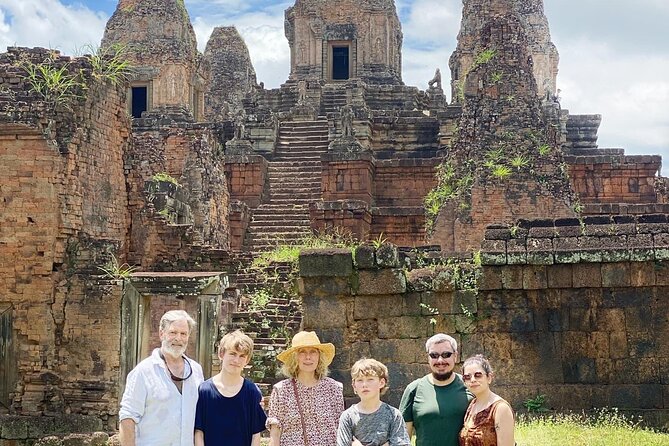
- Day two is quieter and more spread out: Pre Rup, Ta Som, Neak Pean, and Preah Khan offer a slower look at the wider complex.
- The $35 price excludes the temple pass: Budget an additional $62 per person for admission.
- Comfort support is practical, not fancy: Expect an air-conditioned vehicle, hotel pickup, cool water, and wet towels.
- Guides are a major part of the experience: Sam and Vone receive especially warm praise for clear explanations, patience, humor, and help with photos.
What this $35 Angkor tour really gives you
At $35 per person, this is priced as a shared sightseeing tour rather than a private luxury outing. The package includes transport, a guide, hotel pickup and drop-off, cold water, wet towels, and two days among the Angkor temples. Those basics add real value in Cambodia’s heat.
The important extra cost is the temple ticket, listed at $62 per person. Add that to the tour price and your total reaches $97 before meals. That is not a cheap half-day visit, but it is a reasonable cost for two full mornings and a route that covers the best-known monuments along with several quieter sites.
I would judge the value by the guiding and transport, not just the number of temples. Angkor is spread over a large area, and moving between sites by an air-conditioned vehicle is far easier than arranging separate rides while trying to follow the history yourself. The guide also gives the temples a clearer shape: kings, religious changes, architecture, sculpture, and the purpose of each complex become easier to follow.
The group can reach 15 people. That keeps the price down, though it also means you should not expect a private guide who can adjust every minute to your pace. The strongest feedback centers on guides who explain a site, allow time for your own photos and exploring, then keep the group moving before the heat takes over.
More historical sites:
- Siem Reap: Banteay Srei and Grand Circuit Heritage Tour
★ 4.9 · 163 reviews - Banteay Srei and Grand Circuit Heritage Tour from Siem Reap
★ 5.0 · 142 reviews - Angkor World Heritage with Sunrise – Small Group
★ 5.0 · 32 reviews
Day one begins with Angkor Wat at sunrise
Pickup starts at about 4:30 a.m. from your hotel, with the listed meeting point near Pub Street and the Angkor Night Market for those needing a central location. Hotel pickup and drop-off are included, but the one poor experience in the available feedback points to a real practical concern: make sure the pickup details are clear before bed, and do not assume a late meeting at the entrance will work.
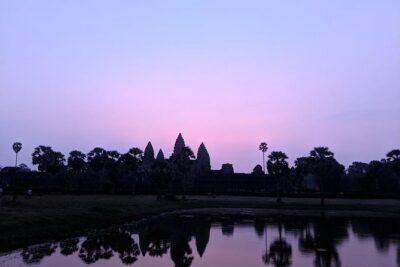
The first stop is Angkor Wat, where you arrive for sunrise before entering the temple with your guide. The early hour is the reason to book this schedule, but it also brings the hardest start of the trip. Bring a small flashlight if you have one. A flashlight was specifically provided for at least one early group, but it is wiser to be prepared rather than depend on that.
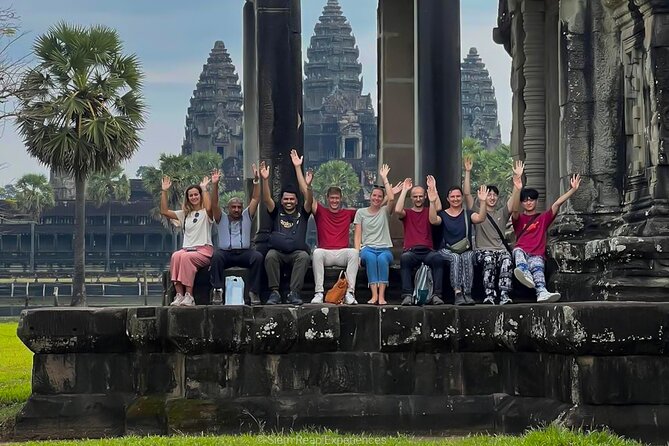
Angkor Wat needs time. The schedule allows about two hours, enough for a guided introduction and some independent looking, though not enough to examine every carved surface at leisure. I like the way this opening stop gives you the essential orientation: the temple’s layout, galleries, towers, religious imagery, and role within the Khmer world.
Sunrise can be beautiful, but do not judge the entire visit by the color of the sky. Weather, crowds, and cloud cover affect the view. The temple itself is the main prize, and the guide’s explanation helps you notice details that are easy to miss when you are focused only on getting a photograph.
Angkor Thom and Bayon reveal a different royal vision
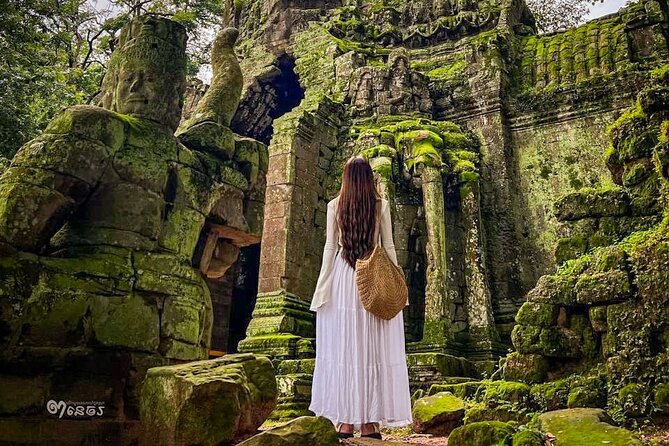
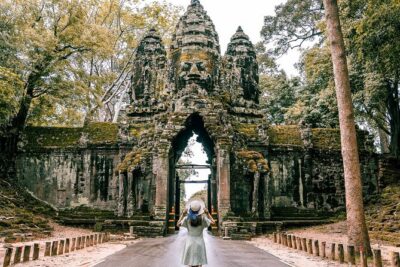
After Angkor Wat, the route moves to Angkor Thom South Gate. This 12th-century entrance is lined with stone figures along the causeway and marked by carved faces. The stop lasts about 30 minutes, which is enough for an explanation and photographs.
The South Gate works as a useful transition. Angkor Wat feels like a monumental temple complex, while Angkor Thom introduces you to a larger fortified royal city. Look closely at the causeway figures and the faces above the gate. Your guide can explain what they represent and how the entrance fits into the wider city.
Bayon follows, with about two hours scheduled. This is one of the most rewarding stops for a guide because the temple can seem confusing at first. Towers, galleries, carvings, and smiling faces overlap in a tight maze. The temple is linked to Buddhism and was built in the late 12th or early 13th century as a state temple.
I especially value having time here rather than rushing through for a quick photograph. Bayon’s carvings show more than religious symbols. They also offer scenes of daily life and warfare, giving you a sense of the people behind the royal monuments. A guide such as Sam or Heang can help connect those details to Cambodia’s past without leaving you to decode every wall alone.
Ta Keo brings a climb before Ta Prohm
Ta Keo is the next major stop, after a breakfast break at a restaurant. Breakfast is not included, so carry money and plan to buy food during the break. This pause matters because the day begins early and the heat builds quickly.
Ta Keo is a temple mountain built mainly from sandstone and associated with the early development of that building style. The schedule gives it about an hour. Its steep form makes the visit feel different from Angkor Wat’s long galleries and Bayon’s crowded towers.
You should expect walking and steps throughout the two days. One person who completed only the first day still found the experience worthwhile but described the heat as difficult, with temperatures reaching 40 degrees. The guide responded by providing water and allowing people to sit in the air-conditioned vehicle when needed. That kind of flexibility is important, but you should still pace yourself.
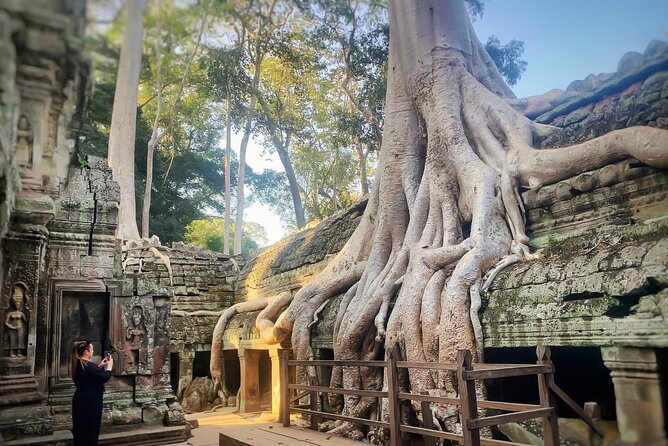
Ta Prohm comes next, with about an hour inside the temple. It is famous for its trees and stonework, and it is one of the most recognizable Angkor stops. The atmospheric setting can make it feel almost unreal, but the visit is not only about photographs. The guide can point out the temple’s layout, carvings, and connection to the larger building program of King Jayavarman VII.
Day one covers the major icons in a logical order. It is also the more demanding day because you have started before dawn and are seeing the sites that attract the largest crowds. The upside is that you finish with the essential Angkor images firmly in your memory. The downside is fatigue, especially if you try to keep exploring after returning to Siem Reap.
A few more trips worth weighing up
- Siem Reap: Angkor Wat 2-Day Tour with Sunrise and Sunset
★ 4.9 · 4,429 reviews - Angkor 2-Day Sunset & Sunrise Small-Group Tour
★ 5.0 · 2,567 reviews - 2 Days Exclusive Temple Highlights with Sunset and Sunrise Tour
★ 5.0 · 1,157 reviews - Siem Reap: Angkor Sunrise 1- or 2-Day Guided Temples Tour
★ 4.9 · 1,132 reviews
Day two trades famous icons for quieter temples
Day two begins with Pre Rup, a Hindu temple built as the state temple of King Rajendravarman and dedicated in 961 or early 962. The schedule allows two hours, making it one of the more substantial visits of the day.
Pre Rup is a temple mountain built from brick, laterite, and sandstone. Its form gives you another way to understand Angkor architecture. After the scale and fame of Angkor Wat, a site like Pre Rup can feel more focused and easier to read. You have room to listen, climb where permitted, and take in the setting without the same pressure as the headline monuments.
Ta Som follows for about an hour. This smaller temple was built at the end of the 12th century for King Jayavarman VII and lies northeast of Angkor Thom. Its smaller scale is part of its appeal. You can pay attention to doorways, towers, carvings, and the way vegetation has become part of the appearance.
The schedule then moves to Neak Pean for about an hour. This site is an artificial island with a temple on a circular island in the Jayatataka Baray, a reservoir linked with Preah Khan. The water setting gives it a distinct character, and the visit breaks up the repeated pattern of climbing temple platforms and walking through galleries.
Preah Khan gives day two its strongest historical stop
Preah Khan receives about two hours and may be the strongest stop on the second day for anyone who wants more explanation. Built in the 12th century by King Jayavarman VII to honor his father, it lies northeast of Angkor Thom near the Jayatataka Baray.
The temple complex has enough scale and detail to reward a slower visit. I would use the guide’s introduction first, then keep a little time for independent exploration. Several people specifically praised guides for giving useful background before allowing quiet time for photographs and personal discovery.
Sam is repeatedly praised for his stories about the Khmer Empire and Cambodian history. Vone is remembered for humor, patience, and noticing small details, including helping with pictures and videos. Heang is praised for clear explanations at every temple, while Sary and Sayon are noted for keeping the day moving while still answering questions. Guide quality can vary from one departure to another, but these names give you a useful sense of the service this company aims to provide.
Phnom Bakheng is a brief sunset stop
The final stop is Phnom Bakheng, a Hindu temple mountain dedicated to Shiva and built near the end of the 9th century during the reign of King Yasovarman. The overview describes staying for sunset, but the itinerary assigns only two minutes to the stop.
That timing needs clarification before you book. Two minutes is not a meaningful temple visit, so the stop appears intended as a brief sunset viewing point rather than a full guided exploration. Ask the operator how long the group actually remains there and whether access or crowd controls affect the plan.
The sunset finish is a pleasant counterpoint to day one’s sunrise. It also means day two may end later than the first day, depending on the timing at Phnom Bakheng. You will want water, sun protection, and shoes suitable for walking on uneven temple grounds.
Heat, walking, meals, and group pace
This tour is manageable for most people, but it is not physically effortless. The two days involve walking across large temple compounds, standing during explanations, climbing at some sites, and coping with tropical heat. The published information says most people can participate, but it does not promise an accessible route or mobility assistance.
The included comforts are simple and useful:
- Air-conditioned transport between temples
- Hotel pickup and drop-off
- Cold water during the day
- Wet towels for cooling down
- A guide for both days
- A group capped at 15 people
Meals are not included. Breakfast is taken during the Ta Keo stop on day one, and lunch breaks are described as taking place at restaurants, with meals paid separately. Clean toilet breaks are part of the day’s rhythm, which becomes more valuable than it sounds after several hours in the heat.
Wear practical clothing that covers the shoulders and knees for temple visits, carry sunscreen, and keep your water within reach. The company supplies water, but you should not treat that as a reason to arrive unprepared. If you are sensitive to heat, use the air-conditioned vehicle as a real recovery space rather than pushing through every minute.
Who will get the most from this two-day route?
I would choose this tour if you want a guided overview of the Angkor complex and prefer not to arrange transport between widely separated temples. It suits first-time visitors who want the headline sights on day one and a broader sense of the site on day two.
It is also a good fit if you enjoy history but do not want a lecture from start to finish. The best guide reports describe a useful balance: clear explanations, time for photographs, personal stories, and answers to questions. Sem, for example, is praised for mixing historical facts with personal stories, which can make a long day feel more human.
The tour is less suitable if you want to set your own pace, sleep late, linger at one temple, or avoid group schedules. One unhappy experience involved confusion over hotel pickup and difficulty rejoining the group after trying to meet the guide independently. That is a reminder to confirm pickup instructions and stay with the group once the day begins.
Language is another point to check. The guides named in the available information appear to serve English-speaking groups well, but one French-speaking participant had difficulty and suggested arranging a Francophone guide. Ask about language availability before paying if this matters to you.
Should you book the Angkor two-day tour?
Book it if you want wide coverage, guided context, and practical transport at a low tour price. The combination of Angkor Wat at sunrise, Ta Prohm, Bayon, Preah Khan, quieter eastern temples, and a planned sunset gives you much more than a quick Angkor Wat visit.
Budget carefully. The $35 tour price does not include the $62 temple pass or meals, so the real cost is closer to $97 plus food. Also, confirm the exact number of temples, pickup procedure, guide language, and Phnom Bakheng timing.
I would recommend it for first-time visitors who can handle early mornings and long, hot days. If you want total independence or a slower photographic visit, pay more for a private arrangement. For most people seeking an efficient first look at Angkor, this shared tour offers a strong balance of price, coverage, and human guidance.
FAQ
What time does the tour start?
The tour starts at 4:30 a.m. Pickup is offered from hotels in Siem Reap, and a listed central meeting point is near Pub Street and the Angkor Night Market.
Is hotel pickup included?
Yes. Hotel pickup and drop-off in Siem Reap are included. Drop-off can be arranged at your hotel or somewhere around Pub Street.
Is the Angkor temple ticket included in the $35 price?
No. The temple entrance ticket is listed separately at $62 per person.
Are meals included?
No. Meals are not included. The itinerary includes a breakfast break near Ta Keo and restaurant breaks during the tour, but you pay for your own food.
How many people can join the group?
The group has a maximum of 15 participants.
What is provided during the tour?
The tour includes an air-conditioned vehicle, a guide, hotel pickup and drop-off, cold water, wet towels, and visits to the temples included in the two-day route.
Just added around Siem Reap
- Private Battambang Full-Day Guided Tour★ 4.5 · 3 reviews
- Kulen Mountain, Beng Mealea and Banteay Srei Full Day Tour★ 5.0 · 3 reviews
- Kompong Pluk Tour★ 5.0 · 3 reviews
- Private 3 Day Tour to Discover the ancient temples★ 5.0 · 3 reviews
- Cambodia: Absolute Traditional Dance Show with Buffet Dinner★ 5.0 · 3 reviews
- Kulen National Park Ticket -Waterfall & 1000 Lingas★ 5.0 · 3 reviews
- Border Transfer (Siem Reap to Laos/Laos to Siem Reap)★ 3.5 · 3 reviews
- Best Taxi Siem Reap to Battambang – English Speaking Driver★ 4.5 · 3 reviews
Historical Tours, compared.
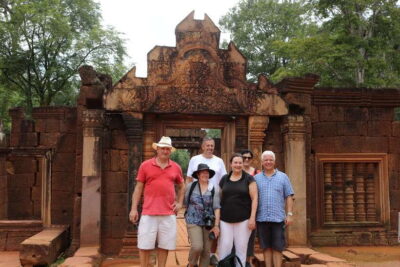
Banteay Srei and Grand Circuit Heritage Tour from Siem Reap
Read our review →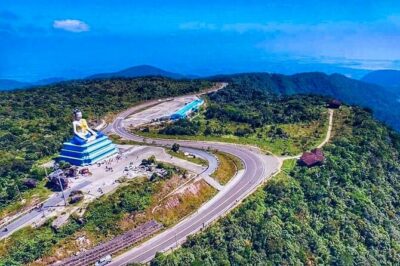
Bokor Mountain Adventure – History, Sights and Waterfalls
Read our review →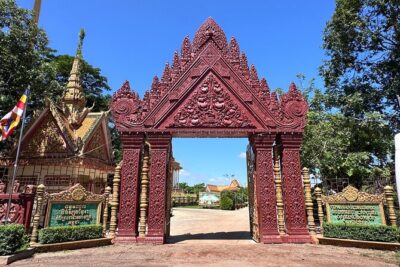
Angkor World Heritage with Sunrise – Small Group
Read our review →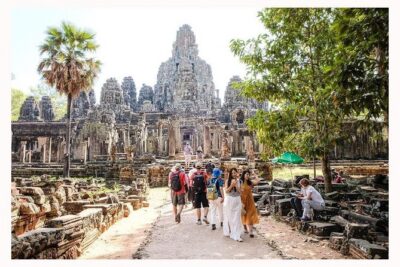
Private Angkor Wat Tour & Angkor Park/Heritage With Local Guide
Read our review →Browse the lists this tour appears in