
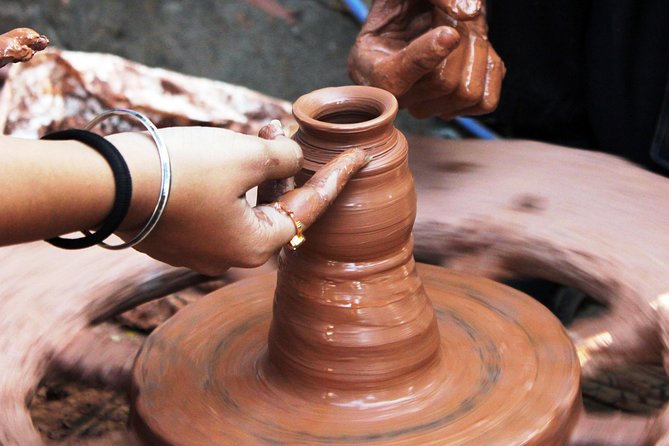
Reviewed · KILLING FIELDS & GENOCIDE MUSEUM TOURS
Half Day War Museum Siem Reap Killing Fields and Artisans Angkor
Cambodia’s past deserves more than a footnote. This three-hour private tour links Wat Thmey’s killing fields and the War Museum with Artisans Angkor, giving you a clear look at both the country’s painful recent past and its effort to revive Khmer craft traditions. I like the one-to-one format with an English-speaking guide, and I like that entrance and donation fees are included. The main drawback is price: at $48.72 per person, it can feel costly for only three hours, especially for a solo visitor.
The route is compact and easy to fit around a Siem Reap stay. Guides such as Suphreap have been praised for explaining the wars with care and for adding useful local context. Still, the first two stops are emotionally hard, and the sites contain graphic material that may not suit young children. You should also expect heat, sun, and a fairly brisk pace.
In This Review
- Key points to know before booking
- Why this half-day route works in Siem Reap
- Wat Thmey and the meaning of a living memorial
- The War Museum and three decades of conflict
- Artisans Angkor brings the tour toward renewal
- What the private format really adds
- Transport, timing, and the small practical details
- Is $48.72 a fair price?
- Who should book this experience?
- Should you book this tour?
- FAQ
- How long does the tour last?
- Is hotel pickup included?
- Is this a private tour?
- What is included in the price?
- Are morning and afternoon departures available?
- Is the tour suitable for young children?
Key points to know before booking
- Wat Thmey offers a quiet introduction to Cambodia’s killing fields, set within a living pagoda where young monks also work on their English.
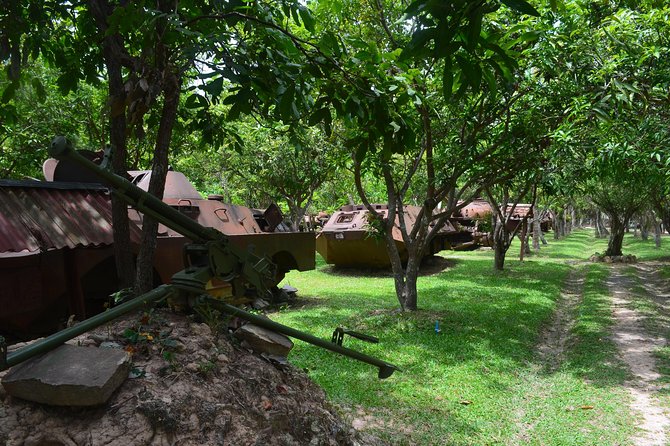
- The War Museum focuses on three decades of conflict, helping explain a period of Cambodian history that many visitors know only in broad outline.
- Artisans Angkor changes the tone of the afternoon, showing efforts to restore Khmer stone-carving and wood-sculpting traditions.
- Your private guide can adjust the conversation, which matters at serious sites where you may want to pause or ask careful questions.
- Hotel pickup and drop-off are included within Siem Reap, but airport and outlying-area transfers cost extra.
- The $48.72 price buys convenience and privacy, though it is less attractive if you are trying to keep daily costs low.
Why this half-day route works in Siem Reap
Siem Reap is best known for Angkor, but the city’s modern story deserves time too. This tour gives you a short, organized way to look beyond temple architecture and learn about the wars that shaped present-day Cambodia.
The order of the stops makes sense. You begin at Wat Thmey, move to the War Museum, and finish at Artisans Angkor. The first two locations carry the heaviest emotional weight. The final stop offers a more hopeful look at cultural recovery and skilled work.
I appreciate the private format here. You are not tied to the questions or pace of a large group. If a guide’s explanation raises a question about Cambodia’s wars, you can ask it right away. If a memorial feels too heavy, you can take a quiet moment without holding up a busload of people.
The tour lasts about three hours, with roughly 45 minutes at each stop. Transportation between sites is included by car, minivan, or coach with a professional driver. That makes this a useful choice if you want the subject covered without spending a full day away from Siem Reap’s other sights.
More Killing Fields and genocide museum tours:
- Siem Reap City Tour with War Museum and Killing Field
★ 5.0 · 27 reviews - War Museum, Killing Field and Floating village ( Chong Kneas) Tour
★ 5.0 · 14 reviews - Kulen Mountain, Killing Fields and War Museum Tour
★ 5.0 · 7 reviews
Wat Thmey and the meaning of a living memorial
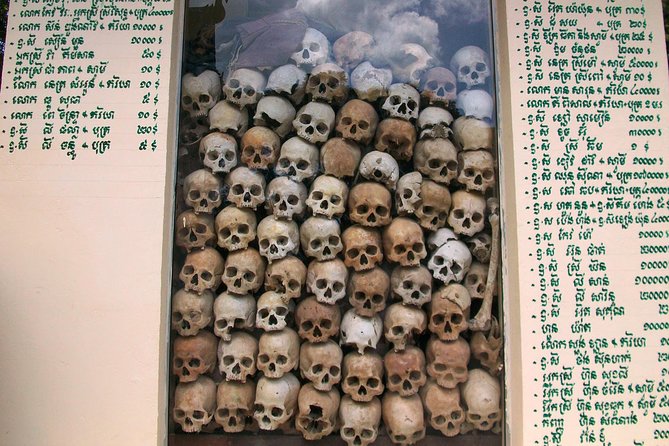
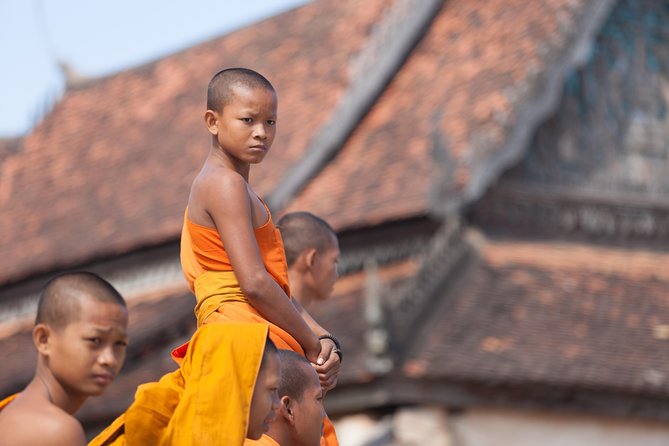
Wat Thmey is the first stop, with about 45 minutes set aside. It is described as a small pagoda that remains active, rather than a memorial visited in isolation. Young monks use the site as an important place to practice English, a detail that gives the stop a human and present-day dimension.
The killing fields connection makes this a serious beginning. You will be confronting the effects of the Khmer Rouge period and the suffering connected with it. This is not a light sightseeing stop, and you should arrive ready for an account of Cambodian history that may be difficult to hear.
The pagoda setting also requires cultural awareness. Your guide will tell you when shoes must be removed, and you should follow local customs without treating the site like a quick photo stop. Modest, respectful behavior is the right approach.
Forty-five minutes is enough for an introduction, but not a long study session. That is both a strength and a limitation. You receive a focused explanation and can then continue, but you will not have hours to sit with every part of the story. If you want a longer visit at memorial sites, this tour may feel too short.
A private guide matters most here. Historical facts can sound cold when they are rushed or poorly explained. The praise for Suphreap points to the value of a guide who can present the subject with care while answering questions about the wars and their effects on Cambodian people.
The War Museum and three decades of conflict
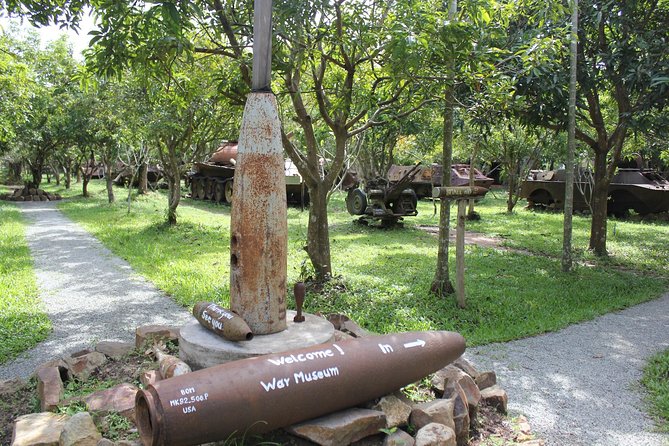
The second stop is the War Museum Cambodia, also for about 45 minutes. Its purpose is to show how life in Cambodia was affected when the nation was caught in war for three decades.
That focus broadens the story beyond the Khmer Rouge alone. You are looking at a longer period of conflict and at the way war affected ordinary Cambodian life. For anyone who knows Cambodia mainly through Angkor, this stop helps connect the country’s ancient achievements with its much more recent struggles.
The museum contains graphic content, so it is important to consider your group before booking. The tour information specifically warns that some material may not be suitable for young children. Older children and teenagers may also respond differently depending on their age and sensitivity.
I would not plan this as a casual stop between lunch and shopping. Give yourself mental room before and after it. The 45-minute visit keeps the experience from taking over your day, but the subject can stay with you longer than the clock suggests.
The guide is central to the quality of this stop. A museum can present objects and information, but a good explanation gives those items meaning. Suphreap was thanked for providing an informative account of the Cambodian wars and their sad results. That kind of personal, steady narration is especially useful when the subject is unfamiliar or emotionally difficult.
The museum stop may feel less polished than a major international institution, and the supplied information does not promise a specific type of display or a particular collection. I would book it for the historical account and guided context, not for a grand museum building or a long independent visit.
Artisans Angkor brings the tour toward renewal
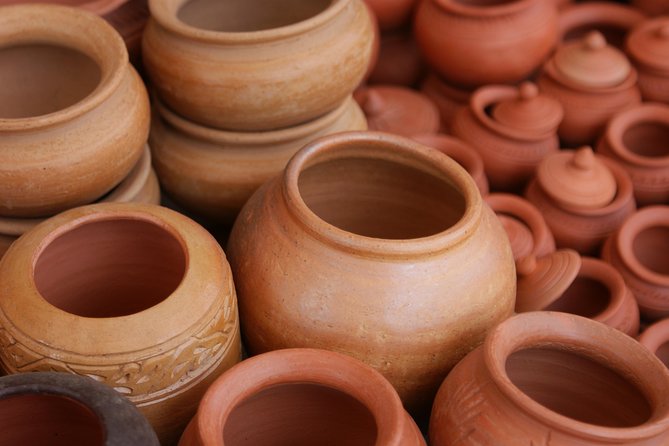
The final stop is Artisans Angkor, with approximately 45 minutes to see the building and the work connected with the institution. Its purpose is to help revive ancient Khmer traditions of stone-carving and wood-sculpting.
This change of mood is one of the tour’s best choices. After Wat Thmey and the War Museum, you finish with an example of Cambodia looking forward. The subject is still cultural preservation, but the atmosphere should feel more constructive and creative.
You should keep your expectations specific. The tour includes the visit and related fees, but it does not include shopping, personal purchases, or optional services. You may find work connected with stone and wood traditions, but the information does not promise a full workshop demonstration or a set amount of time with individual craftspeople.
Artisans Angkor also gives the guide a chance to explain why traditional skills matter. Khmer culture is not only something preserved in temple walls. It also appears in handwork, training, and efforts to keep older techniques in use.
Forty-five minutes is enough for a compact introduction. If you enjoy craft centers, you might wish you had more time to study the work or ask about production. If shopping is not your interest, the stop remains worthwhile because it provides a needed counterpoint to the war sites.
The visit may also help you understand why the tour is arranged as a historical and cultural circuit rather than as three unrelated attractions. Cambodia’s story here moves from loss, through conflict, toward recovery. That arc is simple, but it gives the half-day a clear shape.
A few more trips worth weighing up
- Bantey Srei, Kbal Spean and Landmine museum Private Tuk-Tuk
★ 4.7 · 30 reviews - Private Tour: HERO Rats & Angkor National Museum
★ 4.5 · 16 reviews - Kbal Spean Trekking Tour with Banteay Srei and Landmine Museum
★ 5.0 · 14 reviews - Siem Reap: War Museum included Ticket and Pickup Drop Off
★ 4.9 · 12 reviews
What the private format really adds
Private does not mean luxurious. It means only your group takes part, with a professional English-speaking guide and driver. That difference is useful at serious sites, where a guide who can match your pace is worth more than a packed schedule.
You can ask for clarification without worrying that the rest of a large group is waiting. You can also discuss the history at the level you need. A visitor with strong background knowledge may want more detail, while someone new to Cambodian history may need basic context first.
The private setup can also help with timing. Morning and afternoon departures are available, so you can place the tour around temple visits, meals, or an evening plan. An afternoon departure may leave your morning open, while a morning departure can give you the rest of the day afterward to process what you saw.
The main question is group size. For two people, $48.72 each may be reasonable because it covers transport, a private guide, entrance fees, donation fees, taxes, and service charges. For a larger group, the same individual price can add up quickly. Group discounts are offered, but the exact reduction is not stated, so you should check the final cost before booking.
For a solo visitor, the price is harder to justify. You are paying for a vehicle, driver, guide, and private service rather than simply paying an admission fee. If personal attention matters to you, that may be fair value. If your priority is the lowest possible cost, a shared tour or independent visit could be more appealing, though this experience does not provide those alternatives.
Transport, timing, and the small practical details
Pickup and return are included for hotels inside Siem Reap’s general service area. That removes the need to arrange separate transport and gives the tour a smooth start. Provide the correct hotel details when booking, especially if you change accommodation.
Transfers outside the standard area are not included. That covers places such as Tonle Sap, Koh Ker, Banteay Srei, and Siem Reap International Airport. Supplements apply if you need pickup or drop-off in those locations, so this is not a completely door-to-door service for every address near Siem Reap.
The exact pickup time may be confirmed in advance, but operational issues can mean you receive the final time the day before. Keep some flexibility in your morning or afternoon rather than scheduling a tight connection immediately afterward.
You are responsible for meals, drinks, tips, shopping, porterage, and personal expenses. The tour itself is short enough that no meal is part of the plan, so bring water and dress for heat. Sunglasses, a hat or cap, and high-SPF sunblock are specifically recommended, even on a cloudy day.
Protect cameras and phones from natural conditions. The operator places responsibility for wrapping and protecting electronic equipment with you. That is ordinary travel advice in Cambodia, but it matters when you are moving between outdoor and indoor sites in strong sun and heat.
At religious locations, shoes may need to come off. Wear footwear that is easy to remove and replace. This small choice saves time and keeps you from turning a respectful custom into a nuisance.
Is $48.72 a fair price?
The price sits in the middle of the value question. You are not paying only for three entrance tickets. You are paying for a private vehicle, driver, English-speaking guide, hotel transport within Siem Reap, entrance and donation fees, and the convenience of having the route organized.
That package can be worthwhile for couples, families with older children, and small groups who want a direct explanation of difficult history. It is also useful if you have limited time and do not want to work out transport between three separate sites.
Still, one direct assessment called the tour overpriced despite praising the guide’s eloquence and broad subject knowledge. That criticism is fair to consider. Three hours is a short window, and Artisans Angkor plus two serious historical stops may leave you wishing for more time at one location.
The strongest value comes when you use the guide actively. Ask questions. Request more explanation where needed. Use the private format to shape the conversation. If you simply ride from site to site and spend the allotted time looking around, the price may feel less convincing.
The overall score is 4.2 from nine ratings, while individual comments especially praise the informative guides and the way the tour explains a part of modern Cambodian history that is often overlooked. That pattern suggests the human element is the main reason to book, not an unusually long itinerary or a bargain price.
Who should book this experience?
I would recommend it to you if you want a concise introduction to Cambodia’s modern history and prefer a guide to explain what you are seeing. It suits couples, families with mature children, and small groups who value private transport and flexible conversation.
It is also a strong fit if Angkor is already taking up most of your Siem Reap schedule. You can cover three meaningful stops in half a day without giving up a full day for another excursion.
I would think twice if you are traveling with very young children. The sites include graphic material, and the emotional tone may be too heavy. The tour is also not ideal if you want a relaxed craft workshop or a long museum visit, since each stop lasts about 45 minutes.
You may also prefer another option if price is your main concern. At $48.72 per person, the private service offers convenience, but it is not the cheapest way to see these locations. The value improves for a group, especially if a discount applies.
Cancellation is free if you cancel at least 24 hours before the local start time. Changes or cancellations made later are not accepted for a refund, so keep your schedule settled before the cutoff.
Should you book this tour?
Book it if you want personal guidance through Cambodia’s difficult recent past, plus a final stop focused on traditional craft and cultural renewal. The tour is short, well organized, and practical for a Siem Reap itinerary. Guides such as Suphreap appear to be the main strength, bringing care and clarity to subjects that can be hard to approach alone.
Skip it if you need a low-cost outing, dislike emotionally heavy sites, or want to spend a full day at each location. For everyone else, this is a worthwhile half-day addition to Angkor, especially when you want to understand more of the country than its temples alone can show.
FAQ
How long does the tour last?
The tour lasts approximately three hours. Each of the three listed stops includes about 45 minutes.
Is hotel pickup included?
Pickup and drop-off are included for customers staying inside Siem Reap’s general service area. Transfers from Tonle Sap, Koh Ker, Banteay Srei, Siem Reap International Airport, and other locations outside the area require a supplement.
Is this a private tour?
Yes. The excursion operates on a fully private basis, so only your group participates.
What is included in the price?
The price includes an English-speaking professional guide, transportation with a professional driver, entrance and donation fees for the listed visits, taxes, and service charges.
Are morning and afternoon departures available?
Yes. You can choose between morning and afternoon departures.
Is the tour suitable for young children?
The sites contain graphic content that may not be suitable for young children. You should consider your child’s age and sensitivity before booking.
More Half-Day
- Kompong Phluk Floating Village Half-Day Tour ( Morning / Sunset )
★ 5.0 · 1,494 reviews - Tonle Sap Lake & Kampong Phluk Village Half-Day Tour
★ 5.0 · 1,045 reviews - Siem Reap: Kompong Phluk Floating Village Half-Day Tour
★ 4.8 · 966 reviews - Angkor Sunrise Half-Day Tour with Private Vehicles & Tour Guide
★ 5.0 · 247 reviews
Just added around Siem Reap
- Private Battambang Full-Day Guided Tour★ 4.5 · 3 reviews
- Kulen Mountain, Beng Mealea and Banteay Srei Full Day Tour★ 5.0 · 3 reviews
- Kompong Pluk Tour★ 5.0 · 3 reviews
- Private 3 Day Tour to Discover the ancient temples★ 5.0 · 3 reviews
- Kulen National Park Ticket -Waterfall & 1000 Lingas★ 5.0 · 3 reviews
- Cambodia: Absolute Traditional Dance Show with Buffet Dinner★ 5.0 · 3 reviews
- Border Transfer (Siem Reap to Laos/Laos to Siem Reap)★ 3.5 · 3 reviews
- Beng Melea, Rolous Group & Kompong Phluk Floating Village★ 5.0 · 3 reviews
Killing Fields & Genocide Museum Tours, compared.
The Killing Field and Toul Sleng Genocide Museum (S21) Tour
Read our review →
Killing field and Toul Sleng genocide museum Tour
Read our review →
Visit 11 Places in One Day including S21 & Killing Field
Read our review →
Half Day Tuol Sleng S21 and Choeung Ek Killing Field Tour
Read our review →
Private Half Day To Killing Field & S21 Genocidal Museum in Phnom Penh
Read our review →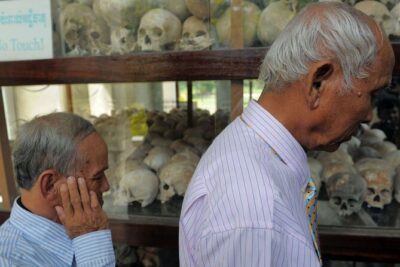
Tuol Sleng Genocide Museum (S-21) and Choeung Ek Killing Fields Tour
Read our review →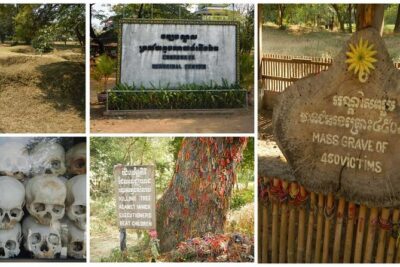
Phnom Penh City Tour, Silver Pagoda, Genocide Museum, Killing Fields
Read our review →Browse the lists this tour appears in