
Reviewed · BATTAMBANG TOURS
Morning village tour Livelihood tour with Local Product discover
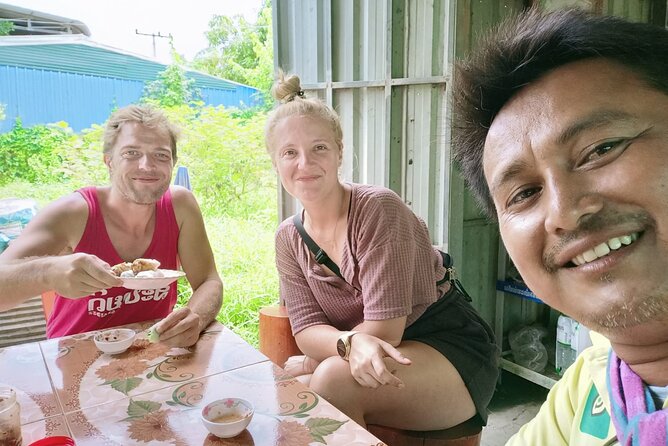
Slow down and taste rural Cambodia. This half-day trip from Battambang takes you beyond the city to see Khmer families making everyday food and drink products by hand. I like the close look at rice paper, banana snacks, and bamboo sticky rice, and I like that the tour is kept to a maximum of 10 people. The main consideration is that this is a working countryside visit, not a polished cultural show, so conditions may be simple and the exact pace can depend on the people you meet.
I also appreciate the practical side: pickup is offered, bottled water is provided, and the driver is described as safe and willing to adjust plans when asked. The optional stop at Wat Samrong Knong and its killing fields adds historical weight, though some visitors may prefer to spend more time with village producers instead.
In This Review
- Key points to know before booking
- Leaving Battambang for the countryside
- Rice paper made by hand
- Bamboo tubes filled with sticky rice
- Fermented fish paste and the stronger side of local food
- Dried bananas and banana chips
- A traditional rice wine distillery
- Wat Samrong Knong and the killing fields option
- What the $15 price really covers
- Who will enjoy this morning most
- Practical details for a smoother morning
- Should you book the Battambang village tour?
- FAQ
- How long does the Battambang village tour last?
- What time does the tour begin?
- How much does the tour cost?
- What foods and drinks can I see being made?
- Is pickup included?
- How many people can join the tour?
- Can I cancel for a full refund?
Key points to know before booking
- Traditional food is the main event: See rice paper, bamboo-cooked sticky rice, dried bananas, banana chips, fermented fish paste, and rice wine being made.
- You visit real village workplaces: The homes, kitchens, factories, and small production sites are part of daily rural life rather than a staged attraction.
- The tour lasts about four to five hours: Morning pickup is scheduled between 8:00 and 8:30 a.m.
- The group is capped at 10 people: That is small enough for questions and closer views of the food-making process.
- Wat Samrong Knong is optional: You can add a temple complex and killing fields visit if you want a stronger historical element.
- The price is $15 per person: With transport, a guide, tastings, and several stops, it offers good value for a short introduction to Battambang’s countryside.
Leaving Battambang for the countryside
The tour begins with a pickup in Battambang, generally between 8:00 and 8:30 a.m. After a brief introduction to the city and its past, you head into the countryside. The drive is part of the change in mood. Urban streets give way to village roads, family homes, small work areas, and fields.
I like this format because you do not spend the whole morning looking at grand monuments. Instead, you see how ordinary products reach local markets and kitchens. The tour gives you a view of Cambodia through work, cooking, and small-scale production.
The maximum group size is 10 people. That matters here. At a food-making site, a large crowd would make it hard to see the process or ask questions. A smaller group also makes it easier to pause when something catches your eye.
Pickup is offered, which is useful if your accommodation is not close to the center. One review describes the driver as safe, helpful, and willing to accommodate a request. Water is also provided. Those are small touches, but they matter on a warm morning outside the city.
A few more trips worth weighing up
- Morning Tour,Ak Phnom temple,Rice wine,Rice Paper, killing Field
★ 5.0 · 22 reviews - half day morning tour by Tuk-Tuk
★ 5.0 · 20 reviews - Explore the Village &Countryside By Bicycle-Half Day Morning
★ 4.8 · 13 reviews
Rice paper made by hand
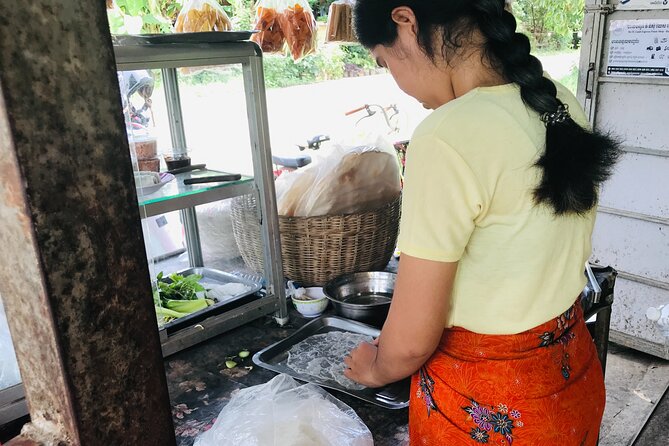
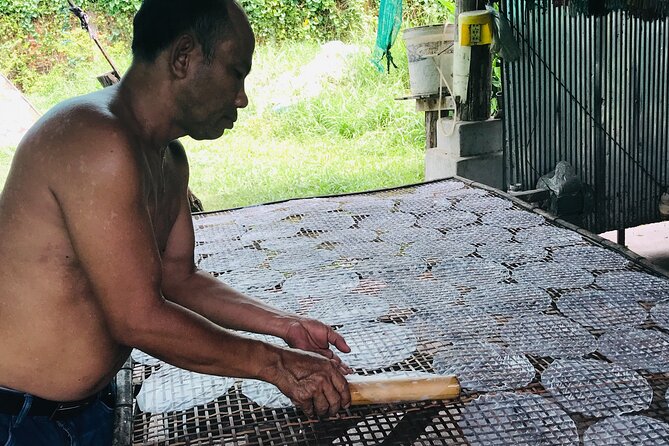
One of the first useful stops is a look at rice paper production. Rice paper is a familiar part of Cambodian and Southeast Asian cooking, but seeing it made gives you a better sense of the labor behind a simple food item.
You can expect to watch the process rather than simply hear an explanation. The appeal is in the repeated handwork and the plain setup. This is not a modern food factory built for tourists. It is a local production method that turns rice into a thin, flexible sheet used in cooking.
For you, the value is visual and practical. You see how a basic crop becomes a product sold and eaten across the region. It also helps explain why visits to small producers can be more revealing than a quick stop at a market stall. At the market, you see the finished product. Here, you see the time and skill behind it.
Do not expect a long formal presentation at every stop. The focus is on watching, tasting, and moving through the countryside. If you want detailed culinary instruction, this may feel brief. If you enjoy seeing how food is made in its original setting, it should be a strong part of the morning.
Bamboo tubes filled with sticky rice
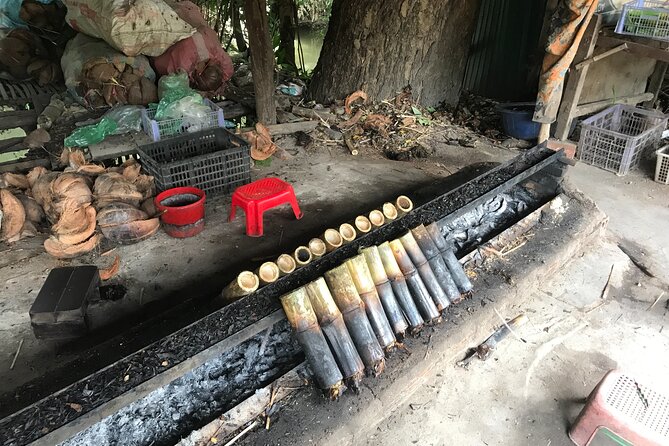
The sticky rice cooked in bamboo tubes is one of the more distinctive food stops. You watch the rice being prepared over an open fire, with bamboo serving as both cooking container and part of the finished product.
This is the sort of detail that makes the tour worthwhile. A cooking method like this connects food to local materials and rural routines. It also gives you something concrete to remember after the tour. You are not just looking at a building or taking a photograph. You are seeing a traditional method in use.
You should have a chance to taste the products made during the morning. Tastings make a real difference because they turn an observation into a personal experience. You can compare what you have seen being prepared with the flavor and texture of the finished food.
The setting may be basic, and that is part of the point. An open fire and bamboo tubes do not offer the control or comfort of a modern kitchen. If you are sensitive to heat, smoke, or rustic conditions, keep your expectations realistic.
Fermented fish paste and the stronger side of local food
The stop at an old fermented fish paste factory will not suit everyone, but it is one of the most honest parts of the visit. Fermented fish paste is an important local ingredient, and its smell can be powerful. This is food production as it really is, not a sanitized demonstration.
You walk around the old facility and see where the paste is made. The stop gives you a better understanding of the flavors used in Cambodian cooking. It also shows how local food traditions often rely on preservation, fermentation, and ingredients that can be stored and used over time.
I would treat this as a cultural stop even if you do not want to taste the product. You can learn from the process without forcing yourself to eat something you dislike. The tour includes several foods and drinks, so one strong-smelling product does not define the whole morning.
This is also a good reason to wear practical clothes and shoes. You are visiting production areas rather than a formal museum. The supplied information does not promise special facilities at each stop, so it is best to be ready for simple surroundings.
A completely different kind of day out from Battambang:
- Battambang: Tuk-Tuk, Bamboo Train, Killing/Bat Caves, Sunset
★ 4.9 · 1,436 reviews - Battambang Tuk Tuk tour: Bambootrain, Killing & Bat Caves,Sunset
★ 5.0 · 799 reviews - Afternoon tour by tuk tuk to bamboo train,bat cave,killing cave,countryside.
★ 5.0 · 344 reviews - Local Livelihood Half Day Bike Tour in Battambang
★ 5.0 · 287 reviews
Dried bananas and banana chips
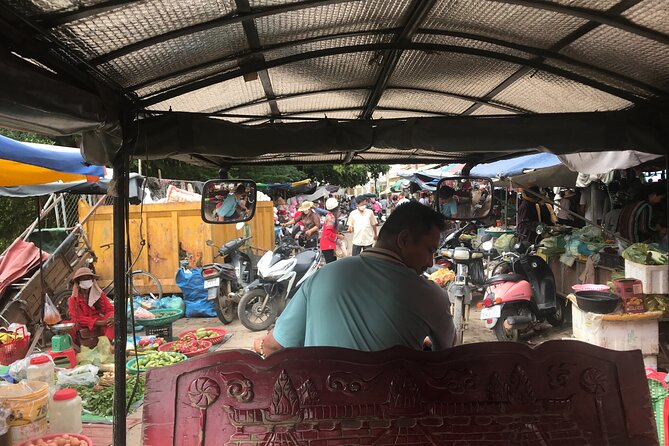
The banana stop provides a lighter contrast to the fermented fish paste. You see dried bananas and banana chips being produced, giving you another example of how a common local crop becomes a shelf-stable food.
The point is not only the snack itself. Drying and frying help preserve fruit and create products that can be sold beyond the moment of harvest. When you see several different foods made from local ingredients in one morning, Cambodia’s rural economy becomes easier to understand.
This stop should appeal to families and to anyone who enjoys food-focused tours. It is also a comfortable introduction if you are less interested in industrial or historical sights. You can watch the process, sample the result, and continue without needing specialist knowledge.
The variety is important. Rice paper, sticky rice, fish paste, bananas, and rice wine each show a different method of preparation. You get a broad look at local food production without spending the entire tour on one factory.
A traditional rice wine distillery
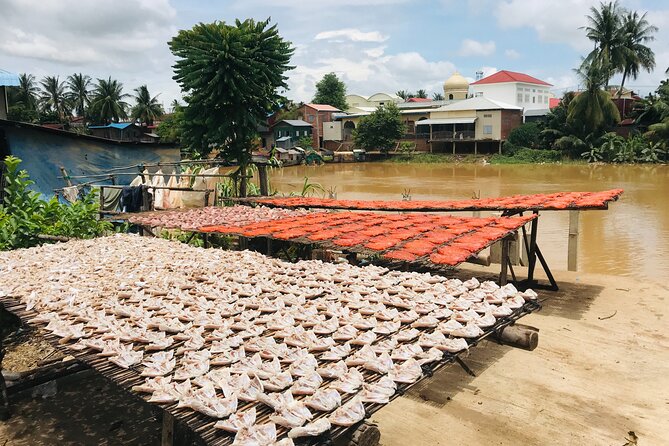
The old rice wine distillery adds a drink to the food theme. You visit a traditional production site and learn how rice wine is made in a local setting.
As with the other stops, the interest comes from seeing a working method rather than simply buying a bottle. Rice is central to Cambodian life, and this stop shows another way it is used. It also gives the tour a clear connection to local household and village traditions.
Tasting is part of the experience, but you should use your judgment with alcohol. The tour is in the morning, and the program includes several stops, so moderation is sensible. The available details do not specify the size or number of tastings, so do not book this as a dedicated drinking tour.
For many people, the distillery will be one of the most memorable stops because the process is less familiar than rice paper or banana snacks. It adds variety and keeps the morning from feeling repetitive.
Wat Samrong Knong and the killing fields option
You may also visit Wat Samrong Knong, a temple complex with an associated killing fields site. This changes the tone of the tour. The food stops focus on daily life and local work, while the killing fields confront Cambodia’s painful modern past.
I value having the choice. Some people want a food and village morning without a serious historical stop. Others want to connect rural Cambodia with the country’s recent history. The optional format lets you decide how to use your limited time.
If you choose to visit, allow yourself a quieter frame of mind. This is not a casual photo stop. The subject matter can be difficult, and it deserves attention. The temple complex also gives the morning a religious and cultural dimension, but the supplied details do not specify how long you spend there or the exact guided explanation.
The optional stop may also affect the balance of the morning. If your priority is meeting producers and tasting local food, ask about the timing before departure. If you want a broader picture of Battambang, adding the temple and killing fields can make the tour feel more complete.
What the $15 price really covers
At $15 per person, this is a low-cost way to see several parts of the Battambang countryside in one morning. The value comes from the combination of pickup, guiding, transport, multiple production stops, and tastings.
You are not paying for a luxury vehicle or a formal museum program. You are paying for access and context. Without local transport, it would be difficult to visit a rice paper maker, bamboo sticky rice producer, fermented fish paste factory, banana producer, and rice wine distillery in four or five hours.
The small group improves that value. A cap of 10 people means the guide has a reasonable chance to explain what you are seeing and respond to requests. Group discounts are also available, which may make the tour more attractive for families or friends traveling together.
The price does not guarantee that every stop will have the same level of presentation. These are local homes and workplaces, so the experience can feel uneven. I see that as a fair trade for seeing real production rather than a perfectly staged show.
Who will enjoy this morning most
I would recommend this tour to you if you like food, village life, and practical cultural experiences. It is a good match if you want to understand what people make and eat outside Battambang’s main streets.
It should also suit first-time visitors who want an easy introduction to the area. The guide handles the transport and route, while you get a range of short stops instead of having to organize several separate visits.
Families may appreciate the variety, especially the sticky rice, bananas, and rice paper. Small groups and couples can also benefit from the relaxed format and the chance to ask questions.
You may want another type of tour if you prefer grand monuments, long historical explanations, or high-end comfort. This experience is about ordinary work. Some stops may be smoky, strongly scented, or basic. That is not a flaw, but you should know what you are choosing.
Practical details for a smoother morning
The scheduled meeting window is 8:00 to 8:30 a.m., Monday through Sunday. Confirm the exact pickup arrangement when booking, especially if your accommodation is outside the central area.
The tour lasts approximately four to five hours. That leaves part of the day free, making it easy to combine with an afternoon activity in Battambang. One visitor also used the same driver for a separate afternoon outing and for transport to and from accommodation, though those arrangements are separate from this morning tour.
Wear comfortable clothes and shoes suited to village production sites. You may be walking around homes, factories, and outdoor work areas. Water is provided, but you should still plan for a warm morning.
Mobile tickets are accepted, and confirmation is received at booking. Service animals are allowed, and the activity is near public transportation. Most people can participate, though the information provided does not give detailed accessibility notes for each rural stop.
Free cancellation is available if you cancel at least 24 hours before the start time. Changes or cancellations within 24 hours are not accepted for a refund. The tour requires good weather, and if poor weather causes cancellation, you can choose another date or receive a full refund.
Should you book the Battambang village tour?
Book it if you want to see Battambang through local food and small-scale work rather than only through temples and city sights. The mix of rice paper, bamboo sticky rice, fermented fish paste, bananas, and rice wine gives you a useful cross-section of rural production for $15.
I especially like the safe driving, included water, small group limit, and flexible attitude described for the service. Those details make a difference when the morning includes several countryside stops. Choose the optional Wat Samrong Knong visit if Cambodia’s recent history matters to you, or focus on the producers if food and village life are your priority.
Skip it if you want a polished attraction with fixed presentations and modern facilities. For everyone else, this is a practical, affordable way to see the human work behind familiar Cambodian foods.
FAQ
How long does the Battambang village tour last?
The tour lasts approximately four to five hours.
What time does the tour begin?
The meeting and pickup window is from 8:00 to 8:30 a.m., Monday through Sunday.
How much does the tour cost?
The listed price is $15 per person. Group discounts are available.
What foods and drinks can I see being made?
The tour includes rice paper, sticky rice cooked in bamboo tubes, fermented fish paste, dried bananas, banana chips, and traditional rice wine.
Is pickup included?
Pickup is offered. The available information does not specify every pickup location, so confirm the arrangement when booking.
How many people can join the tour?
The maximum group size is 10 people.
Can I cancel for a full refund?
Yes. You can receive a full refund if you cancel at least 24 hours before the experience start time. Cancellations within 24 hours are not refunded. If poor weather causes the tour to be canceled, you can select another date or receive a full refund.
Just added around Battambang
- Bamboo Train, Banann Temple, Fruit Bat, Bat Cave, Sunset★ 4.2 · 3 reviews
- Morning Tour Bamboo Train, Ancient House, Local, Countryside★ 5.0 · 3 reviews
- Private Boat from Battambang to Siem Reap via Tonle Sap Lake★ 4.5 · 3 reviews
- Battambang Private afternoon tour bamboo train bat cave & village★ 5.0 · 3 reviews
- Battambang Private Full-Day Tour★ 5.0 · 3 reviews
- From Siem Reap: Battambang Day Trip Bamboo Train & Bat Cave★ 5.0 · 4 reviews
- Private Taxi Transfer From Battambang – Siem Reap City★ 5.0 · 4 reviews
- Battambang City and Country side Full day Tour★ 5.0 · 4 reviews
Battambang Tours, compared.
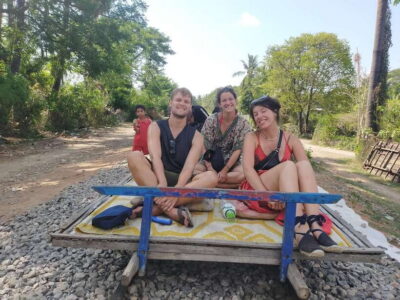
Tuk-Tuk, Bamboo Train, Killing/Bat Caves, Sunset
Read our review →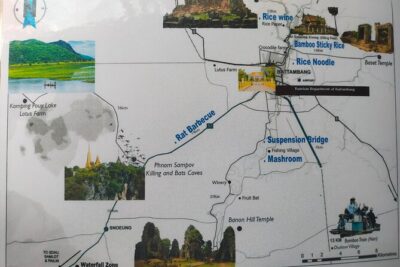
Battambang Tuk Tuk tour: Bambootrain, Killing & Bat Caves,Sunset
Read our review →
Afternoon tour by tuk tuk to bamboo train,bat cave,killing cave,countryside.
Read our review →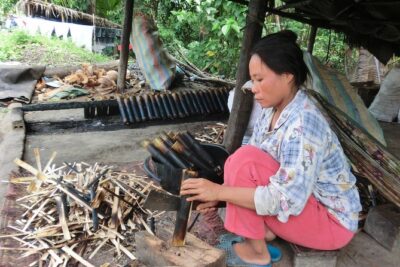
Local Livelihood Half Day Bike Tour in Battambang
Read our review →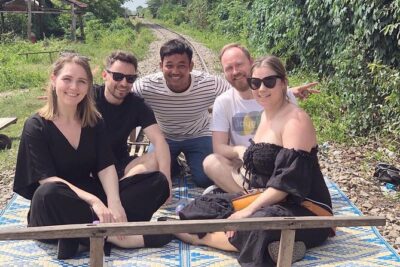
Explore Battambang full day tour by Tuk Tuk (start from 9am-6:30pm)
Read our review →
Full Day tour .City tour.Countryside.Bamboo Train.Secret Bat Cave
Read our review →
Browse the lists this tour appears in