
Reviewed · KILLING FIELDS & GENOCIDE MUSEUM TOURS
Morning Tour,Ak Phnom temple,Rice wine,Rice Paper, killing Field
Ancient stones, village life, and difficult history. This Battambang tuk-tuk outing brings together Ek Phnom temple and several small local businesses that are easy to miss on your own. I like the mix of hands-on stops, especially the rice wine, rice paper, and dried banana visits. I also like the guide-led format, with Pao, Pov, and Yi Yong praised for clear English, humor, and care. The main consideration is that the description is not fully clear about timing, and extra entrance fees are not included in the $20 price.
This is a good choice if you want more than a temple photo and a quick ride through town. You get a look at rural production, a major Buddhist site, and Wat Samrong Khong, a former killing field. The morning departure matters in Cambodia’s heat, and the small shared group, capped at 10 people, should feel more personal than a large coach tour.
In This Review
- What makes this Battambang tour worth considering
- A rural morning beyond central Battambang
- Why the morning departure matters
- Riding north by shared tuk-tuk
- Ek Phnom, an 11th-century temple outside town
- Bamboo sticky rice and the working countryside
- Rice wine, rice paper, and dried bananas
- The fish market and local commerce
- Wat Samrong Khong and the killing field
- What the $20 price really covers
- Who will enjoy this outing most
- Booking details worth checking first
- Should you book this Battambang tour?
- FAQ
- Is hotel pickup offered?
- How much does the tour cost?
- How long does the experience last?
- What is included in the price?
- How many people can join the tour?
- Can I cancel for a full refund?
What makes this Battambang tour worth considering

- Ek Phnom is the historic centerpiece: See an 11th-century Angkor-style temple ruin about 15 kilometers northwest of Battambang, along with a giant Buddha statue.
- Local workshops make the countryside practical and memorable: Watch or learn about bamboo sticky rice, rice wine, rice paper, dried bananas, and banana chips.
- Pao, Pov, and Yi Yong receive especially warm praise: Their English, humor, local knowledge, and willingness to explain Cambodia’s past are major strengths.
- Wat Samrong Khong adds serious historical weight: The killing field visit is sombre and may be emotionally difficult, but it gives the day important context.
- The $20 price covers the basic ride and guide: Water, a shared tuk-tuk, and guiding are included, while tickets and other fees are extra.
- Morning is the sensible time to go: The route includes open countryside and outdoor stops, so an early start should be more comfortable.
A rural morning beyond central Battambang
Battambang is known for its old town, colonial-era buildings, and nearby countryside. This outing points north and west, away from the center, where rice fields and village businesses become the main attraction.
The route is not simply a temple transfer. It connects several modest production sites with religious and historical places. That combination gives you a better sense of how people in the area work, eat, worship, and remember the past.
I particularly like the way the tour uses local products as an entry point. Rice wine, rice paper, bamboo sticky rice, dried bananas, and banana chips are not grand attractions, but they help explain daily life in a direct way. You are not just looking at scenery from the back of a tuk-tuk. You have several reasons to stop and see what is being made.
The experience is advertised at $20, which is a reasonable starting price for a shared tuk-tuk, guide, and water. The value depends partly on how many stops are operating on your day and how much time your guide spends explaining them. Keep a little extra money ready because admission tickets and fees are not included.
More Killing Fields and genocide museum tours:
- Morning Tuk tuk: City, Handicrafts, Killing field, Temples
★ 4.9 · 13 reviews - The Killing Field and Toul Sleng Genocide Museum (S21) Tour
★ 5.0 · 1,977 reviews - Killing field and Toul Sleng genocide museum Tour
★ 5.0 · 610 reviews
Why the morning departure matters
The tour is described as a morning half-day experience, although the supplied schedule also uses a two-day format and some descriptions refer to a full-day outing. That mismatch is worth clearing up before you book.
The safest assumption is that the advertised morning plan covers the main stops in several hours. At the same time, the guide may offer or arrange a longer day around Battambang. Some guests received a roughly 10-hour day with additional sightseeing, but that should not be treated as guaranteed for every booking.
Ask the provider for the exact pickup time, expected finish time, and final stop list. This is especially useful if you have a bus, train, or another activity later in the day.
A morning start is smart. The route includes temple grounds, village stops, and time outside under the Cambodian sun. The tour details do not promise breakfast, so eat beforehand and use the supplied water as a supplement rather than your only refreshment.
Riding north by shared tuk-tuk
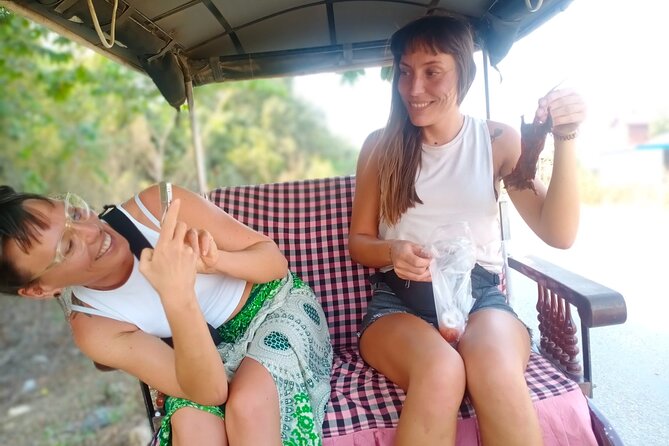
Your transport is a shared tuk-tuk, with hotel pickup offered. That is a good match for Battambang’s smaller roads and rural route. You get open-air views as you leave town, and the ride itself becomes part of the experience.
The group limit is 10 people. That is still a group, but it is small enough for questions and conversation if the tuk-tuk arrangement allows it. Do not expect the same quiet or space as a private vehicle. If you want complete control over stops and timing, ask about a private version before booking.
The guide is a major part of the value. Pao is repeatedly praised for his humor, excellent English, enthusiasm, and strong understanding of local places. Pov is also praised for explaining sites with energy and recommending places to eat, while Yi Yong is described as attentive from hotel pickup onward.
Those details matter because the stops are not all self-explanatory. A rice wine workshop can otherwise become a quick tasting. A temple can look like a pile of old stones. A killing field can be difficult to understand without careful context. A good guide turns each stop into a connected story.
Ek Phnom, an 11th-century temple outside town
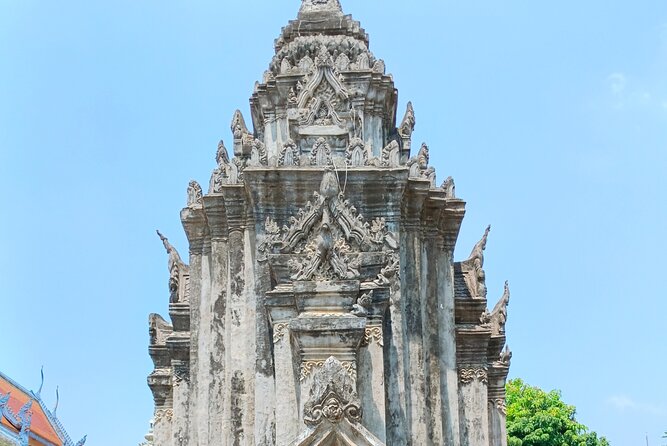
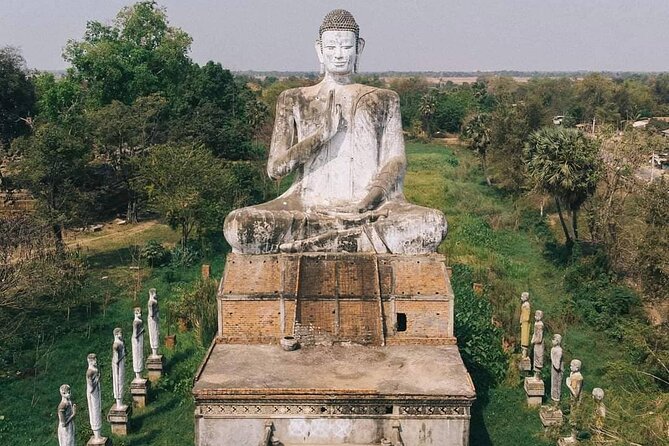
The first major cultural stop is Ek Phnom, also spelled Ak Phnom in the tour material. It is an 11th-century Buddhist temple ruin in the Angkor style, roughly 15 kilometers northwest of Battambang.
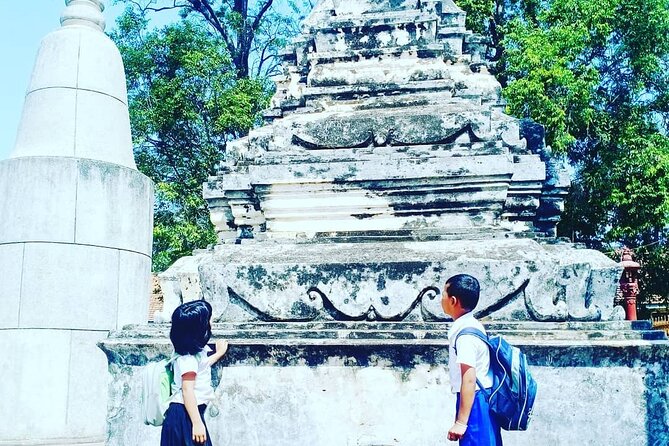
The temple gives you a chance to see Khmer religious architecture away from the crowds and scale of Angkor Wat. It is a ruin, not a polished monument, so expect worn stone, broken structures, and a sense of age. That is part of its appeal.
The guide can help explain the relationship between Hinduism and Buddhism in Cambodia. One especially useful part of the guiding is the connection between these traditions, since Khmer temples often contain symbols and ideas shaped by both. Without that background, the carvings and layout may be harder to read.
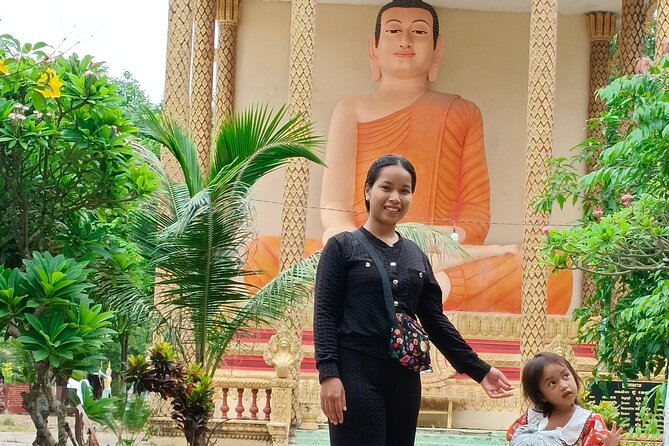
The site is also associated with a large Buddha statue, which adds a more visibly active religious element to the older temple remains. This contrast is useful: you see both a historic ruin and a place connected with living Buddhist practice.
Do not rush this stop. Ek Phnom is the kind of place that benefits from a few minutes of quiet looking after the explanation. At the same time, the experience is outdoors and exposed, so a hat, sunscreen, and comfortable footwear will make the visit easier.
Entrance charges are listed separately from the tour price. Confirm the current amount before you go, since the $20 does not cover ticket and fee costs.
A few more trips worth weighing up
- Handicraft tour/rice paper,/rice wine/bat cave Sun Set
★ 4.6 · 10 reviews - Rooftop Romantic Dinner – 4 Courses Set Meal & Wine
★ 3.5 · 5 reviews
Bamboo sticky rice and the working countryside
The village visits are where this tour becomes more personal. One stop concerns bamboo sticky rice, a Cambodian food prepared with rice and bamboo. The exact demonstration can vary, but you should expect an explanation of how this familiar local product is made.
This is a small-scale activity rather than a staged cultural show. That can mean the visit feels simple, brief, or dependent on what is being produced that day. It also means you get a closer look at real work instead of a polished performance built only for tour groups.
I value stops like this because food gives you a practical link to the countryside. Rice is not an abstract symbol here. It connects farming, cooking, trade, and family life. If you enjoy learning through taste and process, this part may be more memorable than another formal monument.
Your guide can also help with questions about ingredients, preparation, and how the product is sold. If you are curious, ask. The guides praised for this tour seem to enjoy explaining details rather than simply moving people from place to place.
Rice wine, rice paper, and dried bananas
The rice wine stop adds a little fun to the route. You may be offered a small taste, often described as trying a shot of rice wine. Treat it as a tasting, not a drinking session. Anyone who avoids alcohol should tell the guide and skip it.
The visit is also useful because it shows how rice is used beyond the bowl. You see another village product tied to local knowledge and small business. The tour gives you a chance to ask how the wine is made, but the supplied details do not promise a formal demonstration or a fixed tasting quantity.
Rice paper is another practical stop. The name can sound familiar, but seeing how it is produced in a village setting gives you a better sense of the work behind a common Cambodian food ingredient. This is the kind of visit you might not find by wandering around Battambang without local help.
The dried banana and banana chip stop continues the food theme. You may see a local business preparing bananas for sale, giving you a look at preservation and small-scale trade. It is a modest attraction, but that is exactly why it works. You are seeing how everyday produce becomes a marketable product.
These visits may include opportunities to buy items. The tour details do not promise purchases or set prices, so decide for yourself. Buying something can support the makers, but you should not feel pressured to shop.
The fish market and local commerce

The itinerary also includes a fish market. This is a useful change from the workshops because it shifts the focus from prepared goods to fresh food and trade.
A market is often most interesting when you pay attention to the rhythm of buying and selling rather than looking for a single sight. Your guide can explain what you are seeing and help you move through the stop respectfully.
Conditions can be strong in a fish market. Smells, wet floors, heat, and noise are all possible, though the tour information does not describe the exact setup. If you are sensitive to those conditions, ask your guide how long the stop will last.
The market also helps connect the other visits. Rice, fish, bananas, and locally made products all point to the food economy around Battambang. The day is not built around one grand attraction. It is a series of small windows into local life.
Wat Samrong Khong and the killing field
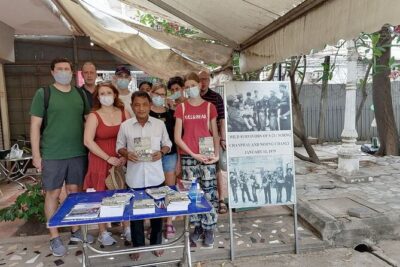
Wat Samrong Khong is the most sombre stop. The site is connected with Cambodia’s killing fields, and it brings the country’s recent painful past into the day.
This visit should not be treated as a casual sightseeing stop. You may find it emotionally heavy, especially after the lighter food and village visits. That contrast is difficult, but it is also important. Cambodia’s story includes ancient religious art and everyday rural life, as well as the trauma of the Khmer Rouge period.
A guide who can explain the site with care is particularly valuable here. Pao and Pov are praised for making even serious places understandable without losing the human weight of the subject. Still, the exact interpretation will depend on who leads your tour and how much time is available.
Give yourself permission to be quiet. You do not need to force a cheerful reaction or hurry through the place for photographs. If you prefer a lighter half-day, ask whether this stop can be discussed before departure, although the tour description presents it as part of the route.
Including Wat Samrong Khong makes the outing more than a food-and-temple circuit. It asks you to see Battambang as a place with both beauty and painful memories.
What the $20 price really covers
At $20, the tour offers a useful bundle:
- Shared tuk-tuk transport
- Hotel pickup
- English-speaking guide
- Drinking water
- Visits to the listed countryside, temple, food, market, and historical stops
The price does not include breakfast, tickets, or other fees. That is the main financial detail to watch. One useful improvement would be a clearer breakdown of the extra costs, so ask for them before the morning begins.
The tour is good value if you want transport and interpretation in one package. Hiring a tuk-tuk independently may look cheaper, but you would need to arrange the route, identify the village businesses, and find someone able to explain the temple and killing field in English.
The value is strongest for first-time visitors to Battambang or anyone with limited time. If you already know the countryside well and only want Ek Phnom, a simple tuk-tuk ride may suit you better.
Who will enjoy this outing most
I would suggest this tour to you if you want:
- A mix of history, food production, and village life
- A guide who can explain Cambodia in clear English
- A small shared group rather than a large bus
- A morning trip from Battambang
- A serious historical stop included alongside lighter activities
- A reasonably priced way to reach places outside town
Families can likely take part because most people can participate, and service animals are allowed. Still, the killing field may require a thoughtful conversation with children before you go.
This is less suited to anyone seeking a quiet luxury excursion, a carefully timed private itinerary, or a tour focused only on temples. The food stops are local and informal, and the schedule may shift depending on the day.
Booking details worth checking first
Confirmation is provided at booking, and pickup is offered. The experience has free cancellation if you cancel at least 24 hours before the start time. Cancellations or changes inside that window are not accepted for a refund.
Good weather is required. If poor weather causes the provider to cancel, you should be offered another date or a full refund.
Because the duration information is inconsistent, contact Mr. Pov Battambang Amazing Tour before paying if you need a strict half-day schedule. Ask whether your booking is the morning half-day route or a longer day, which stops are included, and what admission charges you should carry.
Should you book this Battambang tour?
I would book it if you want Battambang to feel like more than a stop between major Cambodian destinations. Ek Phnom gives you an old temple, the village visits show working life, and Wat Samrong Khong adds a necessary but difficult historical dimension.
The strongest reason to choose it is the guide. Pao, Pov, and Yi Yong are praised for warmth, English, humor, and care, and that personal connection can make a simple tuk-tuk route much more rewarding.
Book with two conditions: confirm the exact duration and budget for extra fees. If you do that, the $20 price offers a practical introduction to the countryside around Battambang, with enough variety to keep the morning moving and enough serious history to give the day weight.
FAQ
Is hotel pickup offered?
Yes. Hotel pickup is offered as part of the experience.
How much does the tour cost?
The listed price is $20. Tickets and fees are not included, so you should allow extra money for those costs.
How long does the experience last?
It is described mainly as a morning half-day tour, but the supplied schedule also refers to two days and some descriptions mention a full-day outing. Confirm the exact duration with the provider before booking.
What is included in the price?
The price includes water, a shared tour, a guide, and tuk-tuk transport.
How many people can join the tour?
The tour has a maximum group size of 10 people.
Can I cancel for a full refund?
Yes, if you cancel at least 24 hours before the experience start time. Poor weather cancellations by the provider should result in another date or a full refund.
More Morning
- Morning village tour Livelihood tour with Local Product discover
★ 5.0 · 36 reviews - half day morning tour by Tuk-Tuk
★ 5.0 · 20 reviews - Explore the Village &Countryside By Bicycle-Half Day Morning
★ 4.8 · 13 reviews - Half day morning bicycle tour to Explore local livelihood and test local snacks
★ 5.0 · 9 reviews
Just added around Battambang
- Bamboo Train, Banann Temple, Fruit Bat, Bat Cave, Sunset★ 4.2 · 3 reviews
- Morning Tour Bamboo Train, Ancient House, Local, Countryside★ 5.0 · 3 reviews
- Private Boat from Battambang to Siem Reap via Tonle Sap Lake★ 4.5 · 3 reviews
- Battambang Private afternoon tour bamboo train bat cave & village★ 5.0 · 3 reviews
- Battambang Private Full-Day Tour★ 5.0 · 3 reviews
- From Siem Reap: Battambang Day Trip Bamboo Train & Bat Cave★ 5.0 · 4 reviews
- Private Taxi Transfer From Battambang – Siem Reap City★ 5.0 · 4 reviews
- Battambang City and Country side Full day Tour★ 5.0 · 4 reviews
Killing Fields & Genocide Museum Tours, compared.
The Killing Field and Toul Sleng Genocide Museum (S21) Tour
Read our review →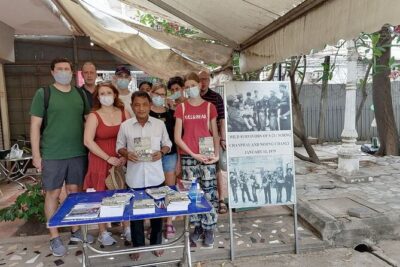
Killing field and Toul Sleng genocide museum Tour
Read our review →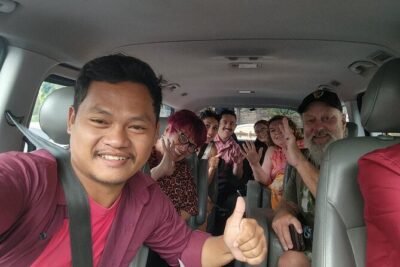
Visit 11 Places in One Day including S21 & Killing Field
Read our review →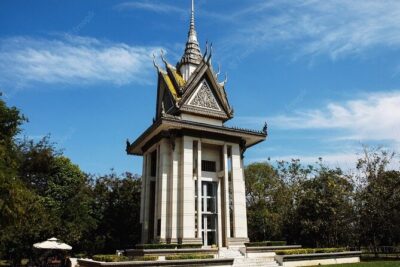
Half Day Tuol Sleng S21 and Choeung Ek Killing Field Tour
Read our review →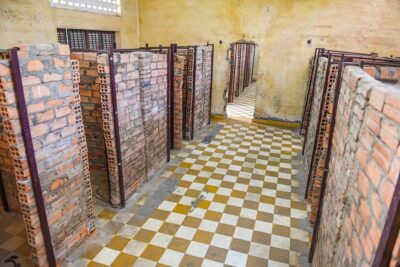
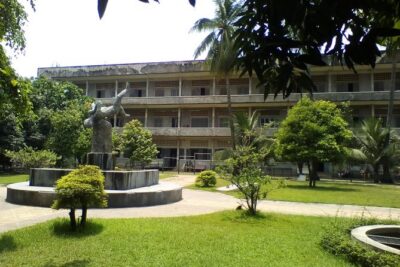
Private Half Day To Killing Field & S21 Genocidal Museum in Phnom Penh
Read our review →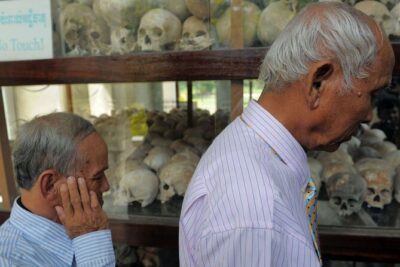
Tuol Sleng Genocide Museum (S-21) and Choeung Ek Killing Fields Tour
Read our review →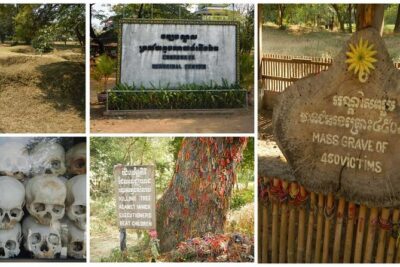
Phnom Penh City Tour, Silver Pagoda, Genocide Museum, Killing Fields
Read our review →Browse the lists this tour appears in