
Reviewed · 1-DAY TOURS
One day normal Angkor tour
Angkor rewards an early start. This eight-hour private tour covers Angkor Wat, Ta Prohm, Angkor Thom, Bayon, the Royal Terraces, and other major sights with hotel pickup, bottled water, and air-conditioned transport. I like the efficient route and the chance to hear the temples explained by an art historian guide rather than simply ticking them off with a camera.
I also like the personal service associated with guide Bunleat, who is praised for his patient explanations, photo help, and strong grasp of Hindu and Buddhist traditions. The main drawback is the extra cost: the $45 tour price does not include the $37 one-day temple pass or lunch, and a full day of temples can be tiring in Cambodia’s heat.
In This Review
- Key points to know before booking
- Why the 7:30 AM start matters at Angkor Wat
- Baksei Chamkrong adds a smaller temple with a big comparison
- Bayon and the smiling faces of Angkor Thom
- Baphuon, Phimeanakas, and the Royal Palace area
- Ta Prohm brings a different kind of atmosphere
- Royal Terraces and the wider Angkor story
- Transport, lunch, and the comfort factor
- What the private format is really worth
- The guide’s role: why Bunleat matters
- Timing, fitness, and what to bring
- Who should book this one-day Angkor tour?
- Should you book it?
- FAQ
- How long does the Angkor tour last?
- What time does the tour begin?
- Is hotel pickup included?
- Which temples and sites are visited?
- Is the Angkor temple ticket included?
- Is lunch included?
- Is this a private tour?
- What should I wear to the temples?
- What does the $45 price include?
Key points to know before booking
- Angkor Wat is visited early: The 7:30 AM start aims for cooler conditions and smaller crowds at Cambodia’s best-known temple.
- The route covers the essential sights: Angkor Wat, Baksei Chamkrong, Bayon, Angkor Thom, Baphuon, Phimeanakas, the Royal Palace area, Ta Prohm, and the Royal Terraces are included.
- You get private transport: Only your own group participates, traveling by air-conditioned car or minivan.
- Guide Bunleat earns repeated praise: His strengths are historical context, religious explanations, patience, and help finding good photo angles.
- The advertised price is not the full day’s cost: Add $37 per person for the one-day Angkor pass, plus lunch and any tip.
- Dress rules are strict: Knees and shoulders must be covered at temples and other religious sites.
Why the 7:30 AM start matters at Angkor Wat
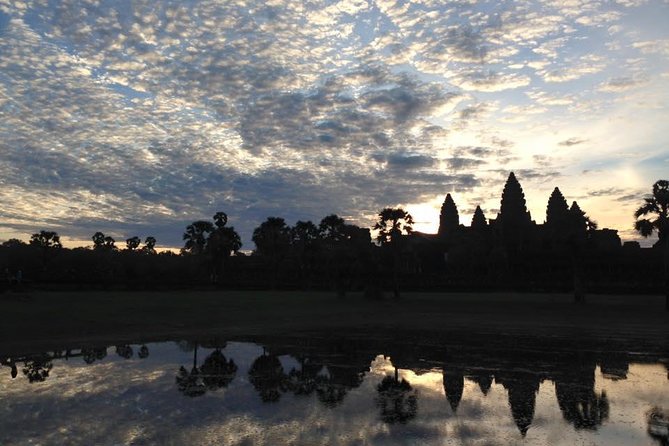
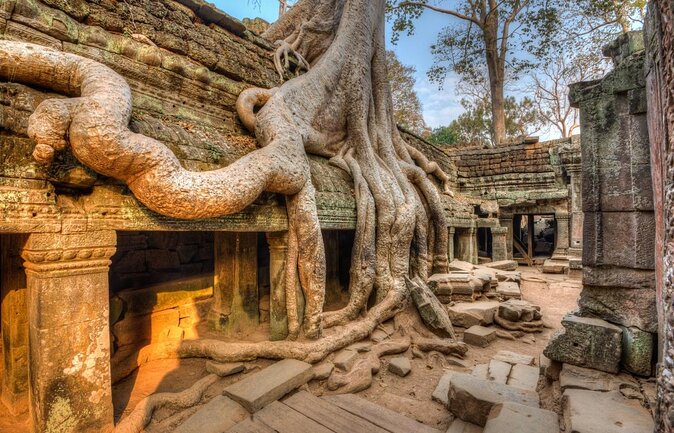
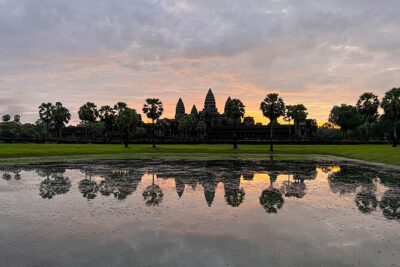
The day begins at about 7:30 AM, with pickup and transport to the Angkor Archaeological Park. The early timing is one of the strongest features of this plan. Angkor Wat is enormous, and seeing it before the hottest part of the day gives you a better chance to appreciate its scale without feeling immediately worn out.
Angkor Wat was built as a Hindu temple dedicated to Vishnu and later became an important Buddhist site. You can expect your guide to explain the temple’s layout, religious imagery, and the meaning of its carved scenes as you move through the complex.
The site is not a quick photo stop. Its causeway, towers, galleries, courtyards, and wall carvings require walking and standing. Good footwear and modest clothing will make the morning easier. Shorts and sleeveless tops are not accepted at places of worship, and both men and women must cover their knees and shoulders.
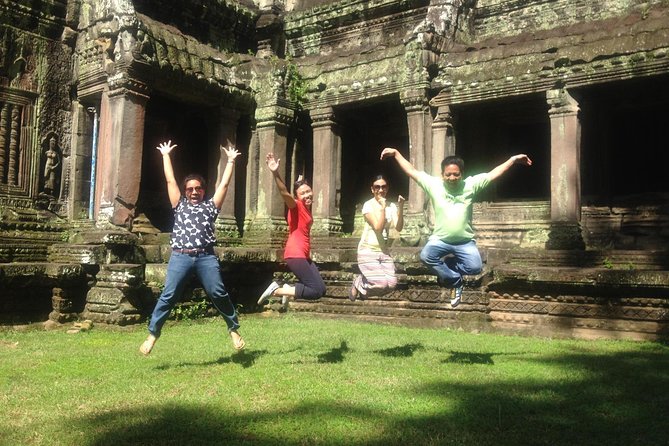
An early visit also helps with photographs. Bunleat is repeatedly praised for pointing out useful locations and angles for pictures, then helping take photos. That small service can matter when you are traveling as a couple or in a small private group and do not want every image to be a selfie.
A few more trips worth weighing up
- 1-Day Amazing Angkor Wat Tour with Sunset & All Interesting Major Temples
★ 5.0 · 308 reviews - Angkor Wat one Day Private Tour for All Highlight Angkor Temples
★ 5.0 · 199 reviews - 1-Day private Angkor Temple Tour from Siem Reap
★ 4.9 · 178 reviews
Baksei Chamkrong adds a smaller temple with a big comparison
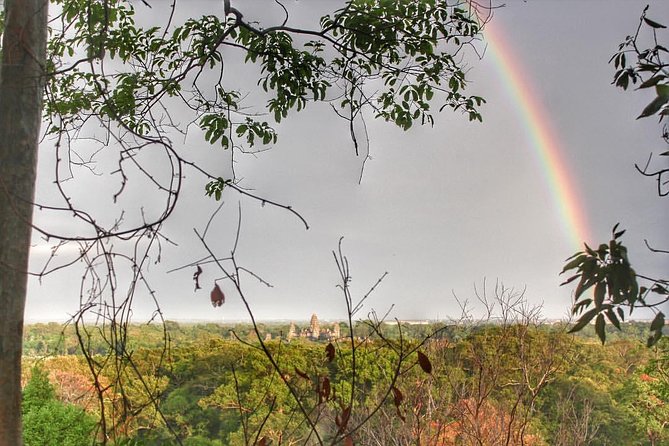
After Angkor Wat, the route heads north to Baksei Chamkrong, identified in the tour details as Basei ChamKrong. This pyramid temple was built in 947 AD by Harshavarman I and completed by Rajendravarman II. It was dedicated to Shiva.
The temple is presented as a useful comparison with the pyramid form found at Tikal in the ancient Maya world. You will not get the same scale as Angkor Wat here, but that is part of the appeal. A smaller monument can help you see the basic pyramid-temple design more clearly, without being overwhelmed by vast galleries and crowds.
This stop also gives the guide a chance to connect architecture with religious purpose. Angkor’s temples were not built as isolated monuments. Their shapes, towers, stairways, and central sanctuaries reflected ideas about the Hindu cosmos, kingship, and access to the divine.
Be ready for uneven surfaces and steps. The tour requires a moderate level of physical fitness, and the full day includes several temple sites rather than one easy indoor attraction.
Bayon and the smiling faces of Angkor Thom
The next major stop is Bayon, located in the middle of Angkor Thom, the ancient city. Bayon is famous for its large carved faces, often described as smiling or calm. These towers give the temple a very different mood from Angkor Wat.
Angkor Thom was a major royal city, and Bayon served as its central temple. Your guide can help you read the site in layers: the central towers and faces, the galleries, the carved scenes, and the way the temple fits into the wider city.
I would allow yourself time to look closely here. Bayon can feel confusing at first because its towers and passageways seem to crowd together. That is exactly where live commentary helps. Bunleat’s explanations are praised for connecting the temples to Cambodian culture, Buddhism, Hinduism, and the work of restoration.
The photo opportunities are strong, but the faces are best understood in person. Move slowly, look up, and notice how many towers are visible from different angles. A guide who knows the site can save you from walking past details that are easy to miss.
Baphuon, Phimeanakas, and the Royal Palace area
Nearby, the itinerary continues to Baphuon, Phimeanakas, and the Royal Palace area. These sites give you a broader picture of Angkor Thom beyond Bayon’s famous faces.
Baphuon is another large temple structure within the ancient city. Its scale and raised form make it an important part of the Angkor Thom visit. Phimeanakas and the Royal Palace area add a royal and civic dimension to the day, helping you understand that Angkor was not just a collection of religious buildings.
The tour information does not promise a long stop at each location, so expect the guide to balance several sites within the available seven to eight hours. That is useful if this is your first Angkor visit and you want the main landmarks in one day. It also means you should not expect a slow, detailed study of every carving.
The private format helps here. Your group can ask questions and keep moving at a reasonable pace rather than following a large crowd. Still, the amount of walking adds up. Bring a hat, wear practical shoes, and use the bottled water provided.
A completely different kind of day out from Siem Reap:
- Angkor Wat Sunrise or Sunset Tour with Guide from Siem Reap
★ 5.0 · 12,109 reviews - Siem Reap: Angkor Wat: Small-Group Sunrise or Sunset Tour
★ 5.0 · 9,444 reviews - From Siem Reap: Kampong Phluk Floating Village Tour by Boat
★ 4.9 · 6,979 reviews - Sunset tour of Kampong Phluk stilts home village on the Tonle Sap
★ 5.0 · 4,865 reviews
Ta Prohm brings a different kind of atmosphere
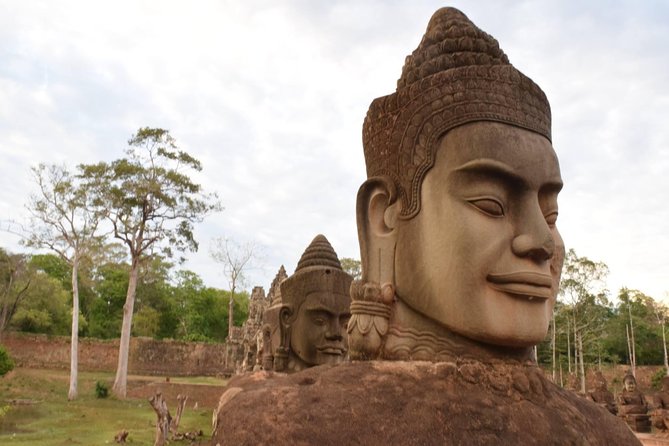
Ta Prohm is one of the essential stops and one of the most memorable because of its stone walls and trees. The temple is associated with the image of nature growing through an ancient structure, though the real value is more than a dramatic photograph.
At Ta Prohm, you see how time, weather, vegetation, and conservation have shaped the visitor experience. The temple feels less orderly than Angkor Wat, with corridors, collapsed sections, and carved stone set among trees. That difference makes it a good counterpoint to the formal symmetry of Angkor Wat.
The route includes Ta Prohm among the major Angkor highlights, but the exact length of time at each temple is not specified. If you have a strong interest in this site, tell your guide early. A private tour gives you a better chance to express that preference, although the day still has a fixed overall length.
This is another place where Bunleat’s knowledge can add real value. The strongest praise directed at him concerns explanations of history, religion, construction, and restoration. At Ta Prohm, those subjects help turn an atmospheric walk into a clearer understanding of how the monument has survived.
Royal Terraces and the wider Angkor story
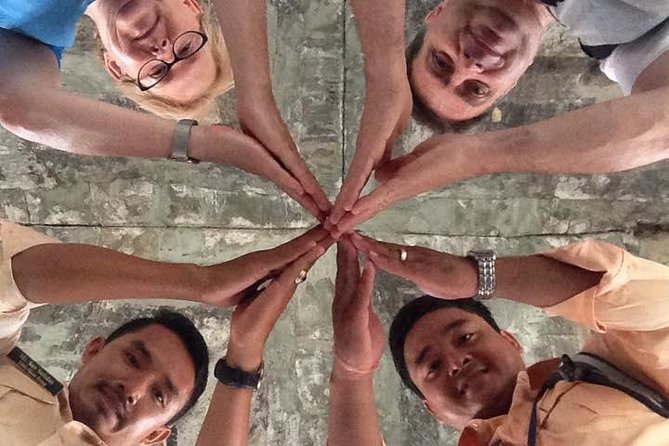
The Royal Terraces are also part of the day. They are connected with the ceremonial and royal side of Angkor Thom, and they help show how the ancient city functioned on a scale larger than any single temple.
You may find this stop less instantly dramatic than Angkor Wat or Ta Prohm. Its value comes from context. After seeing temples as individual buildings, the terraces help you picture public space, royal display, and the relationship between monuments and the city around them.
A good guide can make a major difference here. Without explanation, terraces and carved walls can look like one more set of stones. With context, you begin to see how the site served a living society rather than existing only as an archaeological park.
The itinerary is designed as a highlights day, so the Royal Terraces are part of a larger sequence. I like that approach for a first visit, but it may feel too fast if you want long periods of quiet observation at each location.
Transport, lunch, and the comfort factor
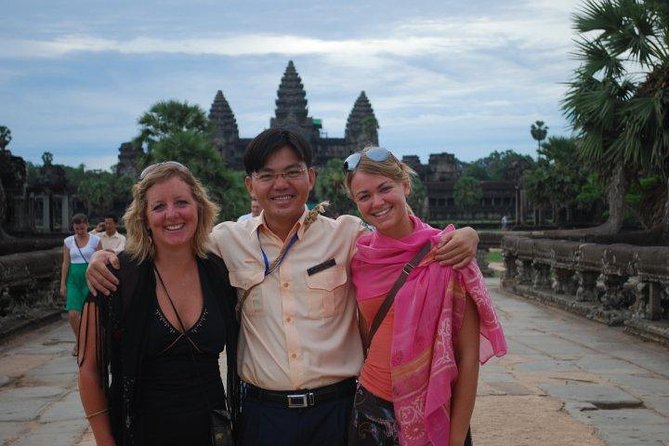
Transport is by private air-conditioned car or minivan, with hotel pickup and drop-off included. This is a practical benefit in Siem Reap. Between temples, you can cool down, sit comfortably, and recover from the heat instead of arranging each transfer yourself.
Bottled water is included. Several accounts also praise Bunleat for providing cold water and, in some cases, chilled towels and a clean, comfortable vehicle. Those extras should not be treated as guaranteed inclusions unless confirmed at booking, but they indicate the kind of attentive service you may receive.
Lunch is not included. The itinerary allows a stop at a restaurant where you can buy your own meal. A vegetarian option is available if requested at the time of booking, but the price and restaurant menu are not specified.
Because lunch is separate, you should budget for it and expect some choice in what you eat. The break is useful after a busy morning, but it also takes time from temple visits. If you are determined to see every detail, the day may feel packed. If you want a manageable first look at Angkor, the meal stop is a welcome pause.
What the private format is really worth

The tour costs $45 per person, but you must add the one-day Angkor ticket, listed at $37 per person. Lunch is extra, and tipping is optional. Your practical base cost is therefore $82 per person before food and any tip.
That price can be good value if you want a guide and transport without organizing the day yourself. The cost covers an art historian guide, private air-conditioned transport, hotel pickup and return, bottled water, and local taxes. You are paying for structure and interpretation as much as for the vehicle.
The private format is especially useful for couples, families, or friends who want to move at their own pace. Only your group participates, so you can ask questions about Hinduism, Buddhism, temple design, or restoration without competing with a busload of people.
The value is less clear if you only want a driver or prefer to explore silently. You are also paying for a full highlights route, so anyone hoping to linger for hours at one temple may find the schedule restrictive.
The guide’s role: why Bunleat matters
The guide is the heart of this experience. Bunleat is repeatedly praised for patient, clear explanations and more than ten years of guiding experience at Angkor Wat. The most useful comments about his service focus on history, religion, culture, restoration, and photography.
That mix is important. A guide who only recites dates can make the temples feel remote. A guide who explains why a temple was built, how Hindu and Buddhist ideas appear in its art, and what restoration involves gives you a way to read the stones for yourself.
His patience is another practical strength. Angkor can be tiring, and not everyone in a group wants the same amount of detail. The description of Bunleat’s service suggests he is attentive to the client experience rather than rushing through a memorized script.
Guide assignments can change, so I would not treat Bunleat as guaranteed unless the operator confirms it. Still, if his availability is important to you, ask before booking. The repeated praise makes the guide a major part of the tour’s appeal.
Timing, fitness, and what to bring
The experience lasts about seven to eight hours, with a listed operating window from 7:00 AM to 3:00 PM. Pickup is offered, and the stated meeting point is Royal Angkor Resort on National Road 6 in Siem Reap. The activity ends back at the meeting point.
You need a moderate level of physical fitness. Expect walking around large temple compounds, uneven ground, and steps. The tour is not described as wheelchair accessible, so anyone with mobility concerns should ask the provider before booking.
Dress for religious sites, not just for the heat. Knees and shoulders must be covered for both men and women, and failure to follow the rule can lead to refused entry. Lightweight clothing that still covers you, comfortable walking shoes, water, and sun protection are sensible choices.
The experience is available near public transport, but hotel pickup makes that less important. Confirmation is normally provided at booking, though bookings made within three days of travel may be confirmed within 48 hours, subject to availability.
Free cancellation is available if you cancel at least 24 hours before the start time. Changes or cancellations made later are not accepted for a refund.
Who should book this one-day Angkor tour?
I would choose this tour if you have one full day in Siem Reap and want the main Angkor sights explained in a sensible order. It suits first-time visitors who value a private guide, dependable transport, and help with photographs.
It also suits history-minded couples and families who want to ask questions as they go. The religious and architectural context is a real benefit, especially at Bayon, Baphuon, Ta Prohm, and the Royal Palace area.
I would hesitate if you dislike early starts, long walking days, or structured sightseeing. I would also compare the total cost carefully if you already have transport and only need a temple pass.
Should you book it?
Book this tour if your priority is an efficient, well-explained first day at Angkor. The route reaches the major temples, the private vehicle keeps transfers comfortable, and guide Bunleat’s reported strengths in history, culture, restoration, and photography add more than simple transportation.
Before paying, confirm the guide, pickup details, and the full cost of the $37 temple pass and lunch. If you accept the long day and the extra ticket cost, this is a practical way to see Angkor’s essential sights without having to plan every turn yourself.
FAQ
How long does the Angkor tour last?
The tour lasts approximately seven to eight hours.
What time does the tour begin?
The itinerary starts at about 7:30 AM. The stated operating hours are 7:00 AM to 3:00 PM, Monday through Sunday.
Is hotel pickup included?
Yes. Hotel pickup and drop-off are included.
Which temples and sites are visited?
The route includes Angkor Wat, Baksei Chamkrong, Bayon, Angkor Thom, Baphuon, Phimeanakas, the Royal Palace area, Ta Prohm, and the Royal Terraces.
Is the Angkor temple ticket included?
No. The one-day ticket costs $37 per person and is not included in the tour price.
Is lunch included?
No. The tour stops at a restaurant where you can purchase lunch.
Is this a private tour?
Yes. Only your own group participates in the activity.
What should I wear to the temples?
Knees and shoulders must be covered for both men and women. Shorts and sleeveless tops are not allowed at places of worship and selected museums.
What does the $45 price include?
The price includes bottled water, an art historian guide, hotel pickup and drop-off, local taxes, and transport in an air-conditioned vehicle. Tips and lunch are not included.
Just added around Siem Reap
- Private Battambang Full-Day Guided Tour★ 4.5 · 3 reviews
- Kulen Mountain, Beng Mealea and Banteay Srei Full Day Tour★ 5.0 · 3 reviews
- Kompong Pluk Tour★ 5.0 · 3 reviews
- Private 3 Day Tour to Discover the ancient temples★ 5.0 · 3 reviews
- Cambodia: Absolute Traditional Dance Show with Buffet Dinner★ 5.0 · 3 reviews
- Kulen National Park Ticket -Waterfall & 1000 Lingas★ 5.0 · 3 reviews
- Border Transfer (Siem Reap to Laos/Laos to Siem Reap)★ 3.5 · 3 reviews
- Beng Melea, Rolous Group & Kompong Phluk Floating Village★ 5.0 · 3 reviews
1-Day Tours, compared.
Visit 11 Places in One Day including S21 & Killing Field
Read our review →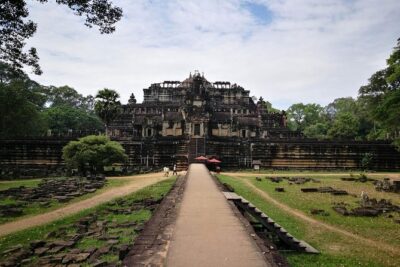
1-Day Amazing Angkor Wat Tour with Sunset & All Interesting Major Temples
Read our review →
Angkor Wat one Day Private Tour for All Highlight Angkor Temples
Read our review →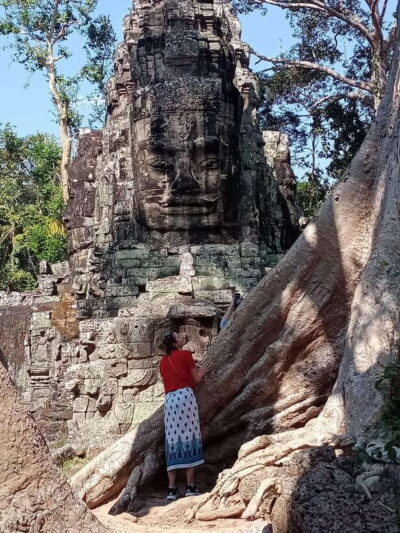
1-Day private Angkor Temple Tour from Siem Reap
Read our review →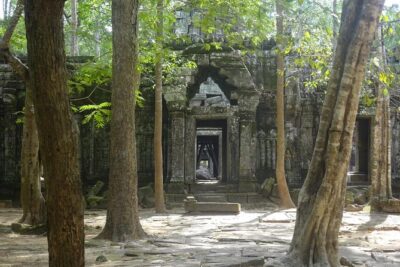
1-Day Angkor Wat Sunrise & All Interesting Temples Private Tour
Read our review →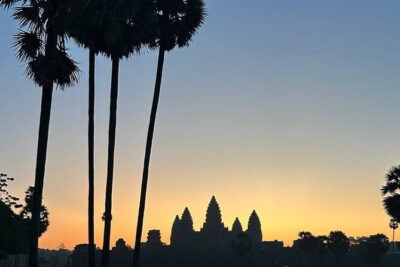
Angkor Wat Sunrise Small-Group 1-Day Tour from Siem Reap
Read our review →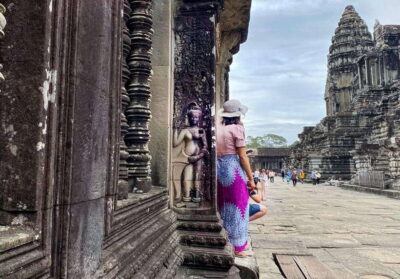
Browse the lists this tour appears in