
Reviewed · TUK-TUKS
Siem Reap: Angkor Temples Tour by a Private Tuk Tuk
Ancient stones, cool breezes, one nimble ride. This private tuk-tuk tour gives you a well-planned day among Angkor’s major temples without the feel of a large group. I like the private schedule, which lets you spend more time at the places that interest you, and I like the thoughtful touches, including cold water and hotel pickup. The main drawback is that the $25 price excludes temple admission and lunch, so your final cost will be higher.
You’ll cover a lot of ground, from Angkor Wat to the gates of Angkor Thom and the tree-wrapped ruins of Ta Prohm. The route can be tiring in Cambodia’s heat, but a tuk-tuk keeps the ride open to the air and makes short transfers more pleasant. Drivers such as Rachou and Sokha Cam have earned praise for their care, timing, and friendly help.
In This Review
- Key points to know before you book
- Why a private tuk-tuk works well at Angkor
- Angkor Wat: begin with Cambodia’s great symbol
- Angkor Thom’s South Gate and Bayon’s stone faces
- Baphuon, Phimeanakas, and the royal terraces
- Lunch in the middle of a long temple day
- Thommanon and Chau Say Tevoda: smaller temples, useful contrast
- Ta Prohm and the roots that made it famous
- What the $25 price really includes
- Comfort, clothing, and pacing
- Who should book this Angkor tour?
- Should you book it?
- FAQ
- How much does the private Angkor tuk-tuk tour cost?
- How long does the tour last?
- What temples are included?
- Is hotel pickup included?
- Is lunch included in the price?
- Are temple entrance fees included?
- How many people can join the tuk-tuk?
- Is the driver English-speaking?
- What should I bring?
Key points to know before you book
- Three essential Angkor stops: Angkor Wat, Bayon, and Ta Prohm form the heart of the day.
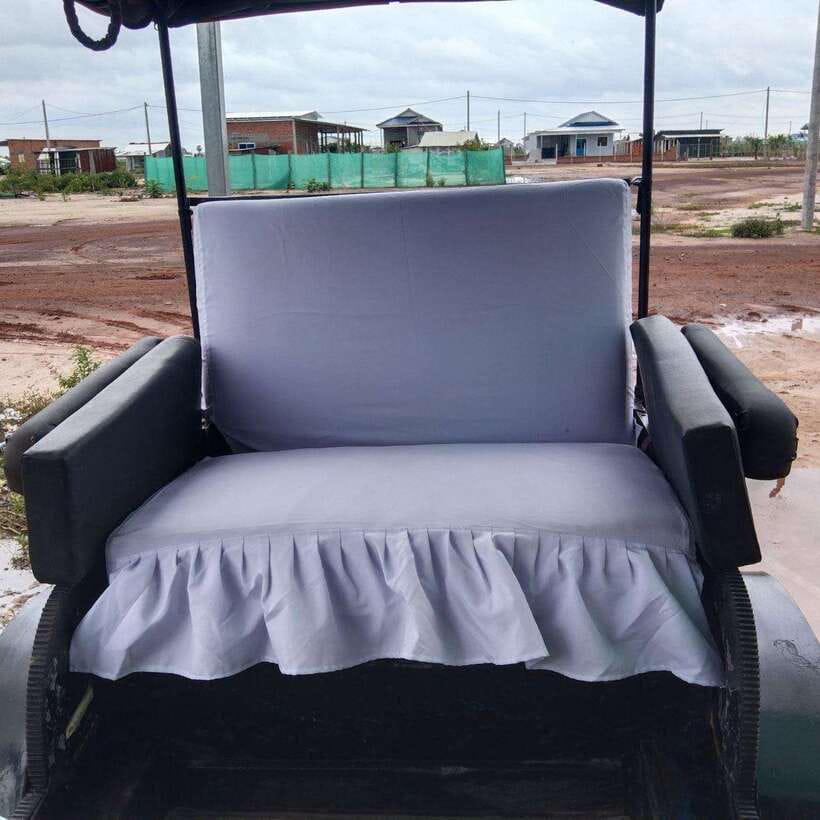
- Private tuk-tuk for up to four people: You are not tied to a fixed group pace.
- Cold water and hotel transfers included: Small comforts matter under the tropical sun.
- Extra temples fill out the day: Baphuon, Phimeanakas, the Terrace of the Elephants, Thommanon, and Chau Say Tevoda add variety.
- Lunch is at your own expense: A local restaurant break is part of the plan, but food is not included.
- Flexible timing is a real advantage: You can spend less time at a minor temple and more time at a major one.
Why a private tuk-tuk works well at Angkor
Angkor is not one temple. It is a huge archaeological area spread around Siem Reap, with long roads between the main monuments. Walking from one major site to the next would waste energy, while a closed vehicle can feel stuffy after hours in the heat.
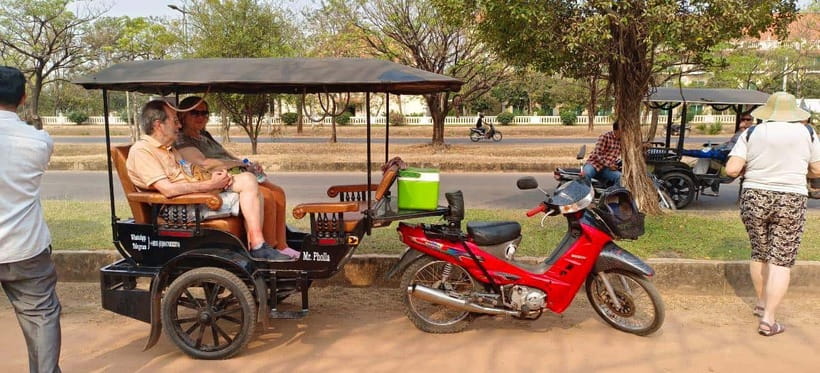
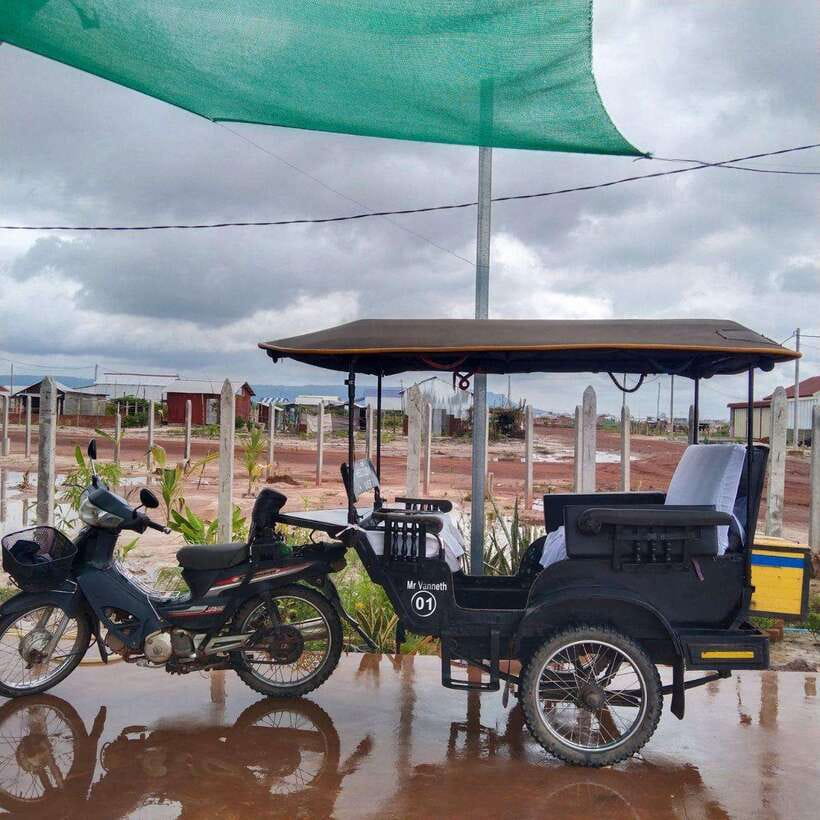
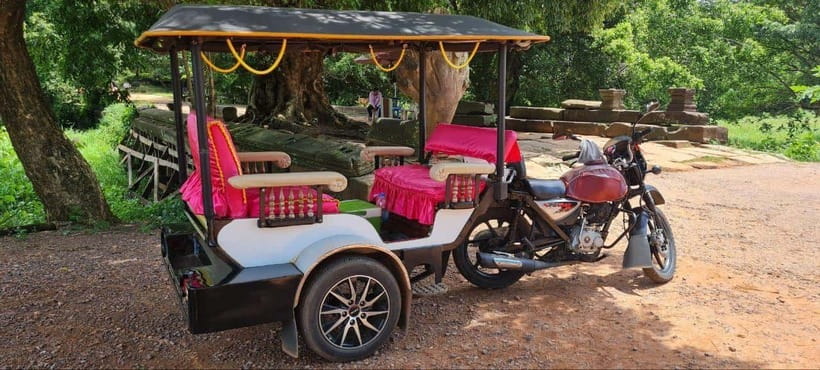
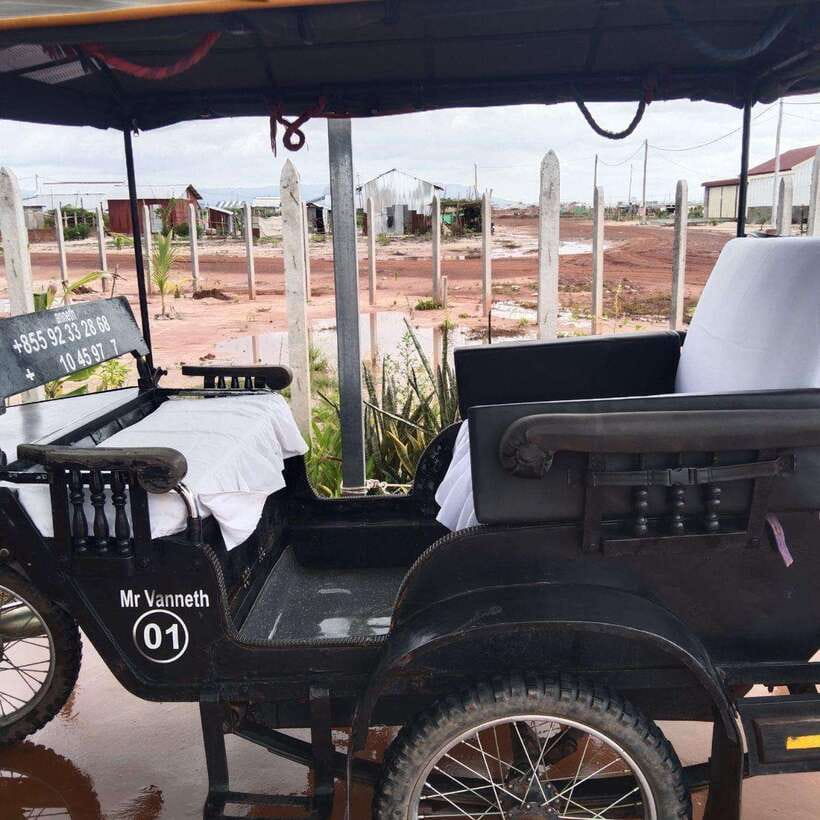
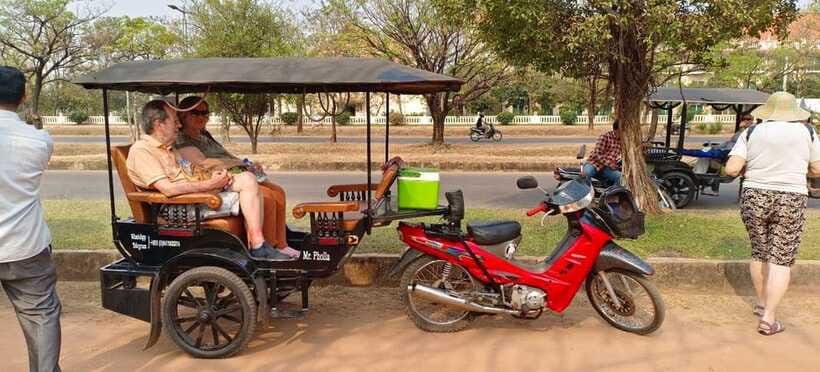
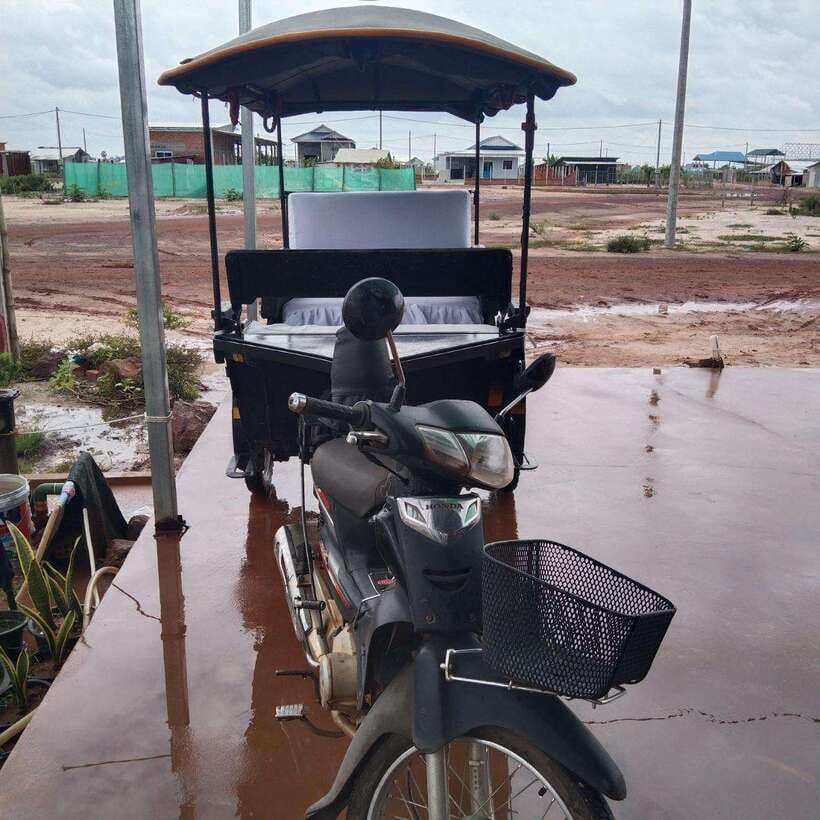
A tuk-tuk gives you the practical middle ground. You sit under a canopy, feel the air moving, and get a better sense of the forest and roads around the monuments. The vehicle is also small enough to stop conveniently and wait while you explore.
This is a private booking for up to four people, so you are not sharing the ride with strangers. That matters most at the end of a long day, when you may want a quiet ride back to the hotel rather than another round of introductions and scheduled stops.
The private format also gives you some control. One couple used the service for only about half a day after an earlier group outing, choosing specific temples and adjusting the length of each stop. The advertised plan is a full day, so confirm your preferred timing in advance, but the experience clearly has room for personal pacing.
Your driver is listed as English-speaking, and the service includes a licensed private driver. Rachou was praised for offering fresh water and cold towels, while Sokha Cam was noted for being especially attentive to an older couple. Those details are useful clues about the style of service: practical help, careful driving, and attention to comfort rather than a formal lecture-heavy tour.
More Tuk Tuk Tours in Siem Reap
- Siem Reap: Angkor Wat Private Tuk-Tuk Tour
★ 4.9 · 2,222 reviews - Siem Reap Countryside Bike Tour / E-Bike or Tuk Tuk
★ 5.0 · 935 reviews - Angkor Sunrise Bike Tour / E-Bike or Tuk Tuk
★ 5.0 · 615 reviews
Angkor Wat: begin with Cambodia’s great symbol
The day begins with hotel pickup in Krong Siem Reap, followed by a transfer of about 30 minutes. Your first major stop is Angkor Wat, the temple most closely linked with Cambodia’s identity.
Built by King Suryavarman II in the early 12th century, Angkor Wat began as a Hindu temple and later became an important Buddhist center. It was constructed as the state temple of Yasodharapura, the capital of the Khmer Empire, and was intended to serve as the king’s mausoleum.
You’ll have about an hour and a half here for walking, sightseeing, and photographs. That is enough for a useful first look, though not enough to inspect every carving and passage at a slow pace. Wear shoes with a good grip, since the visit involves extensive walking over uneven surfaces.
Angkor Wat is especially impressive because so much of its structure remains recognizable. Its towers, galleries, causeway, and grand proportions make it easy to understand why the temple appears on Cambodia’s national flag. Take time to look beyond the famous front view. The scale becomes clearer as you walk toward the central complex.
The early part of the day can also be the most comfortable time for the biggest temple, depending on the starting hour. The exact start time depends on availability, so check it when booking and ask the driver how the stops will be arranged.
Angkor Thom’s South Gate and Bayon’s stone faces
From Angkor Wat, the route continues to the Southern Gate of Angkor Thom, also called Tonle Om Gate. You’ll spend about 15 minutes here, mainly taking photographs and walking across the entrance area.
Angkor Thom was an ancient city enclosed by laterite walls about eight meters high and roughly three kilometers on each side. A moat still surrounds the walls, giving the entrance a strong sense of scale. The South Gate is a quick stop, but it helps you understand that you are entering a planned city, not simply another isolated temple.
Inside Angkor Thom, Bayon is the main event. Allow about an hour for this temple. Its towers and carved stone faces create a mood unlike Angkor Wat’s formal symmetry. You will find narrow passages, stacked galleries, and faces appearing from different angles as you move around the structure.
Bayon rewards slow looking. At first, the faces seem to repeat in a pattern. Then the changing light, close walls, and different viewing angles give the temple a more personal feel. The site can be busy, so your private driver’s ability to wait at the exit is useful. You can explore without worrying that a group is counting heads every few minutes.
Baphuon, Phimeanakas, and the royal terraces
The next section brings you to several monuments within Angkor Thom. Baphuon is known for its long causeway and large scale. The route description also points to an impressive reclining Buddha formed within the temple’s structure.
The planned stop is about 15 minutes, which makes Baphuon more of a focused visit than a full study. If the causeway or upper levels appeal to you, ask how much time is available before you start walking. This is one place where a private schedule is useful, since some visitors will want photographs while others will want to climb and inspect the temple more closely.
Phimeanakas sits in a shaded jungle setting. It offers an over-the-tree-tops view to people willing to tackle its steep steps. The view is a bonus, not a guarantee of an easy climb. If your knees are tired or you are traveling with someone who finds steep stairs difficult, you may prefer to enjoy the temple from below.
The route then follows the Esplanade of the Royal Palace, better known as the Terrace of the Elephants. This long ceremonial platform is decorated with elephant imagery and gives you a sense of how royal processions and public events once related to the city’s central spaces.
The itinerary also includes a shaded area near Preah Palilay. This quieter stop provides a change of pace after the larger monuments. Here, the attraction is less about one famous view and more about the atmosphere of stone, trees, and partial ruins.
A completely different kind of day out from Siem Reap:
- Angkor Wat Sunrise or Sunset Tour with Guide from Siem Reap
★ 5.0 · 12,109 reviews - Siem Reap: Angkor Wat: Small-Group Sunrise or Sunset Tour
★ 5.0 · 9,444 reviews - From Siem Reap: Kampong Phluk Floating Village Tour by Boat
★ 4.9 · 6,979 reviews - Sunset tour of Kampong Phluk stilts home village on the Tonle Sap
★ 5.0 · 4,865 reviews
Lunch in the middle of a long temple day
A lunch break at a local restaurant comes after the Angkor Thom section. Lunch is not included, so you should budget separately for your meal and any drinks beyond the supplied cold water.
The break is not just a chance to eat. It gives your feet time to recover and lets you escape the sun before the afternoon temples. A full day of temple walking can become uncomfortable if you treat lunch as a quick snack, so use this pause properly.
The restaurant is described as being in the middle of the tour, not back in Siem Reap. That keeps the route moving and avoids spending extra time returning to town. Food choices, prices, and the length of the break are not specified, so ask the driver what is available and how long you have.
Thommanon and Chau Say Tevoda: smaller temples, useful contrast
The afternoon begins with Thommanon, a Hindu temple built during the reign of Suryavarman II. Its name comes from Pali terms connected with Buddhist teachings and supreme wisdom.
Thommanon is smaller than Angkor Wat, Bayon, or Ta Prohm. That is part of its value. You can look more closely at the layout and details without feeling overwhelmed by an enormous complex. It also gives you a useful comparison with the grander temples built in the same broad period.
Next comes Chau Say Tevoda, located just east of Angkor Thom and south of Thommanon across Victory Way. Built in the mid-12th century during the Angkor Wat period, it is a Hindu temple dedicated to Shiva and Vishnu.
The temple is noted for its female devata sculptures. If you enjoy carved details, make time to look at the figures rather than treating this as a quick photo stop. The smaller scale of Thommanon and Chau Say Tevoda can be refreshing after the crowds and imposing structure of the main monuments.
These stops also show why a private tour can be better than a simple three-temple shuttle. You get more context for the area and a chance to see how different temples use space, decoration, and setting.
Ta Prohm and the roots that made it famous
Ta Prohm is the afternoon finale and receives about an hour. It gained modern fame through the film Tomb Raider, but its appeal does not depend on cinema.
The temple is famous for the way Spung tree roots push across and around the ancient stonework. Moss, roots, broken galleries, and shadow create some of Angkor’s most memorable photographs. The trees do not simply frame the ruins. They appear to have taken possession of them.
You should expect Ta Prohm to be one of the busiest stops on the route. Move patiently, and look beyond the most photographed corners. The best experience comes from noticing the relationship between the living trees and the carved stone, not from rushing toward one famous doorway.
An hour gives you a solid visit, though photography can easily stretch the stop. You will want comfortable shoes here, as the site calls for steady walking over old surfaces and through uneven passages. Modest clothing is also important because these are culturally and religiously significant places.
After Ta Prohm, the tuk-tuk takes you back to your hotel in Siem Reap. That final ride is welcome. By then, the shade, open air, and supplied water will have mattered as much as the transport itself.
What the $25 price really includes
At $25 per group of up to four, the transport cost is remarkably low for a private full-day route. Split four ways, that is $6.25 per person before entrance fees and lunch. For two people, it remains inexpensive compared with hiring a private car.
The price includes:
- Private tuk-tuk transport
- A private licensed driver
- Hotel pickup and drop-off
- Gasoline
- Toll roads
- Parking
- Cold water
It does not include admission to the temples or lunch. That distinction matters because Angkor admission can be a significant part of your total budget. You should also carry money for food and any personal expenses.
The low fee means you should think of this primarily as a private transport and local assistance service. The driver speaks English, but the information supplied does not promise a full professional archaeological guide at every monument. If you want detailed explanations of inscriptions, religious symbolism, and construction methods, ask in advance if a dedicated guide can be added.
Tipping is not required by the listed price, but one booking party chose to give a tip equal to the service fee because of the driver’s care. I would judge the tip by the actual help you receive, such as thoughtful timing, cold towels, careful assistance, and useful local suggestions.
Comfort, clothing, and pacing
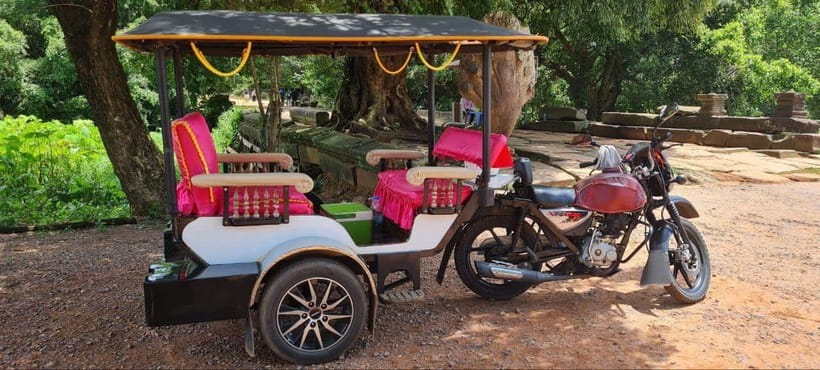
Bring comfortable walking shoes, a hat, sunscreen, sunglasses, a camera, and water. Cold water is included, but carrying your own bottle is still sensible during a long day outdoors.
Wear light clothing, while keeping your shoulders and knees appropriately covered for temple visits. Modest dress is a sign of respect and can prevent problems at religious sites.
Expect extensive walking. The day includes Angkor Wat, Bayon, Baphuon, the royal terraces, smaller temples, and Ta Prohm. Some areas have steep steps, especially around Phimeanakas, and old stone surfaces may be uneven.
The best pace is not to treat every stop as equally important. Spend longer at Angkor Wat, Bayon, and Ta Prohm if those are your priorities. Use the smaller temples as shorter visits unless a particular carving or structure catches your interest.
The open tuk-tuk is part of the appeal, but it does not remove the heat. Rest in the shade when you can, use the lunch break well, and tell the driver when you need a pause. The private setup makes this easier than a fixed group schedule.
Who should book this Angkor tour?
I would recommend it to couples, families, and small groups who want a simple private route at a low price. It is also a good fit if you already know the main Angkor sites and want control over how long you stop.
The tour suits people who prefer fresh air and local transport to a closed van. It is especially appealing for anyone concerned that a tuk-tuk might be too hot, since one couple found it more comfortable than a van during their day.
I would be more cautious if you need a highly detailed, formal history lesson at every temple. The supplied details focus on a private driver, not a dedicated expert guide. I would also think twice if you dislike long walks, steep steps, or open-air transport in hot weather.
The booking allows free cancellation up to 24 hours before departure and offers reserve-now, pay-later flexibility. Pickup is included from your hotel in Krong Siem Reap, and the group remains private.
Should you book it?
Book this tour if you want the major Angkor temples, a few worthwhile smaller sites, and the freedom to set your own pace for $25 per group. The strongest parts are the private tuk-tuk, hotel transfers, open-air comfort, and drivers who have shown real care, including Rachou and Sokha Cam.
Just budget separately for admission and lunch, and confirm how much guiding information you want. For a low-cost, flexible day that covers Angkor Wat, Bayon, and Ta Prohm without a large group, this is a very good value.
FAQ
How much does the private Angkor tuk-tuk tour cost?
The price is $25 per private group of up to four people. Temple entrance fees and lunch are not included.
How long does the tour last?
The experience is described as a one-day tour. Starting times depend on availability, and the full route includes pickup, temple visits, lunch, and return to your hotel.
What temples are included?
The route includes Angkor Wat, the South Gate of Angkor Thom, Bayon, Baphuon, the Terrace of the Elephants, Phimeanakas, Preah Palilay, Thommanon, Chau Say Tevoda, and Ta Prohm.
Is hotel pickup included?
Yes. Pickup and drop-off at your hotel in Krong Siem Reap are included.
Is lunch included in the price?
No. Lunch is not included, although a break at a local restaurant is part of the tour.
Are temple entrance fees included?
No. You must pay the entrance fees separately.
How many people can join the tuk-tuk?
The booking is private for a group of up to four people.
Is the driver English-speaking?
Yes. The listed driver language is English.
What should I bring?
Bring comfortable shoes, a hat, sunscreen, sunglasses, a camera, and water. Light clothing is recommended, along with modest dress for the temples.
Just added around Siem Reap
- Private Battambang Full-Day Guided Tour★ 4.5 · 3 reviews
- Kulen Mountain, Beng Mealea and Banteay Srei Full Day Tour★ 5.0 · 3 reviews
- Kompong Pluk Tour★ 5.0 · 3 reviews
- Private 3 Day Tour to Discover the ancient temples★ 5.0 · 3 reviews
- Cambodia: Absolute Traditional Dance Show with Buffet Dinner★ 5.0 · 3 reviews
- Kulen National Park Ticket -Waterfall & 1000 Lingas★ 5.0 · 3 reviews
- Border Transfer (Siem Reap to Laos/Laos to Siem Reap)★ 3.5 · 3 reviews
- Best Taxi Siem Reap to Battambang – English Speaking Driver★ 4.5 · 3 reviews
Tuk-Tuks, compared.
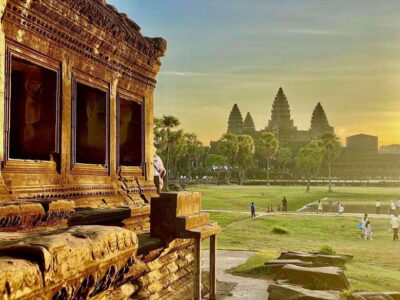
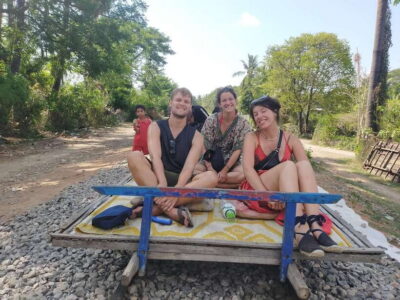
Tuk-Tuk, Bamboo Train, Killing/Bat Caves, Sunset
Read our review →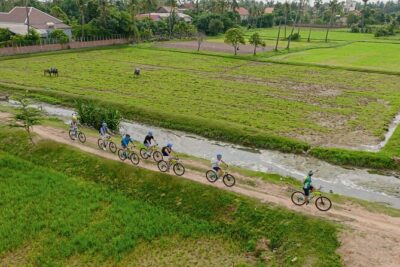
Siem Reap Countryside Bike Tour / E-Bike or Tuk Tuk
Read our review →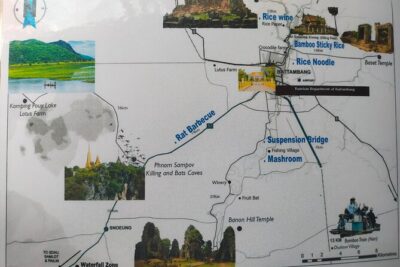
Battambang Tuk Tuk tour: Bambootrain, Killing & Bat Caves,Sunset
Read our review →
Phnom Penh Silk Island Bike Tour/ E-Bike or Tuk Tuk
Read our review →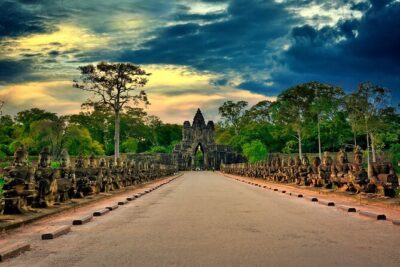
Angkor Wat Private Tuk-Tuk Tour (sunrise Option) & more
Read our review →
Ultimate Phnom Penh Food Tour by Tuk Tuk: 20 Tastings and Drinks
Read our review →Browse the lists this tour appears in