
Reviewed · TONLE SAP FLOATING VILLAGE TOURS
3-Day ‘Temples & Tonle Sap’ Tour
Three days can cover a lot here. Asia Voyage Tour packs Siem Reap’s major temples, quieter ruins, a Tonle Sap boat trip, and local markets into one private itinerary. I like the hotel-to-hotel transport and the chance to see both Angkor’s famous monuments and the older Roluos temples. The main drawback is the pace: this is an action-packed schedule with long temple walks, early starts, and little spare time.
I also like that the three-day Angkor pass is clearly separated from the tour price, so you can see what you are paying for. The $250 fee includes a private air-conditioned vehicle, an English-speaking guide, boat transport, water, and cold towels, but not meals or temple admission. This works best if you want efficient sightseeing rather than a slow, do-it-yourself visit.
In This Review
- Key points at a glance
- What the $250 tour really covers
- Day one: Bayon faces, Ta Prohm roots, and Angkor Wat
- Bayon Temple
- Baphuon Temple
- Ta Prohm
- The Terraces of the Elephants
- Angkor Wat after lunch
- Phnom Bakheng
- Day two: sunrise at Angkor Wat and the quieter eastern temples
- Preah Khan, Neak Pean, Ta Som, and East Mebon
- Banteay Srei
- Banteay Samre
- Banteay Kdei
- Day three: Tonle Sap stilt villages and the Roluos beginning
- The Roluos temples and Siem Reap’s markets
- Transport, guide service, and the pace
- Who should book this three-day route?
- Should you book the Temples & Tonle Sap tour?
- FAQ
- Is hotel pickup included?
- Is the Angkor temple pass included in the price?
- Are meals included?
- Is this a private tour?
- Is transportation air-conditioned?
- Is the Tonle Sap boat ride included?
- Can children under three join the tour?
Key points at a glance
- Angkor Wat twice: You see the complex after lunch on day one, then return before dawn for the famous sunrise.
- A private three-day schedule: Only your group participates, with hotel pickup and drop-off included.
- The Tonle Sap by boat: A motorized boat takes you through Kampong Phluk, a stilted fishing community.
- Less-visited temple stops: Preah Khan, Banteay Samre, Banteay Kdei, and the Roluos group add variety beyond the headline sights.
- Costs to plan for: The $250 tour price excludes the three-day Angkor pass, listed at $62, plus meals and drinks.
- Strong satisfaction record: The tour carries a five-star rating and a 100 percent recommendation rate from 17 published ratings.
What the $250 tour really covers
At $250, this is not an all-inclusive temple package. You must add the three-day Angkor pass, which is listed at $62 per person, along with your meals, soft drinks, and alcohol. That means the final cost depends on how many people share the private vehicle and how much you spend on food.
Still, the included services have real value. Hotel pickup and drop-off remove the need to arrange transport each morning. An air-conditioned vehicle matters in Cambodia, especially after an hour walking through exposed temple courtyards. Bottled water and cold towels are small touches, but they help during long days in the heat.
The private format is another useful part of the price. Your group alone takes part, so you are not tied to strangers or a fixed bus load. The guide can explain the temples as you go, while the driver handles the roads and transfers. If you have only three days in Siem Reap, that saved planning time may justify the cost.
The trade-off is that the schedule is full. You are paying for coverage and convenience, not for long lunches, repeated café stops, or unplanned wandering. I would choose this tour if I wanted a strong first look at the region and did not want to coordinate temple routes, ticketing, and the Tonle Sap independently.
More Tonle Sap floating village trips:
- From Siem Reap: Kampong Phluk Floating Village Tour by Boat
★ 4.9 · 6,979 reviews - Sunset tour of Kampong Phluk stilts home village on the Tonle Sap
★ 5.0 · 4,865 reviews - Siem Reap: Kampong Phluk Floating Village Tour with Boat
★ 4.9 · 3,843 reviews
Day one: Bayon faces, Ta Prohm roots, and Angkor Wat
The first morning begins with pickup from your hotel at 8:30 am. The vehicle first goes to the Angkor Enterprise ticket office, where you buy the required pass. For this itinerary, the listed price is $62 for three days, with a seven-day option at $72 if you plan to stay longer.
Buying the pass at the start is important because nearly every major temple on the first two days requires it. The tour price does not include admission, so keep that extra cost in your budget from the start.
Bayon Temple
Bayon gives you an immediate introduction to the scale and character of Angkor Thom. Built in the late 12th or early 13th century under King Jayavarman VII, it served as the state temple of his Mahayana Buddhist capital.
The temple is known for its carved stone faces and dense decoration. Your guide can help you read the structure rather than simply walk through it, pointing out how the monument fitted into the wider city. Allow about an hour here, enough to see the central towers and major carvings without rushing every corner.
Baphuon Temple
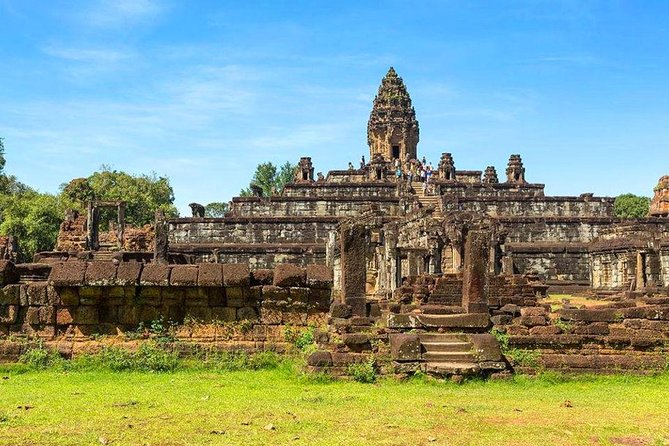
Baphuon sits northwest of Bayon within Angkor Thom. Built in the mid-11th century as a Hindu temple dedicated to Shiva, it has the classic form of a three-level temple mountain.
The climb and uneven stone surfaces make this one of the places where sensible shoes help. You get a change of mood after Bayon, moving from Jayavarman VII’s Buddhist monument to an earlier Hindu royal temple. The hour allotted here should give you time to appreciate the design without turning the visit into a long archaeological study.
A few more trips worth weighing up
- From Siem Reap: Angkor Wat and Floating Village 3-Day Trip
★ 5.0 · 100 reviews - 3-Day Angkor Wat with All Interesting Major Temples, Banteay Srei & Beng Mealea
★ 5.0 · 70 reviews - 3-Day Angkor Wat & All Interesting Major Temples & Kulen Mount Waterfall
★ 5.0 · 63 reviews - 3 Days Siem Reap Explorer – Small Group
★ 5.0 · 50 reviews
Ta Prohm
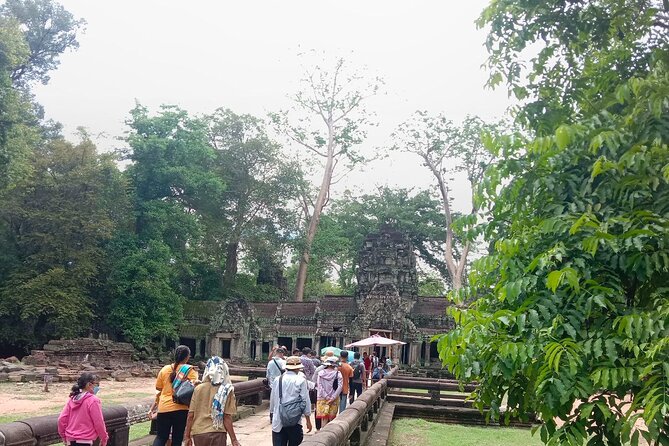
Ta Prohm is one of the most memorable stops because the temple remains closely linked with large trees and jungle growth. Built in the late 12th and early 13th centuries, it was originally called Rajavihara and followed the Bayon style.
The appeal is visual, but the site also rewards patience. Doorways, galleries, courtyards, and carved stone details compete with the roots for your attention. One hour is enough for a focused visit, though you may wish you had more time if you enjoy photography or want to study the carvings.
The Terraces of the Elephants
The Terrace of the Elephants and the Terrace of the Leper King formed the eastern boundary of the royal palace grounds. They face the parade grounds where royal processions and public events took place.
The itinerary gives this stop 30 minutes. That is sensible because the terraces are more about understanding Angkor Thom’s ceremonial layout than entering a single enclosed temple. Your guide’s explanation is especially useful here, since the long stone platform makes more sense when you know how it functioned.
Angkor Wat after lunch
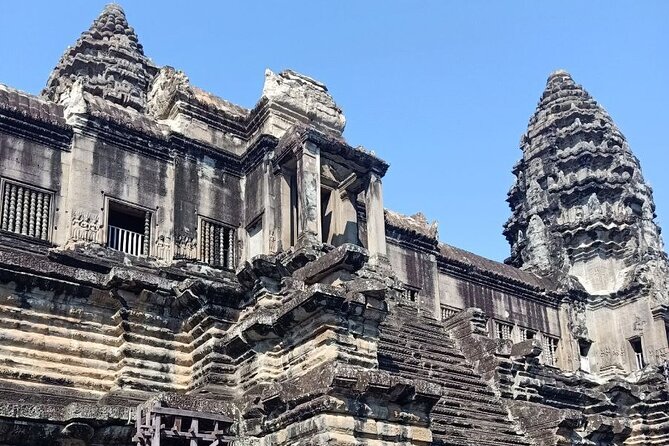
After lunch, you spend about three hours at Angkor Wat, the largest religious monument in the world. It occupies a site of about 162.6 hectares and was originally built as a Hindu temple.
This is the day’s centerpiece, and three hours gives you a fair first look. You can see the grand approach, galleries, courtyards, towers, and carved scenes without having to sprint through the complex. The timing also makes practical sense: you get your first orientation in daylight before returning early the next morning.
Meals are not included, so you will need to pay for lunch separately. The itinerary does not specify a restaurant or meal location, so ask your guide about the day’s lunch plan when you are picked up.
Phnom Bakheng
The day ends at Phnom Bakheng, a temple mountain built in the late ninth century during the reign of King Yasovarman. It was dedicated to Shiva and later had Buddhist use.
The schedule assigns three hours here, making it one of the longest stops on day one. Phnom Bakheng is on a hill, so this is not a casual roadside visit. You should be comfortable walking uphill and over uneven surfaces. The listing identifies it as a popular tourist stop, so expect this part of the day to feel less quiet than the lesser-visited temples later in the itinerary.
Day one covers a great deal: Angkor Thom, Ta Prohm, Angkor Wat, and a hill temple. I would treat it as an orientation day rather than expect to remember every detail. Wear practical shoes, carry water, and accept that you will be tired by the end.
Day two: sunrise at Angkor Wat and the quieter eastern temples
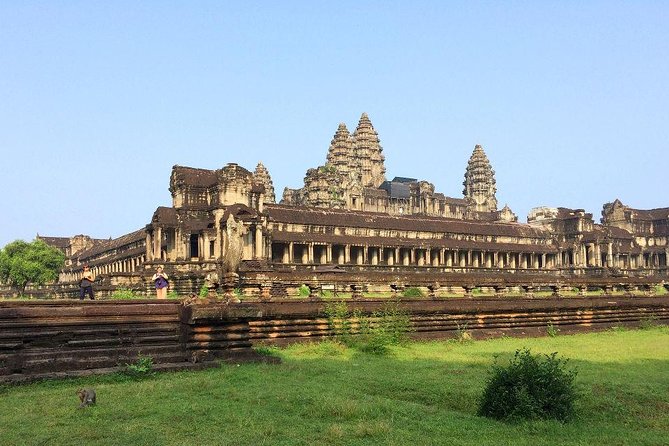
Day two begins with a return to Angkor Wat for sunrise. The scheduled visit lasts about three hours, after which you return to your hotel for breakfast.
This arrangement is convenient, but the early start is the price of the view. You will need to be ready before normal sightseeing hours, and the sunrise visit comes after a full first day. If you value the classic Angkor Wat morning scene, it is worth the lost sleep. If you prefer slow mornings, this is the hardest part of the schedule.
After breakfast, the tour continues to four temples grouped in the same general area: Preah Khan, Neak Pean, Ta Som, and East Mebon. The itinerary assigns two hours to this cluster, so your guide will need to keep the route moving.
Preah Khan, Neak Pean, Ta Som, and East Mebon
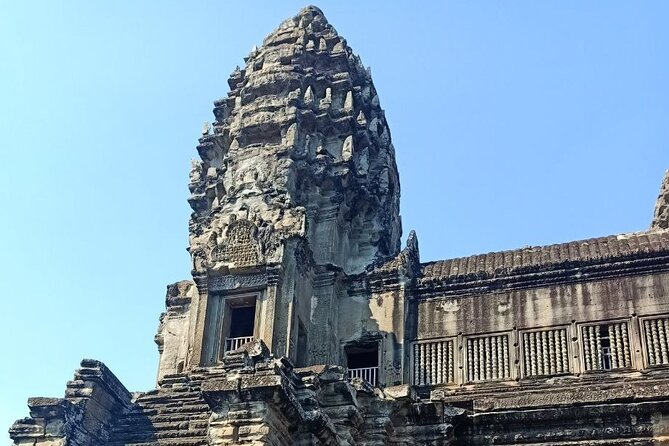
Preah Khan is a large temple complex with corridors, courtyards, and carved stonework. It gives you another look at the building program of Jayavarman VII, but in a setting different from the better-known monuments of Angkor Thom.
Neak Pean is smaller and more unusual in layout. It was built around a central water feature, giving the stop a different feel from the temple mountains and long galleries elsewhere in the park.
Ta Som is a compact temple that rewards close attention to its entrances and stone details. It is a good counterpoint to Angkor Wat, where scale can overwhelm the eye.
East Mebon dates from an earlier period and reflects a different stage of Khmer temple building. Seeing these four sites together helps you compare changes in design, religious use, and royal power instead of treating every ruin as the same.
Banteay Srei
After lunch, you travel to Banteay Srei, often called the ladies temple. It is a 10th-century Hindu temple dedicated to Shiva, located about 25 kilometers northeast of the main Angkor area near Phnom Dei.
The extra drive is part of the point. Banteay Srei is away from the central group, and its smaller scale makes the carvings easier to appreciate. The itinerary allows two hours, giving you time to focus on its detailed decoration rather than merely taking a quick look.
The term ladies temple is widely used, but it can oversimplify the site. The important practical point is that Banteay Srei differs sharply from the giant monuments. Expect a more intimate visit, balanced by the additional time spent on the road.
Banteay Samre
Banteay Samre lies east of the East Baray and was built in the early 12th century during the reigns of Suryavarman II and Yasovarman II. It is a Hindu temple built in the Angkor Wat style.
The one-hour stop gives you a chance to see that style on a smaller scale. It is a useful companion to Angkor Wat because you can notice related features without the same vast crowds and distances, although the schedule still leaves limited time for lingering.
Banteay Kdei
Banteay Kdei means Citadel of Chambers and is also known as the Citadel of Monks’ cells. This Buddhist temple was built in the mid-12th to early 13th century, southeast of Ta Prohm and east of Angkor Thom.
The name hints at its layout. Doorways and chambers make this a more enclosed, maze-like stop than a wide open temple mountain. One hour is enough for a clear introduction, but the uneven ground means you should not expect a smooth walk.
By the end of day two, you have seen both the famous center and several sites farther out. That variety is one of the tour’s strongest features. The weakness is fatigue. Two early mornings and two long temple days demand average or better fitness, as the tour information makes clear.
Day three: Tonle Sap stilt villages and the Roluos beginning
Day three changes the subject from royal temples to life around the Tonle Sap. The first stop is Kampong Phluk, a group of villages largely built on stilts.
The community depends heavily on fishing. During Cambodia’s wet season, from May through October, people spend much of their time fishing. The village name means Harbor of the Tusks, and the elevated homes reflect the changing water conditions around the lake.
A motorized boat ride is included, with about three hours assigned to Kampong Phluk. This is not just a scenic cruise. The boat lets you see how homes and communities are arranged around the water, giving you a useful contrast with the stone world of Angkor.
Conditions may look different depending on the season. The information supplied for the tour specifically notes the wet season, but it does not promise a particular water level or route. I would go expecting a community visit by boat, not a staged performance or a guaranteed wildlife outing.
The Roluos temples and Siem Reap’s markets
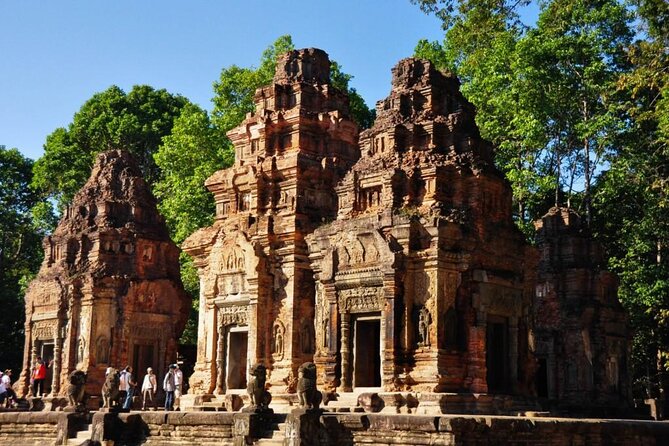
After Kampong Phluk, the route turns to the Roluos group, which includes some of the earliest permanent Khmer structures. These temples date from the late ninth century and mark the beginning of the classical period of Khmer civilization.
This is a valuable stop for anyone who wants a sense of development over time. The central Angkor monuments can seem like a complete world, but Roluos helps you see the earlier foundations. Some structures were built largely with brick, giving them a different appearance from the later stone temples.
Three hours is a generous allocation compared with some of the smaller stops on day two. That allows your guide to explain the architectural changes and gives you more time away from the most famous circuit.
On the way back, you look at Phsar Leu Thom Thmey, Phsar Chas, and Artisans d’Angkor. Phsar Leu is identified as the top market, while Phsar Chas is the old market. The tour gives this final section two hours, with no admission charge listed.
These stops can help you shift from ancient monuments to present-day Siem Reap. The itinerary does not specify shopping requirements, so you can treat the markets as a look at local commercial life rather than assume you must buy anything. Artisans d’Angkor adds a craft-focused stop to the end of the trip.
Transport, guide service, and the pace
The vehicle is air-conditioned and used for hotel transfers and touring. That matters because the route covers the main Angkor area, farther temples, Kampong Phluk, and Roluos. You are not solving a new transport problem each morning.
An English-speaking professional guide is included. The guide is the key to getting value from the tour. At places such as the Terraces of the Elephants, Neak Pean, and Roluos, a short explanation can turn a collection of stones into a readable part of Khmer history.
The tour receives a five-star rating with a 100 percent recommendation rate from 17 published ratings. The strongest praise focuses on organization, punctuality, and professional guiding. One Italian-language rating describes three fantastic days and specifically highlights careful organization and precision. Those are exactly the qualities you need in a schedule with this many moving parts.
The private setup also gives you some breathing room. Only your group participates, though the itinerary itself remains fixed and busy. You can ask for clarification or practical help, but the supplied information does not promise custom route changes.
Who should book this three-day route?
I would recommend it to you if:
- You have only three days in Siem Reap.
- You want Angkor Wat plus less famous temples.
- You prefer hotel pickup, a private vehicle, and a guide.
- You want a planned Tonle Sap boat visit.
- You are comfortable walking for long periods and starting early.
- You would rather pay for convenience than arrange every transfer yourself.
I would think twice if you want quiet mornings, long meals, or lots of free time. The itinerary includes repeated temple walks, a hill climb at Phnom Bakheng, an early sunrise, and several long sightseeing blocks. Children under three cannot join, and the tour is not suitable for anyone who cannot walk normally or has below-average fitness.
You should also remember the extra costs. Add the $62 three-day pass per person, plus food and drinks. Hotel pickup is complimentary, and confirmation is provided at booking. Free cancellation is available if you cancel at least 24 hours before the local start time. Inside that window, the payment is not refunded.
Should you book the Temples & Tonle Sap tour?
Book it if you want a well-organized first visit to Siem Reap and want to fit a lot into three days. The best parts are the private transport, the guide, Angkor Wat at two different times, the Tonle Sap boat ride, and the Roluos temples that many short temple trips skip.
I would not book it for a relaxed holiday. The schedule is demanding, and the $250 price does not include the Angkor pass or meals. But if your time is limited and you value reliable logistics, this is a strong package. You see the headline monument, several distinct temple periods, a stilted fishing community, and modern Siem Reap, all without having to build the route yourself.
FAQ
Is hotel pickup included?
Yes. Complimentary hotel pickup and drop-off are included, and the vehicle departs your hotel at the 8:30 am tour start time.
Is the Angkor temple pass included in the price?
No. The three-day Angkor pass is not included. The listed price is $62 per person, with a seven-day pass listed at $72.
Are meals included?
No. Meals, soft drinks, and alcohol are not included in the tour price.
Is this a private tour?
Yes. Only your group participates in the activity.
Is transportation air-conditioned?
Yes. An air-conditioned vehicle is used for hotel transfers and touring.
Is the Tonle Sap boat ride included?
Yes. The fee for the motorized boat is included, along with bottled water and cold towels.
Can children under three join the tour?
No. The tour is not available for children under three years old.
Just added around Siem Reap
- Private Battambang Full-Day Guided Tour★ 4.5 · 3 reviews
- Kulen Mountain, Beng Mealea and Banteay Srei Full Day Tour★ 5.0 · 3 reviews
- Kompong Pluk Tour★ 5.0 · 3 reviews
- Private 3 Day Tour to Discover the ancient temples★ 5.0 · 3 reviews
- Cambodia: Absolute Traditional Dance Show with Buffet Dinner★ 5.0 · 3 reviews
- Kulen National Park Ticket -Waterfall & 1000 Lingas★ 5.0 · 3 reviews
- Border Transfer (Siem Reap to Laos/Laos to Siem Reap)★ 3.5 · 3 reviews
- Best Taxi Siem Reap to Battambang – English Speaking Driver★ 4.5 · 3 reviews
Tonle Sap Floating Village Tours, compared.
Sunset tour of Kampong Phluk stilts home village on the Tonle Sap
Read our review →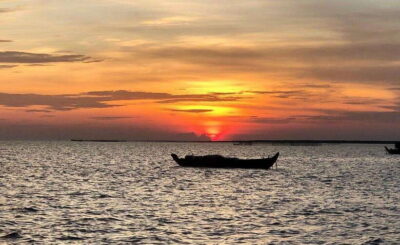
Kampong Phluk Floating Village Tour with Boat
Read our review →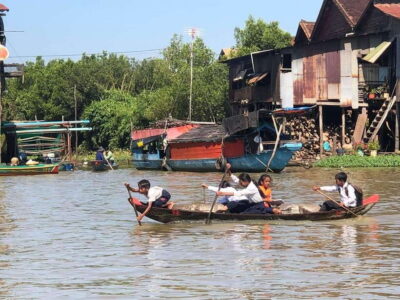
Siem Reap Floating Village Kampong Phluk Sunset with Boat
Read our review →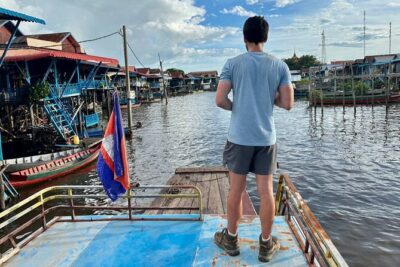
Kompong Phluk Floating Village Half-Day Tour ( Morning / Sunset )
Read our review →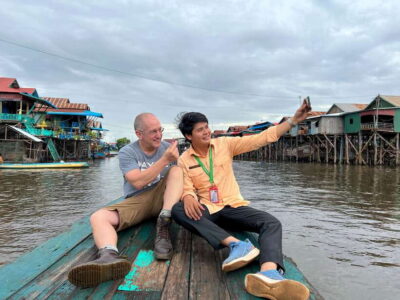
Kulen Mountain, Beng Mealea and Tonle Sap Tour
Read our review →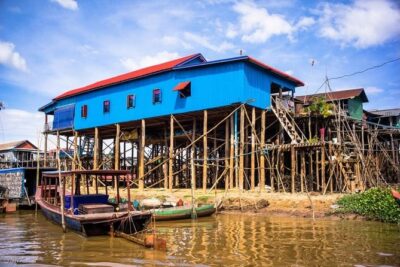
Tonle Sap Lake & Kampong Phluk Village Half-Day Tour
Read our review →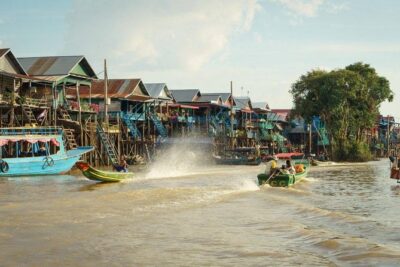
Browse the lists this tour appears in