
Reviewed · PHNOM KULEN TOURS
3-Day Tour of Siem Reap, Angkor Temples & Phnom Kulen Waterfall
Angkor rewards an early start. This three-day private tour gives you a broad look at Cambodia’s temples, countryside, sacred mountain, and Tonle Sap Lake, with hotel pickup, air-conditioned transport, an English-speaking guide, two lunches, drinks, cool water, and towels. I especially like the private itinerary, which lets your own group travel with one guide rather than follow a large coach, and the way it combines famous sites with quieter temples such as Banteay Samre and Beng Mealea. The main drawback is that the $250 price does not include accommodation, Angkor temple admission, or the Phnom Kulen ticket, so your final cost will be higher.
The schedule is full, and two early starts shape the experience. Day one begins at 8:00am and ends with sunset at Phnom Bakheng. Day two starts at 4:30am for Angkor Wat sunrise, then continues through several outlying temples. I like that guide Hok is praised for turning temple visits into clear, engaging stories, but you should book this tour only if you are comfortable with long days and a tightly packed program.
In This Review
- Key points to know before booking
- What $250 covers, and what it does not
- Day one: Angkor Wat, royal capitals, and a sunset finish
- Day two: sunrise, pink sandstone, and the quieter eastern temples
- Day three: Phnom Kulen’s sacred water and Beng Mealea’s ruins
- How the private guide shapes the experience
- Who should book this three-day plan?
- Should you book this Siem Reap tour?
- FAQ
- Is this a private tour?
- Is hotel pickup included?
- Is accommodation included?
- Are Angkor temple tickets included?
- Is the Phnom Kulen ticket included?
- What meals and refreshments are included?
- What type of vehicle and guide are provided?
Key points to know before booking
- Private guiding with Hok: The guide is praised for humor, clear explanations, kindness, and a strong sense of care.
- Two very early temple moments: You visit Angkor Wat for sunset on the first day and return at 4:30am for sunrise on the second.
- A wide Angkor sweep: The plan includes Angkor Wat, Angkor Thom, Bayon, Baphuon, Ta Prohm, Preah Khan, Ta Som, Neak Pean, Banteay Srei, and more.
- Phnom Kulen adds a change of pace: Waterfalls, a reclining Buddha, a sacred river with thousand Lingas, Srash Damrei, and Bat Cave are included in the route.
- Costs require careful planning: Temple tickets, the Phnom Kulen ticket, and your hotel are extra.
- Tonle Sap rounds out the trip: The final day ends with a one-hour visit to Cambodia’s great freshwater lake.
What $250 covers, and what it does not
At $250 per person, this is not a budget temple shuttle. It is a private three-day service with a guide, dedicated transport, two lunches, drinks, cool water, and towels. The value improves if you are traveling with family or friends and want a guide who can adjust explanations and pacing for your own group. Group discounts are offered, so it is worth checking the price for your party rather than assuming the listed per-person figure is final.
The important catch is the list of exclusions. Accommodation is not included, which is useful if you already have a hotel or prefer to choose your own price range. You also pay separately for the Angkor temple ticket and Phnom Kulen admission. Those are not minor details, since the itinerary enters many ticketed sites over three days.
The air-conditioned vehicle matters in Siem Reap. You will move between major temple zones, distant ruins, Phnom Kulen, Beng Mealea, and Tonle Sap, so the vehicle provides a practical break between walks. Water and towels are welcome after time outside, while the two included lunches reduce the need to organize meals during the busiest parts of the schedule.
This is a private activity for your group only. Pickup is offered from your hotel, with the first departure at 8:00am and the sunrise departure at 4:30am. Confirmation is received when you book, and the tour is near public transportation. Most people can participate, but the number of temples and walking periods make comfortable shoes and a realistic view of your energy important.
More Phnom Kulen day trips:
- Kulen Waterfall Join-in Tour (local Picnic lunch)
★ 5.0 · 2,434 reviews - Kulen Mountain: Small-Group Tour and Picnic lunch
★ 4.9 · 1,802 reviews - Siem Reap: Kulen Mountain, Beng Mealea and Tonle Sap Tour
★ 5.0 · 1,483 reviews
Day one: Angkor Wat, royal capitals, and a sunset finish
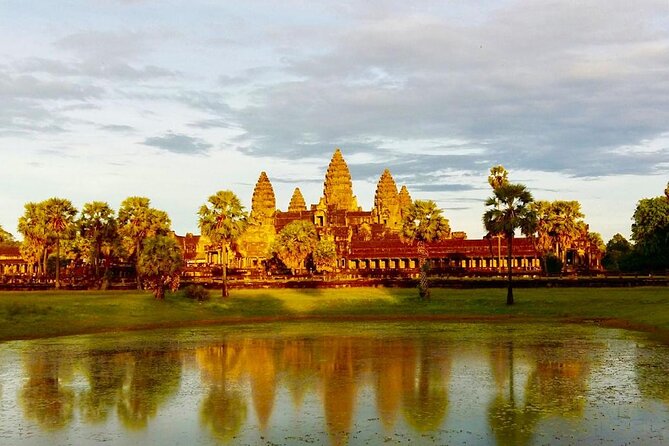
The first morning starts at Angkor Wat, where you have about two hours to explore. This is the grandest and most famous stop, but the guide is what can make the visit more than a procession through galleries and courtyards. Hok is praised for explaining Cambodia’s past, religion, and culture in a story-like way, with humor when the moment allows and clear seriousness when the site demands it.
The plan also includes local villages and forest around Angkor Wat. That gives the morning some context beyond the monument itself. You get a look at the setting that surrounds the temple complex rather than spending every minute inside stone walls.
Next comes Angkor Thom, the former stronghold capital of the Khmer Empire. The stop is listed at about 30 minutes, so expect an orientation visit rather than a complete examination of every corner. Its original name was Yashodarapura, established under King Yasovarman I, while Angkor Thom means great city.
Inside Angkor Thom, Bayon receives about an hour. Its famous carved faces and central position make it one of the essential stops in the region. Bayon was built by King Jayavarman VII and linked to Mahayana Buddhism, so this is a good place to ask your guide how royal power and religious ideas were joined in Khmer architecture.
Baphuon follows for about 45 minutes. This pyramid-shaped Hindu monument was built between 1050 and 1066 under King Udayadityavarman II and dedicated to Shiva. Its design represents Mount Meru, the sacred mountain at the center of Hindu belief. The visit gives you a useful contrast with the Buddhist focus associated with Bayon.
The Terrace of the Elephants is a shorter, 30-minute stop. It functioned as a royal conference area in front of the palace and took its name from the elephant carvings. This is less about entering a complete temple and more about understanding how the Angkor royal center was arranged.
Ta Prohm brings the day’s most cinematic moment. Built by Jayavarman VII in 1186 and dedicated to his mother, it is the jungle temple associated with the film Tomb Raider. Roots and stone share the scene, though the fame of the site also means it can feel more crowded than the less famous temples on this tour. Your guide can help you look past the film connection toward the monument’s original purpose.
The day then moves to Pre Rup, a large brick temple from 961 built under Rajendravarman II for Shiva. It is a compact stop of about 30 minutes and offers another clear example of a temple designed around Mount Meru.
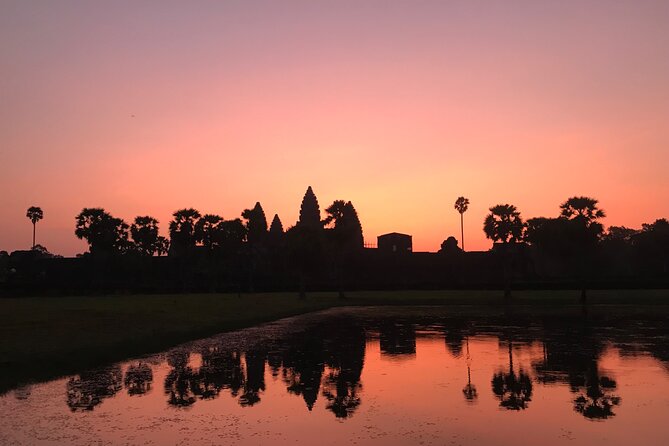
The final stop is Phnom Bakheng, with about an hour scheduled for sunset. This hill temple is among the best-known sunset points in the Angkor region, and its popularity brings a practical warning: the itinerary itself notes that thousands of people visit at sunset. You should expect this to be the most crowded moment of the first day, not a quiet private view.
Day two: sunrise, pink sandstone, and the quieter eastern temples
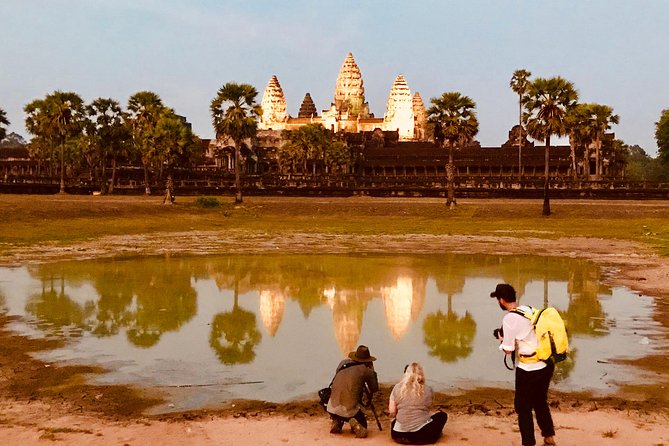
The second day starts at 4:30am from your hotel. The aim is to reach Angkor Wat for sunrise and secure a good viewing position. The sunrise visit lasts about 90 minutes, so plan on a short night and a long day. This is one of the tour’s strongest features if you want the classic Angkor experience, but it is also the part most likely to test your stamina.
After sunrise, the route goes north to Banteay Srei. The temple is about 37 kilometers from Angkor Wat and is known for its pink sandstone and fine carvings. Its name means Lady Temple. The smaller scale and detailed decoration offer a welcome change after the immense size of Angkor Wat and Angkor Thom.
Banteay Srei receives about an hour, which is enough to study the carving style without rushing through in a few minutes. Since it lies away from the central temple group, having private transport is especially useful here. You avoid arranging a separate trip for one of the area’s most distinctive monuments.
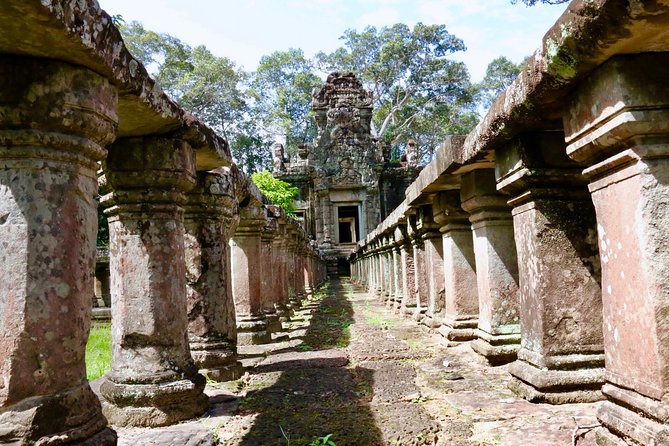
Preah Khan is next, with an hour to explore. Known as the Holy Sword Temple, it is one of the largest complexes in Siem Reap and retains many fine carvings. Its size can feel confusing without orientation, so this is another stop where Hok’s explanations can help you understand what you are seeing.
Ta Som is a smaller, 30-minute visit. Built by Jayavarman VII as a Mahayana Buddhist temple, it was dedicated to his ancestors and teacher. The shorter stop works well here because it breaks up the larger complexes and keeps the day moving.
Neak Pean takes another 30 minutes. The temple sits in the center of Jayatadak lake and is reached in a watery setting. Its name refers to entwined serpents, and its original purpose was connected with ancient healing beliefs. This is a more unusual stop than a standard pyramid temple, though the amount you see will depend on water and access conditions at the time of your visit.
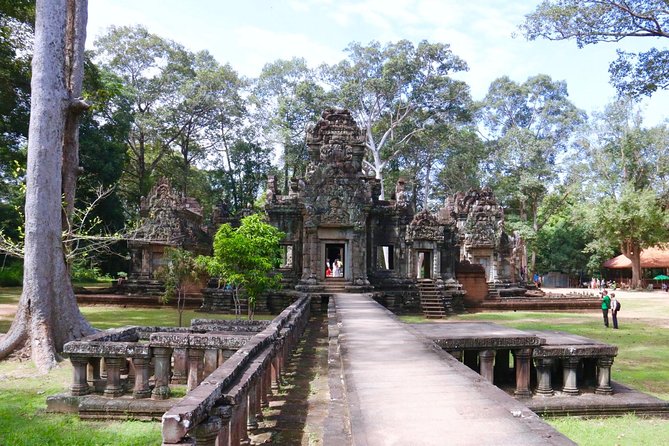
The final temple is Banteay Samre, scheduled for about 30 minutes. It was built under Suryavarman II and is described as well preserved, with fine stone decoration. Its location east of the old reservoir makes it feel separate from the main Angkor circuit, and it is a pleasing way to finish a day that has covered both famous and less familiar sites.
The challenge of day two is obvious: sunrise, a long drive to Banteay Srei, and several temples afterward. The reward is range. You see delicate pink carvings, large royal complexes, water-centered architecture, and a quieter temple style all in one day.
Day three: Phnom Kulen’s sacred water and Beng Mealea’s ruins
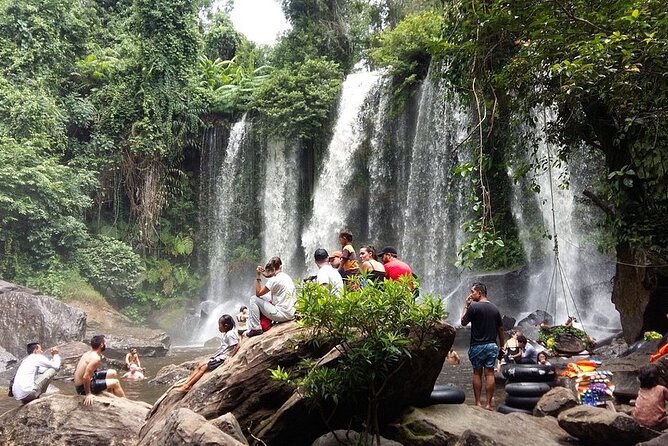
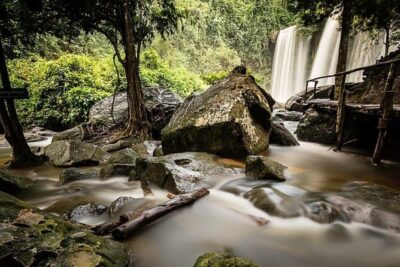
Day three changes the subject from temple concentration to sacred nature and remote ruins. Phnom Kulen National Park is scheduled for about two hours and includes several different sights: waterfalls, a reclining Buddha, a sacred river carved with thousand Lingas, Srash Damrei, and Bat Cave.
The waterfall is the central attraction, but Phnom Kulen is also important as a sacred mountain. The river with thousand Lingas connects the natural setting with religious symbolism, while the reclining Buddha adds another cultural layer. Because the stop includes several named points, ask your guide how much time will be spent at each one before the day begins.
The ticket for Phnom Kulen is not included. Add that cost to your budget, and remember that this is not simply another stop covered by an Angkor temple pass.
After Phnom Kulen, the vehicle continues to Prasat Beng Mealea, about 66 kilometers northeast of Siem Reap. The visit lasts about an hour. Beng Mealea is known as a remote jungle temple, and its appeal comes from the sense of a large ruin away from the central Angkor circuit.
This stop is valuable because it gives you a different impression of Khmer architecture. Angkor Wat and Bayon are major monuments with a strong formal presentation. Beng Mealea is more about broken stone, overgrown surroundings, and the feeling of finding a large complex beyond the main route. The tradeoff is the extra driving time, which makes day three another full day rather than a gentle finale.
The final stop is Tonle Sap Lake, with about an hour scheduled. It is the largest freshwater lake in the Southeast Asian peninsula and touches several Cambodian provinces. A visit here shifts your attention from royal monuments to the water system that remains central to Cambodia’s geography and daily life.
The supplied plan does not specify a particular floating village, boat type, or exact village route, so you should ask for those details before departure. The important point is that Tonle Sap is included as a separate experience, not simply a drive back to Siem Reap after the temples.
A few more trips worth weighing up
- From Siem Reap: Angkor Wat and Floating Village 3-Day Trip
★ 5.0 · 100 reviews - 3-Day Angkor Wat with All Interesting Major Temples, Banteay Srei & Beng Mealea
★ 5.0 · 70 reviews - 3-Day Angkor Wat & All Interesting Major Temples & Kulen Mount Waterfall
★ 5.0 · 63 reviews - 3 Days Siem Reap Explorer – Small Group
★ 5.0 · 50 reviews
How the private guide shapes the experience
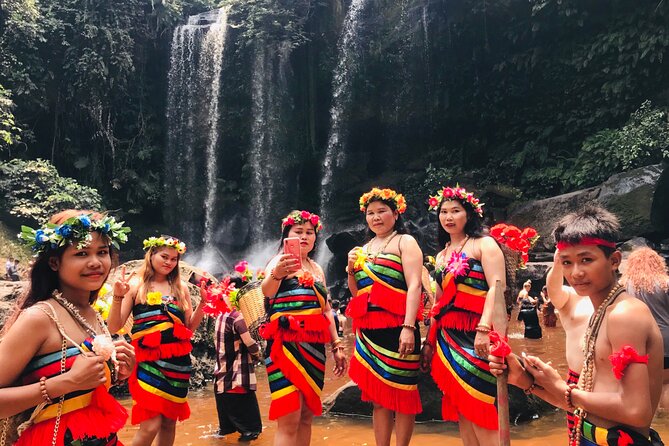
The guide is the heart of this tour. Hok receives repeated praise for his friendly manner, humor, clear speaking style, and strong command of the stories behind the monuments. Several accounts describe him as attentive to personal wishes and helpful in arranging the days, which matters when an itinerary includes so many stops.
I would value that most at Bayon, Ta Prohm, and the smaller temples. Without context, it is easy to remember only faces, towers, roots, and carved figures. A good explanation connects the building to a king, a religious purpose, or an older use of the site. Hok’s style is described as passionate without losing clarity, which should suit you if you want more than photographs.
A private guide also gives your group room to ask questions. You can request more time at Banteay Srei, move along at a quicker pace at a smaller stop, or ask for more explanation about Buddhist and Hindu symbolism. The itinerary is still busy, so do not assume unlimited flexibility, but private travel is more adaptable than joining a fixed large group.
Who should book this three-day plan?
I would recommend it to first-time visitors who want a broad introduction to Siem Reap without arranging separate transport for each region. You see the major Angkor landmarks, smaller temples, Phnom Kulen, Beng Mealea, and Tonle Sap in one organized package.
It also suits families and small groups that value a private vehicle and personal guide. The positive accounts about Hok’s care and organization are especially relevant if you want help with timing, site explanations, and moving through a complicated three-day plan.
I would hesitate to recommend it to anyone seeking a slow temple holiday. Day one is long, day two begins at 4:30am, and day three combines a mountain park, a remote temple, and the lake. The schedule covers a lot, but it does not leave much room for unplanned wandering.
Bring a good pair of walking shoes, keep water close, and treat the listed times as approximate rather than guaranteed minutes at each ruin. The tour includes cool water and towels, but you still need to budget for admission tickets and arrange your own hotel.
Should you book this Siem Reap tour?
Book it if you want breadth, private transport, and a guide-led understanding of Angkor. The combination of sunrise, sunset, major temples, outlying ruins, Phnom Kulen, and Tonle Sap is strong for a three-day visit, and Hok’s storytelling and personal care appear to be the tour’s biggest assets.
Skip it if you want a relaxed pace or a package with every cost included. The $250 price is reasonable for a private three-day service with transport, guide, lunches, and drinks, but it is not the complete trip budget. Check the temple and Phnom Kulen admission costs, confirm the Tonle Sap details, and make sure your hotel is already arranged.
Cancellation is allowed for a full refund when made at least three full days before the experience begins. Changes or cancellations inside that period are not accepted for a refund.
FAQ
Is this a private tour?
Yes. Only your group participates in the activity.
Is hotel pickup included?
Pickup is offered from your hotel. Day one pickup is scheduled for 8:00am, and day two pickup for the sunrise visit is scheduled for 4:30am.
Is accommodation included?
No. Hotel accommodation is not included, so you choose and pay for your own place to stay.
Are Angkor temple tickets included?
No. Admission to the Angkor temples is not included in the tour price.
Is the Phnom Kulen ticket included?
No. The Phnom Kulen National Park ticket is an additional cost.
What meals and refreshments are included?
The tour includes two lunches and drinks, along with cool water and towels.
What type of vehicle and guide are provided?
The tour includes an air-conditioned vehicle and an English-speaking guide.
Just added around Siem Reap
- Private Battambang Full-Day Guided Tour★ 4.5 · 3 reviews
- Kulen Mountain, Beng Mealea and Banteay Srei Full Day Tour★ 5.0 · 3 reviews
- Kompong Pluk Tour★ 5.0 · 3 reviews
- Private 3 Day Tour to Discover the ancient temples★ 5.0 · 3 reviews
- Kulen National Park Ticket -Waterfall & 1000 Lingas★ 5.0 · 3 reviews
- Cambodia: Absolute Traditional Dance Show with Buffet Dinner★ 5.0 · 3 reviews
- Border Transfer (Siem Reap to Laos/Laos to Siem Reap)★ 3.5 · 3 reviews
- Beng Melea, Rolous Group & Kompong Phluk Floating Village★ 5.0 · 3 reviews
Phnom Kulen Tours, compared.
Kulen Waterfall Join-in Tour (local Picnic lunch)
Read our review →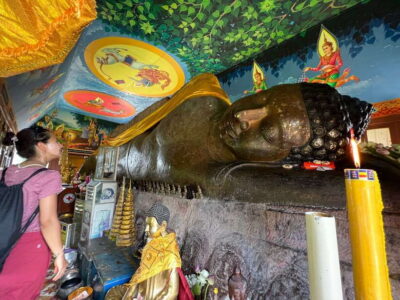
Kulen Mountain: Small-Group Tour and Picnic lunch
Read our review →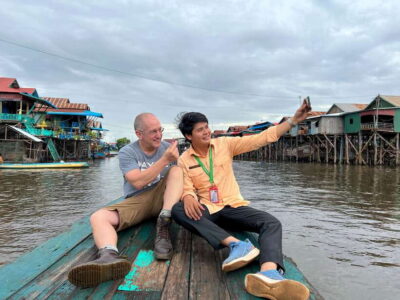
Kulen Mountain, Beng Mealea and Tonle Sap Tour
Read our review →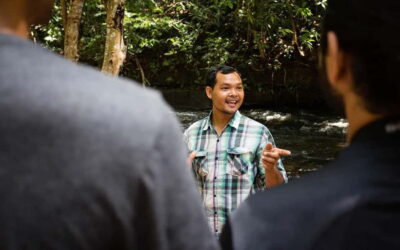
Phnom Kulen Waterfall & the Sacred 1000 Lingas (with Lunch)
Read our review →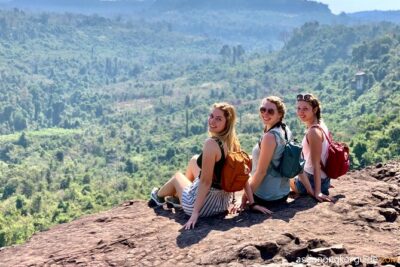
Kulen Mountain with Beng Mealea and Tonle Sap Small Group Tour
Read our review →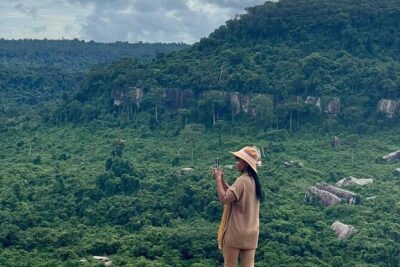
Guided Small-Group Tour in Kulen Mountain Park Waterfall
Read our review →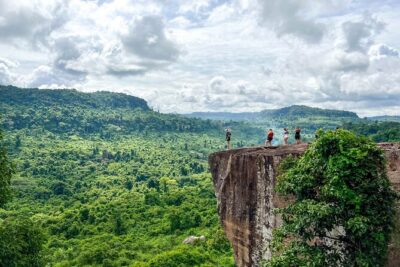
Kulen Mountain Waterfall Tour with Picnic Lunch from Siem Reap
Read our review →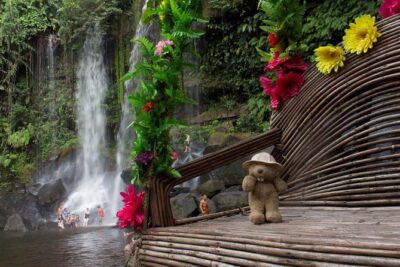
Kulen Waterfall & 1000 Linga River Small-Group Tours
Read our review →Browse the lists this tour appears in