
Reviewed · BENG MEALEA TOURS
4-Day All Major Temples & Kulen mountain & Koh Ker & Beng Mealea
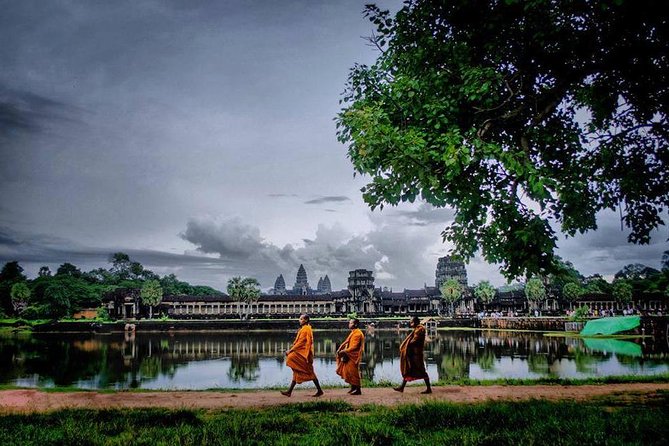
Ancient Cambodia rewards patient explorers. This four-day private tour gives you a wide look at the Khmer world, from famous Angkor Wat and tree-covered Ta Prohm to remote Koh Ker and the waterfall at Phnom Kulen. You travel in a private air-conditioned vehicle with an English-speaking guide, so the days can feel more personal than a large coach outing.
I especially like the mix of famous temples and quiet ruins, plus the chance to see Cambodia beyond the main Angkor complex. The guide and driver pairing also matters on long sightseeing days, and guides such as Vanna and Sam have earned strong praise for their history knowledge, kindness, and good humor. The main drawback is the pace: four days cover a huge amount of ground, with early starts, long drives, and many separate entrance fees added to the tour price.
In This Review
- Key points to know before booking
- What the $389.25 price really covers
- Day 1: Angkor Wat, Ta Prohm, and the heart of Angkor Thom
- Day 2: Phnom Kulen adds water, worship, and countryside
- Day 3: Sunrise, Jayavarman VII, and the Roluos temples
- Day 4: Koh Ker and Beng Mealea require stamina
- Private transport and the pace of four big days
- Who will like this tour most?
- Should you book the four-day temple tour?
- FAQ
- Is the tour private?
- Is hotel pickup included?
- Are temple admission fees included?
- Is lunch included?
- What time does the sunrise day begin?
- Can you swim at Phnom Kulen?
- How far is Koh Ker from Siem Reap?
Key points to know before booking
- Angkor Wat appears twice, with a daytime visit on Day 1 and an early sunrise outing on Day 3.
- Phnom Kulen includes more than temple ruins, with the River of a Thousand Lingas and a waterfall where you can swim.
- Koh Ker requires a long day, located more than 150 kilometers northeast of Siem Reap.
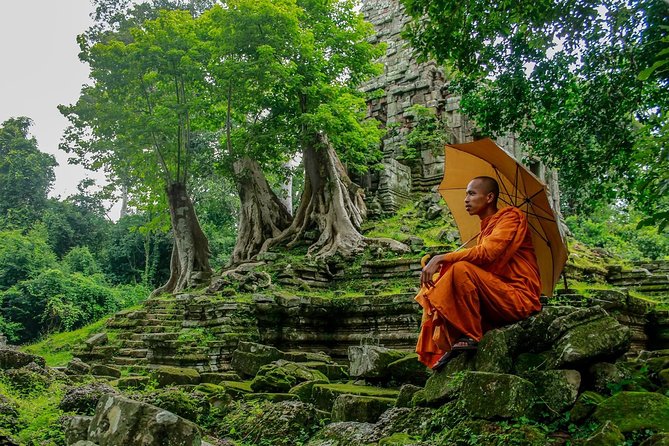
- Beng Mealea offers a rougher ruin experience, with trees, fallen stones, and a less restored feel.
- The $389.25 price excludes major tickets, including the $72 Angkor pass, $20 Kulen ticket, and $15 Koh Ker ticket.
- This is a genuinely private tour, with only your own group in the vehicle and at the sights.
What the $389.25 price really covers
The advertised cost includes a private air-conditioned vehicle, driver, licensed English-speaking guide, drinking water, cool wet towels, parking fees, road tolls, hotel pickup, and hotel drop-off. That package is useful in Cambodia, where the heat and dusty roads can make a full day of temple walking tiring.
The price does not include admission. Budget another $72 per person for the Angkor and temple pass, $20 for Phnom Kulen, and $15 for Koh Ker. Lunch is also separate, with meals estimated at about $5 per person from the menu.
If you eat lunch on all four days at that quoted rate, the rough total becomes $516.25 per person. That is before any drinks or other personal spending. The number looks much higher than the headline price, but you are paying for a private vehicle and guide across four long days, including distant sites that would be harder to arrange independently.
The value is strongest for couples, families, or a small group that wants its own schedule. Group discounts are offered, so a larger private party may find the per-person cost more attractive. You are not simply paying for transport. You are paying to connect several separate temple areas without arranging different drivers, permits, and routes yourself.
More Koh Ker trips:
- Koh Ker Temple Group & Beng Mealea Full-Day Join-in Tour
★ 5.0 · 710 reviews - From Siem Reap: Koh Ker and Beng Mealea Temples Tour
★ 4.9 · 293 reviews - Preah Vihear: Full-Day Preah Vihear and Koh Ker Temple Tour
★ 4.9 · 263 reviews
Day 1: Angkor Wat, Ta Prohm, and the heart of Angkor Thom
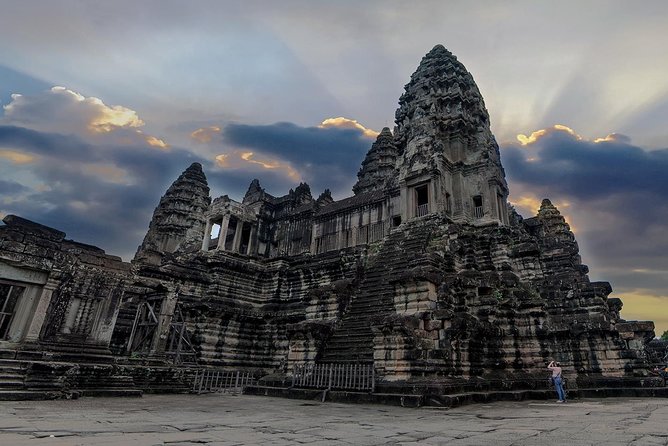
The first pickup is scheduled for 8:00am from your hotel or guest house. The tour stops to buy the temple pass before entering the Angkor area, and Angkor Wat receives about two and a half hours.
That is enough time to see the major parts of the temple, but do not expect a slow, solitary morning. Angkor Wat is vast, and your guide’s explanations can help you understand the layout, carvings, and religious purpose instead of simply walking through corridors and taking photographs. The tour’s main value here is having someone connect the stones to the Khmer Empire’s story.
Ta Prohm follows, with about two hours. This is the temple many people associate with tree roots pushing across old walls. The setting is dramatic, though its fame also makes it one of the busier stops. I would keep your expectations practical: the famous movie connection adds interest, but the real appeal is the uneasy meeting of masonry and forest growth.
Ta Nei is a shorter 45-minute stop and a useful change of mood. It is smaller and less restored, surrounded by large trees. If you want a quieter ruin where you can look closely at the stonework without the same level of attention as Angkor Wat or Ta Prohm, this stop may be one of your favorites.
The route then moves into Angkor Thom. A quick stop at Victory Gate allows time for photographs before you continue to Bayon, the city’s central temple. Bayon is known for its towers with four faces, traditionally linked with the Buddhist figure Avalokitesvara. The scale can be confusing at first, and the guide is especially useful here because the faces, galleries, and changing levels are easy to mix up.
Baphuon comes next, a large Hindu temple built before Angkor Wat in the 11th century. The reclining Buddha at its rear was added in the 16th century, giving the monument several layers of religious change. Nearby Phimeanakas is a smaller pyramid temple connected with the old royal palace area.
The Terraces of the Elephants and the Leper King are brief stops, each about 10 minutes. They are platforms rather than full temple visits, so they work best as visual pieces of Angkor Thom’s royal center. Expect quick photographs and guide commentary rather than extended exploration.
The day may finish at Phnom Bakheng for sunset. The climb takes time, and the upper area has a limited number of people allowed at once. This can mean waiting, and the schedule specifically allows you to skip sunset if you prefer. That is a sensible option after a full day of ruins. A sunset viewpoint is not worth forcing if you are already tired.
Day 2: Phnom Kulen adds water, worship, and countryside
Day 2 moves well beyond the main Angkor park. Phnom Kulen National Park is more than 60 kilometers from Angkor, and the visit is planned for about five hours. This long drive is part of the experience, but it also makes the day less efficient if your priority is only temple architecture.
The River of a Thousand Lingas is the main cultural stop. Here, carvings cover the riverbed with lingas, symbols connected with Shiva and Hindu worship. Seeing the sculptures in their natural setting helps explain how water, kingship, and religion were linked in the Khmer period.
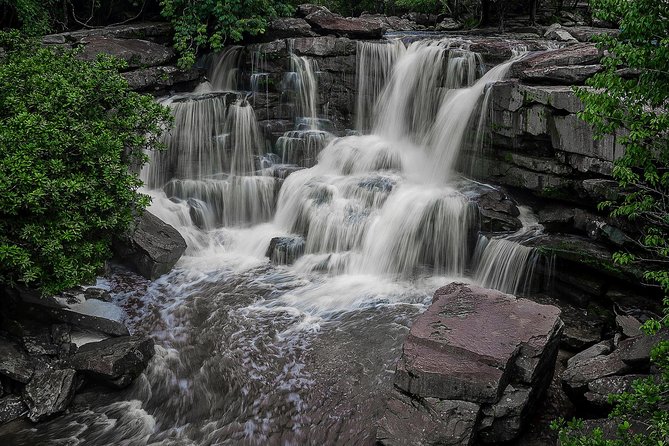
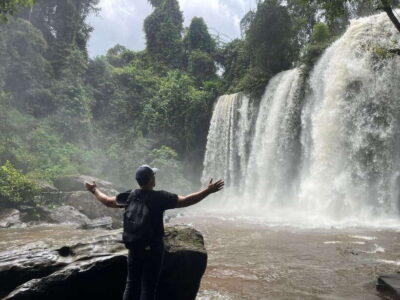
The waterfall gives the day a different rhythm. You can swim there, making Phnom Kulen a welcome break from hot stone paths and enclosed galleries. Bring suitable swimwear and keep your expectations simple, as the supplied details confirm the swimming opportunity but do not describe facilities or changing arrangements.
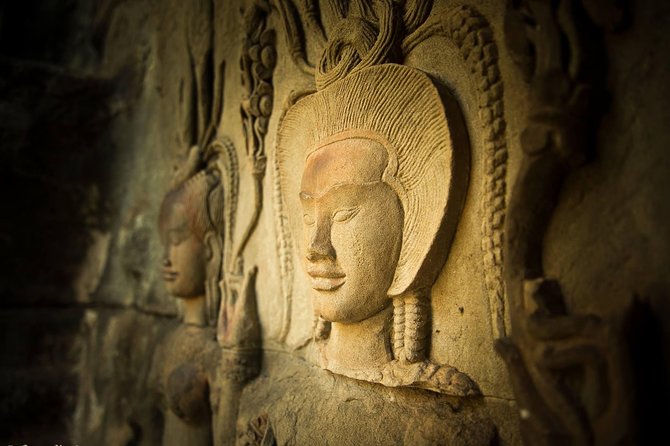
After Kulen, the tour visits Banteay Srei. This smaller temple is famous for its pink sandstone and fine carving. It was built in the 10th century under King Rajendravarman II and dedicated mainly to Shiva. The one-hour visit is well judged, since the monument is compact but rewards careful attention to its details.
Banteay Samre receives about 45 minutes. Its 12th-century Hindu design is often compared with Angkor Wat, giving you a useful point of reference after the previous day’s major monument. It is a good stop for seeing how Khmer temple plans and decorative ideas were reused in different settings.
The final planned temple is Pre Rup, a late 10th-century temple mountain associated with Hindu worship and traditional funeral beliefs. The 30-minute visit suits its size and exposed upper levels. After a five-hour Kulen visit, you may be ready for a shorter stop rather than another enormous complex.
Day 3: Sunrise, Jayavarman VII, and the Roluos temples
Day 3 begins at 5:00am for Angkor Wat sunrise. This is an early start, so the experience depends heavily on your tolerance for short nights. The sunrise visit lasts about one hour and 45 minutes, giving you time to see the temple in changing morning light before returning for breakfast.
You already visited Angkor Wat on Day 1, but sunrise changes the experience. The first visit helps you understand the structure, while the second offers a quieter visual moment. The tour does not promise a particular sky or reflection, so treat the sunrise as a chance to see the monument at a different hour, not as a guaranteed postcard scene.
After breakfast, you return to the temples. Preah Khan is a large Buddhist complex built by King Jayavarman VII and dedicated to his father. Allow about an hour. Its size can feel overwhelming, but the long galleries and layered spaces show why a guide is valuable. You will get more from the stop if you focus on how the temple was used, not just on finding the next photo angle.
Neak Pean is a small island temple in the middle of the last baray, or reservoir, and the visit lasts around 30 minutes. Its position on water gives it a distinct character, but it is not a large monument. Ta Som, another 30-minute stop, is a smaller Buddhist temple east of Neak Pean, with a more modest scale than the main Angkor sites.
Eastern Mebon receives an hour. This three-level temple mountain is known for its corner elephants and five upper towers. The elephants are especially easy to appreciate because they sit low and close to the temple’s edges rather than disappearing into a distant gallery.
The route then continues to the Roluos Group, an early center of Khmer power. Lolei is a short 15-minute stop, followed by about 20 minutes at Preah Ko. Bakong receives 45 minutes and is the largest temple in the group, as well as an early sandstone temple mountain.
This section is important because it takes you away from the best-known Angkor names and toward earlier Khmer building traditions. The stops are shorter, but together they show how temple design developed before the great monuments of Angkor.
Lunch is arranged at a restaurant along the route, with food charged separately from the tour. The listed meal estimate is $5 per person, though the actual cost depends on what you order.
More Beng Mealea trips:
- Siem Reap: Kulen Mountain, Beng Mealea and Tonle Sap Tour
★ 5.0 · 1,483 reviews - Kulen Mountain with Beng Mealea and Tonle Sap Small Group Tour
★ 5.0 · 780 reviews - Banteay Srei, Kulen Waterfall & Beng Mealea Exploration
★ 5.0 · 185 reviews - Siem Reap: Kulen Waterfall, Banteay Srei, and Beng Mealea Tour
★ 5.0 · 148 reviews
Day 4: Koh Ker and Beng Mealea require stamina
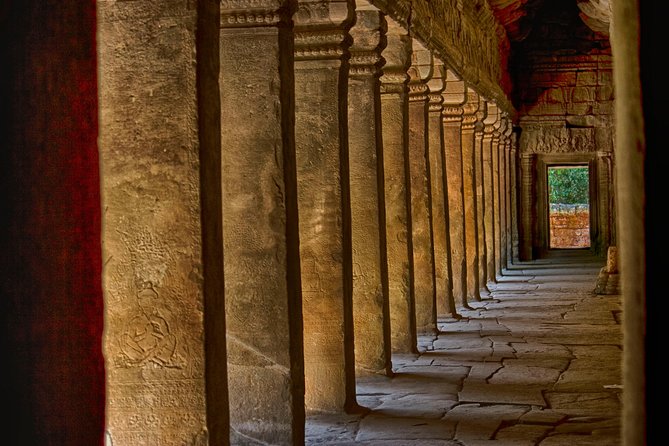
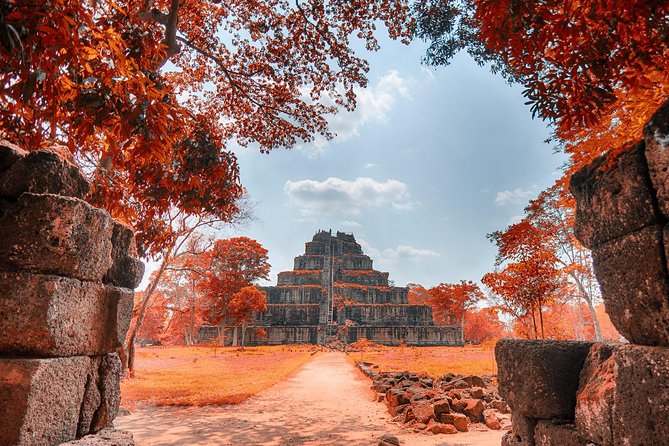
The final day reaches the most remote part of the tour. Koh Ker is more than 150 kilometers northeast of Siem Reap and was briefly the Khmer capital from 928 to 944. The Koh Ker visit is planned for about four hours, but the long road journey means this is a full day even before you begin walking among the ruins.
Koh Ker suits you if you want a less central archaeological experience and do not mind spending many hours in the vehicle. The former capital’s short period of importance gives it a different story from Angkor. You are not simply seeing another temple complex, you are visiting the remains of a short-lived royal center.
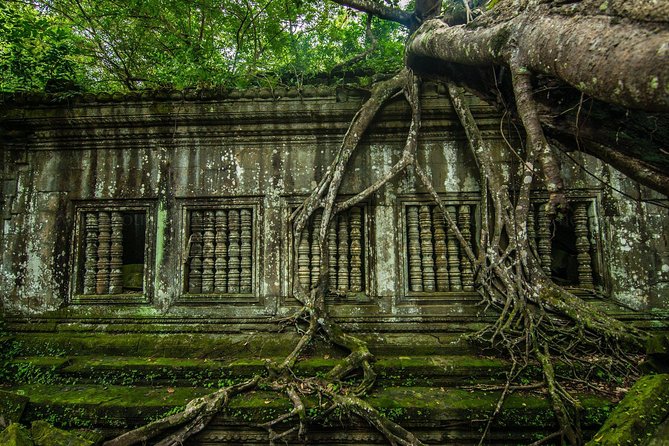
Beng Mealea follows for about 90 minutes. Nature has spread across the ruins, and the temple is built on a plan similar to Angkor Wat. Fallen blocks, trees, and rough paths create a more adventurous setting than the carefully managed central monuments.
That roughness is also the main caution. Beng Mealea may be exciting, but it can be harder to read than a restored temple with clear walkways. Listen closely to your guide and watch your footing. The experience is best for people who enjoy atmosphere and ruins in an unfinished state.
The schedule also lists Lolei, Preah Ko, and Bakong again after Beng Mealea, with visits of about 20, 20, and 40 minutes. Since those Roluos temples already appear on Day 3, confirm the exact order and final-day plan with Happy Angkor Tour before departure. The supplied schedule may reflect an alternate arrangement or repeated visits, and clearing this up will prevent confusion after a very long drive.
Private transport and the pace of four big days
Private transport is one of the strongest reasons to choose this experience. Your group has its own air-conditioned vehicle, driver, guide, water, and wet towels. On a tour that includes 5:00am starts, long rural drives, and repeated walks over stone, those simple comforts matter.
The tour is private, but it is not slow by default. Day 1 includes many separate stops, Day 2 includes a five-hour Kulen visit, and Day 4 reaches Koh Ker. You can ask your guide about pacing, but you should still expect a structured sightseeing program rather than a loose, spontaneous day.
The English-speaking guide is another major part of the value. Sam is praised for explaining temple history and Cambodian culture while remaining funny, kind, and caring. Vanna has also been singled out for doing a strong job across several days, working with driver Pat on long and short journeys. You should confirm your assigned guide at booking, since names may vary.
Who will like this tour most?
I would recommend this experience to you if you want to see the major Siem Reap temples but also care about remote sites, early Khmer history, and a day with swimming at Phnom Kulen. It works particularly well for a small family or group that values a private vehicle and an English-speaking guide.
It is also a good fit if you prefer one organized plan for a complicated region. Koh Ker and Beng Mealea are not casual add-ons to a standard Angkor day. Having transport, tolls, parking, and hotel transfers handled removes much of the planning burden.
I would be more cautious if you dislike early mornings, long drives, or repeated temple walks. Four days of ruins can feel physically demanding, and the program includes very little empty time. The private format helps, but it does not shorten the roads between Siem Reap, Kulen, and Koh Ker.
The tour has a five-star rating from 28 submitted ratings, with 100 percent recommending it. That supports the strongest parts of the package, especially the guides, drivers, private setup, and broad range of sites. Still, the rating should not hide the key practical issue: the headline price does not include the admission tickets.
Should you book the four-day temple tour?
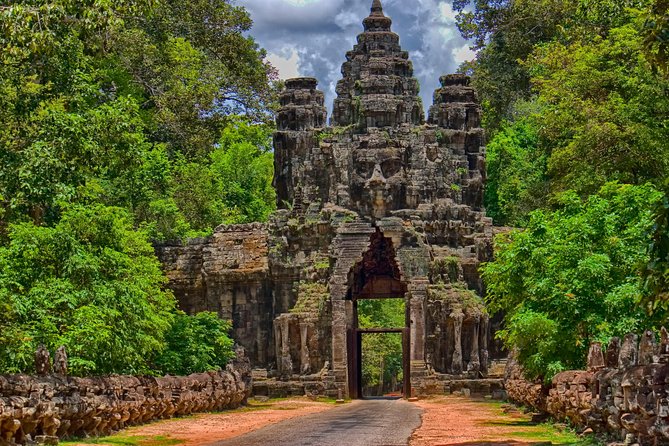
Book it if you want breadth, private transport, and history explained as you go. You will see Angkor Wat in daylight and at sunrise, explore the best-known temples, swim at Phnom Kulen, and reach the more distant ruins of Koh Ker and Beng Mealea.
Skip it if you want a relaxed holiday with short sightseeing periods. A shorter Angkor-focused plan would be easier on your body. For this four-day program, budget the extra tickets in advance, prepare for the 5:00am start, and ask about the repeated Roluos stops on Day 4.
Free cancellation is available when you cancel at least 24 hours before the start time. Changes or cancellations made inside that window are not accepted for a refund.
FAQ
Is the tour private?
Yes. Only your own group participates in the activity, with a private air-conditioned vehicle and English-speaking guide.
Is hotel pickup included?
Yes. Pickup is offered from your hotel or guest house, and the tour finishes with drop-off at your hotel.
Are temple admission fees included?
No. The Angkor and all temples pass costs $72 per person, Phnom Kulen costs $20, and the Koh Ker Group ticket costs $15.
Is lunch included?
No. Lunch is charged separately. The stated estimate is about $5 per person, depending on the food selected from the menu.
What time does the sunrise day begin?
The guide is scheduled to pick you up at 5:00am for the Angkor Wat sunrise visit on Day 3.
Can you swim at Phnom Kulen?
Yes. The Phnom Kulen visit includes a waterfall where you can swim.
How far is Koh Ker from Siem Reap?
Koh Ker is located more than 150 kilometers northeast of Siem Reap town. The temple visit itself is planned for about four hours, making Day 4 a long outing.
More 4-Day Experiences
- 4-Day Excursion of Angkor, Koh Ker, Beng Mealea, Tonle Sap and Waterfalls
★ 5.0 · 87 reviews - Private Siem Reap 4 Days: Full Exploration of the Angkor Complex
★ 5.0 · 17 reviews - 4-Day Tour from Siem Reap to Phnom Penh
★ 4.0 · 9 reviews - 4-Day Cambodia Highlights Tour from Phnom Penh with Angkor Wat
★ 4.5 · 4 reviews
More Phnom Kulen Tours
- Kulen Waterfall Join-in Tour (local Picnic lunch)
★ 5.0 · 2,434 reviews - Kulen Mountain: Small-Group Tour and Picnic lunch
★ 4.9 · 1,802 reviews - Phnom Kulen Waterfall & the Sacred 1000 Lingas (with Lunch)
★ 4.8 · 974 reviews - Guided Small-Group Tour in Kulen Mountain Park Waterfall
★ 5.0 · 480 reviews
Just added around Siem Reap
- Private Battambang Full-Day Guided Tour★ 4.5 · 3 reviews
- Kulen Mountain, Beng Mealea and Banteay Srei Full Day Tour★ 5.0 · 3 reviews
- Kompong Pluk Tour★ 5.0 · 3 reviews
- Private 3 Day Tour to Discover the ancient temples★ 5.0 · 3 reviews
- Kulen National Park Ticket -Waterfall & 1000 Lingas★ 5.0 · 3 reviews
- Cambodia: Absolute Traditional Dance Show with Buffet Dinner★ 5.0 · 3 reviews
- Border Transfer (Siem Reap to Laos/Laos to Siem Reap)★ 3.5 · 3 reviews
- Best Taxi Siem Reap to Battambang – English Speaking Driver★ 4.5 · 3 reviews
Beng Mealea Tours, compared.
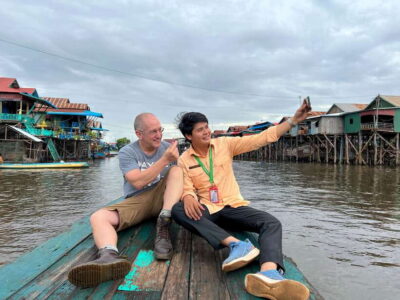
Kulen Mountain, Beng Mealea and Tonle Sap Tour
Read our review →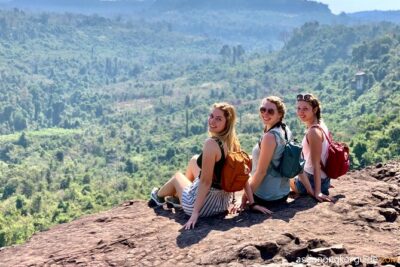
Kulen Mountain with Beng Mealea and Tonle Sap Small Group Tour
Read our review →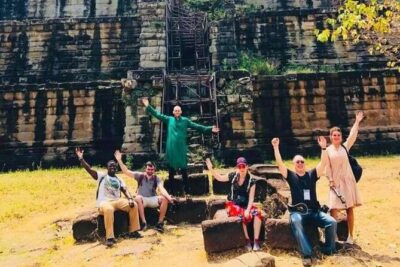
Koh Ker Temple Group & Beng Mealea Full-Day Join-in Tour
Read our review →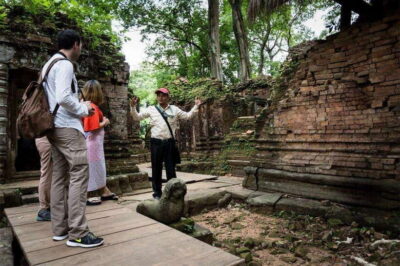
Banteay Srei, Kulen Waterfall & Beng Mealea Exploration
Read our review →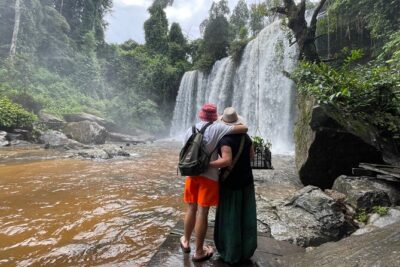
Kulen Waterfall, Banteay Srei, and Beng Mealea Tour
Read our review →
Banteay Srei, Beng Mealea and Kulen Mountain with Picnic
Read our review →Kulen Mountain, Beng Mealea, and Tonle Sap Tour
Read our review →Browse the lists this tour appears in