
Reviewed · TUK-TUKS
A Day TukTuk Bambootrain, Banan, Killing & Bat Caves, Sunset
Battambang rewards curious visitors. This $14 tuk-tuk day covers temples, rice fields, villages, Khmer Rouge history, local food, and the famous evening bat flight in one long outing. I especially like the mix of quiet countryside and serious history, plus the chance to ride the original Bamboo Train rather than simply look at it in a museum.
The strongest part is the guide service. Samol receives repeated praise for his humor, energy, Cambodian history stories, and willingness to answer questions. Guides such as Uk Bon Thai and Jay have also led highly rated days. The main drawback is the length: at about 11 hours, and with extra costs for the Bamboo Train and lunch, the day can feel tiring in the heat.
In This Review
- Key points at a glance
- Why this full day works in Battambang
- Battambang town: a useful start before the countryside
- Villages, fruit plantations, and the original Bamboo Train
- Wat Banan and the climb up 358 steps
- Local food, fruit, and an optional taste of rat barbecue
- Phnom Sampov and the painful history of Killing Cave
- Monkeys, temples, and views above the plain
- The Bat Cave sunset spectacle
- What the $14 price really includes
- Who should book this day
- Should you book the Battambang Tuk-Tuk tour?
- FAQ
- How long does the Battambang tour last?
- What is the price of the tour?
- Is the Bamboo Train included?
- How many steps are there at Wat Banan?
- Is lunch included?
- Where can I be picked up and dropped off?
Key points at a glance
- 358 steps to Wat Banan: Climb the laterite staircase to one of Battambang’s best-preserved Khmer temples and its distinctive five-tower design.
- An old-fashioned Bamboo Train ride: Pay an additional $5 per person for a short, bumpy trip through rice fields and rural villages.
- A serious stop at Killing Cave: Phnom Sampov offers difficult but important history connected to the Khmer Rouge period.
- Millions of bats at sunset: The evening flight from the cave can continue for more than 50 minutes.
- A guide-led look at local life: Learn about farming, fruit plantations, religion, folk stories, and Battambang’s past from an English-speaking guide.
- Strong value at $14: Hotel pickup, admissions, water, fruit, mountain transport, and donations are included, but lunch, personal spending, and the Bamboo Train are extra.
Why this full day works in Battambang
Battambang is best understood outside its central streets. The town has handsome old buildings and an interesting market, but the countryside gives you the fuller picture: rice farming, fruit growing, village homes, temples, caves, and the slow rhythm of rural Cambodia.
This tour connects those pieces without requiring you to arrange several separate rides. Pickup begins around 8:20 AM from your accommodation or a restaurant within 5 kilometers of Battambang town. From there, your tuk-tuk becomes both transport and viewing platform. You can watch the road, farms, and village life pass at an easy pace.
I like that the day is not built around one major monument. It gives you several different kinds of experience. You get architecture at Wat Banan, a playful ride on the Bamboo Train, local food and agriculture, a sobering memorial site, and a natural spectacle at dusk.
The guide makes a real difference. Samol is praised for being funny, warm, and well informed, with a talent for explaining Cambodian history without turning the day into a lecture. He is also known for taking photos, offering water breaks, and adding small touches such as jokes and magic tricks. If Samol is not your guide, Uk Bon Thai and Jay have also been singled out for their friendly approach and strong local knowledge.
More Tuk Tuk Tours in Battambang
- Battambang: Tuk-Tuk, Bamboo Train, Killing/Bat Caves, Sunset
★ 4.9 · 1,436 reviews - Battambang Tuk Tuk tour: Bambootrain, Killing & Bat Caves,Sunset
★ 5.0 · 799 reviews - Afternoon tour by tuk tuk to bamboo train,bat cave,killing cave,countryside.
★ 5.0 · 344 reviews
Battambang town: a useful start before the countryside
The morning begins with a look at central Battambang. You pass historical buildings, the central market, the provincial hall, and the statue of Ta Dambong Kranhoung, the city’s symbolic figure.
This opening matters because it gives you a quick sense of place before the tuk-tuk heads into the countryside. Your guide explains local religion, agriculture, culture, folk tales, and the history of Battambang. You can ask questions early, then connect later stops to what you have already heard.
The city portion is fairly brief. One practical limitation is that you may want more time to walk around town, especially if you have an interest in old architecture or local markets. The tour focuses on seeing the main sights from the tuk-tuk rather than offering a long city walking tour.
Still, this is a useful orientation. It helps you understand that Battambang is more than a base for the caves and temples. It is a provincial center with its own local identity and a long connection to farming and trade.
Villages, fruit plantations, and the original Bamboo Train
The route to Ou Srauo Laou is one of the more appealing parts of the day. You pass rice fields, fruit plantations, small villages, and a suspension bridge. There is also time to stop and speak with farmers, which gives the countryside section more purpose than simply taking photographs from the road.
The suspension bridge and village scenes offer the kind of ordinary local detail that organized sightseeing often misses. You may see people working around their homes or fields, and your guide can explain how agriculture fits into daily life in the area.
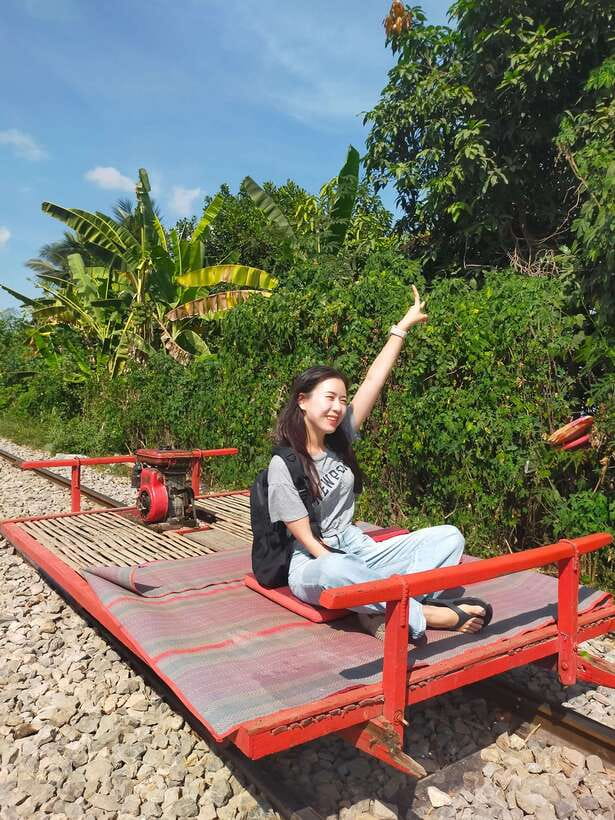
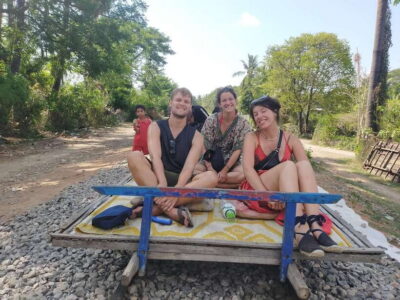
Then comes the Bamboo Train. The ride costs an extra $5 per person and is not included in the tour price. You buy the ticket locally, board a simple bamboo platform, and rattle along the track through the countryside. The experience is not luxurious, and it is not a long scenic railway journey. It is basic, noisy, and pleasantly odd.
You may also receive a free massage during the stop, according to the activity details. The ride itself offers open views of rice fields and rural life, with a little bumping and plenty of novelty.
I would keep expectations sensible. Some people find the Bamboo Train unforgettable because of its unusual design and old rural setting. Others find it less exciting than expected, especially after the novelty wears off. It is best viewed as a short cultural curiosity, not the main reason to book the day.
Between the Bamboo Train and Banan, look up into the trees for fruit bats hanging from the branches. These are different from the huge evening flight at Phnom Sampov, so the day gives you two bat-related moments: a quieter daytime sighting and the dramatic sunset departure from the cave.
Wat Banan and the climb up 358 steps
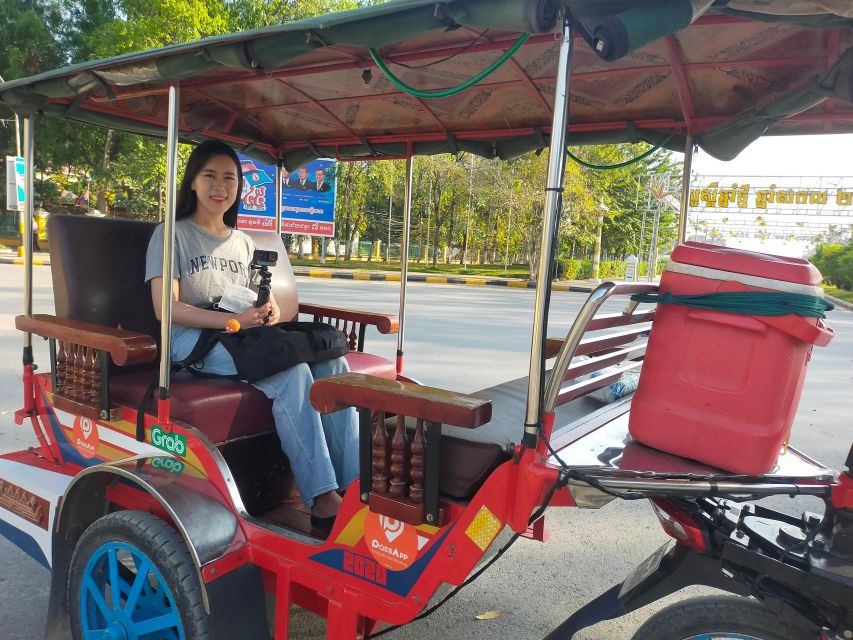
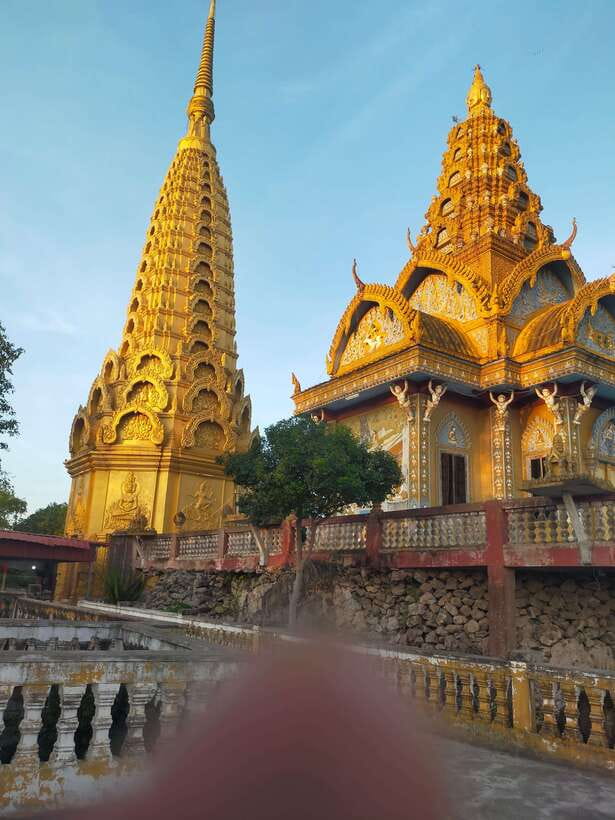
Wat Banan is one of the day’s strongest stops. It is described as the best-preserved Khmer temple in Battambang, with five towers that recall the better-known arrangement at Angkor Wat.
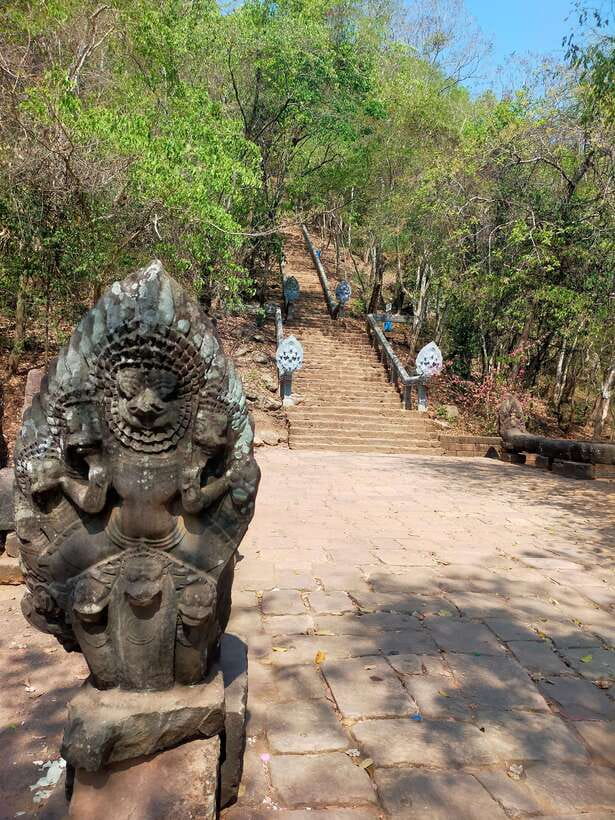
Getting there requires effort. A laterite staircase with 358 steps leads up the mountain, with naga railings near the base. The climb is manageable for many people, but the heat makes it harder than the number alone suggests. Bring water, use sunscreen, and take your time.
At the top, the temple’s five towers give the site a compact, memorable shape. It does not match Angkor Wat in scale, and that is part of its appeal. You are not facing a huge complex that takes hours to cross. Instead, you get a smaller mountain temple with a strong setting and room to pause.
The temple dates to the 11th century and is linked to King Udayadityavarman II, the son of King Suryavarman I. It was built for prayer and devotion, in a period when Hindu gods held a central place in religious life. The site also reflects later changes, including Buddhist elements associated with rebuilding under Jayavarman VII.
Your guide can help explain these layers. Without context, the five towers are attractive but easy to view as just another old temple. With the history, you begin to see how Cambodian religious sites changed over time.
After the climb, lunch takes place beside a lake. Lunch is not included, so plan to pay separately. The setting is part of the pleasure: after the stairs and temple visit, a meal near the water offers a welcome pause.
One criticism of the day is that the pace can feel slow after Banan. That may suit you if you want an unhurried lunch and countryside views. If you prefer constant activity, this middle section may test your patience.
More sunset tours:
- A Day TukTuk Handicrafts Bambootrain Killing&BatCaves,Sunset
★ 4.9 · 78 reviews - Bamboo Train, Banann Temple, Fruit Bat, Bat Cave, Sunset
★ 4.2 · 3 reviews - Angkor Wat Sunrise or Sunset Tour with Guide from Siem Reap
★ 5.0 · 12,109 reviews - Siem Reap: Angkor Wat: Small-Group Sunrise or Sunset Tour
★ 5.0 · 9,444 reviews
Local food, fruit, and an optional taste of rat barbecue
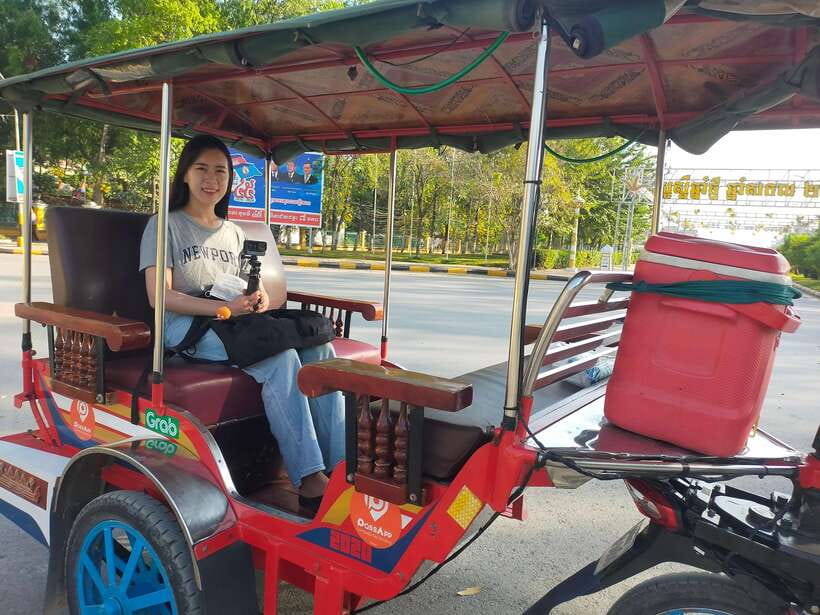
Food is used here as a way to talk about Cambodian life, not just to fill a gap between sights. You get a fruit salad, and the route includes opportunities to learn about fruit plants and local agriculture.
Rat barbecue is offered as an optional tasting before Phnom Sampov. It may sound confronting, but it is presented as a local food experience rather than a stunt. One guide-led group found it delicious, while other people may reasonably decide to skip it.
The important point is choice. You do not have to taste it to enjoy the day, but if you are open to unfamiliar food, this is a chance to try something you are unlikely to encounter at home. Ask your guide about what you are eating and how it fits into local food habits.
Bring cash for lunch, the Bamboo Train, food, and personal expenses. The $14 headline price does not cover everything, but the included admissions and transport still make the base cost unusually low for an 11-hour private or small-group style outing.
Phnom Sampov and the painful history of Killing Cave
The afternoon turns serious at Phnom Sampov. Before reaching the caves, the tour may stop at a local food point for the optional rat barbecue. Then you take a mountain shuttle, motorbike, or pickup truck up the hill, with the return transport included.
Killing Cave is connected to the Khmer Rouge period from 1975 to 1979. More than 10,000 victims were killed in the caves, making this one of the most difficult stops of the day.
You should not treat it as a quick photo stop. The site asks for quiet attention. The cave is a place to learn about the suffering caused by the Khmer Rouge, and the guide’s explanation gives the history a local frame. The subject is disturbing, but it is an important part of understanding Cambodia today.
The stop may feel emotionally heavy after the lighter Bamboo Train ride and food tasting. That contrast is not a flaw. It reflects the range of Cambodian experience, from farming and village routines to a recent past that still shapes families and communities.
Killing Cave can occasionally be closed. If that happens, the guide may adjust the plan and take you to other activities. That flexibility is useful, but you should understand that access to every stop cannot be guaranteed on every day.
Monkeys, temples, and views above the plain
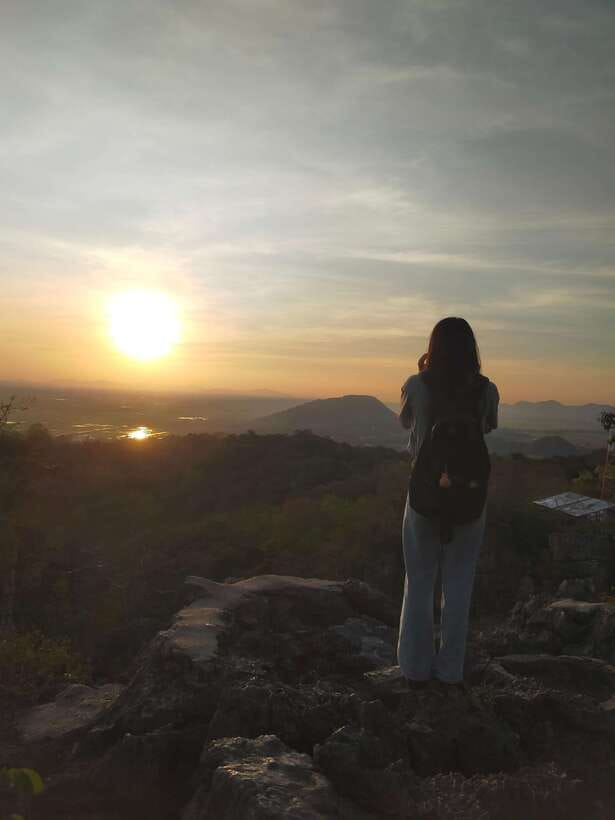
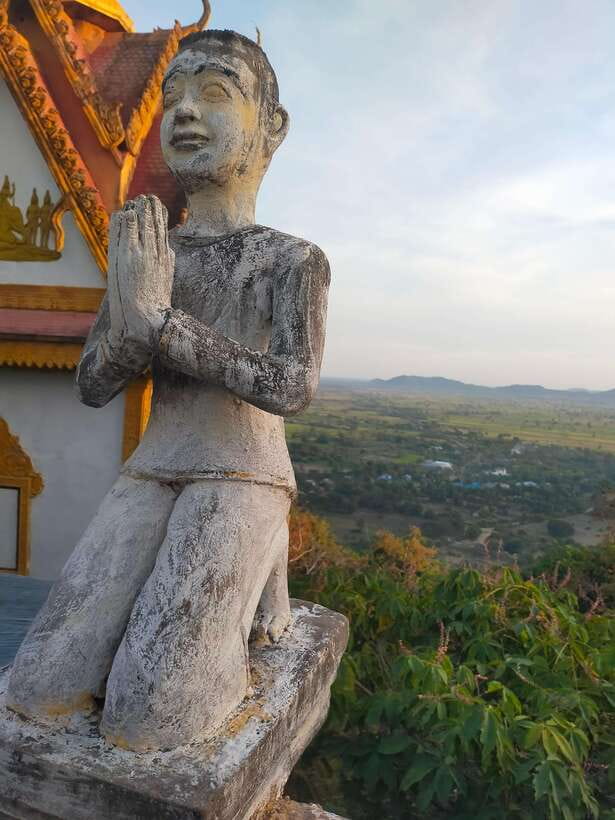
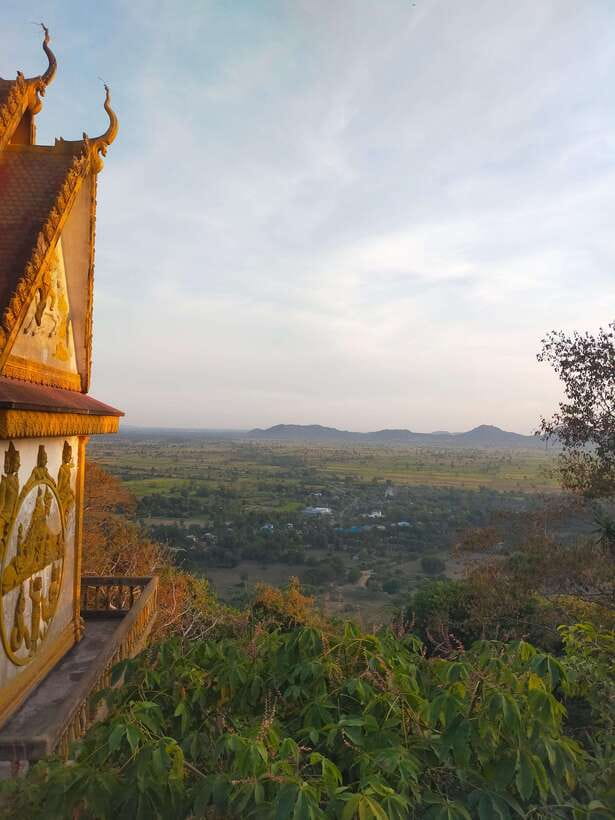
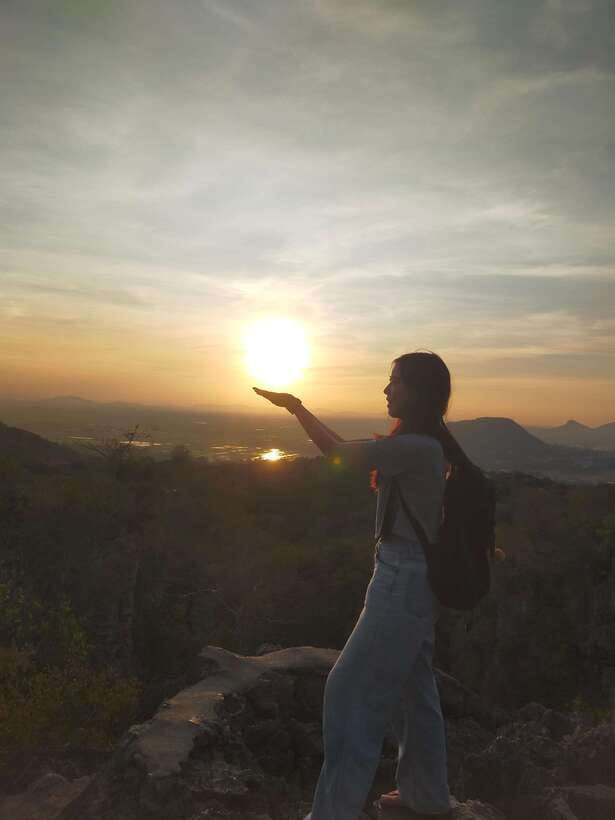
After the cave, you continue up Phnom Sampov to see temples, monkeys, and viewpoints. The summit gives you a broad view over the surrounding countryside, and the late afternoon light can be especially pleasing.
This is another section where sturdy shoes and patience help. The mountain has stairs and uneven areas, and the day has already included the 358-step climb at Banan. You may be ready for a rest by this point.
The views add balance to the darker cave visit. From above, you can see why the region’s temples and caves were built in such prominent places. The stop also gives you time to take photographs before the main event at sunset.
Do not expect a perfectly quiet mountaintop. There are temples, monkeys, other visitors, and the practical movement of people waiting for the bats. The setting is still memorable, but it is a working sightseeing place rather than an untouched lookout.
The Bat Cave sunset spectacle
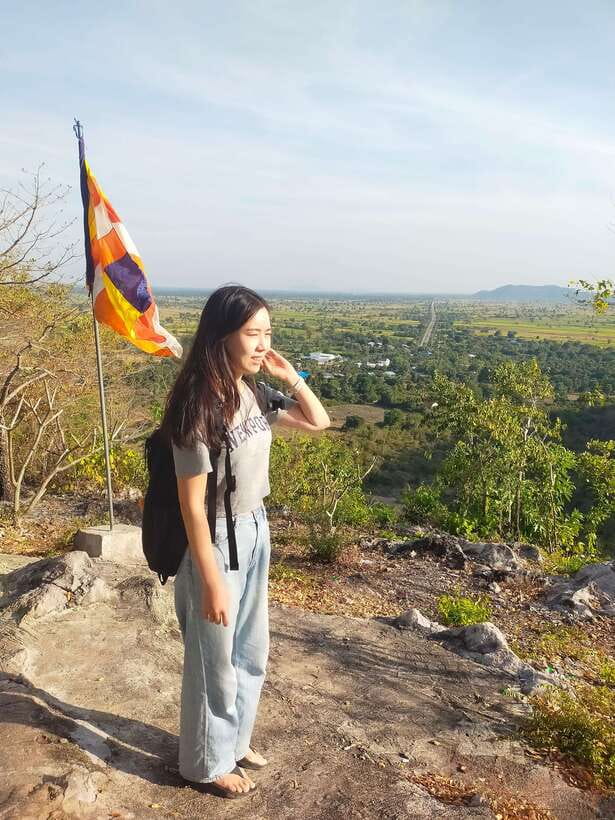
The final major stop is the Bat Cave. As evening arrives, millions of wrinkle-lipped bats fly out from the cave in a long, flowing stream. The flight can continue for more than 50 minutes.
This is the visual payoff of the day. You wait near the cave, watch the light change, and then see the bats pour into the sky in a seemingly endless line. It is simple to understand but hard to forget.
The timing also explains why this must be a full-day activity. The tour begins in the morning, but the bat flight only happens at dusk. You cannot comfortably combine all these stops in a short morning outing.
Bring a camera, but do not spend the entire flight looking through it. The bats move quickly, and the best part is watching the stream change shape against the evening sky. Your guide can help position you and explain what you are seeing.
Once the flight is over, you return to Battambang, either to your hotel or to Pomme Bar in town. The return is late enough that you should expect a full day rather than an early dinner.
What the $14 price really includes
At $14 per person, this is excellent value if you want many sights in one day. The price includes hotel pickup and drop-off within 5 kilometers of Battambang, an English-speaking guide, bottled water, wet wipes, fruit salad, admissions to Banan, Phnom Sampov, Killing Cave, and Bat Cave, mountain transport, photo opportunities, and donations.
You still need to budget for three main extras:
- Bamboo Train: $5 per person
- Lunch
- Personal expenses, including optional food and drinks
Even after those additions, the total is modest for a day that uses tuk-tuk transport, covers several distant sites, and lasts about 11 hours. The value depends heavily on the guide. Samol’s humor, stories, and attention to comfort appear to add much of what makes the day work.
The low price does not mean the day is polished like a luxury tour. The tuk-tuk is open to heat, dust, and road noise. Stops can run at a relaxed pace, and some parts involve waiting. I see that as a fair trade for the access and local feel, but you should not book this expecting air-conditioned transport or a tightly timed schedule.
Who should book this day
I would recommend it to you if this is your first visit to Battambang and you want a broad introduction in one day. It suits people who like mixing culture, food, nature, history, and unusual transport rather than spending the whole day at one temple.
It is also a good fit if you value a guide who talks, explains, jokes, and responds to questions. The strongest praise is directed at the human side of the experience, especially Samol’s warmth, humor, and passion for Battambang.
You should think twice if you dislike long days, hot weather, stairs, or emotionally difficult historical sites. The tour is not suitable for pregnant women, people over 220 pounds or 100 kilograms, people with high blood pressure, or people over 95 years old.
Wear comfortable walking shoes and bring sunscreen, a camera, cash, and rain gear. Water is provided, but extra water breaks are sensible, especially during the Banan and Phnom Sampov climbs.
Should you book the Battambang Tuk-Tuk tour?
Book it if you want variety and strong local guidance at a very low base price. The Bamboo Train is quirky rather than thrilling, and the pace may drag after lunch, but the combination of Wat Banan, rural roads, Killing Cave, mountain views, and the long bat flight gives you a well-rounded day.
The tour is especially worthwhile with Samol or another guide who brings history and humor to the ride. If you have only one full day in Battambang, this is an efficient way to see the province’s best-known sights while also meeting the countryside beyond town.
FAQ
How long does the Battambang tour last?
The tour lasts about 11 hours. Pickup begins around 8:20 AM, and the return follows the evening bat flight at Phnom Sampov.
What is the price of the tour?
The listed price is $14 per person. The Bamboo Train costs an additional $5 per person, while lunch and personal expenses are not included.
Is the Bamboo Train included?
No. The Bamboo Train ticket costs $5 per person and is paid separately.
How many steps are there at Wat Banan?
The climb to Wat Banan includes 358 steps. Comfortable shoes, sunscreen, and water are important.
Is lunch included?
No. Lunch is paid for separately and takes place beside a lake near Wat Banan.
Where can I be picked up and dropped off?
Pickup and drop-off are available at accommodation or a restaurant within 5 kilometers of Battambang town.
More Evening Experiences
- Sunset tour of Kampong Phluk stilts home village on the Tonle Sap
★ 5.0 · 4,865 reviews - Siem Reap: Angkor Wat 2-Day Tour with Sunrise and Sunset
★ 4.9 · 4,429 reviews - Siem Reap: Full-Day Angkor Wat Guided Tour with Sunset
★ 4.9 · 3,803 reviews - Angkor Wat Sunset Small Group Tour with Lunch Included
★ 5.0 · 3,059 reviews
Just added around Battambang
- Bamboo Train, Banann Temple, Fruit Bat, Bat Cave, Sunset★ 4.2 · 3 reviews
- Morning Tour Bamboo Train, Ancient House, Local, Countryside★ 5.0 · 3 reviews
- Private Boat from Battambang to Siem Reap via Tonle Sap Lake★ 4.5 · 3 reviews
- Battambang Private afternoon tour bamboo train bat cave & village★ 5.0 · 3 reviews
- Battambang Private Full-Day Tour★ 5.0 · 3 reviews
- From Siem Reap: Battambang Day Trip Bamboo Train & Bat Cave★ 5.0 · 4 reviews
- Private Taxi Transfer From Battambang – Siem Reap City★ 5.0 · 4 reviews
- Battambang City and Country side Full day Tour★ 5.0 · 4 reviews
Tuk-Tuks, compared.

Tuk-Tuk, Bamboo Train, Killing/Bat Caves, Sunset
Read our review →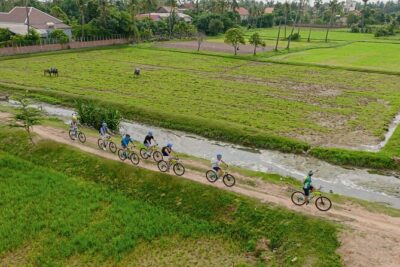
Siem Reap Countryside Bike Tour / E-Bike or Tuk Tuk
Read our review →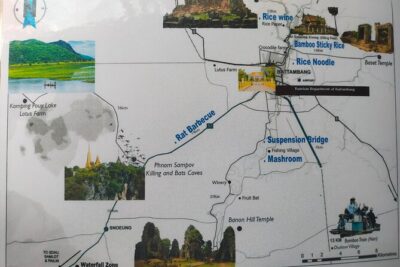
Battambang Tuk Tuk tour: Bambootrain, Killing & Bat Caves,Sunset
Read our review →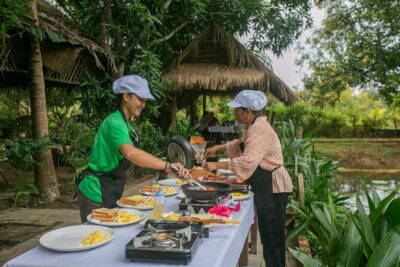
Phnom Penh Silk Island Bike Tour/ E-Bike or Tuk Tuk
Read our review →
Angkor Wat Private Tuk-Tuk Tour (sunrise Option) & more
Read our review →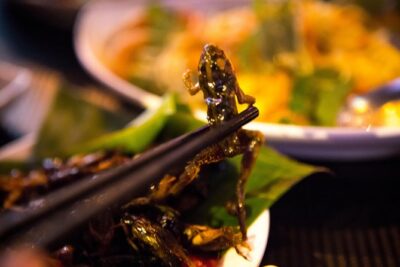
Ultimate Phnom Penh Food Tour by Tuk Tuk: 20 Tastings and Drinks
Read our review →Browse the lists this tour appears in