
Reviewed · ANGKOR WAT TOURS
Siem Reap: Full-Day Angkor Wat Guided Tour with Sunset
The temples tell the story. This full-day Angkor tour packs Angkor Wat, Angkor Thom, Bayon, Ta Prohm, and Phnom Bakheng into one well-planned day from Siem Reap. I like the small-group format, capped at 13 people, and the steady supply of cold water and cool towels, which matter greatly in Cambodia’s heat. The main drawback is the long day, with plenty of walking, uneven steps, and a sunset climb at the end.
I also like that an English-speaking guide turns carved stones into understandable stories about Hindu beliefs, Buddhist rulers, Khmer kings, and daily life. Guides such as Nick, Vone, Sayon, Ho Heang, and Sok Vuthy have been praised for clear English, humor, local insight, and even photography help. You will need to add the $37 one-day temple pass, plus lunch and drinks, so the real cost is higher than the advertised $15.
In This Review
- Key points to know before you go
- What this Angkor Wat day is really like
- Angkor Wat takes the morning lead
- The gates and faces of Angkor Thom
- Bayon’s smiling faces need a guide
- Lunch is a practical pause, not a long retreat
- Ta Prohm brings jungle and ruins together
- Phnom Bakheng finishes the day with a climb
- Guides make the $15 tour worthwhile
- Transport, water, and heat management
- What the tour costs in real terms
- Who should book this Angkor day?
- Should you book this Angkor Wat tour?
- FAQ
- How long does the Angkor Wat tour last?
- What temples are included?
- Is the Angkor park entry ticket included?
- Is lunch included?
- What should I wear?
- Is hotel pickup included?
Key points to know before you go
- A full Angkor circuit in one day: See Angkor Wat, Angkor Thom, Bayon, Ta Prohm, and Phnom Bakheng in roughly 9 to 10 hours.
- Late morning pickup: Collection is usually between 9:10 and 9:30 a.m., so this is not an Angkor sunrise tour.
- Guide-led temple visits: Expect explanations of carvings, religious meaning, royal history, and local customs at each major stop.
- Comfort between ruins: An air-conditioned minibus, chilled bottled water, and cool towels help you recover between walks.
- Sunset requires effort: Phnom Bakheng involves an uphill walk and temple steps after an already active day.
- Budget price, extra ticket: The tour costs $15 per person, but the official one-day park pass costs $37 and lunch is separate.
What this Angkor Wat day is really like
This is a classic first visit to Angkor Archaeological Park. You are not simply driven to one famous temple, given a few minutes for photographs, and hurried away. The day gives you time inside several major sites, with a guide explaining what you are looking at and why it matters.
Pickup from your Siem Reap hotel usually falls between 9:10 and 9:30 a.m. Be ready in the lobby at least 30 minutes early, since hotel pickups can take time. The drive to the park takes about 45 minutes, giving you a useful transition from modern Siem Reap to the old Khmer capital.
The tour ends around 6:30 to 7 p.m., depending on sunset and traffic. That timing makes this a strong choice if you have only one full day for Angkor, but it is not suitable if you want a relaxed temple day with long breaks.
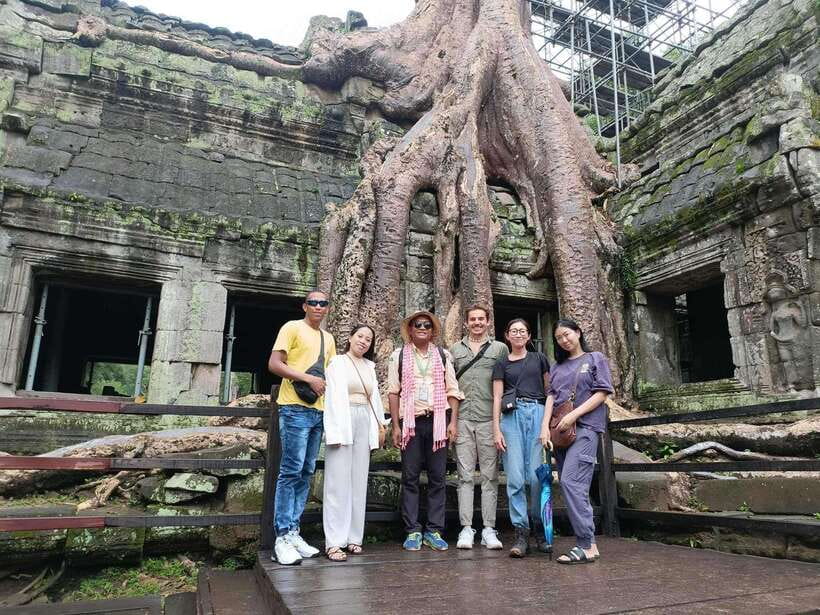
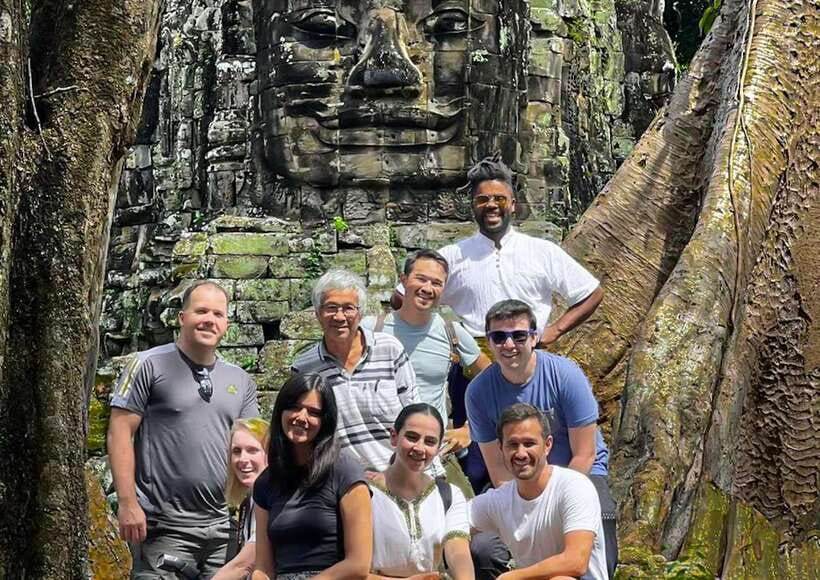
You can join a small group or choose a private option. A group of five, which one party experienced, gives you some social company without the feel of a large coach tour. A private vehicle gives you more control over the pace and lets you retreat to the air conditioning whenever the heat becomes too much.
More Angkor Wat tours we have reviewed:
- Angkor Wat Sunrise or Sunset Tour with Guide from Siem Reap
★ 5.0 · 12,109 reviews - Siem Reap: Angkor Wat: Small-Group Sunrise or Sunset Tour
★ 5.0 · 9,444 reviews - Siem Reap: Angkor Wat 2-Day Tour with Sunrise and Sunset
★ 4.9 · 4,429 reviews
Angkor Wat takes the morning lead
The first major visit is Angkor Wat, with about two and a half hours for a guided walk. This is enough time to see the main approach, galleries, courtyards, towers, and carved scenes without treating the world’s largest religious structure like a quick photo stop.
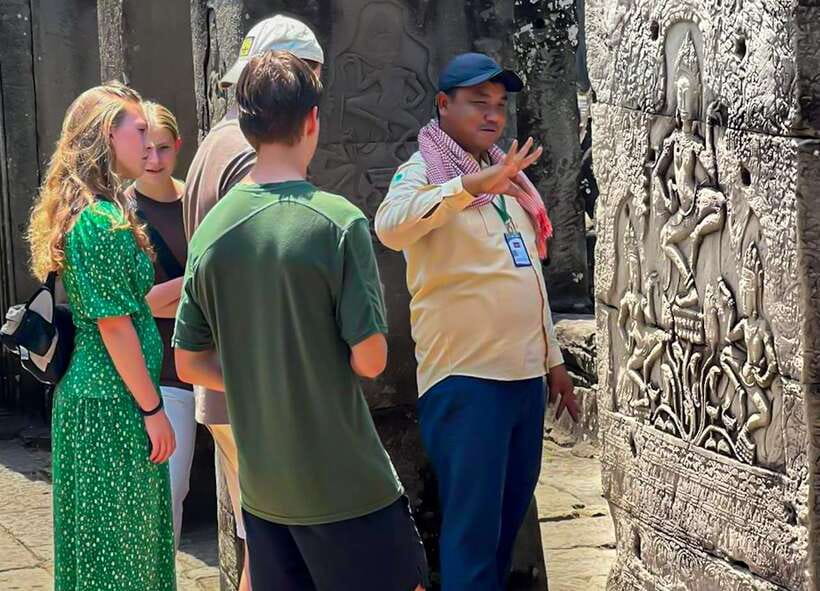
A guide adds real value here. The temple can look like a grand arrangement of stone towers if you do not know what you are seeing. With an explanation of Hindu imagery, later Buddhist use, royal power, and the meaning of the bas-reliefs, the building becomes easier to read.
You should expect a lot of walking on stone and packed paths. Some surfaces are uneven, and the day’s total can feel substantial, especially when combined with the later climb at Phnom Bakheng. Comfortable shoes are not optional if you want to enjoy the final hours.
The late start has one clear advantage: you avoid committing to a very early morning. The trade-off is that you will not see Angkor Wat at sunrise, one of the most popular ways to visit it. If that reflection-on-the-pool photograph is a top priority, you may need a separate sunrise plan.
The gates and faces of Angkor Thom
The route continues to Angkor Thom, an enormous walled royal city entered through a monumental gate. The southern gate is especially memorable, with rows of stone figures appearing to pull a giant serpent. This is one of the best places for your guide to explain Khmer religious ideas through the sculptures around you.
The scheduled guided visit here is about 30 minutes. That may sound short, but Angkor Thom is a huge complex rather than one single building, and the time works as an introduction before the more focused visit to Bayon.
The approach also gives you a sense of scale. The old city was not built merely as a decorative temple setting. It was part of a royal center, and the gate, moat, walls, and processional route help explain how power was presented in the Khmer era.
Bayon’s smiling faces need a guide
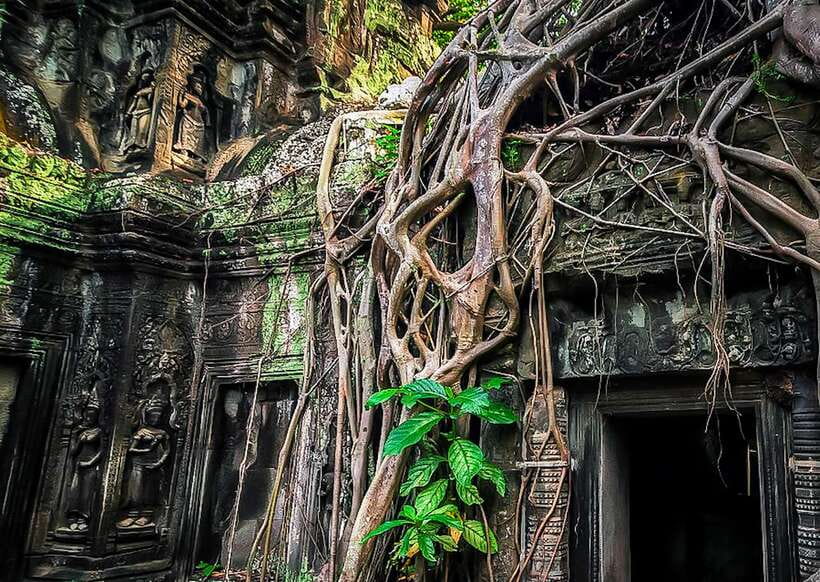
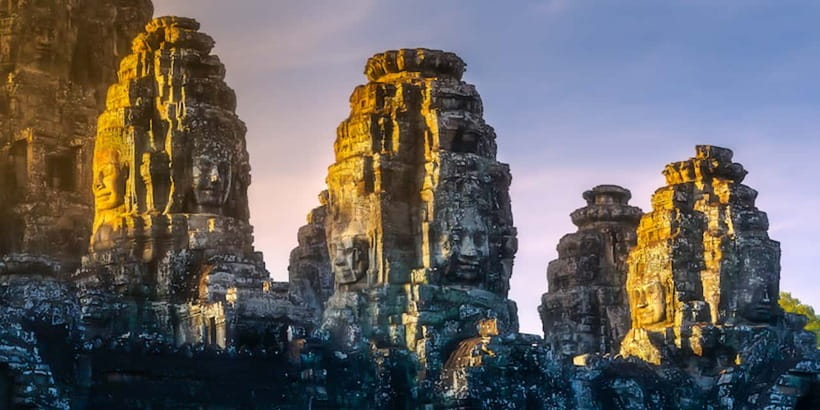
Bayon Temple receives about an hour and a half, making it one of the day’s most rewarding stops. Its central towers are covered with enormous carved faces, often described as calm or smiling. They appear from different angles as you move through the narrow galleries and upper levels.
This is a temple where a guide can save you from missing the best details. You will hear about the temple’s Buddhist connections, the royal figure associated with its construction, and the way the faces dominate the central sanctuary.
The experience is not always easy on the body. Bayon has uneven floors, constricted passages, and steps, so you should take your time. One visitor estimated around 17,000 uneven steps across the day, a dramatic figure but a useful warning about the physical demand.
The guide’s pacing matters here. Nick has been praised for giving people time to wander and ask questions, while Vone and Sayon are noted for combining temple information with humor and help with photographs. Individual guide assignments can vary, so treat those names as examples rather than a guarantee.
More sunset tours:
- Sunset tour of Kampong Phluk stilts home village on the Tonle Sap
★ 5.0 · 4,865 reviews - Angkor Wat Sunset Small Group Tour with Lunch Included
★ 5.0 · 3,059 reviews - Angkor 2-Day Sunset & Sunrise Small-Group Tour
★ 5.0 · 2,567 reviews - Siem Reap: Angkor Wat Sunrise or Sunset Guided Tour
★ 4.9 · 2,123 reviews
Lunch is a practical pause, not a long retreat
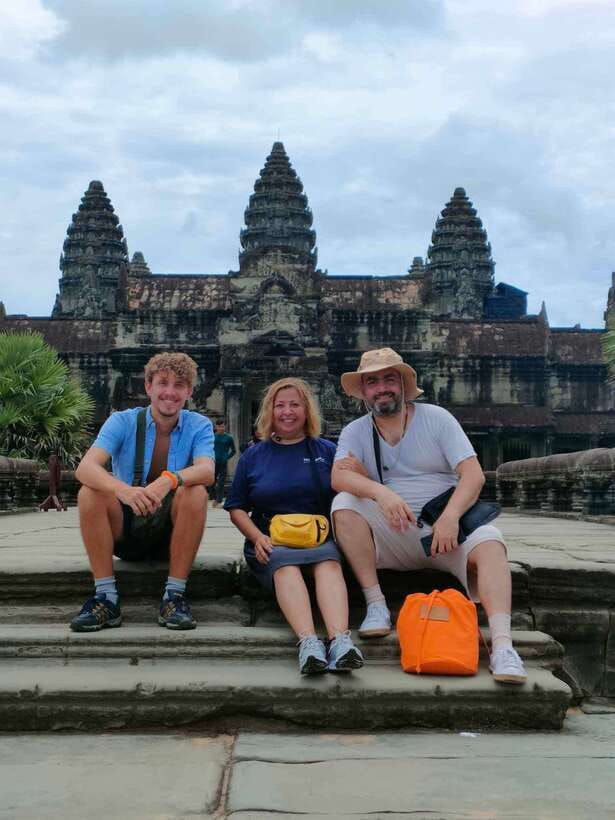
After Angkor Thom and Bayon, the schedule includes about an hour for lunch and rest. Food is not included, and the information indicates that lunch is available at local restaurants near the temples. Bring money for your meal and any additional drinks.
This break is important because the day is structured around repeated walks in tropical heat. You will have a chance to sit down, eat, refill your energy, and return to the minibus before Ta Prohm.
Do not expect a long leisurely restaurant visit. One hour passes quickly when a group is ordering and eating. If you have dietary needs, it is sensible to clarify your options with the guide early in the day.
Ta Prohm brings jungle and ruins together
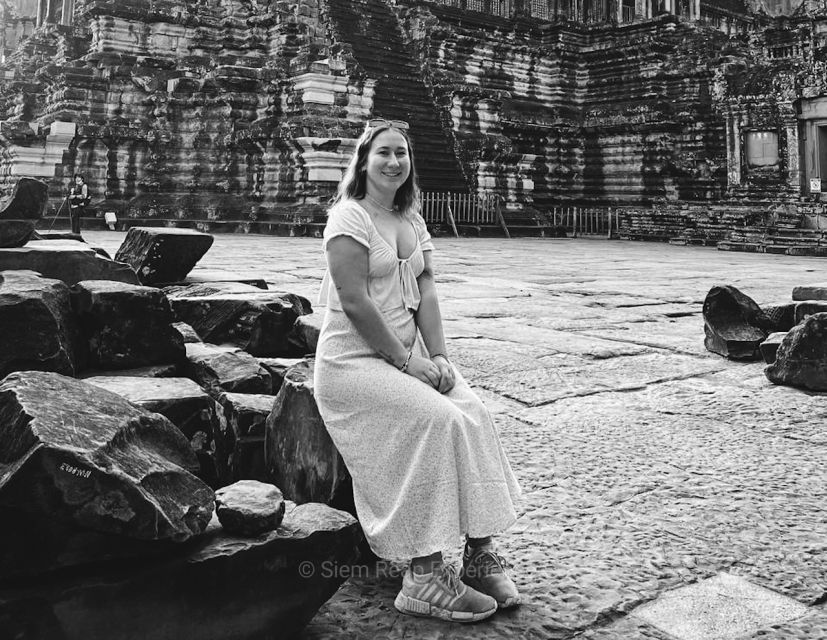
Ta Prohm is the atmospheric stop many people remember most clearly. The route includes a walk through lush jungle toward the temple, followed by about an hour and a half at the site.
Trees grow through and over parts of the ruins, creating the famous meeting of roots, stone galleries, and forest. The scene is striking because it feels less orderly than Angkor Wat. You are looking at a working religious complex overtaken by nature, with collapsed sections and narrow passages adding to the sense of age.
Your guide helps separate what is original, what is damaged, and what the carvings represent. Without context, it is easy to focus only on the tree roots. With a good explanation, you see Ta Prohm as more than a picture setting.
This stop can also be busy, and the paths may become tight around the most photographed sections. The group’s timing and route can make a difference. One party appreciated being taken along a route with fewer crowds, though crowd levels will always depend on the day and time.
Phnom Bakheng finishes the day with a climb

The final major stop is Phnom Bakheng, reached by bus in about 15 minutes from Ta Prohm. The visit lasts roughly an hour and a half, including the walk, temple visit, and sunset.
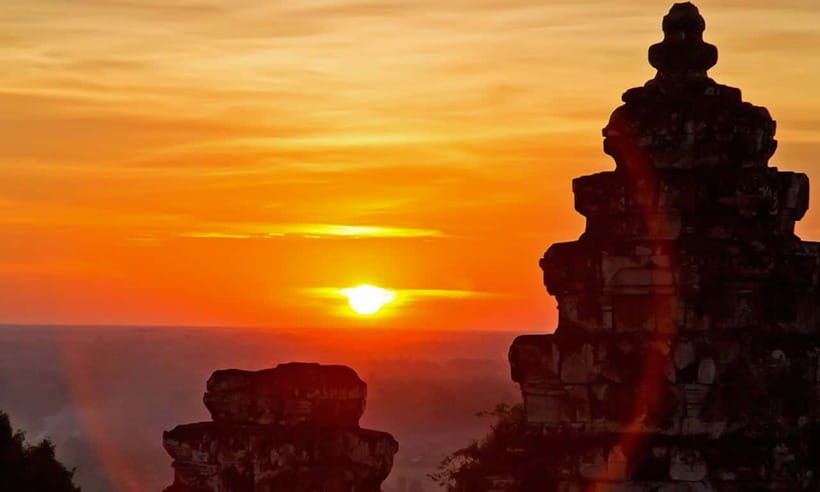
Phnom Bakheng is a temple mountain linked with the first Khmer capital in the region. Its elevated position gives you a broad sunset view, which is a fitting way to end a day spent among royal monuments.
There is a catch: you must climb to reach the temple. After hours of walking through Angkor, tired legs and hot weather can make the ascent feel harder than expected. Wear shoes with a reliable grip, carry water, and do not leave the climb until the last possible moment.
Sunset is never guaranteed to be dramatic. Clouds, haze, and the number of people at the viewpoint can change the mood. Even so, the height and the end-of-day light offer a different experience from the enclosed galleries and shaded courtyards earlier in the tour.
After sunset, the minibus returns you to Siem Reap in about 40 minutes. Hotel drop-off should be between 6:30 and 7 p.m., though traffic and the sunset schedule can affect the exact arrival.
Guides make the $15 tour worthwhile
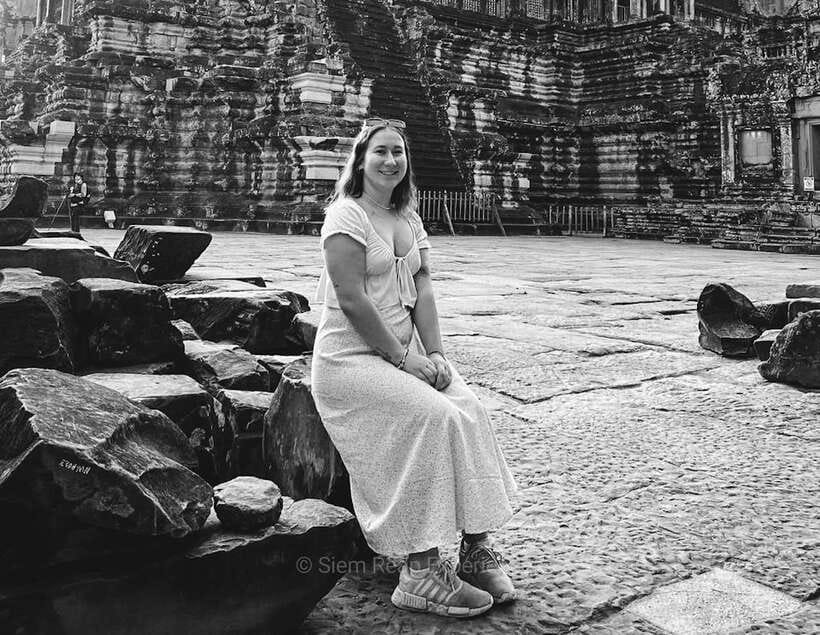
The tour’s greatest strength is the guide service. Angkor is too large and historically layered to understand fully from signboards alone. You will get far more from the carvings and layouts when someone explains the religious symbols, royal ambitions, temple functions, and changes from Hindu worship to Buddhism.
The strongest guide comments focus on both ancient and modern Cambodia. Nick has been praised for humor, clear English, and explanations that include Cambodia’s recent history and ordinary life. Vone is often described as friendly, funny, attentive, and strong on temple stories and photographs.
Sayon, Ho Heang, Sok, John, Tom, and Thum have also received praise for organization, good English, local insight, photography, or careful attention to the group. Thum was especially valued by a private party for finding picture spots and taking photos. These reports point to a consistent feature of the operation: the guide is expected to do more than recite dates.
The quality of any guided tour still depends on the person assigned that day. If you care about photography, ask your guide for help. Several guides are happy to take pictures, but that is a courtesy rather than a separately promised service.
Transport, water, and heat management
The air-conditioned minibus is more than a luxury here. You repeatedly move between temples, and the short rides provide a chance to cool down before the next walk. Several people particularly appreciated the clean vehicle, comfortable seats, and cold water waiting when they returned.
Chilled bottled water and refreshing cool towels are included. That simple touch received frequent praise and can make the difference between enjoying the afternoon and counting the minutes until the hotel.
The vehicle is not a replacement for sun protection. Bring comfortable shoes, a charged smartphone, and clothing that covers your knees and shoulders. Shorts, short skirts, and sleeveless shirts are not allowed at the temples, so dress for both cultural respect and the heat.
Alcohol and drugs are prohibited. Children under 12 do not need a temple ticket according to the provided information, while the tour is not considered suitable for babies under one year or people over 70.
What the tour costs in real terms
At $15 per person, the guiding and transport price is remarkably low for a full day. You receive hotel pickup and drop-off, an air-conditioned minibus, an English-speaking guide, visits to five main temple sites, water, cool towels, and local tax.
The important extra cost is the Angkor Archaeological Park pass. A one-day pass is listed at $37, making the basic total $52 per person before lunch and extra drinks. A three-day pass is also available, but this tour only covers one day of visits.
You can buy the pass online through the official Angkor Enterprise website, or the guide can take you to the ticket office before the tour. A passport is not required for this tour, according to the supplied information.
For a first day, the value is strong. A private guide and transport arranged independently could cost more, while visiting alone leaves you responsible for transport, timing, temple interpretation, and the sunset plan. The $15 portion is not the full park cost, but it is a low fee for organizing a demanding route.
Who should book this Angkor day?
I would choose this tour if you have one full day in Siem Reap and want the major temples handled in one sweep. It suits first-time visitors, people who prefer historical explanation, and anyone who would rather not negotiate transport between widely separated sites.
It is also a good match if you want a small social group and the reassurance of a set schedule. The transport, water, cool towels, lunch pause, and hotel drop-off remove much of the day’s practical work.
I would hesitate if you dislike early-to-late sightseeing days, hot weather, uneven ground, or fixed timing. A private option is better if you need regular breaks, want to set your own pace, or are traveling with someone who tires quickly.
Families with older children may manage the day well, but small babies are not considered suitable. Anyone with mobility concerns should think carefully about the temple surfaces, steps, jungle paths, and Phnom Bakheng climb.
Should you book this Angkor Wat tour?
Yes, if you want the best-known Angkor sites with a guide and a sunset finish at a very low organizing cost. The combination of Angkor Wat, Bayon’s carved faces, Ta Prohm’s tree-covered ruins, and Phnom Bakheng gives you a strong first look at the park.
Book it with realistic expectations. The $15 price does not include the $37 temple pass or lunch, and the day is physically demanding. If you can handle the walking and dress correctly, the guide, air-conditioned transport, cold water, and clear route make this a practical and highly rated introduction to Angkor.
FAQ
How long does the Angkor Wat tour last?
The tour lasts about 9 to 10 hours. Pickup is usually between 9:10 and 9:30 a.m., with hotel arrival expected around 6:30 to 7 p.m.
What temples are included?
The tour visits Angkor Wat, Angkor Thom, Bayon Temple, Ta Prohm, and Phnom Bakheng. The schedule also includes a lunch and rest break near the temples.
Is the Angkor park entry ticket included?
No. The one-day Angkor Archaeological Park ticket costs $37. You can buy it online through the official Angkor Enterprise website or go to the ticket office before the tour with your guide.
Is lunch included?
No. Lunch and additional drinks are separate. Food is available at local restaurants near the temples.
What should I wear?
You should wear clothing that covers your knees and shoulders. Shorts, short skirts, and sleeveless shirts are not allowed at the temples.
Is hotel pickup included?
Yes. Hotel pickup and drop-off in Siem Reap are included, along with an air-conditioned minibus, an English-speaking guide, chilled bottled water, and cool towels.
More Full-Day
- Full-Day Angkor Wat Sunrise Private Tour with Guide from Siem Reap
★ 5.0 · 2,920 reviews - Siem Reap: Angkor Wat Sunrise and Full-Day Sightseeing Tour
★ 4.9 · 2,828 reviews - Angkor Wat full Day ‘Small Group with sunset & Tour Guide
★ 5.0 · 1,369 reviews - Full-Day Banteay Srei & 4 Temples – Grand Tours Join-in Tour
★ 5.0 · 1,155 reviews
More Evening Experiences
- Siem Reap Floating Village Kampong Phluk Sunset with Boat
★ 5.0 · 1,962 reviews - Full-Day Guided Sunset Tour of Angkor Wat
★ 5.0 · 1,507 reviews - Kompong Phluk Floating Village Half-Day Tour ( Morning / Sunset )
★ 5.0 · 1,494 reviews - Siem Reap: Full Day Angkor Wat Temple Experience with Sunset
★ 4.9 · 1,490 reviews
Just added around Siem Reap
- Private Battambang Full-Day Guided Tour★ 4.5 · 3 reviews
- Kulen Mountain, Beng Mealea and Banteay Srei Full Day Tour★ 5.0 · 3 reviews
- Kompong Pluk Tour★ 5.0 · 3 reviews
- Private 3 Day Tour to Discover the ancient temples★ 5.0 · 3 reviews
- Kulen National Park Ticket -Waterfall & 1000 Lingas★ 5.0 · 3 reviews
- Cambodia: Absolute Traditional Dance Show with Buffet Dinner★ 5.0 · 3 reviews
- Border Transfer (Siem Reap to Laos/Laos to Siem Reap)★ 3.5 · 3 reviews
- Best Taxi Siem Reap to Battambang – English Speaking Driver★ 4.5 · 3 reviews
Angkor Wat Tours, compared.

Angkor Wat Sunrise or Sunset Tour with Guide from Siem Reap
Read our review →
Angkor Wat: Small-Group Sunrise or Sunset Tour
Read our review →
Angkor Wat 2-Day Tour with Sunrise and Sunset
Read our review →
Angkor Wat Sunrise tour with Small – Group and Guide tours
Read our review →
Angkor Wat Highlights and Sunrise Guided Tour from Siem Reap
Read our review →
Angkor Wat Sunset Small Group Tour with Lunch Included
Read our review →
Full-Day Angkor Wat Sunrise Private Tour with Guide from Siem Reap
Read our review →
Angkor Wat Sunrise & 3 Main Temples with Breakfast – Small Group
Read our review →Browse the lists this tour appears in