
Reviewed · ANGKOR WAT TOURS
Siem Reap: Angkor Wat 2-Day Tour with Sunrise and Sunset
Wake before dawn for Cambodia’s greatest view. This two-day small-group tour gives you a well-planned introduction to Angkor, combining Angkor Wat at sunrise with quieter temples, an English-speaking guide, hotel pickup, and air-conditioned transport. I especially like the way the schedule splits the enormous temple complex into two manageable circuits, and I like that guides such as Sary, Sok, Sam, Vone, Pheap, and Nick Kosal are praised for turning carved stone into clear stories about Cambodian religion, kings, and daily life.
The price is $34 per person, before the temple pass and meals. That is strong value if you want transport, guiding, water, towels, and 11 temples without arranging tuk-tuks yourself. The main catch is stamina: the first day begins around 4:30am, and both days involve heat, walking, steps, and long hours outside.
In This Review
- Key points to know before booking
- Why the two-day plan works so well
- Day one: Angkor Wat before breakfast
- Ta Prohm and the romance of ruins
- Bayon’s smiling faces and Angkor Thom
- Ta Keo and Angkor Thom’s South Gate
- Day two: quieter temples and a later start
- Preah Khan
- Neak Pean
- Ta Som
- East Mebon
- Pre Rup
- Phnom Bakheng
- Guides, photos, and the human side of the tour
- Heat, walking, clothing, and comfort
- What the $34 price really buys you
- Who should book this tour?
- Should you book it?
- FAQ
- Is the Angkor temple pass included?
- How long does the tour last each day?
- Which temples are included?
- Is sunrise included?
- Are meals included?
- Is hotel pickup provided?
- Is transport air-conditioned?
- Can I cancel the booking?
Key points to know before booking
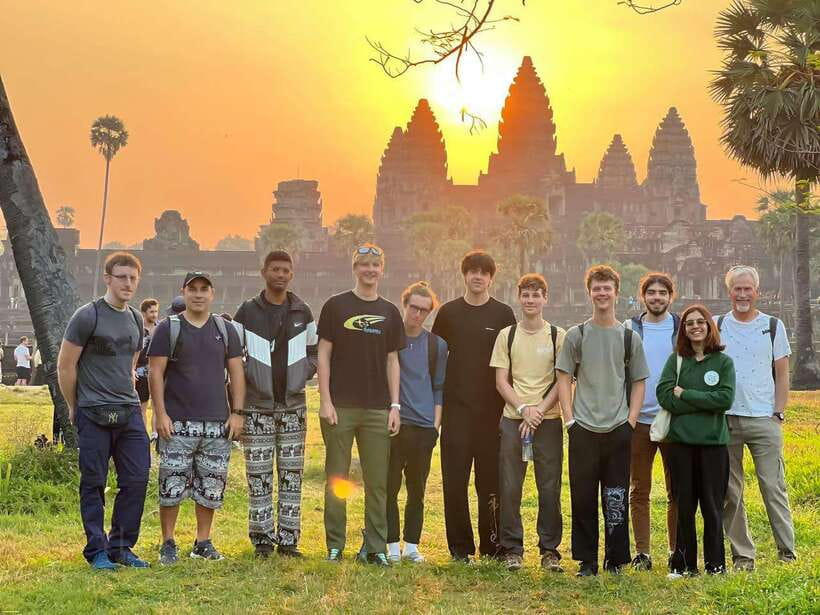
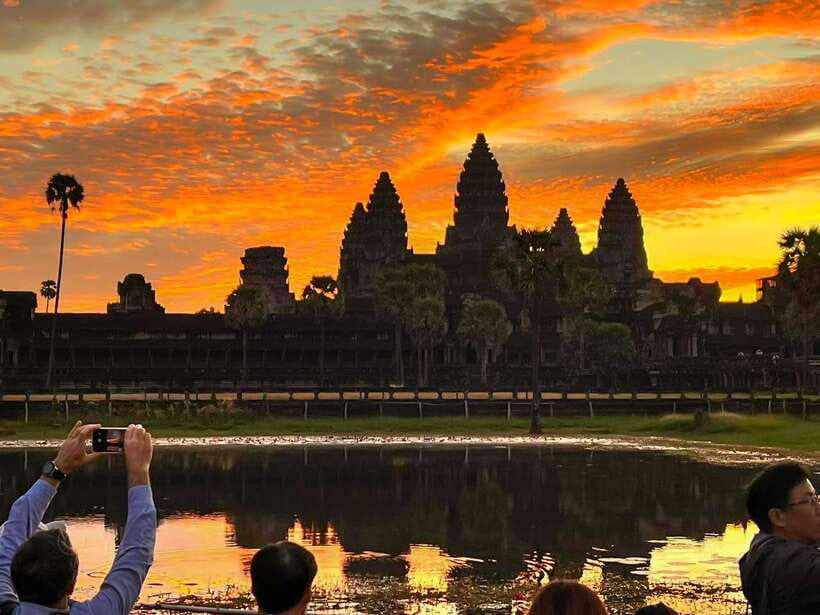
- Angkor Wat at sunrise: Day one starts before dawn, giving you a chance to see the temple reflected in the water as the sky brightens.
- Two different temple circuits: The first day focuses on Angkor Wat, Ta Prohm, Bayon, Ta Keo, and Angkor Thom, while the second reaches Preah Khan, Neak Pean, Ta Som, East Mebon, Pre Rup, and Phnom Bakheng.
- Guides make the difference: The strongest part of the experience is the English commentary, with guides praised for history, mythology, photography, humor, and crowd timing.
- Air-conditioned relief: The minibus and chilled water matter after hours in the sun. Refreshing towels are also provided at stops.
- A very full schedule: Day one runs roughly 4:30am to 1:00pm. Day two runs about 10:30am to 7:00pm, so you need comfortable shoes and decent energy.
- Temple pass not included: You must buy the Angkor Archaeological Park pass separately, either online through the Cambodian government website or at the ticket office.
Why the two-day plan works so well
Angkor is not one temple. It is a huge archaeological park with monuments spread across a wide area, and seeing it well requires more than a quick stop at Angkor Wat. This tour uses two familiar routes, often called the small circuit and the grand circuit, to cover the main sights without forcing every temple into one exhausting day.
I like this structure because the two days feel different. Day one brings the famous names and the biggest visual rewards. Day two slows the pace slightly and introduces temples that can be just as moving, especially when the crowds thin out.
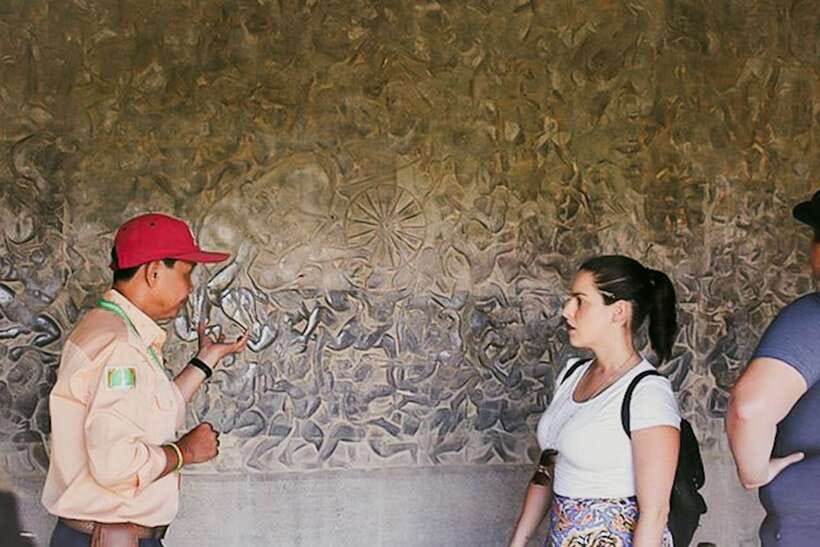
You also get a guide on both days. That matters at Angkor. Without context, you may notice enormous faces, carvings, towers, and trees swallowing walls, but miss the ideas behind them. A good guide explains who built each temple, which religion shaped it, and how the structures connected to royal power.
The tour has earned a 4.9 rating from 4,429 bookings, with transport receiving especially strong marks. That does not remove the need to pace yourself, but it suggests the basic operation is reliable and well organized.
More Angkor Wat tours we have reviewed:
- Angkor Wat Sunrise or Sunset Tour with Guide from Siem Reap
★ 5.0 · 12,109 reviews - Siem Reap: Angkor Wat: Small-Group Sunrise or Sunset Tour
★ 5.0 · 9,444 reviews - Siem Reap: Full-Day Angkor Wat Guided Tour with Sunset
★ 4.9 · 3,803 reviews
Day one: Angkor Wat before breakfast
Pickup begins very early, generally around 4:30am. You should be ready at your hotel at least 30 minutes before the stated start time, since pickup timing can vary. One practical warning: a communication error has caused confusion about pickup time for at least one booking, so check your confirmation carefully and make sure the company has your exact hotel address.
The first stop is Angkor Wat, Cambodia’s most famous monument. Arriving in darkness lets you find a place near the reflecting pool before the morning light begins to show the temple’s towers. Sunrise is never guaranteed to be dramatic. Clouds can flatten the colors, as one visitor discovered, but the early start still pays off because the air is cooler and you are ahead of some later groups.
Bring a charged phone if you want photographs. Several guides, including Pheap and Nick Kosal, are praised for knowing useful viewpoints and taking group pictures. That is a small service, but it is valuable when you are traveling alone or want everyone in the picture.
After sunrise, you explore Angkor Wat itself. The temple is more than a photo backdrop. Your guide can help you read the galleries, reliefs, towers, and religious symbolism, while also explaining how the Khmer Empire used architecture to express power and belief.
The early hours are the best time for this visit. You may still find crowds around the most famous viewpoints, but the cooler temperature makes the long corridors and open courtyards easier to handle. Do not assume that sunrise means a short morning. This is a full temple visit followed by several more sites.
Ta Prohm and the romance of ruins
Ta Prohm is the temple many people recognize from the Tomb Raider film. Its appeal comes from the collision between architecture and forest, with large roots growing across walls and doorways. The trees are not simply decoration. They show how the site looked after centuries of neglect and why Ta Prohm feels less formal than Angkor Wat.
The tour aims to reach Ta Prohm early, before some other groups arrive. That timing can improve the experience, though you should still expect other people at the best-known sections. The temple has uneven ground, tight passages, and worn stone, so comfortable shoes are important.
This is a good place to listen closely to your guide. The carvings and collapsed galleries can look confusing when seen alone. A clear explanation helps you understand what is original, what has fallen, and why the temple was built.
Bayon’s smiling faces and Angkor Thom
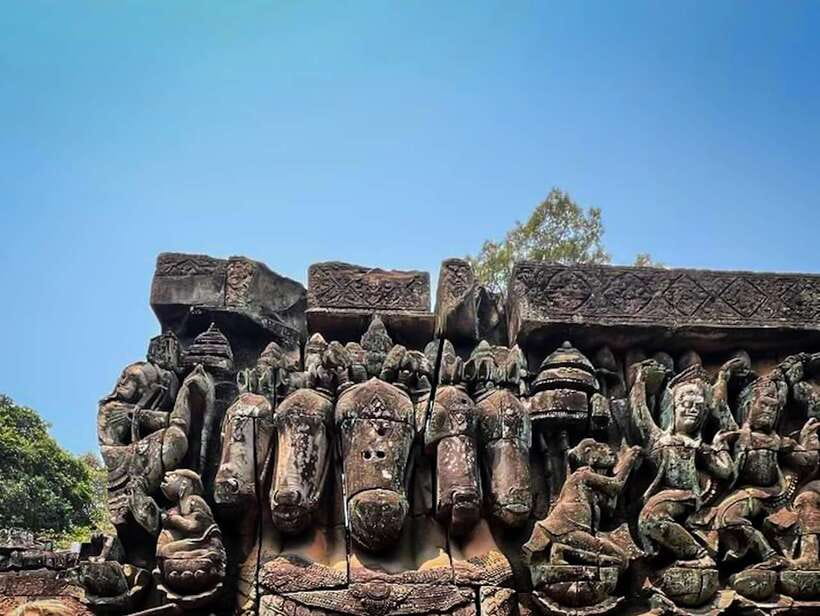
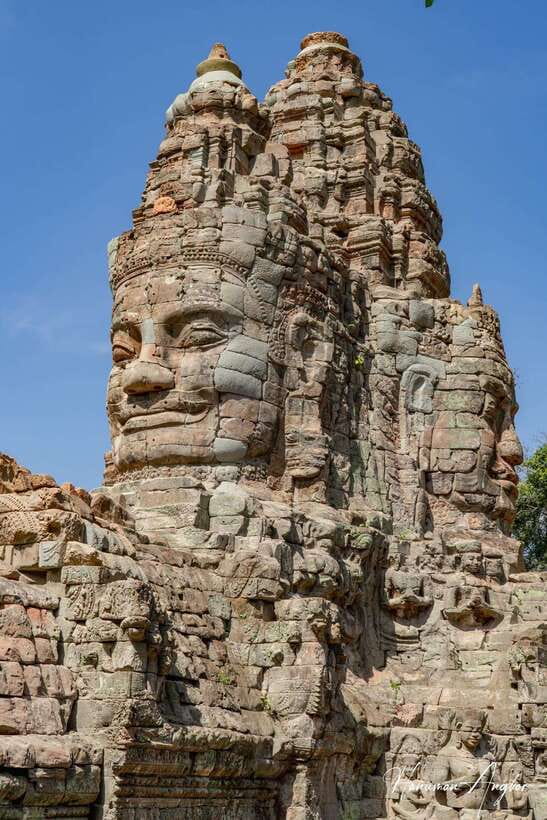
Bayon Temple is famous for its giant carved faces. They appear on towers throughout the central sanctuary, giving the place a strange, watchful character. The faces are often linked with King Jayavarman VII, whose reign produced some of Angkor’s most ambitious building projects.
The guide helps connect Bayon to Angkor Thom, the walled royal city around it. You will hear about the temple’s Buddhist role and the political setting in which it was built. That context makes Bayon more than a stop for taking pictures beside smiling stone faces.
The scale can be tiring. You move between different sections, often across exposed ground, and the heat builds quickly after sunrise. The air-conditioned minibus becomes part of the tour’s value here. After several stops, stepping into a cool vehicle is not a luxury. It is how you keep going.
More sunset tours:
- Sunset tour of Kampong Phluk stilts home village on the Tonle Sap
★ 5.0 · 4,865 reviews - Angkor Wat Sunset Small Group Tour with Lunch Included
★ 5.0 · 3,059 reviews - Angkor 2-Day Sunset & Sunrise Small-Group Tour
★ 5.0 · 2,567 reviews - Siem Reap: Angkor Wat Sunrise or Sunset Guided Tour
★ 4.9 · 2,123 reviews
Ta Keo and Angkor Thom’s South Gate
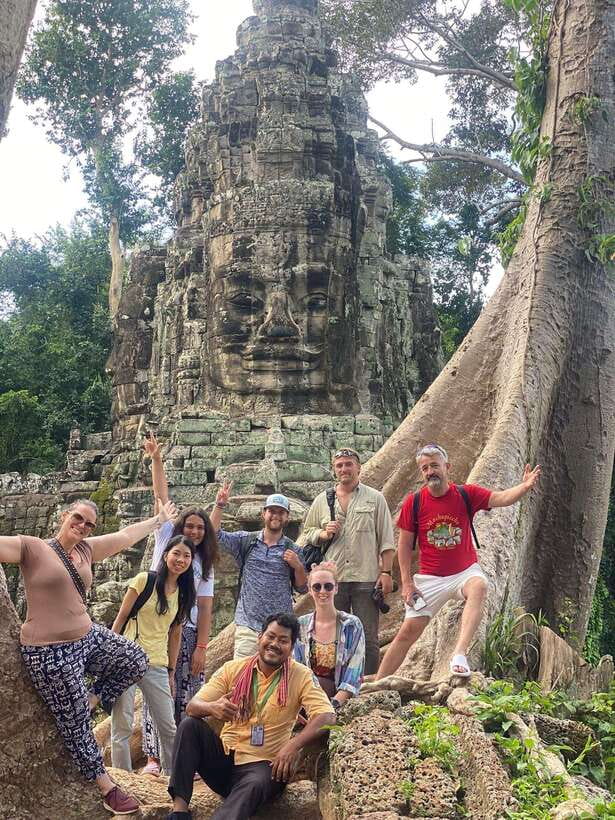
Ta Keo is a mountain temple built in the 10th century. Its steep form is meant to suggest a sacred mountain, so reaching the higher levels requires walking up steps. The climb may be brief compared with the overall day, but the stone can be uneven and the heat makes any ascent harder.
If your knees or feet are sensitive, take your time. A guide may help with pacing, but you should not feel obliged to climb every level. The temple remains impressive from below.
The South Gate of Angkor Thom is the final point described for day one. Its bridge is lined with two rows of figures, gods on one side and demons on the other, each holding the body of a seven-headed naga. This is one of the park’s best examples of a grand entrance carrying a religious message. The scene presents a cosmic struggle and gives the road into Angkor Thom a ceremonial feel.
The morning circuit finishes around 1:00pm. At that point, you will likely be ready for food, a shower, or a quiet afternoon. The schedule provides occasional breaks, but meals are not included, so plan to pay for lunch separately.
Day two: quieter temples and a later start
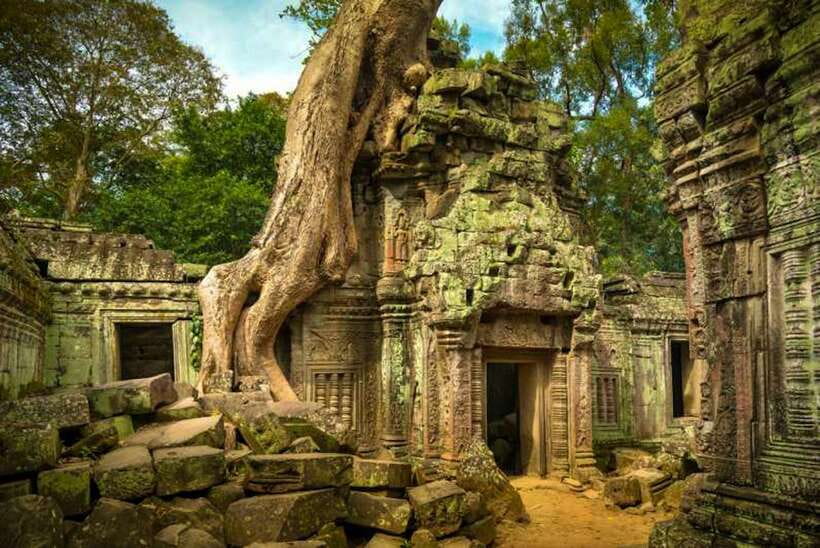
Day two usually begins around 10:30am and continues until about 7:00pm. I see this later start as a smart counterweight to the first morning. You do not need another pre-dawn alarm, and the second circuit lets you approach Angkor with a little more breathing room.
The route includes six temples, each with a different character. That variety helps prevent the familiar problem of temple fatigue, when every tower starts to look the same.
Preah Khan
Preah Khan is described as the largest temple on this loop. Its long galleries, courtyards, and carved details reward a slower walk. Your guide can explain its connection to King Jayavarman VII and the purpose behind its design.
Compared with Angkor Wat, Preah Khan can feel less polished and more maze-like. That is part of its appeal. You get a stronger sense of a working religious complex rather than a single grand monument.
Neak Pean
Neak Pean is a small island temple surrounded by water. During the Angkor period, the pools were used for bathing and health purposes. The setting is different from the dry stone sanctuaries elsewhere in the park, and the water gives this stop a calmer mood.
The temple itself is not huge, so you will not spend as long here as at Angkor Wat or Bayon. Its value comes from understanding the water system and the beliefs connected with healing.
Ta Som
Ta Som is best known for the large tree growing over its east gate. It also contains many sculptures of dancers with long hair. The temple was built for the king’s sister, giving the site a personal connection within the royal building program.
This is one of the stops where a guide adds real value. Details about the person honored, the carvings, and the tree’s growth help you look beyond the obvious photograph.
East Mebon
East Mebon was built for royal ancestors and once sat in the middle of a reservoir. It dates as early as the 10th century and has a more open, elevated setting than some of the later temples.
The vanished reservoir is an important part of the story. You are not just looking at a stone structure. You are seeing one piece of an engineered water system that supported Angkor’s power and population.
Pre Rup
Pre Rup was built by a king for himself. Its tiered form catches the light well late in the day, which helps explain why it often works as a sunset stop.
The structure is sometimes mistaken for a crematorium because of a stone form that resembles a coffin. The explanation given here is different: the object was used by Hindus for meditation at the full moon. This is a useful reminder that assumptions about temple features can be wrong without a guide to explain the religious setting.
Phnom Bakheng
Phnom Bakheng sits on a hill, and its 33 towers represent the heavens. The climb adds physical work to an already long day, but it provides a high viewpoint for the final light.
The tour description presents Phnom Bakheng as part of the sunset experience. It is worth checking the exact sunset arrangement when booking, since the included feature is described as sunrise on the small tour or sunset on the grand tour. Expect the return to Siem Reap around 7:00pm.
Sunset, like sunrise, depends on weather. Even without glowing skies, the hilltop and temple geometry provide a satisfying finish. After two days, you also have a stronger sense of how the monuments relate to one another.
Guides, photos, and the human side of the tour
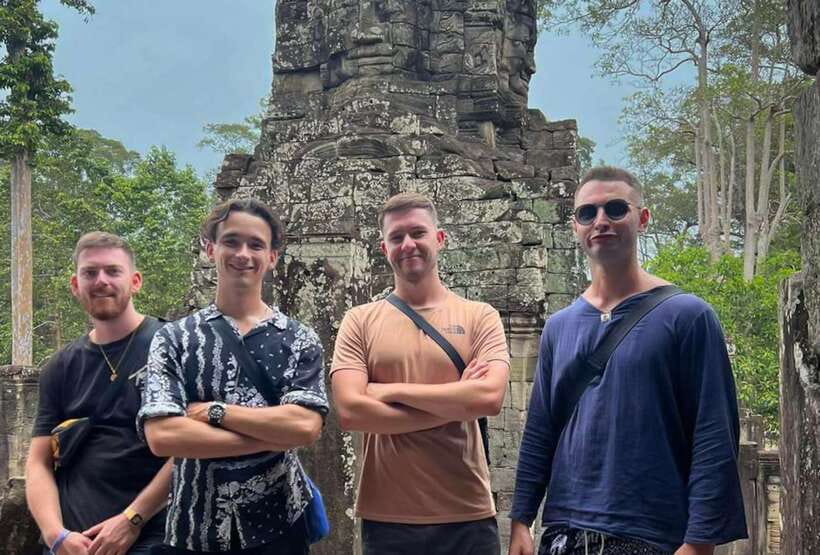
The guides are the main reason this inexpensive tour works. Sayon is praised for history, timing, and finding good photo locations. Sary is described as organized and helpful. Sok receives repeated praise for clear explanations and an upbeat manner, while Sam is valued for religious context and storytelling.
Vone is especially useful if you enjoy pictures along with history. He is praised for taking photos at each attraction and keeping the mood light. Pheap, also called Pip in some bookings, is noted for humor, strong explanations, and the ability to answer questions without making the day feel like a lecture.
Nick Kosal is another popular guide, especially on the sunrise route. His strengths include organization, jokes, mythology, and avoiding the worst crowd clusters. These details matter because two long days can become draining if the guide simply recites dates.
You may have different guides on the two days. That is not a flaw. The best guides often bring different strengths, and a new voice can make the second day feel fresh.
Heat, walking, clothing, and comfort
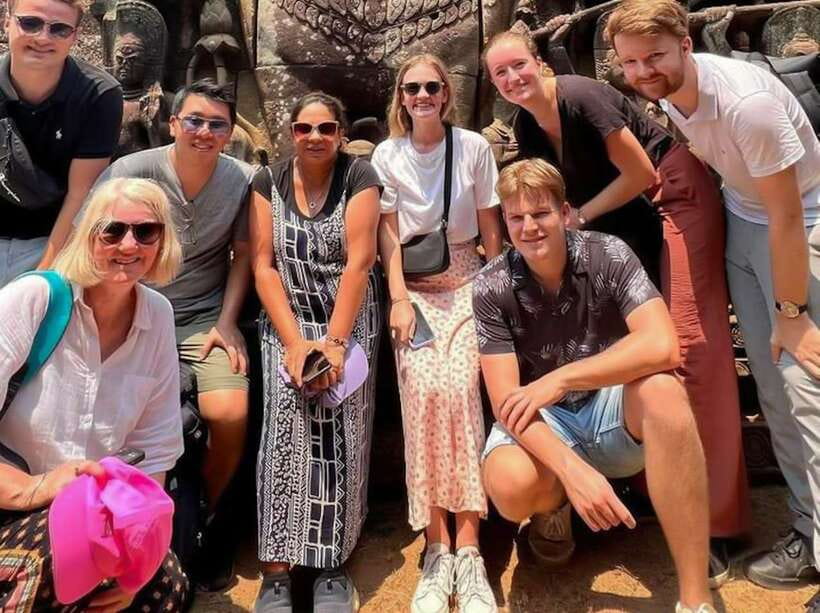
This is not a gentle sightseeing trip. The days are long and hot, and some temples include steps, uneven paving, and exposed courtyards. The first morning also begins before dawn, so you trade sleep for cooler conditions and sunrise.
The minibus has air conditioning, and chilled bottled water is provided. Refreshing wipe towels are offered at stops, a welcome touch after walking in the heat. Several people found the cool vehicle especially helpful when returning from the temples.
Wear comfortable clothing, sunglasses, and sunscreen. Temple dress rules require covered shoulders and knees, so avoid shorts, short skirts, and sleeveless shirts. Alcohol and drugs are not allowed.
There is conflicting information about mobility. The activity is marked wheelchair accessible, but it is also described as unsuitable for wheelchair users and people over 70. Because the temples include uneven surfaces and steps, you should contact the provider before booking if mobility is a concern rather than relying on the accessibility label alone.
What the $34 price really buys you
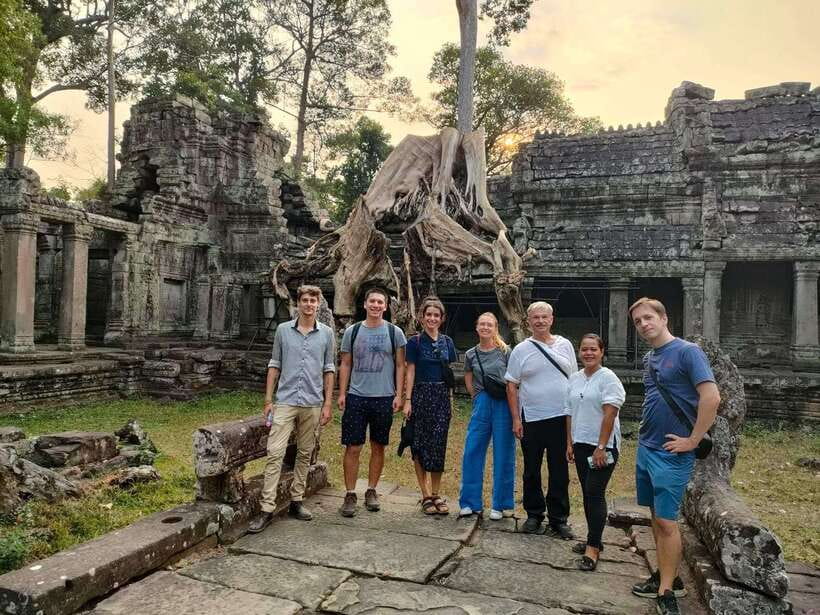
At $34, the tour is priced well for two guided days. You are paying for hotel pickup and drop-off, an air-conditioned minibus, an English-speaking guide, water, wipe towels, local tax, and visits to 11 temples.
The important extra cost is the Angkor Archaeological Park entry ticket. That pass is not included. You must buy it online through the Cambodian government’s Angkor Enterprise website or at the ticket office after pickup, depending on the arrangement available to you.
Meals are also separate. Breaks are built into the days, and food stops may include local Khmer restaurants, but you pay for what you eat. This keeps the base price low and lets you choose how much to spend.
For a solo visitor, the value is particularly good. You can join a small group, share transport, meet people from different countries, and avoid negotiating separate tuk-tuk arrangements. A private option is also available if you prefer more control over pace and stops, though the price may differ.
Who should book this tour?
I would choose this tour if you have limited time in Siem Reap and want a strong first look at the main temple area. It suits solo visitors, couples, families with older children, and anyone who wants historical explanation rather than a quick photo circuit.
It is also a good choice if you have three days available for temple sightseeing. The two-day tour uses a three-day temple pass, leaving day three open for rest, a return to Angkor Wat, a favorite temple, or more exploring by private tuk-tuk.
I would think twice if you dislike early mornings, heat, group schedules, or long periods on your feet. The itinerary is full, and one person found lunch longer than needed. Another noted that two hot days can be intense, even though the experience was worthwhile.
Should you book it?
Book this tour if you want strong coverage and clear guidance at a low base price. The combination of sunrise at Angkor Wat, sunset on the second circuit, 11 temples, cold water, cool transport, and experienced guides gives you a lot for $34.
Do not book it expecting a slow, private temple retreat. You will follow a schedule, pay separately for the pass and meals, and work through heat and steps. For most first-time visitors to Siem Reap, though, this is a practical way to understand Angkor before deciding what deserves a closer look on a third day.
FAQ
Is the Angkor temple pass included?
No. You must purchase the Angkor Archaeological Park entry ticket yourself, either online through the Cambodian government website or at the ticket office after pickup.
How long does the tour last each day?
Day one runs approximately from 4:30am to 1:00pm. Day two runs approximately from 10:30am to 7:00pm.
Which temples are included?
The tour visits Angkor Wat, Ta Prohm, Bayon, Ta Keo, Angkor Thom’s South Gate, Preah Khan, Neak Pean, Ta Som, East Mebon, Pre Rup, and Phnom Bakheng.
Is sunrise included?
Yes. Sunrise at Angkor Wat is included on day one. The package also includes a sunset experience on the second circuit, described as the grand tour.
Are meals included?
No. Meals are not included, although the schedule includes occasional food and rest breaks.
Is hotel pickup provided?
Yes. Hotel pickup and drop-off are included. You should be ready at least 30 minutes before the start time and provide the correct hotel address.
Is transport air-conditioned?
Yes. Transport is provided in an air-conditioned minibus, with chilled bottled water and refreshing wipe towels.
Can I cancel the booking?
Yes. You can cancel up to 24 hours in advance for a full refund. You can also reserve now and pay later.
More Morning
- Angkor Wat Sunrise tour with Small – Group and Guide tours
★ 5.0 · 3,655 reviews - Angkor Wat Highlights and Sunrise Guided Tour from Siem Reap
★ 5.0 · 3,213 reviews - Full-Day Angkor Wat Sunrise Private Tour with Guide from Siem Reap
★ 5.0 · 2,920 reviews - Angkor Wat Sunrise & 3 Main Temples with Breakfast – Small Group
★ 5.0 · 2,857 reviews
More Evening Experiences
- Siem Reap Floating Village Kampong Phluk Sunset with Boat
★ 5.0 · 1,962 reviews - Full-Day Guided Sunset Tour of Angkor Wat
★ 5.0 · 1,507 reviews - Kompong Phluk Floating Village Half-Day Tour ( Morning / Sunset )
★ 5.0 · 1,494 reviews - Siem Reap: Full Day Angkor Wat Temple Experience with Sunset
★ 4.9 · 1,490 reviews
Just added around Siem Reap
- Private Battambang Full-Day Guided Tour★ 4.5 · 3 reviews
- Kulen Mountain, Beng Mealea and Banteay Srei Full Day Tour★ 5.0 · 3 reviews
- Kompong Pluk Tour★ 5.0 · 3 reviews
- Private 3 Day Tour to Discover the ancient temples★ 5.0 · 3 reviews
- Cambodia: Absolute Traditional Dance Show with Buffet Dinner★ 5.0 · 3 reviews
- Kulen National Park Ticket -Waterfall & 1000 Lingas★ 5.0 · 3 reviews
- Border Transfer (Siem Reap to Laos/Laos to Siem Reap)★ 3.5 · 3 reviews
- Best Taxi Siem Reap to Battambang – English Speaking Driver★ 4.5 · 3 reviews
Angkor Wat Tours, compared.

Angkor Wat Sunrise or Sunset Tour with Guide from Siem Reap
Read our review →
Angkor Wat: Small-Group Sunrise or Sunset Tour
Read our review →

Angkor Wat Sunrise tour with Small – Group and Guide tours
Read our review →
Angkor Wat Highlights and Sunrise Guided Tour from Siem Reap
Read our review →
Angkor Wat Sunset Small Group Tour with Lunch Included
Read our review →
Full-Day Angkor Wat Sunrise Private Tour with Guide from Siem Reap
Read our review →
Angkor Wat Sunrise & 3 Main Temples with Breakfast – Small Group
Read our review →Browse the lists this tour appears in