
Reviewed · CYCLING TOURS
Angkor Cycling Tour
Angkor is best seen at bicycle speed. This 35-kilometer ride mixes quiet forest tracks with the great monuments, and I like the way it gets you away from the busiest temple roads. I also like the thoughtful balance of history, wildlife, food, and exercise, especially the birdwatching stop at Jayatataka Baray and the ride along Angkor Thom’s old wall. The main consideration is the Cambodian heat: seven hours on a bike takes water, sunscreen, and a reasonable level of fitness.
You start with a bike fitting in Siem Reap, then ride toward Angkor Wat through river paths and rainforest trails. The route is about 70 percent off-road, with the rest on paved roads, so this is not a gentle city ride. Still, the moderate rating is fair. One recent rider described most of the route as easy, with only a few moderate sections, while praising the patient guide and peaceful pace.
In This Review
- Key points to know before booking
- Why cycling makes Angkor feel different
- 7:45 AM pickup and the ride toward Angkor Wat
- Two hours at Angkor Wat
- Bakheng Hill and the ancient wall of Angkor Thom
- Bayon’s stone faces and lunch by the Elephant Terrace
- Ta Nie, one of Angkor’s quieter stops
- Birdwatching at Jayatataka Baray
- Ta Prohm and the famous jungle roots
- The 12-kilometer return through forest and bike lanes
- What the $65 price really covers
- Who should book this ride
- FAQ
- How long does the Angkor Cycling Tour last?
- How far do you cycle?
- How much of the route is off-road?
- Is the tour suitable for beginners?
- Is the Angkor temple pass included?
- What temples and sites are included?
- Is lunch included?
- What equipment is supplied?
- What should you wear and bring?
- Is hotel pickup available?
- What languages are available?
- Can you cancel or pay later?
- Should you book the Angkor Cycling Tour?
Key points to know before booking
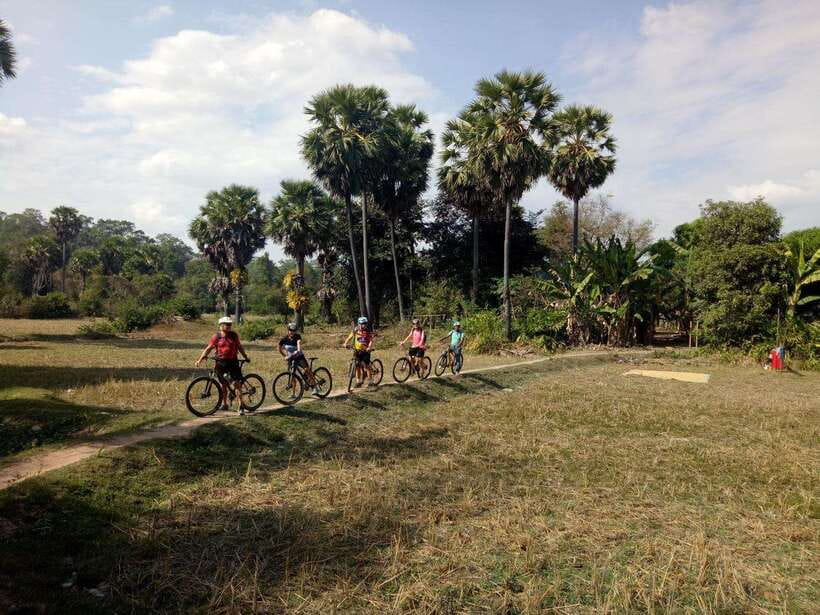
- 35 kilometers with 70 percent off-road riding: Expect forest tracks, single trails, canal-side paths, and ancient stone surfaces rather than a simple road ride.
- Angkor’s major temples in one day: The route includes Angkor Wat, Bayon, Ta Prohm, Ta Nie, the Elephant Terrace, the Ghost Gate, and Angkor Thom’s walls.
- Wildlife at Jayatataka Baray: Bring binoculars if you have them. You might spot cranes, egrets, lesser whistling ducks, kingfishers, butterflies, monkeys, or freshwater otters.
- Lunch and transfers are included: A local restaurant near the Elephant Terrace provides lunch, while a tuk tuk or minivan handles transfers according to group size.
- Temple etiquette matters: Shorts are practical for cycling, but you need spare clothing for temple visits and modest dress at sacred sites.
- Good value at $65: The price includes a mountain bike, helmet, guide, lunch, drinks, snacks, spare parts, first aid, and tuk tuk transfers, but not the temple pass.
Why cycling makes Angkor feel different
Angkor is vast. From one famous monument to the next, you can spend much of the day sitting in a vehicle, looking through a window at jungle, stone, and passing traffic. On a bicycle, you notice the small changes: a paved lane giving way to a dirt track, the shade under the trees, a canal beside the road, or a bird lifting off from the water.
I like that this tour uses the bicycle as transport rather than treating it as a short extra activity. The ride connects the temples. You are not simply dropped at a gate, shown around, and loaded back into a vehicle. The movement between sites becomes part of the day.
That also means you should be honest about your comfort level. The route is rated medium, and the distance is substantial. You do not need to be a racing cyclist, but you should be comfortable riding for several hours in warm conditions. Loose clothing is not allowed, and closed-toe shoes are required. Sturdy shoes, breathable clothing, sunscreen, sunglasses, and extra water are sensible choices.
More Bike Tours in Siem Reap
- Siem Reap Countryside Bike Tour / E-Bike or Tuk Tuk
★ 5.0 · 935 reviews - Angkor Sunrise Bike Tour / E-Bike or Tuk Tuk
★ 5.0 · 615 reviews - Siem Reap: Bike the Angkor Temples – Full-Day 30km Tour
★ 5.0 · 463 reviews
7:45 AM pickup and the ride toward Angkor Wat
Pickup begins around 7:45 in the morning, with collection from the lobby of hotels, apartments, and Airbnb properties in Siem Reap city. A tuk tuk or minivan may be used, depending on the size of the group.
At the cycling shop, you receive a mountain bike and helmet, with bikes available in all sizes. A quick fitting comes before the ride toward Angkor Wat. Be ready with your height in centimeters when booking, since that helps the operator prepare the right bicycle.
The first section follows the Siem Reap River before leading into trails around the Angkor complex. This opening gives you time to settle into the bike and get used to the pace. It also avoids beginning the day with a long, hard push on exposed roads.
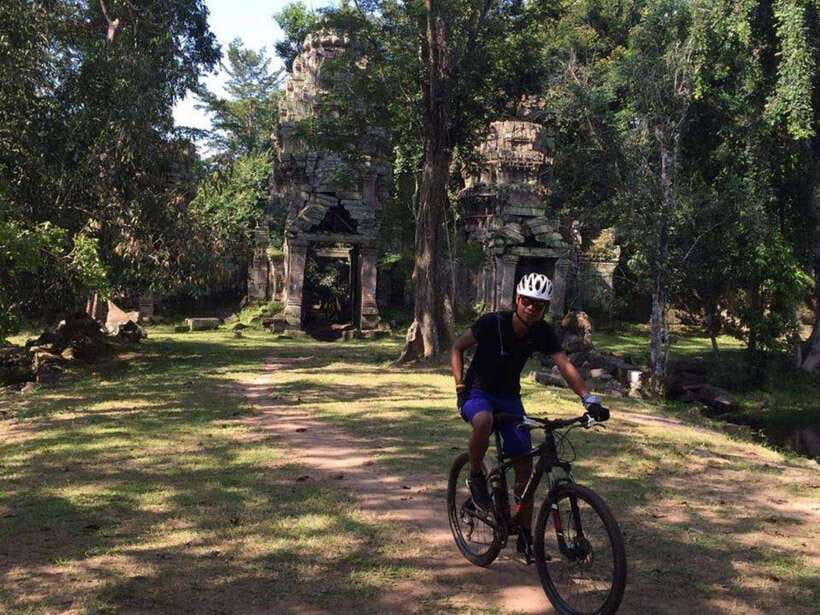
The route soon shifts into rainforest and countryside tracks. You might find some uneven surfaces, but the point is not speed. The guide’s job is to keep the ride manageable, explain the area, and help with the practical details. A first aid kit and spare bike parts are carried along, which is reassuring on an off-road route.
Two hours at Angkor Wat
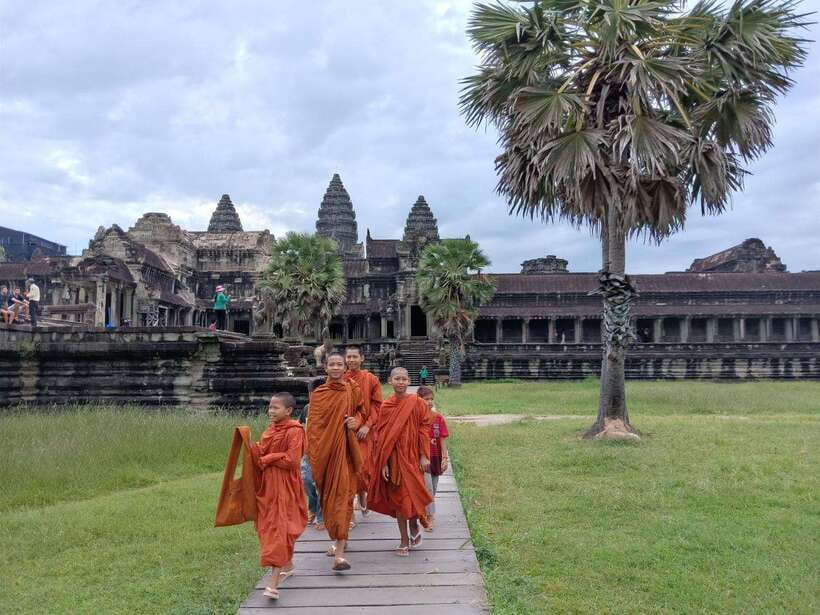
Angkor Wat is the major architectural event of the day, and the tour gives you about two hours to explore it with a guide. That time allows a proper visit rather than a quick photo stop.
The bicycle approach adds a pleasant sense of arrival. You ride beside the ancient moat, with the temple complex opening gradually around you. Angkor Wat is famous for its scale, towers, galleries, carved details, and long ceremonial approach, but it can also feel overwhelming without a plan. A guide helps turn the site into a sequence of stories instead of a long march through stone corridors.
Expect to park the bikes and walk inside the temple. This is one place where practical clothing matters. Shorts may work during the ride, but you should carry a spare garment for temple visits and follow modest dress rules.
The stop is also the least secluded part of the day. Angkor Wat is the complex’s best-known monument, so you should expect more activity here than at Ta Nie or along the forest trails. The reward is that you see the essential monument early, before the ride continues into quieter parts of Angkor.
Bakheng Hill and the ancient wall of Angkor Thom
After Angkor Wat, the route follows the moat and heads toward Bakheng Hill. Here the ride becomes more adventurous, using forest trails away from the main flow of visitors.
One unusual part of the route is the chance to cycle along the wall of Angkor Thom. This is not just a scenic road beside a monument. You are riding on an ancient fortification, with the forest and old stonework close around you. It gives you a physical sense of how large and defended the old city was.
The entrance through the South Gate leads into Angkor Thom. You stop at the Ghost Gate for photos and stories, then continue toward Bayon, about one kilometer away. The route offers a useful contrast: the South Gate is a grand formal entrance, while the Ghost Gate has a more remote and mysterious feel.
The wall ride is one of the tour’s strongest features, but it is also a section where you should take care. Off-road surfaces can make balance and bike control more important than fitness alone. Listen to the guide and do not treat this as a race.
A completely different kind of day out from Siem Reap:
- Angkor Wat Sunrise or Sunset Tour with Guide from Siem Reap
★ 5.0 · 12,109 reviews - Siem Reap: Angkor Wat: Small-Group Sunrise or Sunset Tour
★ 5.0 · 9,444 reviews - From Siem Reap: Kampong Phluk Floating Village Tour by Boat
★ 4.9 · 6,979 reviews - Sunset tour of Kampong Phluk stilts home village on the Tonle Sap
★ 5.0 · 4,865 reviews
Bayon’s stone faces and lunch by the Elephant Terrace
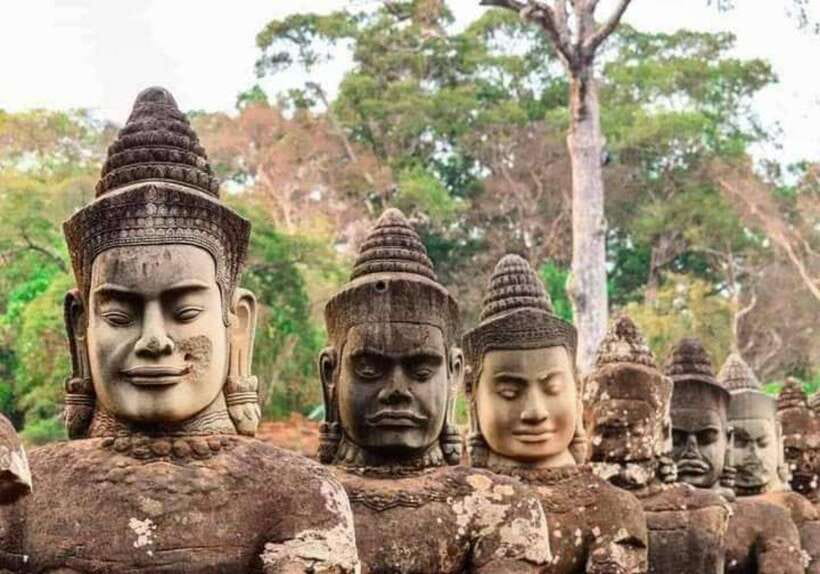
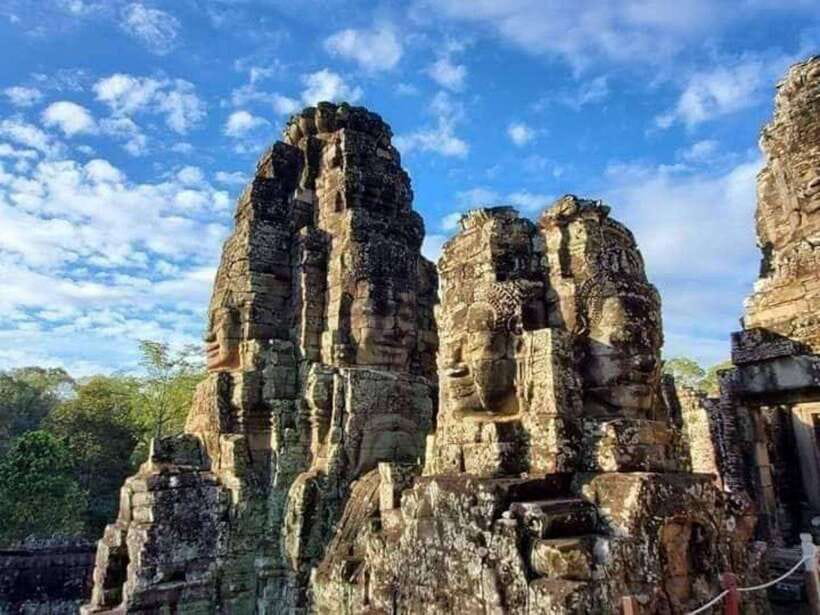
Bayon is known for its huge carved faces, which look out from the temple towers with calm, enigmatic smiles. I find this stop especially effective after the ride along Angkor Thom’s wall. You arrive with a sense of the city’s size, then encounter a temple that feels more enclosed, complex, and personal.
The faces are not the only reason to visit. Bayon’s towers, passages, and carved surfaces reward slow looking. Your guide provides context while you move through the temple, helping you notice details that are easy to miss when you are focused only on getting the famous photograph.
After Bayon, it is a short cycle to the Elephant Terrace. Lunch is served at a local restaurant in front of the terrace, with Khmer specialties, seasonal fruit, snacks, and water included during the day.
This is a practical meal break rather than a luxury restaurant stop, and that suits the tour. You are eating close to the monuments, not losing time on a long detour. The food also gives you a taste of local cooking while keeping the schedule moving.
Cold water and snacks are provided at temple stops. That matters in Cambodia, where even a moderate ride can feel harder after several hours in the sun. I would still carry a personal bottle and drink before you feel thirsty.
Ta Nie, one of Angkor’s quieter stops
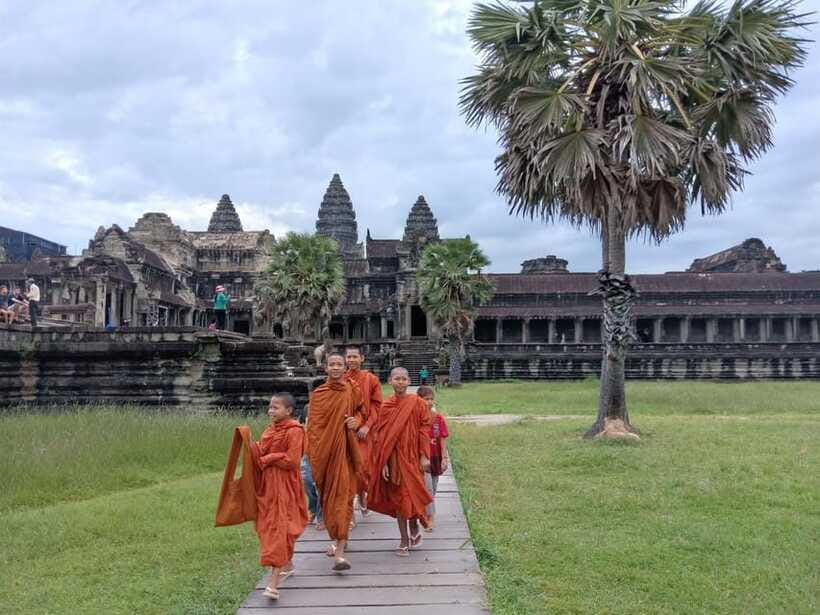
Ta Nie is a smaller sanctuary hidden in the forest. It does not have the same fame as Angkor Wat, Bayon, or Ta Prohm, and that is precisely the appeal.
Here you get a better sense of how ruins appear away from the main monuments. Trees press close to the stone, the setting feels quieter, and the stop offers room to look around without the same pressure to keep moving through a major attraction.
The ride to Ta Nie is part of the attraction. You leave the central city area and continue through single tracks in the forest, following paths connected with the old Angkorian settlement. This is where the tour feels least like a standard sightseeing circuit and most like an exploration by bicycle.
The tradeoff is that a smaller ruin may not satisfy someone who wants every stop to be a grand architectural highlight. I see Ta Nie as a pause in the rhythm of the day, giving the route atmosphere and solitude before the wildlife stop and Ta Prohm.
Birdwatching at Jayatataka Baray
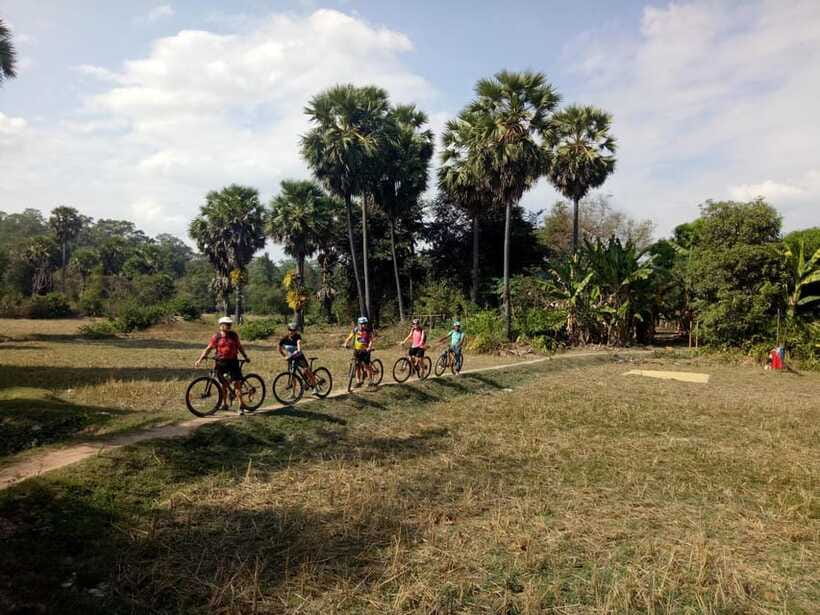
Jayatataka Baray brings a different kind of interest. Instead of focusing only on carved stone, you stop beside the water and look for wildlife.
Depending on conditions, you might see cranes, egrets, lesser whistling ducks, or kingfishers. Butterflies, monkeys, and freshwater otters are also possible. These sightings are not guaranteed, so you should treat the stop as a chance to watch and listen rather than a scheduled animal show.
This is one of the smartest parts of the route. Angkor was not only a collection of temples. Water management, reservoirs, canals, forests, and cultivated areas supported life around the monuments. A stop at Jayatataka Baray helps connect the ruins to the natural setting that still surrounds them.
Bring patience. Wildlife may appear quickly and disappear just as fast. The break also gives your legs time to recover before Ta Prohm and the long ride back. A peaceful tree nursery garden adds another quiet nature stop to the day.
Ta Prohm and the famous jungle roots
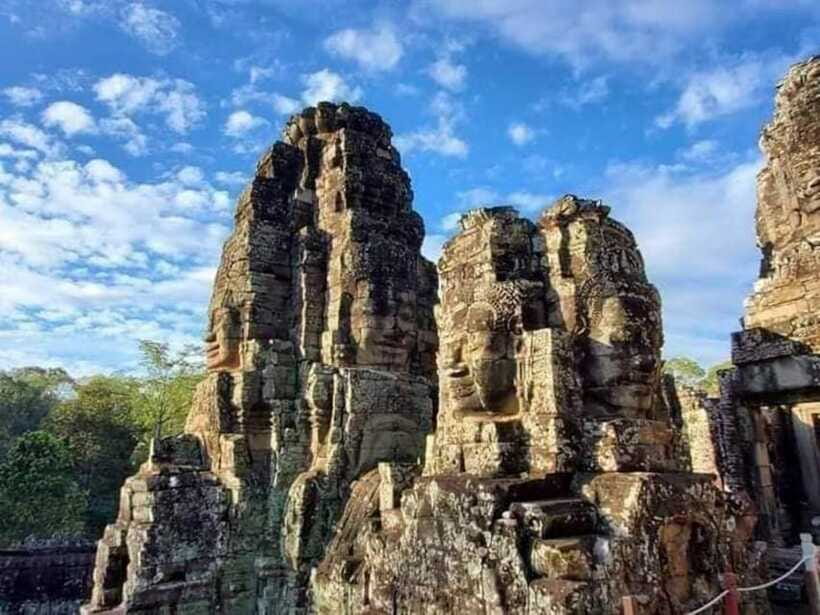
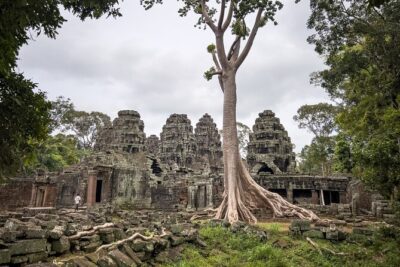
Ta Prohm is the final major temple, and it delivers the image many people associate with Angkor: giant tree roots pressing against ancient walls.
The so-called Tomb Raider temple is popular for good reason. The meeting of living trees and carved stone creates scenes that feel different from the formal scale of Angkor Wat or the face towers of Bayon. You will want your camera ready, but do not rush through the site looking only for one famous angle.
Ta Prohm is also a busy stop, so the calm feeling may vary by time and conditions. The tour’s forest riding helps balance that. You reach the temple through a day of quieter tracks and lesser-known places, rather than spending every hour among the main crowds.
By this point, you will likely feel the distance in your legs. The temple visit involves walking over uneven ground, so sturdy footwear is useful. Take the chance to drink water and use the shade when available.
The 12-kilometer return through forest and bike lanes
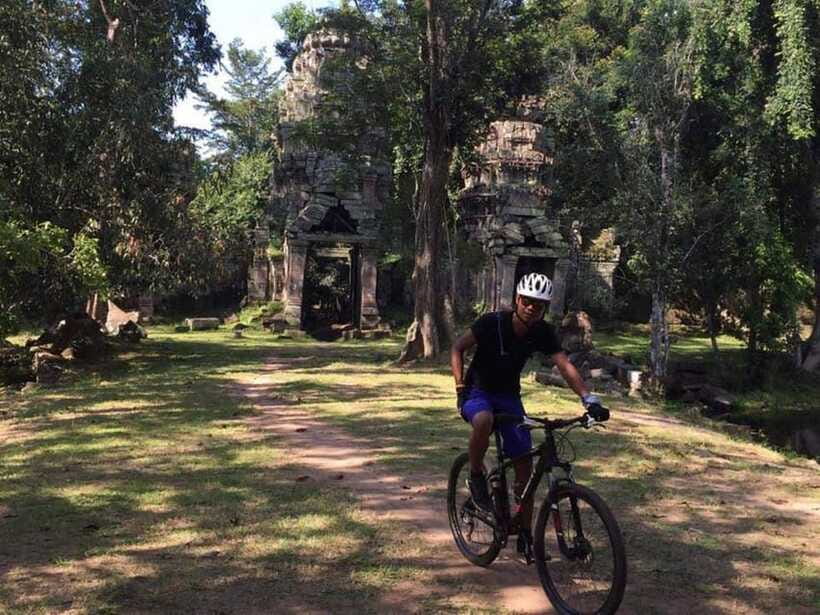
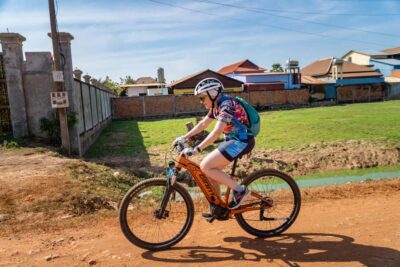
The return covers about 12 kilometers, using winding single tracks and smoother bike lanes back toward town. This final section is described as a blend of adventure and relaxation, and the mix matters after a full day.
The single tracks keep the ending interesting, while smoother paths allow you to settle into a steady rhythm. You are not simply retracing the entire route, and the return gives you one last look at the countryside around Siem Reap.
The experience finishes with a transfer back to Siem Reap Province or Krong Siem Reap, depending on the arrangement. The full activity lasts seven hours from activation, including the temple visits, food stop, wildlife break, and cycling.
What the $65 price really covers
At $65 per person, this tour offers solid value if you want a full day rather than a short bicycle outing. The package includes a mountain bike, helmet, English or Spanish-speaking guide, lunch, water, snacks, seasonal fruit, first aid, spare bike parts, and free tuk tuk transfers.
The important extra cost is the Angkor temple pass, which is not included. Travel insurance and personal expenses are also separate. You should budget for the pass before deciding that the advertised price is your total day cost.
I like the fact that the price covers both the practical cycling support and a proper local lunch. A self-guided ride might cost less, but you would need to arrange a suitable bike, navigation, food, water, temple access, and transport yourself. The guide also adds value by explaining the monuments and helping you handle the off-road sections.
The flexible booking terms are useful: you can reserve now and pay later, and cancellation is free up to 24 hours before the activity for a full refund. Those details are worth checking at booking, especially during a tightly scheduled Cambodia trip.
Who should book this ride
I would choose this tour if you want Angkor to feel active and varied. It suits people who enjoy cycling, nature, and ancient sites in equal measure. It is also a good choice if you prefer a slower, quieter rhythm than a vehicle-based circuit can provide.
The tour is not ideal if you dislike heat, uneven paths, or several hours of physical activity. Pregnant women should not book, and anyone with uncertainty about cycling 35 kilometers should think carefully before committing.
The route is also a good fit for repeat visitors who have already seen the main temples and want a different way to connect them. First-time visitors can enjoy it too, but you should accept that the cycling time is a major part of the day, not just a way to move between photo stops.
FAQ
How long does the Angkor Cycling Tour last?
The activity lasts seven hours from the first activation, beginning with pickup around 7:45 AM.
How far do you cycle?
The route covers about 35 kilometers in total. The return section alone is about 12 kilometers.
How much of the route is off-road?
About 70 percent of the route uses off-road trails. The remaining 30 percent uses paved roads and smoother bike lanes.
Is the tour suitable for beginners?
The tour is rated medium. Most of the ride is described as easy, with some moderate sections, so you should be comfortable cycling for several hours.
Is the Angkor temple pass included?
No. The temple pass is required but is not included in the $65 tour price.
What temples and sites are included?
The route includes Angkor Wat, Angkor Thom’s wall, the Ghost Gate, Bayon, the Elephant Terrace, Ta Nie, Ta Prohm, Bakheng Hill trails, and Jayatataka Baray.
Is lunch included?
Yes. Lunch is provided at a local restaurant in front of the Elephant Terrace. Water, snacks, seasonal fruit, and Khmer specialties are included.
What equipment is supplied?
A mountain bike and helmet are supplied. Bikes are available in all sizes, and spare parts and a first aid kit are carried during the ride.
What should you wear and bring?
You should bring closed-toe shoes, sunscreen, sunglasses, and plenty of water. Shorts are acceptable while biking, but bring spare clothing for temple visits and dress modestly at sacred sites.
Is hotel pickup available?
Yes. Pickup is available from hotel, apartment, and Airbnb lobbies in Siem Reap city, generally 15 minutes before the stated pickup time.
What languages are available?
The live guide service is available in English and Spanish.
Can you cancel or pay later?
You can reserve now and pay later. Cancellation up to 24 hours in advance qualifies for a full refund.
Should you book the Angkor Cycling Tour?
Book it if you want the temples with a strong dose of forest, exercise, and local scenery. The best parts are not only Angkor Wat and Ta Prohm, but also the canal-side riding, Angkor Thom wall, quiet Ta Nie, and wildlife pause at Jayatataka Baray.
Skip it if you want an easy sightseeing day with minimal exertion. For everyone else, $65 is a fair price for a guided 35-kilometer route with equipment, lunch, refreshments, transfers, and access to parts of Angkor that are easy to miss from a vehicle. Bring sensible clothing, pace yourself, and let the bicycle do what it does best: connect the famous monuments with the living countryside around them.
Just added around Siem Reap
- Private Battambang Full-Day Guided Tour★ 4.5 · 3 reviews
- Kulen Mountain, Beng Mealea and Banteay Srei Full Day Tour★ 5.0 · 3 reviews
- Kompong Pluk Tour★ 5.0 · 3 reviews
- Private 3 Day Tour to Discover the ancient temples★ 5.0 · 3 reviews
- Kulen National Park Ticket -Waterfall & 1000 Lingas★ 5.0 · 3 reviews
- Cambodia: Absolute Traditional Dance Show with Buffet Dinner★ 5.0 · 3 reviews
- Border Transfer (Siem Reap to Laos/Laos to Siem Reap)★ 3.5 · 3 reviews
- Siem Reap Countryside Sunset Vespa Tour or Tuk Tuk★ 4.5 · 3 reviews
Cycling Tours, compared.
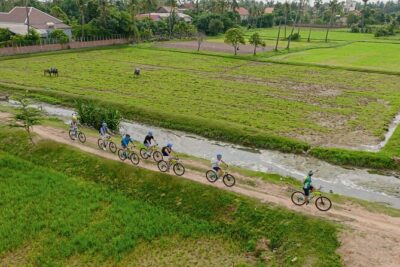
Siem Reap Countryside Bike Tour / E-Bike or Tuk Tuk
Read our review →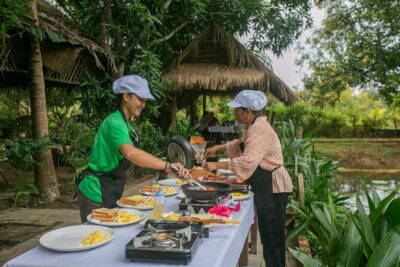
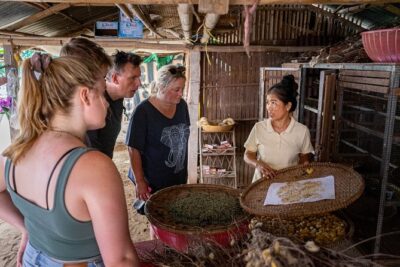
Phnom Penh Silk Island Bike Tour/ E-Bike or Tuk Tuk
Read our review →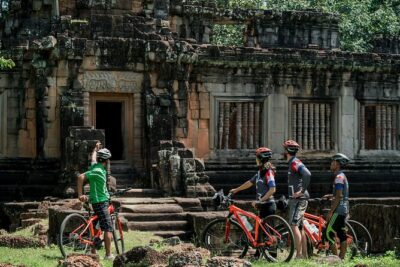
Angkor Wat Sunrise Bike Tour & Jungle Breakfast
Read our review →
Local Livelihood Half Day Bike Tour in Battambang
Read our review →Browse the lists this tour appears in