
Reviewed · BANTEAY SREI TOURS
Angkor Grand Circuit Tour & Banteay Srei
The quieter temples reward the extra miles. This Siem Reap tour pairs remote Grand Circuit temples with the finely carved sanctuary of Banteay Srei, giving you a broader look at Angkor beyond the best-known monuments. I like the peaceful route through Preah Khan, Neak Pean, Ta Som, and the East Mebon, and I like that the private format lets your guide adjust the pace. The main consideration is cost: the $50 tour price does not include the $37 Angkor Pass, so your total starts at $87 per person.
You should allow six to eight hours, and possibly more energy than you expect. Banteay Srei sits about 25 kilometers northeast of the central temple group, while the Grand Circuit covers several sizeable sites. The air-conditioned vehicle, hotel pickup, drop-off, and cold drinking water make the long outing easier, but this is still a full day of temple walking and heat.
In This Review
- Key points at a glance
- Why the Grand Circuit makes a good second Angkor day
- Preah Khan: a large temple with room to wander
- Neak Pean: a temple reached by water
- Ta Som: the small temple with the famous tree
- East Mebon: five towers on a three-tier base
- Banteay Samre: a substantial stop before the final prize
- Banteay Srei: the most detailed carving of the day
- A private guide can shape the whole day
- What the $50 price really covers
- Timing, comfort, and practical limits
- Who should book this Angkor route?
- Should you book the Grand Circuit and Banteay Srei?
- FAQ
- How much does the tour cost?
- How long does the experience last?
- Is hotel pickup included?
- Is transportation included?
- Is a guide included?
- Is the Angkor Pass included?
- Which temples are visited?
- Is this a private tour?
- Can I cancel for a full refund?
Key points at a glance
- Preah Khan gives you a spacious opening stop: Built by King Jayavarman VII in the 12th century to honor his father, it offers a substantial first look at the Grand Circuit.
- Neak Pean is reached across an artificial island setting: The Buddhist temple sits on a circular island in the Jayatataka baray, creating a very different scene from the land-based sanctuaries.
- Ta Som has the day’s most memorable doorway: A tree-entwined gate gives this smaller temple its famous character.
- Banteay Samre rewards a slower two-hour visit: Its Hindu design and early 12th-century construction add another style to the route.
- Banteay Srei is small but intensely detailed: Its pinkish sandstone and fine three-dimensional carvings explain its reputation as the jewel of Khmer art.
- Mr K receives especially warm praise: His attentive guiding, timing choices, cultural explanations, and evident affection for Cambodia are major reasons to consider this private option.
Why the Grand Circuit makes a good second Angkor day
If you have already seen Angkor Wat and the central temples, this route makes sense as your next outing. The Grand Circuit heads toward sites that generally feel less congested and more remote than the main Small Circuit. You get fewer of the instantly recognizable postcard scenes, but you gain quieter paths, unusual layouts, and a better sense of how broad the Angkor area really is.
I like the rhythm of this day. The itinerary begins with a large temple, moves to a water-based monument, shifts to a small tree-covered sanctuary, then continues toward two more substantial temples before reaching Banteay Srei. That variety keeps the day from becoming a blur of sandstone towers.
The tour is private, so only your own group participates. That matters here. You can ask for more explanation at a site that catches your attention, or keep moving when the heat and stone begin to feel repetitive. The published duration is six to eight hours, though the six stops add up to about eight hours on paper. Pickup time, walking speed, and time spent at each monument will affect the final length.
More Banteay Srei trips:
- Full-Day Banteay Srei & 4 Temples – Grand Tours Join-in Tour
★ 5.0 · 1,155 reviews - Siem Reap Tour: Angkor Wat Sunrise, Bayon, Ta Prohm, Banteay Srei
★ 5.0 · 931 reviews - 2-Day Angkor Wat With Small, Big Circuit and Banteay Srei Tour
★ 5.0 · 545 reviews
Preah Khan: a large temple with room to wander
Preah Khan is scheduled for one hour, a sensible introduction to the circuit. King Jayavarman VII built it in the 12th century in honor of his father. Its position northeast of Angkor Thom and just west of the Jayatataka baray also helps explain why it fits naturally with Neak Pean later in the route.
This is a good place to begin because it gives you scale. Rather than presenting only a single compact tower, Preah Khan helps you see the size and ambition of an Angkor temple complex. You can expect broad enclosures, stone corridors, and layers of architectural detail that reward a guide’s explanation.
An hour is useful but not generous. If you want to inspect every carved surface, photograph each passage, and listen closely to the temple’s background, you may wish the stop were longer. The private setup gives you a chance to tell Mr K or your guide what interests you most, which is particularly helpful at a site with many corners and details.
Neak Pean: a temple reached by water
Neak Pean changes the mood completely. The Buddhist temple sits on a circular island in the Jayatataka baray, an artificial reservoir associated with Preah Khan. Instead of entering a huge land-based complex, you approach a monument defined by water and symmetry.
The setting is the attraction. Neak Pean is not the place to expect a long sequence of halls. Its appeal comes from the artificial island, the circular form, and the way the monument relates to the surrounding baray. Your one-hour stop should leave enough time to take in the approach and understand the layout without rushing.
Because Neak Pean is different from the other temples on the day, I consider it one of the route’s most useful stops. It gives you a break from repeating the same temple pattern. You might also appreciate it if you enjoy places where engineering and religious design work together.
The itinerary lists admission here as free, but the separate Angkor Pass still applies to the tour’s temple visits. The $37 pass is not included in the $50 tour price.
Ta Som: the small temple with the famous tree
Ta Som is another temple built for King Jayavarman VII, this time near the end of the 12th century. It lies northeast of Angkor Thom and east of Neak Pean, making it a practical continuation of the route.
The main draw is its tree-entwined gate. Roots and stone share the scene, producing the kind of image many people remember long after the larger monuments blend together. Ta Som is small, and that is part of its charm. You can take in its character without the scale of Preah Khan demanding all your attention.
The one-hour allowance works well for a compact sanctuary. Still, the tree-covered gate can attract attention, so patience helps if you want a clear look or photograph. A private guide can also point out details you might otherwise pass without noticing.
I like Ta Som because it shows how Angkor’s appeal is not limited to monumental size. A smaller temple with one remarkable doorway can be just as memorable as a much larger complex.
A few more trips worth weighing up
- Angkor Wat Sunrise or Sunset Tour with Guide from Siem Reap
★ 5.0 · 12,109 reviews - Siem Reap: Angkor Wat: Small-Group Sunrise or Sunset Tour
★ 5.0 · 9,444 reviews - From Siem Reap: Kampong Phluk Floating Village Tour by Boat
★ 4.9 · 6,979 reviews - Sunset tour of Kampong Phluk stilts home village on the Tonle Sap
★ 5.0 · 4,865 reviews
East Mebon: five towers on a three-tier base
The East Mebon offers a more formal, geometric view of Khmer temple design. Its five towers are arranged like the numbers on a die and sit on a three-tier base. Three surrounding enclosures complete the layout, while the towers represent the five peaks of the mythical Mount Meru.
You have one hour here. That gives you time to understand the arrangement, walk around the base, and compare the temple’s structured appearance with the organic stone-and-tree atmosphere of Ta Som.
The East Mebon may appeal most to you if you enjoy temple plans and symbolism. It is less about one dramatic doorway and more about the relationship between tiers, towers, and sacred design. A guide’s explanation is valuable because the meaning of the five towers is easy to miss if you only walk around taking pictures.
This stop also helps broaden the day beyond Jayavarman VII’s monuments. The route is not a single ruler’s story, and the change in style keeps the experience from feeling too narrow.
Banteay Samre: a substantial stop before the final prize
Banteay Samre receives two hours, making it one of the day’s longer visits. Built during the reigns of Suryavarman II and Yasovarman II in the early 12th century, it is a Hindu temple located about 400 meters east of the East Baray.
That extra time is useful. Banteay Samre has enough architectural substance to reward a slower walk, and it gives you a chance to look closely at the temple rather than treating it as a quick photo stop. Its Hindu identity also adds context before you reach the Shiva-dedicated Banteay Srei.
For me, this is the stop that may divide opinions. If you want only the most famous Angkor monuments, two hours here might feel long. If you enjoy comparing temple layouts and seeing how different sanctuaries use gates, enclosures, and towers, the longer pause makes good sense.
The route’s order also matters. After several northern and eastern temples, Banteay Samre prepares you for the more delicate carving that awaits at Banteay Srei.
Banteay Srei: the most detailed carving of the day
Banteay Srei is the clear artistic highlight for many people. This 10th-century temple is dedicated to Shiva and lies near Phnom Dei, about 25 kilometers northeast of the main Angkor temple group. Its smaller size makes it feel different from the giant complexes closer to Siem Reap.
The sandstone has a pinkish tone, and the carvings are unusually intricate, with a three-dimensional quality that rewards close attention. You can expect delicate decorative work rather than the broad scale that defines some of Angkor’s larger sites. The name is often translated as Citadel of the Women, reflecting the fine craftsmanship associated with the temple.
Its origin is also unusual. Banteay Srei was not commissioned by a king. A Brahman courtier sponsored it, giving the monument a different place in Khmer temple history. The dedication to Shiva and the courtier’s role make it an especially interesting site for a guide to explain.
Two hours is appropriate here. You will want time to look carefully at the carvings, compare the pink stone with the darker sandstone elsewhere, and absorb the compact design. Banteay Srei is farther from the central Angkor group, so the drive adds time to the day, but that distance is part of why the stop feels like a separate chapter.
If your main goal is the most refined carving in the Angkor area, do not skip this tour’s final stop. If you have only a few hours in Siem Reap, however, the distance and full itinerary may make a shorter central-temple plan more practical.
A private guide can shape the whole day
The tour includes an English-speaking guide, and the strongest praise attached to this experience centers on Mr K. He is described as informative and attentive, with a good sense of which temples deserve more attention and what time of day may suit each stop.
That kind of judgment matters at Angkor. Six temples in one day can become tiring if every visit receives the same treatment. A guide who notices your interests can spend more time on sculpture, religious meaning, temple plans, or local culture instead of reciting the same basic facts at every gate.
Mr K is also praised for explaining the area beyond the temples and for showing clear affection for Cambodia. That cultural connection can make the drive between monuments feel less like dead time. You are not just moving from stone structure to stone structure, you are getting help placing the sites within the wider setting.
The driver and vehicle are important, too. An air-conditioned vehicle, hotel pickup, drop-off, and cold drinking water are included. Those basics sound modest, but after several hours in the Cambodian heat, they have real value.
What the $50 price really covers
At $50 per person, the tour fee covers a private experience, an English-speaking guide, transport in an air-conditioned vehicle, pickup and drop-off, and cold drinking water. The Angkor Pass costs an additional $37 per person, bringing the known total to $87 per person before any other personal spending.
I judge that price mainly by the private format. If you are traveling with family or friends, the cost buys a full day of transport and guiding without sharing the vehicle with strangers. Group discounts are listed as available, though the exact discount is not specified, so you should confirm the final amount when booking.
The value is strongest if you want the guide’s help. You could arrange transport separately, but then you would need to organize a driver, route, and timing for six sites, including the distant Banteay Srei. This tour packages those moving parts into one day.
The price is less attractive if you have no interest in guided temple interpretation or if you plan to visit only one or two monuments. The route is designed for people who want breadth and context, not a quick glimpse.
Timing, comfort, and practical limits
Plan for a long outing. The stated duration is approximately six to eight hours, while the individual stops total about eight hours. You should be ready for a full day of walking, outdoor exposure, and repeated temple visits.
Pickup is offered, and confirmation is received at booking. The experience is private, and most people can participate according to the supplied information. An Angkor Pass is required and is not included, so budget for that separately rather than treating the $50 as the complete cost.
Free cancellation is available if you cancel at least 24 hours before the start time. Cancellations or changes made less than 24 hours ahead are not accepted for a refund.
I would wear practical clothing and shoes, though the supplied details do not specify a dress code or exact walking conditions. The safest planning choice is to expect uneven temple surfaces and heat, without assuming that every path will be easy.
Who should book this Angkor route?
I would recommend it to you if you have already seen the headline temples and want a quieter second day. It suits people who enjoy architectural variety, smaller sanctuaries, detailed carvings, and a guide who can adjust the focus to match their interests.
It is also a good fit for a private family or friend group. The air-conditioned vehicle and included water take care of basic comfort, while the private format keeps the day from being tied to another group’s pace.
I would hesitate if you have limited time in Siem Reap and have not yet seen the most famous central temples. Banteay Srei is excellent, but reaching it adds distance, and the full circuit asks for several hours. I would also think twice if long temple days wear you down quickly.
Should you book the Grand Circuit and Banteay Srei?
Book it if you want more than the standard Angkor highlights. The combination of Neak Pean’s island setting, Ta Som’s tree-covered gate, the East Mebon’s five-tower design, Banteay Samre’s scale, and Banteay Srei’s pink sandstone makes this a varied and worthwhile day.
The extra $37 Angkor Pass is the main cost to remember. With that included, the tour offers its best value to people who want private transport, an English-speaking guide, and a carefully linked route rather than a basic ride between temples. Mr K’s attentive style and cultural explanations add another reason to choose it.
Skip it only if you need a short outing or still need to visit Angkor Wat and the central monuments. For a deeper second day in Siem Reap, this is a strong choice.
FAQ
How much does the tour cost?
The tour costs $50 per person. The $37 Angkor Pass is not included, so the listed tour and pass together total $87 per person.
How long does the experience last?
The tour lasts approximately six to eight hours. The planned stops total about eight hours, though the final timing can vary.
Is hotel pickup included?
Yes. Pickup and drop-off are included.
Is transportation included?
Yes. Transport is provided in an air-conditioned vehicle.
Is a guide included?
Yes. An English-speaking tour guide is included.
Is the Angkor Pass included?
No. The admission fee under the Angkor Pass is listed separately at $37 per person.
Which temples are visited?
The route includes Preah Khan, Neak Pean, Ta Som, Eastern Mebon, Banteay Samre, and Banteay Srei.
Is this a private tour?
Yes. Only your group participates in the activity.
Can I cancel for a full refund?
Yes, if you cancel at least 24 hours before the experience start time. Cancellations or changes made less than 24 hours in advance are not accepted for a refund.
Just added around Siem Reap
- Private Battambang Full-Day Guided Tour★ 4.5 · 3 reviews
- Kulen Mountain, Beng Mealea and Banteay Srei Full Day Tour★ 5.0 · 3 reviews
- Kompong Pluk Tour★ 5.0 · 3 reviews
- Private 3 Day Tour to Discover the ancient temples★ 5.0 · 3 reviews
- Kulen National Park Ticket -Waterfall & 1000 Lingas★ 5.0 · 3 reviews
- Cambodia: Absolute Traditional Dance Show with Buffet Dinner★ 5.0 · 3 reviews
- Border Transfer (Siem Reap to Laos/Laos to Siem Reap)★ 3.5 · 3 reviews
- Beng Melea, Rolous Group & Kompong Phluk Floating Village★ 5.0 · 3 reviews
Banteay Srei Tours, compared.
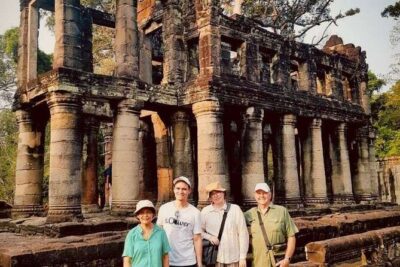
Full-Day Banteay Srei & 4 Temples – Grand Tours Join-in Tour
Read our review →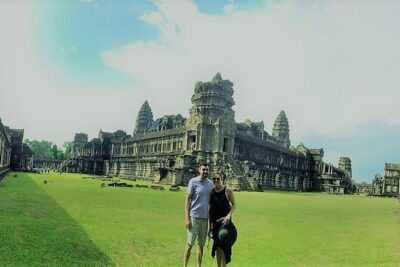
Siem Reap Tour: Angkor Wat Sunrise, Bayon, Ta Prohm, Banteay Srei
Read our review →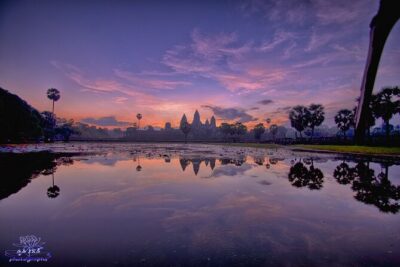
2-Day Angkor Wat With Small, Big Circuit and Banteay Srei Tour
Read our review →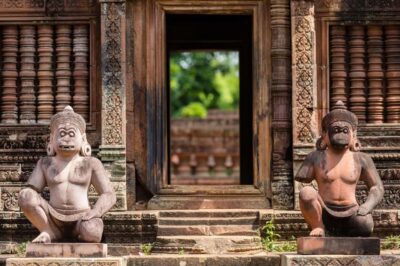
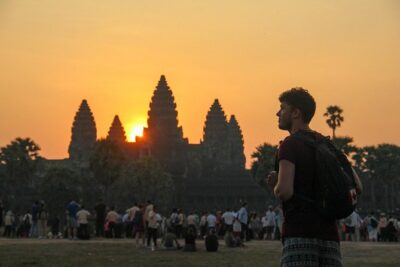
3-Days Discovery Of Angkor: Waterfalls,Floating Village and Banteay Srei temple
Read our review →
Banteay Srei, Kulen Waterfall & Beng Mealea Exploration
Read our review →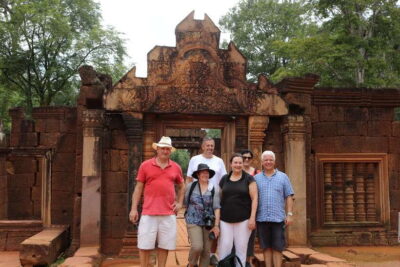
Kulen Waterfall, Banteay Srei, and Beng Mealea Tour
Read our review →Browse the lists this tour appears in