
Reviewed · SILK FARM & CRAFT WORKSHOPS
Angkor Silk Farm & Lotus Silk Farm: Siem Reap Discovery Tour
Textiles tell Cambodia’s story beautifully. This four-hour Siem Reap tour links the careful work of silkworm farming with the remarkable craft of pulling thread from lotus stems. I like the clear contrast between the two farms, and I like that your $25 fee helps support social enterprises working with local women. The main drawback is the road between the farms, which can feel long and hot, especially if you are riding in a tuk-tuk rather than an air-conditioned car.
You begin at Biolab Café in central Siem Reap, then travel into the countryside for guided demonstrations, weaving, lotus tea, and time in both farm shops. I especially appreciate that this is not just a shopping stop disguised as a cultural visit. You see how the materials are produced, how much handwork goes into each item, and why ethical textiles cost more than factory-made cloth.
In This Review
- Key points to know before you go
- Starting at Biolab Café in central Siem Reap
- Angkor Silk Farm: from mulberry leaves to woven silk
- Fifteen minutes in the Angkor Silk Farm shop
- The countryside transfer: useful, but not always easy
- Lotus Farm by Samatoa: an ingenious use of lotus stems
- Lotus tea, biscuits, and a quieter pause
- Shopping at both farms: useful context, not pressure
- What the $25 price really covers
- Who will enjoy this Siem Reap outing most
- Practical advice for a smoother morning
- Should you book the Angkor and Lotus Silk Farm tour?
- FAQ
- Where does the tour begin and end?
- What time do the morning tours depart?
- Which languages are available?
- Is lunch included?
- Are hands-on craft activities included?
- Can I buy silk and lotus products during the tour?
Key points to know before you go
- Two very different textile traditions: Angkor Silk Farm shows mulberry cultivation, silkworms, cocoons, thread, and weaving. Lotus Farm by Samatoa focuses on extracting fine fiber from lotus stems.
- A strong value at $25: Transport, English or French guiding, both farm visits, demonstrations, and lotus tea with biscuits are included.
- Allow for a hot countryside transfer: The ride between sites can take a while and may be less comfortable in a tuk-tuk during warm weather.
- The farm shops are part of the experience: Handmade silk and lotus products are available, but purchases are extra.
- The most interesting moments are hands-on only if arranged separately: Craft activities and workshops may be available for an added fee, but they are not included in the standard tour.
- Best for curious, culture-minded visitors: You do not need special fitness, and photography is allowed at both farms.
Starting at Biolab Café in central Siem Reap
The tour begins at Biolab Café, a garden café downtown. Arrive about 10 minutes before departure and look for the lotus-colored flag marked PICKUP, Lotus Silk Farm. The vehicle is grey, and the driver waits outside.
This meeting point is useful if your hotel is not included in the pickup area. You get an air-conditioned place to wait, seating, restrooms, WiFi, and the option to buy a coffee or drink before leaving. The important catch is simple: hotel pickup and drop-off are not included. You need to reach Biolab Café on your own.
Morning departures are listed at 8:30 and 10:00. The tour may be shared with other people, so the feel can range from a small outing to a group visit. Transport is described as a private car, although some past arrangements used a tuk-tuk. If comfort matters to you, confirm the vehicle when booking, particularly during Cambodia’s hotter months.
The order can change. The planned route begins at Angkor Silk Farm, but the farms may be visited in the opposite order to suit the day. That flexibility can be helpful, though you should not assume the printed sequence is fixed.
More Craft Workshops in Siem Reap
- Siem Reap: Cambodian Pottery Class
★ 4.9 · 339 reviews - Siem Reap Lotus Silk Farm Discovery tour & Lake experience
★ 4.7 · 291 reviews - Cambodian Pottery Class in Siem Reap
★ 4.5 · 157 reviews
Angkor Silk Farm: from mulberry leaves to woven silk
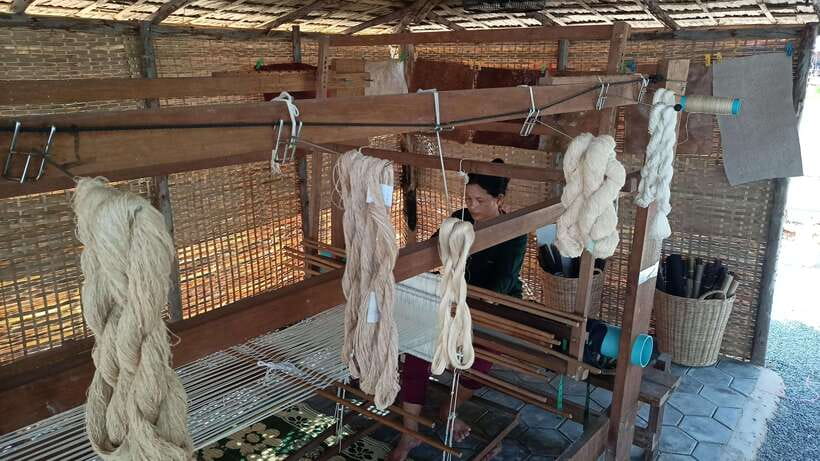
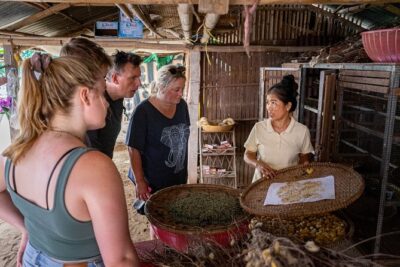
At Angkor Silk Farm, the story begins with the silkworm rather than the finished scarf. A guide explains the full process, starting with mulberry cultivation and moving through the silkworm’s life cycle, cocoon production, thread extraction, and weaving.
The guided visit lasts about 45 minutes. That is enough time to follow the basic chain without turning the morning into a technical lecture. You will see the different stages of silkworm development and learn how fragile cocoons become strong, delicate thread.
This stop is especially good if you want to understand how much labor sits behind a piece of Cambodian silk. The finished fabric can look light and effortless. The process is anything but. Growing the feed plants, caring for the worms, handling cocoons, drawing thread, and preparing a loom all require patience and practiced hands.
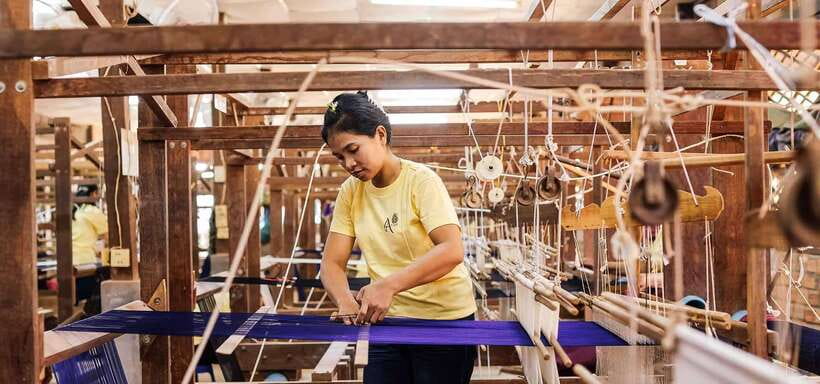
The weaving demonstration adds the human element. Skilled artisans work on traditional wooden looms, showing how patterns are built through repeated movements. Ancient Khmer techniques are presented as working skills, not just museum pieces. You can watch the cloth take shape and see why patterned silk is priced well above mass-produced fabric.
The tour does not include a full weaving workshop. You observe the process rather than spending a long session at the loom. That is worth knowing if you are hoping to make a scarf yourself.
Photography is allowed, so bring your camera. Still, take a moment to watch before raising it. The most useful part of this stop is not a single dramatic photo. It is seeing the sequence from living creature to finished textile.
Fifteen minutes in the Angkor Silk Farm shop
After the guided portion, you have about 15 minutes to browse the boutique. This is a short stop, but it gives you a chance to connect the demonstration with actual products.
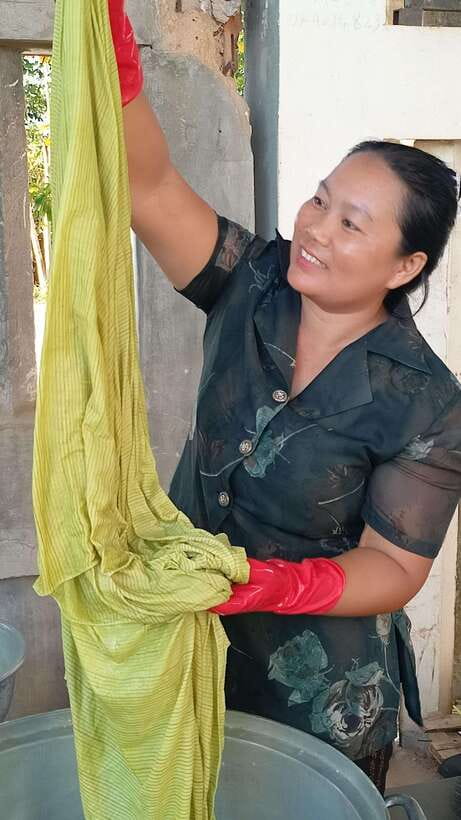
You might find silk goods made by the local craft community, with the quality and price shaped by the amount of handwork involved. The shop is not merely an exit corridor. It is also where the economic side of the project becomes clear. Buying directly supports artisan work and helps keep traditional techniques in use.
Bring cash if you plan to shop. US dollars are accepted, and purchases are not part of the $25 tour fee. I suggest deciding in advance how much room you have in your luggage and budget. It is easier to judge a product after you have seen the time and skill behind it.
The countryside transfer: useful, but not always easy
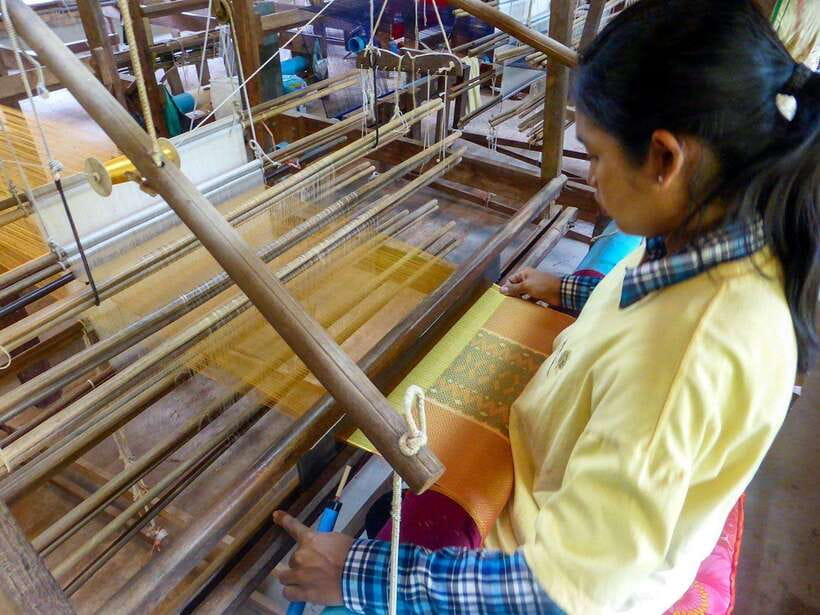
The journey to the second farm takes you through rural Cambodia and offers a break from Siem Reap’s central streets. You see countryside views from the vehicle, and the drive gives the day a sense of place beyond the temple zone.
The transport is also the weakest part for some people. The ride between the sites can feel long once the first 10 minutes have passed, and there are no scheduled extra stops. In hot conditions, a tuk-tuk can be tiring. One past visitor specifically found the transfer too long and uncomfortable in the heat, while another praised the driver for taking care during the journey.
That difference comes down partly to the vehicle and the weather. If you are sensitive to heat, wear light clothing, use sunscreen, and carry water. The tour includes lotus tea and biscuits, but not general drinks or meals. You can buy refreshments at Biolab Café before departure, but do not treat this as a lunch tour.
Drivers have received warm praise for being punctual, patient, and careful. Vanny, named in one account, was especially appreciated for his friendly and flexible service. Driver quality can shape the transfer, so it is worth confirming the meeting instructions and vehicle details ahead of time.
A completely different kind of day out from Siem Reap:
- Angkor Wat Sunrise or Sunset Tour with Guide from Siem Reap
★ 5.0 · 12,109 reviews - Siem Reap: Angkor Wat: Small-Group Sunrise or Sunset Tour
★ 5.0 · 9,444 reviews - From Siem Reap: Kampong Phluk Floating Village Tour by Boat
★ 4.9 · 6,979 reviews - Sunset tour of Kampong Phluk stilts home village on the Tonle Sap
★ 5.0 · 4,865 reviews
Lotus Farm by Samatoa: an ingenious use of lotus stems
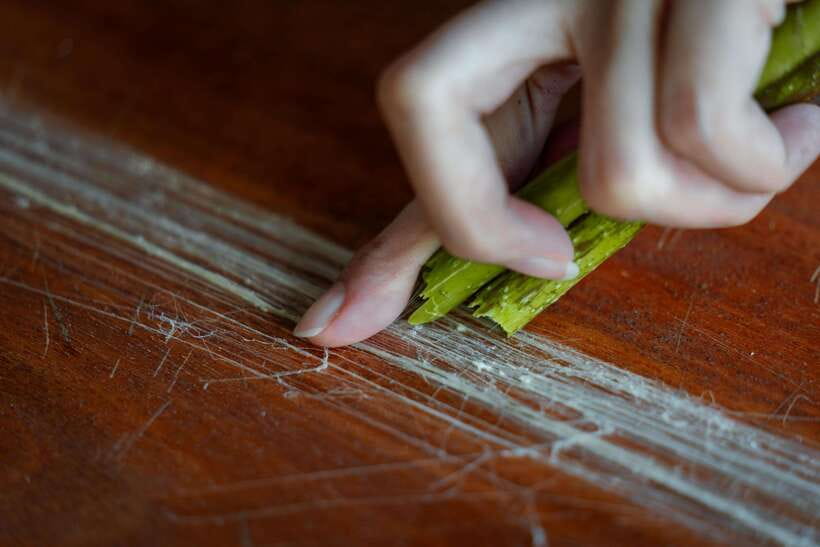
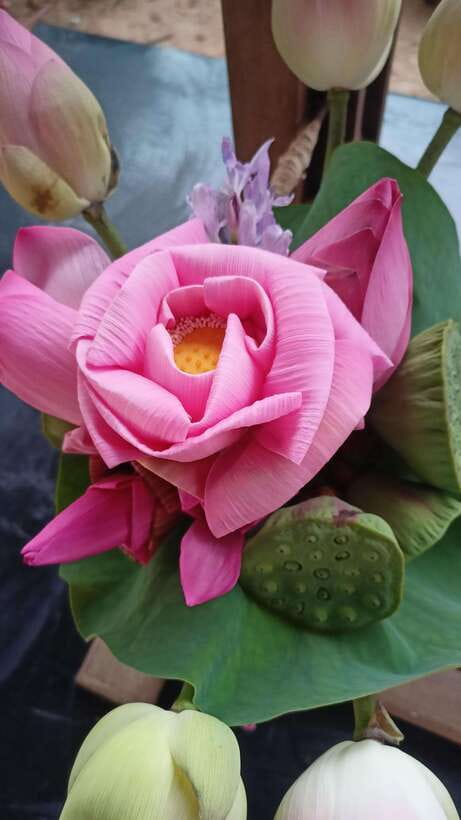
The Lotus Silk Farm offers the tour’s biggest surprise. Most people arrive knowing at least something about silkworm silk. Far fewer know that fine fibers can be drawn from lotus stems.
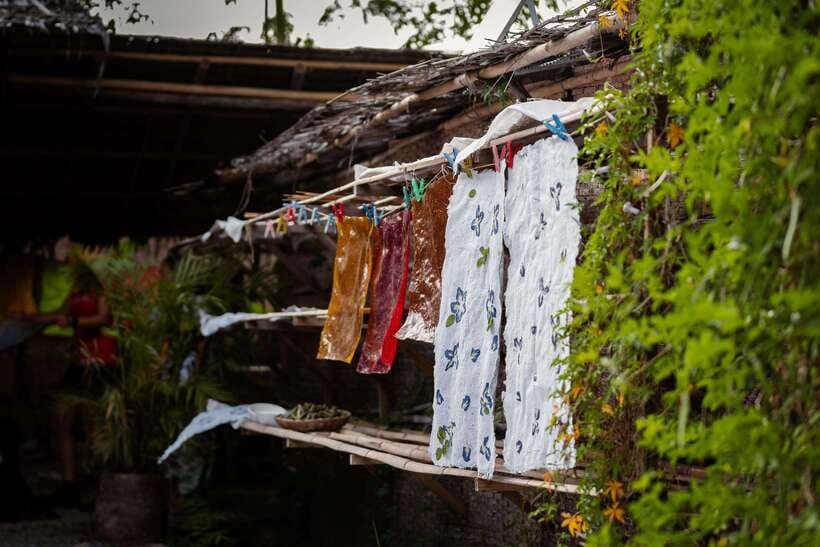
The guided visit lasts around 30 minutes. A craft worker demonstrates how the stem is handled and how delicate fibers are pulled out. The material is then prepared for textile production. The process is slow, precise, and done by hand, which helps explain the higher price of lotus products.
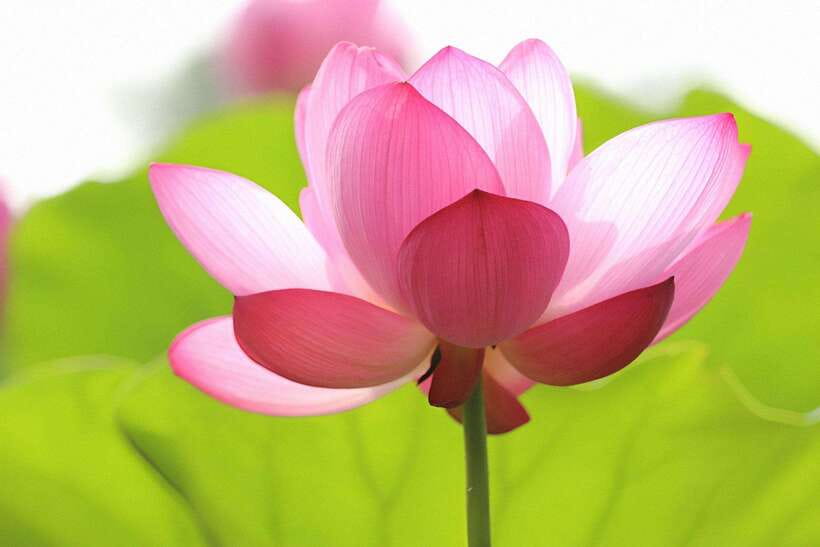
This is not silk in the same biological sense as silkworm silk. It is a lotus-based fiber, and the tour presents it as a sustainable textile created through local craft and careful use of natural materials. The social enterprise also focuses on employing local women. That connection between new ideas, income, and handmade production gives the visit real weight.
The standard visit includes demonstrations, but not hands-on craft activities. Some arrangements have offered optional activities such as making a lotus seed bracelet, trying to form silk strands, or creating a sheet of paper. These may cost extra and should not be assumed to be included. If making something matters to you, ask before the tour begins.
The lotus stop is relaxed and visually appealing, with work in progress on display. You see the skilled workers handling the material rather than simply looking at finished goods. For many people, this is the most memorable part because the method is so unfamiliar.
Lotus tea, biscuits, and a quieter pause
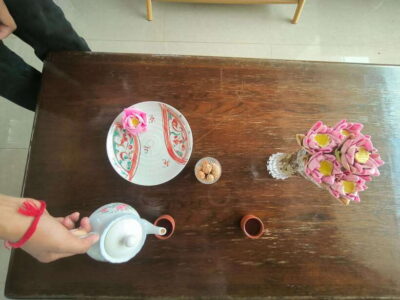
After the demonstration, you have about 15 minutes for complimentary lotus tea and biscuits. This small refreshment break works well. It gives you time to sit, ask questions, and absorb what you have just seen.
The garden setting provides a calm change from the workshop areas. WiFi and restrooms are available here, too. Do not expect a full meal. Some past arrangements included lunch, including a lotus-based meal, but food is not included in the standard experience. Plan on tea and biscuits only unless you have separately arranged lunch.
If you enjoy food as part of cultural learning, ask in advance about any optional meal. Otherwise, schedule lunch after returning to Siem Reap or make your own plans before setting out.
Shopping at both farms: useful context, not pressure
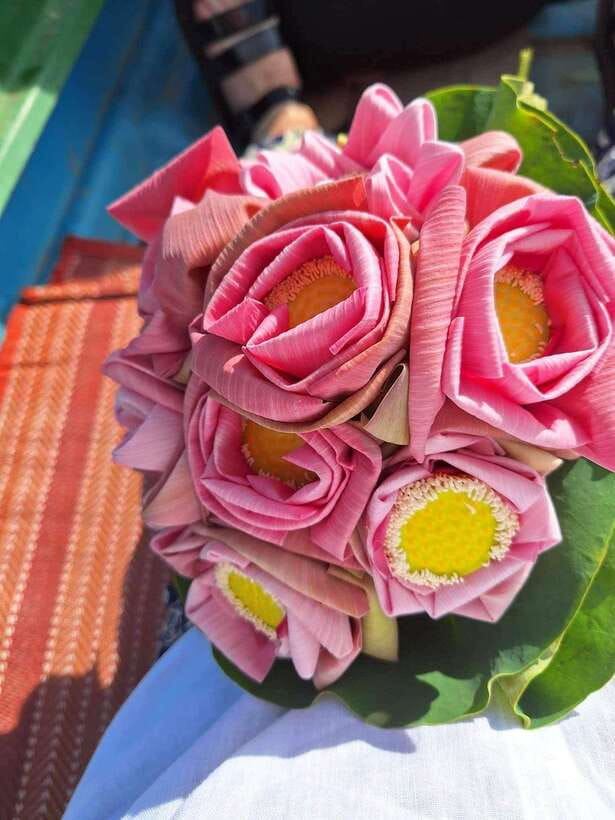
You get time at the Lotus Farm boutique as well as the Angkor Silk Farm shop. These purchases directly support local artisan communities and the two social enterprises, but you are not required to buy anything.
I find the shopping more meaningful after the demonstrations. At the silk farm, you have seen the worms, thread, and looms. At the lotus farm, you have watched a difficult fiber extraction process. That knowledge makes it easier to understand why a handmade textile cannot compete with a cheap factory item on price.
The products are also a practical reminder that ethical production is not free. Handwork takes time. Small-scale production uses different methods from mass manufacturing. If you want a Cambodian textile that carries a clear connection to its making, this is a good place to look.
Give yourself a firm spending limit. The short shopping periods can feel quick, especially if you want to compare pieces carefully. The tour price covers access and guiding, not souvenirs, additional refreshments, or private demonstrations.
What the $25 price really covers
At $25 per person, this is a good-value half-day outing if you use all its parts. You receive transport from Biolab Café, a professional English or French-speaking guide, admission and guided access at both farms, live demonstrations, countryside travel, and lotus tea with biscuits.
You are paying for interpretation as much as transport. Without a guide, you could see silkworms, looms, lotus stems, and finished products without fully understanding the work connecting them. The explanations give the objects a practical and cultural context.
The price is less attractive if you mainly want a hands-on workshop or a long rural excursion. Those are not part of the standard package. Optional craft activities, private demonstrations, costume photography, extra stops, food, and purchases all cost more or are unavailable within this tour.
Still, the fee supports two ethical enterprises and gives you a focused look at both older and newer Cambodian textile methods. Compared with spending a few hours only in shops, I think the added context makes the price fair.
Who will enjoy this Siem Reap outing most
I would choose this tour for anyone interested in textiles, craft, sustainability, local livelihoods, or the practical side of Cambodian culture. It also suits families, since the tour is listed as appropriate for all ages and children can attend with an adult.
It works well for visitors who have already seen Angkor Wat and want a different side of Siem Reap. You leave the central tourist area, see countryside, and spend time with working artisans rather than only viewing historic monuments.
It is also a good choice for people who like process. If you enjoy learning how a product is made, you will have plenty to watch. One engineer who joined with a parent particularly valued seeing how much work went into both textiles.
I would hesitate if you dislike shopping stops, expect a full meal, or want continuous activity. The tour includes two boutiques and a tea break, and the road transfer may feel slow. It is cultural education with some downtime, not a fast-moving adventure.
Practical advice for a smoother morning
Wear comfortable walking shoes, light clothes, a hat, and sunscreen. Both farms have restroom facilities, and photography is allowed.
Bring cash in US dollars if you might buy silk, lotus products, or small gifts. Keep a little extra time in your day because the route order can change and the shared vehicle may affect the pace.
Arrive 10 minutes early at Biolab Café. Hotel transport is not included, and the café is the fixed starting and ending point. You can cancel up to 24 hours ahead for a full refund, and reserve now while paying later, which helps if your Siem Reap schedule is still shifting.
The tour runs in all weather conditions. Since much of the day is outdoors or in open work areas, sun protection matters even on a cloudy morning.
Should you book the Angkor and Lotus Silk Farm tour?
Book it if you want a clear, affordable introduction to Cambodian textile production and you value direct support for local craft work. The strongest feature is the comparison: silkworm silk shows an old Khmer tradition, while lotus fiber shows how local craft is being adapted for a more sustainable future.
I would give the tour extra credit for its guides, the live demonstrations, and the chance to see real work in progress. I would also plan around its limits. Do not expect hotel pickup, lunch, included craft activities, or a perfectly comfortable transfer in every vehicle.
For the best experience, confirm the transport type, ask about optional hands-on activities, and carry water and cash. If those details suit your plans, this is one of the more useful half-day cultural outings from Siem Reap, especially for anyone who wants to bring home a textile with a story behind it.
FAQ
Where does the tour begin and end?
The tour begins and ends at Biolab Café and Restaurant in downtown Siem Reap. Hotel pickup and drop-off are not included.
What time do the morning tours depart?
Morning departures are scheduled for 8:30 AM and 10:00 AM. You should arrive 10 minutes before your selected departure.
Which languages are available?
The tour is conducted in English or French.
Is lunch included?
No. The standard tour includes complimentary lotus tea and biscuits, but meals and additional beverages are not included.
Are hands-on craft activities included?
No. The standard package includes demonstrations, but silk weaving workshops, hands-on craft activities, private demonstrations, and costume photo sessions are not included. Optional activities may be available for an additional fee.
Can I buy silk and lotus products during the tour?
Yes. You have time to shop at both farm boutiques. Purchases, souvenirs, and personal expenses are not included in the tour price.
More Farms
- Siem Reap: Khmer Village and Fish Farm ATV Tour
★ 4.9 · 266 reviews - Siem Reap: Lotus Silk Farm- Tour, Lake & Masterclass
★ 4.9 · 77 reviews - Siem Reap: Khmer Water Blessing by Monk and Lotus Farm Visit
★ 5.0 · 15 reviews - Siem Reap: Silk Farm & Countryside Offbeat Jeep Tour
★ 4.5 · 11 reviews
Just added around Siem Reap
- Private Battambang Full-Day Guided Tour★ 4.5 · 3 reviews
- Kulen Mountain, Beng Mealea and Banteay Srei Full Day Tour★ 5.0 · 3 reviews
- Kompong Pluk Tour★ 5.0 · 3 reviews
- Private 3 Day Tour to Discover the ancient temples★ 5.0 · 3 reviews
- Kulen National Park Ticket -Waterfall & 1000 Lingas★ 5.0 · 3 reviews
- Cambodia: Absolute Traditional Dance Show with Buffet Dinner★ 5.0 · 3 reviews
- Border Transfer (Siem Reap to Laos/Laos to Siem Reap)★ 3.5 · 3 reviews
- Beng Melea, Rolous Group & Kompong Phluk Floating Village★ 5.0 · 3 reviews
Silk Farm & Craft Workshops, compared.
Phnom Penh Silk Island Bike Tour/ E-Bike or Tuk Tuk
Read our review →
Siem Reap Lotus Silk Farm Discovery tour & Lake experience
Read our review →
Silk Island Cycling Adventure & lunch with locals
Read our review →
Phnom Penh to Silk Island By Tuk-Tuk with local Expert
Read our review →
Phnom Penh Silk Island Vespa Tour / Tuk Tuk Available
Read our review →
Mekong Silk Island Cruise – Unlimited Beer, Soft Drinks & Fresh Fruit Platter
Read our review →Browse the lists this tour appears in