Reviewed · FULL-DAY
Angkor Temples Private Full-Day Tour from Siem Reap (Free Child)
Angkor rewards a full day. This private tour pairs Angkor Wat, Ta Prohm, and Angkor Thom with a personal guide, air-conditioned vehicle, hotel pickup, and time for sunset. I especially like the flexible pace and the chance to ask questions instead of following a large group. The main drawback is cost: the $54 tour price does not include the $37 temple pass or lunch.
The guides are a major part of the experience. Names praised for clear explanations, good humor, family-friendly help, and excellent photos include Tip, Sothy, Raksa, Sampat, and James Bon Thai. You should also expect a long, hot day, and the itinerary can feel ambitious if you want to study every carving slowly.
In This Review
- Key points at a glance
- Why a private Angkor day makes sense
- The real price: $91 before lunch
- Angkor Thom South Gate, the first stone welcome
- Bayon’s 54 towers and giant stone faces
- Baphuon and the Terrace of the Elephants
- Ta Prohm, where trees share the ruins
- Angkor Wat deserves the longest visit
- Sunset adds a final, tiring chapter
- The guides shape the day
- What to wear and carry
- Who should book this tour?
- Should you book the Angkor private day?
- FAQ
- Is the Angkor temple pass included?
- Is lunch included?
- Is hotel pickup provided?
- Is the tour private?
- How long does the tour last?
- What should I wear to the temples?
- Can I cancel for a full refund?
Key points at a glance
- A genuinely private outing: Only your group, guide, and driver take part, making it easier to adjust the pace.
- The main Angkor sights in one day: You visit Angkor Thom, Bayon, Baphuon, the Terrace of the Elephants, Ta Prohm, and Angkor Wat.
- Strong guide service: Guides such as Tip, Sothy, Raksa, Sampat, and James Bon Thai are praised for history, humor, photos, and family support.
- Useful comfort in Cambodia’s heat: Air-conditioning, cold bottled water, wet tissues, and hotel pickup make the long day easier.
- Sunset is part of the plan: The day can continue into the evening, with Phnom Bakheng mentioned as a sunset location.
- Budget for the temple pass: The $54 price excludes the $37 Angkor Archaeological Park admission fee.
Why a private Angkor day makes sense
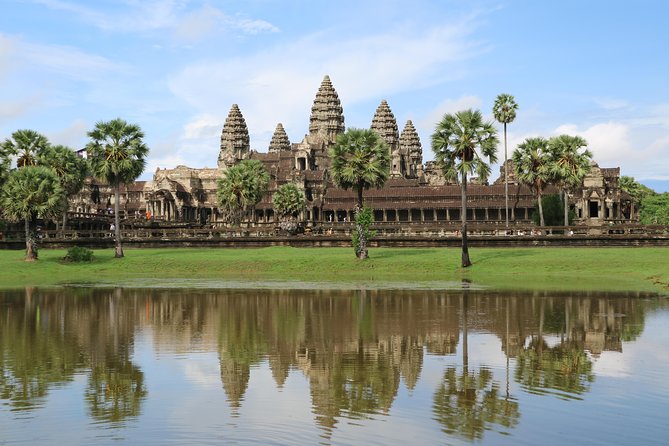
Angkor is too large for a quick look. The temples are spread through a huge archaeological park, and each one has a different mood. Angkor Wat is grand and formal, Ta Prohm feels tangled and atmospheric, and Bayon is full of giant stone faces and carved scenes.
A private guide gives you more than a ride between monuments. You can stop to ask how a carving fits into Khmer religion, request a slower pace, or pause for photographs without waiting for a busload of people. Several guides also take pictures, which is helpful when you want more than a collection of selfies.
The private format is especially useful for families. One guide, Tip, is praised for joking with children and keeping three girls engaged. Raksa is also noted for adjusting the day for a two-year-old. That does not make the temples effortless for small children, but it does give your group room to adapt.
You get private air-conditioned transport, hotel pickup and drop-off, bottled water, and wet tissues. In Siem Reap’s heat, those are practical comforts, not fancy extras. The vehicle gives you a cool place to recover between sites, and drivers such as Dole, Pip, Seth, Sitha, and Nimol are praised for punctuality and helpful service.
A few more trips worth weighing up
- Siem Reap: Full-Day Angkor Wat Guided Tour with Sunset
★ 4.9 · 3,803 reviews - Full-Day Angkor Wat Sunrise Private Tour with Guide from Siem Reap
★ 5.0 · 2,920 reviews - Siem Reap: Angkor Wat Sunrise and Full-Day Sightseeing Tour
★ 4.9 · 2,828 reviews
The real price: $91 before lunch
The advertised cost is $54 per person, but you must add the $37 one-day Angkor Archaeological Park pass. That puts the basic total at $91 per person before lunch and any travel insurance.
For a private guide and private vehicle, this can be good value, especially if you are traveling with family or a small group. A shared tour may cost less, but you lose control over the pace and spend more time managing other people’s schedules.
The tour price includes transport, guiding, water, and hotel transfers. It does not include meals, so lunch is your own expense. Some guides have taken groups to Khmer restaurants, including Batchum Khmer Kitchen, and one report specifically praises a filling lunch. Still, you should treat the meal as an additional cost rather than part of the package.
The title includes Free Child, but the provided details do not state the age limit or conditions. If you are booking for a child, confirm exactly who qualifies before paying. The same advice applies if your group has an infant or young child, since the temples involve heat, walking, and uneven stone surfaces.
Angkor Thom South Gate, the first stone welcome
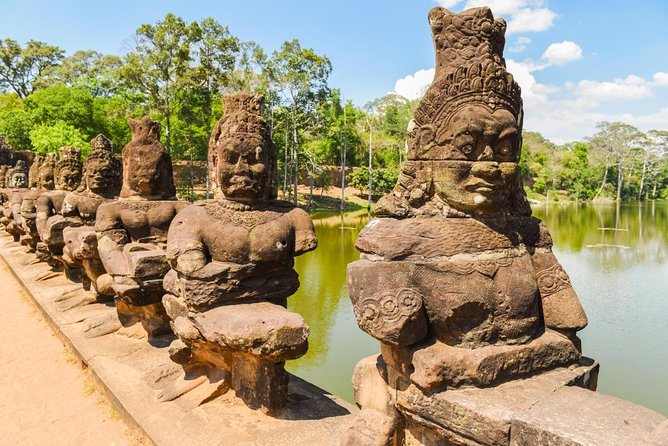
The tour begins at the South Gate of Angkor Thom, the old royal city. Its defensive walls once formed a roughly 12-kilometer square around the Khmer capital. You have about 30 minutes here, enough to understand the scale of the city and take in the approach.
This is a good opening stop because it gives you context before the detailed temple visits. The road crosses the moat and leads through a striking entrance lined with monumental figures. Your guide can help explain the religious symbolism and the role of the gate in the wider city plan.
Do not expect a long exploration of the walls during this brief stop. The value is visual and introductory. You get your first sense that Angkor was not just one temple, but a planned capital with roads, reservoirs, gates, terraces, and royal buildings.
Bayon’s 54 towers and giant stone faces
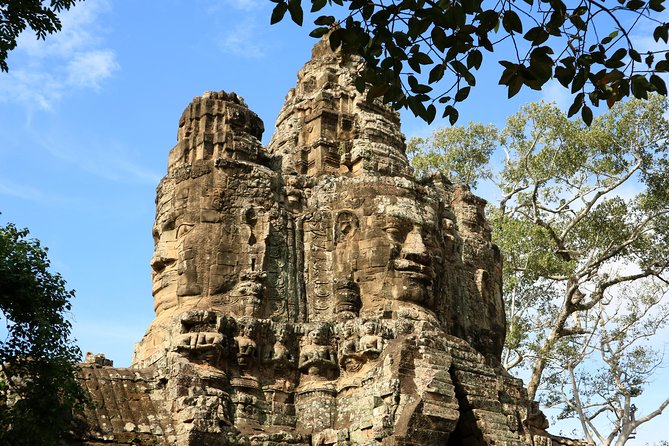
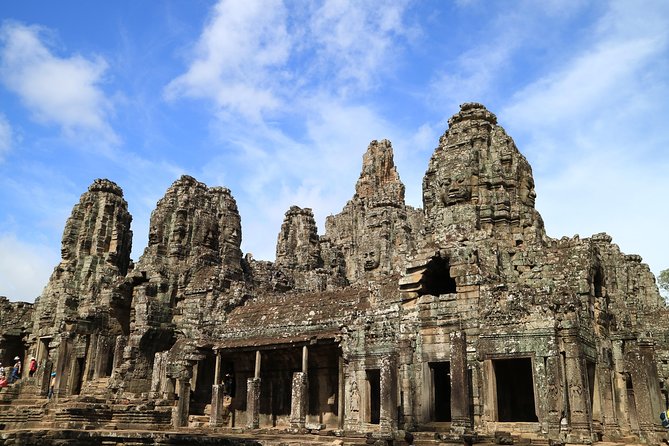
Bayon receives about 90 minutes, and it deserves the time. Built under King Jayavarman VII, the temple is famous for its towers with huge carved faces. The listed description refers to 54 towers, each with four faces, though the surviving arrangement can be difficult to grasp from ground level.
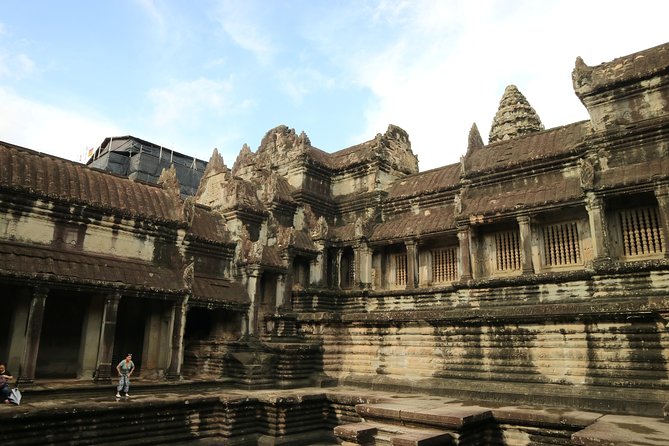
Bayon is not as immediately orderly as Angkor Wat. Corridors, galleries, towers, and stairways fold into one another. A guide is useful here because the temple can feel like a stone maze, and the bas-reliefs are easy to pass without understanding what you are seeing.
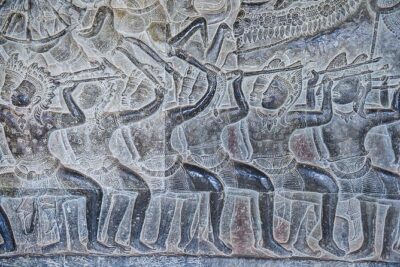
Look closely at the carvings showing battles, processions, markets, daily work, and court life. These scenes give Bayon a human scale. Instead of only seeing kings and gods, you can spot details of ordinary Khmer life.
The stone faces are the photo prize, but do not rush past the lower galleries. Your guide can point out scenes that explain the political and religious ideas of the period. Several guides are praised for explaining difficult material in simple English, which matters when you are already hot and tired.
A completely different kind of day out from Siem Reap:
- Angkor Wat Sunrise or Sunset Tour with Guide from Siem Reap
★ 5.0 · 12,109 reviews - Siem Reap: Angkor Wat: Small-Group Sunrise or Sunset Tour
★ 5.0 · 9,444 reviews - From Siem Reap: Kampong Phluk Floating Village Tour by Boat
★ 4.9 · 6,979 reviews - Sunset tour of Kampong Phluk stilts home village on the Tonle Sap
★ 5.0 · 4,865 reviews
Baphuon and the Terrace of the Elephants
Baphuon follows with about an hour. Built in the middle of the 11th century under Udayadityavarman II, it is known for its tall structure and difficult construction. The description calls it one of the most poorly constructed temples at Angkor, a reminder that these monuments were engineering projects as well as religious centers.
The approach and raised levels give Baphuon a different feel from Bayon. You may need to climb steps and walk across uneven stone, so good shoes matter. The reward is a better sense of how these temple mountains were designed to lead worshippers upward.
The Terrace of the Elephants gets about 30 minutes. It is a long, raised platform, about four meters high and 15 meters wide along its length, built under King Jayavarman VII. Carved elephants and other figures decorate the terrace, which once served as a grand viewing platform beside the royal city.
This is more of a monumental public space than an enclosed temple. Your guide can connect it to the ceremonies and royal displays that took place around Angkor Thom. The short visit works well as a change of pace after the tighter spaces of Bayon and Baphuon.
Ta Prohm, where trees share the ruins
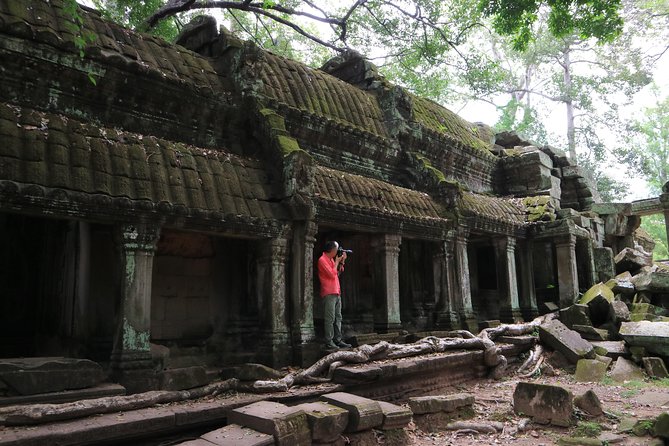
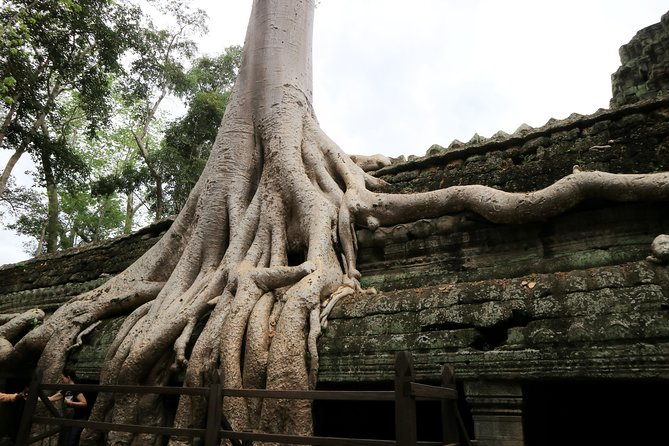
Ta Prohm is given about 90 minutes, and this is one of the day’s most memorable stops. King Jayavarman VII built it in 1186 in dedication to his mother. Large trees grow through and around the stonework, creating the jungle-temple image that draws many people to Angkor.
Ta Prohm is photogenic, but the photographs can distract you from the structure. Look at the carved doorways, galleries, courtyards, and collapsed sections before focusing on the famous tree roots. The power of the place comes from the tension between careful construction and nature’s slow pressure.
The site can feel crowded at popular photo points. A private guide can help you approach at a quieter moment or use a less crowded path. One guide is praised for taking groups through quieter routes and finding good picture spots, which is a real benefit at a temple often visited for a single famous view.
Rain does not necessarily end the day. One group continued to Ta Prohm during heavy rain and found the experience enjoyable, but weather can affect comfort and access. Rain may also prevent visitors from climbing the upper tower at Angkor Wat for safety reasons.
Angkor Wat deserves the longest visit
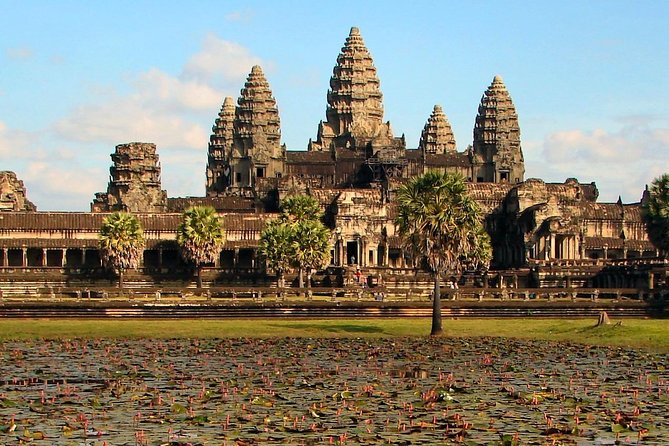
The schedule allows about four and a half hours at Angkor Wat. That is a substantial block of time, and it should be. Angkor Wat is not a quick photo stop. Its towers, galleries, courtyards, bas-reliefs, and long approach require patience.
The temple was built as a monumental religious center and remains the best-known symbol of Cambodia. From the outside, the balanced towers and moat create the grand view you probably expect. Inside, the carved galleries reward slower looking.
Use the guide’s explanations to read the bas-reliefs rather than treating them as decoration. They show religious stories, royal power, battles, and formal processions. The scale can be tiring, so the private vehicle and flexible pacing become especially useful after several earlier sites.
Some groups enter through a less crowded rear approach, depending on the day’s arrangements. That can produce a calmer start, but you should not assume a particular entrance is guaranteed. The main advantage of a private tour is that your guide can adjust the order and timing when conditions allow.
Angkor Wat can also be the point where you decide you have had enough. One group changed the start to 5:30 a.m. for sunrise, returned to the hotel for breakfast and rest, then continued around 9 a.m. Another group finished the temple visits around 2 p.m. and chose to return rather than wait for sunset. A private itinerary gives you this kind of choice, but you need to communicate clearly with the guide.
Sunset adds a final, tiring chapter
The advertised day includes sunset over the temple complex. Phnom Bakheng is mentioned as a sunset location, and the day may continue for around 10 hours depending on your choices and timing.
Sunset is a pleasant finish, but it is not a free extra in terms of energy. After Bayon, Baphuon, the terrace, Ta Prohm, and Angkor Wat, you may be ready for a shower rather than another climb or wait. The private setup lets you decide, which is better than being locked into a group schedule.
If sunset matters to you, say so early. If you are traveling with children, older family members, or anyone struggling with heat, keep the option open rather than treating it as compulsory. The tour’s flexibility is one of its best features.
The guides shape the day
The strongest praise goes to the human service. Tip is repeatedly described as funny, patient, well informed, good with children, and skilled at taking photographs. Sothy is praised for clear English, history, and calm organization. Raksa is noted for adapting the route to a young child.
Sampat, also called Tip in some descriptions, is praised for humor, cultural explanations, and helping with photos. James Bon Thai receives praise for his English and for explaining both the temples and Cambodian life. Guide assignments can vary, so you should not assume you will receive a particular person unless the operator confirms it.
The driver matters too. A punctual pickup, cold vehicle, and helpful support between sites make a difference on a nine-hour outing. Cold water and working air-conditioning may sound basic, but you will be grateful for both when the sun is high.
What to wear and carry
Angkor is a sacred place, so dress modestly. Wear trousers or a skirt that covers the knees and a shirt with sleeves covering the shoulders. Singlets, tank tops, mini skirts, short pants, and sleeveless shirts may prevent entry at some areas.
Choose comfortable sports shoes that you do not mind getting dusty or dirty. Bring sunscreen, sunglasses, and a hat because the ultraviolet light is strong throughout the year. During the rainy season, from May through November, pack an umbrella or raincoat, although umbrellas may also be supplied by the driver.
Mosquito repellent is a sensible addition, especially around tree-covered areas and later in the day. Bottled water and wet tissues are included, but you should still bring enough personal supplies for a long day outside.
Professional cameras or video equipment require an approval letter from the authority. Without that approval, you may not be allowed to bring such equipment into the park. Ordinary personal photography is treated differently, but ask before arriving if your equipment is large or professional-grade.
Who should book this tour?
I would choose this tour if you want the major Angkor sites with your own guide and vehicle, especially for a couple, family, or small private group. It suits people who value explanations and flexibility more than the lowest possible price.
It is also a good match if you want help with photographs. Guides such as Tip and Sampat are praised for finding picture locations and taking creative shots. Families may appreciate the ability to slow down, adjust the route, or return to the hotel before sunset.
I would think twice if you dislike long sightseeing days or prefer to explore at your own pace without a guide. The itinerary is full, and the combination of heat, stairs, uneven stones, and long walks can wear you down. The separate admission fee also makes the final cost higher than the headline price.
Most people can participate, but the supplied information does not give detailed accessibility guidance. If you have mobility concerns, ask the provider which parts of the route can be modified.
Should you book the Angkor private day?
Book it if you want a well-supported first day at Angkor and are comfortable paying about $91 before food. The guide can turn a pile of ancient stones into a readable story, while the private car gives you shade, air-conditioning, and a place to recover.
Before booking, confirm the child-free terms, tell the operator your hotel name, address, phone number, full name, and nationality, and ask about your preferred pickup time. Free cancellation is available up to 24 hours before the start time, but changes or cancellations inside that window are not accepted.
My call: this is a strong-value choice for families and first-time visitors who want the essential temples, personal attention, and sunset flexibility in one long day. If you want to study every monument at a slow archaeological pace, split Angkor across more than one day instead.
FAQ
Is the Angkor temple pass included?
No. The Angkor Archaeological Park entrance fee is listed separately at $37 per person for one day.
Is lunch included?
No. Meals are not included. You pay for lunch separately.
Is hotel pickup provided?
Yes. Hotel pickup and drop-off are included. You need to provide your hotel name, address, and phone number when booking.
Is the tour private?
Yes. Only your group takes part, with a private guide and private air-conditioned transport.
How long does the tour last?
The advertised duration is approximately nine hours. The day can run longer depending on your pace and whether you stay for sunset.
What should I wear to the temples?
Wear trousers or a skirt long enough to cover your knees and a shirt with sleeves covering your shoulders. Sleeveless shirts, tank tops, mini skirts, and short pants may not be accepted at some areas.
Can I cancel for a full refund?
Yes, if you cancel at least 24 hours before the experience start time. Cancellations or changes made less than 24 hours before the start time are not accepted for a refund.
Just added around Siem Reap
- Private Battambang Full-Day Guided Tour★ 4.5 · 3 reviews
- Kulen Mountain, Beng Mealea and Banteay Srei Full Day Tour★ 5.0 · 3 reviews
- Kompong Pluk Tour★ 5.0 · 3 reviews
- Private 3 Day Tour to Discover the ancient temples★ 5.0 · 3 reviews
- Cambodia: Absolute Traditional Dance Show with Buffet Dinner★ 5.0 · 3 reviews
- Kulen National Park Ticket -Waterfall & 1000 Lingas★ 5.0 · 3 reviews
- Border Transfer (Siem Reap to Laos/Laos to Siem Reap)★ 3.5 · 3 reviews
- Beng Melea, Rolous Group & Kompong Phluk Floating Village★ 5.0 · 3 reviews
Full-Day, compared.


Full-Day Angkor Wat Sunrise Private Tour with Guide from Siem Reap
Read our review →
Angkor Wat Sunrise and Full-Day Sightseeing Tour
Read our review →
Full Day Angkor Wat Temple Experience with Sunset
Read our review →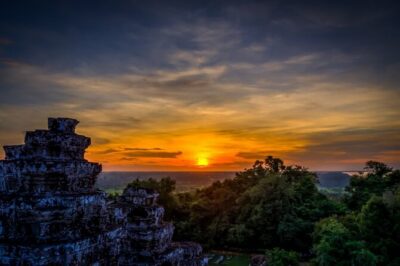
Angkor Wat full Day ‘Small Group with sunset & Tour Guide
Read our review →
Full-Day Banteay Srei & 4 Temples – Grand Tours Join-in Tour
Read our review →