
Reviewed · COOKING CLASSES
Cambodian Cooking Class from Siem Reap
Cambodian food is best learned at the cooking station. This half-day class takes you beyond Siem Reap’s restaurant row and into a rural village, where you can meet local people, see home gardens, and prepare a full Khmer meal. I especially like the small groups of six or fewer and the beautiful open-air pavilion beside a pond, where you eat what you cook. The setting feels relaxed, and the class gives you useful recipes rather than just a quick demonstration.
The main consideration is the heat. Cooking takes place outdoors under cover, and the short village walk can be hot, so bring a hat, water, and comfortable shoes. The class is also limited to children over 12, unless you arrange a private family session. At $32 per person, the pickup, tuk tuk transport, guide, market or village visit, class, meal, drink, and recipe book make this a strong value for a three-and-a-half-hour activity.
In This Review
- Key points to know before booking
- Leaving Siem Reap by tuk tuk
- Market ingredients and the Khmer pantry
- A look inside a Cambodian family home
- Cooking in the open pavilion
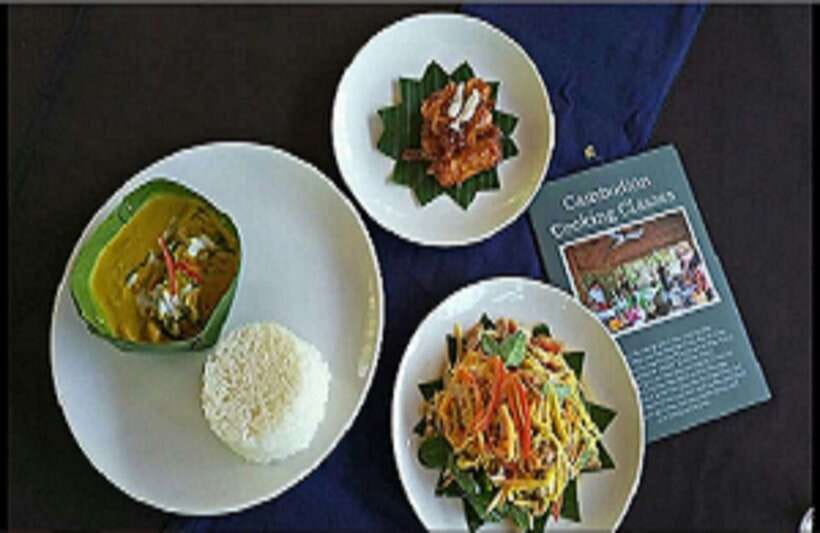
- Morning menu: mango salad and fish amok
- Afternoon menu: curry, sugar cane, and a sweet finish
- Eating what you made beside the pond
- The people who make the class work
- Who will enjoy this class most
- Is $32 a good value?
- Should you book the Cambodian cooking class?
- FAQ
- Where does the Cambodian cooking class take place?
- How long does the experience last?
- Is tuk tuk transport included?
- What food do you cook in the morning class?
- What food do you cook in the afternoon class?
- Is the cooking class suitable for beginners?
- Can children join the class?
- What should I bring?
Key points to know before booking
- Your own cooking station: Every participant gets individual equipment and takes part in the preparation.
- A rural Cambodian setting: The class takes place in an open pavilion beside a pond, away from central Siem Reap.
- Food lessons begin before the cooking: You may visit a local market, family home, garden, or village area to learn about herbs and vegetables.
- Classic Khmer dishes: Menus include fish amok, Cambodian mango salad, Cambodian curry, minced fish on sugar cane, and palm-sugar desserts.
- Small groups: Classes are capped at six people, with private classes possible for families on request.
- Useful take-home material: A recipe book explains the dishes and includes recipes beyond the menu you prepare.
Leaving Siem Reap by tuk tuk
The experience begins with pickup from your hotel in Siem Reap and a tuk tuk ride toward the countryside. The trip is part of the appeal. Instead of spending the whole morning in the central tourist zone, you get a short ride along quieter roads toward a rural village.
The tuk tuk transport is included to the class and back to the centrally located Beyond office at the end. The published arrangement does not promise a return to your hotel, so check the final drop-off details if you need to connect with another activity.
The ride also sets the mood. Several people have singled out the friendly drivers, including Mr. Pin, who has handled pickups for the class. You are not being taken to a hotel kitchen or a staged restaurant lesson. The change in scenery is one of the reasons this activity feels worthwhile.
The class lasts about 3.5 hours. That is long enough for a market or village visit, several dishes, and a proper meal, but short enough to fit around sightseeing in Siem Reap.
More Cooking Classes in Siem Reap
- Khmer Cooking Class at a Local’s Home in Krong Siem Reap
★ 5.0 · 2,731 reviews - Siem Reap: Khmer Cooking Class at a Local’s Home
★ 5.0 · 1,108 reviews - Award-Winning Cooking Class Experience with Professional Teacher
★ 5.0 · 745 reviews
Market ingredients and the Khmer pantry
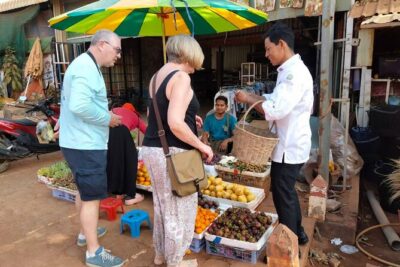
The exact opening can vary by class, but the experience may begin at a local market with your guide and chef. This is one of the most useful parts for anyone who wants to understand Cambodian food instead of simply eating it.
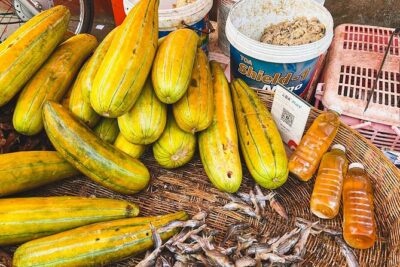
You can look at the produce, smell herbs and leaves, and learn how ingredients are used in everyday Khmer cooking. Some sessions have included local fruit and small treats to try. The guide explains ingredients that may look unfamiliar, which makes the later cooking steps easier to follow.
This market visit also gives you a better sense of how Cambodian cooks build flavor. Khmer food uses herbs, spices, aromatics, coconut, vegetables, fish, and curry pastes, but it is usually less hot than Thai food or some neighboring cuisines. Flavor comes from layers of fragrant ingredients rather than simply adding more chili.
The class is practical about substitutions. Guides have explained which ingredients you can replace at home if your local market does not carry the exact Cambodian version. That matters because a recipe is only useful if you can make it again after your holiday.
If your class does not include a market visit, the village walk still introduces you to local plants and food preparation. The description places strong emphasis on herbs and vegetables grown around Khmer homes, so ask your guide to point out anything you want to identify for later shopping.
A look inside a Cambodian family home
After the market or on the village walk, you visit a local family. The purpose is not simply to look at a house. You get an explanation of how food is prepared in a Khmer home, along with a look at the kitchen and vegetable garden.
This stop adds context that a standard cooking demonstration cannot provide. You see how ingredients connect to daily life, rather than meeting them only as neatly arranged items on a cutting board.
The visit should be approached with courtesy. You are entering someone’s home, not a museum, and the experience works best when you listen, ask polite questions, and follow your guide’s lead. Some sessions have included a small rice gift for the family, but this is not stated as a standard inclusion, so do not assume it is required.
The village walk is short, but wear comfortable footwear. A hat is recommended, especially for morning classes when the sun is already strong. The route adds an outdoor element, so this is not the right choice if you want a fully air-conditioned activity.
Cooking in the open pavilion
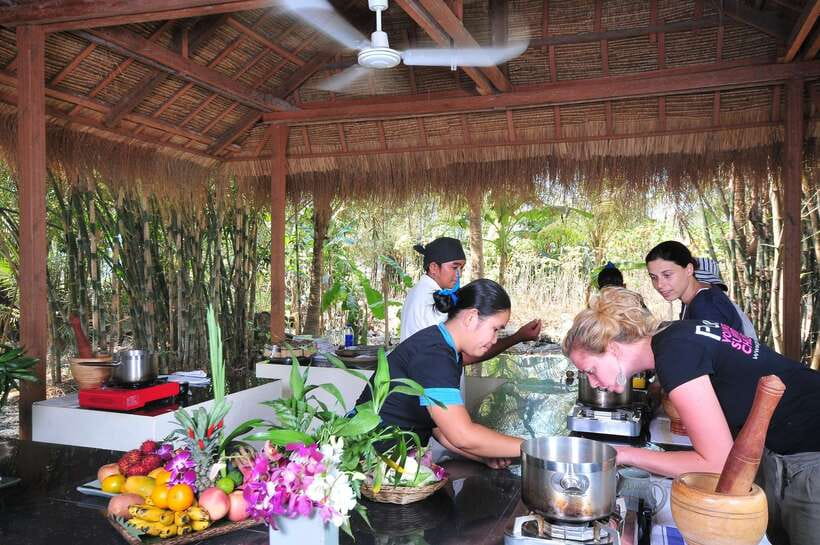
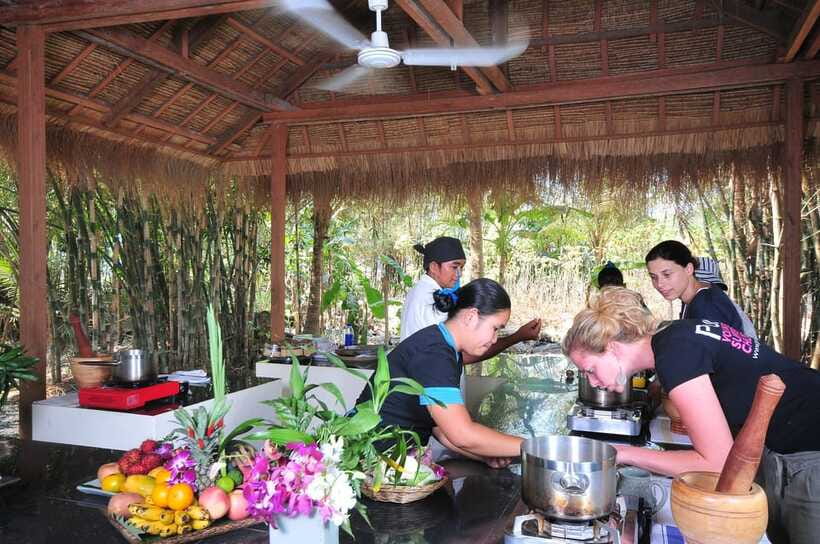
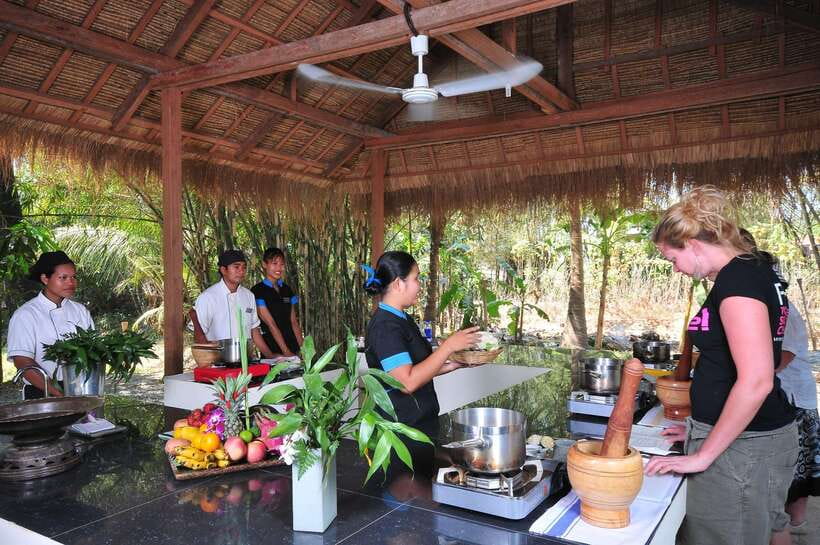
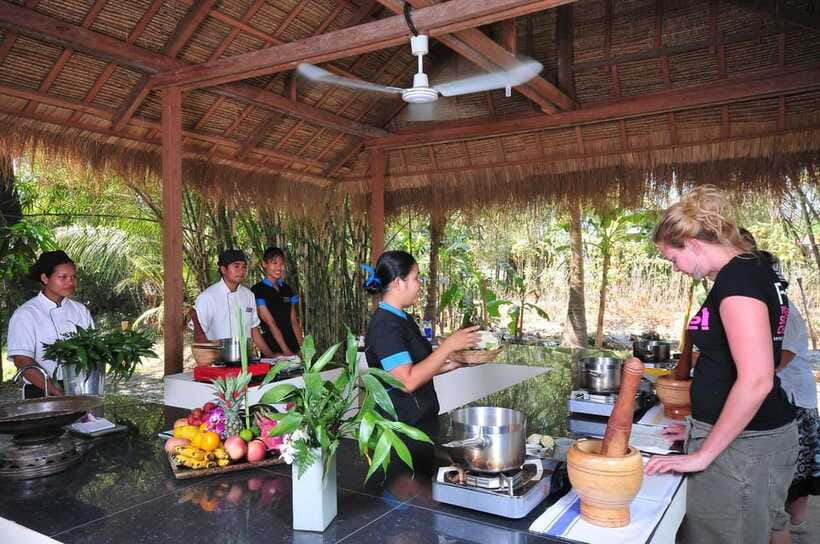
The class itself takes place at a nearby outdoor pavilion, often described as sitting beside a pond. The setting is a major part of the experience. You cook under cover, with greenery around you and water nearby, then sit down to eat with the pond in front of you. One account even noted turtles swimming in it.
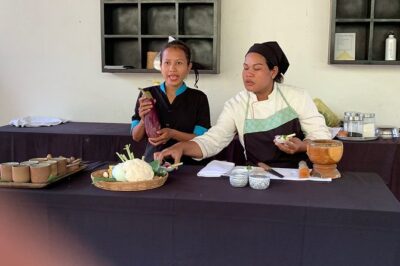
The cooking area is designed for participation. Each person has an individual station and equipment, so you are not standing at the back while one chef does the real work. Your chef and English-speaking guide explain the ingredients and methods, then help as you prepare the food yourself.
You may chop, mix, pound, season, and cook the dishes under supervision. The mortar and pestle work used for curry paste is particularly useful because it shows how the flavor base is made, not just how it appears in a packet.
The pace is generally calm and suitable for beginners. You do not need special cooking skills. The chef demonstrates each stage, and the guide can offer help when a technique or ingredient is unfamiliar.
The open-air design has one tradeoff: it can be warm. The cover protects you from direct sun, but it does not turn the pavilion into a cool indoor kitchen. Take the heat seriously, especially in the hotter months, and tell the guide if you need a pause. Staff have provided cold towels and water when someone felt unwell during the market portion, which suggests that comfort is taken seriously.
More Khmer cooking classes:
- Cambodian Village Cooking Class
★ 5.0 · 265 reviews - Siem Reap Cooking Class
★ 5.0 · 170 reviews - Khmer Gourmet Cooking Class
★ 5.0 · 145 reviews - Khmer Cooking Class in Cambodia
★ 5.0 · 36 reviews
Morning menu: mango salad and fish amok
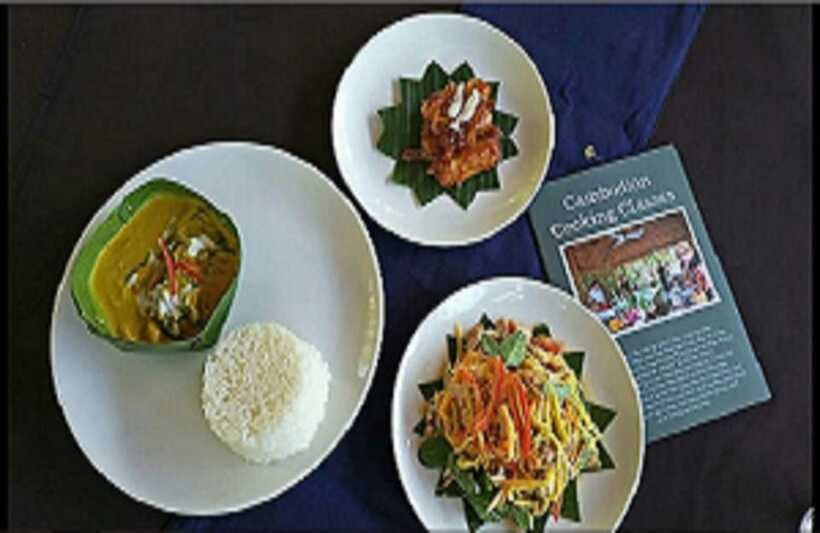
Morning classes include three dishes that introduce several key parts of Khmer cooking.
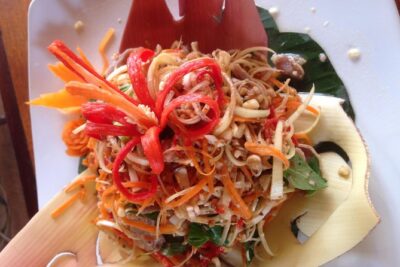
Cambodian mango salad uses fresh, light ingredients and provides a crisp start to the meal. It is a good beginner dish because you can see how sour, sweet, salty, and herbal notes work together without relying on heavy heat.
Fish amok is the signature dish on this menu. Amok is a smooth Cambodian curry, traditionally made with fish, chicken, or tofu, and cooked in a young coconut. It is a useful dish to learn because the curry paste carries the main flavor, while the cooking method produces a gentle, fragrant result.
If you enjoy the amok served in Siem Reap, this class gives you the chance to understand what goes into it. You can ask about the curry base, the spice balance, and substitutions for ingredients you may not find at home. Several people have found this the most memorable dish of the meal.
Dessert is sticky rice balls with palm sugar and grated young coconut. It rounds out the menu with sweetness and texture, and it shows how coconut and palm sugar appear in Cambodian cooking beyond savory dishes.
At the end, the staff serve each dish one by one. That makes it easier to taste the results while they are fresh and compare the balance of the different courses.
Afternoon menu: curry, sugar cane, and a sweet finish
Afternoon classes use a different menu.
Prahet Chien is minced fish formed on sugar cane. The sugar cane gives the dish its distinctive presentation and adds a subtle sweetness as it cooks. It is also a good example of how Cambodian food can combine savory ingredients with natural sweet notes.
Cambodian curry is fragrant rather than fiercely hot. If you avoid spicy food, do not assume that a curry class will be too intense. The cuisine uses spices, but the heat level is generally milder than the food of neighboring Thailand.
The dessert is Nom Tong Noun, described as Khmer brandy snaps. It is a lightly sweet treat and a pleasant way to finish the afternoon session.
Menus are assigned by the time of day, so check the available start time if one dish matters most to you. The class may also be able to adapt dishes for different diets. Dietary restrictions have been accommodated, but you should provide that information when booking rather than waiting until the cooking begins.
Eating what you made beside the pond
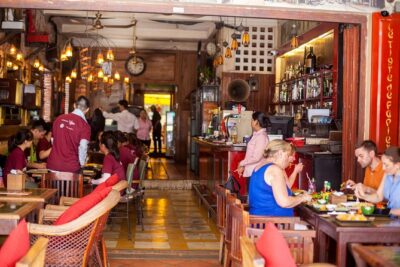
Once the cooking is finished, you sit in the wooden pavilion and eat your own meal. This is more satisfying than receiving a plated lunch prepared by someone else, because you can judge the result and remember the steps that produced it.
The portions can be generous. In one class, leftovers were packed into takeaway containers, so you might have more food than you can finish at the table. The meal includes a complimentary beer, soft drink, or bottled water.
There was one older report of a misunderstanding over a beer charge, despite the stated inclusion of a complimentary drink. The current information says one beer, soft drink, or bottled water is included, but it is still sensible to confirm what you order before accepting an extra beverage.
The pondside meal also gives the class a natural pause. You have spent the morning or afternoon concentrating on ingredients and cooking, and now you can sit back, talk with the chef and guide, and enjoy the food without rushing.
The people who make the class work
The cooking itself matters, but the staff shape the experience. Guides named Sophia, Sophea, Sopheap, and Sophie have been praised for clear English, patience, humor, and close attention to participants. Sophia Lauren in particular has been noted for explaining market ingredients, checking on the group, and keeping the mood warm and easygoing.
Chefs such as Prey and Prayer have been praised for clear instruction and practical help at the cooking stations. The staff are not simply there to recite a recipe. They explain why ingredients are used and suggest replacements when needed.
Group size makes a real difference. With a maximum of six participants, you have a fair chance to ask questions and receive help. Solo participants may even find themselves in a private class if no one else books the same time, although that cannot be guaranteed.
The activity also has a social purpose. It is operated by Beyond. Unique Escapes, an organization connected with helping local people gain skills and improve their economic prospects. That gives the $32 price added value, although you should still judge the experience on its practical benefits, not only its social message.
Who will enjoy this class most
I would recommend this to you if you want to do more than order amok at a restaurant. It suits curious cooks, food-focused visitors, couples, small groups, and anyone who likes meeting local people in a respectful setting.
It is also a good choice early in your Siem Reap stay. Learning about herbs, curry paste, and local produce can make later meals more interesting. You will recognize ingredients and understand why Cambodian dishes taste different from Thai or Vietnamese food.
Beginners are welcome, and you do not need formal cooking experience. The recipes are designed to be repeated at home, and the recipe book includes additional Cambodian dishes beyond the ones prepared during your session.
This is less suitable if you dislike outdoor heat, short walks, tuk tuk rides, or hands-on kitchen work. It is also not a drop-in activity for young children. Children over 12 can join the regular class, while private family classes may be arranged for younger children.
Is $32 a good value?
At $32, this is a solid half-day purchase. You are paying for tuk tuk transport, an English-speaking chef and guide, a village or market experience, a hands-on class, lunch, a drink, and a recipe book.
The strongest value comes from the combination. A restaurant meal alone would cost less, but it would not include the market lesson, family visit, cooking instruction, or chance to prepare the food yourself. A cooking class in a city hotel might offer more polished facilities, but this one gives you a rural setting and a closer link to everyday food.
The small group cap improves the value further. You are not paying to watch a large demonstration from a distance. You get your own station and direct guidance.
Free cancellation up to 24 hours before the activity and reserve-now, pay-later booking make it easier to fit into a changing Siem Reap schedule. Still, book with the menu and weather in mind, since the experience is outdoors and the morning and afternoon dishes differ.
Should you book the Cambodian cooking class?
Yes, if you want an active, friendly introduction to Khmer food with a genuine village setting. The most praised parts are consistent: the kind staff, clear instruction, fresh food, market or village visit, peaceful pondside kitchen, and manageable group size.
I would choose the morning session if fish amok and mango salad are high on your list. Choose the afternoon for minced fish on sugar cane and Cambodian curry. Bring a hat, wear comfortable shoes, mention dietary needs ahead of time, and leave room in your schedule for a generous meal.
Skip it only if you want a fully indoor activity or prefer watching rather than cooking. For everyone else, $32 buys much more than lunch. It gives you a better understanding of what is on your plate and a recipe book that can keep the memory going at home.
FAQ
Where does the Cambodian cooking class take place?
The class takes place in a rural village in Siem Reap Province, outside the city. Cooking is held in an outdoor pavilion beside a pond.
How long does the experience last?
The activity lasts 3.5 hours.
Is tuk tuk transport included?
Yes. Tuk tuk pickup from your hotel to the cooking venue is included. Return transport is provided to the centrally located Beyond office at the end of the class.
What food do you cook in the morning class?
The morning menu includes Cambodian mango salad, fish amok, and sticky rice balls with palm sugar and grated young coconut.
What food do you cook in the afternoon class?
The afternoon menu includes Prahet Chien, which is minced fish on sugar cane, Cambodian curry, and Nom Tong Noun, a Khmer brandy snap dessert.
Is the cooking class suitable for beginners?
Yes. The class is hands-on, but no particular cooking skills are required. Each participant has an individual cooking station and receives guidance from the chef and guide.
Can children join the class?
Children over 12 can join the regular cooking class. Private classes for families can be arranged on request.
What should I bring?
A hat is recommended for the village walk, and comfortable footwear is advised. The cooking area is outdoors, so you should also be prepared for warm conditions.
More Workshops
- Siem Reap: Cambodian Pottery Class
★ 4.9 · 339 reviews - Cambodian Pottery Class in Siem Reap
★ 4.5 · 157 reviews - Workshop Visit and Sombai Liqueur Tasting
★ 5.0 · 90 reviews - 3-Hour Siem Reap Guided Cooking Class and Market with Pick up
★ 4.5 · 26 reviews
Just added around Siem Reap
- Private Battambang Full-Day Guided Tour★ 4.5 · 3 reviews
- Kulen Mountain, Beng Mealea and Banteay Srei Full Day Tour★ 5.0 · 3 reviews
- Kompong Pluk Tour★ 5.0 · 3 reviews
- Private 3 Day Tour to Discover the ancient temples★ 5.0 · 3 reviews
- Kulen National Park Ticket -Waterfall & 1000 Lingas★ 5.0 · 3 reviews
- Cambodia: Absolute Traditional Dance Show with Buffet Dinner★ 5.0 · 3 reviews
- Border Transfer (Siem Reap to Laos/Laos to Siem Reap)★ 3.5 · 3 reviews
- Best Taxi Siem Reap to Battambang – English Speaking Driver★ 4.5 · 3 reviews
Cooking Classes, compared.
Khmer Cooking Class at a Local’s Home in Krong Siem Reap
Read our review →
Award-Winning Cooking Class Experience with Professional Teacher
Read our review →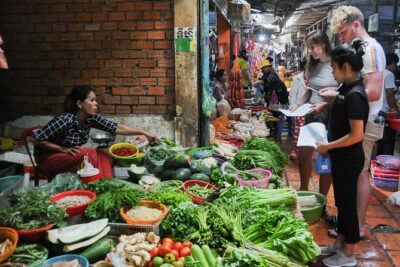
Browse the lists this tour appears in