
Reviewed · COOKING CLASSES
Siem Reap Cooking Class
Taste Cambodia from the cooking fire. This Siem Reap class combines a local market visit with hands-on Khmer cooking, so you learn not only how dishes are made, but also what the ingredients look like before they reach the plate. I like the small maximum of eight people, and I like that you cook one starter, one main course, and one dessert before eating your own work. The main consideration is timing: the class lasts about three hours, and a cancellation within 24 hours brings no refund.
The menu can include fish amok with steamed rice, vegetable or meat spring rolls, and bananas cooked in palm sugar with coconut juice. Chef Dee has earned praise for clear explanations, clean cooking facilities, garden ingredients, and adapting recipes for vegetarians. Pickup is offered from your accommodation, but you should provide the correct hotel name and a working contact number when you book.
In This Review
- Key points to know before booking
- A three-hour taste of everyday Khmer cooking
- Starting at the market near Angkor Night Market
- Choosing a starter, main course, and dessert
- Learning in a garden pavilion with Chef Dee
- What you actually take away from the lesson
- Is $35 a fair price?
- Who will enjoy this Siem Reap class most?
- Practical tips for getting the most from the class
- Should you book the Siem Reap Cooking Class?
- FAQ
- Where does the cooking class take place?
- Does the class offer pickup from my accommodation?
- How long does the experience last?
- How many dishes will I cook?
- What dishes might be available?
- Do I need previous cooking experience?
- How large is the group?
- Is the class suitable for children?
- Can vegetarian recipes be prepared?
- What happens if I need to cancel?
Key points to know before booking
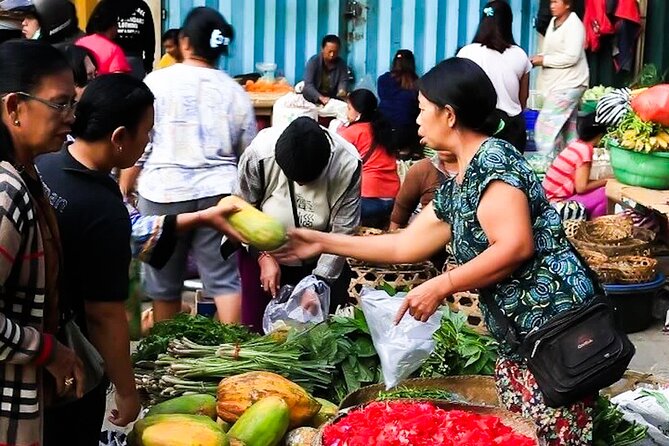
- A market visit comes first: You see Cambodian vegetables, fruit, fish, meat, and other ingredients with a local guide before cooking.
- Three dishes are prepared: You choose one starter, one main course, and one dessert from the Khmer menu.
- Chef Dee leads the class: Her teaching style is friendly and practical, with ingredients explained one by one.
- The class takes place in a garden pavilion: The purpose-built cooking porch gives you room to work and eat afterward.
- Small groups keep the lesson personal: A maximum of eight people suits families, students, couples, and mixed skill levels.
- Hotel pickup is included: The activity ends back at the meeting point, with pickup arrangements made in advance.
A three-hour taste of everyday Khmer cooking
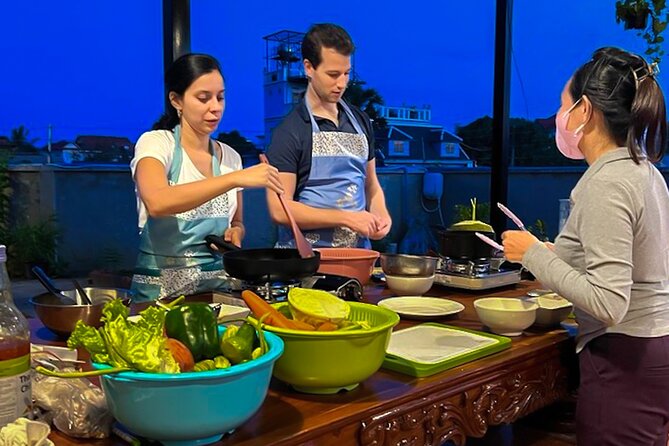
After temple visits and hot afternoons around Angkor, a cooking class gives you a different way to understand Siem Reap. You are not just being served a finished dish. You handle the ingredients, follow the cooking steps, and sit down to eat what you made.
The format is simple. You are collected from your accommodation, visit a local market with a guide, continue to a garden pavilion, and cook three Cambodian dishes with a Khmer chef. The whole experience takes about three hours, which makes it easy to fit around other plans.
I especially like the balance between explanation and doing. A demonstration alone can feel passive. Here, you work through the basic processes yourself, then get an immediate reward at the table. No previous cooking experience is required, so you do not need to know the difference between every Cambodian herb before arriving.
The class is also suitable for children, groups, and students. That does not mean every child will enjoy every step, but the hands-on format gives younger participants something active to do. For adults, it offers a relaxed break from sightseeing without turning the day into a formal culinary course.
More Cooking Classes in Siem Reap
- Khmer Cooking Class at a Local’s Home in Krong Siem Reap
★ 5.0 · 2,731 reviews - Siem Reap: Khmer Cooking Class at a Local’s Home
★ 5.0 · 1,108 reviews - Award-Winning Cooking Class Experience with Professional Teacher
★ 5.0 · 745 reviews
Starting at the market near Angkor Night Market
The listed meeting point is Siem Reap Pub Hostel, behind Angkor Night Market, at Krong Siem Reap 17252. The activity also offers collection from accommodations, so you should enter your hotel or hostel details and a contact number when booking.
That pickup matters in Siem Reap. You avoid spending part of your morning or afternoon finding an unfamiliar address, and the local transport links the market visit with the cooking venue. Still, confirm the pickup arrangement if you are staying outside the central area. The published details identify the hostel as the start point, while the experience description says accommodation pickup is available.
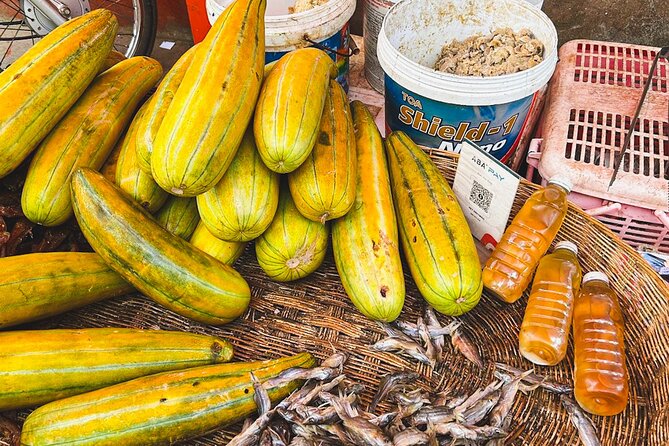
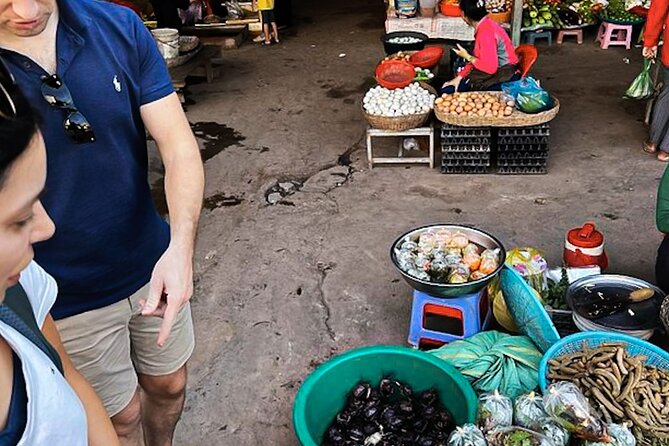
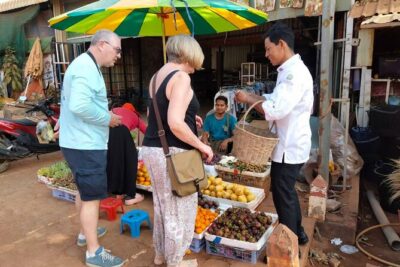
The first useful stop is the local market. This is not just a quick shopping errand. Your guide helps identify the vegetables, fruit, fish, meat, and other ingredients used in Cambodian food. For many people, this is the most eye-opening part because a menu name tells you very little about the raw materials behind it.
A market also gives the class a sense of place. You see ingredients in their everyday setting rather than lined up in a tourist display. The guide explains what is being sold and how those foods fit into Khmer cooking. If you are curious about Cambodian flavors but unsure where to begin, this orientation makes the later cooking steps easier to follow.
The market may be less comfortable than an air-conditioned shop. It can be warm, wet, crowded, or full of strong smells, depending on the day. That is part of the point, but you should expect a working food market, not a polished attraction.
Choosing a starter, main course, and dessert
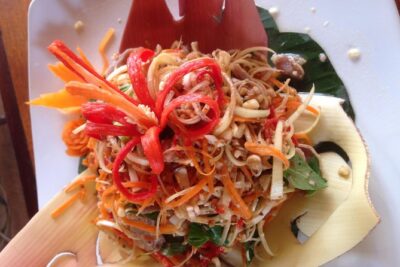
You choose three dishes from the Khmer menu: one starter, one main course, and one dessert. The examples provided are fish amok served with steamed rice, spring rolls made with vegetables or meat, and bananas in palm sugar with coconut juice.
Fish amok is the headline dish for many first-time visitors. It introduces the creamy, aromatic side of Cambodian cooking and shows how a main course can be both delicate and strongly seasoned. The inclusion of steamed rice makes it a complete meal rather than a small tasting portion.
Spring rolls give you a more familiar starting point, especially if you are cooking with children or have little kitchen experience. You can choose a vegetable or meat version, which also helps groups with different eating preferences. The class is not limited to one kind of dish, so you get a mix of preparation methods and flavors.
The banana dessert brings the meal to a sweet finish. Palm sugar and coconut juice give it a distinctly local character without requiring a complicated pastry technique. It is a useful choice for home cooks because the ingredients and method are easier to remember after returning home.
Menu availability can change. The description presents these as examples, so do not assume every dish will be offered at every session. If one choice matters to you, ask about it when booking or before the class begins. If you avoid meat, the class has adapted recipes for vegetarian diners in the past, but it is sensible to state your needs in advance.
Learning in a garden pavilion with Chef Dee
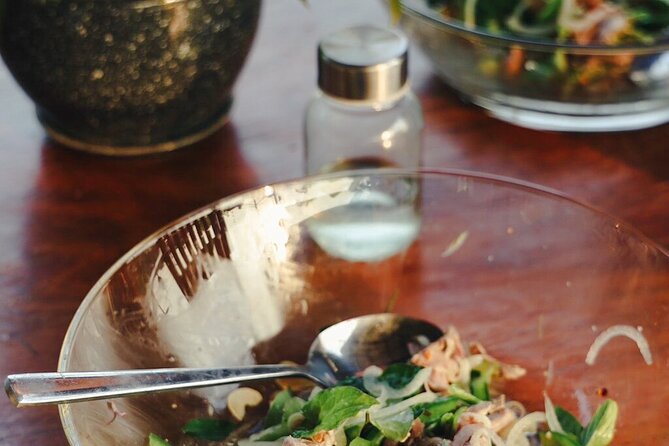
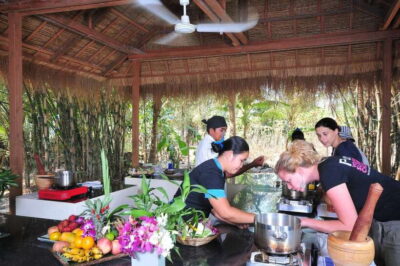
After the market, you head to a purpose-built garden pavilion for the cooking lesson. The setting is more personal than a large teaching kitchen, and the group limit of eight means the chef can give individual help without running between a crowd of stations.
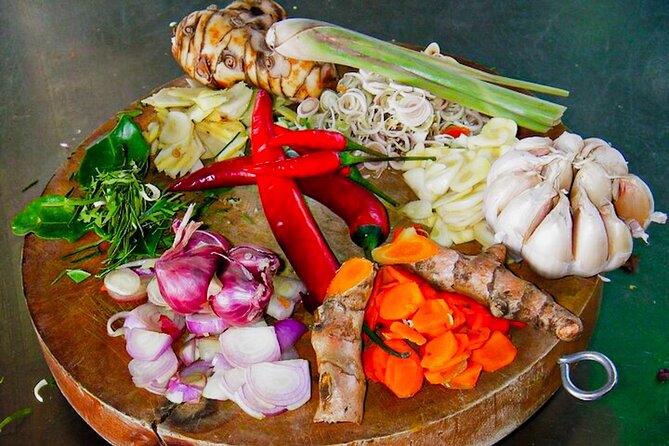
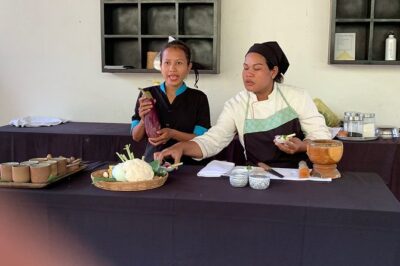
Chef Dee is the key personality in the class. She explains ingredients separately, including some grown in her own garden, and teaches the basic steps behind each recipe. That ingredient-by-ingredient approach is valuable because Khmer cooking often depends on combining several small flavors rather than relying on one heavy sauce.
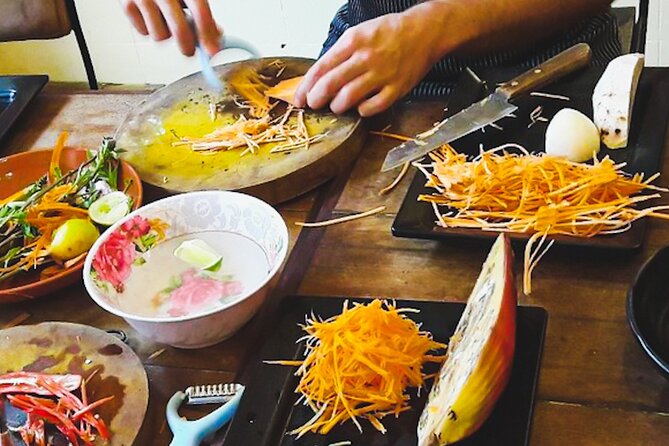
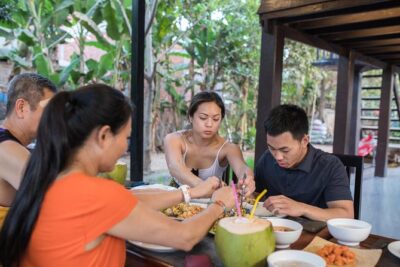
You should expect an interactive lesson, not a quick demonstration followed by a plate already prepared for you. You cook the starter, main course, and dessert under instruction, then sit down to eat. Different skill levels can work together, and the class has received praise for handling groups where some people cook regularly and others are complete beginners.
The cooking area has also been described as clean, with cold water provided during the activity. That is a small detail, but it matters in Siem Reap’s heat. A clean workspace and regular water breaks make the three-hour session much more comfortable.
The garden setting may appeal to you if you want a home-style connection to Khmer food. It is not a restaurant kitchen or a grand culinary school. The benefit is a more direct lesson with a local cook. The tradeoff is that the surroundings are likely practical rather than luxurious.
More Khmer cooking classes:
- Cambodian Village Cooking Class
★ 5.0 · 265 reviews - Cambodian Cooking Class from Siem Reap
★ 4.9 · 190 reviews - Khmer Gourmet Cooking Class
★ 5.0 · 145 reviews - Khmer Cooking Class in Cambodia
★ 5.0 · 36 reviews
What you actually take away from the lesson
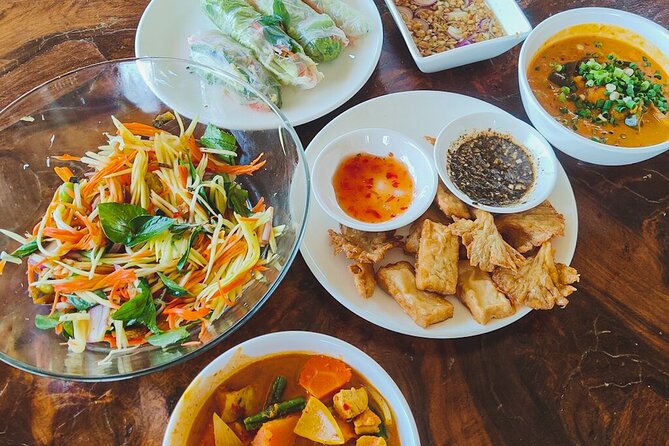
The best cooking classes give you something useful after the meal. This one focuses on basic processes and techniques that you can repeat at home, rather than showing off complicated restaurant tricks.
You learn how individual ingredients are handled, how the dishes are assembled, and how the finished food should come together. Because you prepare three courses, you get a wider sample of Khmer cooking than you would from making only one specialty.
I would not book this expecting a formal certificate or advanced chef training. The experience is aimed at everyday cooks, curious eaters, families, and people who want a practical cultural activity. The teaching is accessible, and the small group helps, but three hours is still an introduction.
The meal at the end is part of the value. You are not simply watching food being prepared for someone else. You eat the dishes you worked on, which makes it easier to remember the recipes and the flavors. It also gives the session a social finish, particularly for couples and small groups.
Is $35 a fair price?
At $35 per person, the class offers more than a restaurant meal. The price covers roughly three hours, accommodation pickup, the market visit, a guided lesson, three dishes, and the chance to eat what you prepare.
The value is strongest if you were already planning to eat lunch or dinner in Siem Reap. For a modest premium over a single meal, you get context about the ingredients and skills you can use again. The small group also makes the price more attractive than a large, impersonal demonstration.
The value is weaker if you dislike cooking or want a purely sightseeing-based activity. You will spend much of the session chopping, preparing, and following instructions. The market may also feel routine if you already have extensive experience with Cambodian food.
The class is often booked well ahead, with an average booking time of about 33 days. That suggests you should reserve early if your schedule is tight, especially during a busy visit. The maximum group size of eight is another reason the available spaces may be limited.
Who will enjoy this Siem Reap class most?
This is a strong choice for you if food is one of the ways you connect with a place. The market adds local context, and the cooking gives you a skill to carry home. It works particularly well after several days of temple sightseeing, when you want an activity that uses your hands instead of your camera.
It also suits mixed groups. Experienced cooks can ask questions and adjust their methods, while beginners can follow the chef’s instructions without feeling out of place. Children and students may enjoy the active format, provided they are comfortable spending several hours in a cooking setting.
Vegetarians should contact the provider before the class. Recipes have been adapted for vegetarian diners, but the published information does not promise a fixed vegetarian menu for every session.
I would be more cautious if you have strict allergies. No allergy procedure is provided in the details, so you should explain your needs clearly before booking and confirm that the class can accommodate them.
The experience requires good weather and a minimum number of participants. If poor weather or low enrollment causes cancellation, you are offered another date or a full refund. You can cancel for a full refund up to 24 hours before the start time. Within 24 hours, the payment is not refunded.
Practical tips for getting the most from the class
Give the provider your exact accommodation details and a phone number that works in Cambodia. Pickup is offered, but vague information can create avoidable delays.
Wear comfortable clothes suitable for cooking and market walking. The official information does not specify a dress code, but practical clothing is a better choice than anything delicate or difficult to move in.
Tell the chef about dietary needs as early as possible. Vegetarian adjustments have been made before, and early notice gives the kitchen a better chance to prepare.
Keep your schedule flexible around the three-hour duration. Pickup and the market visit are part of the experience, so do not place a temple entry time immediately afterward.
Finally, pay attention during the market portion. The cooking lesson will make more sense when you recognize the ingredients from the earlier visit. Ask about anything unfamiliar, especially items that you would like to find in an Asian grocery store at home.
Should you book the Siem Reap Cooking Class?
I would book this class if you want a friendly, small-group introduction to Cambodian food rather than another passive tour. The combination of market shopping, Chef Dee’s instruction, three dishes, and a meal you prepare yourself gives the experience real substance for $35.
I would skip it only if you dislike cooking, have a very tight schedule, or need guaranteed handling of complex dietary restrictions. For everyone else, it is a practical way to spend half a day in Siem Reap, with recipes, market knowledge, and a better understanding of Khmer flavors to take home.
FAQ
Where does the cooking class take place?
The meeting point is Siem Reap Pub Hostel behind Angkor Night Market in Krong Siem Reap. The cooking portion takes place in a purpose-built garden pavilion.
Does the class offer pickup from my accommodation?
Yes. Accommodation pickup is offered. You should provide your lodging details and a contact number when booking.
How long does the experience last?
The cooking class lasts approximately three hours.
How many dishes will I cook?
You will prepare three dishes: one starter, one main course, and one dessert.
What dishes might be available?
Examples include fish amok with steamed rice, vegetable or meat spring rolls, and bananas in palm sugar with coconut juice.
Do I need previous cooking experience?
No. The experience is designed for people with no cooking experience as well as those who already enjoy cooking.
How large is the group?
The activity has a maximum of eight participants.
Is the class suitable for children?
Yes. It is described as child-friendly and suitable for groups and students.
Can vegetarian recipes be prepared?
Vegetarian adaptations have been made for participants before. You should request this in advance because a fixed vegetarian menu is not specified.
What happens if I need to cancel?
You receive a full refund if you cancel at least 24 hours before the start time. Cancellations or changes made within 24 hours are not refunded or accepted. If poor weather or insufficient enrollment causes the class to be canceled, you are offered another date or a full refund.
More Workshops
- Siem Reap: Cambodian Pottery Class
★ 4.9 · 339 reviews - Cambodian Pottery Class in Siem Reap
★ 4.5 · 157 reviews - Workshop Visit and Sombai Liqueur Tasting
★ 5.0 · 90 reviews - 3-Hour Siem Reap Guided Cooking Class and Market with Pick up
★ 4.5 · 26 reviews
Just added around Siem Reap
- Private Battambang Full-Day Guided Tour★ 4.5 · 3 reviews
- Kulen Mountain, Beng Mealea and Banteay Srei Full Day Tour★ 5.0 · 3 reviews
- Kompong Pluk Tour★ 5.0 · 3 reviews
- Private 3 Day Tour to Discover the ancient temples★ 5.0 · 3 reviews
- Kulen National Park Ticket -Waterfall & 1000 Lingas★ 5.0 · 3 reviews
- Cambodia: Absolute Traditional Dance Show with Buffet Dinner★ 5.0 · 3 reviews
- Border Transfer (Siem Reap to Laos/Laos to Siem Reap)★ 3.5 · 3 reviews
- Beng Melea, Rolous Group & Kompong Phluk Floating Village★ 5.0 · 3 reviews
Cooking Classes, compared.
Khmer Cooking Class at a Local’s Home in Krong Siem Reap
Read our review →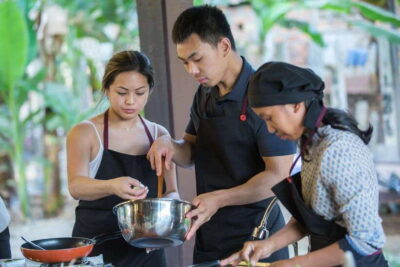
Award-Winning Cooking Class Experience with Professional Teacher
Read our review →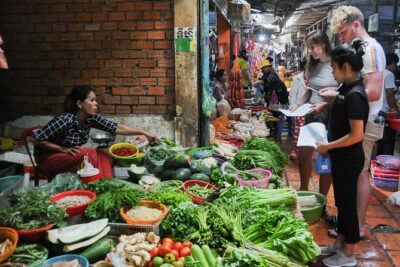
Browse the lists this tour appears in