
Reviewed · HISTORICAL TOURS
Exploring Battambang History (Walking Tour)
History hides in plain sight here. This three to four hour tour offers a guided look at French colonial Battambang, wartime sites, religious buildings, markets, and the city’s role as a major trading center. I like the focus on local stories rather than a quick parade of photo stops, and I like that hotel pickup and drop-off are included for Battambang hotels.
The guide adds real value, especially if you choose someone such as Sothea, Sothai, or Reaksa, all praised for friendly service and strong English. The main point to clarify before booking is the format: the experience is titled as a walking tour, but its description also presents it as a cycling tour into the countryside, with references to a temple, crocodile farm, rice fields, and village visits.
In This Review
- Key points to know before booking
- Why Battambang rewards a slower look
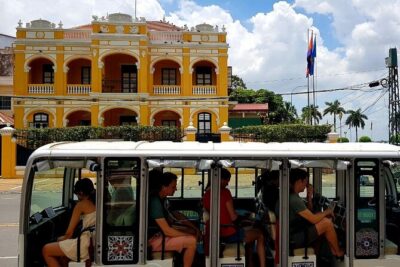
- The Central Market and the French-era city
- White Elephant, Naga Peace, and changing power
- The Governor House and Battambang’s painful years
- The Chinese temple and four faith traditions
- The former Indochina Bank and the trade story
- Walking tour or cycling tour?
- The guides are the main value
- What the $25 price includes
- Who should book this experience?
- Useful preparation for the 7:30 am start
- Should you book the Battambang history tour?
- FAQ
- How long does the Battambang history tour last?
- What time does the tour start?
- Is hotel pickup available?
- What is included in the price?
- What is not included?
- Is this definitely a walking tour?
- How many people can join?
- Can I cancel for a full refund?
Key points to know before booking
- French colonial buildings lead the story: See the Central Market, old houses, the Governor House, and the former Indochina Bank.
- Battambang’s difficult past is part of the tour: The route addresses the Khmer Rouge period, civil war, Thailand’s control, and the city’s wartime scars.
- Several faiths appear in one city walk: Hinduism, Buddhism, Christianity, and Islam are all part of the cultural picture.
- Guide quality is central: Sothea, Sothai, and Reaksa are praised for clear English, warmth, and strong knowledge of local history.
- The format needs confirming: Some details describe walking, while others describe cycling through the countryside.
- The price is reasonable for a private-feeling history lesson: At $25 per person, the guide and included water and fees make this good value for history-minded visitors.
Why Battambang rewards a slower look
Battambang is often treated as a stop between better-known Cambodian destinations. That is a mistake. The city has an identity shaped by trade, colonial planning, religion, war, farming, and its position near the Thai border.
This tour gives you a way to connect those pieces. Instead of seeing an old building and moving on, you get an explanation of why it was built, who used it, and what it tells you about Battambang.
I especially like this approach for your first morning in town. A short guided outing can help you understand the city before you explore it on your own. You will recognize the French-era buildings later, and you may see local religious life with more context.
The experience is listed at about three to four hours, with a 7:30 am start. That early time matters in Cambodia, where a morning outing is usually easier than an afternoon spent under strong sun.
More historical sites:
- 2 Days Guided Historical Tour in Angkor
★ 5.0 · 855 reviews - Siem Reap: Banteay Srei and Grand Circuit Heritage Tour
★ 4.9 · 163 reviews - Banteay Srei and Grand Circuit Heritage Tour from Siem Reap
★ 5.0 · 142 reviews
The Central Market and the French-era city
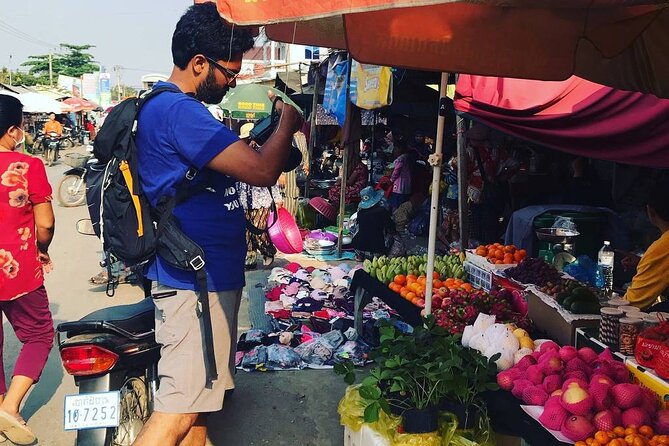
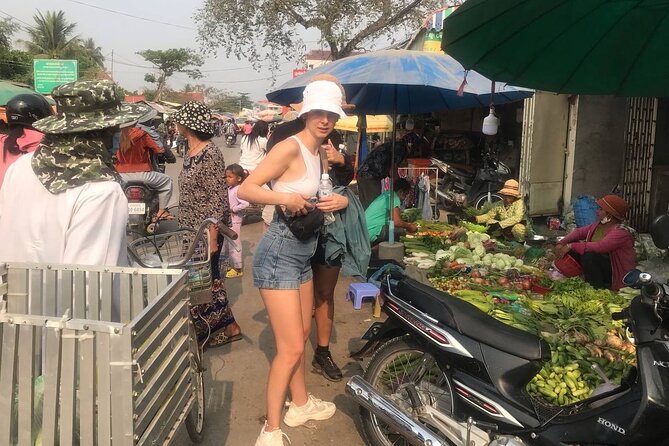
The Central Market is one of the first useful stops because it links everyday life with Battambang’s past. Its French-style design points to the period when colonial planning shaped the city center and its commercial life.
A guide can help you read the market as more than a place to buy food or household goods. Battambang became a major trading center, and the market reflects that long connection between farmers, merchants, and urban residents.
The tour also points out around 300 houses built during the French colonial period. That is an unusually specific part of the route, and it gives you a sense of the scale of the old city rather than showing you just one photogenic building.
You should bring a camera, but keep it in perspective. This is not a restored European-style old town where every facade looks polished. The appeal comes from seeing older structures within a living Cambodian city, with modern activity continuing around them.
The walking pace is described as easy and not especially tiring. Still, Battambang streets can be sunny, so flexible clothing, sunglasses, and sun lotion are sensible.
White Elephant, Naga Peace, and changing power
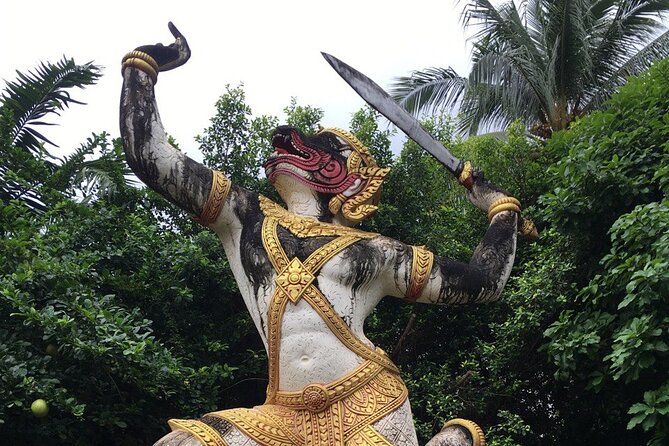
The White Elephant is tied to the period when Thailand controlled Battambang. This stop helps explain that the province’s history does not fit neatly inside the modern borders of Cambodia.
That regional connection is useful because Battambang has long looked toward both Cambodian and Thai worlds. Trade, political control, religion, and culture have crossed this area for generations.
Naga Peace offers a very different message. Its theme is the end of war in Cambodia, giving the tour a chance to connect older symbols with a modern wish for peace.
These stops may not take long, but they help prevent the tour from becoming a simple architecture walk. You are asked to think about who controlled the area, how conflict affected daily life, and how public symbols try to express hope after violence.
The guide’s interpretation matters here. A sign or monument can be easy to miss without context, while a good explanation can turn a brief stop into one of the more memorable parts of the morning.
The Governor House and Battambang’s painful years
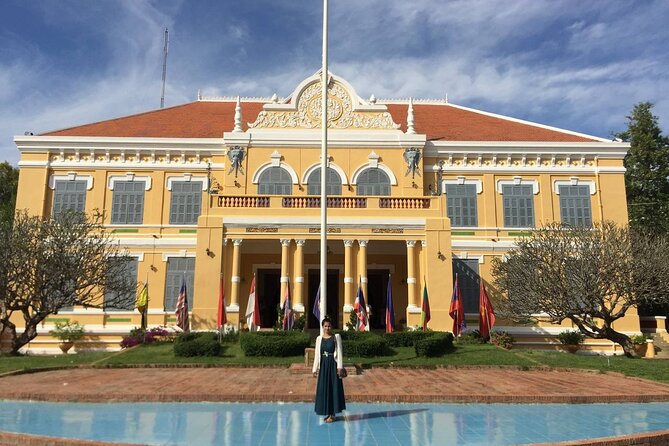
The Governor House is linked with a very difficult period in Battambang’s history. The tour does not avoid the city’s darker chapters, including the Khmer Rouge era and the civil war.
That honesty is important. Cambodia’s past cannot be understood through temples and colonial facades alone. Families, institutions, and communities were affected by decades of violence, and Battambang experienced those changes directly.
You should expect this section to be serious rather than entertaining. The value lies in hearing local historical context from an English-speaking guide who can explain how national events affected this particular city.
The information provided does not promise a museum-style exhibit or a large collection of artifacts at the Governor House. The strength is the explanation at the site itself. If you want detailed dates, archival material, or a long academic lecture, you may find the stop limited. If you want a clear introduction to Battambang’s past, it should do the job.
More walking tours:
- Customs and Culture Half Day Walk and Bike Tour in Battambang
★ 5.0 · 23 reviews - Siem Reap: City Walking Tour
★ 4.6 · 583 reviews - Siem Reap City Walking Tour
★ 4.5 · 114 reviews - Siem Reap Walking Tour: Landmarks & Hidden Gems
★ 5.0 · 15 reviews
The Chinese temple and four faith traditions
The Chinese temple shows how Chinese religious and commercial influence became part of Battambang life. It is a useful counterpoint to the French buildings because it shifts attention from colonial administration to migration, trade, family networks, and religious practice.
The wider tour also introduces Hinduism, Buddhism, Christianity, and Islam. That range makes the experience more than a tour of one religious tradition.
You will not receive a full study of each faith in three or four hours. What you get is a broad picture of how different beliefs have shaped the city. I find that especially useful if you are visiting several parts of Cambodia and want to avoid reducing the country to Angkor temples and Buddhist monuments.
The Chinese temple also reinforces a central theme of the tour: Battambang grew through contact with other places. Its history includes local Cambodian traditions, Thai control, Chinese influence, French colonial rule, and the upheaval of war.
The former Indochina Bank and the trade story
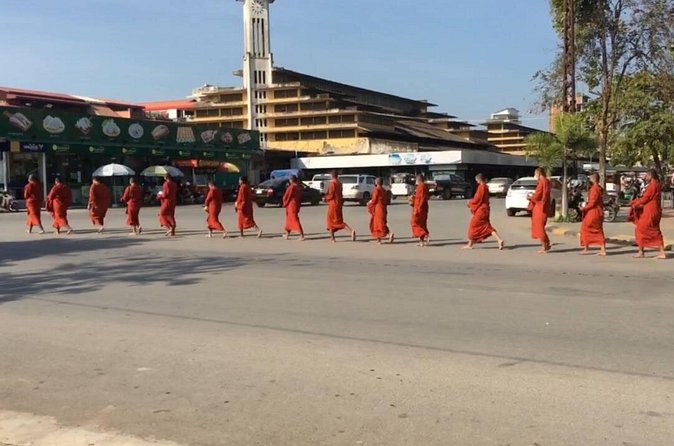
The Indochina Bank stop explains how money moved through Battambang. That may sound less exciting than a temple, but it is one of the more practical pieces of the route.
Banks tell you about commerce, government, colonial power, and the growth of a city. The building helps place Battambang within the wider Indochina trading system and gives you another way to understand why the city became important.
This is where a local guide can make a real difference. Without explanation, an old bank may look like another weathered building. With context, it becomes evidence of how rice, goods, money, and administration passed through the region.
The tour’s description calls Battambang a famous city and trading center. That reputation is not presented as an abstract claim. The market, old houses, bank, and religious buildings give you several physical reminders of that commercial past.
Walking tour or cycling tour?
This is the one practical issue I would settle before paying. The title identifies a walking tour, and several accounts describe walking to historic places in town. At the same time, the experience details describe a cycling tour that escapes the city and visits the countryside.
The cycling description includes a temple, a crocodile farm, village areas, rice fields, farms, cows, and meetings with local residents. Other accounts describe a half-day bike ride through countryside and villages, with photo stops and no need to worry about parking or traffic.
That sounds like a related but broader route than the city history walk. It may be that the operator offers different versions, or that the experience has been described inconsistently. Ask whether your $25 booking is for walking, cycling, or a combination before you go.
This matters for clothing, physical effort, and expectations. A city walk calls for comfortable shoes and sun protection. A countryside bike ride also calls for clothes suitable for cycling and a willingness to spend time outdoors on quieter roads or rural paths.
The group limit is 15 people. That is small enough for a guide to answer questions, although the feel will depend on how many people actually join your departure.
The guides are the main value
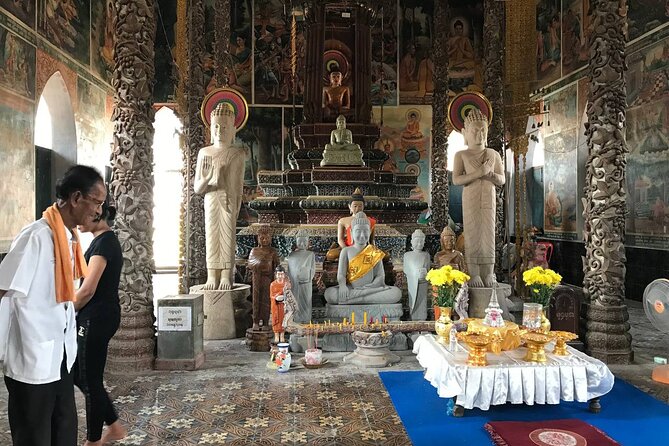
The strongest part of this experience is the guide. The accounts available describe Sothea as friendly, experienced, and strong on Cambodian culture, history, and tradition. Sothai is praised for good English, a pleasant manner, and a clear understanding of Battambang’s past.
Reaksa is described as gentle, English-speaking, and able to connect a countryside ride with village life. The Adventure Bike team also appears to have several guides, so you may not receive one particular person unless you request or confirm a name.
This is worth asking about because the route is not built around major admission-ticket attractions. Much of what you see is public architecture, streets, monuments, and cultural sites. The guide’s storytelling supplies much of the tour’s value.
I would encourage you to ask questions as you go. The route covers colonial rule, Thailand’s control, war, religion, trade, and daily life. You will gain more from it if you ask how these subjects relate to modern Battambang rather than simply listening for dates.
The English ability described is good enough for history and cultural explanation. As always with spoken tours, accents and specialist terms can vary, so do not hesitate to ask the guide to repeat a point.
What the $25 price includes
At $25 per person, this is a fair price for a half-day guided experience. The fee includes a local English-speaking guide, bottled drinking water, and all fees and taxes.
Hotel pickup and drop-off from Battambang hotels are also offered, which adds practical value. You do not need to arrange a tuk-tuk just to reach the meeting point, assuming your accommodation is within the stated hotel pickup area.
There are no listed admission charges, and the itinerary identifies the main historical stops as free to enter. That keeps the price easy to understand. Your main purchase is the guide’s time and local interpretation.
Personal expenses and insurance are not included. Bring money if you want to buy something during the outing, but the available information does not promise meals, snacks, equipment rental, or entrance tickets to paid attractions.
For a solo visitor, the price is particularly reasonable if the guide gives you the kind of personal attention described by people who took the tour alone. For a couple or small group, it is a straightforward way to arrange several hours of sightseeing without managing transport yourself.
Who should book this experience?
I would choose this tour if you want a first look at Battambang’s story and prefer a local explanation to independent wandering. It suits solo visitors, couples, and small groups who enjoy architecture, culture, religion, and difficult history.
It also works well for anyone who has already seen Cambodia’s famous temple sites and wants a more ordinary city experience. The old houses, market, bank, temple, and village scenes show how people lived, traded, worshipped, and rebuilt.
The easy pace makes it suitable for most participants, and the information says most people can take part. Service animals are allowed, and the route is near public transportation, though pickup is offered from Battambang hotels.
I would think twice if you want a tightly defined cycling adventure with a guaranteed countryside route, or if you prefer a long stop at each historic building. The available details do not give exact cycling distance, bicycle specifications, or a minute-by-minute schedule.
Useful preparation for the 7:30 am start
Wear comfortable shoes if you are walking, or flexible sports clothing if your departure is by bicycle. Sun lotion and sunglasses are specifically recommended, and a camera is worth bringing for the old buildings, monuments, market scenes, and countryside stops.
Bring water even though bottled drinking water is included. A small bag is useful for personal items, but avoid carrying more than you need for a half-day outing.
Because the experience starts at 7:30 am, confirm your pickup time and location when you book. Confirmation is provided at booking, and the tour allows free cancellation up to 24 hours before the local start time. Within 24 hours, the payment is not refunded, and late changes are not accepted.
Should you book the Battambang history tour?
Yes, if you want a friendly, affordable introduction to Battambang with real attention to local history. The guide-led explanation of French colonial buildings, Chinese influence, religious traditions, trade, the Khmer Rouge period, and civil war gives the city more meaning than a quick self-guided stroll.
I would book it early in your Battambang stay, then use what you learn to explore on your own. Just confirm the walking-versus-cycling format and, if a particular guide matters to you, ask whether Sothea, Sothai, or Reaksa is available.
FAQ
How long does the Battambang history tour last?
The experience lasts approximately three to four hours. The itinerary also lists four hours for the main stop in Battambang Province.
What time does the tour start?
The stated start time is 7:30 am.
Is hotel pickup available?
Yes. Pickup and drop-off are offered from Battambang hotels.
What is included in the price?
The $25 price includes a local English-speaking guide, bottled drinking water, and all fees and taxes.
What is not included?
Personal expenses and insurance are not included.
Is this definitely a walking tour?
The experience is titled as a walking tour, but its description also presents it as a cycling tour. The cycling details include countryside, a temple, a crocodile farm, rice fields, farms, and village visits. Confirm the exact format before booking.
How many people can join?
The maximum group size is 15 people.
Can I cancel for a full refund?
Yes, if you cancel at least 24 hours before the experience start time. Cancellations made within 24 hours are not refunded, and changes made during that period are not accepted.
Just added around Battambang
- Bamboo Train, Banann Temple, Fruit Bat, Bat Cave, Sunset★ 4.2 · 3 reviews
- Morning Tour Bamboo Train, Ancient House, Local, Countryside★ 5.0 · 3 reviews
- Private Boat from Battambang to Siem Reap via Tonle Sap Lake★ 4.5 · 3 reviews
- Battambang Private afternoon tour bamboo train bat cave & village★ 5.0 · 3 reviews
- Battambang Private Full-Day Tour★ 5.0 · 3 reviews
- From Siem Reap: Battambang Day Trip Bamboo Train & Bat Cave★ 5.0 · 4 reviews
- Private Taxi Transfer From Battambang – Siem Reap City★ 5.0 · 4 reviews
- Battambang City and Country side Full day Tour★ 5.0 · 4 reviews
Historical Tours, compared.
Banteay Srei and Grand Circuit Heritage Tour from Siem Reap
Read our review →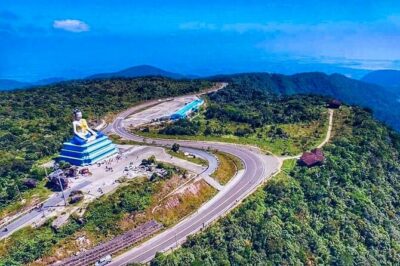
Bokor Mountain Adventure – History, Sights and Waterfalls
Read our review →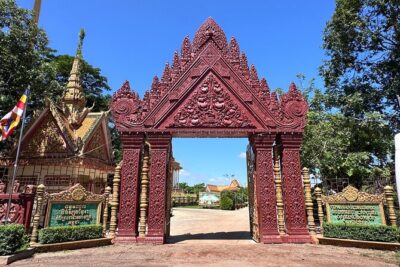
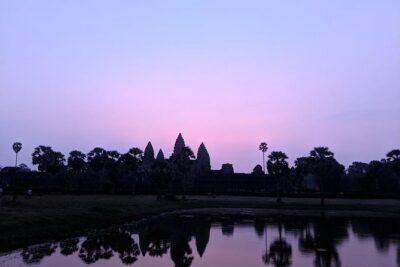
Angkor World Heritage with Sunrise – Small Group
Read our review →
Browse the lists this tour appears in