
Reviewed · BANTEAY SREI TOURS
From Siem Reap: Banteay Srei and Kulen Waterfall Guided Tour
Waterfalls, temples, and mountain air make a fine day out. This 8-hour guided tour combines Phnom Kulen’s sacred sites with Banteay Srei’s pink sandstone carvings, and I especially like the mix of nature and Khmer culture. The 1000 Linga River gives the day real historical weight, while palm cake and seasonal fruit keep it connected to present-day Cambodia.
I also like the careful pacing. You get three hours at Phnom Kulen, a full hour at Banteay Srei, and a short village stop in Preah Dak. The main drawback is cost: the advertised $49 price excludes the $20 Kulen entrance fee, the Angkor Pass for Banteay Srei, lunch, and tips, so your final spend will be higher.
In This Review
- Key points to know before booking
- Why Phnom Kulen makes this more than a temple trip
- Peng Chruonh and the first mountain views
- Preah Ang Thom and the reclining Buddha
- The 1000 Linga River, carved into the bedrock
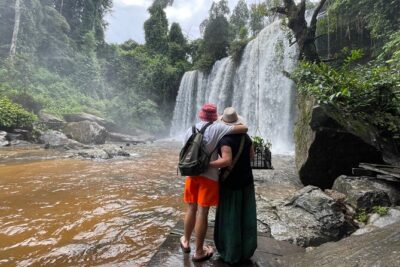
- Phnom Kulen’s two waterfalls
- Lunch and the real cost of the day
- Banteay Srei and Cambodia’s finest small-scale carving
- Preah Dak, palm cake, and village life
- The guide can make or break the mountain day
- How demanding is the eight-hour schedule?
- Who should book this tour?
- Should you book it?
- FAQ
- How long is the tour?
- What is the tour price?
- Is hotel pickup available?
- What language does the guide speak?
- Is transportation provided?
- Is lunch included?
- What will I see at Phnom Kulen?
- Do I need an Angkor Pass for Banteay Srei?
- Can I cancel the booking?
Key points to know before booking
- The mountain route takes effort: Peng Chruonh, Preah Ang Thom, the river carvings, and the waterfalls require walking and some uneven terrain.
- The 1000 Linga River is the cultural centerpiece: Ancient lingas, yoni carvings, and Vishnu figures line about 500 meters of riverbed.
- Banteay Srei is small but finely carved: Its pink stone and delicate sculpture make it different from Angkor’s larger temple complexes.
- Your guide can shape the day: Sam, one guide named in the tour feedback, was praised for clear explanations, good English, and adjusting the plan for a small group.
- The waterfall changes with the weather: Phnom Kulen has two main falls, and their size depends on rainfall and season.
- The village visit adds local flavor: Preah Dak offers palm cake, seasonal fruit, basket making, and a chance to see a model of cleaner village development.
Why Phnom Kulen makes this more than a temple trip
Many Siem Reap excursions stay among the famous Angkor temples. This one heads north to Phnom Kulen National Park, where religious sites, forest roads, mountain viewpoints, carved riverbeds, and waterfalls share one long day.
That change of setting matters. You are not simply moving from one stone monument to another. You get open views at Peng Chruonh, a sacred reclining Buddha, ancient carvings under running water, and a place to cool off at the falls. The day has more variety than a standard temple circuit.
The schedule gives Phnom Kulen about three hours. That sounds generous, but the mountain has several stops and some walking between them. Your guide and driver will need to manage the order carefully, especially in hot weather. One highly rated outing used a revised plan for a combined group and explained the changes at the start, which is exactly how such adjustments should be handled.
The tour is offered privately or in a small group. That is useful here because the day involves several short visits rather than one long walk. A small group also gives you a better chance to ask questions about the carvings, religious customs, and Cambodian history.
More Banteay Srei trips:
- Full-Day Banteay Srei & 4 Temples – Grand Tours Join-in Tour
★ 5.0 · 1,155 reviews - Siem Reap Tour: Angkor Wat Sunrise, Bayon, Ta Prohm, Banteay Srei
★ 5.0 · 931 reviews - 2-Day Angkor Wat With Small, Big Circuit and Banteay Srei Tour
★ 5.0 · 545 reviews
Peng Chruonh and the first mountain views
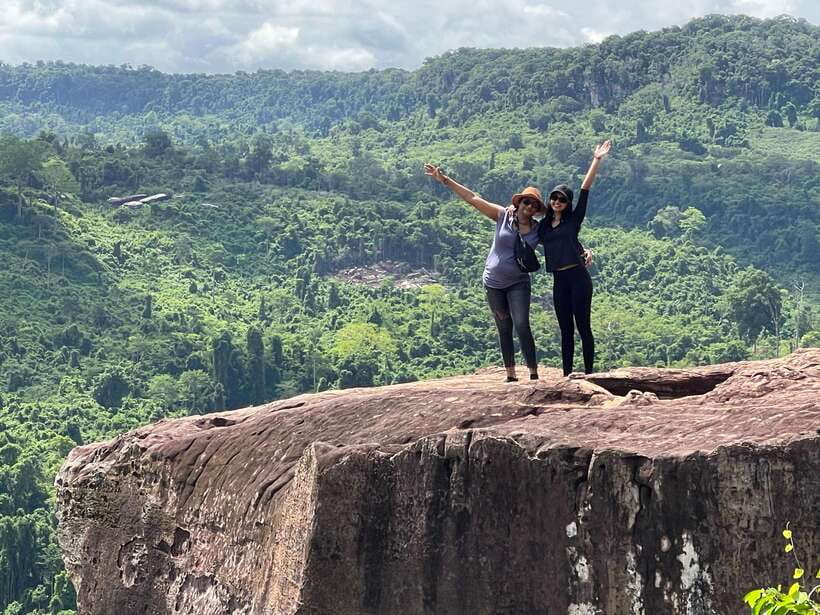
Peng Chruonh, also called Peng Takhu or Peng Chrunh, is a viewpoint on the ridge of Kulen Mountain. It is described as a less obvious stop, reached from a signpost near the foot of the mountain and then a short distance farther on.
The attraction is the view and the sense of reaching a high point before the religious sites. You can pause, take in the panorama, and get a feel for the mountain’s scale before continuing. The stop also breaks up the drive and gives you a chance to stretch.
Do not expect a large visitor center or a polished attraction. The appeal is simple: a ridge, a viewpoint, and a quieter introduction to Phnom Kulen. If your knees or hips are troublesome, ask your guide about the walking surface and distance before setting out. The day is manageable for someone in reasonable health, but one direct assessment noted that people with joint problems or limited mobility could struggle.
Preah Ang Thom and the reclining Buddha
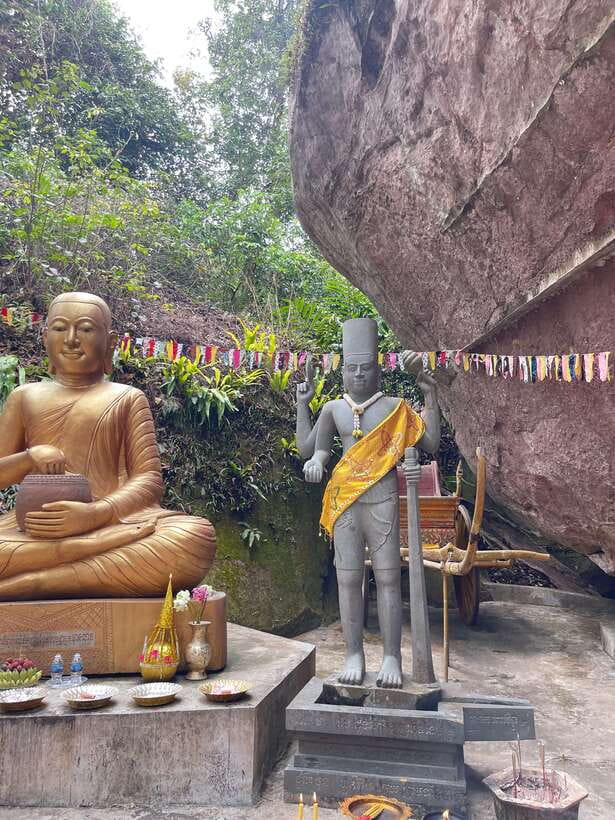
Preah Ang Thom Pagoda contains an eight-meter reclining Buddha carved into a huge natural sandstone boulder. The statue represents the Buddha reaching nirvana, and a modern staircase and shelter now protect and frame the site.
This is an important place for Cambodian worshippers, not merely an old object for visitors to photograph. You may find patrons praying or visiting, and at busy times the area can feel crowded. Keep your voice low and follow the conduct of the site.
The contrast here is striking. The Buddha is ancient in concept and carved into natural stone, but the surrounding access and shelter are modern. That combination helps you understand how sacred places remain active rather than becoming frozen museum pieces.
Your guide can add useful context about the statue and Cambodian Buddhism, but the visit itself is not long. Treat it as a meaningful stop, not a place where you need an hour of free time. Wear footwear that handles stairs and uneven ground.
The 1000 Linga River, carved into the bedrock
The River of 1000 Lingas, also called Anlong Pong Phkay, is the most unusual historical stop on the mountain. Along roughly 500 meters of riverbed, you can see carvings of lingas, several yoni, and a large image of Vishnu. Smaller carvings appear along the riverbed walls.
A linga is a symbol associated with Shiva, while a yoni represents the corresponding female principle. Together, these carvings connect the river to Hindu religious beliefs and the sacred world of the Khmer period. The placement in the riverbed is part of the site’s power. Water passes over or near the stone work, so this is not just sculpture displayed on a dry platform.
The river carvings also reward a slow pace. Look down as you walk, listen to your guide, and do not assume the largest carving is the only thing worth seeing. Some of the details are small and easy to miss.
Conditions will vary with water levels and the season. You may find wet, slippery, or uneven sections, so sensible shoes are more useful than stylish ones. This stop is particularly valuable if you want to connect Cambodia’s religious art with the natural setting around it.
More Phnom Kulen day trips:
- Kulen Waterfall Join-in Tour (local Picnic lunch)
★ 5.0 · 2,434 reviews - Kulen Mountain: Small-Group Tour and Picnic lunch
★ 4.9 · 1,802 reviews - Siem Reap: Kulen Mountain, Beng Mealea and Tonle Sap Tour
★ 5.0 · 1,483 reviews - Phnom Kulen Waterfall & the Sacred 1000 Lingas (with Lunch)
★ 4.8 · 974 reviews
Phnom Kulen’s two waterfalls
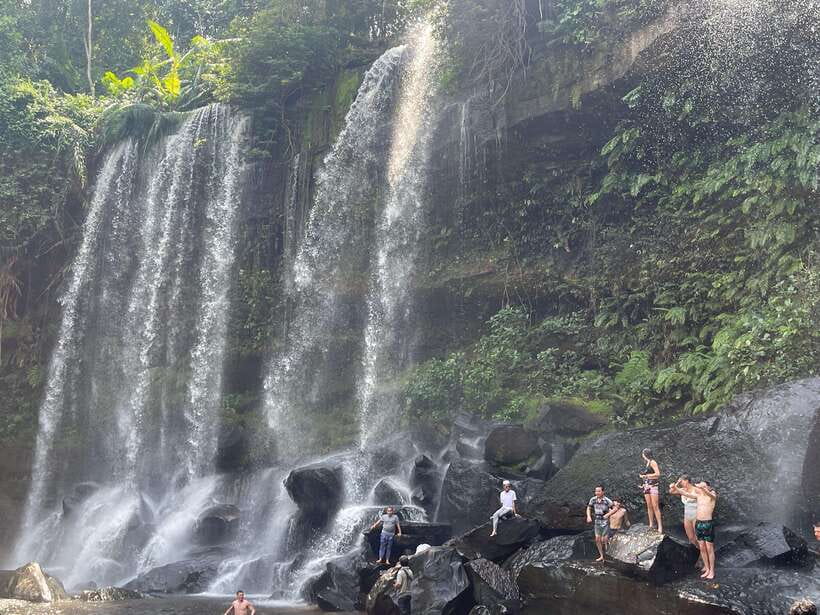
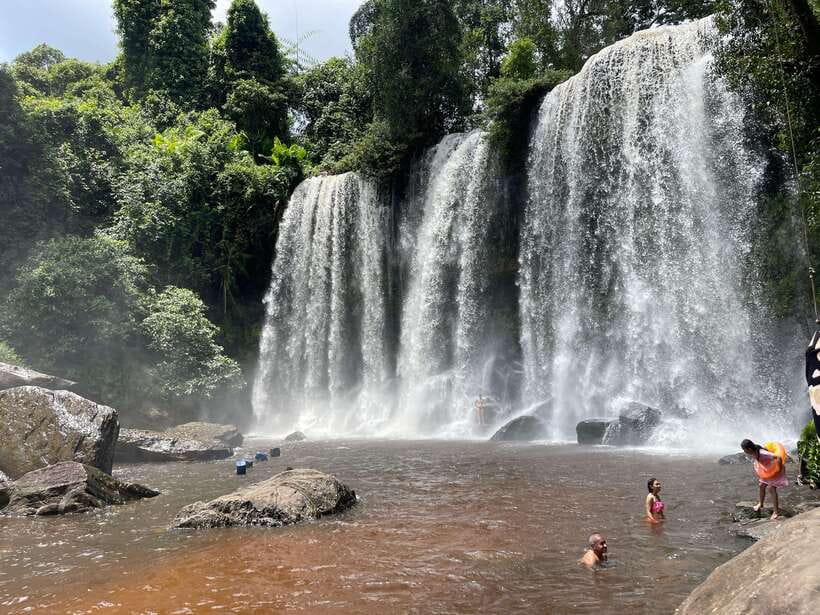
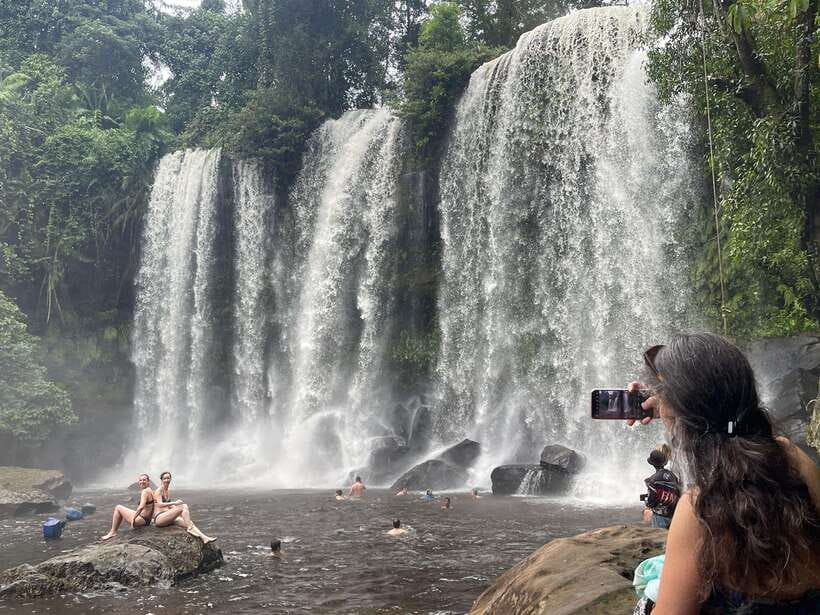
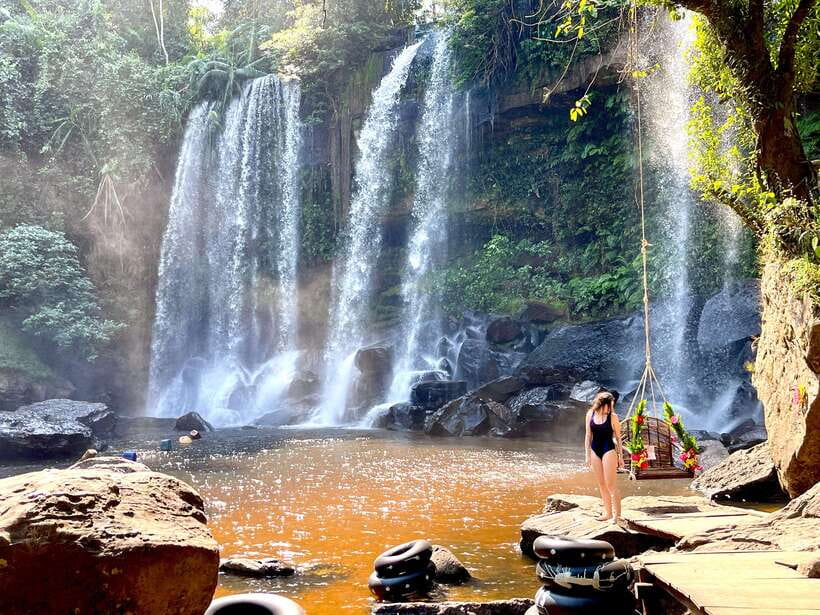
The national park has two main waterfalls. The first is about four to five meters high and around 25 meters wide during the rainy season. The second is taller, about 15 to 20 meters high, and around 15 meters wide during the rainy season.
Those measurements are seasonal, not fixed. Rainfall affects both the volume and appearance of the water, so the falls may look quite different at another time of year. That is worth keeping in mind if you arrive expecting the strongest flow shown in promotional photographs.
The falls are a welcome change after the cultural stops. You can enjoy the sound of the water and take a break from the sun. The tour includes a towel, which is a small but useful touch around a waterfall, though the supplied information does not promise swimming time or equipment.
Do not rush this part. The waterfall is one of the day’s most memorable sights, but you still need time for lunch and Banteay Srei. Your guide may adjust the length of the stop according to heat, crowds, water conditions, and the group’s energy.
Lunch and the real cost of the day
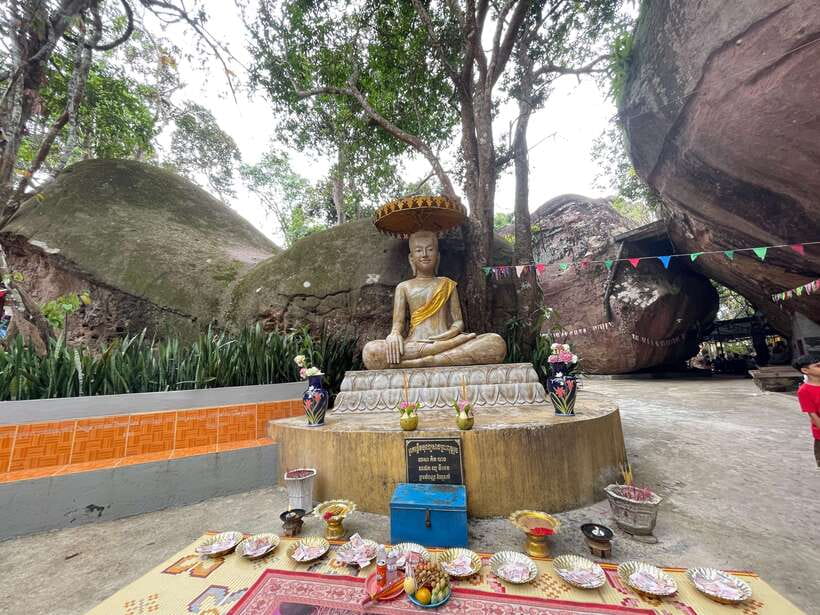
After Phnom Kulen, the tour stops at a local restaurant for about an hour. Food and drinks are not included, so plan to pay for your own meal. The hour gives you time to eat rather than forcing a quick roadside stop.
The $49 starting price looks attractive for an eight-hour trip with hotel pickup, air-conditioned transport, an English-speaking guide, bottled water, a towel, sightseeing, fruit, and palm cake tasting. But you need to add the $20 Kulen Mountain National Park entrance fee. Banteay Srei also requires an Angkor Pass, and the price of that pass is not provided here.
Lunch and guide or driver tips are extra as well. In practical terms, this is not a $49 all-in day. It can still offer good value if you want one organized trip covering a distant mountain and Banteay Srei, but compare the final cost with other excursions before booking.
The air-conditioned vehicle matters in Cambodia’s heat. One highly praised outing also included cold bottled water and cold towels, which make a real difference after walking outdoors. The exact vehicle may vary, but air conditioning and complimentary water are part of the stated service.
Banteay Srei and Cambodia’s finest small-scale carving
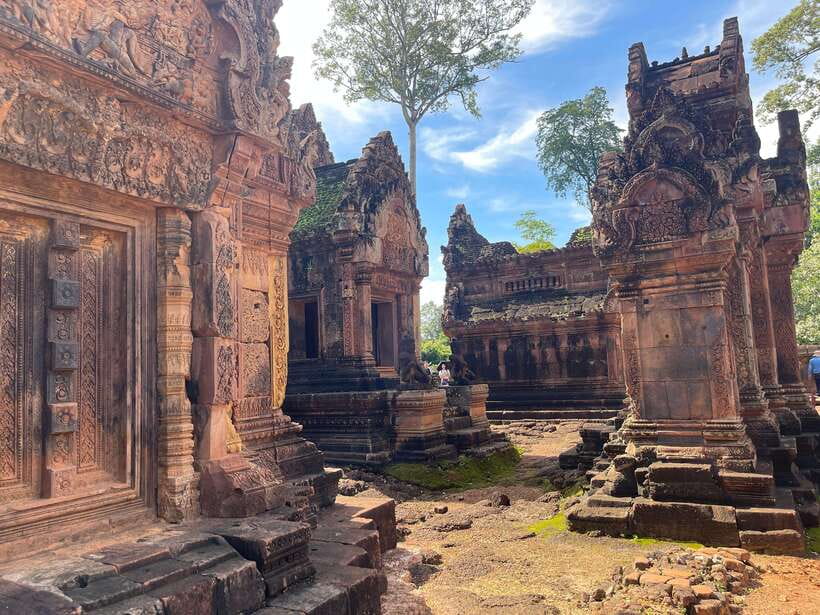
Banteay Srei is a tenth-century temple dedicated to Shiva and Parvati. It sits near Phnom Dei, about 25 kilometers northeast of the main Angkor temple group.
The temple is known for pink sandstone and very fine carving. Compared with the huge gateways and galleries of Angkor Wat or Angkor Thom, Banteay Srei feels more compact and detailed. I like it because you can focus on the workmanship instead of spending the whole visit trying to understand a massive complex.
The one-hour visit is a sensible length for a guided stop. You have enough time to see the temple and hear its story without turning the whole afternoon into a slow march among ruins. Look closely at the sculpted figures and decorative patterns. The stone’s warm color also changes the feel of the visit, especially after the forested mountain sites.
Remember that your Angkor Pass is not included. Even though Banteay Srei is reached as part of this day tour, it remains within the Angkor ticket system. Check that you have the required pass before the tour date.
Preah Dak, palm cake, and village life
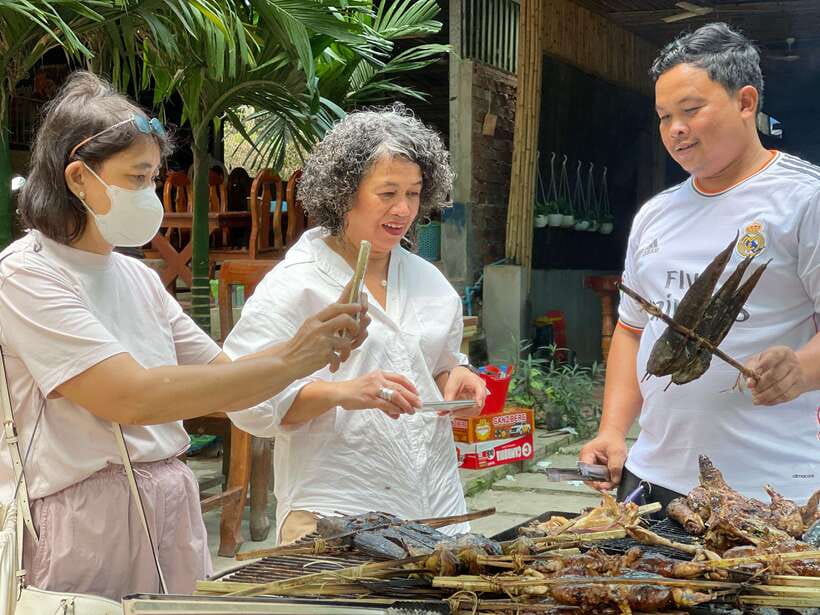
The final stop is Preah Dak, a village near Siem Reap known for nom ban chok noodles, basket making, and local efforts to improve cleanliness and sustainability. The village has also become a model for the One Village, One Light Bulb solar scheme.
The visit lasts about 20 minutes, so think of it as a short look at local life rather than a full village workshop. You may see basket making and learn about the village’s solar lighting project. The palm cake and seasonal fruit tasting adds a simple food experience that helps break up the day’s temple and nature focus.
This stop works best when you approach it with modest expectations. You are not getting a long cooking class or an extended market visit. You are getting a brief introduction to a Cambodian village that is trying to retain its character while improving daily conditions.
The stop also keeps the tour from ending only with ancient monuments. Preah Dak shows how communities near Siem Reap are adapting and presenting local traditions to visitors without turning the whole day into a shopping trip.
The guide can make or break the mountain day
The strongest praise for this experience concerns the guides. Sam was described as charming, well informed, clear in English, and good at explaining a changed plan to a small group. Another guide was praised for answering questions in simple language and focusing on the group’s comfort.
That matters because Phnom Kulen has several sites with names and religious details that can blur together. A good guide explains what you are seeing, tells you where to conserve energy, and keeps the schedule realistic.
The best sign is not simply that a guide knows facts. It is that the guide communicates changes clearly and watches the group’s needs. One outing combined two bookings into a group of four, and the guide explained the revised arrangement immediately. That kind of direct communication builds trust.
Your guide speaks English, and the tour can be private or arranged for a small group. If you value questions and a flexible pace, choose the smallest group option available.
How demanding is the eight-hour schedule?
This is a full day, but the schedule is not packed with endless temple stops. You spend three hours in Phnom Kulen, one hour at lunch, one hour at Banteay Srei, and about 20 minutes in Preah Dak, with driving time between the locations.
The mountain section is the part that requires the most care. Viewpoints, stairs, riverbed carvings, and waterfall access can be tiring in heat. A direct assessment of the day found it reasonable for someone with ordinary fitness but difficult for people with joint issues or limited mobility.
Bring comfortable shoes, sun protection, and a little patience. Bottled water and a towel are supplied, but you should still take water breaks when offered. The vehicle’s air conditioning gives you a proper reset between stops.
You can cancel up to 24 hours before departure for a full refund, and the reserve-now, pay-later option keeps your plans flexible. Pickup and drop-off at city hotels in Siem Reap are available, which removes some of the morning fuss.
Who should book this tour?
I would choose this day if you want a break from central Angkor and like the idea of combining sacred places, waterfalls, village life, and one finely carved temple. It is especially good for first-time visitors who want a guide to connect the sites rather than arrange several separate rides.
It also suits people who value practical comfort. Air-conditioned transport, water, a towel, hotel pickup, and a small-group option all help on a hot Cambodian day.
I would hesitate if you want a slow temple study day, dislike uneven walking, or are trying to keep the final cost very low. The $49 starting rate does not include the mountain fee, Angkor Pass, lunch, or tips. Also, the waterfall experience depends on the season, and the village visit is brief.
Should you book it?
Book this tour if you want a varied day with strong guiding, mountain scenery, ancient river carvings, and Banteay Srei’s detailed pink stone. The highest praise has gone to the guides, transport comfort, clear explanations, and sensible pacing, and those are exactly the features that matter on a long outing.
Before paying, confirm your Angkor Pass, budget for the $20 Kulen entrance fee and lunch, and be honest about your walking ability. If those points work for you, this is a well-balanced way to see a side of Siem Reap that a standard Angkor circuit does not cover.
FAQ
How long is the tour?
The experience lasts eight hours, including visits to Phnom Kulen National Park, Banteay Srei, and Preah Dak, plus lunch and transport.
What is the tour price?
The listed price is $49 per person. This does not include the $20 entrance fee for Kulen Mountain National Park, the Angkor Pass for Banteay Srei, food, drinks, or guide and driver tips.
Is hotel pickup available?
Yes. Pickup and drop-off are available at city hotels in Siem Reap.
What language does the guide speak?
The tour includes a live English-speaking guide.
Is transportation provided?
Yes. Transportation is by air-conditioned vehicle. Bottled water and a towel are also included.
Is lunch included?
No. The schedule includes a one-hour stop at a local restaurant, but food and drinks are paid for separately.
What will I see at Phnom Kulen?
The tour visits Peng Chruonh, Preah Ang Thom Pagoda and its reclining Buddha, the River of 1000 Lingas, and the two main waterfalls in Phnom Kulen National Park.
Do I need an Angkor Pass for Banteay Srei?
Yes. The Angkor Pass is required for entry to Banteay Srei and is not included in the tour price.
Can I cancel the booking?
You can cancel up to 24 hours in advance for a full refund. A reserve-now, pay-later option is also available.
Just added around Siem Reap
- Private Battambang Full-Day Guided Tour★ 4.5 · 3 reviews
- Kulen Mountain, Beng Mealea and Banteay Srei Full Day Tour★ 5.0 · 3 reviews
- Kompong Pluk Tour★ 5.0 · 3 reviews
- Private 3 Day Tour to Discover the ancient temples★ 5.0 · 3 reviews
- Kulen National Park Ticket -Waterfall & 1000 Lingas★ 5.0 · 3 reviews
- Cambodia: Absolute Traditional Dance Show with Buffet Dinner★ 5.0 · 3 reviews
- Border Transfer (Siem Reap to Laos/Laos to Siem Reap)★ 3.5 · 3 reviews
- Best Taxi Siem Reap to Battambang – English Speaking Driver★ 4.5 · 3 reviews
Banteay Srei Tours, compared.
Full-Day Banteay Srei & 4 Temples – Grand Tours Join-in Tour
Read our review →
Siem Reap Tour: Angkor Wat Sunrise, Bayon, Ta Prohm, Banteay Srei
Read our review →
2-Day Angkor Wat With Small, Big Circuit and Banteay Srei Tour
Read our review →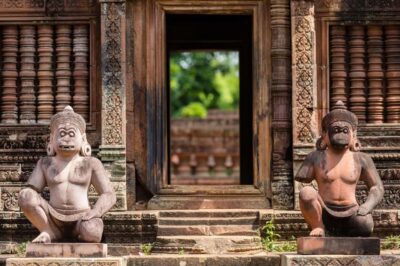
3-Days Discovery Of Angkor: Waterfalls,Floating Village and Banteay Srei temple
Read our review →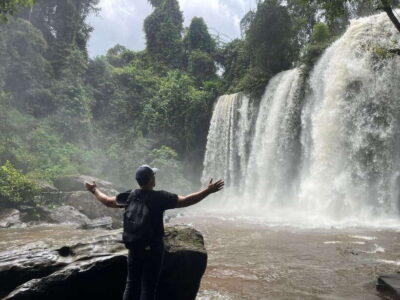
Banteay Srei, Kulen Waterfall & Beng Mealea Exploration
Read our review →
Kulen Waterfall, Banteay Srei, and Beng Mealea Tour
Read our review →Browse the lists this tour appears in