
Reviewed · SILK FARM & CRAFT WORKSHOPS
Handicraft tour/rice paper,/rice wine/bat cave Sun Set
Come for the bats, stay for the countryside. This Battambang tour packs farms, village workshops, Khmer Rouge history, food tastings, temples, and Phnom Sampov’s famous sunset bat flight into one long day. I like the close look at everyday work, especially the rice paper and rice wine making, and I like the flexible route, which can be adjusted for your pace.
The main caution is cost clarity. The advertised price is only $8 per person, but several stops charge separately. If you choose every paid activity listed, the extras can add at least $10, before lunch and any donation. The day can also feel rushed or information-heavy, depending on your guide.
In This Review
- Five Details That Shape the Day
- From Battambang Streets to Paddy Fields
- Wat Samrong Khong and Cambodia’s Difficult Past
- Bamboo Sticky Rice, Fish, and Village Food
- Rice Paper and Rice Wine in Working Factories
- Ek Phnom, Crocodiles, and the Roadside View
- The Bamboo Train: Fun, Simple, and Extra
- Phnom Sampov, Killing Cave, and the View from Above
- Millions of Bats at 6:30 PM
- What the $8 Price Really Means
- Guide Style and How to Get the Best Day
- Who Should Book This Battambang Tour?
- Should You Book It?
- FAQ
- What time does the tour start?
- How long does the tour last?
- Is lunch included?
- What is included in the price?
- How much are the extra entrance fees?
- Is the tour suitable for people with mobility problems?
- What should I bring?
Five Details That Shape the Day
- Rice paper made for spring rolls: You can watch a simple local process turn rice into thin wrappers, then pay $1 to taste one.
- A working countryside route: Paddy fields, small villages, fruit stands, fish products, and bamboo sticky rice give the day a useful local focus.
- Wat Samrong Khong and Phnom Sampov: The tour connects two difficult Khmer Rouge sites with explanations of Cambodia’s recent past.
- Millions of bats at sunset: Around 6:30 PM, bats stream from Phnom Sampov in one of Battambang’s most memorable sights.
- A flexible English-speaking guide: Guides such as Vannak, Sam, Bao, Pay, and Sambath Liv have been praised for patience, clear English, and adapting the route.
- A long tuk-tuk day: A full version can run from about 9:00 AM until 7:00 PM, so comfort, heat, and stamina matter.
From Battambang Streets to Paddy Fields
The day usually begins with hotel pickup in the Battambang area, often around 9:00 AM, though the starting time can be arranged. After a short briefing, you head out by tuk-tuk with a driver and English-speaking guide.
The first part is less about famous monuments and more about seeing how the area works. You pass rice fields, small villages, and roads lined with local activity. A stop at the fresh market adds another layer, giving you a look at produce and daily shopping rather than a polished sightseeing display.
I like this opening because it gives the later craft stops some context. Rice paper, dried bananas, fish, and rice wine are not random tourist products. They connect to crops, preservation, family work, and small-scale trade in the countryside.
The tuk-tuk is part of the experience, not just transport. You get open views and fresh air, but you also get heat, dust, traffic noise, and a long day on a basic seat. Bring water, and use the supplied cold bottled water as a supplement rather than your only drink.
More craft workshops:
- Full Day-Tour: Handicraft, Bamboo train, Killing cave. Bat cave
★ 5.0 · 29 reviews - Full-day: Handicraft, Bamboo train, Killing cave, Bat Cave
★ 5.0 · 5 reviews - Phnom Penh Silk Island Bike Tour/ E-Bike or Tuk Tuk
★ 5.0 · 495 reviews
Wat Samrong Khong and Cambodia’s Difficult Past
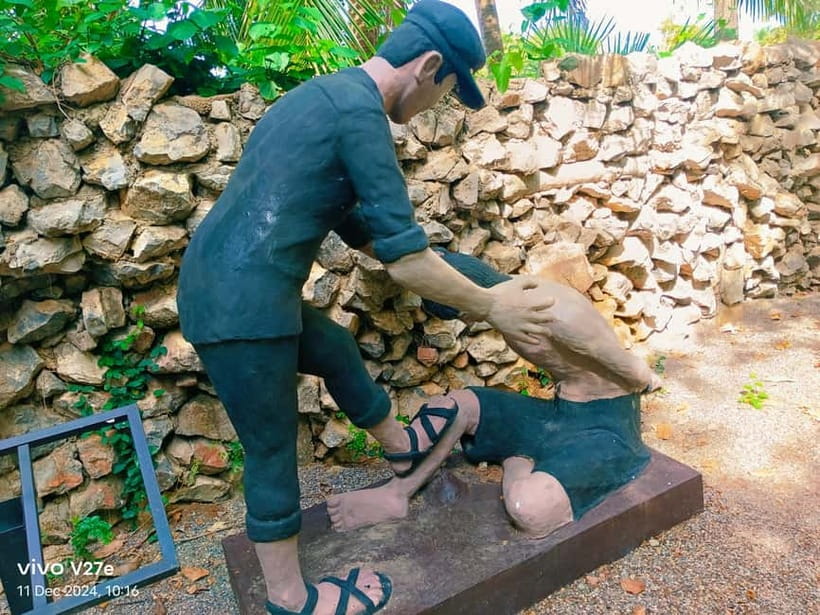
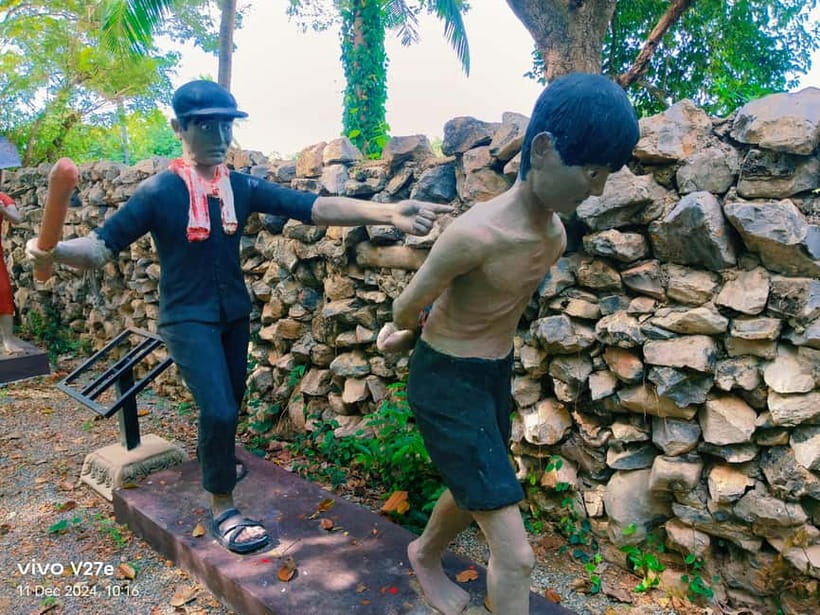
Wat Samrong Khong, also written as Wat Somrong or Wat Samrong Khnong, is visited as a former killing field. Here the guide explains the Khmer Rouge period under Pol Pot and the violence that affected Cambodia.
This is an important stop, but it needs a respectful pace. The tour description presents it as a historical visit, not a light sightseeing stop. You may find the guide gives a large amount of background in one stretch, so do not hesitate to ask for shorter explanations or specific questions if the discussion becomes too broad.
One useful point is the contrast between the ordinary setting and the painful past. The temple and surrounding community are part of present-day Cambodia, while the site also asks you to think about what happened there. I would not treat this as a quick photo stop.
The quality of this section depends heavily on the guide. Some guides have been praised for answering questions patiently and explaining culture, people, and history clearly. One criticism was that too much information was delivered at once, including discussion that moved beyond Cambodia. If this subject matters to you, tell your guide that you prefer focused explanations about the site itself.
Bamboo Sticky Rice, Fish, and Village Food

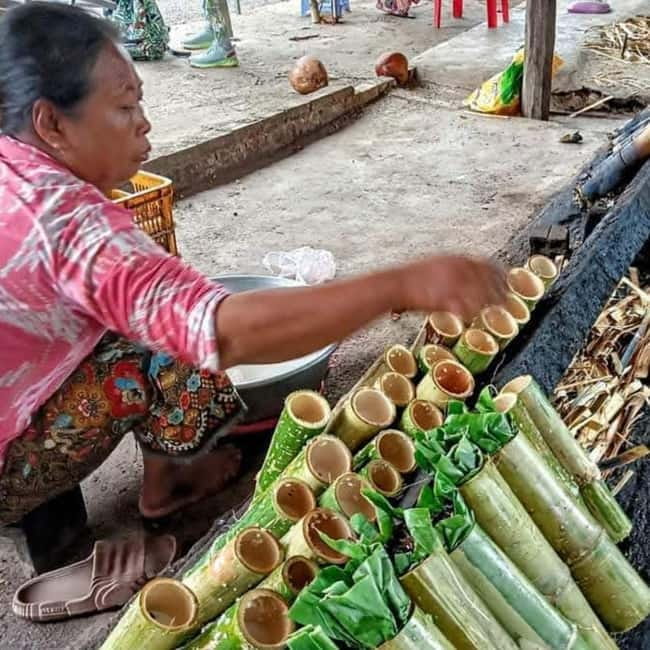
Along the route, you may stop to see local people preparing bamboo sticky rice. The rice is cooked inside bamboo, creating a portable food with a distinct link to rural Cambodian cooking.
The tasting costs $1 altogether, according to the supplied details. It is a small charge, but it is worth knowing in advance because the $8 headline price does not cover it.
The tour also includes demonstrations or stops involving Cambodian cheese, dried fish, and smoked fish. These are practical food traditions built around using what is available and keeping food edible for longer. You may also see roadside sellers offering unusual grilled foods, including insects, snakes, mice, and bats.
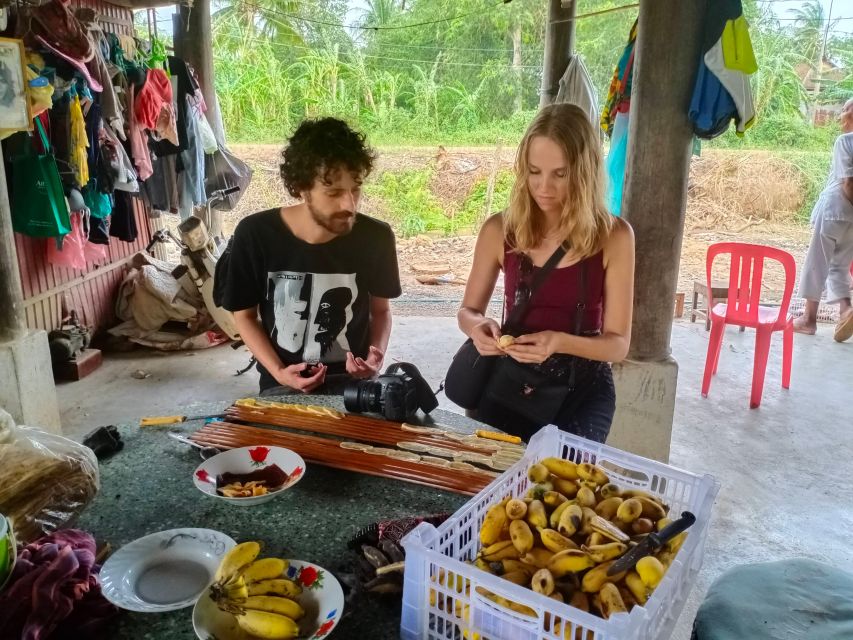
That part may fascinate you, or it may not appeal at all. Nothing in the information says you must eat these foods. You can look, ask questions, and decide for yourself. The guide may also stop at fruit stands and offer local fruit tastings, which is a gentler way to sample the area.
Rice Paper and Rice Wine in Working Factories
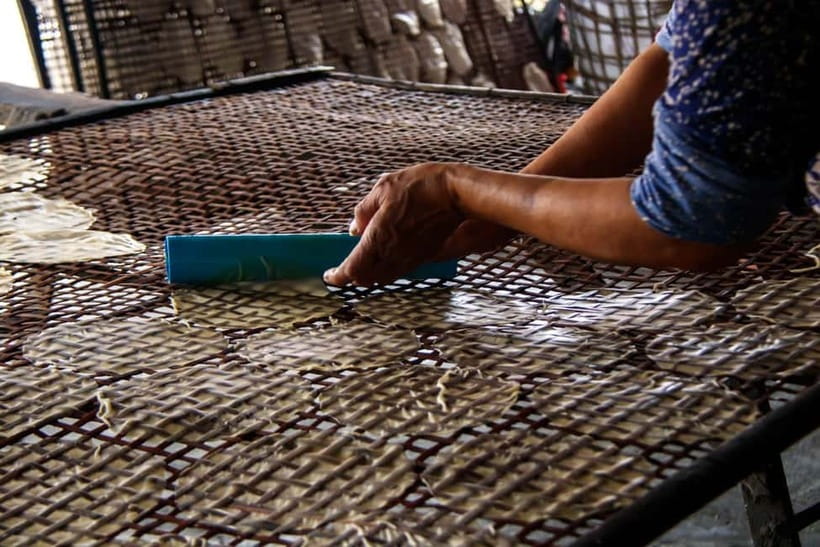
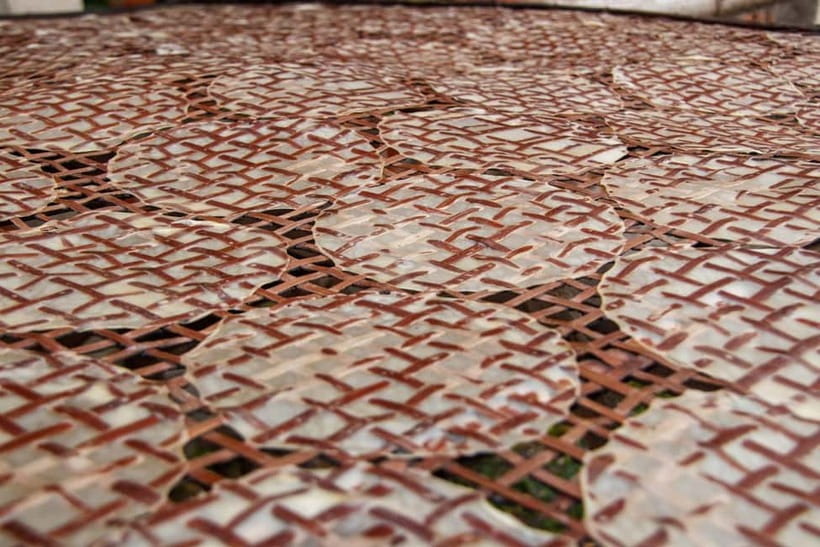
The craft section is the heart of the tour. At the rice paper factory, you see how rice becomes thin wrappers used for spring rolls. The process is simple in principle, but watching the repeated handwork makes the product feel less anonymous once you see it in a market or restaurant.
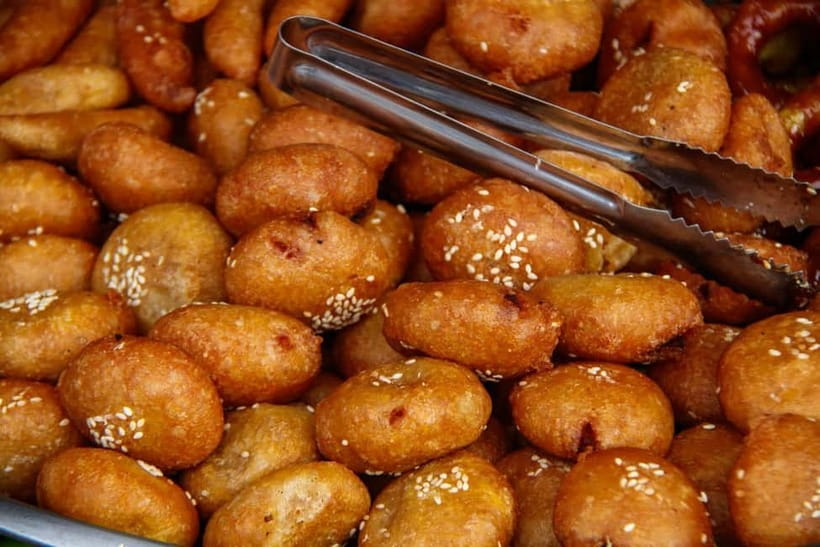
A spring roll taste costs $1 per person. Dried banana tasting also costs $1 altogether. These small samples help turn a factory visit into something you can taste, not just observe.
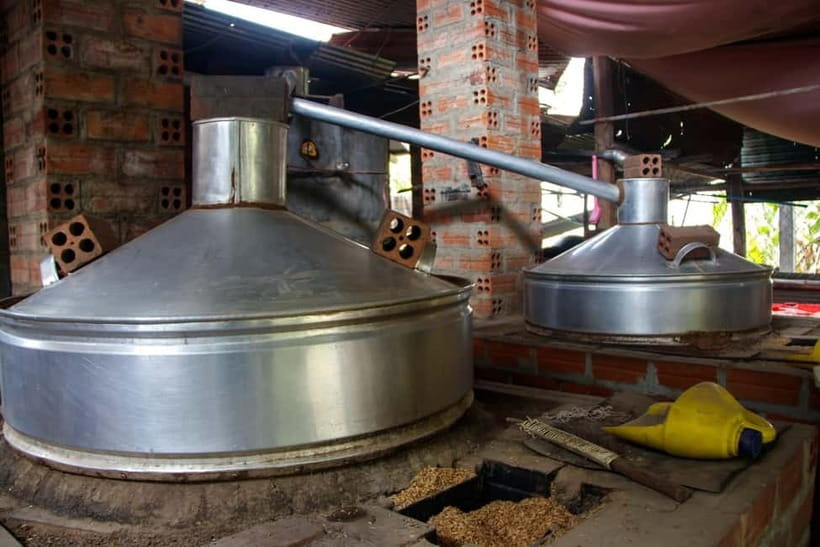
The rice wine stop offers another look at local production. You can see how rice is used to make the drink and pay a $1 entrance fee per person, with tasting included in the broader description. If you do sample it, keep the rest of the day in mind. You still have a bamboo train ride, a mountain visit, stairs or a motorbike ascent, and a sunset wait ahead.
The tour also mentions cheap bananas and dried bananas, which shows how broad the route can be. It is not limited to one formal workshop. You are moving through a chain of small businesses and family production, with the guide explaining what you are seeing.
This is where the strongest praise for the tour makes sense. Several guides have been described as friendly, flexible, and good at answering questions about local life. One guide even made extra fruit stops and explained the agriculture along the road. That personal attention can make a basic factory visit much more worthwhile.
A few more trips worth weighing up
- Morning Tour,Ak Phnom temple,Rice wine,Rice Paper, killing Field
★ 5.0 · 22 reviews - Rooftop Romantic Dinner – 4 Courses Set Meal & Wine
★ 3.5 · 5 reviews
Ek Phnom, Crocodiles, and the Roadside View
The route can include Ek Phnom temple, reached by a road through the countryside. The stop is brief in the supplied schedule, so you should not expect a long archaeological visit.
Another unusual stop involves a crocodile facility with about 800 crocodiles. You can take photographs, and the sight is certainly different from the usual temple and market circuit. The information does not describe a long guided presentation here, so consider it a short visual stop rather than the main reason to book the tour.
The road itself remains part of the day. Your guide may point out rice seed, explain how rice is grown, and show you paddy fields and village life. These explanations matter because they connect the food tastings to the land around Battambang.
Lunch is flexible around 12:00 to 1:00 PM. You can choose to eat in the countryside or in the city, and lunch is not included. Ask about the timing and price before ordering, especially if you are trying to keep the total close to the advertised rate.
The Bamboo Train: Fun, Simple, and Extra
The bamboo train is one of Battambang’s best-known activities. You ride a small bamboo platform along the railway through the countryside, villages, and farmland. It is a simple experience, but that is part of its appeal.
The ticket or entrance fee is listed as $5 for each person. Since the wording around the fee is not perfectly clear, confirm the exact amount before you ride.
The train is not guaranteed to suit every schedule. One person could not take the ride, but the guide replaced it with a nature tour and local explanations. That is a useful sign of flexibility, but you should still say clearly if the bamboo train is a priority for you.
The stop can be enjoyable for families and first-time visitors to Battambang, though the ride itself is not a major cultural lesson. Its value comes from the open countryside, the novelty, and the chance to slow down after a morning of stops.
Phnom Sampov, Killing Cave, and the View from Above
Later, the tuk-tuk heads toward Phnom Sampov. You can hike up or take a motorbike to the mountain area, depending on your energy and timing. The information specifically warns that the tour is not suitable for people with mobility impairments, wheelchair users, heart problems, people over 95, or people over 70.
At the top, the route can include the killing cave, a large cannon, a gun, a monastery, stupas, and monkeys. The hilltop view is described as one of the finest around Battambang, with broad views across the countryside.
Bring cash for the $1 ticket to the killing cave and bat cave. You should also bring suitable climbing or walking gear. The mountain section is not a place for flip-flop confidence and a tight schedule.
The killing cave is another serious historical stop. Your guide may explain how the cave relates to Khmer Rouge violence and the mountain’s past. The setting can be emotionally difficult, so give yourself room to listen quietly rather than treating the stop as a checklist item.
Guide involvement matters here. One positive account praised a guide for staying patient and explaining history carefully. One negative account described the guide remaining below the cave, making it hard to hear. Before walking up, confirm where your guide will meet you and whether explanations will happen inside the site or from below.
Millions of Bats at 6:30 PM
After the killing cave, you wait about five to ten minutes for bats to emerge. Around 6:30 PM, millions of bats can pour from the cave in a long moving stream. This is the day’s natural finale and the reason many people will remember the tour.
The guide may know a quieter viewing location. One particularly positive account described being taken to a less crowded spot with no other tourists nearby. That detail cannot be guaranteed, but it shows why a local guide can be useful at a popular sunset site.
You will want your camera ready, though the spectacle can be hard to capture well. I would watch first and photograph second. The bat flight lasts long enough to feel like an event, but the timing depends on the evening and the cave.
After sunset, the usual return to Battambang is around 7:00 PM. A full day from 9:00 AM to 7:00 PM is demanding, but the order works well: local food and crafts in daylight, mountain history in the late afternoon, then bats at dusk.
What the $8 Price Really Means
At $8 per person, the tour looks like a bargain for hotel pickup, a tuk-tuk, a driver, an English-speaking guide, bottled water, and local fruit. The price is genuinely low for a private-feeling day with transport across the province.
The extra charges change the calculation. Listed costs include:
- Bamboo train: $5 per person
- Wat Samrong Khong: donation
- Bamboo sticky rice: $1 altogether
- Rice paper spring roll taste: $1 per person
- Dried banana taste: $1 altogether
- Rice wine entrance: $1 per person
- Killing cave and bat cave: $1 per person
- Lunch: not included
If you choose all the paid activities, you can add at least $10 per person to the $8 base price, plus lunch and the temple donation. That brings the known total to at least $18 before food and donation, and the bamboo train fee may need confirmation.
I would carry cash in small bills. The tour specifically asks you to bring cash, and several stops are small local operations. Ask your guide at the start which tastings are optional and what you are likely to spend.
Guide Style and How to Get the Best Day
The guide is the biggest variable. The supplied experiences name Vannak, Sam, Bao, Pay, and Sambath Liv, with strong praise for clear English, kindness, patience, and flexibility.
Sam was praised for excellent English and for answering many questions. Bao was appreciated for patient explanations about culture, people, history, and nature. Sambath Liv was described as smiling, flexible, and unhurried. Vannak was praised for adding fruit stops and showing a quieter bat viewing place.
At the same time, one account found the presentation too long, rushed, and unfocused. That is useful advice rather than a reason to dismiss the tour. At the briefing, tell your guide what matters most to you: food, craft, history, temples, photography, or the bamboo train.
If you are traveling with a child, ask for extra time at stops. The route can be adjusted, and one guide was praised for slowing down for a young child. The tour also accommodated a tight personal schedule in one case, but you should agree on timing before departure.
Who Should Book This Battambang Tour?
I would choose this tour if you want a busy, flexible day that reaches far beyond the city center. It suits first-time visitors who want a broad introduction to Battambang, especially if you enjoy seeing how food and household goods are made.
It also suits people who prefer local roads and working communities to a short list of major monuments. You get far more than a sunset viewpoint: rice agriculture, fish preparation, fruit, village roads, local drinks, difficult history, and a mountain visit.
I would hesitate if you dislike long tuk-tuk rides, heat, repeated roadside stops, or extra fees. It is also a poor fit if you need step-free access, have heart problems, or do not want a demanding mountain section.
The best approach is to treat the day as a custom countryside outing rather than a tightly timed premium tour. Choose your must-see stops, ask for focused explanations, and keep enough cash for the activities you actually want.
Should You Book It?
Book it if the combination of rice paper, rice wine, village food, Khmer Rouge history, bamboo train, and bat cave sounds more appealing than a short city tour. At $8, the transport and guide offer strong value, even after you allow for the paid stops.
Skip it if you want a quiet, polished, all-inclusive excursion. The day is full-on, the guide style can vary, and the final bill will be higher than the headline price. For an active visitor with a flexible attitude, though, this is a lively and useful way to see Battambang Province beyond its central streets.
FAQ
What time does the tour start?
Tours generally start at 9:00 AM, but the starting time can be arranged. Pickup is available from hotels in the Battambang area.
How long does the tour last?
The activity can last from 4 to 10 hours, depending on the selected option. The full countryside and Phnom Sampov version usually runs from about 9:00 AM until 7:00 PM.
Is lunch included?
No. You can choose to eat in the countryside or in Battambang, and lunch is paid separately.
What is included in the price?
The price includes a tuk-tuk and driver, an English-speaking live guide, hotel pickup and drop-off, cold bottled water, and local fruit tastings.
How much are the extra entrance fees?
Listed extras include $5 per person for the bamboo train, $1 per person for the rice paper spring roll taste, $1 altogether for dried banana tasting, $1 per person for rice wine, and $1 per person for the killing cave and bat cave. Wat Samrong Khong requires a donation.
Is the tour suitable for people with mobility problems?
No. The tour is not suitable for wheelchair users or people with mobility impairments or heart problems. It also advises against participation for people over 70, and people over 95 are specifically excluded.
What should I bring?
Bring a camera, climbing or walking gear, and cash. Smoking in the vehicle and making noise are not allowed.
Just added around Battambang
- Bamboo Train, Banann Temple, Fruit Bat, Bat Cave, Sunset★ 4.2 · 3 reviews
- Morning Tour Bamboo Train, Ancient House, Local, Countryside★ 5.0 · 3 reviews
- Private Boat from Battambang to Siem Reap via Tonle Sap Lake★ 4.5 · 3 reviews
- Battambang Private afternoon tour bamboo train bat cave & village★ 5.0 · 3 reviews
- Battambang Private Full-Day Tour★ 5.0 · 3 reviews
- From Siem Reap: Battambang Day Trip Bamboo Train & Bat Cave★ 5.0 · 4 reviews
- Private Taxi Transfer From Battambang – Siem Reap City★ 5.0 · 4 reviews
- Battambang City and Country side Full day Tour★ 5.0 · 4 reviews
Silk Farm & Craft Workshops, compared.
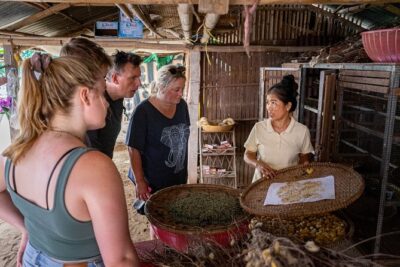
Phnom Penh Silk Island Bike Tour/ E-Bike or Tuk Tuk
Read our review →
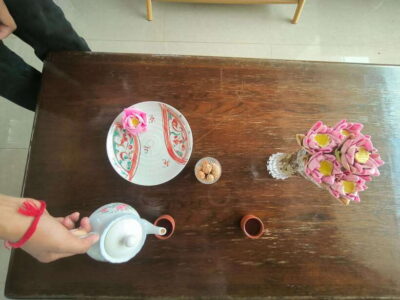
Siem Reap Lotus Silk Farm Discovery tour & Lake experience
Read our review →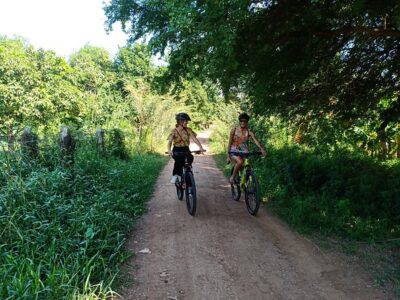
Silk Island Cycling Adventure & lunch with locals
Read our review →
Phnom Penh to Silk Island By Tuk-Tuk with local Expert
Read our review →
Phnom Penh Silk Island Vespa Tour / Tuk Tuk Available
Read our review →
Mekong Silk Island Cruise – Unlimited Beer, Soft Drinks & Fresh Fruit Platter
Read our review →Browse the lists this tour appears in