
Reviewed · CITY TOURS
Siem Reap City Hidden Gems (Private Guided Tour)
Siem Reap rewards curiosity. This 3.5-hour private tour gives you a quick introduction to the city beyond Angkor Wat, with local markets, Buddhist sites, a hidden 10th-century brick temple, village life, and craft workshops. I like the way it mixes major town landmarks with places you could easily miss on your own.
I also like the flexibility. Your guide and driver collect you in Siem Reap, provide drinking water, and take you between stops by private transport. The strongest part for me is the chance to add the Apopo Rat Center, where trained rats help locate landmines. The main consideration is that the advertised schedule may change, and one recent guest found the actual route quite different from the expected walking tour.
In This Review
- Key points to know before booking
- A short orientation to Siem Reap beyond Angkor
- Starting at Psa Chas and the Old Market
- Royal Residence and the town’s formal side
- An old Buddhist monastery and monk life
- The long wooden boat and the local village route
- The 10th-century brick temple
- Satcha and the Made in Cambodia Market
- Why Apopo may be worth the extra $10
- Transport, timing, and the route you actually receive
- Is $39 good value?
- Who should book this Siem Reap tour?
- FAQ
- How long does the Siem Reap city tour last?
- How much does the tour cost?
- Is the Apopo Rat Center included?
- What happens at the Apopo Rat Center?
- Is hotel pickup included?
- Is this a private tour?
- Which language does the guide speak?
- Are attraction tickets included?
- What should I bring?
- Can I cancel the tour?
- Should you book it?
Key points to know before booking
- Apopo is the most unusual optional stop: The rat center costs an extra $10 per person, but it offers a memorable look at Cambodia’s ongoing landmine-clearing work.
- This is a private tour with a flexible route: You travel with your own English-speaking guide and driver, rather than in a large group.
- The tour covers more than temples: Markets, monasteries, a royal residence, village life, handicrafts, and local enterprises all feature in the plan.
- The hidden brick temple needs no ticket: This gives you a taste of early Khmer architecture without adding another major admission fee.
- The timing is tight: In roughly three and a half hours, you cannot linger everywhere, so confirm your priority stops before setting off.
- It is useful early in your stay: The tour helps you understand Siem Reap before spending full days at Angkor.
A short orientation to Siem Reap beyond Angkor
Most people arrive in Siem Reap with one goal: Angkor. That is sensible, but the town itself deserves a little time. This tour works as a compact introduction to the places that give Siem Reap its daily character, from the Old Market area to Buddhist monasteries and small craft businesses.
You will not get a slow, scholarly examination of every site. Instead, you get a local guide’s overview of Cambodian culture, Buddhism, the town’s past, and ordinary life in nearby villages. For a first afternoon in Siem Reap, that can be useful. You get your bearings fast, then decide which places deserve a longer return visit.
The private format matters here. A guide can explain why you are stopping at a particular shrine or monastery, answer questions about monk life, and adjust the pace to your interests. It also means that the experience may feel less fixed than the written route suggests. That flexibility is helpful, but you should ask what will actually be included.
More City Tours in Siem Reap
- Siem Reap: City Walking Tour
★ 4.6 · 583 reviews - Angkor Wat Sunrise & Ancient City Discovery
★ 5.0 · 124 reviews - Siem Reap City Walking Tour
★ 4.5 · 114 reviews
Starting at Psa Chas and the Old Market
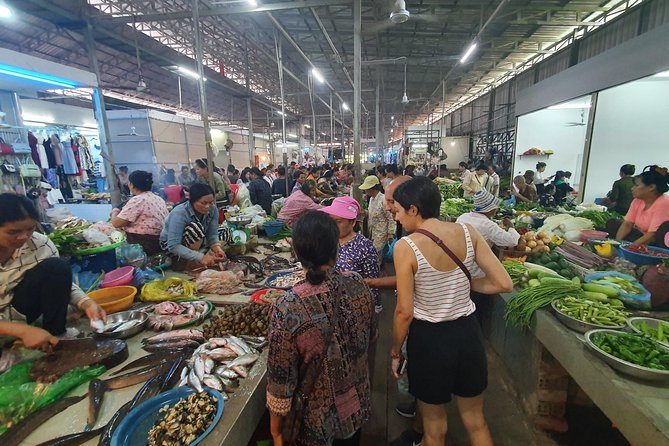
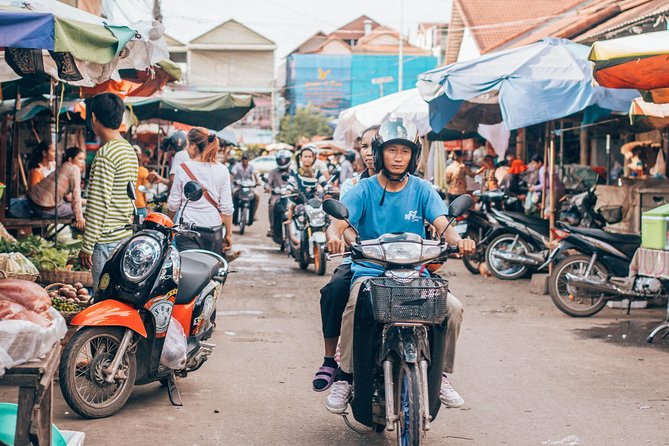
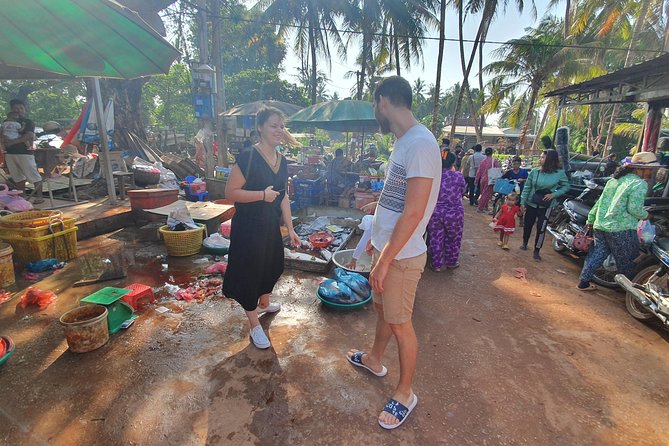
The tour begins around Psa Chas, usually called the Old Market. This is a practical place to start because it introduces you to Siem Reap’s commercial center and local rhythm before the route moves toward quieter cultural sites.
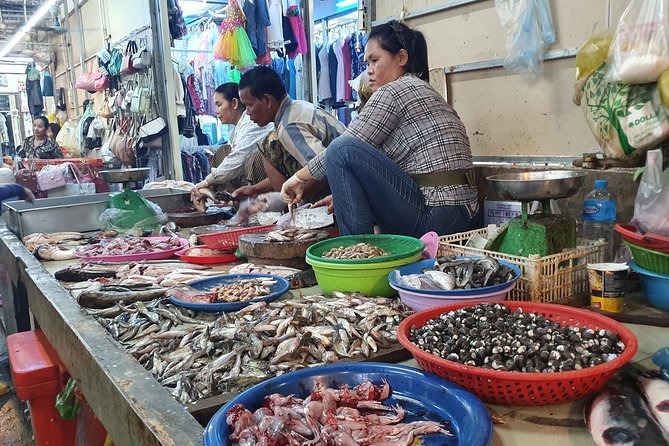
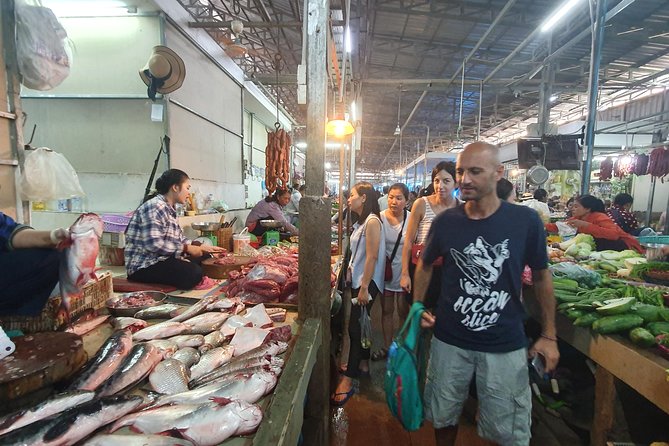
The market area is useful for seeing the everyday side of town. You may encounter food stalls, small shops, local produce, and businesses serving residents as well as visitors. The tour also includes the French Quarter, which provides a different view of Siem Reap through its older town planning and colonial-era character.
Allow about 20 minutes for the guided market portion. That is enough for an introduction, but not enough for a long shopping session or a serious look at every lane. If you have already spent time at Psa Chas, tell your guide at the beginning. One guest who knew the market well found that this part was shortened, which also reduced the overall route.
That detail points to a practical truth: this tour is best when you have not yet explored central Siem Reap. If you have already visited the Old Market, Pub Street area, and French Quarter on foot, ask to use the time elsewhere.
Royal Residence and the town’s formal side
The Royal Residence is scheduled for about 30 minutes. This stop shifts the mood from market life to the civic and royal side of Siem Reap.
The attraction gives your guide a chance to explain how the town developed as a regional center and how Cambodia’s modern royal story fits into the wider history of the country. The stop is not presented as a long palace visit, so expect an orientation rather than a detailed architectural study.
Because the route is short, your guide’s explanation will shape much of the value here. Ask direct questions about what you are seeing and how the residence relates to the city. A private guide is most useful when you treat the visit as a conversation, not just a series of photo stops.
The schedule also includes Big Bat Park, although the supplied route does not give a separate description or exact time for it. I would confirm this stop before booking if it matters to you. The same applies to the precise order of the attractions.
An old Buddhist monastery and monk life
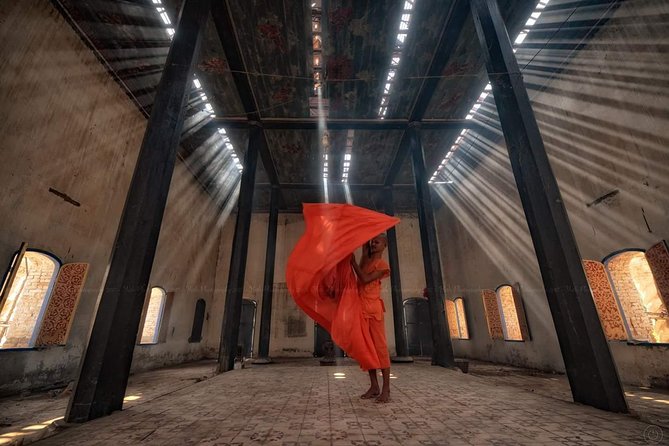
One of the more meaningful stops is an old Buddhist monastery said to date to A.D. 1371. That long connection to Buddhist practice gives the site more weight than a quick photo stop.
The tour is designed to explain Buddhism in Cambodia and the daily life of monks. You may learn about the role of monasteries, see the setting where monks live, and gain a clearer sense of how religious places function within local communities.
This is one reason I prefer this experience to a simple drive around town. Temples can look impressive, but without context they can become a blur of roofs, statues, and stone. A guide can connect the building to living religious practice.
You should dress with respect. Bring a scarf if you need one, and plan on modest clothing for monastery visits. The suggested packing list also includes a hat, camera, cash, and hand sanitizer or tissues. Those are small items, but they make a short outdoor route more comfortable.
A few more trips worth weighing up
- Angkor Wat Sunrise or Sunset Tour with Guide from Siem Reap
★ 5.0 · 12,109 reviews - Siem Reap: Angkor Wat: Small-Group Sunrise or Sunset Tour
★ 5.0 · 9,444 reviews - From Siem Reap: Kampong Phluk Floating Village Tour by Boat
★ 4.9 · 6,979 reviews - Sunset tour of Kampong Phluk stilts home village on the Tonle Sap
★ 5.0 · 4,865 reviews
The long wooden boat and the local village route
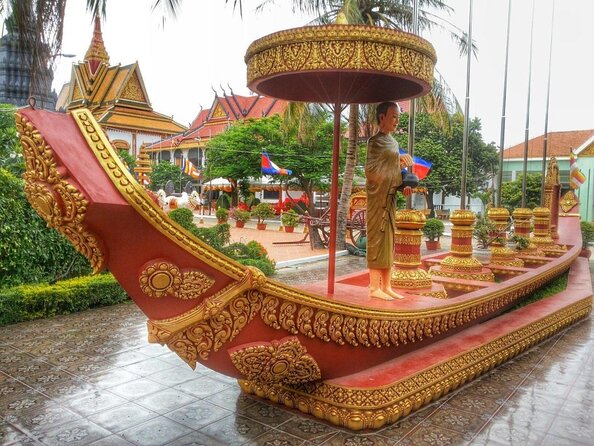
The tour includes a local monastery with a wooden boat built to carry 76 rowers. That is an unusually specific detail, and it gives the stop a clear point of interest. Rather than seeing only religious buildings, you get a look at the equipment and traditions connected with community life.
The route may also pass a local school and a small village. These stops help place Siem Reap in its wider setting. The town is not separate from rural Cambodia. Villages, schools, monasteries, and small businesses sit close to the tourist center, and the tour attempts to show that connection.
The itinerary lists several stops with durations of roughly 30 to 40 minutes, but it does not identify every location by name. Because of that, I would ask your guide to confirm whether the boat, school, village, and brick temple are all included on your chosen departure.
One recent guest did not visit several of these advertised places, including the palace, brick temple, and boat. Some of that was linked to personal preferences and some to the way the route changed. Do not assume every listed stop is guaranteed unless you clarify the plan before leaving.
The 10th-century brick temple
The hidden brick temple is one of the strongest reasons to choose this tour instead of a standard city circuit. It dates to the 10th century and does not require an admission ticket.
You should not expect an Angkor-scale monument. The attraction is smaller and less formal, but that is precisely its appeal. A modest ruin can help you understand how many old religious sites are scattered around Cambodia, including places that do not receive the crowds or attention of Angkor Wat.
The guide’s explanation is especially important here. Without context, an old brick structure may look like a pleasant but puzzling pile of masonry. With an explanation of its age and purpose, you get a better sense of the early Khmer building tradition.
Time may be limited. If ancient architecture is your main interest, tell your guide that you would rather spend extra minutes at the temple than at a workshop or shopping stop. The private format gives you a better chance of making that request.
Satcha and the Made in Cambodia Market
Satcha Handicraft Incubation Center is another useful stop because it connects culture with present-day work. The center supports local crafts and small enterprises, giving you a chance to see Cambodian design in a more organized setting.
This is not the same as visiting a centuries-old monument. You are looking at current production, business development, and the effort to keep local skills in use. I find that combination valuable because it prevents the tour from treating Cambodia as if its culture ended in the Angkor period.
The tour also includes the Made in Cambodia Market, described as a local enterprise. This is a good place to look for locally made products rather than generic souvenirs. If you want to buy something, carry cash, as cash is specifically recommended for the outing.
There is a possible downside. One guest declined silver and gem crafts and a crocodile leather workshop, and found that the actual experience differed from the planned schedule. If you do not want shopping-oriented stops, say so clearly. A private tour should make it easier to avoid them, but you need to set that expectation at the start.
Why Apopo may be worth the extra $10
The Apopo Rat Center is optional and costs $10 per person beyond the $39 tour price. At the center, rats are trained to help locate landmines, an important task in a country still affected by the legacy of war.
This is not a novelty act. The value is in learning how the animals are trained and why mine detection matters in Cambodia. One guest called the stop the highlight and said it was a definite must. That enthusiasm makes sense: the subject is serious, unusual, and closely tied to Cambodia’s recent past.
The extra charge is reasonable if you want a stronger historical and social component. It is also the clearest add-on in the whole experience, so budget for $49 per person before tips if you choose it.
The center can also change the balance of the day. Since the full tour lasts only around three and a half hours, adding Apopo may mean less time at another stop. Ask how long the visit will take and which part of the route it replaces.
Transport, timing, and the route you actually receive
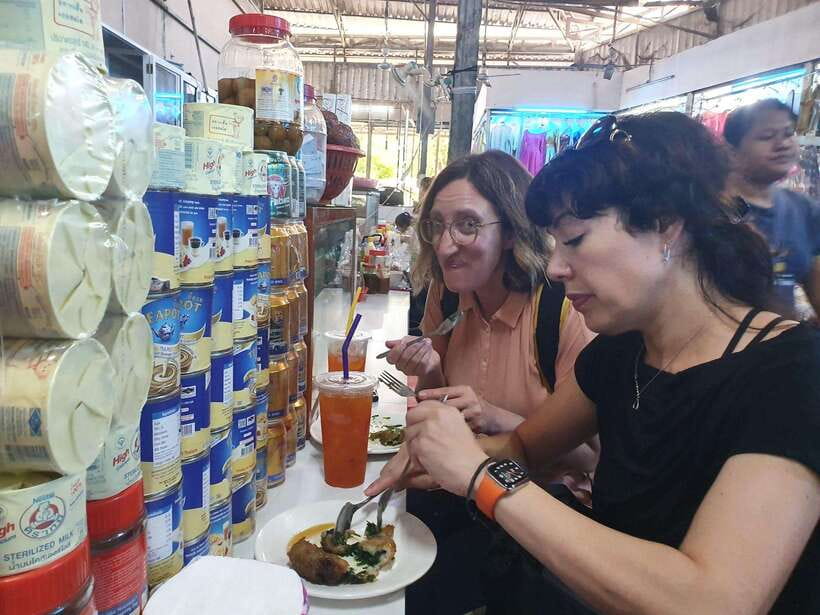
The tour description presents a city tour that includes walking, but one recent guest said the experience was conducted by tuk tuk rather than as a walking tour. That difference matters.
A tuk tuk lets you cover more ground and reach sites outside the central market area. It also reduces the effort required in Cambodia’s heat. On the other hand, you get less time to wander, notice small details, or stop spontaneously between attractions.
The listed duration is 3.5 hours, with the full outing generally taking three to four hours. The schedule gives about 2.5 hours for the general Siem Reap visit, 20 minutes at the Old Market, 30 minutes at the Royal Residence, and two further blocks of about 40 and 30 minutes. Those figures leave little spare time once driving and transitions are included.
I would choose a morning or late afternoon departure if available, especially if you dislike heat. The booking information says to check starting times and select a convenient time. You receive cool drinking water, but you still need sun protection and comfortable clothing.
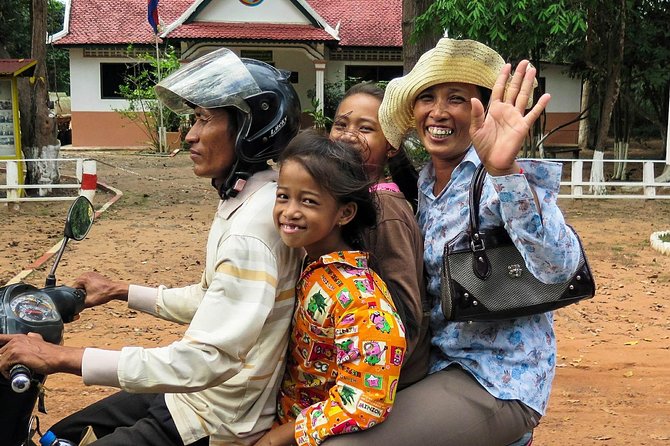
Pickup is included from your hotel in Krong Siem Reap. After booking, provide your hotel details so the driver can arrange the start. The group is private, and the guide speaks English.
Is $39 good value?
At $39 per person, the tour includes a private guide, driver, attraction tickets except Apopo, drinking water, and taxes. For a private three-and-a-half-hour introduction, that is fair value, particularly if you are traveling with a companion or small group.
The value is strongest when you use the guide for interpretation. You are not paying simply to be driven between sites. You are paying for explanations of Cambodian history, Buddhism, local life, and the meaning of places that may be difficult to understand alone.
The value is weaker if you have already explored the Old Market and central town, or if you expect every listed stop to be completed in detail. A short route with many attractions naturally involves compromises.
The tour includes free cancellation up to 24 hours before departure and allows you to reserve now and pay later. Those terms give you some useful flexibility, but the more important question is route clarity. Ask which stops are confirmed, whether transport is by tuk tuk, and whether Apopo will be added or substituted.
Who should book this Siem Reap tour?
I would recommend it to first-time visitors who want more than Angkor Wat but have only half a day available. It also suits anyone who prefers a private guide and wants to ask questions about religion, local customs, and Cambodia’s past.
It is a good fit for curious visitors who enjoy varied outings. In one short trip, you may see a market, royal site, monastery, village, old temple, craft center, and mine-detection center. That range is the point.
I would be more cautious if you want a carefully fixed itinerary, a long walking tour, or extensive time at each site. You may also prefer a different tour if shopping stops irritate you or if you have already covered central Siem Reap.
FAQ
How long does the Siem Reap city tour last?
The tour lasts about 3.5 hours. The total outing may run around three to four hours depending on the starting time and route.
How much does the tour cost?
The price is $39 per person. This includes the private guide, driver, attraction tickets except Apopo, drinking water, and taxes.
Is the Apopo Rat Center included?
No. Apopo costs an additional $10 per person. You can choose whether to add it.
What happens at the Apopo Rat Center?
The center trains rats to help clear landmines. The visit explains their role in mine detection.
Is hotel pickup included?
Yes. Pickup is included from your hotel in Krong Siem Reap. You should provide your hotel details after booking.
Is this a private tour?
Yes. The tour is arranged for a private group with an English-speaking live guide and driver.
Which language does the guide speak?
The listed tour language is English.
Are attraction tickets included?
Tickets to the included attractions are covered, except for the Apopo Rat Center. The hidden 10th-century brick temple does not require a ticket.
What should I bring?
Bring a hat, camera, cash, scarf, and hand sanitizer or tissues. Drinking water is supplied.
Can I cancel the tour?
You can cancel up to 24 hours in advance for a full refund. You can also reserve now and pay later.
Should you book it?
Book this tour if you want a quick, private introduction to Siem Reap’s local life, Buddhist traditions, craft work, and lesser-known ruins. Add Apopo if Cambodia’s recent history and mine-clearing work interest you.
Before you pay, confirm the exact stops, transport method, and any workshop visits. That one conversation can prevent the main disappointment reported on this route. With clear expectations, $39 buys a useful first look at Siem Reap beyond the famous temples.
Just added around Siem Reap
- Private Battambang Full-Day Guided Tour★ 4.5 · 3 reviews
- Kulen Mountain, Beng Mealea and Banteay Srei Full Day Tour★ 5.0 · 3 reviews
- Kompong Pluk Tour★ 5.0 · 3 reviews
- Private 3 Day Tour to Discover the ancient temples★ 5.0 · 3 reviews
- Kulen National Park Ticket -Waterfall & 1000 Lingas★ 5.0 · 3 reviews
- Cambodia: Absolute Traditional Dance Show with Buffet Dinner★ 5.0 · 3 reviews
- Border Transfer (Siem Reap to Laos/Laos to Siem Reap)★ 3.5 · 3 reviews
- Beng Melea, Rolous Group & Kompong Phluk Floating Village★ 5.0 · 3 reviews
City Tours, compared.
Full Day tour .City tour.Countryside.Bamboo Train.Secret Bat Cave
Read our review →
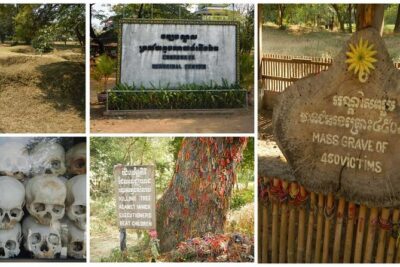
Phnom Penh City Tour, Silver Pagoda, Genocide Museum, Killing Fields
Read our review →
Siem Reap City Hidden Gems (Private Guided Tour)
Read our review →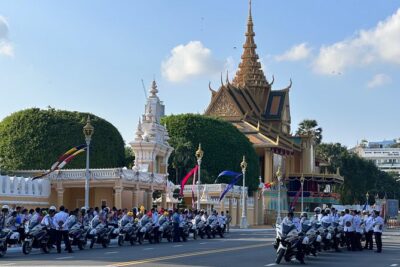
City Highlights and the Killing Fields Day Tour
Read our review →
Siem Reap City to Siem Reap Angkor Airport by Shuttle Bus
Read our review →Browse the lists this tour appears in