
Reviewed · ANGKOR WAT SUNRISE TOURS
Angkor Wat Sunrise & Ancient City Discovery
Wake before dawn for Angkor’s best light. This nine-hour cycling trip gives you sunrise at Angkor Wat, guided visits to major temples, and quieter forest paths between them. A quality mountain bike, helmet, English-speaking guide, breakfast, lunch, water, and coconut juice are included.
I especially like the way the tour combines the famous temple with less obvious corners of the Angkor complex. I also like the small group limit of 10, which should make it easier to hear your guide and adjust the pace. The main catch is the very early 5:00 am start, plus the $37 temple pass and lack of included hotel drop-off.
In This Review
- Key points before you book
- Why a bicycle works so well at Angkor
- 5:00 am pickup and the first light at Angkor Wat
- South Gate of Angkor Thom and the defensive walls
- Bayon and the stone faces of Angkor Thom
- Tanei and the quieter forest route
- Ta Prohm and the power of atmosphere
- Preah Khan, another large temple to explore
- Breakfast, lunch, coconut juice, and the practical value
- Group size, guide quality, and the solo question
- Who should book this Angkor experience?
- Should you book the $70 sunrise cycling tour?
- FAQ
- What time does the tour start?
- How long does the experience last?
- Is hotel pickup included?
- Is the Angkor temple pass included?
- What equipment is provided?
- Is a guide included?
- Are food and drinks included?
- How many people can join the tour?
- What should I wear and bring?
Key points before you book
- Sunrise begins at Angkor Wat: Arrive in darkness and watch the temple change as the sky turns gold.
- Five more major sites follow: Bayon, Preah Khan, Tanei, Ta Prohm, and Prasat Chrung are part of the long day.
- Forest riding adds variety: The route can include paved roads, dirt tracks, raised trails, and single-track sections.
- Meals and drinks are covered: Breakfast, lunch, drinking water, and fresh coconut juice are included.
- Bikes are supplied: You ride a quality Giant or Trek mountain bike with a helmet.
- Plan for the extra costs: The one-day Angkor pass costs $37, and you arrange your own return to your hotel.
Why a bicycle works so well at Angkor
Angkor is not one compact temple with a few nearby ruins. It is a huge archaeological area with roads, trees, gates, walls, reservoirs, and scattered monuments. A bicycle helps you understand that scale in a way a vehicle often does not.
You pedal between stops instead of simply stepping out of a car, taking photos, and climbing back in. The movement gives the day a natural rhythm: ride, explore, rest, ride again. The forest sections also give you a break from the busiest paths around Angkor Wat.
The route is not described as a flat, easy city ride. It may include asphalt, dirt roads, raised trails, and single-track sections. That variety is part of the appeal, but you should be comfortable riding a mountain bike for much of the day. You do not need to bring your own equipment, since a Giant or Trek mountain bike and helmet are supplied.
The guide matters here. You are not just following a road between monuments. The guides named in the tour’s feedback, including Vannarath, Mr. Seng, Bobo, Sihal, and Seyha, are praised for temple knowledge, clear explanations, careful pacing, and help with photographs. Vannarath is also noted for suggesting good photo positions and helping solo riders take pictures.
More City Tours in Siem Reap
- Siem Reap: City Walking Tour
★ 4.6 · 583 reviews - Siem Reap City Walking Tour
★ 4.5 · 114 reviews - Siem Reap City Hidden Gems (Private Guided Tour)
★ 5.0 · 105 reviews
5:00 am pickup and the first light at Angkor Wat
The morning starts at 5:00 am, with hotel pickup included. That early departure is necessary if you want to reach Angkor Wat before sunrise, but it is also the hardest part of the day. Arrange your clothing and camera the night before, and do not expect a relaxed breakfast before leaving.
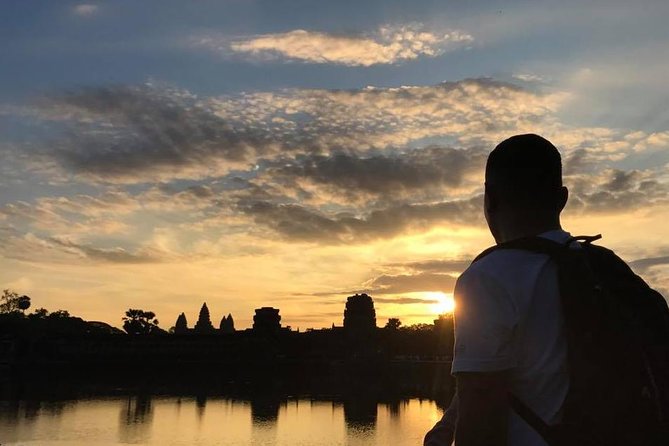
The first sight is Angkor Wat in the dark. As daylight appears, the temple’s towers and galleries gain shape, while the sky shifts toward warm gold. This is the emotional center of the tour, and the bicycle format gives you plenty of time afterward rather than ending the day at the main temple.
Your guide leads you through the temple complex and explains its design, stories, and religious importance. Angkor Wat is an active spiritual site, not only an archaeological attraction, so dress with care. Shorts and skirts above the knees and bare shoulders are not permitted in sacred areas. Sunscreen, sunglasses, and a camera are sensible additions to your small day bag.
Sunrise can be busy, and no tour can guarantee an empty viewing area. Still, the guide’s timing and knowledge of alternate positions can help you avoid some of the worst crowding. You should think of the sunrise as a shared public moment, followed by a more personal day of riding and temple visits.
South Gate of Angkor Thom and the defensive walls
After Angkor Wat, the route moves toward Angkor Thom, the great walled city. The South Gate is one of the most memorable entrances in the area, with its monumental approach and defensive setting.
This stop gives useful context. You begin to see Angkor not as a collection of isolated buildings, but as a planned city protected by walls, gates, and wide approaches. The bicycle makes sense here because the route connects these large spaces naturally.
The itinerary also includes riding along the protection wall toward Prasat Chrung. The wall offers a change from enclosed temple corridors, with views across the surrounding area. Reaching this section requires more than a quick roadside stop. You climb up and travel along the wall, so this is one place where balance, comfort on uneven surfaces, and a reasonable level of fitness matter.
Prasat Chrung is a smaller and quieter stop than Angkor Wat or Bayon. Its value comes from the setting and the sense of being away from the main flow. You are not simply ticking off famous names. You are seeing how the city’s outer defenses worked and how its builders used position and distance.
Bayon and the stone faces of Angkor Thom
Bayon is likely to be one of the day’s most visually striking temples. Its towers carry large carved faces, and its galleries contain scenes that reward close attention.
A guide can make a real difference here. The stonework is dense, and it is easy to walk past important details without knowing where to look. The guides are praised for pointing out small features and explaining the meaning behind the carvings, rather than giving only a quick list of dates.
Bayon can also feel busy, especially after the quiet of the morning ride. That contrast is useful to keep in mind. This is a major attraction, so you should expect more people and less solitude than at the smaller stops. The tour’s compact group can help, but it cannot remove the crowds entirely.
Because the day is long, do not rush every gallery. You will get more from Bayon if you pause for the faces, bas-reliefs, and layout instead of treating it as another photo stop.
More sunrise starts at Angkor Wat:
- Angkor Wat Sunrise or Sunset Tour with Guide from Siem Reap
★ 5.0 · 12,109 reviews - Angkor Wat Sunrise tour with Small – Group and Guide tours
★ 5.0 · 3,655 reviews - Full-Day Angkor Wat Sunrise Private Tour with Guide from Siem Reap
★ 5.0 · 2,920 reviews - Angkor Wat Sunrise & 3 Main Temples with Breakfast – Small Group
★ 5.0 · 2,857 reviews
Tanei and the quieter forest route
Tanei is one of the less famous names on the route, which is exactly why it adds value. The ride through forest and dirt paths makes the approach feel like part of the discovery.
The temple itself is less grand than Angkor Wat or Bayon, but the setting gives it character. You may find a calmer atmosphere here, along with a stronger sense of how scattered the Angkor complex really is.
This section also shows the difference between a cycling tour and a standard minibus circuit. The ride is not just transport. It is an active part of the experience, with changing surfaces and glimpses of trees and old walls between monuments.
The drawback is simple: a forest trail can be less predictable than pavement. If you prefer a gentle ride with no uneven sections, this tour may feel demanding. If you enjoy switching between road and trail, it is one of the day’s strongest features.
Ta Prohm and the power of atmosphere
Ta Prohm is famous for its trees growing around and over the ruins. The combination of carved stone, roots, shadow, and collapsed structures gives the temple a strong visual identity.
It is also one of the most popular places in Angkor, so do not expect the same quiet found at Tanei or Prasat Chrung. The reward is the setting itself. Ta Prohm shows how the forest has become part of the ruin, even though the site is carefully managed and protected.
A guide helps you read the temple instead of seeing only the most photographed tree. Ask about the layout, the carvings, and the areas that are easy to miss. The guides are praised for knowing good photo spots and helping visitors avoid some of the largest groups when timing allows.
By this point, you will have been awake for hours and cycling between several sites. Comfortable clothing, sunscreen, and regular water breaks are not minor details. They determine whether the afternoon feels rewarding or simply long.
Preah Khan, another large temple to explore
Preah Khan adds another broad, complex temple to the day. It is known for long corridors, courtyards, carved details, and a layout that takes time to understand.
This is a good place to let your guide set a sensible pace. You could spend a long time wandering here, but the tour still has to reach other stops and include lunch. The guide’s role is to point out the best sections without turning the visit into a race.
Preah Khan also suits the cycling format because it comes after a ride through the wider Angkor area. You arrive with a sense of place, not just a quick transfer from one isolated entrance to another.
The combination of major temples and smaller sites is one reason the price feels reasonable. You are paying for a full day of guided access to the complex, not only a sunrise photograph.
Breakfast, lunch, coconut juice, and the practical value
Food and drinks are included, which matters on a 5:00 am start. Breakfast gives you something to eat after the sunrise visit, while lunch keeps the day moving without requiring you to arrange a separate stop.
Fresh coconut juice is a particularly welcome touch in Cambodia’s heat. Pure drinking water is also provided, so you do not need to begin the ride carrying a large supply of water. You should still bring sunscreen and sunglasses, since the open sections and midday sun can be strong.
Tell the operator about dietary requirements when booking. The supplied information confirms that requests can be advised in advance, but it does not specify a standard menu or guarantee every type of diet. If you have strict needs, give clear details before the tour date.
The included meals, drinks, bike, helmet, guide, and pickup make the $70 price easier to justify. The extra $37 temple pass is important, though. Your total for the day is effectively $107 per person before considering any other personal costs.
Group size, guide quality, and the solo question
The maximum group size is 10 people. That is small enough to keep the guide’s explanations personal and make regrouping easier on the trails.
The experience can also operate with very few bookings. One person had the tour continue at the advertised price rather than being canceled or repriced, which is reassuring if you are booking alone. A solo rider may receive more attention, including help with photos and flexible pacing, though you should not assume every departure will be private.
The strongest part of the guiding is the combination of site information and practical help. Guides are praised for knowing the temples well, answering questions, finding less crowded photo positions, and making the ride feel safe. Bobo is singled out for handling varied terrain, while Vannarath is praised for a gentle manner and strong command of the route.
English is the guiding language. If you want a silent ride with little explanation, this may feel too structured. If you want the carvings and walls to make more sense, the guide is central to the value.
Who should book this Angkor experience?
I would choose this tour if you want an active day and would rather move through Angkor under your own power. It suits couples, friends, solo visitors, and anyone who likes combining major sights with forest trails.
It is also a strong choice if you have only one full day for Angkor. The itinerary covers Angkor Wat, Angkor Thom, Bayon, Tanei, Ta Prohm, Preah Khan, and Prasat Chrung, giving you a broad look at the complex.
I would think twice if you dislike early mornings, struggle with long rides, or want to spend an entire day at only one or two temples. The nine-hour schedule is generous, but it is not gentle. The changing trail surfaces may also be uncomfortable for anyone seeking a fully smooth route.
Wear respectful, breathable clothing and bring a camera, sunglasses, and sunscreen. Check the temple clothing rules before leaving your hotel. You should also confirm how you will return to your hotel, since pickup is included but hotel drop-off is not.
Should you book the $70 sunrise cycling tour?
Book it if you want Angkor to feel like a place rather than a string of entrances. The sunrise is the headline, but the real value comes from the hours afterward: cycling past walls, reaching lesser-seen corners, listening to a guide explain the carvings, and taking breaks with water, coconut juice, and meals already arranged.
The tour is not the cheapest possible way to see Angkor once you add the $37 pass. Still, the bike, helmet, guide, food, drinks, and hotel pickup cover the practical pieces of a demanding day. For an active visitor who wants more than the standard Angkor Wat photo, I think it is a strong buy.
If you prefer comfort over movement, choose a less strenuous format. If you like a little effort, an early start, and a route that mixes famous temples with quieter trails, this is the better fit.
FAQ
What time does the tour start?
The tour starts at 5:00 am.
How long does the experience last?
The cycling tour lasts approximately nine hours.
Is hotel pickup included?
Yes. Hotel pickup is included, but hotel drop-off is not included.
Is the Angkor temple pass included?
No. The one-day temple pass costs $37 and is not included in the tour price.
What equipment is provided?
A quality Giant or Trek mountain bike and a helmet are provided.
Is a guide included?
Yes. An English-speaking tour guide is included.
Are food and drinks included?
Yes. Breakfast, lunch, pure drinking water, and fresh coconut juice are included.
How many people can join the tour?
The tour has a maximum of 10 participants.
What should I wear and bring?
Wear respectful clothing that covers the shoulders and reaches at least to the knees. Bring a camera, sunglasses, and sunscreen, and advise the operator about dietary requirements when booking.
More Morning
- Siem Reap: Angkor Wat Sunrise and Full-Day Sightseeing Tour
★ 4.9 · 2,828 reviews - Angkor 2-Day Sunset & Sunrise Small-Group Tour
★ 5.0 · 2,567 reviews - Siem Reap: Angkor Wat Sunrise or Sunset Guided Tour
★ 4.9 · 2,123 reviews - Angkor Wat: Highlights and Sunrise Guided Tour
★ 4.9 · 1,586 reviews
More Angkor Wat Tours
- Siem Reap: Angkor Wat: Small-Group Sunrise or Sunset Tour
★ 5.0 · 9,444 reviews - Siem Reap: Angkor Wat 2-Day Tour with Sunrise and Sunset
★ 4.9 · 4,429 reviews - Siem Reap: Full-Day Angkor Wat Guided Tour with Sunset
★ 4.9 · 3,803 reviews - Angkor Wat Highlights and Sunrise Guided Tour from Siem Reap
★ 5.0 · 3,213 reviews
Just added around Siem Reap
- Private Battambang Full-Day Guided Tour★ 4.5 · 3 reviews
- Kulen Mountain, Beng Mealea and Banteay Srei Full Day Tour★ 5.0 · 3 reviews
- Kompong Pluk Tour★ 5.0 · 3 reviews
- Private 3 Day Tour to Discover the ancient temples★ 5.0 · 3 reviews
- Kulen National Park Ticket -Waterfall & 1000 Lingas★ 5.0 · 3 reviews
- Cambodia: Absolute Traditional Dance Show with Buffet Dinner★ 5.0 · 3 reviews
- Border Transfer (Siem Reap to Laos/Laos to Siem Reap)★ 3.5 · 3 reviews
- Best Taxi Siem Reap to Battambang – English Speaking Driver★ 4.5 · 3 reviews
Angkor Wat Sunrise Tours, compared.

Angkor Wat Sunrise or Sunset Tour with Guide from Siem Reap
Read our review →
Angkor Wat Sunrise tour with Small – Group and Guide tours
Read our review →
Full-Day Angkor Wat Sunrise Private Tour with Guide from Siem Reap
Read our review →
Angkor Wat Sunrise & 3 Main Temples with Breakfast – Small Group
Read our review →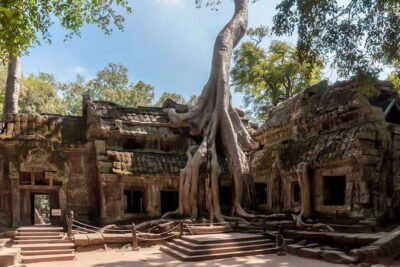
Angkor Wat Sunrise and Full-Day Sightseeing Tour
Read our review →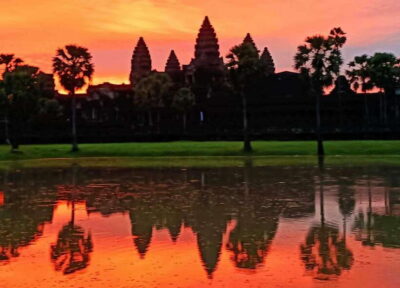
Siem Reap Tour: Angkor Wat Sunrise, Bayon, Ta Prohm, Banteay Srei
Read our review →
Angkor Wat Sunrise Explore The Most Iconic Temples
Read our review →Browse the lists this tour appears in