
Reviewed · 3-DAY EXPERIENCES
Siem Reap Temple and Waterfall 3-Day Tour
Start with sunrise, end with temples. This three-day private tour packs Angkor Wat, Angkor Thom, Ta Prohm, Banteay Srei, Phnom Kulen, and Tonlé Sap into a well-planned route. I especially like the private door-to-door transport and the chance to see both famous temples and quieter sites beyond the main Angkor circuit. I also like the thoughtful timing, including Angkor Wat at sunrise and Pre Rup near sunset.
The main drawback is cost control. The $171.50 price covers transport, a guide, water, and cool towels, but temple tickets, meals, and accommodation are extra. You also need to handle hot weather, early starts, and several long days on your feet.
In This Review
- Key points at a glance
- Why this three-day route works
- Day 1: Bayon faces, Angkor Thom, and Angkor Wat
- Day 2: Phnom Kulen’s waterfall and Banteay Srei’s fine stonework
- Day 3: Angkor Wat sunrise and the big circuit
- Guides, photos, and the private format
- What the $171.50 price really covers
- Heat, clothing, and the pace of the days
- Who should book this tour?
- Should you book it?
- FAQ
- How long is the Siem Reap Temple and Waterfall Tour?
- What time does the tour begin?
- Is this a private tour?
- What transport is provided?
- Are temple entrance fees included?
- Are meals included?
- Is accommodation included?
- What should I wear to the temples?
- Can I cancel for a full refund?
Key points at a glance
- Private guide and vehicle: Only your group joins the tour, with pickup and drop-off in Siem Reap.
- A broad three-day route: You visit Angkor Wat, Angkor Thom, Ta Prohm, Preah Khan, Neak Pean, Ta Som, Pre Rup, Banteay Srei, Phnom Kulen, and Tonlé Sap.
- Two strong viewing times: Angkor Wat sunrise begins at 5:00 am on Day 3, while Pre Rup or Phnom Bakheng may provide the sunset stop.
- Phnom Kulen adds variety: Waterfalls, the River of 1000 Lingas, and a large reclining Buddha give you more than another temple corridor.
- Guides can shape the experience: Boy, Young, and Makara received especially warm praise, with Makara also noted for taking excellent photos.
- Extra costs matter: The Angkor temple ticket is listed at $37 per person for one day, while meals and personal expenses are also separate.
Why this three-day route works
Siem Reap has no public transport system that makes this spread-out collection of sites easy to manage. A private car, van, or minibus with air conditioning saves you from arranging separate rides for each outing, and pickup from your hotel keeps the mornings simple.
The route also avoids making every day feel like the same temple visit. Day 1 focuses on Angkor Thom and Angkor Wat. Day 2 takes you out to Phnom Kulen and Banteay Srei before ending at Tonlé Sap. Day 3 returns to the Angkor area for sunrise and a string of temples on the big circuit.
That variety is the tour’s greatest strength. You get royal city gates, giant carved faces, pink sandstone, forest-covered ruins, a waterfall, village life on the lake, and two different kinds of sunset and sunrise light.
Because this is a private activity, your guide can give the day a more personal rhythm than a large coach tour. The group size is limited to you and your companions, which is useful if one person wants more time for photographs or if your group includes a child. One family of five adults and a four-year-old particularly valued the friendly, personal treatment from guide Young.
A few more trips worth weighing up
- From Siem Reap: Angkor Wat and Floating Village 3-Day Trip
★ 5.0 · 100 reviews - 3-Day Angkor Wat with All Interesting Major Temples, Banteay Srei & Beng Mealea
★ 5.0 · 70 reviews - 3-Day Angkor Wat & All Interesting Major Temples & Kulen Mount Waterfall
★ 5.0 · 63 reviews
Day 1: Bayon faces, Angkor Thom, and Angkor Wat
The first morning begins at 8:00 am at the South Gate of Angkor Thom. This is a practical first stop because it introduces you to the scale of the old Khmer capital before you enter the individual temples.
The South Gate is approached by a bridge lined with large stone figures. From there, you continue into Angkor Thom, where Bayon is the star. Built in the late 12th century as a Buddhist state temple, Bayon is famous for its towers carved with serene faces associated with the bodhisattva Avalokitesvara.
I would give Bayon time rather than rushing through it. The faces appear from different angles as you move among the towers, and the lower galleries show scenes of daily life as well as battles involving the Champa kingdom. These carvings help turn the site from a pile of stones into a record of people, trade, conflict, and court life.
Next comes Baphuon, a pyramid-shaped temple reached by a long bridge. It gives you a different visual experience from Bayon, with a more pronounced upward climb and broad stone levels. Nearby, Phimeanakas sits beside the former Royal swimming pool. It is less visually famous than Bayon, but its position inside the old royal area helps explain how the city functioned.
The morning schedule includes a lunch break in the Angkor Park, followed by time to rest. Lunch is not included, so you should budget for it separately. The break matters because Cambodian heat can make even a relaxed temple visit tiring, especially when the day includes uneven paths and exposed stone.
In the afternoon, you visit Angkor Wat, the monument most closely linked with Siem Reap. The site is vast, so you should expect grand galleries, long sightlines, towers, and detailed carvings rather than a quick single-room attraction. The guide can help you understand how the temple’s layout fits together and point out scenes that are easy to miss when you are focused only on the central towers.
The day finishes with a sunset option at Phnom Bakheng or Pre Rup. The exact choice can depend on conditions and the plan for the following days. Pre Rup is especially appealing for its brick construction and high platform, while Phnom Bakheng is known as a sunset viewing point.
Day 2: Phnom Kulen’s waterfall and Banteay Srei’s fine stonework
Day 2 begins at 8:00 am and heads toward Phnom Kulen. The journey gives you a look at rural Cambodia, with Khmer people going about daily life along the road. Since the site lies outside the main Angkor group, this day feels less like a circuit of nearby monuments and more like a trip into the wider region.
Phnom Kulen is important in Khmer history as an early center of the empire. The visit combines natural features and religious remains, which makes it one of the most varied parts of the trip.
At the site, you see the Kulen Waterfall, the River of 1000 Lingas, and a large reclining Buddha image. The waterfall provides a welcome change after the stone temples of Day 1. The river carvings add a religious layer, with lingas cut into the riverbed, while the reclining Buddha gives the visit another distinct focus.
You should expect this outing to be more physically demanding than simply walking through a temple courtyard. The tour information does not give detailed access conditions, so you should be ready for walking and outdoor heat. Wear light cotton clothing, bring the supplied water, and use the cool towels as intended.
After lunch and a rest, the afternoon turns to Banteay Srei. This small temple is built from pink sandstone and is prized for its delicate Khmer carvings. It is often called the jewelry of Khmer art, a fair description of the fine detail packed into its relatively modest scale.
Banteay Srei feels different from Angkor Wat because it is not about monumental size. Its appeal comes from careful decoration, carved figures, and the warm color of the stone. The lowland setting and smaller layout also make it easier to take in as a complete design.
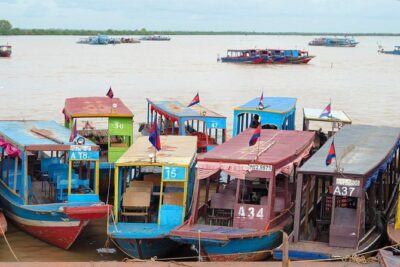
The final stop is Tonlé Sap, including a floating village and floating market. This gives you a look at a way of life shaped by the lake rather than by temple tourism. It also breaks up the rhythm of ancient monuments with a present-day Cambodian community.
The Tonlé Sap visit is a useful part of the itinerary, though the experience may feel less predictable than a temple. Water levels, weather, and local activity can affect what you see. Still, it adds cultural range and helps you understand that Siem Reap is more than an archaeological zone.
Day 3: Angkor Wat sunrise and the big circuit
The final day starts at 5:00 am from your hotel. The early departure is the price of seeing Angkor Wat at sunrise, but it also gives you a head start before the largest crowds build.
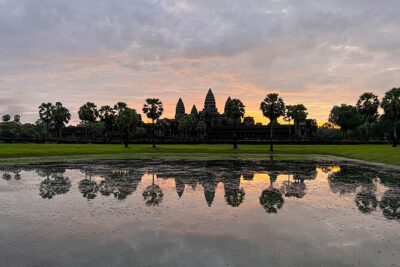
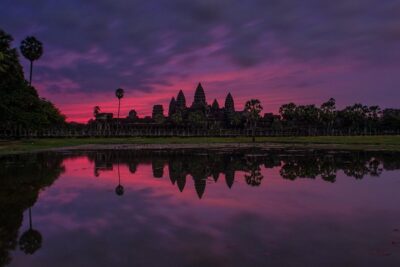
Sunrise at Angkor Wat is a classic Siem Reap moment, and the setting rewards patience. You may find the sky changes slowly, so do not expect the best color the instant you arrive. The tour then takes you to a local restaurant for breakfast, which is not included in the price.
After breakfast, you visit Ta Prohm. This is the temple associated with the Tomb Raider film, but its appeal is not limited to movie fame. Tree roots have grown across sections of the stonework, and the mix of carved walls and forest gives the site a more enclosed, dramatic mood than Angkor Wat.
The early timing is smart here. The plan is to reach Ta Prohm before the heaviest crowds arrive, giving you a better chance to appreciate the corridors and courtyards without moving at a crawl. Even so, you should keep expectations sensible. Ta Prohm is one of the best-known stops around Siem Reap.
A short drive along the big circuit brings you to Preah Khan, the largest ancestor temple built by the Buddhist king Jayavarman VII in honor of his father. It has long passageways and a sense of depth that rewards slow walking. I would ask your guide to point out how the temple changes as you move from the outer areas toward the central sections.
Neak Pean is next, positioned in the middle of a reservoir. It is associated with a holy pool and has a more open setting than the enclosed temples. The approach across the water gives the visit a distinct visual character, even though the central structure is smaller than the major Angkor monuments.
Ta Som follows on the bank of the reservoir. It is another smaller temple, and its placement helps the third day feel like a sequence of contrasting sites rather than one long visit to similar ruins. The tour ends at Pre Rup, a 10th-century royal state temple and one of the largest surviving brick sanctuaries in the area.
Pre Rup makes a strong final stop. Its brick towers and raised form look quite different from the later Buddhist temples visited earlier in the tour. If the timing works for sunset, the warm light can bring out the color and texture of the brickwork.
A completely different kind of day out from Siem Reap:
- Angkor Wat Sunrise or Sunset Tour with Guide from Siem Reap
★ 5.0 · 12,109 reviews - Siem Reap: Angkor Wat: Small-Group Sunrise or Sunset Tour
★ 5.0 · 9,444 reviews - From Siem Reap: Kampong Phluk Floating Village Tour by Boat
★ 4.9 · 6,979 reviews - Sunset tour of Kampong Phluk stilts home village on the Tonle Sap
★ 5.0 · 4,865 reviews
Guides, photos, and the private format
The guide can make or break a temple trip, and this experience has several named guides associated with strong praise. Boy was singled out along with driver Chantha for helping create a smooth visit. Young was described as professional, kind, funny, and especially good with a family group that included a four-year-old.
Makara also received praise for being friendly and for taking excellent photographs. That detail matters more than it may seem. Angkor has many grand views, but a good guide who knows where to place your group can help you return home with better pictures and less time spent trying to organize everyone.
The private format is best for couples, families, and small groups who want flexibility. You are not joining strangers, and the vehicle is reserved for your party. The tradeoff is that a private tour usually costs more per person than a large group departure, though the listed price includes three days of guiding and transport.
The vehicle may be a car, van, or minibus with air conditioning. Water and cool towels are included, which are small but useful comforts in Cambodia’s heat. Pickup and drop-off in Siem Reap also remove the need to arrange transport to a meeting point each morning.
What the $171.50 price really covers
At $171.50 per person, the tour offers good value if you want a complete route without arranging several separate day trips. You receive private transport, a guide, hotel pickup and drop-off in Siem Reap, cool water, and cool towels.
The headline price is not the final trip cost. Temple entry fees are excluded, and the stated Angkor ticket price is $37 per person for one day. Since this is a three-day temple program, you should confirm the ticket arrangement before departure and budget carefully rather than assuming admission is included.
Lunch is also separate on each day, as are personal expenses. Accommodation is not part of the tour either. This setup works well if you have already booked a hotel and want to choose your own meals, but it requires a little financial planning.
Group discounts are available, which may improve the value for a larger party. The private arrangement is also easier to justify when several people are sharing the vehicle and guide rather than paying for separate transport each day.
Heat, clothing, and the pace of the days
Cambodia is hot and humid for much of the year. Light cotton clothing is recommended, but temple rules are the more important issue. Shorts and shirts should cover the knees and shoulders, and scarves, shawls, and tank tops are not accepted as substitutes.
November, December, and January are identified as the most pleasant months. Even then, you should plan for early mornings, warm afternoons, and plenty of walking. Day 3 starts before dawn, while Day 2 includes an outdoor excursion to Phnom Kulen.
You will get breaks for lunch and rest, but this is still an active program. If you prefer short sightseeing sessions with long downtime, the schedule may feel full. If you want to see the major temples plus sites outside the usual Angkor core, the pace is a reasonable trade.
The tour suits most people, but the information does not promise special accessibility arrangements. If you have mobility concerns, ask the provider about individual temple access before booking.
Who should book this tour?
I would recommend it to a first-time Siem Reap visitor who wants a strong overview without spending days negotiating drivers and routes. It is also a good fit for families, couples, and small groups who value privacy and a guide who can adjust explanations and photo stops.
It suits anyone who wants more than Angkor Wat. Phnom Kulen and Tonlé Sap add a useful sense of place, while Banteay Srei, Preah Khan, Neak Pean, Ta Som, and Pre Rup keep the temple program from becoming repetitive.
I would think twice if you want a slow, highly specialized archaeology tour, or if you dislike early mornings and full sightseeing days. You should also compare the total cost after adding tickets, meals, and your hotel.
Should you book it?
Book this tour if you want three busy but varied days, private transport, and a guide-led route that reaches both the major Angkor monuments and the wider Siem Reap area. The strongest reasons are the sunrise timing, Phnom Kulen excursion, personal guide service, and simple hotel transfers.
Skip it if you would rather set your own pace, spend several hours at only one temple, or keep extra costs to an absolute minimum. For most first visits, though, the route gives you a practical mix of Khmer architecture, local life, countryside, and outdoor scenery in one organized package.
FAQ
How long is the Siem Reap Temple and Waterfall Tour?
The experience lasts approximately three days.
What time does the tour begin?
The listed start time is 8:00 am, but Day 3 begins at 5:00 am for the Angkor Wat sunrise.
Is this a private tour?
Yes. Only your group participates in the activity.
What transport is provided?
A car, van, or minibus with air conditioning is provided, along with pickup and drop-off in Siem Reap.
Are temple entrance fees included?
No. Entry fees and tickets are not included. The stated temple ticket price is $37 per person for one day.
Are meals included?
No. Lunch is not included, and breakfast after the Angkor Wat sunrise is also at your own expense.
Is accommodation included?
No. You need to arrange and pay for your own accommodation in Siem Reap.
What should I wear to the temples?
Wear clothing that covers your knees and shoulders. Shorts and shirts must be long enough, and scarves, shawls, and tank tops are not accepted.
Can I cancel for a full refund?
Yes, if you cancel at least 24 hours before the experience start time. Cancellations made less than 24 hours in advance are not refunded, and late changes are not accepted.
Just added around Siem Reap
- Private Battambang Full-Day Guided Tour★ 4.5 · 3 reviews
- Kulen Mountain, Beng Mealea and Banteay Srei Full Day Tour★ 5.0 · 3 reviews
- Kompong Pluk Tour★ 5.0 · 3 reviews
- Private 3 Day Tour to Discover the ancient temples★ 5.0 · 3 reviews
- Kulen National Park Ticket -Waterfall & 1000 Lingas★ 5.0 · 3 reviews
- Cambodia: Absolute Traditional Dance Show with Buffet Dinner★ 5.0 · 3 reviews
- Border Transfer (Siem Reap to Laos/Laos to Siem Reap)★ 3.5 · 3 reviews
- Beng Melea, Rolous Group & Kompong Phluk Floating Village★ 5.0 · 3 reviews
3-Day Experiences, compared.
3-Day Angkor Wat with All Interesting Major Temples, Banteay Srei & Beng Mealea
Read our review →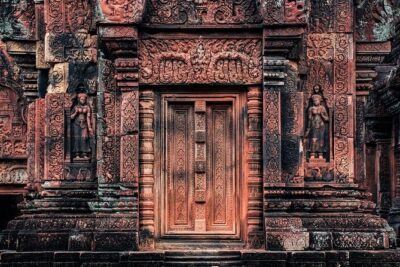
3-Day Angkor Wat & All Interesting Major Temples & Kulen Mount Waterfall
Read our review →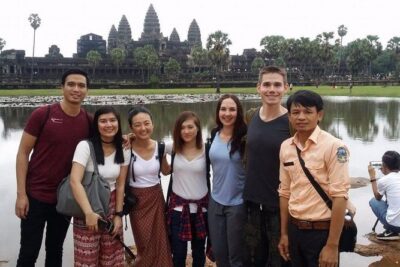
Best of Siem Reap 3-Day Private Tour to Angkor Wat & Tonle Sap
Read our review →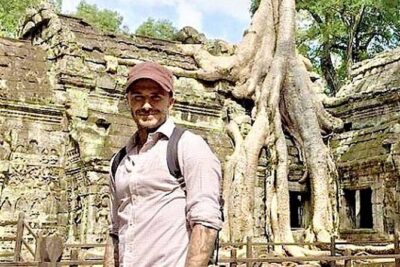
Private Siem Reap 3 Day Tour Discover All Highlight Angkor Temple
Read our review →
Private 3-Day Mekong Delta River Tour from Phnom Penh to Ho Chi Minh City
Read our review →Browse the lists this tour appears in