
Reviewed · ANGKOR WAT SUNRISE TOURS
1 Day Discover Angkor Wat Sunrise Private Tour
Sunrise makes Angkor Wat unforgettable. This early start gives you the temple before the worst heat, then carries you through Ta Prohm, Angkor Thom, Bayon, the Terrace of the Elephants, and Ta Keo with a private English-speaking guide. I especially like the flexible pace and the chance to travel with only your own group.
I also like the practical touches: an air-conditioned vehicle, hotel pickup and drop-off, cold water, and cold towels. The main drawback is the 5 a.m. start, and the $110 tour price does not include the $37-per-person Angkor admission fee.
In This Review
- Key points at a glance
- Why the 5 a.m. start is worth considering
- Angkor Wat: two hours with the great first stop
- Ta Prohm: trees, roots, and a famous film setting
- Angkor Thom: entering an ancient royal city
- Bayon: the faces that make you stop
- The Terrace of the Elephants: a short but meaningful pause
- Ta Keo: a steep final temple stop
- What the private format really gives you
- How to prepare for temple rules and walking
- Who will get the most from this eight-hour route
- Should you book the Angkor Visitor tour?
- FAQ
- What time does the tour start?
- How long does the experience last?
- How many people can join the private tour?
- Is hotel pickup and drop-off included?
- Is transportation provided?
- Is an English-speaking guide included?
- Is the Angkor entrance ticket included?
- Are food and drinks included?
- What should I wear?
- Can I cancel for a full refund?
Key points at a glance
- Sunrise at Angkor Wat: Arrive in the dark and watch the temple appear as daylight grows.
- Private group of up to 10: You avoid a large coach and have more room to adjust the pace.
- Six major temple stops: The route covers Angkor Wat, Ta Prohm, Angkor Thom, Bayon, the Terrace of the Elephants, and Ta Keo.
- Guides praised by name: Guides including Praim, Sieng Kei, and Kim are singled out for clear explanations, photo help, and courteous service.
- Useful transport comforts: An air-conditioned vehicle, cold drinking water, cold towels, and hotel pickup are included.
- Plan for walking and temple dress: You need moderate fitness, comfortable shoes, covered shoulders, and clothing that reaches the knees.
Why the 5 a.m. start is worth considering
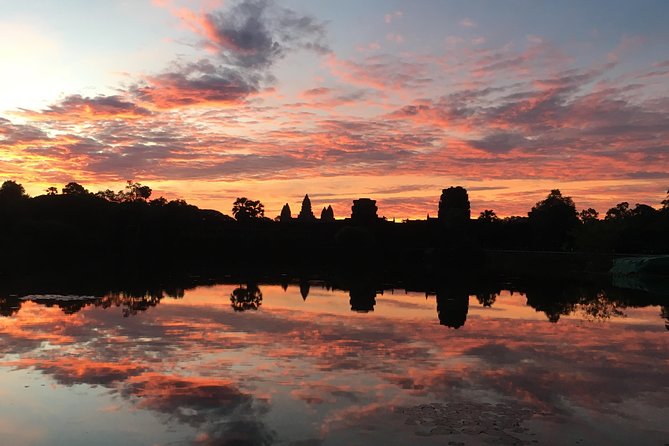
Angkor Wat at sunrise is the reason to book this outing. You leave around 5 a.m., reach the temple while it is still dark, and wait for the sky to brighten behind one of Cambodia’s most famous monuments. The changing light gives you time to take photographs before the morning heat becomes difficult.
The timing also helps you make better use of the eight-hour schedule. Cambodia can be hot, and temple exploration often means walking over uneven ground with little shade. Starting early gives you a cooler first half of the day and gets you to several major sites before the sun is at its strongest.
There is a catch. Sunrise tours require an early night before, and the wait at Angkor Wat may last close to an hour. One account describes arriving around 5:30 a.m. and seeing the sun come through the temple around 6 a.m. If you want a slow hotel breakfast, this is not your tour.
Still, the quiet build-up has its own appeal. You begin in the dark, hear the site wake up, and watch the outline of the temple become clear. The sunrise is never guaranteed to look dramatic, since weather controls the colors, but the setting remains special even on a plain morning.
More sunrise starts at Angkor Wat:
- Angkor Wat Sunrise or Sunset Tour with Guide from Siem Reap
★ 5.0 · 12,109 reviews - Angkor Wat Sunrise tour with Small – Group and Guide tours
★ 5.0 · 3,655 reviews - Full-Day Angkor Wat Sunrise Private Tour with Guide from Siem Reap
★ 5.0 · 2,920 reviews
Angkor Wat: two hours with the great first stop
Angkor Wat receives about two hours, making it the longest stop on the route. That is sensible. This is a large temple complex on a 162.6-hectare site, and a quick photograph from outside would not do it justice.
The temple was originally built as a Hindu monument dedicated to Vishnu. Your guide can help give meaning to the towers, galleries, carvings, and religious design rather than leaving you to see them as a series of impressive stones. Several people particularly valued guides who explained both the ancient site and modern Cambodia.
Your first experience here is likely to focus on the sunrise view, but the temple deserves attention after the sky brightens. Look at the way the main structure is framed across the water, then take time to notice the scale of the galleries and the carved surfaces. The site can feel crowded at the popular sunrise viewpoint, so a private guide who knows alternative photo positions can be useful.
Guides named Praim, Sieng Kei, and Kim received especially strong praise for storytelling, timing, and photography help. Praim was described as good at keeping ahead of other groups, while Kim helped a family find attractive photo spots and took pictures for them. Those small services matter when you are traveling with a family or trying to include everyone in the frame.
Admission is separate. The Angkor ticket costs $37 per person, and you should allow for that on top of the tour fee.
Ta Prohm: trees, roots, and a famous film setting
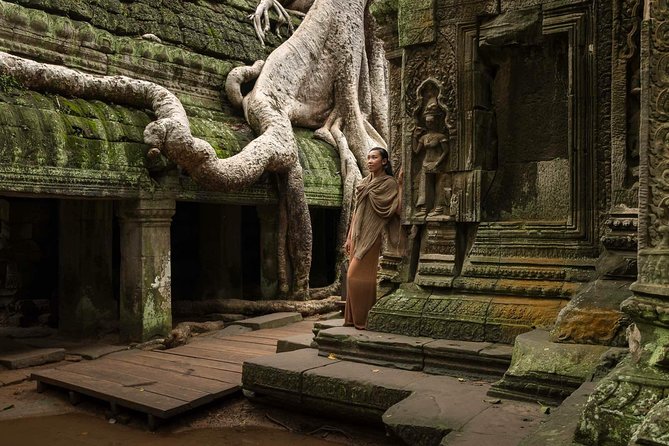
Ta Prohm gets about one hour. It is one of the most visually memorable stops because large trees and thick roots grow through the temple walls. The result is not simply a ruined building, but a place where stone and forest seem to have pressed into each other over time.
Ta Prohm was also featured in the adventure film Tomb Raider. That connection brings extra attention, but the temple has more to offer than a movie location. The roots, narrow passages, damaged walls, and shifting views make it a good contrast with the broad order of Angkor Wat.
The one-hour visit should give you enough time to see the main features, but not enough time for a slow, wandering exploration of every corner. Your guide’s route matters here. A good guide can point out what deserves a closer look and help you avoid spending the whole stop waiting for a photograph.
Because the ground can be uneven, sturdy walking shoes are a smart choice. The tour requires a moderate level of physical fitness, so you should be comfortable walking between temple areas and standing for parts of the visit.
Angkor Thom: entering an ancient royal city
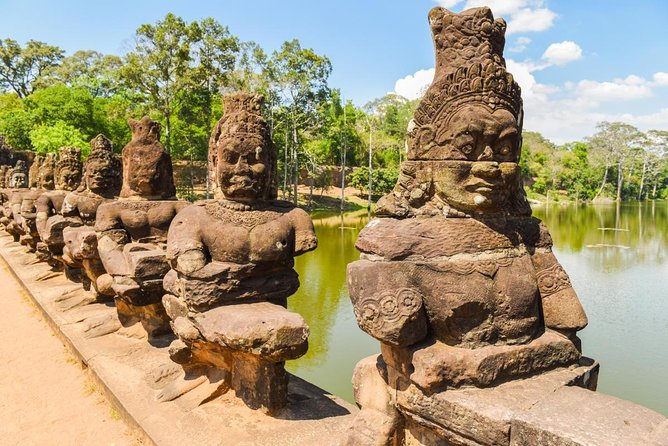
Angkor Thom receives one hour, and it is more than another temple stop. It was an ancient Khmer imperial city, built around 1181 under King Jayavarman VII. The city was nearly square and enclosed by walls about eight meters high, stretching a little over 12 kilometers.
That scale changes how you understand the area. You are not just moving from one isolated monument to another. You are entering the remains of a planned royal center, with the next stops, Bayon and the Terrace of the Elephants, inside its boundaries.
A private tour is helpful here because Angkor Thom can be hard to read without explanation. Walls, gates, roads, and temple remains may look disconnected when you first see them. A licensed guide can connect the pieces and explain how the city functioned.
The schedule gives you an overview rather than an exhaustive study. If you become fascinated by the city’s layout, you may wish the hour were longer. That is the trade-off in a one-day highlights tour: you see many important places, but each stop has a firm limit.
More Angkor Wat tours we have reviewed:
- Siem Reap: Angkor Wat: Small-Group Sunrise or Sunset Tour
★ 5.0 · 9,444 reviews - Siem Reap: Angkor Wat 2-Day Tour with Sunrise and Sunset
★ 4.9 · 4,429 reviews - Siem Reap: Full-Day Angkor Wat Guided Tour with Sunset
★ 4.9 · 3,803 reviews - Angkor Wat Highlights and Sunrise Guided Tour from Siem Reap
★ 5.0 · 3,213 reviews
Bayon: the faces that make you stop
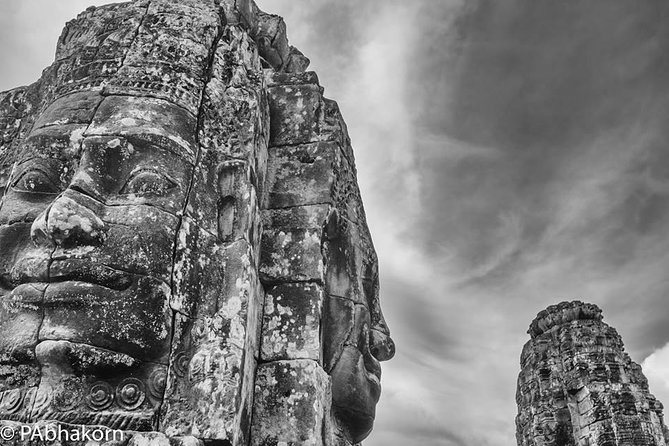
Bayon receives another hour and is one of the route’s most distinctive temples. It was built in the late 12th or early 13th century as the state temple of King Jayavarman VII. Its towers carry the famous stone faces, often described as smiling faces or four-faced Buddha images.
Bayon is less immediately orderly than Angkor Wat. Passages, towers, and carved surfaces create a more enclosed and puzzling experience. You may find yourself looking up at a face from one angle, then discovering another one above a nearby passage.
This is a place where interpretation adds real value. The faces are easy to photograph, but a guide can help you understand the temple’s role and point out details you might otherwise walk past. The strongest praise for the guides focused on their ability to explain the sites clearly without making the tour feel rushed.
One hour is enough for a strong introduction. It is not enough to inspect every carving. I would pay attention to how the temple feels different from Angkor Wat, then let the guide steer you toward the details that best fit your interests.
The Terrace of the Elephants: a short but meaningful pause
The Terrace of the Elephants is allotted about 25 minutes. This is the briefest stop, but it adds useful context to Angkor Thom. King Jayavarman VII used the terrace as a platform from which to view victorious armies.
Its function helps you picture the city as a royal and political center, not only a collection of religious buildings. The name comes from elephant imagery connected with the terrace, and the long raised platform gives you a sense of ceremony and display.
Do not expect a long independent visit here. Twenty-five minutes is enough for an explanation, photographs, and a look at the carvings, but the stop is designed as part of the larger Angkor Thom visit. If you prefer to study one monument at length, this fast rhythm may feel limiting.
Ta Keo: a steep final temple stop
Ta Keo receives about 30 minutes. It is one of Angkor’s taller monuments, built by Jayavarman V just east of Angkor Thom. Its five sanctuaries sit atop a five-stepped pyramid that rises about 22 meters.
The design gives Ta Keo a strong vertical feel. Compared with Ta Prohm’s roots or Bayon’s faces, this temple is about height, steps, and the visual force of a mountain temple. Half an hour provides an introduction and time for photographs, though it is not a long visit.
The steps and walking make comfortable footwear important. If your knees or balance are a concern, tell the guide early. One family found the private vehicle particularly useful when a member had a knee problem, since the guide could bring the car closer to the sites where possible. That does not remove all walking, but it can make the day easier.
What the private format really gives you
The $110 price covers the whole group, up to 10 people, rather than charging $110 per person. With 10 people, that works out to $11 per person for the guide and transport. With two people, the per-person cost is much higher, but you gain a private vehicle, a private guide, and the ability to keep the day within your own group.
The value is strongest for families, couples, and small groups who care about control and personal attention. A guide can help with photographs, adjust the pace, and respond to mobility concerns. You also avoid being tied to strangers who may want a different amount of time at each temple.
The entrance ticket changes the total. At $37 per person, two people would add $74, while a group of 10 would add $370. Food, drinks beyond the supplied water, and personal expenses are also separate.
The tour includes an air-conditioned vehicle, hotel pickup and drop-off, cold drinking water, and cold towels. Those are practical benefits in Siem Reap, especially after several hours of walking outdoors. Food is not included, so arrange breakfast through your hotel or carry something suitable for after the sunrise portion.
The experience has a 5 rating from 88 reviews and a 99 percent recommendation rate. The praise centers on punctuality, polite service, strong explanations, crowd awareness, and photo assistance. Praim was repeatedly valued for storytelling and efficient routing, while Sieng Kei and Kim were also praised for making the day informative and personal.
How to prepare for temple rules and walking
Dress for both heat and temple etiquette. Your shirt should cover your shoulders, and your pants or shorts should reach the knees. These rules are easy to follow if you choose loose, breathable clothing before leaving your hotel.
Wear comfortable walking shoes. The itinerary includes several temple compounds, steps, and uneven surfaces, and the tour asks for moderate physical fitness. Cold towels and air conditioning help between stops, but they do not replace sensible clothing and footwear.
The private setting is also useful if you need a little flexibility. You can tell the guide about a knee issue or a preference for a slower pace, although the supplied information does not promise a fully accessible route. The temples themselves still require walking.
Weather matters. This experience requires good weather, and a cancellation for poor conditions brings either a different date or a full refund. For your own cancellation, you receive a full refund if you cancel at least 24 hours before the 5 a.m. start. Changes or cancellations within 24 hours are not refunded.
Who will get the most from this eight-hour route
This tour suits a first visit to Angkor when you want the major sights in one carefully arranged morning and early afternoon. You get the most famous temple, two memorable temple styles, the ancient city, and two shorter architectural stops without having to organize transport yourself.
It is also a good match for families and small groups. The private format gives you space in the vehicle and lets the guide help with photographs. The example of a guide bringing a car closer for a traveler with knee trouble shows why private transport can be worth the extra cost.
You should think twice if you dislike early mornings or prefer a slow, single-site visit. Six stops in about eight hours create a full day. The short time at the Terrace of the Elephants and Ta Keo may leave a serious temple enthusiast wanting more.
It is also not a bargain for a solo visitor. The group price becomes better as more people join, while the $37 admission fee remains per person. For a couple, the convenience may justify the total. For a larger family or group of friends, the value improves quickly.
Should you book the Angkor Visitor tour?
Book it if you want the classic Angkor introduction with sunrise, private transport, and a guide who can explain what you are seeing. The strongest reasons are the early timing, the compact route through major monuments, and the personal help with photos, crowds, and mobility.
Before booking, confirm that everyone is ready for a 5 a.m. departure, moderate walking, temple-appropriate clothing, and the separate $37 entrance fee. If those conditions suit you, this is a well-priced option for a group of up to 10 and a practical way to make one memorable day count.
FAQ
What time does the tour start?
The tour starts at 5:00 a.m.
How long does the experience last?
The tour lasts approximately eight hours.
How many people can join the private tour?
The private tour can include up to 10 people in your group.
Is hotel pickup and drop-off included?
Yes. Pickup and drop-off are included.
Is transportation provided?
Yes. The tour includes an air-conditioned vehicle.
Is an English-speaking guide included?
Yes. A licensed and experienced English-speaking guide is included.
Is the Angkor entrance ticket included?
No. The Angkor Wat and other temple entrance fee costs $37 per person and is paid separately.
Are food and drinks included?
Food and beverages are not included. Cold drinking water and cold towels are included.
What should I wear?
Wear a shirt that covers your shoulders and pants or shorts that reach knee level.
Can I cancel for a full refund?
Yes. You can cancel at least 24 hours before the start time for a full refund. Cancellations or changes made within 24 hours are not refunded.
More 1-Day Tours
- 1-Day Amazing Angkor Wat Tour with Sunset & All Interesting Major Temples
★ 5.0 · 308 reviews - Angkor Wat one Day Private Tour for All Highlight Angkor Temples
★ 5.0 · 199 reviews - 1-Day private Angkor Temple Tour from Siem Reap
★ 4.9 · 178 reviews - 1-Day Angkor Wat Sunrise & All Interesting Temples Private Tour
★ 5.0 · 174 reviews
More Morning
- Angkor Wat Sunrise & 3 Main Temples with Breakfast – Small Group
★ 5.0 · 2,857 reviews - Siem Reap: Angkor Wat Sunrise and Full-Day Sightseeing Tour
★ 4.9 · 2,828 reviews - Angkor 2-Day Sunset & Sunrise Small-Group Tour
★ 5.0 · 2,567 reviews - Siem Reap: Angkor Wat Sunrise or Sunset Guided Tour
★ 4.9 · 2,123 reviews
Just added around Siem Reap
- Private Battambang Full-Day Guided Tour★ 4.5 · 3 reviews
- Kulen Mountain, Beng Mealea and Banteay Srei Full Day Tour★ 5.0 · 3 reviews
- Kompong Pluk Tour★ 5.0 · 3 reviews
- Private 3 Day Tour to Discover the ancient temples★ 5.0 · 3 reviews
- Cambodia: Absolute Traditional Dance Show with Buffet Dinner★ 5.0 · 3 reviews
- Kulen National Park Ticket -Waterfall & 1000 Lingas★ 5.0 · 3 reviews
- Border Transfer (Siem Reap to Laos/Laos to Siem Reap)★ 3.5 · 3 reviews
- Beng Melea, Rolous Group & Kompong Phluk Floating Village★ 5.0 · 3 reviews
Angkor Wat Sunrise Tours, compared.

Angkor Wat Sunrise or Sunset Tour with Guide from Siem Reap
Read our review →
Angkor Wat Sunrise tour with Small – Group and Guide tours
Read our review →
Full-Day Angkor Wat Sunrise Private Tour with Guide from Siem Reap
Read our review →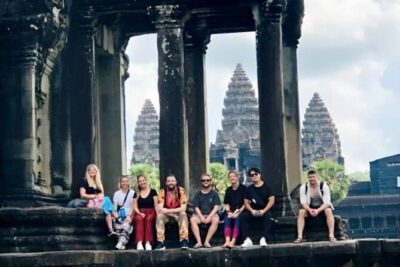
Angkor Wat Sunrise & 3 Main Temples with Breakfast – Small Group
Read our review →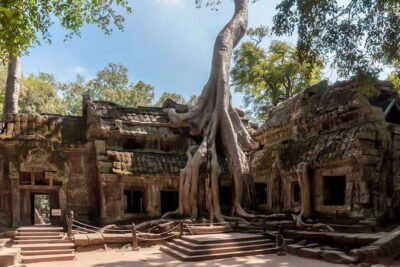
Angkor Wat Sunrise and Full-Day Sightseeing Tour
Read our review →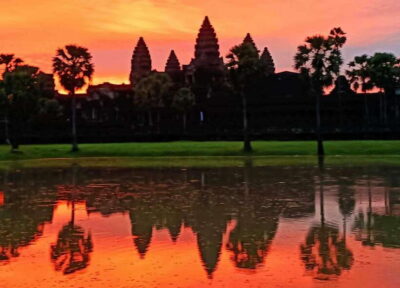
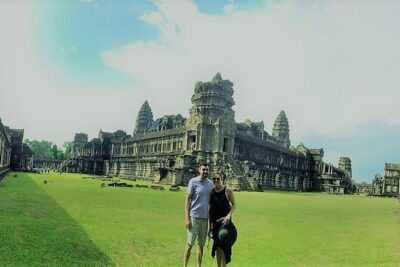
Siem Reap Tour: Angkor Wat Sunrise, Bayon, Ta Prohm, Banteay Srei
Read our review →
Angkor Wat Sunrise Explore The Most Iconic Temples
Read our review →Browse the lists this tour appears in