
Reviewed · ANGKOR WAT SUNRISE TOURS
2 Days Angkor Wat Sunrise and Sunset Private Tour
Angkor rewards an unhurried visit. This two-day private tour covers the major temples of both the Big and Small Circles, with Angkor Wat sunrise and sunset from Phnom Bakheng adding two memorable light shows. I like the efficient route, which includes Bayon, Ta Prohm, Banteay Srei, Preah Khan, and several quieter ruins. I also like having an English-speaking guide and air-conditioned transport reserved just for your group. The main drawback is cost: the $134 tour price does not include the required $62 three-day Angkor Pass, meals, drinks, or tips.
The schedule is full, and the early start can be tiring. You will also need respectful clothing covering your shoulders and knees, and a real scarf cannot be used as a substitute. Still, for a first visit to Angkor, this is a strong way to see a wide range of temples without arranging every ride and stop yourself. The guide praised by name in the available feedback is Tann, who was described as well prepared and consistently helpful.
In This Review
- Key points at a glance
- Why two days works better than one
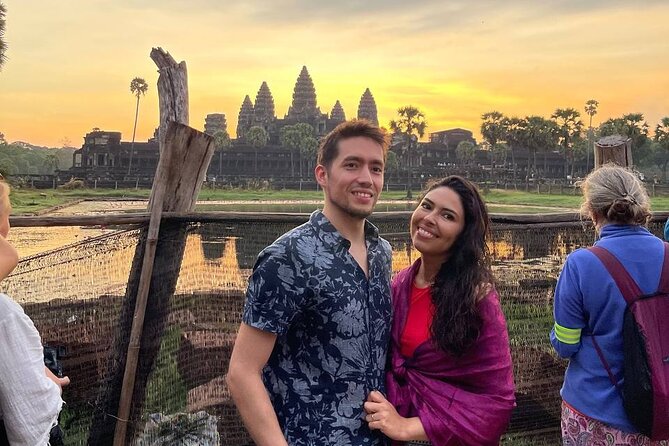
- Sunrise at Angkor Wat
- Angkor Thom, Bayon, and the royal city
- Ta Prohm and the quieter Ta Nei
- Banteay Srei brings a different style
- Preah Khan, Neak Pean, and Ta Som
- Eastern Mebon and sunset from Phnom Bakheng
- What the $134 price really covers
- Clothing, tickets, and simple preparation
- Who should book this Angkor tour?
- Should you book it?
- FAQ
- Is the Angkor Pass included in the tour price?
- Does the tour include hotel pickup and drop-off?
- Is this a private tour?
- What meals are included?
- What clothing is required?
- Is an English-speaking guide included?
- Can I use a drone at the temples?
- What is the cancellation policy?
Key points at a glance
- Two different golden-hour visits: See Angkor Wat at sunrise on one morning and Phnom Bakheng at sunset on the other day.
- Private touring: Only your own group participates, giving you a more personal schedule than a large coach trip.
- Wide temple coverage: The route includes Angkor Wat, Bayon, Ta Prohm, Banteay Srei, Preah Khan, Neak Pean, Ta Som, and Eastern Mebon.
- Air-conditioned transport: Hotel pickup and drop-off are included, an important comfort in Cambodia’s heat.
- Bring the pass budget: The three-day Angkor Pass costs $62 per person and is separate from the tour price.
- Smart breakfast tip: Ask your hotel for a breakfast pack, then eat it after the sunrise visit at Angkor Wat.
Why two days works better than one
Angkor is too large for a quick single outing if you want to see its main temples properly. This tour gives you roughly two hours at Angkor Wat, an hour at Bayon, an hour at Ta Prohm, and a second full day for outlying sites such as Banteay Srei and Eastern Mebon.
That extra day matters because the temples are not all alike. Angkor Wat is vast and formal. Bayon is compact, crowded with stone faces, and visually intense. Ta Prohm is atmospheric and partly claimed by tree roots. Banteay Srei is smaller, more delicate, and farther from the central group.
I also like the split between sunrise and sunset. You are not trying to force both into one exhausting day, and the second evening gives you a different view of the Angkor area from Phnom Bakheng. The schedule still begins early and covers plenty of ground, but it avoids treating every temple as one long blur of carved stone.
Because this is a private activity, the experience is limited to your group. That does not guarantee unlimited time at every stop, but it should make questions and explanations easier than they would be on a large shared bus.
More sunrise starts at Angkor Wat:
- Angkor Wat Sunrise or Sunset Tour with Guide from Siem Reap
★ 5.0 · 12,109 reviews - Angkor Wat Sunrise tour with Small – Group and Guide tours
★ 5.0 · 3,655 reviews - Full-Day Angkor Wat Sunrise Private Tour with Guide from Siem Reap
★ 5.0 · 2,920 reviews
Sunrise at Angkor Wat
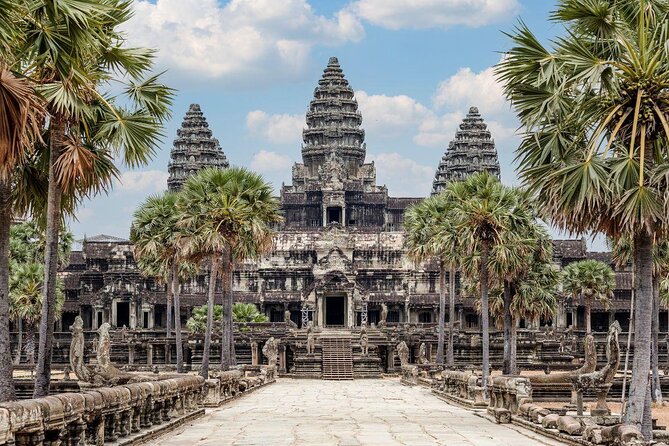
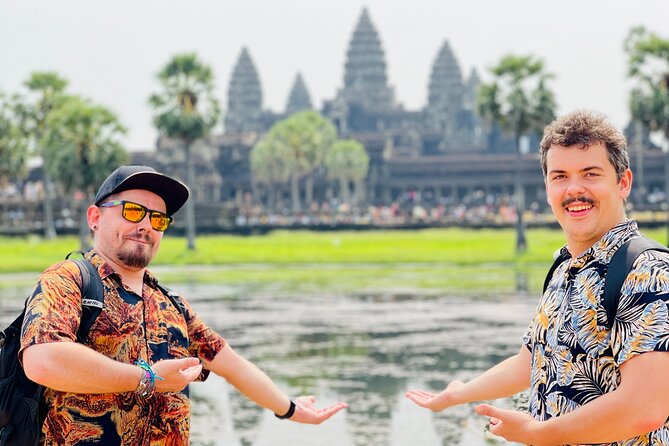
Your first stop is Angkor Wat, the enormous temple complex dedicated originally to the Hindu god Vishnu. It occupies a site of about 162.6 hectares, so even the two-hour visit only gives you an introduction to the main areas.
Sunrise is the reason for the early departure. The temple’s towers and reflection pools are at their most recognizable in the soft morning light, and the cooler hours make walking easier. This is the point where the breakfast-pack advice becomes useful. If your hotel includes breakfast, ask for a packed meal and eat after the sunrise visit rather than trying to fit a full hotel breakfast into the morning.
The two-hour allocation is sensible, but do not expect to see every corner. Angkor Wat rewards a slow look at its galleries and carved scenes, yet this tour must continue to Angkor Thom. You will want comfortable shoes, water, and a plan for what you most want to see inside.
The entrance ticket is not included. The required three-day Angkor Pass costs $62 per person, and it can be bought on the day of the tour just before sunrise. Visa cards are accepted. Keep that extra expense in mind when comparing the $134 tour price with a do-it-yourself visit.
Angkor Thom, Bayon, and the royal city
After Angkor Wat, the route moves to Angkor Thom through the South Gate. The gate visit is brief, about 15 minutes, but it introduces the great city founded in the late 12th century by King Jayavarman VII.
The South Gate is more than a quick photo stop. It marks the entrance to a former Khmer capital and gives your guide a useful place to explain the city’s layout. You will not spend long here, so listen closely and save detailed questions for the longer Bayon stop.
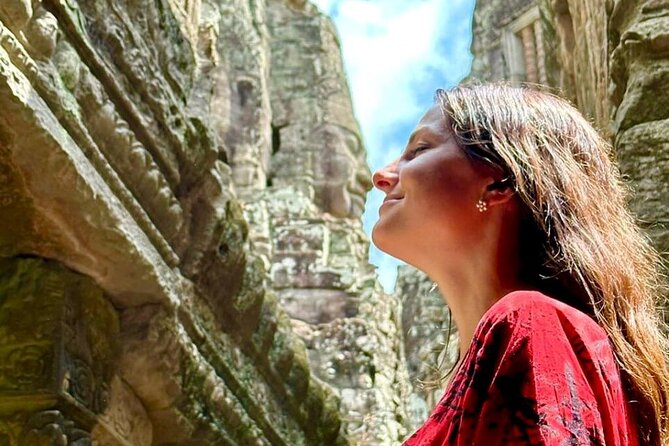
Bayon gets about an hour. This was the state temple of Jayavarman VII and was built as a Mahayana Buddhist site. Its famous carved faces give it a character very different from Angkor Wat’s broad symmetry.
I find Bayon best approached slowly. Look up, look around, and notice how the towers crowd together. The temple can feel confusing at first, which is exactly where a guide earns the transport and tour fee. A clear explanation can help you understand what you are seeing instead of simply collecting another set of photographs.
The tour also passes through Angkor Thom and visits the Terrace of the Elephants for about 15 minutes. The terrace is free to enter, and the stop is short. Treat it as a quick look at the ceremonial center rather than a major temple visit.
Ta Prohm and the quieter Ta Nei
Ta Prohm receives an hour, which gives you time to see why it is one of Angkor’s most recognizable temples. Built in the late 12th and early 13th centuries during the Bayon period, it was originally called Rajavihara.
The appeal here comes from the meeting of stone and trees. Ta Prohm feels less orderly than Angkor Wat, with corridors, towers, and roots creating a more enclosed setting. The route does not promise every section of the temple, so stay aware of the time and follow your guide’s plan.
Ta Nei is a smaller late 12th-century temple, and the 40-minute stop changes the pace. Dedicated to the Buddha and built during Jayavarman VII’s reign, it offers a less monumental experience than the famous sites.
That contrast is valuable. After the large crowds and grand scale of Angkor Wat, Bayon, and Ta Prohm, Ta Nei gives you room to pay attention to the stonework and setting. It is also a reminder that Angkor is not just a short list of celebrity temples.
Day one is therefore carefully balanced: a major temple at sunrise, the central royal city, two very different temple settings, and a ceremonial terrace. It is a long sightseeing day, but the air-conditioned vehicle helps during transfers.
More Angkor Wat tours we have reviewed:
- Siem Reap: Angkor Wat: Small-Group Sunrise or Sunset Tour
★ 5.0 · 9,444 reviews - Siem Reap: Angkor Wat 2-Day Tour with Sunrise and Sunset
★ 4.9 · 4,429 reviews - Siem Reap: Full-Day Angkor Wat Guided Tour with Sunset
★ 4.9 · 3,803 reviews - Angkor Wat Highlights and Sunrise Guided Tour from Siem Reap
★ 5.0 · 3,213 reviews
Banteay Srei brings a different style
Day two begins with Banteay Srei, a 10th-century Hindu temple dedicated to Shiva. The visit lasts about two hours, making it the longest stop of the day.
Banteay Srei is known for its smaller scale and detailed decoration. After the broad spaces of Angkor Wat, it can feel almost intimate. The earlier date also gives you a useful point of comparison with Jayavarman VII’s later temples.
The distance and early start are the trade-off. You are giving much of the morning to reach one of the area’s distinctive temples, then returning toward the main Angkor zone. I think that choice is worthwhile if you want variety, but you should not choose this tour expecting a relaxed schedule with long breaks.
The guide’s role is especially useful here. Small carved details are easy to pass without context, and the two-hour allocation allows time to look rather than simply stop for a photograph.
Preah Khan, Neak Pean, and Ta Som
Preah Khan follows with about an hour. Built in the 12th century for Jayavarman VII to honor his father, it lies northeast of Angkor Thom and west of the Jayatataka baray.
The temple gives you another large complex to explore, but its layout and mood differ from the central temples. You can expect a substantial walk through corridors and courtyards, so water and sensible footwear matter. The one-hour stop is enough for a guided introduction, though not for a leisurely examination of every section.
Neak Pean receives 30 minutes. This Buddhist temple sits on an artificial island in the Jayatataka baray, a reservoir linked with Preah Khan. Its island setting makes it unlike most of the other stops, although the short visit means you should expect a focused look rather than a long exploration.
Ta Som gets about 35 minutes. This smaller temple was built at the end of the 12th century for Jayavarman VII and lies northeast of Angkor Thom. It works well as a compact stop between the larger sites.
The sequence is practical. You see a major temple, a water-centered monument, and a smaller ruin without spending the entire day at only one place. The downside is that the stops are tightly timed. If you become absorbed in one site, the schedule may feel restrictive.
Eastern Mebon and sunset from Phnom Bakheng
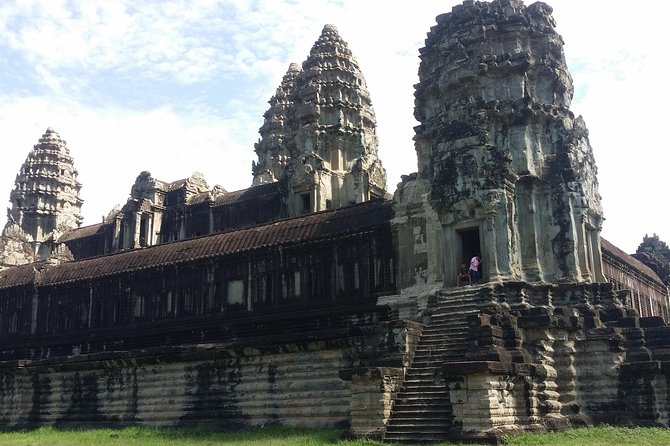
Eastern Mebon is a 10th-century temple built during the reign of King Rajendravarman. It once stood on an artificial island in the East Baray, a reservoir that is now dry.
The site gives you another view of Angkor’s earlier temple tradition. Its former island position also helps explain how water management shaped the Khmer capital. You receive about 40 minutes here, enough for an overview and photographs without making the second day drag.
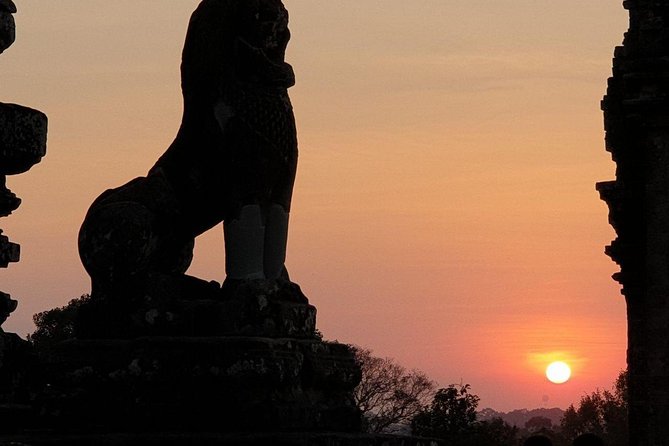
The final stop is Phnom Bakheng, a temple mountain dedicated to Shiva and built in the late 9th century during the reign of King Yasovarman. The tour allows about an hour for the visit and sunset.
Sunset at Phnom Bakheng is not the same experience as sunrise at Angkor Wat. Here, the appeal comes from the elevated setting and the view across the surrounding area as daylight fades. The stop gives the two-day plan a clear ending and lets you compare two famous Angkor viewpoints in different light.
The practical issue is timing. Sunset viewing is popular, and the visit may feel more constrained than the earlier temples. The supplied details do not promise a particular sunset viewpoint or guaranteed access to every upper area, so I would treat the hour as a planned visit rather than an open-ended wait for the perfect sky.
What the $134 price really covers
At $134 per person, this is not a bargain basement temple ride. But the price includes an English-speaking professional guide, an air-conditioned vehicle, sightseeing at the listed sites, bottled water, and free pickup and drop-off at city hotels.
The private format is the key value. You are paying for two days of transport and guiding without sharing the activity with other groups. That can make sense if you want explanations at the temples, prefer a set route, or are traveling with family or friends who would rather not negotiate separate tuk-tuk rides.
The total required sightseeing budget is higher than the headline price. Add the $62 three-day Angkor Pass, and the basic combined cost reaches $196 per person before meals, drinks, and tips. Breakfast and lunch are not included, and guide and driver tips are recommended.
For a solo visitor, the total may feel steep. For a small private group, the convenience becomes easier to justify, especially with hotel pickup and drop-off included. Group discounts are available, so ask about the final rate if several people are booking together.
The tour is booked an average of 53 days ahead, which suggests you should not leave it until the last minute if your dates are fixed. Confirmation is provided at booking, and free cancellation is available up to 24 hours before the start time.
Clothing, tickets, and simple preparation
Respectful dress is required at the temples. Your shoulders and knees must be covered, and a real scarf is not accepted as a substitute. Pack proper clothing before leaving your hotel, since a quick cover-up may not meet the rules.
The Angkor Pass can be purchased just before sunrise on the tour day, and Visa cards are accepted. Because admission is separate, budget for it in advance instead of treating the tour price as the full cost.
Ask your hotel for a breakfast pack if breakfast is included in your room. This is one of the most useful tips for the tour because sunrise starts before a normal breakfast schedule is convenient.
Drone use is not allowed at the temples unless permission is obtained from APSARA. Do not assume you can launch one for a quick aerial photograph.
The tour is near public transportation, although pickup and drop-off at city hotels are already included. Most people can participate, but the schedule involves walking around temple grounds and several long sightseeing days.
Who should book this Angkor tour?
I would recommend it to a first-time Siem Reap visitor who wants the major temples covered in two days without arranging transport, tickets, timing, and routes alone. It suits couples, families, and small groups who value a private guide and a vehicle with air conditioning.
It is also a good fit if sunrise and sunset are important to you. Many short temple outings focus only on Angkor Wat, while this plan gives you Angkor Wat in the morning and Phnom Bakheng in the evening.
I would hesitate if you want slow photography sessions, long meals, or a flexible schedule. The route is packed, and the admission fee and meals add to the final cost. You should also be comfortable with early starts, heat, temple walking, and respectful clothing rules.
The strongest praise attached to the experience concerns the guide service, especially Tann, who was described as well prepared and consistently attentive. That matters here because the value of the tour depends not only on moving between temples, but on helping you understand why each site looks and feels different.
Should you book it?
Book this tour if you want a well-planned first look at Angkor, prefer private transport, and care about seeing both sunrise and sunset. The broad selection of temples is its greatest strength, and the two-day structure gives you more variety than a single highlight-only visit.
Skip it if your priority is the lowest possible price or a slow, independent pace. Once you add the $62 Angkor Pass, meals, drinks, and tips, the final cost is substantial. For many first-time visitors, though, the private guide, hotel transfers, air-conditioned vehicle, and carefully arranged temple route make the expense reasonable.
FAQ
Is the Angkor Pass included in the tour price?
No. The three-day Angkor Pass costs $62 per person and is not included. It can be purchased on the tour day just before sunrise, and Visa cards are accepted.
Does the tour include hotel pickup and drop-off?
Yes. Free pickup and drop-off are provided at city hotels.
Is this a private tour?
Yes. Only your own group participates in the activity.
What meals are included?
Breakfast, lunch, and drinks are not included. If your hotel provides breakfast, you can request a breakfast pack and eat it after sunrise at Angkor Wat.
What clothing is required?
You must cover your shoulders and knees with respectful clothing. A real dress scarf is not accepted as a substitute.
Is an English-speaking guide included?
Yes. A professional English-speaking tour guide is included.
Can I use a drone at the temples?
Drone use is not allowed unless you first obtain permission from APSARA.
What is the cancellation policy?
You can cancel up to 24 hours before the experience starts for a full refund. Changes or cancellations made less than 24 hours before the start time are not accepted for a refund.
More Evening Experiences
- Siem Reap Floating Village Kampong Phluk Sunset with Boat
★ 5.0 · 1,962 reviews - Full-Day Guided Sunset Tour of Angkor Wat
★ 5.0 · 1,507 reviews - Kompong Phluk Floating Village Half-Day Tour ( Morning / Sunset )
★ 5.0 · 1,494 reviews - Siem Reap: Full Day Angkor Wat Temple Experience with Sunset
★ 4.9 · 1,490 reviews
More Sunset Tours
- Sunset tour of Kampong Phluk stilts home village on the Tonle Sap
★ 5.0 · 4,865 reviews - Angkor Wat Sunset Small Group Tour with Lunch Included
★ 5.0 · 3,059 reviews - Angkor 2-Day Sunset & Sunrise Small-Group Tour
★ 5.0 · 2,567 reviews - Siem Reap: Angkor Wat Sunrise or Sunset Guided Tour
★ 4.9 · 2,123 reviews
Just added around Siem Reap
- Private Battambang Full-Day Guided Tour★ 4.5 · 3 reviews
- Kulen Mountain, Beng Mealea and Banteay Srei Full Day Tour★ 5.0 · 3 reviews
- Kompong Pluk Tour★ 5.0 · 3 reviews
- Private 3 Day Tour to Discover the ancient temples★ 5.0 · 3 reviews
- Kulen National Park Ticket -Waterfall & 1000 Lingas★ 5.0 · 3 reviews
- Cambodia: Absolute Traditional Dance Show with Buffet Dinner★ 5.0 · 3 reviews
- Border Transfer (Siem Reap to Laos/Laos to Siem Reap)★ 3.5 · 3 reviews
- Beng Melea, Rolous Group & Kompong Phluk Floating Village★ 5.0 · 3 reviews
Angkor Wat Sunrise Tours, compared.

Angkor Wat Sunrise or Sunset Tour with Guide from Siem Reap
Read our review →
Angkor Wat Sunrise tour with Small – Group and Guide tours
Read our review →
Full-Day Angkor Wat Sunrise Private Tour with Guide from Siem Reap
Read our review →
Angkor Wat Sunrise & 3 Main Temples with Breakfast – Small Group
Read our review →
Angkor Wat Sunrise and Full-Day Sightseeing Tour
Read our review →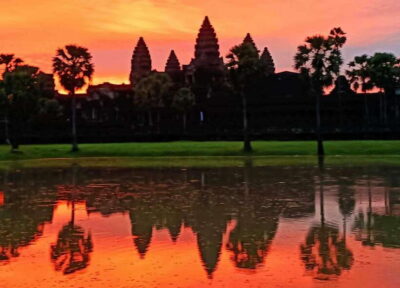
Siem Reap Tour: Angkor Wat Sunrise, Bayon, Ta Prohm, Banteay Srei
Read our review →
Angkor Wat Sunrise Explore The Most Iconic Temples
Read our review →Browse the lists this tour appears in