
Reviewed · BANTEAY SREI TOURS
3-Day Tour(Unforgettable Angkor Temple Complex, Banteay Srei& Floating Village)
Angkor rewards an unhurried three days. This private Siem Reap tour gives you time for major sights such as Angkor Wat, Bayon, and Ta Prohm, while also reaching quieter temples, Banteay Srei, the Roluos Group, and Kampong Phluk on Tonle Sap lake. You travel by air-conditioned vehicle with an English-speaking guide and professional driver, so the days feel organized without locking you into a fixed group schedule.
I especially like the 4:30 a.m. Angkor Wat sunrise and the chance to ask your guide for food suggestions and lesser-known stops. A guide named Mr Lion is praised for finding good photo positions, helping with pictures, and introducing local cuisine. The main drawback is cost control: the $245 price excludes the Angkor pass, boat ticket, meals, and personal expenses, so your final bill will be higher.
This works best for you if you want a private experience and prefer temple visits with context rather than simply being dropped at a gate. The program is full, and some mornings start very early. Still, the mix of famous monuments, forest temples, Hindu shrines, countryside roads, and lake life gives you a broader view of Siem Reap than a one-day circuit.
In This Review
- Key points to know before booking
- Why three days makes sense at Angkor
- Day one: tree roots, royal faces and Angkor Thom
- Ta Prohm, where the forest takes part in the ruins
- Ta Nei and Ta Keo show a different side of Angkor
- Victory Gate and the southern entrance to Angkor Thom
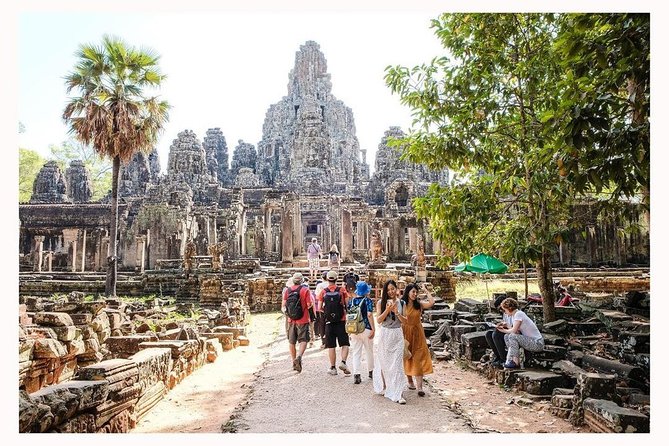
- Bayon, Baphuon and Angkor Thom’s ceremonial center
- Day two: sunrise at Angkor Wat and the older Roluos temples
- The 4:30 a.m. start at Angkor Wat
- Roluos Group: Bakong, Lolei and Preah Ko
- Day three: pink sandstone, countryside roads and Tonle Sap
- Banteay Srei and its precise carvings
- Banteay Samre, a quieter relative of Angkor Wat
- Kampong Phluk and life on Tonle Sap
- What the $245 price really covers
- Who should book this private Siem Reap tour?
- Should you book it?
- FAQ
- Is the tour private?
- Is hotel pickup included?
- Is the Angkor Archaeological site pass included?
- Is the floating-village boat ticket included?
- What time does the Angkor Wat sunrise tour begin?
- Are meals included?
- What should I wear at the temples?
- Can I cancel for a full refund?
Key points to know before booking
- Angkor Wat sunrise is included, with a very early 4:30 a.m. start on day two.
- Mr Lion has received praise for photography help, local food advice, and attentive guiding.
- The private format gives your group control, with only your party participating.
- The program reaches quieter sites, including Ta Nei, Preah Palilay, and the Roluos temples.
- Banteay Srei adds finely carved pink sandstone, while Banteay Samre offers a quieter Angkor Wat-style temple.
- The Angkor pass and floating-village boat ticket are extra, as are lunches, drinks, and tips.
Why three days makes sense at Angkor
Angkor is not one building. It is a large archaeological area with temples spread across the countryside around Siem Reap. Trying to see the principal monuments in a single day usually means rushing from one famous stop to another, with little time to notice how the sites differ.
This three-day plan has a sensible shape. The first day focuses on Angkor Thom and nearby forest temples. Day two begins with Angkor Wat, then shifts to the older Roluos Group. Day three heads farther north to Banteay Srei and Banteay Samre before ending at Kampong Phluk on Tonle Sap.
I like that arrangement because it changes the pace. You get the famous stone faces and grand causeways, but also smaller sanctuaries where the setting matters as much as the architecture. The private format is valuable here. You can ask your guide to explain a carving, pause for photographs, or spend less time at a stop that does not hold your interest.
The vehicle, driver, cool water, and wet towels are included. Those small comforts matter in Cambodia’s heat, especially after walking over stone surfaces for several hours. Lunch is not included, so plan to pay for meals at local restaurants or arrange them with your guide.
More Banteay Srei trips:
- Full-Day Banteay Srei & 4 Temples – Grand Tours Join-in Tour
★ 5.0 · 1,155 reviews - Siem Reap Tour: Angkor Wat Sunrise, Bayon, Ta Prohm, Banteay Srei
★ 5.0 · 931 reviews - 2-Day Angkor Wat With Small, Big Circuit and Banteay Srei Tour
★ 5.0 · 545 reviews
Day one: tree roots, royal faces and Angkor Thom
Ta Prohm, where the forest takes part in the ruins
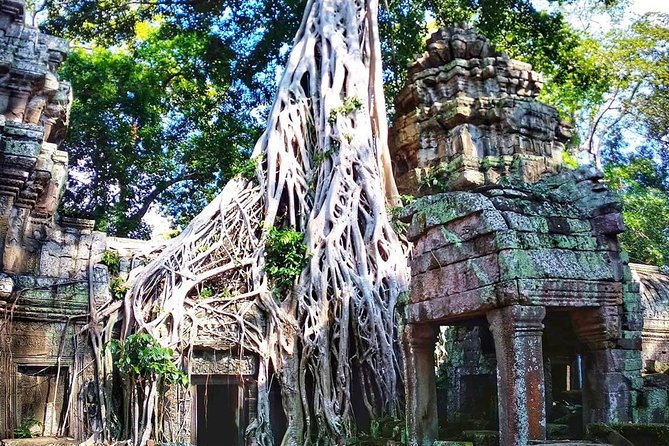
Ta Prohm is one of Angkor’s most atmospheric temples. Parts of the monastic complex remain tangled with jungle growth, and enormous tree roots press against the walls. The site offers the familiar tree-and-stone photographs, but it is more than a picture stop.
Give yourself the full 90 minutes. Look beyond the best-known corners and notice the long galleries, doorways, and partially cleared sections. The appeal comes from the tension between careful Khmer construction and the force of the forest. Ta Prohm can also be one of the more popular stops, so the private vehicle and guide help you use your time efficiently.
Ta Nei and Ta Keo show a different side of Angkor
Ta Nei is smaller and more secluded in feel than Ta Prohm. Its design recalls Ta Som, and its art belongs to the period associated with King Jayavarman VII. You have about 45 minutes here, which is enough for a focused look without turning the visit into another long temple walk.
Ta Keo is a temple mountain dedicated to Shiva. Unlike some of Angkor’s heavily decorated monuments, it is notable for its plain sandstone construction and strong, towering shape. You get another 45 minutes. If you enjoy architecture, this stop helps you see that Khmer temple design was not only about surface ornament. Mass, height, and layout mattered too.
More Tonle Sap floating village trips:
- From Siem Reap: Kampong Phluk Floating Village Tour by Boat
★ 4.9 · 6,979 reviews - Sunset tour of Kampong Phluk stilts home village on the Tonle Sap
★ 5.0 · 4,865 reviews - Siem Reap: Kampong Phluk Floating Village Tour with Boat
★ 4.9 · 3,843 reviews - Siem Reap Floating Village Kampong Phluk Sunset with Boat
★ 5.0 · 1,962 reviews
Victory Gate and the southern entrance to Angkor Thom
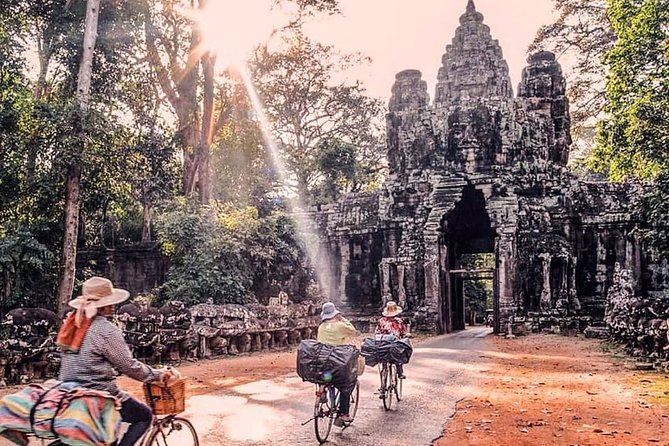
The Victory Gate is one of five entrances guarding the ancient city of Angkor Thom. It provides a useful lead-in to the city’s larger monuments and helps you understand that Angkor was an urban and political center, not simply a collection of isolated temples.
After a short stop, the route continues to the South Gate. Its causeway is lined with 54 stone figures on each side, linked to the Hindu story of the churning of the ocean of milk. This is one of the tour’s best places to pause for an explanation. Without a guide, the rows of figures can look like decoration. With context, the causeway becomes a scene from a major Hindu story.
Lunch is taken at a local restaurant in the temple area or back at your hotel. Since the meal is on your own payment, ask about the timing and location before setting out. A private guide can also point you toward local food, an aspect particularly praised in connection with Mr Lion.
Bayon, Baphuon and Angkor Thom’s ceremonial center
Bayon is the visual centerpiece of Angkor Thom. Its towers carry the famous carved faces, and the temple’s compact passages can feel almost maze-like. The program allows one hour, enough to see the major features and hear how the monument fits into the wider city.
Next comes Baphuon, a three-tiered temple mountain dedicated to Shiva. Its scale is impressive, but it can also be physically demanding because temple visits involve walking and uneven stone surfaces. Dress accordingly and wear practical footwear.
The Terrace of the Elephants stretches about 300 meters and is decorated with elephants and garudas. It once formed part of the ceremonial heart of Angkor Thom. The Terrace of the Leper King has a double wall covered with nagas, demons, and other mythical figures. Both stops last around 30 minutes, making them good places for your guide to point out details without keeping you in the heat too long.
The final stop, Preah Palilay, is a small sandstone and laterite tower set in a shaded forest setting. Buddhist carvings on the eastern entrance add another layer to the day. It is a quieter finish after the grand scale of Bayon and the terraces.
Day two: sunrise at Angkor Wat and the older Roluos temples
The 4:30 a.m. start at Angkor Wat
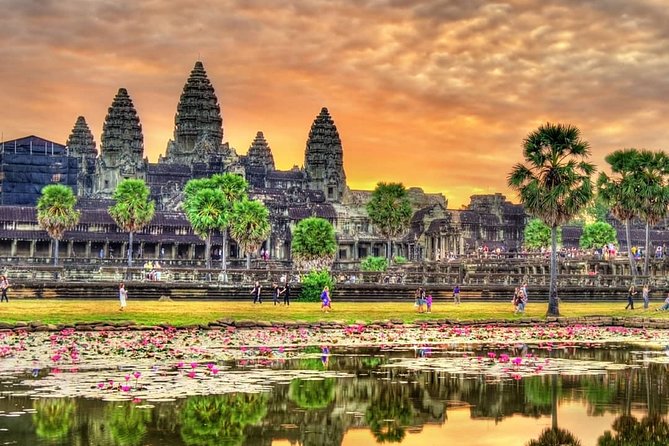
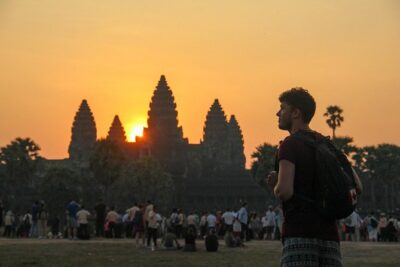
Day two begins early, very early. The 4:30 a.m. departure is the price of seeing sunrise at Angkor Wat. Bring patience as well as a camera. Sunrise conditions are never guaranteed, and the experience depends on the weather, but the early start lets you see the temple at a cooler hour.
The visit allows about four hours, which is appropriate for Angkor Wat. This is not a monument to skim in 30 minutes. Its scale, galleries, towers, bas-reliefs, and layered design require time. Your guide can help connect the building’s Hindu purpose, architectural plan, and artistic program.
The early hour also affects the rest of your day. You may return to the hotel or continue according to the guide’s plan, but do not expect day two to feel leisurely from start to finish. The benefit is substantial: you spend your best temple hours at Cambodia’s most important monument, before the midday heat becomes intense.
Angkor’s dress rules matter. Wear clothing that covers your shoulders and falls below your knees. Some temples and palaces, including Baphuon, enforce this carefully. Shirts with obscene or disrespectful images, as well as brightly colored clothing, may lead to refused entry.
Roluos Group: Bakong, Lolei and Preah Ko
The afternoon moves to the Roluos Group, an earlier collection of temples linked to the capital of King Indravarman I between 877 and 889. These monuments help you see how Khmer architecture developed before the classic Angkor Wat period.
Bakong is the largest of the three stops and receives about 45 minutes. It is a temple mountain, so the structure’s rising form is important. Lolei, visited for around 30 minutes, was built in the ninth century as a Hindu temple dedicated to Shiva.
Preah Ko means sacred bull. Built in 879, it is dedicated to Shiva and named for Nandi, Shiva’s bull. You have about 40 minutes here. The Roluos temples do not have the same instant fame as Angkor Wat or Bayon, but that is part of their value. They give you architectural sequence and a quieter afternoon after the morning crowds.
Day three: pink sandstone, countryside roads and Tonle Sap
Banteay Srei and its precise carvings
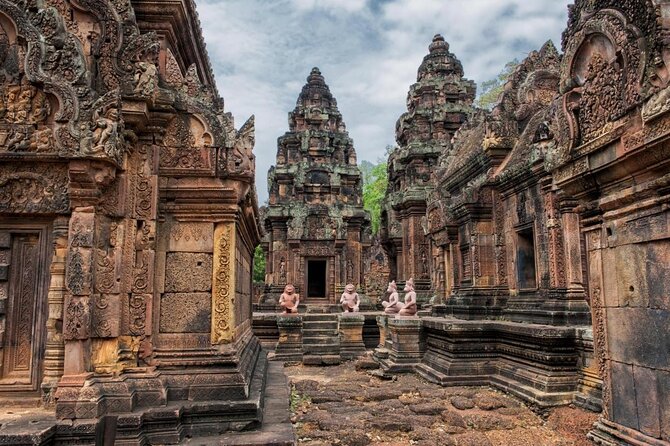
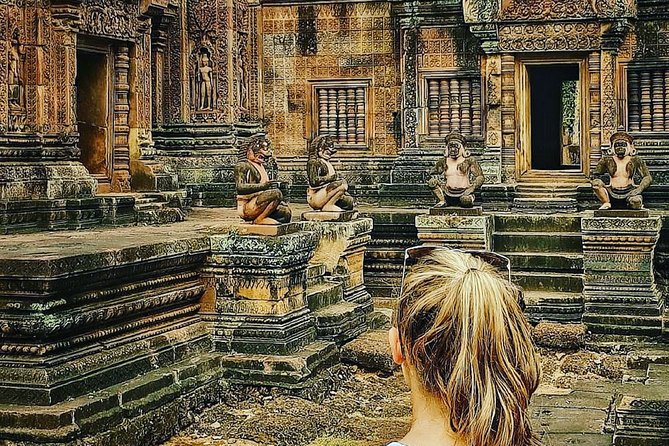
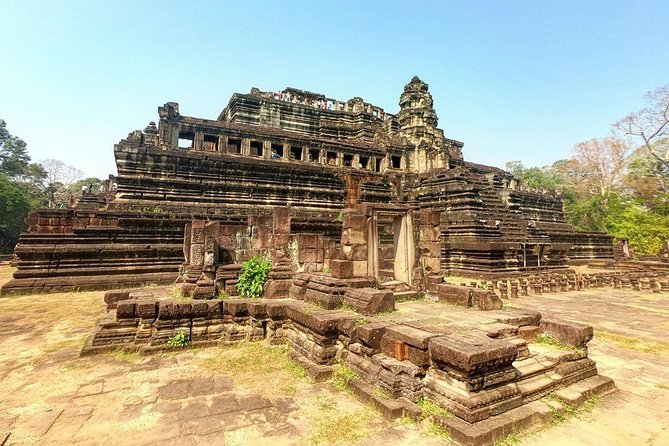
Banteay Srei lies about 25 kilometers north of Angkor Wat. It is often called the pink temple of women, a name linked to its pink sandstone and its association with Hindu art. The temple is smaller than Angkor Wat, but its carvings are exceptionally fine.
The two-hour visit gives you time to examine door lintels, figures, and decorative patterns at close range. Here, detail matters more than scale. If you enjoy sculpture and photography, Banteay Srei may become one of your favorite stops.
The drive also adds countryside to the program. You are not spending all three days inside the central temple zone. That change in setting helps the region feel like a lived-in part of Cambodia rather than a line of monuments arranged for sightseeing.
Banteay Samre, a quieter relative of Angkor Wat
Banteay Samre was built around the same period as Angkor Wat and uses a similar architectural and artistic style. It is a large, relatively low-rise temple, with a more enclosed and contained character than the giant central monument.
You have about one hour here. That is enough to appreciate the layout and compare its design with what you saw at Angkor Wat the previous morning. I like this pairing because Banteay Srei emphasizes delicate carving, while Banteay Samre gives you a broader architectural comparison.
Kampong Phluk and life on Tonle Sap
In the afternoon, the tour reaches Kampong Phluk Floating Village, located south of the Roluos temple area. The visit includes a boat ride and a chance to see the daily routine of fishing families who live on Tonle Sap lake.
This is an important change in subject. The temple days focus on royal power, religious buildings, and stone carving. Kampong Phluk shifts your attention to local Khmer life and the lake’s role in daily work. The boat ticket is not included, so confirm the current cost before you go.
The stop is scheduled for about three hours, including the boat experience. Conditions can vary with weather and water levels, and the operator requires good weather for the excursion. Protect your phone and camera from water and other natural elements. The tour provider places responsibility for electronic equipment with you, so a waterproof bag is a sensible precaution.
The day also includes time at the Old Market, one of Siem Reap’s most visited shopping areas. The supplied schedule does not give a separate duration for this stop, so treat it as a possible final visit rather than a guaranteed long shopping session. It can be useful for browsing local goods or getting your bearings in central Siem Reap.
What the $245 price really covers
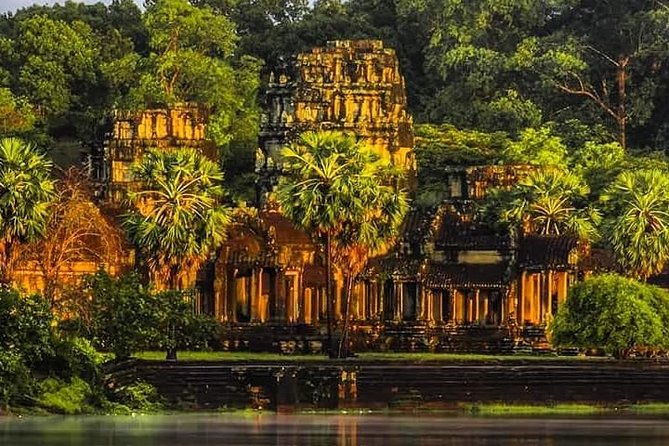
At $245 per person, this is not a low-cost temple shuttle. You are paying for three days of private transport, an English-speaking guide, a professional driver, hotel pickup within Siem Reap, cool water, wet towels, taxes, and service charges.
The private format is the main value. Your group is not combined with strangers, and you can receive direct help with photographs, temple details, meal suggestions, and timing. That matters more on a three-day program than on a short transfer. A good guide can help you make sense of the differences between Hindu and Buddhist imagery and show you what to look for in the carvings.
The price does not include the Angkor Archaeological site pass. You must buy that separately, with passes ranging from one day to seven days and fees charged in U.S. dollars at the main gate. Children under 12 enter free of charge. You must keep the pass visible while visiting the sites.
The floating-village boat ticket is also extra. So are lunches, drinks, tips, shopping, portage fees, travel insurance, and any single supplement that applies to solo visitors. Add those costs before comparing this tour with cheaper group options.
Who should book this private Siem Reap tour?
I would choose this tour if you want the main Angkor monuments but also care about context, quieter stops, and a look at present-day lake life. It suits couples, families, and small groups who value their own vehicle and guide.
It is also a good fit if photography matters to you. The praise for Mr Lion centers on finding strong photo locations and helping take pictures, which is useful when you are traveling without a second person to operate the camera.
You should think twice if you dislike early starts, long sightseeing days, or extra costs paid locally. The 4:30 a.m. morning is demanding, and the temple program involves walking in heat. People with limited time may prefer a shorter Angkor plan, while people who want a slow, unstructured holiday may find this schedule too full.
Pickup and return transfers apply to customers staying in and inside Siem Reap. Other languages may be requested, subject to availability and an added charge. Confirmation is provided when booking, although the exact pickup time may sometimes be confirmed only the day before.
Should you book it?
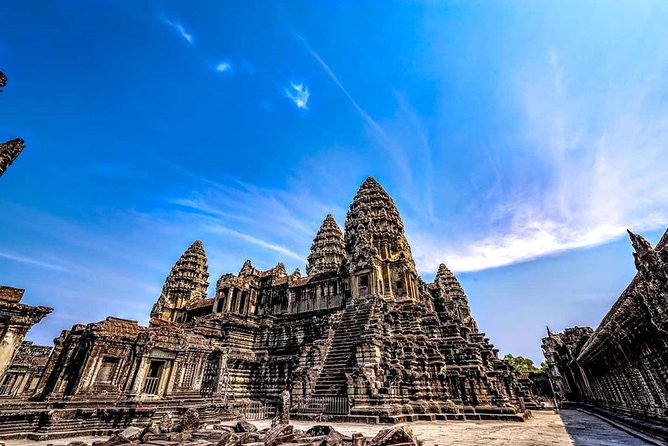
Book this tour if you want a private, well-rounded introduction to Siem Reap. Its strongest features are the sunrise at Angkor Wat, the wide range of temple styles, the quieter sites on the edges of the main circuit, and the final shift to Kampong Phluk.
The decision comes down to value. The $245 fee is reasonable for three days of private guiding and transport, but only after you add the archaeological pass, boat ticket, food, and tips. If you are prepared for those extras and want more than a quick Angkor checklist, this is a strong choice. Ask for Mr Lion if available, especially if photographs and local food advice are high on your list.
FAQ
Is the tour private?
Yes. Only your group participates, and the tour operates with a private English-speaking guide and professional driver.
Is hotel pickup included?
Pickup and return transfers are included for customers staying in and inside Siem Reap.
Is the Angkor Archaeological site pass included?
No. You must purchase the pass separately at the main gate. Passes range from one day to seven days, and the fees are charged in U.S. dollars.
Is the floating-village boat ticket included?
No. The boat ticket for Kampong Phluk is an additional expense.
What time does the Angkor Wat sunrise tour begin?
The itinerary states that the sunrise tour starts at 4:30 a.m. on day two.
Are meals included?
No. Lunches, drinks, and personal expenses are not included. Lunch may be taken at a local restaurant in the temple area or back at your hotel.
What should I wear at the temples?
Wear clothing that covers your shoulders and falls below your knees. Shirts with obscene or disrespectful images and brightly colored clothing may be refused at some sites.
Can I cancel for a full refund?
Yes, if you cancel at least 24 hours before the experience start time. Cancellations made within 24 hours are not refunded. If poor weather causes the tour to be canceled, you will be offered another date or a full refund.
More 3-Day Experiences
- From Siem Reap: Angkor Wat and Floating Village 3-Day Trip
★ 5.0 · 100 reviews - 3-Day Angkor Wat with All Interesting Major Temples, Banteay Srei & Beng Mealea
★ 5.0 · 70 reviews - 3-Day Angkor Wat & All Interesting Major Temples & Kulen Mount Waterfall
★ 5.0 · 63 reviews - 3 Days Siem Reap Explorer – Small Group
★ 5.0 · 50 reviews
Just added around Siem Reap
- Private Battambang Full-Day Guided Tour★ 4.5 · 3 reviews
- Kulen Mountain, Beng Mealea and Banteay Srei Full Day Tour★ 5.0 · 3 reviews
- Kompong Pluk Tour★ 5.0 · 3 reviews
- Private 3 Day Tour to Discover the ancient temples★ 5.0 · 3 reviews
- Cambodia: Absolute Traditional Dance Show with Buffet Dinner★ 5.0 · 3 reviews
- Kulen National Park Ticket -Waterfall & 1000 Lingas★ 5.0 · 3 reviews
- Border Transfer (Siem Reap to Laos/Laos to Siem Reap)★ 3.5 · 3 reviews
- Best Taxi Siem Reap to Battambang – English Speaking Driver★ 4.5 · 3 reviews
Banteay Srei Tours, compared.
Full-Day Banteay Srei & 4 Temples – Grand Tours Join-in Tour
Read our review →
Siem Reap Tour: Angkor Wat Sunrise, Bayon, Ta Prohm, Banteay Srei
Read our review →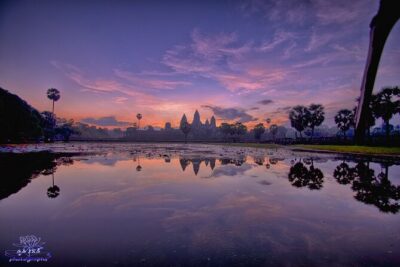
2-Day Angkor Wat With Small, Big Circuit and Banteay Srei Tour
Read our review →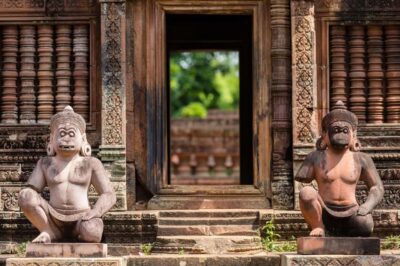
3-Days Discovery Of Angkor: Waterfalls,Floating Village and Banteay Srei temple
Read our review →
Banteay Srei, Kulen Waterfall & Beng Mealea Exploration
Read our review →
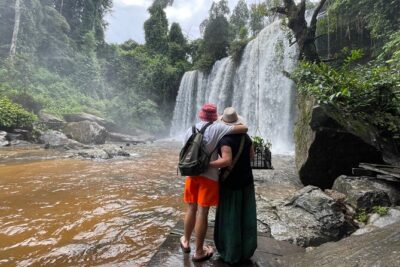
Kulen Waterfall, Banteay Srei, and Beng Mealea Tour
Read our review →Browse the lists this tour appears in