
Reviewed · TOURS
Angkor Grand Circuit Temples Tour
Temples reward patience here. This private Siem Reap tour takes you beyond Angkor Wat to the quieter Grand Circuit, with stops at Preah Khan, Neak Pean, Ta Som, Eastern Mebon, Banteay Samre, Pre Rup, and Srah Srang. I like the private guide and vehicle, which let your group move at a more comfortable pace, and I like the chance to visit smaller sites that many first-time visitors skip. The main drawback is cost: at $52 per person, plus the separate $37 Angkor Pass, this is not the cheapest way to see the temples.
The day begins with hotel pickup at 8 a.m. and includes air-conditioned transport, an English-speaking guide, and cold bottled water. Guides Bunpheng and Mr. Pal Chen receive especially strong praise for their temple knowledge, photo-stop advice, clear English, and skill at finding quieter corners. You should still expect a full day in the heat, with several hours of walking and no food included.
In This Review
- Key points to know before booking
- What this Grand Circuit day is really like
- 8 a.m. pickup and the Angkor ticket stop
- Preah Khan, a large and rewarding first stop
- Banteay Prei, a short stop with a quiet feel
- Neak Pean and its unusual island setting
- Ta Som, where atmosphere matters more than scale
- Eastern Mebon and the value of a guide
- Banteay Samre, a different architectural mood
- Pre Rup, stone steps and a high viewpoint
- Srah Srang, a calm final stop
- The private vehicle and guide setup
- What to wear and what to budget
- Who should choose this tour?
- Should you book the Angkor Grand Circuit Temples Tour?
- FAQ
- What time does the tour begin?
- How long does the Angkor Grand Circuit tour last?
- Is the Angkor Pass included in the tour price?
- Which temples are included?
- Is this a private tour?
- What is included in the $52 price?
Key points to know before booking
- Eight temple-area stops: The route includes Preah Khan, Banteay Prei, Neak Pean, Ta Som, Eastern Mebon, Banteay Samre, Pre Rup, and Srah Srang.
- Private touring matters: Only your own group takes part, so you can ask questions and spend more time at places that interest you.
- The Angkor Pass costs extra: Budget $37 per person for the one-day entrance pass, in addition to the $52 tour price.
- Bunpheng and Mr. Pal Chen earn high marks: Both guides are praised for strong English, temple knowledge, useful routes, and help with photographs.
- Banteay Prei may be wonderfully quiet: The guide describes it as a place where there are often no other tourists.
- Dress for temple access: Your shoulders and knees must be covered, or you may not be allowed inside.
What this Grand Circuit day is really like
The tour is designed as a companion to a visit to Angkor Wat, not a replacement for it. Angkor Wat is the famous centerpiece, while this route takes you around the wider Angkor complex and introduces a wider range of temple styles, settings, and moods.
That variety is the reason I find this tour appealing. You get a large former temple city at Preah Khan, a small island sanctuary at Neak Pean, jungle-framed ruins at Ta Som, mountain-like steps at Pre Rup, and a quiet waterside finish at Srah Srang. The sites do not all have the same scale, but that is part of the pleasure. After a grand monument, a smaller temple can feel like a welcome change.
The private format also helps. You do not have to follow the rhythm of a large bus group, and you can ask your guide to explain a carving, pause for a photograph, or clarify the role of a temple in the Angkor period. The strongest guide feedback centers on Bunpheng and Mr. Pal Chen, both of whom are praised for knowing the best routes and photo points at each site.
The advertised duration is about seven to eight hours. The listed visits add up to almost eight hours by themselves, so this is a substantial day. Expect heat, uneven ground, stone steps, and repeated walking in open areas. The air-conditioned car, minivan, or minibus is not just a nice extra. It gives you a cool break between temples.
A few more trips worth weighing up
- Angkor Wat Sunrise or Sunset Tour with Guide from Siem Reap
★ 5.0 · 12,109 reviews - Siem Reap: Angkor Wat: Small-Group Sunrise or Sunset Tour
★ 5.0 · 9,444 reviews - From Siem Reap: Kampong Phluk Floating Village Tour by Boat
★ 4.9 · 6,979 reviews
8 a.m. pickup and the Angkor ticket stop
Your day begins at your Siem Reap hotel lobby at 8 a.m., after breakfast. The vehicle then takes you to the ticket office to buy or collect your entrance pass before continuing toward the northern part of the ancient Angkor area.
The tour price does not include admission. The one-day Angkor Pass costs $37 per person, so the basic combined cost is $89 per person before food or any other personal spending. That price is fair if you value a private guide and private transport, but it is important to calculate the full cost before booking.
Hotel pickup and drop-off simplify the morning. You do not need to arrange a separate ride to the temples, and the included bottled water is useful in Cambodia’s heat. Food and drinks beyond the supplied water are not included, so eat breakfast and plan for your own lunch arrangements.
Preah Khan, a large and rewarding first stop
The first temple is Preah Khan, with about two hours scheduled here. That gives it the most time of any stop and signals its importance.
Preah Khan is a strong opening visit because it gives you room to see a large complex without rushing. You can expect long passages, courtyards, stone galleries, and a mix of open and enclosed spaces. A good guide can help you understand how the site is organized instead of leaving you to wander through a maze of stones.
Two hours is generous compared with the short visits later in the day. It allows time for photographs and explanations, though it also means you should pace yourself. The day is still young, and the heat will build. Wear practical shoes and keep your water close.
Bunpheng is praised for knowing the best routes and unusual details at each temple. That matters at a site like Preah Khan, where a guide can point out features you might otherwise pass without noticing. Mr. Pal Chen is also praised for his clear English and help with photographs, a useful service when your group wants a picture without repeatedly asking strangers.
Banteay Prei, a short stop with a quiet feel
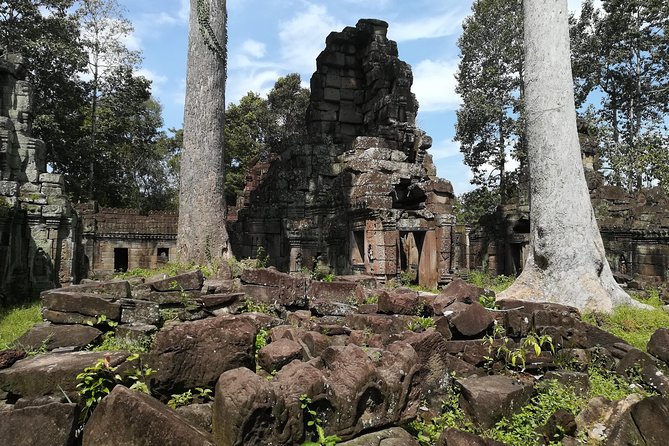
The tour continues to Banteay Prei for about 30 minutes. This is the shortest temple visit on the route, but it may offer one of the day’s calmest moments.
The guide describes Banteay Prei as a place that is often free of other tourists. You should treat that as a possibility rather than a guarantee, but the stop is still valuable. Smaller temple sites can give you time to look closely and listen without the noise and movement found at the most famous monuments.
Thirty minutes is enough for a compact visit, not a long exploration. If you like photographing stone details or simply prefer quieter places, this stop may appeal to you. If your main goal is large architecture, it may feel brief.
A completely different kind of day out from Siem Reap:
- Sunset tour of Kampong Phluk stilts home village on the Tonle Sap
★ 5.0 · 4,865 reviews - Siem Reap: Angkor Wat 2-Day Tour with Sunrise and Sunset
★ 4.9 · 4,429 reviews - Siem Reap: Kampong Phluk Floating Village Tour with Boat
★ 4.9 · 3,843 reviews - Siem Reap: Full-Day Angkor Wat Guided Tour with Sunset
★ 4.9 · 3,803 reviews
Neak Pean and its unusual island setting
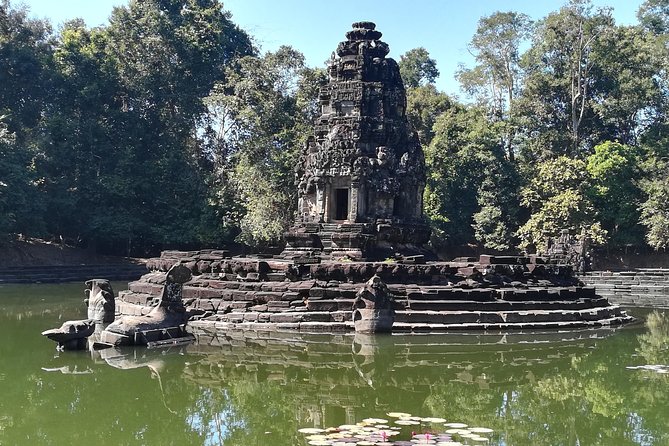
Neak Pean receives about one hour. Its layout makes it different from the other temples on this tour.
The site is associated with a central sanctuary reached across a raised path over water. The approach creates a more open, reflective setting than the enclosed galleries at Preah Khan. You get a change of pace here, with water and stone shaping the view.
This is a good place to ask your guide about the temple’s purpose and design. Neak Pean is not the largest monument on the route, so its appeal comes from the arrangement and setting rather than sheer size. Depending on conditions, the water and surrounding vegetation may affect how dramatic the view feels.
The hour gives you enough time to walk out, see the central structure, and return without treating the visit as a quick photo stop. Comfortable shoes remain important, since the route includes walking rather than simply stepping out of the vehicle.
Ta Som, where atmosphere matters more than scale
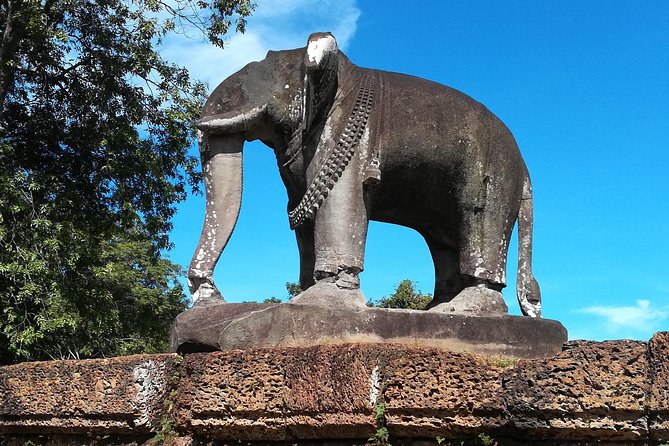
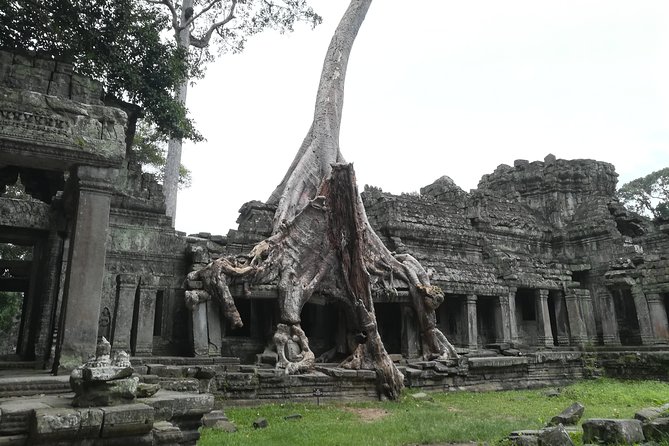
Ta Som is scheduled for another hour. It is a smaller temple, but it has the kind of aged, atmospheric appearance that makes a strong impression.
The site is especially enjoyable when you take time to look at the way stone and plant growth meet. You should not expect the same scale as Preah Khan. Instead, Ta Som offers a more intimate visit, with details that reward a slower look.
Your guide can help you find the best angle for photographs and explain what you are seeing. This is one area where the private format earns its keep. You can spend less time waiting for a group to gather and more time making a few careful photographs.
By this point, the tour has already moved through several distinct settings. That variety keeps the day from becoming a blur of similar ruins, though anyone who tires quickly on temple walks may want to ask the guide for sensible pacing.
Eastern Mebon and the value of a guide
Eastern Mebon is next, with about an hour planned. The temple rises on a broad platform and is known for its stone towers and guardian figures.
The open layout helps you see the structure from different angles. It also exposes you more fully to the sun, so this is a good point to use the supplied cold water and take a short rest in the vehicle afterward.
A guide adds more than dates and names here. The value lies in showing you how the temple’s design fits into the wider Angkor area and directing your attention to details that are easy to miss. Bunpheng receives praise for identifying interesting features unique to each site, while Mr. Pal Chen is praised for his experience and strong English. Those qualities are particularly useful when several temples are visited in one day and you need help separating one site from another.
Banteay Samre, a different architectural mood
Banteay Samre follows with about an hour. This temple gives the route another change in appearance and scale.
The complex has a more fortified feel, with walls, galleries, and a contained interior. It is a satisfying stop for anyone who likes to see how Angkorian temple design varies from one site to the next. You can walk through the enclosure, study the stonework, and compare the experience with the more open spaces visited earlier.
An hour is a comfortable amount of time. You should have enough time for a guided explanation and photographs without feeling trapped in a long stop. The main concern is cumulative fatigue. By this stage, you have been walking for several hours, so the air-conditioned transport between sites becomes increasingly valuable.
Pre Rup, stone steps and a high viewpoint
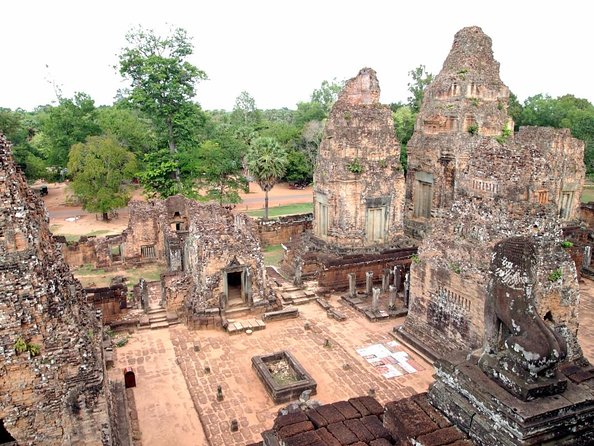
Pre Rup is scheduled for about an hour and is one of the route’s more imposing stops. Its upper levels create a strong sense of height, with steep stone steps and broad views over the surrounding area.
The climb is the main consideration. You should take care on the steps, especially if the stone is hot or uneven. The reward is a better sense of the temple’s vertical design and a chance to look out across the flat surroundings.
Pre Rup can be a memorable late-day visit because it feels substantial after the smaller sites. It is also a place where you should not rush simply because it comes near the end of the itinerary. Ask your guide how best to approach the upper levels and take breaks as needed.
Srah Srang, a calm final stop
The last stop is Srah Srang, with about 20 minutes for relaxation. Its sandstone terrace is decorated with Naga and Shimha statues and faces a large reservoir.
After a full circuit of temples, this is a sensible ending. Rather than sending you into one more demanding complex, the tour finishes with a view and a place to pause. The stop is short, but it gives you time to sit, take photographs, and let the day settle.
The atmosphere here depends on the light and weather, but the water creates a clear contrast with the stone interiors and courtyards earlier in the day. It is not a major exploration stop. Think of it as a closing viewpoint, not another full temple visit.
The private vehicle and guide setup
Transportation is provided by air-conditioned car, minivan, or minibus. The exact vehicle depends on the size of your group, but the important point is that you have private transport rather than joining a shared group.
That arrangement gives you three practical benefits. First, you can move between sites without organizing your own transport. Second, you have a cool place to recover from the heat. Third, you get direct access to an English-speaking guide for the whole day.
The tour is private, so only your group participates. That suits couples, families, and small groups with different walking speeds or interests. It also makes the day more personal. You can ask for more historical explanation at one temple and a quicker visit at another.
The two guide names associated with the strongest feedback are Bunpheng and Mr. Pal Chen. Bunpheng is praised for punctuality, route planning, photo stops, and unusual site details. Mr. Pal Chen receives praise for exceptional English, long experience, historical explanation, and help taking photographs. Guide quality can shape a temple day, and these specific strengths are worth noting when you make your choice.
What to wear and what to budget
Temple access requires clothing that covers your shoulders and knees. This is a firm practical rule, not a suggestion. Pack light, breathable clothing that meets the requirement, along with comfortable walking shoes.
The tour costs $52 per person. The one-day Angkor Pass is extra at $37 per person, bringing the known total to $89. Food, additional drinks, and accommodation are also excluded. The price is strongest for people who want a private arrangement and do not want to coordinate vehicles, routes, or explanations on their own.
If you are traveling alone, the per-person cost may feel high. For a couple or small group, the private format can offer better value, especially if you care about flexible pacing and direct guide attention. Group discounts are offered, though the exact discount is not specified.
You can cancel for a full refund up to 24 hours before the start time. Changes or cancellations made within 24 hours are not accepted for a refund, based on local time.
Who should choose this tour?
I would choose this tour if you have already planned to see Angkor Wat and want a wider picture of the temple area. It is also a good fit if you prefer quieter sites, want a guide to explain what you are seeing, or value a private vehicle during a long hot day.
Families and small groups may appreciate the private setup. Couples who want photographs and a less hurried pace may also find it useful. The itinerary is especially suited to people who like variety: large ruins, small sanctuaries, water views, galleries, stone towers, and elevated viewpoints all appear in one day.
I would think twice if your main goal is a relaxed outing with little walking. Seven to eight hours is a long time, and the tour includes eight stops with substantial time on foot. I would also compare the cost carefully if you are on a tight budget, since the $52 tour price does not include the $37 temple pass or meals.
Should you book the Angkor Grand Circuit Temples Tour?
Book it if you want a private, guide-led day that goes beyond the headline temple. The best reasons are the range of sites, the private air-conditioned transport, and the chance to visit places such as Banteay Prei, Ta Som, and Neak Pean with more personal attention.
Go in knowing that the Angkor Pass is extra, the day is active, and not every stop has the scale of Angkor Wat. For many visitors, that mix is exactly the point. You see the famous complex from a broader angle, with a guide such as Bunpheng or Mr. Pal Chen helping you notice the details between the big monuments.
FAQ
What time does the tour begin?
Pickup begins at 8 a.m. from your Siem Reap hotel lobby.
How long does the Angkor Grand Circuit tour last?
The tour lasts approximately seven to eight hours.
Is the Angkor Pass included in the tour price?
No. The one-day Angkor Pass costs $37 per person and is not included.
Which temples are included?
The route includes Preah Khan, Banteay Prei, Neak Pean, Ta Som, Eastern Mebon, Banteay Samre, Pre Rup, and Srah Srang.
Is this a private tour?
Yes. Only your own group participates, with a private guide and vehicle.
What is included in the $52 price?
The price includes an English-speaking guide, transportation by air-conditioned car, minivan, or minibus, and cold bottled water. Food, drinks beyond the supplied water, temple admission, and accommodation are not included.
Just added around Siem Reap
- Private Battambang Full-Day Guided Tour★ 4.5 · 3 reviews
- Kulen Mountain, Beng Mealea and Banteay Srei Full Day Tour★ 5.0 · 3 reviews
- Kompong Pluk Tour★ 5.0 · 3 reviews
- Private 3 Day Tour to Discover the ancient temples★ 5.0 · 3 reviews
- Kulen National Park Ticket -Waterfall & 1000 Lingas★ 5.0 · 3 reviews
- Cambodia: Absolute Traditional Dance Show with Buffet Dinner★ 5.0 · 3 reviews
- Border Transfer (Siem Reap to Laos/Laos to Siem Reap)★ 3.5 · 3 reviews
- Siem Reap Countryside Sunset Vespa Tour or Tuk Tuk★ 4.5 · 3 reviews
Tours, compared.

Angkor Wat Sunrise or Sunset Tour with Guide from Siem Reap
Read our review →
Angkor Wat: Small-Group Sunrise or Sunset Tour
Read our review →
Sunset tour of Kampong Phluk stilts home village on the Tonle Sap
Read our review →
Angkor Wat 2-Day Tour with Sunrise and Sunset
Read our review →
Kampong Phluk Floating Village Tour with Boat
Read our review →
