
Reviewed · ANGKOR WAT TOURS
Angkor wat and Small group temples Full day tours
Angkor rewards a well-planned day. This $19 small-group tour covers the main temples with an English-speaking guide, air-conditioned transport, hotel pickup, and drop-off. I like the group limit of 15 and the way the route brings together Angkor Wat, Bayon, Ta Prohm, and the major monuments of Angkor Thom. The main drawback is clear: the $37 Angkor admission fee and meals cost extra.
I also like that the day is built for first-time visitors who want the big picture without arranging several separate rides. Guides Marin and Chum Nak have earned especially warm praise, with Nak noted for his past life as a monk and his strong background in history. You should still expect a full, warm day with several hours on foot.
In This Review
- Key points at a glance
- Why this $19 Angkor tour works for first-time visitors
- Angkor Wat begins the day with scale and detail
- Angkor Thom reveals an ancient capital city
- Bayon’s stone faces reward a slower look
- Ta Prohm brings the jungle into the ruins
- The Terraces show Angkor’s public and royal side
- Baphuon adds an earlier layer to Angkor Thom
- Guides Marin and Chum Nak can shape the day
- What the price really includes
- Who should book this small-group temple day
- Should you book the Angkor small-group tour?
- FAQ
- How much does the tour cost?
- How long does the experience last?
- Is hotel pickup included?
- What type of transportation is provided?
- Is an English-speaking guide included?
- How many people can join the group?
- Which temples and monuments does the tour visit?
- Is food included?
- Can I cancel for a full refund?
Key points at a glance
- Seven major temple stops in about nine hours: The route covers Angkor Wat, Angkor Thom, Ta Prohm, Bayon, the two terraces, and Baphuon.
- A group capped at 15 people: This is a more personal setup than a large coach tour, with a better chance to hear explanations and ask questions.
- Guides can add real historical depth: Marin is praised for thoughtful pacing and photography, while Chum Nak is noted for his former monastic life and history studies.
- Hotel pickup and air-conditioning included: Transport matters here because Angkor’s temples are spread across a wide archaeological park.
- The low advertised price needs one adjustment: Add $37 per person for the Angkor admission ticket, plus lunch if you want a midday meal.
- A strong first-day introduction: The schedule gives you the essential sights, though it leaves limited time for quieter corners or repeat visits.
Why this $19 Angkor tour works for first-time visitors
Angkor Archaeological Park is not one compact temple. Its monuments are spread across a large area, and getting between them takes planning. This tour solves that basic problem with hotel pickup, an air-conditioned van or bus, and a guide who handles the route.
The schedule includes around nine hours in total. The listed temple visits add up to about seven and a half hours, leaving time for road connections, organizing the group, and the practical pauses that come with a long day.
I like this structure for a first visit because you see the park’s main architectural chapters in one sweep. Angkor Wat gives you the grand opening, Angkor Thom brings you into the old royal city, Bayon supplies the famous stone faces, and Ta Prohm offers a very different mood with trees and ruins entwined.
The group limit of 15 is important. You will not have the intimacy of a private guide, but you should have a better chance to hear the explanations than you would in a large coach group. It also keeps the $19 price remarkably low for a full day of transport and guiding, even after adding the admission fee.
More Angkor Wat tours we have reviewed:
- Angkor Wat Sunrise or Sunset Tour with Guide from Siem Reap
★ 5.0 · 12,109 reviews - Siem Reap: Angkor Wat: Small-Group Sunrise or Sunset Tour
★ 5.0 · 9,444 reviews - Siem Reap: Angkor Wat 2-Day Tour with Sunrise and Sunset
★ 4.9 · 4,429 reviews
Angkor Wat begins the day with scale and detail
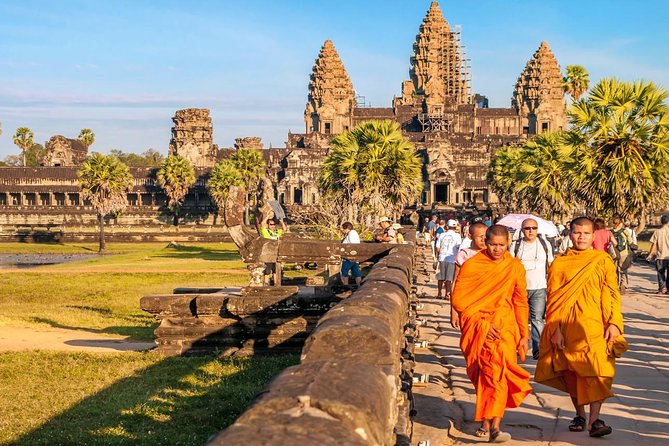
The first stop is Angkor Wat, the temple complex most closely linked with Cambodia. It was built as a Hindu temple and later used as a Buddhist site, a detail that helps explain the mixture of religious images and later changes.
Two hours is a useful amount of time for a first look. You can take in the broad plan of the complex, then focus on carved details and the temple’s layered design. A guide can help you understand what you are looking at instead of leaving you to see only a huge stone structure and a long list of names.
The scale can be hard to grasp at first. Angkor Wat occupies a site of about 162.6 hectares, or roughly 402 acres. That size is why a guided route and organized transport help. You will spend less energy figuring out where to go next and more time noticing the design.
Two hours will not cover every corner. If you already know Angkor Wat well, you may want a longer visit on another day. For a first introduction, however, this opening gives you the essential sense of its size and importance.
Angkor Thom reveals an ancient capital city
The next major section is Angkor Thom, the great city built as an ancient Khmer capital. The two-hour allotment is generous because Angkor Thom is not simply one temple. It contains several major monuments, including Bayon, Baphuon, and the terraces visited later in the route.
This part of the day gives you useful context. You are not just moving from one impressive ruin to another. You are seeing an urban and royal center, with ceremonial spaces and monuments connected by roads and gates.
The stop can feel broad and slightly confusing without guidance. That is where the English-speaking guide earns the fee. A good explanation helps you understand why the monuments sit where they do and how they relate to the old city.
Because the tour separates the Angkor Thom visit from the individual stops inside it, you should expect some overlap in location rather than seven completely separate drives. That is sensible. The temples are close enough to group together, and the air-conditioned vehicle keeps the walking between areas manageable.
Bayon’s stone faces reward a slower look
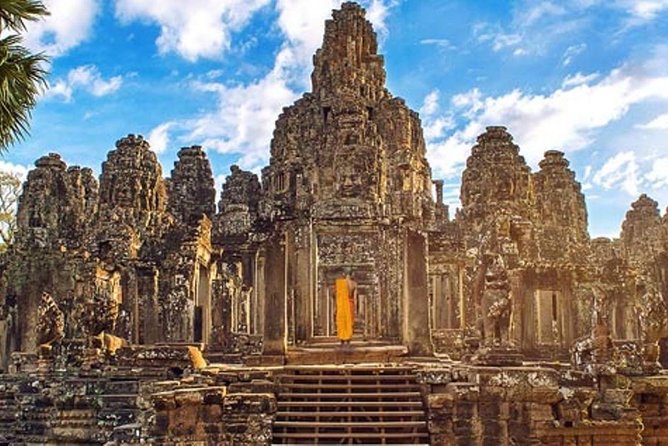
Bayon Temple receives about an hour, and it deserves patient attention. Built at the end of the 12th century as the state temple of King Jayavarman VII, Bayon was designed as a mountain temple representing Mount Meru.
Its most famous feature is the collection of enormous carved faces. From a distance, they create a strong visual impression. Up close, the corridors and towers make the temple more complicated, with sightlines opening and closing as you move through it.
One hour is enough to get the main idea and see the key carvings, but it may feel short if you enjoy architectural detail. The guide’s role matters here because the temple can look like a maze of stone towers. You will get more from the stop if you listen for the explanation of its plan and religious purpose.
I would pay attention to how the faces change as you move around the temple. The experience is not only about taking the famous photograph. It is about seeing how the carved towers work together as part of the building’s design.
A few more trips worth weighing up
- Siem Reap: Full-Day Angkor Wat Guided Tour with Sunset
★ 4.9 · 3,803 reviews - Full-Day Angkor Wat Sunrise Private Tour with Guide from Siem Reap
★ 5.0 · 2,920 reviews - Siem Reap: Angkor Wat Sunrise and Full-Day Sightseeing Tour
★ 4.9 · 2,828 reviews - Full-Day Guided Sunset Tour of Angkor Wat
★ 5.0 · 1,507 reviews
Ta Prohm brings the jungle into the ruins
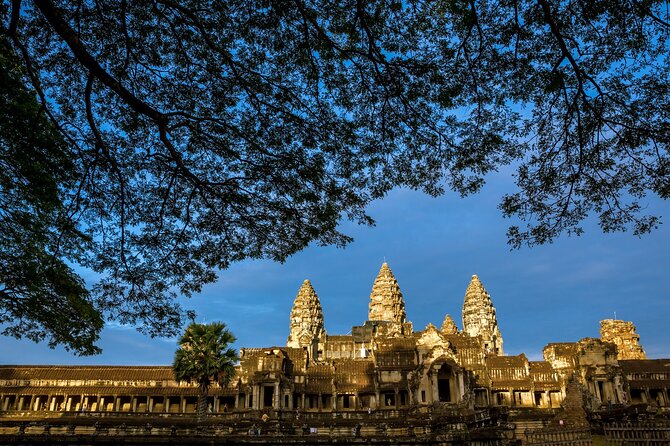
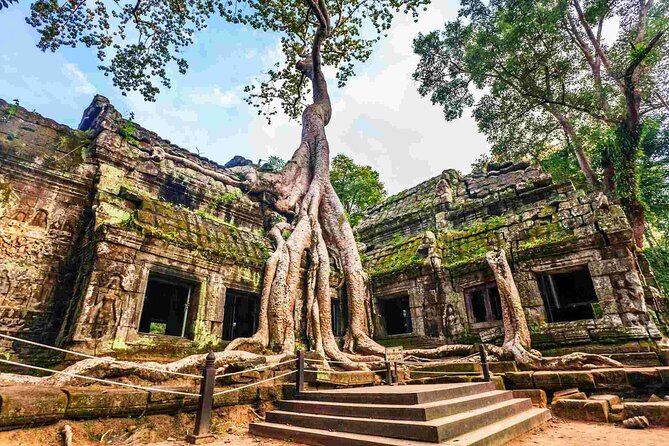
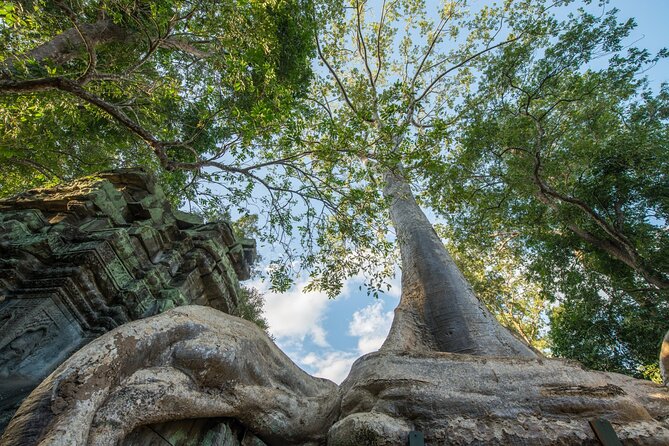
Ta Prohm gets one hour and offers the strongest contrast with Angkor Wat. Here, ancient stonework is intertwined with jungle growth, producing the atmospheric scene many people associate with Angkor.
The trees and roots are the attraction, but the temple is not merely a backdrop for photographs. Look at the remaining carvings and the way the passageways frame the vegetation. The combination of damaged stone and plant growth gives Ta Prohm a different emotional tone from the formal scale of Angkor Wat.
An hour lets you see the central areas without turning the stop into a long exploration. If Ta Prohm is the site you most want to study, you may wish for additional time. The tour is designed to give you a broad introduction rather than linger at one monument.
The route also makes practical sense. Ta Prohm is one of the park’s essential stops, and combining it with the major monuments allows you to cover the best-known sites in one day.
The Terraces show Angkor’s public and royal side
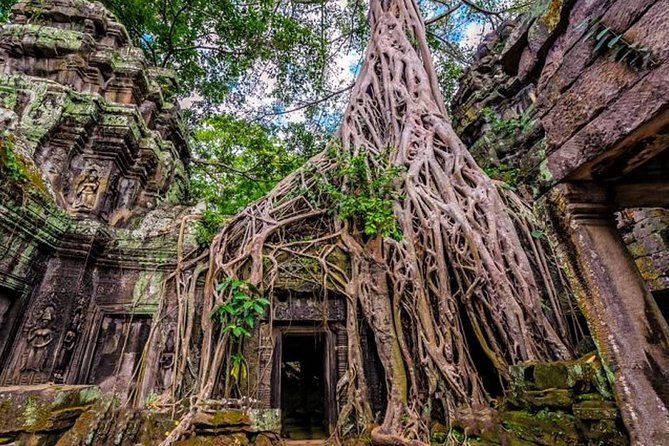
The Terrace of the Elephants receives 30 minutes. It was built as a viewing platform where victorious armies could be welcomed back, giving the site a ceremonial and political purpose.
This is a shorter stop, but it helps round out your understanding of Angkor Thom. You are seeing more than temples used for worship. The terraces connect the royal city with public display, processions, and military triumph.
The Terrace of the Leper King is also allotted 30 minutes. Dating from the late 12th century, it is a platform about seven meters high with a statue on top. Its location just north of the Terrace of the Elephants makes it an efficient addition to the route.
Neither terrace is likely to require the same amount of time as Angkor Wat or Ta Prohm. Half an hour is enough for an explanation, photographs, and a look at the carvings. I would treat these as context-building stops rather than the main events of the day.
Baphuon adds an earlier layer to Angkor Thom
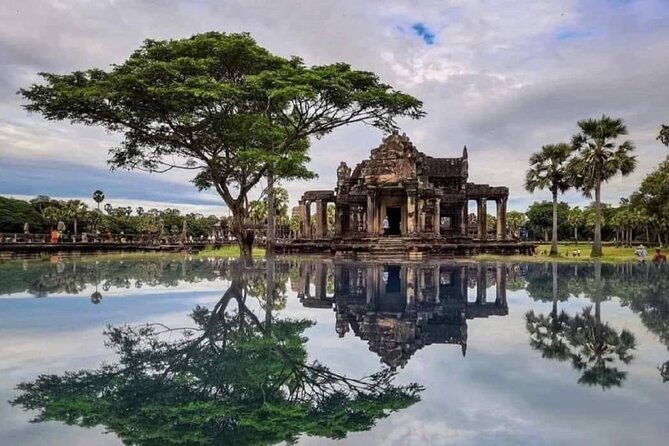
Baphuon gets another 30 minutes. Located northwest of Bayon, this three-tiered temple was built in the mid-11th century.
Its earlier date gives the day another useful layer. You are not seeing a single period of construction. The park contains monuments from different stages of Khmer rule, and Baphuon helps show how temple design developed before the later buildings associated with Jayavarman VII.
The half-hour visit is brief, so expect a focused stop rather than a long architectural study. Your guide can point out the temple’s three levels and explain its place within Angkor Thom.
By this point, you may be glad the vehicle is air-conditioned. The day includes a lot of walking and repeated movement between sun, stone, and open spaces. Comfortable shoes, water, and sensible clothing will make the schedule easier to handle.
Guides Marin and Chum Nak can shape the day
The guide may be the biggest variable in any historical tour. The strongest feedback connected with this experience highlights Marin and Chum Nak by name.
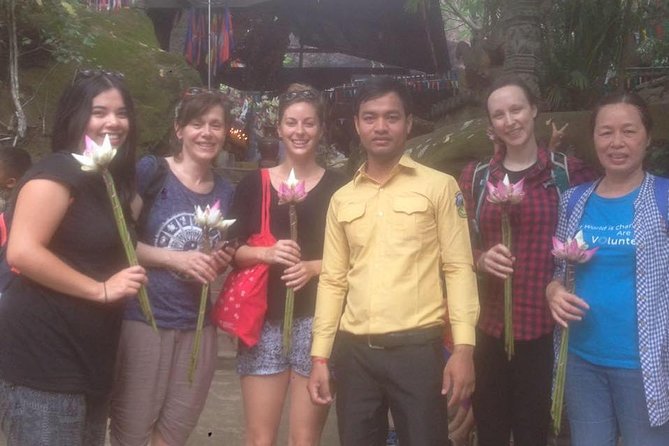
Marin is praised for being friendly, informative, and considerate about pace. He reportedly allowed a slower-moving couple to explore without pressure, still covered a great deal of ground, and knew good photo locations. That combination matters. A guide who races through every stop can make a full-day temple tour tiring and frustrating.
Marin was also praised for taking photographs. That is a useful extra for couples or small groups who want pictures together, though you should still keep your own phone or camera ready.
Chum Nak has an unusual background. He was described as a former monk who studied history during that period of his life. That kind of personal connection may bring a different angle to the religious buildings and the transition from Hindu worship to Buddhism.
You cannot guarantee which guide will lead your departure, so it is best to see these names as useful requests rather than promises. If a guide named Marin or Chum Nak is available, asking for one may be worthwhile.
What the price really includes
At $19, this is a low-cost full-day tour. The price includes an English-speaking licensed guide, an air-conditioned van or bus, mineral water, and pickup and drop-off at your hotel in Siem Reap.
The Angkor admission ticket is not included. The stated price is $37 per person, so your basic cost becomes $56 before lunch. That is still reasonable for a day with transport and a guide, but the extra fee should be part of your budget from the beginning.
Lunch and dinner are also excluded. The supplied details do not state where or how long the meal break will be, so you should ask the provider if meal timing matters to you. At minimum, bring enough water and plan for the fact that food is your responsibility.
The low price makes the tour especially good value for a solo visitor, couple, or small group that wants shared transport rather than a private vehicle. A private tour may offer more control over timing, but this option keeps the essential sights affordable.
Who should book this small-group temple day
I would recommend this tour to a first-time visitor with one main temple day available. It gives you the major names, a historical framework, and transportation between widely spaced monuments.
It also suits anyone who prefers a guide to explain architecture and history rather than wandering alone. The 15-person maximum offers a middle ground: more personal than a large group, less expensive than private guiding.
You may want another type of arrangement if you have already seen Angkor Wat and want long, quiet visits at fewer monuments. The schedule is full, and the seven listed stops leave little room for spontaneous detours.
It may also be less suitable if you dislike fixed pacing. Marin’s reported flexibility is encouraging, but the tour still has to keep moving so the group can complete the route in one day.
Pickup and drop-off from your Siem Reap hotel remove a common nuisance. Confirmation is provided at booking, and free cancellation is available if you cancel at least 24 hours before the local start time. Cancellations or changes inside that window are not refunded or accepted.
Should you book the Angkor small-group tour?
Book it if you want the essential Angkor temples covered in one organized day at a modest cost. The strongest reasons are the hotel transport, air-conditioning, licensed English-speaking guide, group size capped at 15, and the chance of getting a guide such as Marin or Chum Nak.
Before booking, set aside the separate $37 admission fee and money for food. If you want maximum control, more time at each temple, or a slower photographic visit, a private or multi-day plan may suit you better.
For a first look at Angkor, though, this tour makes a practical choice. It covers the major monuments without asking you to solve the park’s transport puzzle yourself.
FAQ
How much does the tour cost?
The tour price is $19. The Angkor admission fee is not included and is listed as $37 per person.
How long does the experience last?
The tour lasts approximately nine hours.
Is hotel pickup included?
Yes. Pickup and drop-off are offered from the hotel where you stay in Siem Reap.
What type of transportation is provided?
Transport is provided in an air-conditioned van or bus.
Is an English-speaking guide included?
Yes. The experience includes a licensed English-speaking guide.
How many people can join the group?
The group has a maximum of 15 participants.
Which temples and monuments does the tour visit?
The route includes Angkor Wat, Angkor Thom, Ta Prohm, Bayon Temple, the Terrace of the Elephants, the Terrace of the Leper King, and Baphuon Temple.
Is food included?
No. Lunch and dinner are not included. The Angkor entrance fee is also separate.
Can I cancel for a full refund?
Yes, if you cancel at least 24 hours before the experience start time. Cancellations or changes made less than 24 hours before the start are not refunded or accepted.
Just added around Siem Reap
- Private Battambang Full-Day Guided Tour★ 4.5 · 3 reviews
- Kulen Mountain, Beng Mealea and Banteay Srei Full Day Tour★ 5.0 · 3 reviews
- Kompong Pluk Tour★ 5.0 · 3 reviews
- Private 3 Day Tour to Discover the ancient temples★ 5.0 · 3 reviews
- Kulen National Park Ticket -Waterfall & 1000 Lingas★ 5.0 · 3 reviews
- Cambodia: Absolute Traditional Dance Show with Buffet Dinner★ 5.0 · 3 reviews
- Border Transfer (Siem Reap to Laos/Laos to Siem Reap)★ 3.5 · 3 reviews
- Beng Melea, Rolous Group & Kompong Phluk Floating Village★ 5.0 · 3 reviews
Angkor Wat Tours, compared.

Angkor Wat Sunrise or Sunset Tour with Guide from Siem Reap
Read our review →
Angkor Wat: Small-Group Sunrise or Sunset Tour
Read our review →
Angkor Wat 2-Day Tour with Sunrise and Sunset
Read our review →

Angkor Wat Sunrise tour with Small – Group and Guide tours
Read our review →
Angkor Wat Highlights and Sunrise Guided Tour from Siem Reap
Read our review →
Angkor Wat Sunset Small Group Tour with Lunch Included
Read our review →