
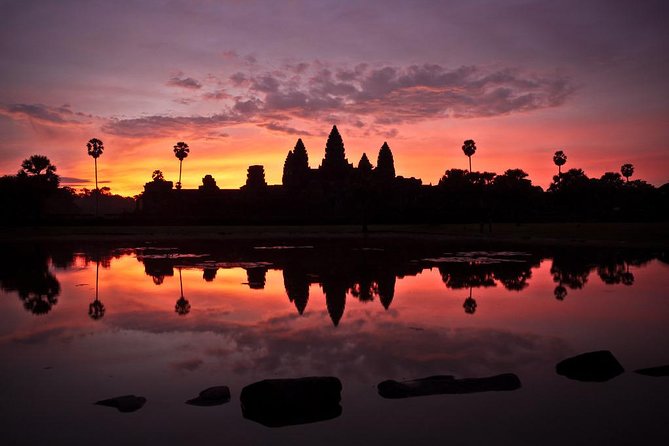
Reviewed · ANGKOR WAT TOURS
Angkor Wat & Banteay Srey Tour
Ancient stone, living roots, unforgettable faces. This private Siem Reap tour brings together Angkor Wat, Bayon, Ta Prohm, Banteay Srei, and Banteay Samre in one long temple day, with hotel pickup, air-conditioned transport, drinking water, cool towels, and a guide-driver included. I like the mix of famous monuments and quieter stops, especially the finely carved pink sandstone at Banteay Srei and the tree-covered ruins at Ta Prohm.
I also like the personal feel. Only your own group takes part, and guides such as Kosorl Oun, Sinann, and Bros have been praised for their friendly manner, temple knowledge, photography help, and willingness to adjust the day around individual needs. The main drawback is the pace: seven to ten hours is a lot of time in the heat, and five temples can feel demanding if you want to study every carving slowly.
In This Review
- Key points at a glance
- Why this temple combination works
- Starting at Angkor Wat, the grand first stop
- Bayon and the smiling faces of Angkor Thom
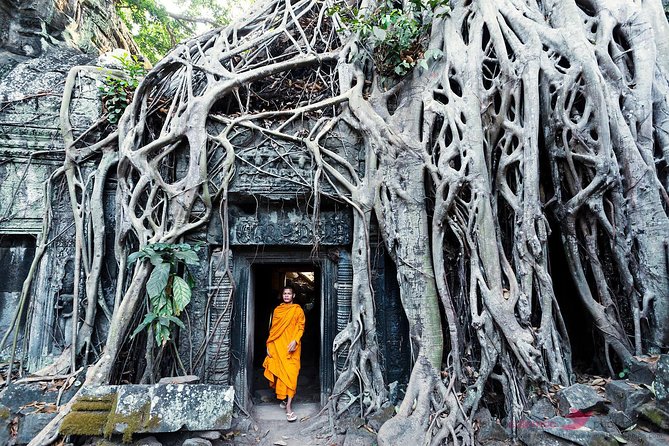
- Ta Prohm, where trees take over the ruins
- Banteay Srei and its delicate pink sandstone
- Banteay Samre, a quieter final monument
- What the guide adds to the day
- Transport, comfort, and the long-day reality
- Who should book this private temple day
- Booking details and cancellation terms
- Should you book the Angkor Wat and Banteay Srei tour?
- FAQ
- How much does the Angkor Wat and Banteay Srei tour cost?
- How long does the tour last?
- Is hotel pickup included?
- Is the temple admission fee included?
- Is sunrise included?
- Is transportation air-conditioned?
- Are water and towels provided?
- Is this a private tour?
- Are meals included?
- Can I cancel for a full refund?
Key points at a glance
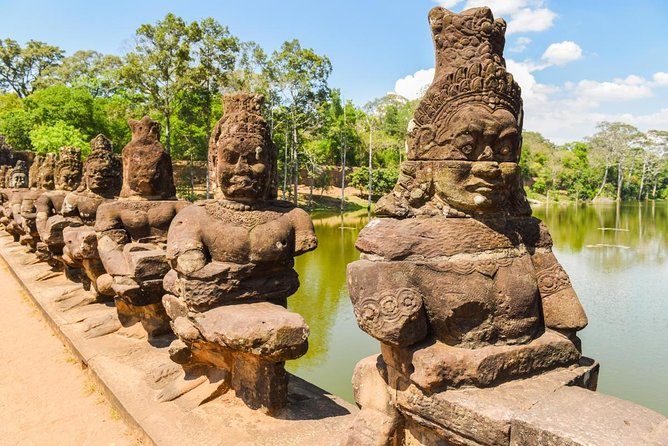
- Angkor Wat takes about three hours, but its admission fee is not included in the $50 price.
- Banteay Srei is about 35 kilometers from the main temple area, making this a long but worthwhile extension.
- The tour is private, so your group can receive more direct help and explanation than on a large coach trip.
- Cool water, towels, and air-conditioning matter during a full day of walking in Cambodia’s heat.
- Sunrise is not included and carries an extra charge, so confirm the departure time before booking.
- Guide quality is a major strength, with repeated praise for Kosorl Oun’s history talks, personal care, and photography.
Why this temple combination works
Many first visits to Angkor focus only on the central circuit around Angkor Wat, Angkor Thom, and Ta Prohm. This tour adds Banteay Srei and Banteay Samre, giving you a wider look at Khmer temple design.
That broader reach is the chief reason I find the $50 price appealing. You are not paying only for a ride to the postcard sights. You are also getting a guide and driver, hotel pickup, air-conditioning, drinking water, and a full day of transport between sites.
The price does not cover the temple pass, food, insurance, personal expenses, or sunrise. That distinction matters. The advertised price is for the service, not your complete day’s spending. Ask about the current admission cost before you go, and confirm whether a group discount applies to your party.
Because this is a private activity, the experience should feel more flexible than a large group outing. You can ask for more explanation at one temple, take a shorter walk at another, or let the guide know when you need a break. Still, the number of sites means you should expect an active day rather than a leisurely stroll.
More Banteay Srei trips:
- Full-Day Banteay Srei & 4 Temples – Grand Tours Join-in Tour
★ 5.0 · 1,155 reviews - Siem Reap Tour: Angkor Wat Sunrise, Bayon, Ta Prohm, Banteay Srei
★ 5.0 · 931 reviews - 2-Day Angkor Wat With Small, Big Circuit and Banteay Srei Tour
★ 5.0 · 545 reviews
Starting at Angkor Wat, the grand first stop
Your guide or driver picks you up from your hotel at the time selected during booking. The meeting point is the hotel lobby, which keeps the start simple. The first practical stop is the ticket office, where you buy your temple pass.
Angkor Wat is the day’s headline monument and receives about three hours. Built between 1113 and 1150 during the reign of Suryavarman II, it was designed on a huge scale, with a broad moat and towers rising as high as 65 meters.
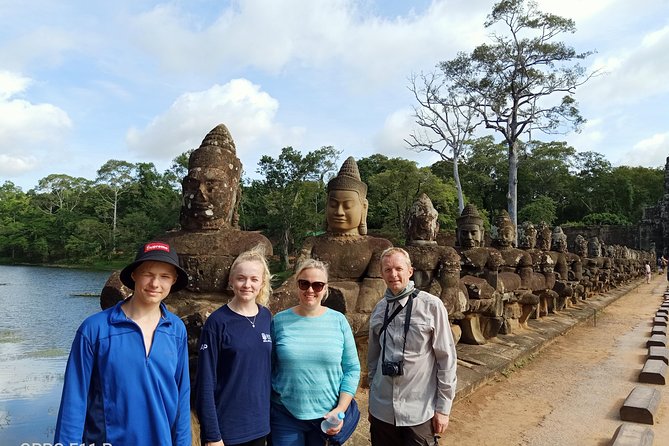
The first sight is the setting. Water surrounds the temple, and the long approach gives you time to see the building’s size before you enter. Once inside, look closely at the bas-reliefs covering the exterior and interior walls. These are not just decoration. They turn the temple into a long stone narrative, and a good guide can help you understand what you are seeing instead of leaving you with a series of impressive but disconnected photographs.
Three hours sounds generous, but Angkor Wat can easily absorb it. You may spend part of the visit crossing courtyards, studying carved walls, and listening to the story of the temple’s construction. The scale can also become tiring, particularly under strong sun.
Admission is not included here, so budget for the pass separately. If you want sunrise, note that it costs extra. The tour can include a sunrise option, but you should confirm that arrangement before the day begins rather than assume it is part of the $50 package.
Bayon and the smiling faces of Angkor Thom
The next major stop is Bayon, reached within the Angkor Thom area. The planned visit lasts about two hours, making it one of the longer stops.
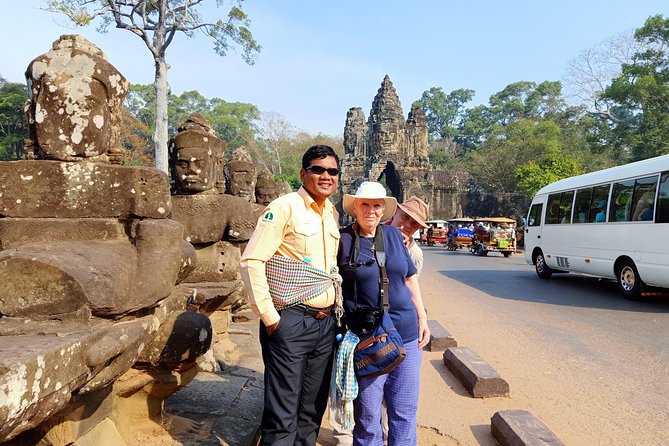
Bayon was built in the late 12th or early 13th century under Jayavarman VII. Its defining feature is the forest of towers carved with more than 200 large faces. The description of 54 towers representing provinces of the Khmer Empire gives you a useful way to understand the monument’s scale, though what matters most on site is the feeling of being watched from every direction.
Bayon is a Buddhist-style temple, unlike the Hindu focus of Angkor Wat. That change reflects the different religious and political ideas of the rulers who built the monuments. The site was part of a thriving capital, so the temple is not an isolated shrine. It belonged to a much larger urban center.
I would give your guide room to explain the faces and the role of Bayon within Angkor Thom. The stones can look confusing at first, with galleries, towers, and carvings packed closely together. A guide who can point out the details will help you see the design rather than simply walk through it.
The stop is listed with no additional admission charge, but that should not be mistaken for free access to the Angkor complex. The temple pass bought at the ticket office remains the key expense.
Ta Prohm, where trees take over the ruins
Ta Prohm receives about two hours and sits roughly 1.5 kilometers from Bayon through the Victory Gate. It is one of the most visually memorable places on the route because large trees, identified as spung trees, grow up through and over the sandstone walls.
Built in the late 12th century by Jayavarman VII, Ta Prohm was dedicated in 1186 to his mother. It began with a Buddhist connection and was later changed to a Hindu temple, with some Buddhist galleries destroyed and symbols such as yoni and lingam added.
The appeal here is the tension between architecture and nature. At Angkor Wat, human design dominates. At Ta Prohm, roots press into the stone and the forest seems to have claimed part of the building. You get a strong sense of age without needing a long explanation.
The same features that make Ta Prohm memorable can make it awkward to explore. Roots, uneven stone, and narrow passages require care. One visitor specifically praised a guide for helping with steep temple steps when knee problems made climbing difficult. That kind of personal attention is worth discussing with your guide early in the day, especially if anyone in your group has limited mobility.
Ta Prohm can also be the point when fatigue sets in. Two hours is enough for a meaningful visit, but you do not need to inspect every corner. Let your guide help you focus on the major galleries and tree-covered sections.
More Angkor Wat tours we have reviewed:
- Angkor Wat Sunrise or Sunset Tour with Guide from Siem Reap
★ 5.0 · 12,109 reviews - Siem Reap: Angkor Wat: Small-Group Sunrise or Sunset Tour
★ 5.0 · 9,444 reviews - Siem Reap: Angkor Wat 2-Day Tour with Sunrise and Sunset
★ 4.9 · 4,429 reviews - Siem Reap: Full-Day Angkor Wat Guided Tour with Sunset
★ 4.9 · 3,803 reviews
Banteay Srei and its delicate pink sandstone
Banteay Srei is the tour’s long-distance reward. It lies about 35 kilometers from the main temple area, so reaching it adds road time to an already full day. The planned stop lasts about two hours.
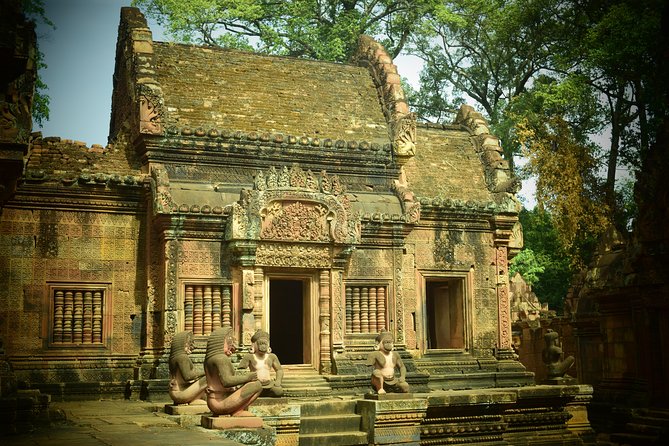
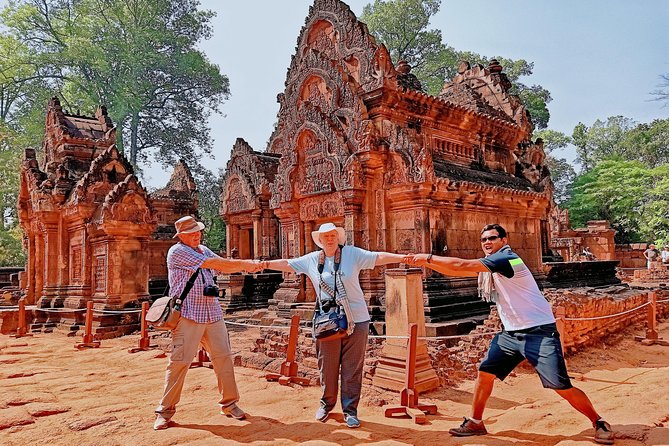
The temple is famous for its pink sandstone and fine carving. Compared with the massive scale of Angkor Wat, Banteay Srei feels more compact and delicate. Its nickname, Lady Temple, reflects the elegance of its detailed work rather than the size of the monument.
This is where the tour broadens your understanding of Khmer art. At Angkor Wat, you notice grand planning and long walls. At Banteay Srei, you look closer at the carving itself. Small details matter, and the softer color of the stone gives the temple a different character from the gray sandstone used at many other sites.
The distance is the tradeoff. If you want only the central Angkor highlights, Banteay Srei may make the day feel too long. If you have enough time in Siem Reap and want more than the standard circuit, it is one of the best additions.
On the way, you may stop to see local people making natural sugar products from sugar palm. This is a useful break from monuments because it connects the ancient sites with present-day Cambodian life. The stop is described as an opportunity rather than a guaranteed activity, so ask your guide if it is available that day.
Banteay Samre, a quieter final monument
Banteay Samre is scheduled for about one hour and is located east of the East Baray, roughly 400 meters from it. It was built during the reigns of Suryavarman II and Yasovarman II in the early 12th century.
This Hindu temple follows the Angkor Wat style, which makes it a good companion to the morning’s main monument. You can compare the layout and decorative approach without returning to the crowds and scale of Angkor Wat itself.
The final stop has a practical advantage: it gives the day a different ending from the usual three-temple loop. The disadvantage is simple fatigue. After Angkor Wat, Bayon, Ta Prohm, and the drive to Banteay Srei, you may find that one more temple asks a lot of your attention.
I would treat Banteay Samre as a bonus rather than the reason to book. It is especially useful if you enjoy architectural comparison and want to make the most of your private vehicle.
What the guide adds to the day
The strongest part of this experience is not just the vehicle. It is the chance to have a guide explain the monuments in a human way.
Kosorl Oun has been praised for his enthusiasm, historical explanations, friendly approach, and creative photography. He has also been described as attentive to personal needs, including helping a visitor who was worried about steep steps. Other named guides include Sinann and Bros, both praised for politeness and useful explanations.
Guide assignment may vary, so you should not assume a particular person is guaranteed unless the operator confirms it. Still, the pattern is encouraging. The guiding style appears to include more than dates and architectural labels. Discussions can include Cambodian history, modern life, and the Khmer Rouge period, along with cultural exchange and local communities.
Photography help is another small but valuable touch. Angkor’s scale makes it hard to frame yourself and the monument at the same time. A guide who knows the site and takes care with photos can save you from returning home with hundreds of impressive buildings and very few pictures of your own group.
The best way to get value from the guide is to ask questions. Tell the guide if you prefer history, religion, architecture, photography, or local life. Also say when you need water, shade, or a slower pace. Private touring works best when you use that flexibility.
Transport, comfort, and the long-day reality
Air-conditioned transportation is included, along with cool drinking water and cool towels. These are practical benefits, not decorative extras. You will be moving between several sites, walking on stone, and spending time outdoors. A cold towel at the right moment can feel like a small luxury.
Hotel pickup removes the need to arrange a separate ride to a meeting point. You meet in the lobby at the selected time, then travel to the ticket office and onward to the temples.
The stated duration is approximately seven to ten hours, while the listed temple visits add up to about ten hours. That tells you to keep your schedule open for the day. Do not plan a tightly timed evening commitment immediately afterward.
The route covers both the main Angkor sites and the more distant Banteay Srei. That distance is part of the value, but it also means less time sitting still. Wear practical shoes, carry sun protection, and keep your expectations realistic. This is a temple day, not a relaxed scenic drive.
Meals are not included. You will need to arrange food yourself, and personal expenses are also excluded. The provided details do not specify a restaurant or meal stop, so ask about lunch plans before departure.
Who should book this private temple day
I would recommend this tour to a first-time visitor who wants the essential monuments plus two less central sites in one organized day. It also suits couples, families, and small groups who prefer their own vehicle and guide rather than a large shared bus.
It is a good fit if you value explanations and personal help. The guides connected with this company have been praised for making history understandable, adapting to individual needs, and offering local perspectives. The photography assistance could be especially useful if you want a strong set of personal photos.
I would be more cautious if you dislike early starts, long drives, or packed sightseeing days. The route is ambitious. Anyone with mobility concerns should discuss the steep steps and walking demands before booking, even though a guide may be able to offer assistance.
If you have three or more days in Siem Reap, you might prefer spreading the temples across separate outings. The company has also provided multi-day touring, and the personal approach may work well for a slower plan. If you have only one full day, this route gives you a broad and memorable introduction.
Booking details and cancellation terms
The cost is $50 per person, with group discounts offered. Because entrance fees are excluded, compare the full cost with other private options rather than judging the headline price alone.
Confirmation is provided at booking, and mobile tickets are supported. Free cancellation is available if you cancel at least 24 hours before the local start time. Cancellations or changes made within 24 hours are not accepted for a refund.
Should you book the Angkor Wat and Banteay Srei tour?
Book it if you want a private, guide-led day with wide coverage. Angkor Wat, Bayon, and Ta Prohm provide the essential introduction, while Banteay Srei adds the finest small-scale carving and Banteay Samre gives you another example of the Angkor Wat style.
The best reason to choose this option is the combination of personal service and variety. The main caution is the length and the separate temple admission cost. Confirm the guide, sunrise supplement, group discount, meal arrangements, and exact pickup time before paying.
For a visitor with limited time, this is a strong use of one full day. For anyone who prefers slow looking, choose fewer temples or ask whether the route can be adjusted.
FAQ
How much does the Angkor Wat and Banteay Srei tour cost?
The tour costs $50 per person. Group discounts are offered, so ask the provider what rate applies to your party.
How long does the tour last?
The experience lasts approximately seven to ten hours. The planned visits add up to about ten hours, so keep most of the day free.
Is hotel pickup included?
Yes. Your guide or driver picks you up from your hotel lobby at the time selected during booking.
Is the temple admission fee included?
No. Entrance fees are not included. You stop at the ticket office to buy your temple pass.
Is sunrise included?
No. Sunrise requires an extra charge. Confirm the supplement and pickup time before booking if you want a sunrise start.
Is transportation air-conditioned?
Yes. Air-conditioned transportation is included.
Are water and towels provided?
Yes. The tour includes cool drinking water and cool towels.
Is this a private tour?
Yes. Only your group participates in the activity.
Are meals included?
No. Breakfast, lunch, dinner, and other meals are not included.
Can I cancel for a full refund?
Yes, if you cancel at least 24 hours before the experience start time. Cancellations or changes made less than 24 hours before the start are not refunded or accepted.
Just added around Siem Reap
- Private Battambang Full-Day Guided Tour★ 4.5 · 3 reviews
- Kulen Mountain, Beng Mealea and Banteay Srei Full Day Tour★ 5.0 · 3 reviews
- Kompong Pluk Tour★ 5.0 · 3 reviews
- Private 3 Day Tour to Discover the ancient temples★ 5.0 · 3 reviews
- Kulen National Park Ticket -Waterfall & 1000 Lingas★ 5.0 · 3 reviews
- Cambodia: Absolute Traditional Dance Show with Buffet Dinner★ 5.0 · 3 reviews
- Border Transfer (Siem Reap to Laos/Laos to Siem Reap)★ 3.5 · 3 reviews
- Best Taxi Siem Reap to Battambang – English Speaking Driver★ 4.5 · 3 reviews
Angkor Wat Tours, compared.

Angkor Wat Sunrise or Sunset Tour with Guide from Siem Reap
Read our review →
Angkor Wat: Small-Group Sunrise or Sunset Tour
Read our review →
Angkor Wat 2-Day Tour with Sunrise and Sunset
Read our review →

Angkor Wat Sunrise tour with Small – Group and Guide tours
Read our review →
Angkor Wat Highlights and Sunrise Guided Tour from Siem Reap
Read our review →
Angkor Wat Sunset Small Group Tour with Lunch Included
Read our review →
Full-Day Angkor Wat Sunrise Private Tour with Guide from Siem Reap
Read our review →Browse the lists this tour appears in