
Reviewed · ANGKOR WAT TOURS
Angkor Wat: Full-Day Temples Small Group Tour
Ancient stone, jungle roots, and smiling faces await. This $17 small-group tour gives you a practical first look at Angkor Wat, Angkor Thom, Bayon, and Ta Prohm, with an English-speaking guide, hotel pickup, air-conditioned transport, water, and cool towels. I especially like the strong focus on the three essential temple areas and the guides’ knack for explaining carvings, religion, and Cambodian history in clear language.
I also like the way the day is paced. You get temple walks, a lunch and rest break, and time to cool down before continuing. The main drawback is the early start and extra cost: the Angkor Pass is $37, lunch is separate, and eight hours of heat, stairs, and uneven paths can wear you out.
In This Review
- Key Points Before You Book
- What This Angkor Wat Day Is Really Like
- Angkor Wat: Two Hours at Cambodia’s Great Temple
- Angkor Thom and Bayon’s Stone Faces
- Lunch and a Needed Break at Srah Srang
- Ta Prohm and the Jungle-Covered Ruins
- A Guide Makes the Difference
- Is the $17 Price Good Value?
- Heat, Clothing, and Walking
- Who Should Choose This Tour?
- Should You Book It?
- FAQ
- How much does the tour cost?
- What temples are included?
- What time is hotel pickup?
- Is lunch included?
- What should I wear to the temples?
- Can I cancel or change the booking?
Key Points Before You Book
- Three essential temple areas: Angkor Wat, Angkor Thom with Bayon, and jungle-covered Ta Prohm form a solid first visit.
- Guide-led context: Guides such as Yuth, Pal Saruon, Sam, Sok, and Mr. Sarkiya have been praised for clear explanations, cultural insight, and help with photographs.
- Small-group value: A smaller group makes it easier to ask questions, hear the guide, and move at a comfortable pace.
- Comfort in the heat: The van has air conditioning, and the driver provides bottled water and cool towels.
- Real total cost: Add the $37 one-day Angkor Pass and the price of lunch to the $17 tour fee.
- Plan for walking: Comfortable shoes, covered knees and shoulders, sun protection, and insect repellent are essential.
What This Angkor Wat Day Is Really Like
This is a classic introduction to the Angkor temple complex rather than a slow, specialist archaeology tour. You see the three major sights most people hope to visit, learn how they fit into Khmer civilization, and return to Siem Reap in the afternoon.
The tour lasts about eight hours. The supplied details give two different pickup windows, so you should pay close attention to the exact time sent by the local operator. One section lists an early pickup around 4:10 to 4:30 am, while another gives a morning pickup around 7:40 to 8:00 am. The operator is supposed to confirm your precise pickup time one day before the tour.
That difference matters. A very early start may be arranged for special sunrise plans, but the standard schedule may begin later. Do not rely on the general description alone. Check the confirmed time before bed, especially if your hotel is outside central Siem Reap.
The group travels by air-conditioned bus or van. The ride to the temple area takes about 30 minutes, and hotel pickup and return are included. This is much easier than arranging separate transport, finding the right temple entrances, and keeping track of the circuit yourself.
The group is described as small, though no maximum number is given. In practice, the experience can feel especially personal if numbers are low. One booking had only three people, while another group had seven. That size gives you a fair chance to ask questions and hear the guide without shouting over a crowd.
More Angkor Wat tours we have reviewed:
- Angkor Wat Sunrise or Sunset Tour with Guide from Siem Reap
★ 5.0 · 12,109 reviews - Siem Reap: Angkor Wat: Small-Group Sunrise or Sunset Tour
★ 5.0 · 9,444 reviews - Siem Reap: Angkor Wat 2-Day Tour with Sunrise and Sunset
★ 4.9 · 4,429 reviews
Angkor Wat: Two Hours at Cambodia’s Great Temple
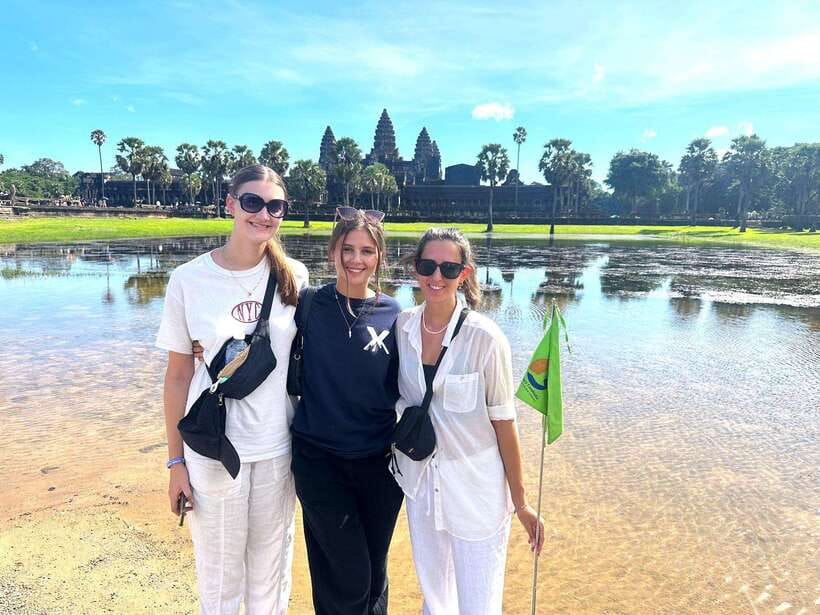
Angkor Wat is the anchor of the day, and rightly so. Built in the 12th century during the height of Khmer civilization, it took about 30 years to complete. It was created as a sacred complex and remains the world’s largest religious building.
You approach a vast architectural work of balance and repetition: towers, galleries, courtyards, carved stone, and long views across the temple grounds. The scale can be hard to grasp at first. A guide helps you read the building as more than a grand photo backdrop.
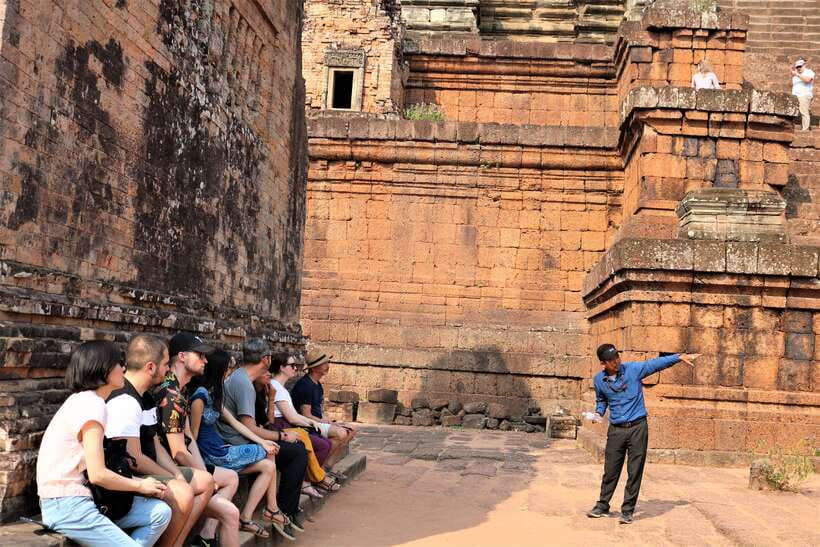
This is where the quality of the guide matters most. A good explanation can connect the temple’s design with Hindu and Buddhist beliefs, royal power, and the role of sacred buildings in Khmer society. Mr. Sarkiya, Yuth, Pal Saruon, and several other guides have been praised for explaining these ideas with patience and enthusiasm. One particularly useful strength is their ability to point out small carvings that you could easily pass without noticing.
You spend about two hours here. That is enough for a solid introduction, though not enough to inspect every gallery or linger at every relief. If you want to study Angkor Wat in great detail, you will need another visit or a longer private tour.
Wear shoes with a good grip. The ground is uneven, and the site involves a fair amount of walking. Shoulders and knees must be covered, so pack a light shirt or scarf rather than hoping temple rules will be relaxed.
Angkor Thom and Bayon’s Stone Faces
The route continues to the southern gate of Angkor Thom, the fortified city that once formed the center of the Khmer capital. The gate is lined with 54 stone figures on each side, gods on the left and demons on the right.
This approach is one of the most memorable parts of the circuit because the figures create a formal procession toward the city. A guide can explain the meaning of the arrangement and help you spot details in the faces and bodies. Without that context, it is easy to see the gate, take a picture, and move on without grasping its purpose.
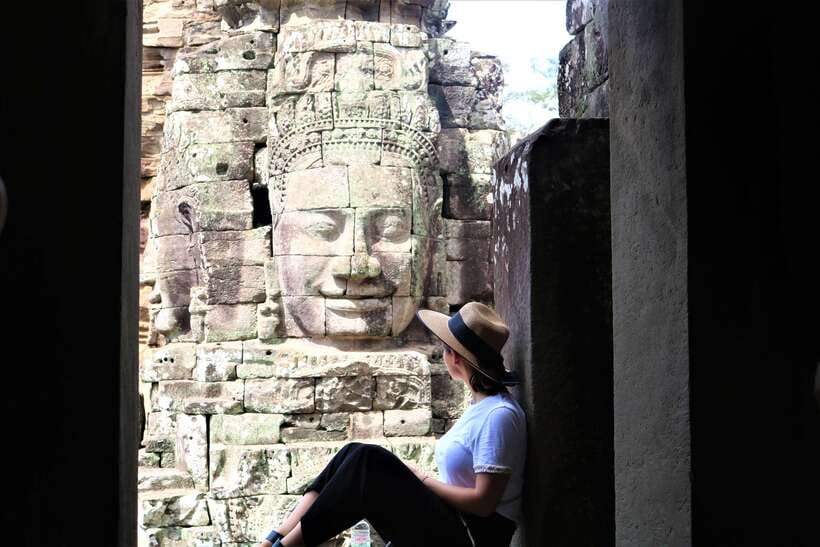
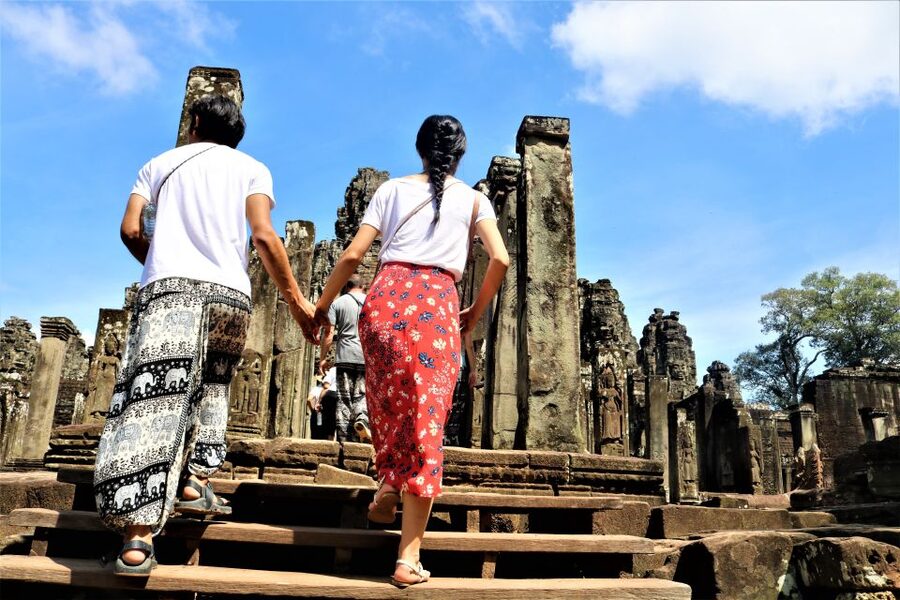
Inside Angkor Thom, the Bayon Temple brings a change in mood. Its central towers carry more than 200 enormous carved faces. They look calm, watchful, and slightly mysterious, especially as you move through the tight temple passages.
Bayon is not a quick monument to photograph from the outside. Its appeal comes from walking through the interior and seeing faces appear from different angles. The narrow routes, worn steps, and irregular stone surfaces make comfortable shoes important again.
The day also passes the Terrace of the Elephants and the Terrace of the Leper King. These are shorter stops, but they add useful context to Angkor Thom as a royal city rather than a collection of unrelated ruins. The elephant carvings are particularly easy to appreciate when your guide shows you where to look.
The itinerary gives about an hour to Bayon and includes sightseeing around the terraces. That is a sensible amount of time for a first visit. You see the main features without spending the entire morning inside one temple.
Lunch and a Needed Break at Srah Srang
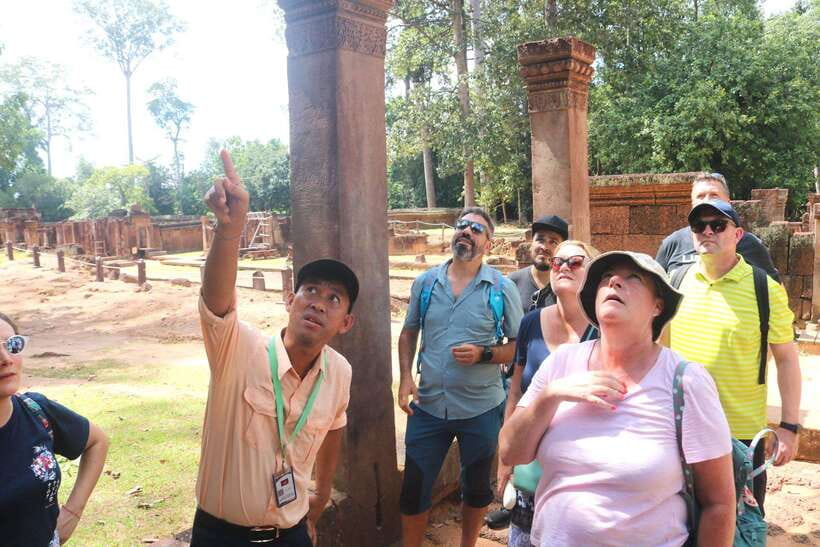
After the first major temple visits, you get about an hour for lunch, drinks, and rest near Srah Srang. Lunch is not included, and food is available at local restaurants near the temples.
This stop is less about sightseeing than recovery. By this point, you will have spent several hours walking over stone and open ground. A proper pause makes the afternoon far more manageable, particularly during the hotter months.
The tour includes bottled water and a cool towel, but you should still carry extra water if you need it. The driver regularly helps refresh the group, and several people specifically appreciated receiving cold towels after temple walks. It is a small service, but on a hot day it changes the feel of the tour.
The restaurant stop also gives you a chance to ask the guide questions that came up during the morning. Guides such as Mr. Bun and Sam have been praised for answering questions carefully rather than rushing from one landmark to the next.
Because lunch costs extra, keep cash available unless the operator gives you different payment instructions. The exact restaurant and menu may vary, so I would not book this tour expecting a specific dining experience. Think of the meal as a practical break in a convenient location.
A few more trips worth weighing up
- Siem Reap: Full-Day Angkor Wat Guided Tour with Sunset
★ 4.9 · 3,803 reviews - Full-Day Angkor Wat Sunrise Private Tour with Guide from Siem Reap
★ 5.0 · 2,920 reviews - Siem Reap: Angkor Wat Sunrise and Full-Day Sightseeing Tour
★ 4.9 · 2,828 reviews - Full-Day Guided Sunset Tour of Angkor Wat
★ 5.0 · 1,507 reviews
Ta Prohm and the Jungle-Covered Ruins
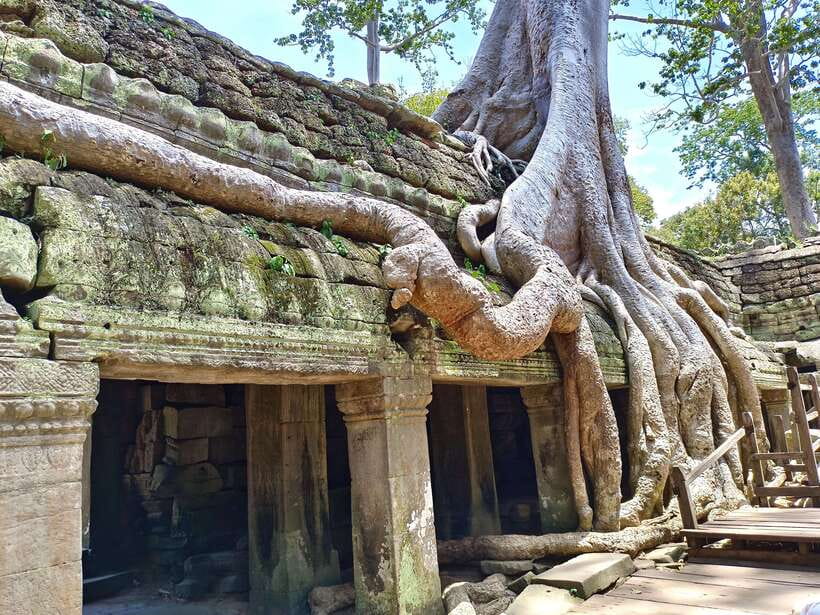
Ta Prohm is the afternoon highlight for many people. It is often called the Tomb Raider Temple, but its appeal goes well beyond its film connection.
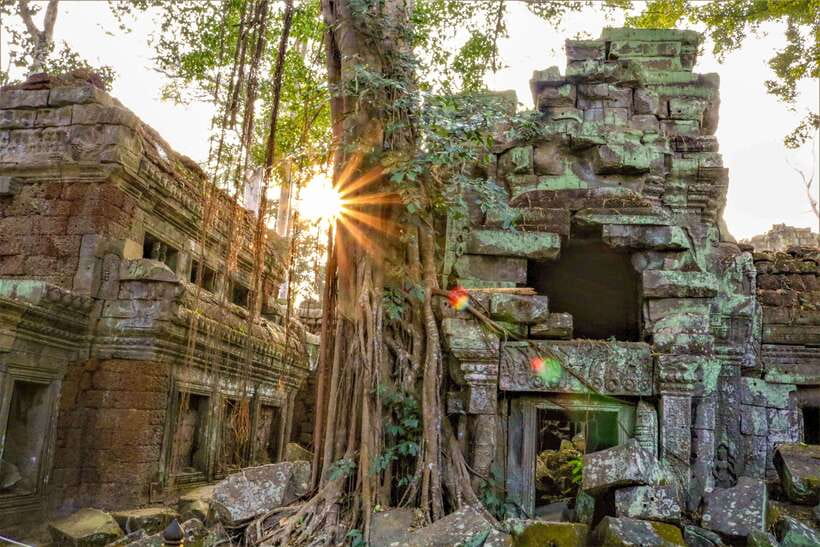
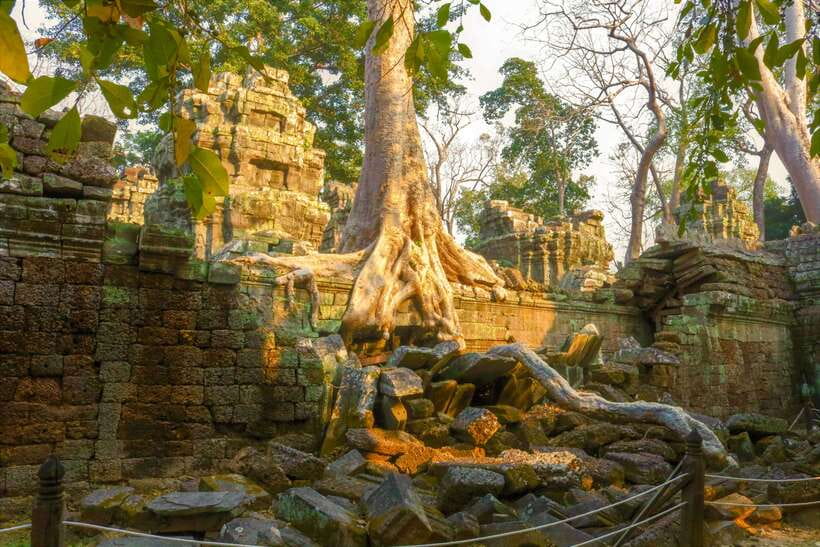
The temple is famous for the way trees and roots have grown through the stonework. Walls, doorways, and courtyards appear partly held together by the same vegetation that is slowly taking them apart. The result feels more atmospheric than polished Angkor Wat and more open to the jungle.
Ta Prohm was once home to 2,740 monks. Today, its damaged galleries and root-covered walls give you a strong sense of age and abandonment, even though the site is carefully managed. The temple has also been associated with the French explorer Henri Mouhot, whose rediscovery of the site in the early 1850s helped bring Angkor to wider European attention.
You get about an hour here, including a guided walk. That is enough to explore the maze-like interior and find the famous root-framed views. It is not enough for a leisurely photographic session at every corner, especially when paths are busy.
Your guide can help you find good picture spots and may take group photos. Sok, in particular, has been praised for knowing attractive angles and for helping solo visitors get photographs. Still, this is not designed as an Instagram-only outing. The focus is on seeing the temple and understanding it, with photo opportunities along the way.
The order of Bayon and Ta Prohm may vary. The written schedule places Ta Prohm before Bayon, while the tour description presents Bayon earlier. Follow your guide’s timing on the day, since temple traffic and local conditions can affect the sequence.
A Guide Makes the Difference

The strongest feature of this experience is the human one. The temples are extraordinary without help, but a good guide turns scattered stones into places with purpose.
Guides named in past bookings include Yuth, Pal Saruon, Sam, Sok, Mr. Sarkiya, Mr. Bun, Chhay, Lucky, Chan, Savoun, and Muon Monirom. Their styles may differ, but the repeated strengths are clear: strong English, a friendly manner, useful historical background, and willingness to answer questions.
Several guides also add practical help. They point out details in carvings, suggest good viewpoints, explain Buddhist and Hindu references, and take photographs for the group. That is particularly useful if you are traveling alone or want a picture with everyone included.
You should not assume every guide will give the same talk. Guide assignments change, and a group tour cannot match the depth of a private specialist guide. Still, the repeated praise for clear explanations and personal attention makes the guide service a major reason to choose this option.
The driver matters too. Drivers such as Naro, Mr. Pha, and Mr. Mong have been praised for punctuality, safe driving, clean transport, water, and cold towels. After a temple walk, stepping into a cool van with a drink waiting is a welcome ritual.
Is the $17 Price Good Value?
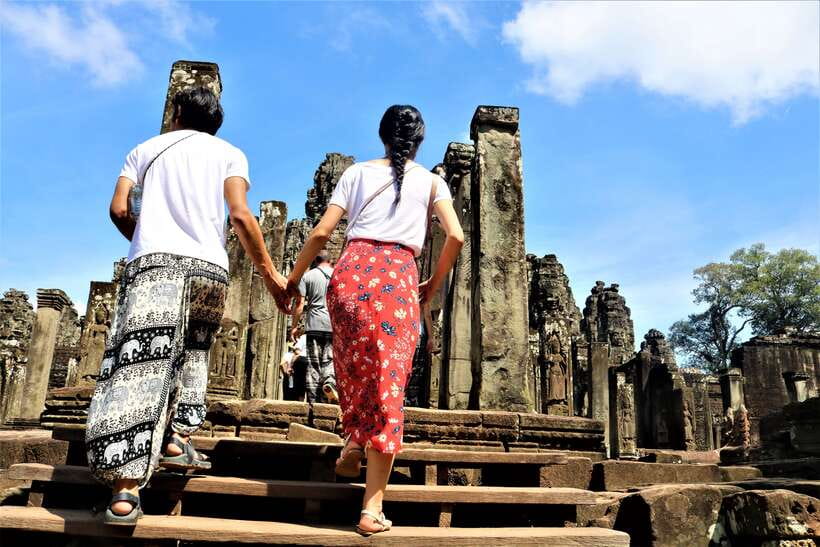
The headline price is $17 per person, but it is not the complete cost. You must add the one-day Angkor Pass, which costs $37 per person, and pay separately for lunch.
That puts the unavoidable pre-lunch total at $54 per person. It is important to understand this before booking, since the pass is a significant part of the day’s cost. The pass covers the temples, not just the sites visited on this particular tour.
For that money, you receive hotel transfers, transport, an English-speaking guide, water, and cool towels. You also avoid the work of arranging a driver and negotiating a route. Compared with paying for a private vehicle, the tour can be strong value if you are comfortable sharing the day with other people.
The value is best for a first visit. You see Angkor Wat, Angkor Thom, Bayon, the terraces, and Ta Prohm in one organized circuit. You learn enough to understand what you are looking at, but you do not get the freedom to spend half a day at one favorite temple.
The free cancellation policy allows cancellation up to 24 hours before the start for a full refund. You can also reserve now and pay later, and general last-minute date changes are allowed up to seven hours before departure without an added fee. Those terms help if your Siem Reap plans are still shifting.
Heat, Clothing, and Walking
The tour is not suitable for children under five or wheelchair users. The temple paths include uneven surfaces and walking, and the day can become tiring.
Bring:
- Comfortable walking shoes
- Sunglasses
- A sun hat
- Insect repellent
- Clothing that covers your knees and shoulders
A light, breathable outfit is sensible, but temple rules still apply. Skirts are listed as not allowed, so choose trousers or longer shorts with a suitable top.
The early timing can be both a benefit and a burden. Cooler morning temperatures make the first temples easier, while the midday rest gives you a chance to recover. On the other hand, an early pickup followed by a full day of walking can leave you tired by the afternoon.
Several people described the day as long but rewarding. That is the right expectation. You will not spend eight hours sitting in a van, but the air-conditioned transport breaks up the walking and keeps the schedule manageable.
Who Should Choose This Tour?
I would choose this tour if you are visiting Angkor for the first time and want the major sights explained in one day. It suits solo visitors, couples, and small groups who value an organized route and the chance to ask a guide questions.
It is also a good match if you want photographs but do not want a photo-only tour. Guides may help with angles and group pictures, yet the main purpose remains history, architecture, religion, and Cambodian culture.
You may want something else if you prefer a private schedule, need a slow pace, or want to spend several hours at one temple. The tour covers a lot of ground, and the fixed route limits how long you can linger.
One detail needs special care: sunset at Phnom Bakheng appeared in one recent experience, but it is not part of the standard stops provided here. Do not book this tour solely for a Phnom Bakheng sunset unless the operator confirms it in writing.
Should You Book It?
Yes, if you want a low-cost, well-organized introduction to Angkor’s essential temples. The guides, small groups, safe transport, water, and cool towels add real value to a day that could otherwise feel confusing and exhausting.
Book it with realistic expectations. Your true cost is $17 plus the $37 Angkor Pass, lunch is extra, the day involves plenty of walking, and pickup times need confirmation. If those points suit you, this is a practical way to meet Angkor Wat, Bayon, Angkor Thom, and Ta Prohm without trying to organize the whole circuit yourself.
FAQ
How much does the tour cost?
The tour price is $17 per person. The one-day Angkor Pass costs an additional $37 per person and is payable on the tour day. Lunch is also not included.
What temples are included?
The tour includes Angkor Wat, the southern gate and city of Angkor Thom, Bayon Temple, the Terrace of the Elephants, the Terrace of the Leper King, and Ta Prohm.
What time is hotel pickup?
The supplied details list two possible pickup windows: approximately 4:10 to 4:30 am and approximately 7:40 to 8:00 am. The exact time depends on your hotel and should be confirmed by the operator one day before the tour.
Is lunch included?
No. Lunch is available at local restaurants near the temples, and you have about one hour for lunch and a rest break.
What should I wear to the temples?
You must cover your knees and shoulders when visiting the temples. Comfortable shoes, sunglasses, a sun hat, and insect repellent are also recommended.
Can I cancel or change the booking?
You can cancel up to 24 hours in advance for a full refund. General last-minute changes to the tour date can be made up to seven hours before the start without an additional charge.
Just added around Siem Reap
- Private Battambang Full-Day Guided Tour★ 4.5 · 3 reviews
- Kulen Mountain, Beng Mealea and Banteay Srei Full Day Tour★ 5.0 · 3 reviews
- Private 3 Day Tour to Discover the ancient temples★ 5.0 · 3 reviews
- Kompong Pluk Tour★ 5.0 · 3 reviews
- Kulen National Park Ticket -Waterfall & 1000 Lingas★ 5.0 · 3 reviews
- Cambodia: Absolute Traditional Dance Show with Buffet Dinner★ 5.0 · 3 reviews
- Border Transfer (Siem Reap to Laos/Laos to Siem Reap)★ 3.5 · 3 reviews
- Beng Melea, Rolous Group & Kompong Phluk Floating Village★ 5.0 · 3 reviews
Angkor Wat Tours, compared.

Angkor Wat Sunrise or Sunset Tour with Guide from Siem Reap
Read our review →
Angkor Wat: Small-Group Sunrise or Sunset Tour
Read our review →
Angkor Wat 2-Day Tour with Sunrise and Sunset
Read our review →

Angkor Wat Sunrise tour with Small – Group and Guide tours
Read our review →
Angkor Wat Highlights and Sunrise Guided Tour from Siem Reap
Read our review →
Angkor Wat Sunset Small Group Tour with Lunch Included
Read our review →