
Reviewed · ANGKOR WAT TOURS
Angkor Wat Private Day Tour from Siem Reap
Ancient stones meet hungry tree roots. This private tour gives you a clear, guided route through Angkor Wat, Angkor Thom, Bayon, the Elephant Terrace, and Ta Prohm, with hotel pickup and an air-conditioned return ride. I like the personal attention of a private guide, especially at temples where carvings and religious symbols can blur together without context. I also like the simple comfort of cold bottled water and transport arranged from your hotel.
The main caution is the cost of the park ticket. The tour is advertised at $49 per person, but the required Angkor National Park admission adds $37, before food and gratuities. You should also expect serious heat, long walks, steps, and a full six to seven hours on the move.
In This Review
- Key points at a glance
- Why a private day tour works well at Angkor
- Starting from Siem Reap at 8 a.m.
- Angkor Wat, two hours with the great classic
- Angkor Thom South Gate and the royal city
- Bayon Temple and its 200 stone faces
- The Elephant Terrace and Terrace of the Leper King
- Ta Prohm, where trees take over the ruins
- Guides, drivers, and the value of local explanation
- What the $49 price really covers
- Clothing, walking, and heat
- Should you book this Angkor Wat tour?
- FAQ
- What is included in the Angkor Wat private tour?
- How much is the Angkor National Park ticket?
- How long does the tour last?
- What time does hotel pickup begin?
- What type of transport is used?
- Is this a private tour?
- What clothing should I wear?
Key points at a glance
- Five major temple stops: Angkor Wat, Angkor Thom South Gate, Bayon, the Elephant Terrace, and Ta Prohm form a strong first look at the park.
- A private guide makes the carvings readable: Guides such as Nak, Dy, Roem, Sorphea, and Choud have been praised for clear explanations of Khmer history, Hinduism, Buddhism, and temple symbolism.
- The $49 price is not the final cost: Add the $37 park ticket, plus meals, drinks beyond the supplied water, and gratuities.
- Transport depends on group size: One or two people travel by tuk tuk, while groups of three or more use a minivan.
- Cold water and cooling towels matter: Drivers regularly provide chilled water, and some have supplied cold face towels after each temple walk.
- The 8 a.m. start is practical, but sunrise may be possible: Some arrangements have begun around 4:30 a.m., so confirm the start time if sunrise is your priority.
Why a private day tour works well at Angkor
Angkor Archaeological Park is too large to treat as one simple monument. Angkor Wat alone can take two hours, and the surrounding complex adds several more sites with different architectural styles and stories. A private tour gives you one guide for your group instead of asking you to keep pace with a large crowd.
That flexibility matters in Cambodia’s heat. If you need a slower pace, more water breaks, or a shorter visit at one temple, you can say so. One visitor found the day tiring after only two temples, while others were happy to see all the main stops. That is the central tradeoff: the route covers a lot, but you need a moderate level of fitness.
The guide is the real value here. Angkor’s walls are packed with gods, battles, dancers, animals, kings, and religious scenes. Without help, you may notice the scale but miss the meaning. Guides named Nak, Dy, Roem, Sorphea, Choud, and Samun have received particular praise for explaining the sites in clear English, answering questions, and connecting the temples to Cambodian history and religious practice.
More Angkor Wat tours we have reviewed:
- Angkor Wat Sunrise or Sunset Tour with Guide from Siem Reap
★ 5.0 · 12,109 reviews - Siem Reap: Angkor Wat: Small-Group Sunrise or Sunset Tour
★ 5.0 · 9,444 reviews - Siem Reap: Angkor Wat 2-Day Tour with Sunrise and Sunset
★ 4.9 · 4,429 reviews
Starting from Siem Reap at 8 a.m.
Pickup is arranged from your hotel at 8 a.m. The opening hour in the schedule allows time to begin the journey into the UNESCO-listed Angkor Archaeological Park and get oriented before the temple visits. Hotel pickup and drop-off are included, which removes the need to arrange a separate driver for the day.
For one or two people, transport is by tuk tuk. This is a pleasant way to move between the temples, with open air and a better sense of the surrounding park. It also leaves you more exposed to heat and dust than a vehicle with closed windows. Groups of three or more use a minivan, which gives you more shelter and air conditioning.
The drivers are an important part of the experience. Several guides have been paired with drivers praised for safe driving, punctual waiting, chilled water, and cold towels. Those small touches are useful after walking across hot stone courtyards. Bring your own water as well, but the supplied bottles are a welcome start.
Some experiences connected with this tour have begun at 4:30 a.m. for sunrise at Angkor Wat. The stated schedule for this experience begins at 8 a.m., so do not assume sunrise is included. If the first light over Angkor Wat is your main goal, ask for the early start when booking and confirm any change in timing.
Angkor Wat, two hours with the great classic
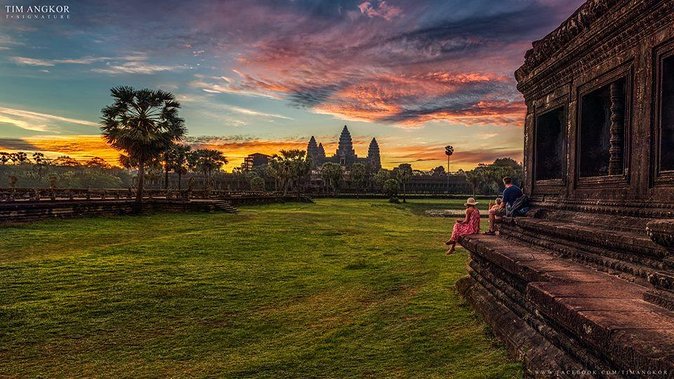
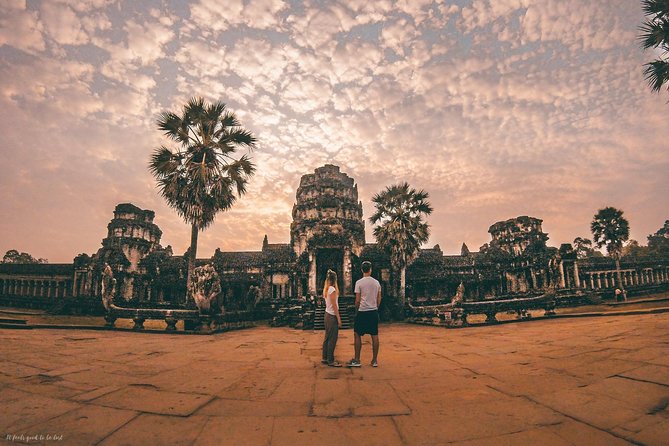
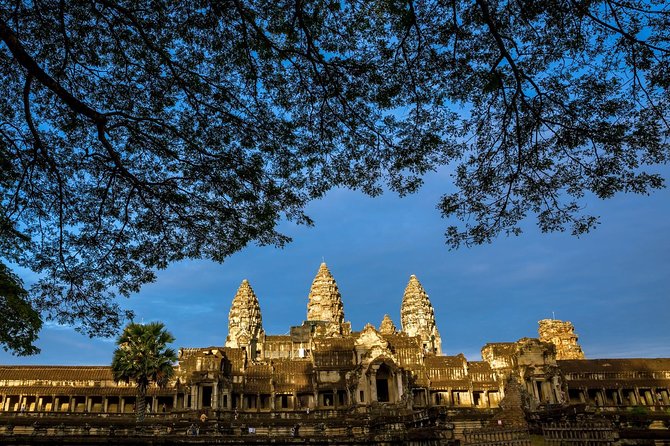
Angkor Wat is the anchor of the day. Built between 1113 and 1150 and dedicated to Vishnu, the Hindu god of preservation, it is described as the best-preserved temple in the park. Its scale can be hard to grasp at first. You move through broad approaches, walls, galleries, towers, and courtyards, with each section revealing another layer of the design.
The tour gives you about two hours here, enough to see the major areas without reducing the visit to a quick photo stop. Your guide can point out the religious iconography and explain how the temple’s layout reflects Hindu ideas. The same carvings can look like decoration until someone explains the figures and scenes.
One of Angkor Wat’s great treasures is its continuous bas relief, described as the world’s longest. This is not a detail to rush past. The carved galleries tell stories across long stretches of stone, and a guide helps you follow the figures, movement, and repeated motifs rather than seeing only a wall of intricate carving.
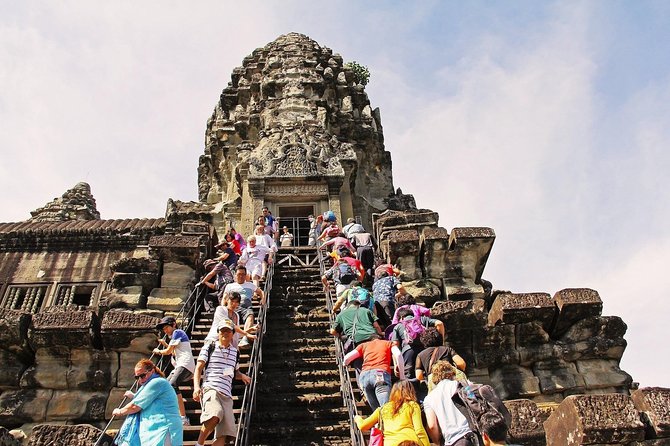
The drawback is that two hours may feel short if you want to study every gallery or climb every permitted section. Angkor Wat is also the most famous stop, so it is likely to feel more heavily visited than some of the other temples. A private guide can help you focus, but cannot remove the scale of the site or the heat.
Angkor Thom South Gate and the royal city
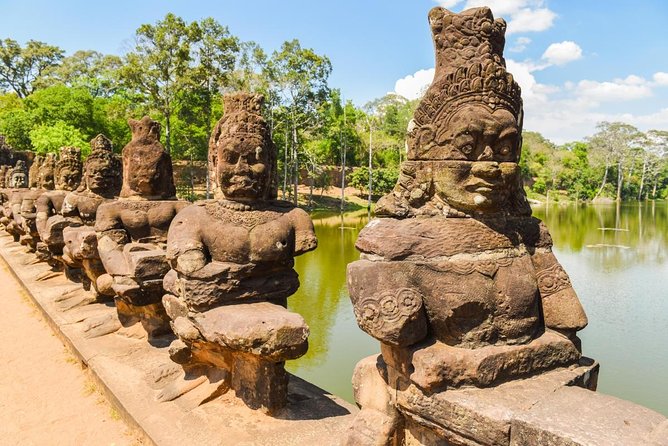
The route continues to Angkor Thom, a vast walled complex that once contained royal residences, officials, military officers, priests, and other monuments. The walls are described as about six meters wide, eight meters high, and 13 kilometers long. Even before you reach the main temples, the entrance helps show that Angkor was not just a single shrine. It was a major royal city.
The South Gate receives about 50 minutes in the planned schedule. This gives you time to look at the entrance and understand how it fits into the larger city. Your guide can explain the layout and the role of Angkor Thom before you continue to Bayon.
This stop is less about one perfectly preserved building and more about scale and setting. You are seeing the remains of a planned urban center, not simply a stand-alone temple. That context makes the later stops more meaningful.
A few more trips worth weighing up
- From Siem Reap: Kampong Phluk Floating Village Tour by Boat
★ 4.9 · 6,979 reviews - Sunset tour of Kampong Phluk stilts home village on the Tonle Sap
★ 5.0 · 4,865 reviews - Siem Reap: Kampong Phluk Floating Village Tour with Boat
★ 4.9 · 3,843 reviews - Siem Reap: Full-Day Angkor Wat Guided Tour with Sunset
★ 4.9 · 3,803 reviews
Bayon Temple and its 200 stone faces
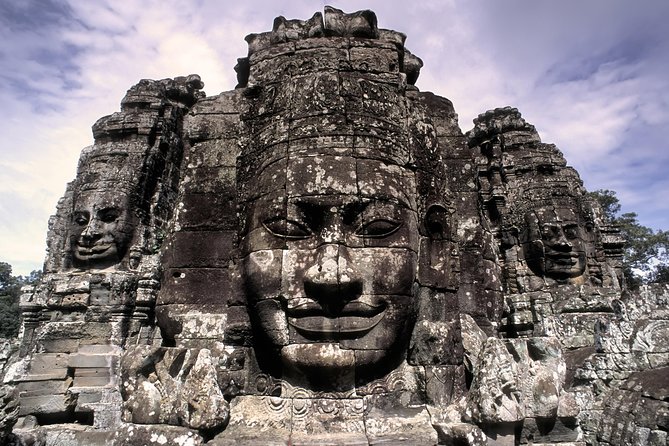
Inside Angkor Thom, Bayon is the emotional high point for many people. The temple sits at the center of the old city and is known for its roughly 200 smiling faces. As you move around the towers, faces appear from different angles, sometimes close and sometimes partly hidden by the structure.
The schedule allows about 45 minutes. That is enough for a strong introduction, especially with a guide explaining the temple’s place within Angkor Thom and the meaning of its sculpted details. It is also one of the sites where a guide can save time by directing you to useful viewpoints.
Bayon is not as immediately spacious as Angkor Wat. Its towers and narrow passages can feel crowded and confusing, especially when several groups arrive at once. The private format helps you ask questions and move at your own pace, but you should still expect uneven stone, steps, and a fair amount of walking.
The Elephant Terrace and Terrace of the Leper King
The next stop is the Elephant Terrace, named for its prominent elephant carvings. It is followed by the Terrace of the Leper King, known for a sculpture popularly called the Leper King. The planned time is about 45 minutes for these terraces.
These sites add a different view of Angkor’s public and ceremonial spaces. Instead of spending the visit inside a tall temple, you examine long sculpted platforms and carved surfaces. The details may be easy to overlook if you walk past quickly, so use this part of the tour to ask your guide about the figures, animals, and purpose of the terraces.
This stop can feel less dramatic than Angkor Wat or Ta Prohm, particularly if you are tired by this point. Still, it helps break up the day and shows that Angkor’s art was not limited to temple towers. Wear shoes with good grip because the route includes walking and steps.
Ta Prohm, where trees take over the ruins
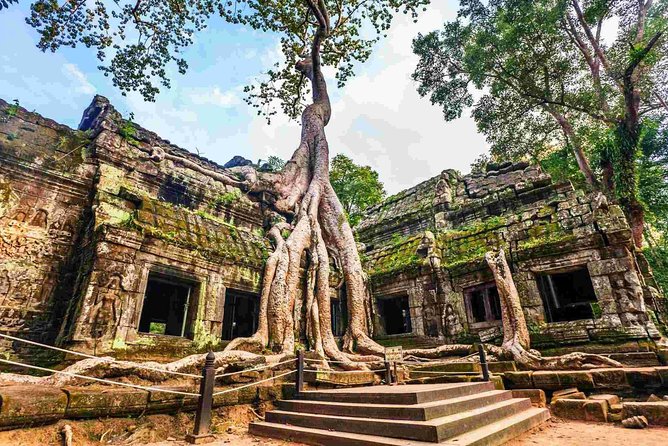
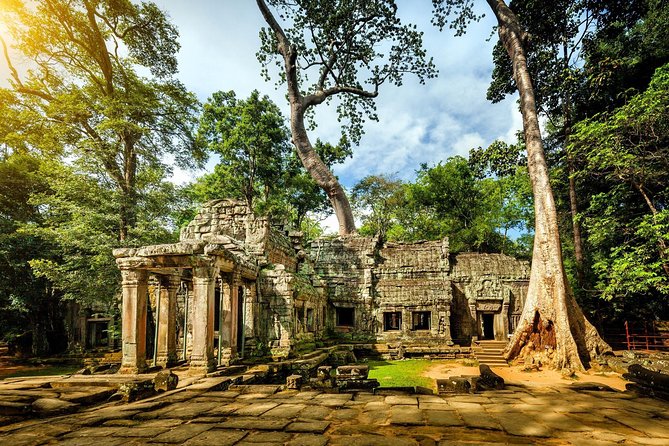
Ta Prohm is the final major temple stop and often the most memorable. Here, massive tree roots push over walls and wrap around stone, showing the force of nature against human construction. The site was left in a partially ruined condition by French archaeologists, creating the famous meeting of jungle and temple.
The visit lasts about an hour. That gives you time to see the root-covered passages, examine the remaining carvings, and hear how the site was preserved. Ta Prohm is widely associated with the film Tomb Raider, but its appeal does not depend on cinema. The contrast between carefully built stone galleries and invading roots is powerful on its own.
Ta Prohm can also be a frustrating stop if you want quiet. Its fame brings plenty of people, and some corridors are narrow. A private guide may know useful shortcuts and photo locations. Dy, for example, has been praised for helping people find good places for pictures and for explaining the carvings along the way.
The tree roots are not simply a decorative backdrop. They also raise difficult preservation questions. Removing every root could damage the ruins, while leaving them unchecked could cause further collapse. A good explanation turns the site from a striking photo stop into a lesson in conservation.
Guides, drivers, and the value of local explanation
The strongest part of this experience is the human service. The guides are praised for clear English, patience, humor, and a strong grasp of Cambodian history. Several have explained Hinduism and Buddhism without overwhelming people with too many details. That balance is important because Angkor can become a blur of dates and royal names.
Guides have also helped with practical matters. Some have taken phone photos at good locations, adjusted the pace in the heat, and offered suggestions for local food. If you want more time at one temple or fewer details at another, tell the guide early. The private structure makes that request realistic.
The driver’s role is quieter but just as useful. Safe transport, reliable waiting, cold bottles, and cooling towels can shape how you feel by the afternoon. A clean, comfortable tuk tuk can be a highlight in its own right, though the minivan will suit you better if you prefer air conditioning between stops.
Guide quality can vary by individual, as it does with any guided activity. The supplied experiences include English-speaking and multilingual guides, with an additional surcharge possible for another language and availability dependent on the request. Confirm the language before you go.
What the $49 price really covers
The advertised price is $49 per person. That covers hotel pickup and drop-off, transport, an experienced English-speaking guide, and cold bottled water. For a private experience, that is a reasonable starting price, especially if you value having a guide focused only on your group.
The required park ticket costs another $37 per person. That brings the basic cost to $86 per person before food, extra drinks, gratuities, and personal expenses. You should budget from that higher figure rather than treating $49 as the full admission price.
The value improves for people with limited time in Cambodia. You see the central Angkor route in one day without arranging separate transport or deciding which temples to cut. It is also a good choice for couples, families, and small groups who want to pause for photos or adjust the walking pace.
The price is less attractive if you want a very slow temple visit. The schedule is full, and you may prefer spreading Angkor across two days if you want to study every carving. This tour is best viewed as a well-organized highlights day, not a complete survey of every monument in the park.
Clothing, walking, and heat
Only pants or knee-length skirts and dresses are permitted. Choose light clothing that still covers your knees, and wear good walking shoes. You will cross uneven ground, climb steps, and walk for long periods between transport and temple interiors.
The tour requires moderate physical fitness. The total route lasts around six to seven hours, and the heat can make the distance feel longer. Take the water offered, use the cooling towels, and tell your guide if you need a break. The schedule can be adjusted more easily when you speak up.
Children must be accompanied by an adult. Families can book the private format because the group does not include strangers, and one family experience described careful attention to a couple traveling with an infant. Even so, parents should be ready for heat, steps, and long walks.
Should you book this Angkor Wat tour?
I would book it if you have one full day in Siem Reap and want the major temples explained properly. The guide, private transport, hotel pickup, cold water, and focused route offer real convenience. The strongest value comes from the personal attention, not simply from getting between the sites.
I would hesitate only if you dislike early starts, heat, or long walks, or if you want to examine Angkor at a very slow pace. Remember that the park ticket is extra, and confirm the start time if sunrise matters to you. For a first visit, especially as a couple, family, or small group, this is a practical way to see Angkor Wat, Bayon, Angkor Thom, and Ta Prohm without handling the day alone.
FAQ
What is included in the Angkor Wat private tour?
Hotel pickup and drop-off, transport, an experienced English-speaking guide, and cold bottled water are included.
How much is the Angkor National Park ticket?
The required park ticket costs $37 per person and is not included in the $49 tour price.
How long does the tour last?
The tour lasts approximately six to seven hours.
What time does hotel pickup begin?
The stated pickup time is 8 a.m. from your hotel in Siem Reap.
What type of transport is used?
One or two people travel by tuk tuk. Groups of three or more travel by minivan.
Is this a private tour?
Yes. Only your group participates in the private activity.
What clothing should I wear?
You must wear pants or a knee-length skirt or dress. Good walking shoes are recommended.
Just added around Siem Reap
- Private Battambang Full-Day Guided Tour★ 4.5 · 3 reviews
- Kulen Mountain, Beng Mealea and Banteay Srei Full Day Tour★ 5.0 · 3 reviews
- Kompong Pluk Tour★ 5.0 · 3 reviews
- Private 3 Day Tour to Discover the ancient temples★ 5.0 · 3 reviews
- Kulen National Park Ticket -Waterfall & 1000 Lingas★ 5.0 · 3 reviews
- Cambodia: Absolute Traditional Dance Show with Buffet Dinner★ 5.0 · 3 reviews
- Border Transfer (Siem Reap to Laos/Laos to Siem Reap)★ 3.5 · 3 reviews
- Siem Reap Countryside Sunset Vespa Tour or Tuk Tuk★ 4.5 · 3 reviews
Angkor Wat Tours, compared.

Angkor Wat Sunrise or Sunset Tour with Guide from Siem Reap
Read our review →
Angkor Wat: Small-Group Sunrise or Sunset Tour
Read our review →
Angkor Wat 2-Day Tour with Sunrise and Sunset
Read our review →

Angkor Wat Sunrise tour with Small – Group and Guide tours
Read our review →
Angkor Wat Highlights and Sunrise Guided Tour from Siem Reap
Read our review →
Angkor Wat Sunset Small Group Tour with Lunch Included
Read our review →