
Reviewed · ANGKOR WAT TOURS
Angkor Wat Small Circuit & Sunset Tour
Ancient stones, cool water, and a long day. This 8 to 9-hour private tour gives you a practical way to see Angkor Wat, Ta Prohm, Bayon, and Angkor Thom without getting up before dawn. I like the 9 a.m. start, which lets you eat breakfast first, and I like having an English-speaking guide explain the carvings, temple plans, and Khmer history as you walk.
The air-conditioned vehicle and free cold bottled water also matter in Cambodia’s heat. The main drawback is cost: the advertised price is $54 per person, but the required one-day Angkor Pass adds $37, and lunch is not included. That brings the basic cost to $91 per person before food.
In This Review
- The best parts of this Angkor tour
- Why the 9 a.m. start works well
- Angkor Wat: start with the great temple
- Banteay Kdei: a quieter half-hour
- Ta Prohm and the famous tree roots
- Ta Keo: a short climb and open views
- Angkor Thom: the long final chapter
- What the guide adds to the day
- Is $54 a fair price?
- Who should book this experience?
- My booking verdict
- FAQ
- What time does the tour start?
- How long does the experience last?
- Is this a private tour?
- Is transportation included?
- Is an English-speaking guide included?
- Are temple entrance fees included?
- Is food included?
- What clothing should I wear?
- Does the tour visit Angkor Wat and Ta Prohm?
- Can I cancel for a full refund?
The best parts of this Angkor tour
- A 9 a.m. start: You can have breakfast before visiting the temples, rather than beginning with a pre-dawn sunrise.
- A private group: Only your own party participates, which gives you more room to ask questions and set a comfortable walking pace.
- Vanna and Pal Chen: Both guides earned special praise for clear English, personal stories, and strong knowledge of the temples. Pal Chen’s background as a former Buddhist monk adds an unusual perspective.
- A useful temple mix: You see major sights such as Angkor Wat and Ta Prohm, plus quieter stops including Banteay Kdei and Ta Nei.
- Air-conditioned transport: The vehicle gives you a cool break between temple visits and includes bottled water.
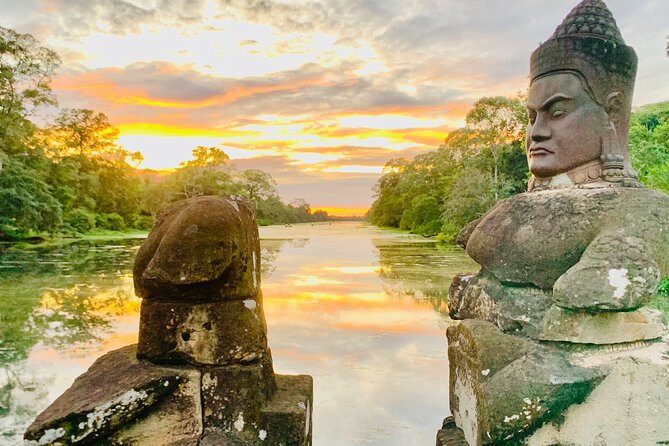
- Sunset at Angkor Thom: The day ends with sunset views from the ancient city, rather than stopping after the main temples.
Why the 9 a.m. start works well
Many Angkor tours begin in darkness. That can be worthwhile if sunrise is your main goal, but it also creates an early start, a crowded opening, and a long day when you may already be tired by the afternoon.
This tour begins at 9 a.m. I like that rhythm. You can eat breakfast, collect what you need, and start the day with a little energy left for the final temples. The schedule still runs roughly eight to nine hours, so this is not a quick visit. You will spend much of the day walking, climbing steps, and moving through large temple compounds.
The later start does mean you are not seeing sunrise at Angkor Wat. If that is the image you came to Cambodia for, choose a sunrise-focused tour instead. If you prefer a less punishing morning and want sunset views at the other end of the day, this schedule is a sensible trade.
Your guide and driver pick you up, then take you between the temple sites in an air-conditioned car, minivan, or minibus. The exact vehicle depends on the group arrangement, but the important point is that you have a cool place to rest between walks. Cold bottled water is included, which is a small but useful comfort in the heat.
More Angkor Wat tours we have reviewed:
- Angkor Wat Sunrise or Sunset Tour with Guide from Siem Reap
★ 5.0 · 12,109 reviews - Siem Reap: Angkor Wat: Small-Group Sunrise or Sunset Tour
★ 5.0 · 9,444 reviews - Siem Reap: Angkor Wat 2-Day Tour with Sunrise and Sunset
★ 4.9 · 4,429 reviews
Angkor Wat: start with the great temple
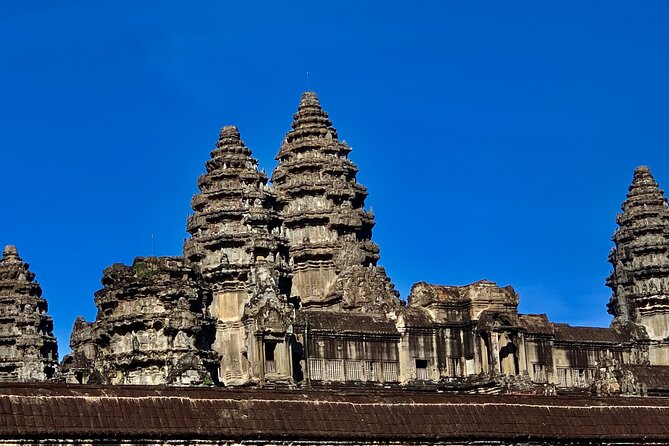
The first stop is Angkor Wat, with about two hours set aside. That is the right amount of time for a meaningful first look, though you should expect the visit to feel full rather than leisurely.
Angkor Wat is large, and its scale can be hard to grasp from photographs. You move through broad grounds, galleries, courtyards, and stone corridors, with details appearing slowly as you walk. A guide helps turn the site from a wall of carved stone into a place with purpose and design.
This is where an experienced guide can make a clear difference. Vanna was praised for explaining the temple’s carvings, the meaning of engravings, and the stories connected with the ruins. His English and storytelling were also singled out as strengths. That kind of commentary gives you something to look for instead of simply moving from one photo stop to the next.
Pal Chen received similar praise, with the added benefit of his past as a Buddhist monk. His background may help you see the temple not only as an archaeological site, but also as part of Cambodia’s religious story. The exact guide assigned to you is not guaranteed, so you should request a preferred guide if that matters to you.
Admission is not included. You need the one-day Angkor Pass, listed at $37 per person. Make sure you budget for it before comparing the tour price with other options.
Banteay Kdei: a quieter half-hour
After Angkor Wat, you visit Banteay Kdei for about 30 minutes. This Buddhist temple was built during the reign of King Jayavarman VII at the end of the 12th century.
The stop is brief, but it changes the pace. Angkor Wat is vast and formal. Banteay Kdei feels more enclosed and atmospheric, with a quieter mood that can help you notice smaller details in the stonework. I value this kind of stop because the day is not built only around the most famous names.
Thirty minutes gives you time for a focused walk and photos, but not a slow study of every corridor. You may find the visit short if Banteay Kdei becomes a favorite. Still, as part of a busy small circuit, the timing keeps the whole day moving.
The temple is also a useful reminder that Angkor is not one monument. It is a large archaeological area with temples built for different purposes and under different kings. Your guide can help connect these sites as you go.
Ta Prohm and the famous tree roots
The tour allows about two hours at Ta Prohm, one of the day’s major stops. This is the temple often linked with the film Tomb Raider, but the movie connection is only part of its appeal.
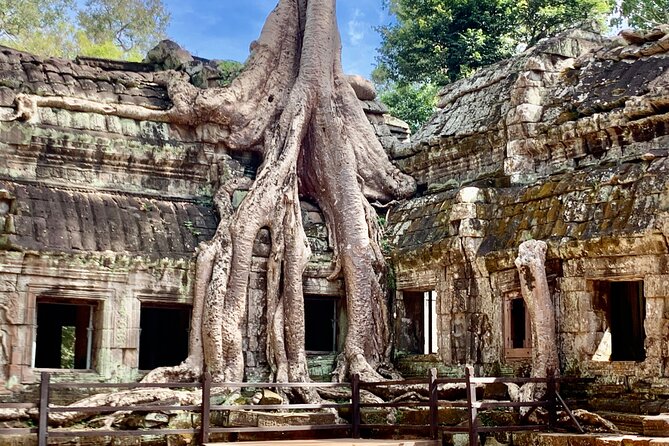
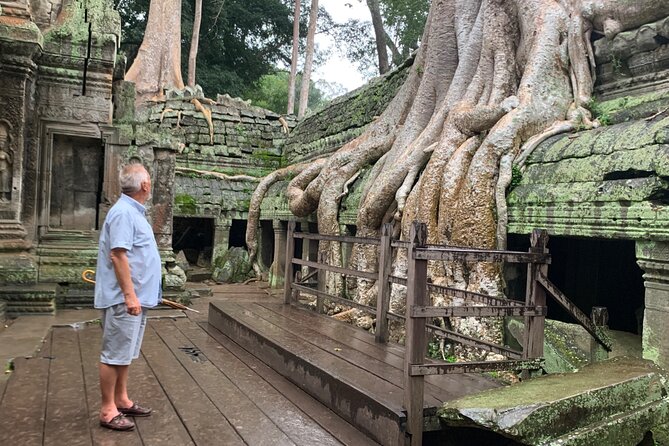
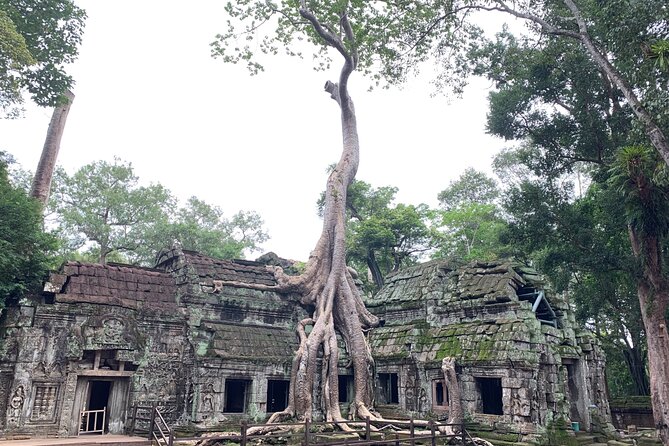
Ta Prohm is famous for trees growing through and over the ancient structure. Roots press against walls, spread across stone, and create the unusual meeting of living growth and carved architecture that makes the site instantly recognizable.
Two hours gives you time to see more than the most photographed corner. You can look at the relationship between collapsed sections, galleries, doorways, and tree roots without rushing straight back to the vehicle. Your guide can also explain what you are seeing and point out details that are easy to miss.
The popular reputation has a downside. Ta Prohm is one of the stops most people want to see, so this part of the day may feel more intense than Banteay Kdei. The tour does not promise a quiet, empty temple. Go in expecting an important and visually dramatic visit, not solitude.
Comfortable shoes are important. The ground at temple sites can be uneven, and the day includes a lot of walking. You also need clothing that covers your shoulders and knees. Without appropriate clothing, you may not be allowed access to the temples.
More sunset tours:
- Sunset tour of Kampong Phluk stilts home village on the Tonle Sap
★ 5.0 · 4,865 reviews - Siem Reap: Full-Day Angkor Wat Guided Tour with Sunset
★ 4.9 · 3,803 reviews - Angkor Wat Sunset Small Group Tour with Lunch Included
★ 5.0 · 3,059 reviews - Angkor 2-Day Sunset & Sunrise Small-Group Tour
★ 5.0 · 2,567 reviews
Ta Keo: a short climb and open views
Ta Keo receives about 20 minutes. The key feature here is the chance to climb and look over the surrounding area.
This is a short stop, so it works best as a change of pace rather than a full temple study. You get a little time to see the structure and, if you are comfortable with the climb, look out across the area.
The climb is worth considering carefully if you have mobility concerns or dislike steep temple steps. The supplied tour details say most people can participate, but they do not promise special access arrangements. If you need such arrangements, ask before booking.
Because the stop is short, your guide will likely keep the group focused. You should not expect the same long explanation or walking time provided at Angkor Wat and Ta Prohm.
Angkor Thom: the long final chapter
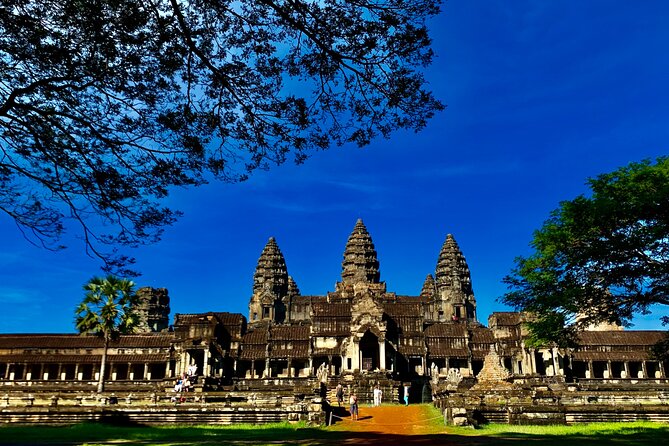
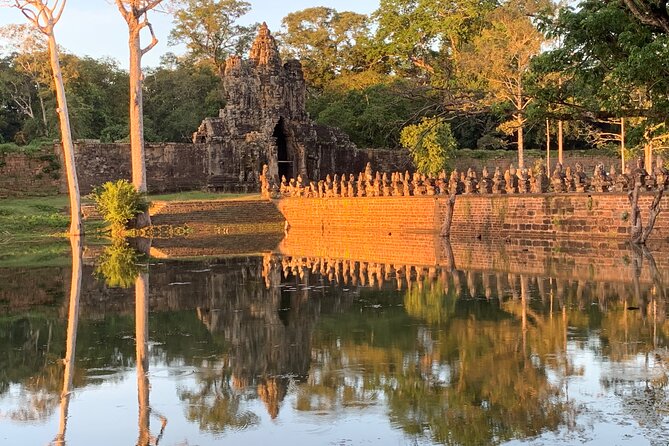
The tour then moves into Angkor Thom, the ancient city compound, with about two hours planned. Entry is through the Victory Gate, and the route can include optional stops such as Spean Thmor, Chau Say Tevoda, Thommanon, Sourprat, and the Terrace of the Leper King.
This portion gives the day its broadest sense of place. Instead of visiting a single temple, you are moving through a former urban center with several structures and viewpoints. The optional stops are useful if you want more variety, but they also make the final section flexible rather than perfectly fixed.
Bayon is one of the important sights in this part of the tour. Its stone faces are among the most recognizable images in the Angkor area. A guide is particularly helpful here because the temple can feel confusing at first. Narrow passages, towers, and carved faces create a layered site that is easier to understand with someone explaining the layout and symbolism.
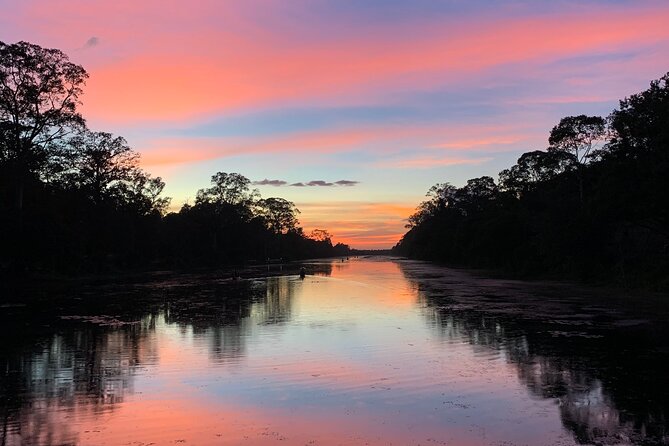
The tour finishes with sunset views from Angkor Thom. This is a strong ending because you have already seen the main temples and can settle into the final part of the day without another early start waiting for you the next morning.
Sunset conditions can change, of course, and the tour details do not promise a particular color or clear sky. What you are guaranteed is the plan to end in Angkor Thom for sunset views, not a perfect sunset itself.
What the guide adds to the day
The biggest reason to choose this experience over arranging basic transport is the guide. Temples such as Angkor Wat and Ta Prohm are impressive without explanation, but their carvings and layouts reward context.
Vanna was praised for his command of English, his understanding of the temples and ruins, and his ability to explain the meanings of wall engravings. His personal and historical stories were also appreciated. That combination matters because a good temple guide does more than list dates. He gives you a way to read what is in front of you.
Pal Chen was also praised for his explanations, with his former Buddhist monk background adding a personal and religious angle. If Pal Chen is available, his perspective could be especially helpful for anyone interested in the Buddhist side of the monuments.
The assigned guide is not guaranteed, so treat these names as useful points to request, not a promise. Either way, the tour includes an English-speaking guide, and the guide is part of what gives the day its value.
Is $54 a fair price?
At $54 per person, the tour is not an inexpensive way to see Angkor. Once you add the $37 one-day Angkor Pass, the basic total becomes $91 per person. You also pay for lunch and any other food or drinks beyond the included bottled water.
The price makes more sense if you value a private group, a guide, and air-conditioned transport. You are not simply paying for a ride between monuments. You get a full-day structure, temple explanations, cooling breaks, and a sunset finish.
For one person or a couple, the total may feel high compared with using shared transport and visiting independently. For a small group, the private arrangement can offer better value because the same vehicle and guide serve only your party. Group discounts are available, though the exact reduction is not given.
The tour is especially useful if you want to avoid the work of planning the order of temples and arranging transport. Independent visits can cost less, but they require you to manage timing, navigation, tickets, and explanations yourself.
Who should book this experience?
I would suggest this tour to you if you want the major Angkor sights in one organized day, prefer a 9 a.m. start, and care about historical explanation. It also suits a family or small group that wants a private vehicle and does not want to coordinate several separate rides.
It is a good fit for first-time visitors who want a clear introduction to Angkor Wat, Ta Prohm, Bayon, and Angkor Thom. The route includes famous temples, but also gives you quieter or less central stops such as Banteay Kdei and Ta Keo.
You may want another option if sunrise at Angkor Wat is essential, if you want long unstructured time at each temple, or if climbing at Ta Keo would be difficult. The day is full, and the schedule leaves limited room for lingering at every stop.
Dress for temple access. Your shoulders and knees must be covered. Bring comfortable footwear, and remember that lunch is your own expense.
The tour offers free cancellation up to 24 hours before the start time. Cancellations made less than 24 hours before the start, along with late changes, are not refundable.
My booking verdict
I would book this tour if I wanted a well-paced first day at Angkor without a sunrise alarm. The strongest reasons are the private format, the air-conditioned transport, and the quality of guide commentary associated with Vanna and Pal Chen.
The extra $37 entrance fee and separate lunch cost are important, so the real price is higher than the headline figure. Still, the package gives you a full route through the major small circuit sights and ends at Angkor Thom for sunset. For a small group that values comfort and explanation, that is a fair exchange.
FAQ
What time does the tour start?
The tour starts at 9:00 a.m.
How long does the experience last?
The tour lasts approximately eight to nine hours.
Is this a private tour?
Yes. Only your own group participates in the activity.
Is transportation included?
Yes. Transportation is provided in an air-conditioned car, minivan, or minibus.
Is an English-speaking guide included?
Yes. An English-speaking tour guide is included.
Are temple entrance fees included?
No. The one-day Angkor Pass costs $37 per person and is not included.
Is food included?
No. Food and drinks are not included. Cold bottled water is provided.
What clothing should I wear?
You need clothing that covers your shoulders and knees to enter the temples.
Does the tour visit Angkor Wat and Ta Prohm?
Yes. The route includes Angkor Wat and Ta Prohm, along with Banteay Kdei, Ta Keo, Bayon, and Angkor Thom.
Can I cancel for a full refund?
Yes, if you cancel at least 24 hours before the experience starts. Cancellations made less than 24 hours before the start are not refunded.
More Evening Experiences
- Siem Reap: Angkor Wat Sunrise or Sunset Guided Tour
★ 4.9 · 2,123 reviews - Siem Reap Floating Village Kampong Phluk Sunset with Boat
★ 5.0 · 1,962 reviews - Full-Day Guided Sunset Tour of Angkor Wat
★ 5.0 · 1,507 reviews - Kompong Phluk Floating Village Half-Day Tour ( Morning / Sunset )
★ 5.0 · 1,494 reviews
Just added around Siem Reap
- Private Battambang Full-Day Guided Tour★ 4.5 · 3 reviews
- Kulen Mountain, Beng Mealea and Banteay Srei Full Day Tour★ 5.0 · 3 reviews
- Kompong Pluk Tour★ 5.0 · 3 reviews
- Private 3 Day Tour to Discover the ancient temples★ 5.0 · 3 reviews
- Kulen National Park Ticket -Waterfall & 1000 Lingas★ 5.0 · 3 reviews
- Cambodia: Absolute Traditional Dance Show with Buffet Dinner★ 5.0 · 3 reviews
- Border Transfer (Siem Reap to Laos/Laos to Siem Reap)★ 3.5 · 3 reviews
- Best Taxi Siem Reap to Battambang – English Speaking Driver★ 4.5 · 3 reviews
Angkor Wat Tours, compared.

Angkor Wat Sunrise or Sunset Tour with Guide from Siem Reap
Read our review →
Angkor Wat: Small-Group Sunrise or Sunset Tour
Read our review →
Angkor Wat 2-Day Tour with Sunrise and Sunset
Read our review →

Angkor Wat Sunrise tour with Small – Group and Guide tours
Read our review →
Angkor Wat Highlights and Sunrise Guided Tour from Siem Reap
Read our review →
Angkor Wat Sunset Small Group Tour with Lunch Included
Read our review →
Full-Day Angkor Wat Sunrise Private Tour with Guide from Siem Reap
Read our review →Browse the lists this tour appears in