
Reviewed · ANGKOR WAT TOURS
Angkor Wat: Tuk Tuk and Walking Tour
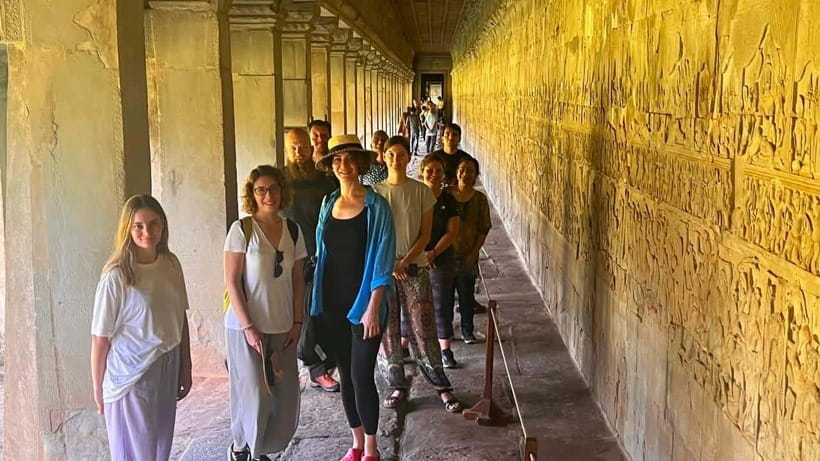
Ancient stones, jungle roots, and a tuk-tuk make a fine day out. This seven-hour Angkor tour pairs private transport with long walks through Angkor Thom, Bayon, the old city walls, and Ta Prohm. I like the mix of moving quickly between sites and slowing down on foot, especially with a local guide to explain how the Khmer Empire worked.
I also like the personal service. Guides such as Monirom, Poleak, Bun, and Sam have earned strong praise for clear English, local insight, good timing, and friendly care. The main catch is physical: one guest estimated about nine miles of walking, and the tour is not suitable for people with mobility impairments.
In This Review
- Key points to know before booking
- What this Angkor day is really like
- A private tuk-tuk ride to Angkor’s eastern gate
- Walking into Angkor Thom’s ancient city
- Bayon and the famous stone faces
- The Dead Gate, Victory Gate, and forest paths
- Lunch and the midday pause
- Ta Prohm, where the jungle takes over
- How the guide shapes the day
- What the $49 price includes and leaves out
- Who should book this tour
- Should you book it?
- FAQ
- How long does the Angkor tuk-tuk and walking tour last?
- What temples and places are included?
- Is hotel pickup included?
- Is transportation private?
- Is the Angkor temple entrance fee included?
- Is lunch included?
- What language does the guide speak?
- What should I bring?
- Is the tour suitable for people with mobility impairments?
Key points to know before booking
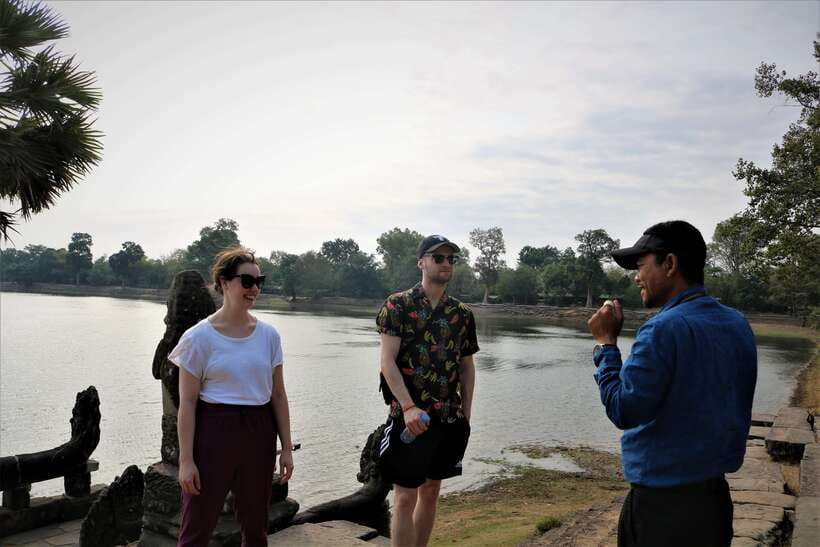
- The tour begins at Angkor’s eastern gate, then explores Angkor Thom on foot rather than simply stopping for quick photographs.
- Bayon’s giant stone faces provide the day’s most memorable temple visit and a useful introduction to Khmer religious art.
- The Dead Gate and old city walls add a quieter, more active side to Angkor, with forest paths and fewer people than the main routes.
- Ta Prohm is the dramatic finale, with trees growing through the ruins and maze-like corridors.
- The $49 price excludes the $37 one-day temple pass and lunch, bringing the known cost to $86 per person before food.
- Expect serious walking, comfortable shoes, insect repellent, water, and soft drinks are provided.
What this Angkor day is really like
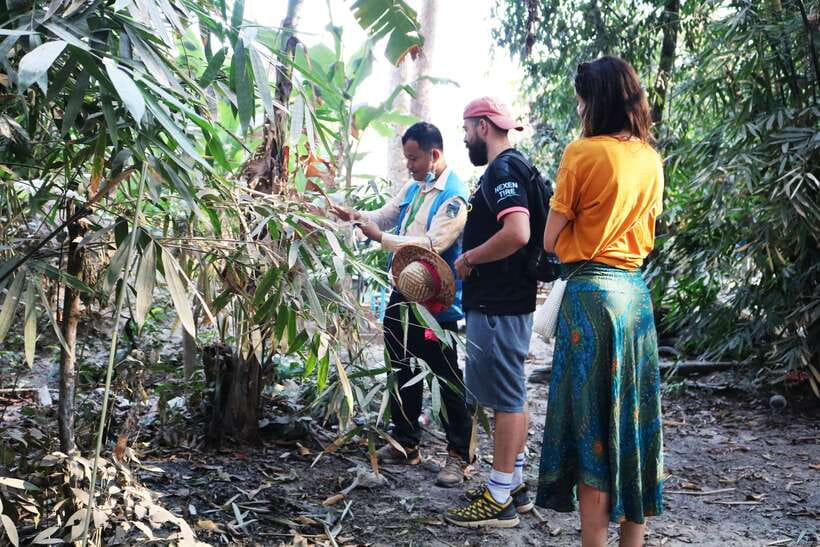
This is not a drive-by temple circuit. You ride in a private tuk-tuk, get out, and walk through the ruins with a guide who puts the stones into context. That matters at Angkor, where a carved doorway can look like just another old wall until someone explains its religious purpose or tells you how the city once functioned.
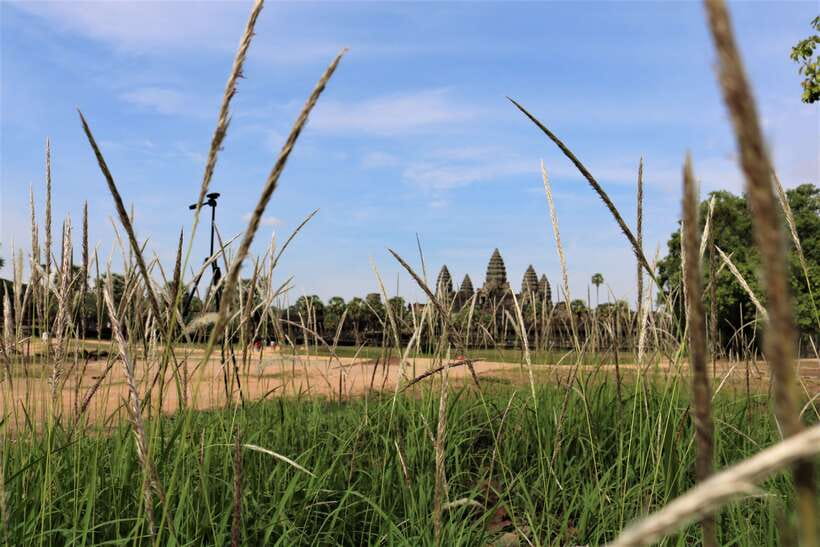
The route focuses on Angkor Thom, Bayon, the city gates and walls, and Ta Prohm. Despite the experience name, the supplied route does not promise a full visit inside Angkor Wat’s main temple. If Angkor Wat itself is your top priority, confirm the exact stops before you pay.
The tour is priced at $49 per person. Add the required one-day temple pass at $37 and lunch, which is not included. Your known cost is therefore $86 per person, plus your meal. That is a fair price if you value a private tuk-tuk, hotel transport, bottled water, soft drinks, and a live English-speaking guide. It is less attractive if you mainly want transport and photographs.
More Tuk Tuk Tours in Siem Reap
- Siem Reap: Angkor Wat Private Tuk-Tuk Tour
★ 4.9 · 2,222 reviews - Siem Reap Countryside Bike Tour / E-Bike or Tuk Tuk
★ 5.0 · 935 reviews - Angkor Sunrise Bike Tour / E-Bike or Tuk Tuk
★ 5.0 · 615 reviews
A private tuk-tuk ride to Angkor’s eastern gate
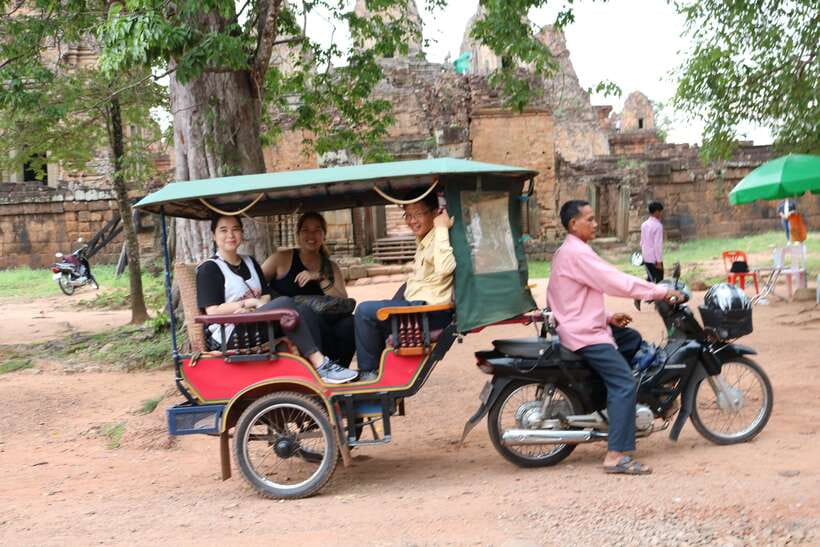
Pickup is included from your hotel in Siem Reap, and the day starts with a private tuk-tuk ride to Angkor’s eastern gate. This is a pleasant way to begin because you are not tied to a large coach or a fixed seat among strangers. The open-air ride also gives the day a local feel, though the route and weather will naturally affect how comfortable it is.
The tuk-tuk remains useful between walking sections. You can cover more ground without spending the entire day on foot, and your driver provides a ready place to return to after a hot temple walk. Bottled water and soft drinks are included, a small but important touch in Cambodia’s heat.
Communication before the tour was praised, and one guest said pickup happened as planned. Still, I would have your hotel name and pickup details ready, since Siem Reap has many hotels with similar names. Ask the provider what time you should be waiting outside.
Walking into Angkor Thom’s ancient city
Angkor Thom is where the tour shifts from transport to exploration. You walk through the former royal city while the guide explains the Khmer Empire and the role of this huge fortified center. The value here is not only the architecture. It is the sense that Angkor was an organized city, not a collection of unrelated temples scattered through trees.
The route includes the Dead Gate, an atmospheric entrance that gives the walk a slightly more remote feel. From there, you climb and follow sections of the old city walls toward the Victory Gate. These paths are a strong part of the tour for anyone who wants more than the standard temple entrance and exit.
The walls and forest tracks can also be the day’s physical test. Surfaces are uneven, and the combination of climbing, heat, and distance adds up. One guest estimated roughly nine miles of walking, while another spent nine to ten hours with the guide, longer than the advertised seven hours. Treat the stated duration as a guide, not a guarantee that every group will follow the same pace.
If you prefer a gentle sightseeing day, this may feel demanding. If you enjoy walking through ruins and want to see Angkor away from its busiest photo points, this is one of the tour’s best features.
Bayon and the famous stone faces
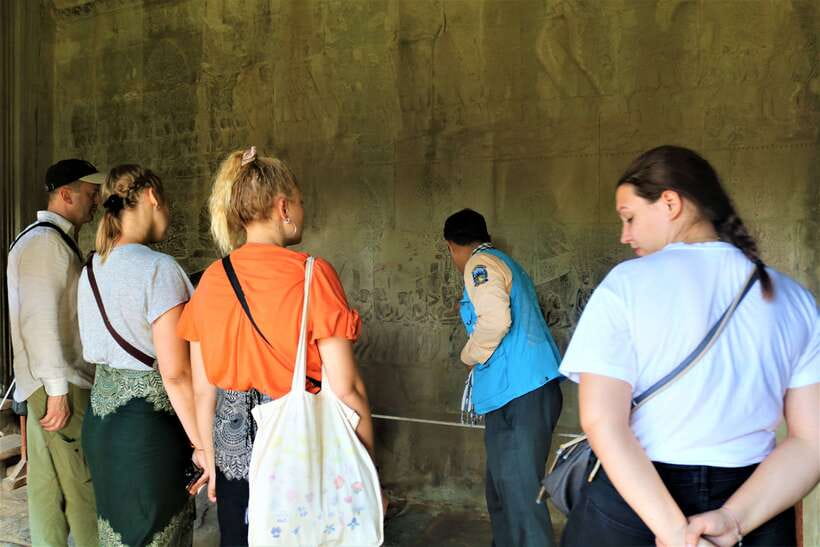
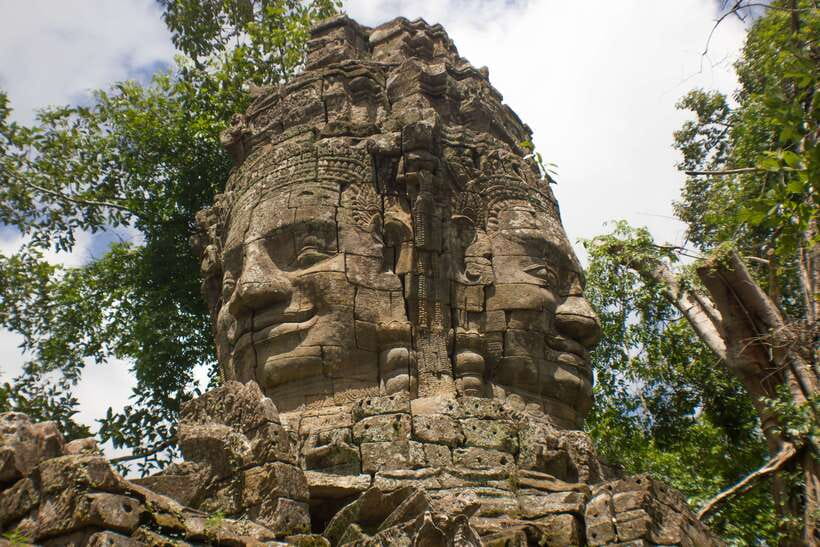
Bayon is the visual centerpiece of the Angkor Thom portion. Its towers carry huge carved faces that look in different directions, giving the temple a watchful, almost human character. The narrow passages and stacked stone create a maze-like visit, with new faces appearing as you turn through the structure.
A guide makes a real difference here. Without context, you may remember only the faces. With an explanation of the temple’s place in Khmer culture and the empire, you can better understand why the building feels both religious and political.
The guides receive especially strong praise for their command of English and their ability to explain more than temple facts. Monirom was praised for discussing daily life and Khmer culture, while Poleak was described as friendly, well informed, and easy to understand. Bun was praised for timing and care during the day. These details suggest that the experience depends in part on the individual guide, but the available guide feedback is unusually positive.
Bring your camera, but do not let it turn Bayon into a quick stop. The faces are best appreciated slowly, as the angle and light change around the towers.
More Angkor Wat tours we have reviewed:
- Angkor Wat Sunrise or Sunset Tour with Guide from Siem Reap
★ 5.0 · 12,109 reviews - Siem Reap: Angkor Wat: Small-Group Sunrise or Sunset Tour
★ 5.0 · 9,444 reviews - Siem Reap: Angkor Wat 2-Day Tour with Sunrise and Sunset
★ 4.9 · 4,429 reviews - Siem Reap: Full-Day Angkor Wat Guided Tour with Sunset
★ 4.9 · 3,803 reviews
The Dead Gate, Victory Gate, and forest paths
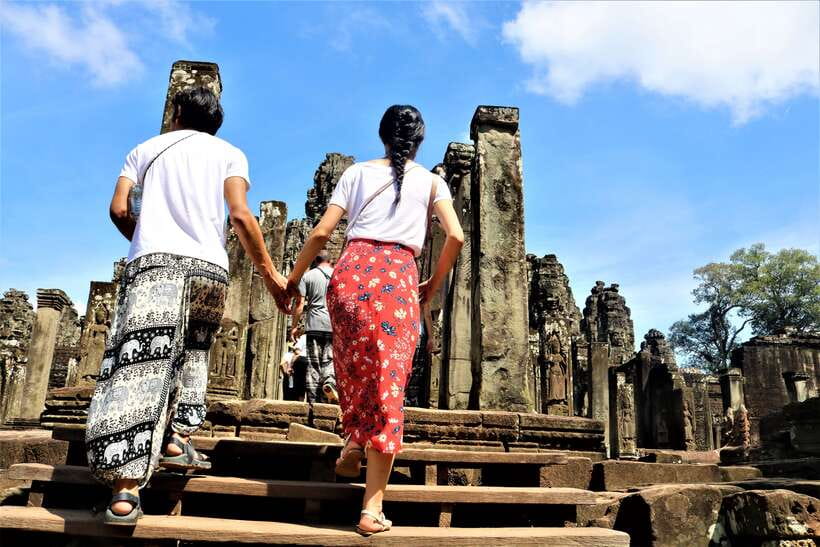
The walk between Angkor Thom’s gates is the part many short circuits leave out. You see the old defensive layout and get a closer feel for the jungle tracks around the ruins. This is not polished sightseeing. You may find muddy or narrow ground, especially after rain.
A previous guest chose to skip a nearby village walk because heavy rain made the route very muddy. The guide arranged for a quicker return to the tuk-tuk, which shows the practical value of having a private vehicle and a guide who can adjust the plan. Another guest decided not to continue a village section because it felt dirty and narrow. Since the village visit is not a listed highlight, ask your guide what is planned before setting out.
The Victory Gate adds another strong visual point. Historically, it was associated with royal and military movement, and the route helps you picture people entering and leaving the great city. The guide’s storytelling is important here because the physical remains can be hard to read on their own.
Lunch and the midday pause
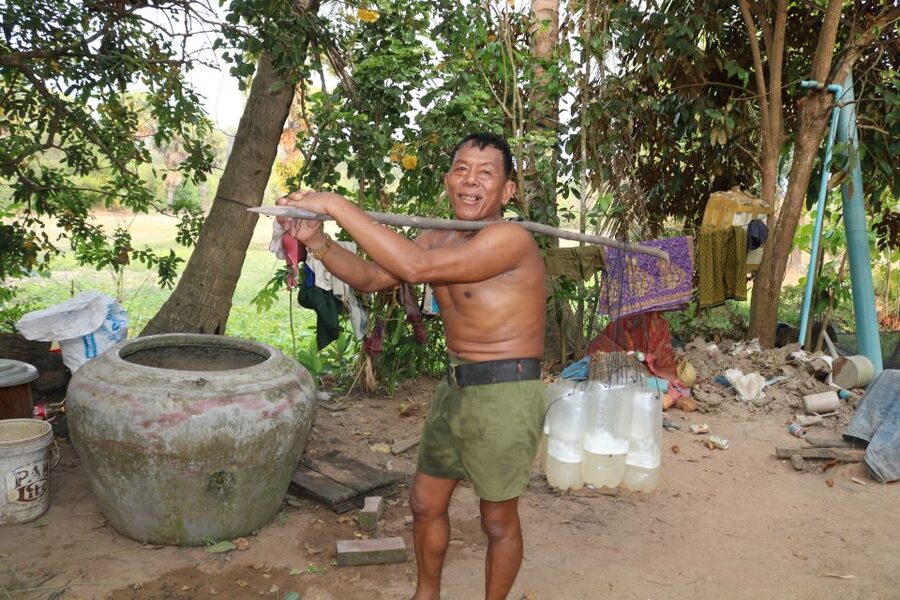
Lunch is not included, so you should budget for it separately. The supplied information does not give a fixed restaurant, menu, or price, but one guest enjoyed a meal at a local restaurant and described it as delicious.
That flexibility can work in your favor. You may be able to eat where your guide recommends, rather than being locked into a preselected tourist restaurant. At the same time, you should ask whether lunch is at a local restaurant, how long the break lasts, and what payment is accepted.
The pause matters because the walking is substantial. Use it to rest your feet, refill your energy, and decide whether you want to keep a brisk pace for Ta Prohm or take a slower approach. Water and soft drinks are included throughout, but food is your responsibility.
Ta Prohm, where the jungle takes over
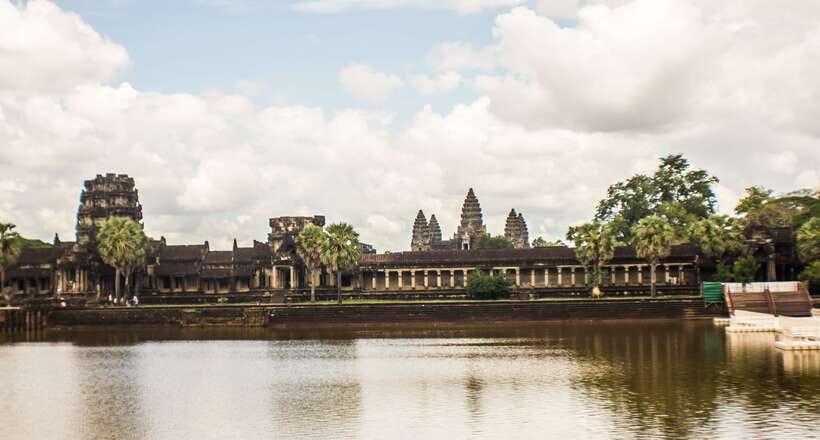
Ta Prohm supplies the day’s most theatrical scene. Trees grow through the stonework, roots press against walls, and corridors lead into one another like a puzzle. It is easy to see why the temple is often called the jungle temple.
The attraction is not simply that nature has covered the ruins. Ta Prohm shows how fragile the structures can look when trees, rain, and time work against them. At the same time, the temple remains a carefully designed religious complex, with carved surfaces and planned passageways beneath the growth.
You will want sturdy shoes here. The interior can be uneven, and the maze-like layout makes it tempting to hurry from one striking view to the next. A guide can help you pause at the parts that reveal the building’s design, not only the famous tree roots.
The experience description presents Ta Prohm as looking much as it did when an explorer found it more than 150 years ago. That wording captures the intended mood: ruins in a forest rather than a fully restored monument. Do not expect total isolation, though. The tour aims to escape the heaviest crowds, not remove every other person from Angkor.
How the guide shapes the day
The strongest part of this experience is the guide. You are not just handed a driver and a map. A professional local guide accompanies you, speaks English, and explains the Khmer Empire, temple details, and everyday Cambodian culture.
Monirom received praise for covering both temple subjects and daily life. Poleak was praised for very good English, friendliness, and clear explanations. Bun was praised for timing and for arranging a practical change when rain made a village route unpleasant. Sam was also singled out with warm respect.
Good guiding matters even more on a walking route. You need someone to set a sensible pace, point out the difference between a gate and a temple entrance, and explain why the walls and forest paths matter. The guide can also respond when rain, mud, or tired legs force a change.
You should still speak up. Tell the guide if you need a slower pace, a longer lunch, or a shorter village section. The experience appears to allow some flexibility, but the day has several major walking segments and only so much daylight.
What the $49 price includes and leaves out
For $49 per person, you receive:
- Private tuk-tuk transportation
- Hotel pickup and return
- Professional local English-speaking guide
- Bottled water
- Soft drinks
You do not receive the temple entrance fee or lunch. The one-day Angkor pass costs $37 per person, so the practical starting total is $86, followed by the cost of your meal.
The tour is a good value for two or more people who want private transport and a guide without arranging each part themselves. It is also useful if you want a more active route through Angkor Thom instead of a simple circuit of the most famous temple entrances.
The value is weaker for anyone who already has a driver, knows the temples well, or wants a short and easy outing. In that case, the cost of the guide and tuk-tuk may feel high once the temple pass is added.
Who should book this tour
I would choose this tour if you want history explained as you walk, enjoy forest tracks, and like the freedom of a private tuk-tuk. It suits visitors who want Bayon and Ta Prohm but also want to see gates, walls, and less direct paths through Angkor Thom.
It is a particularly good fit for reasonably active people who can manage uneven ground and several hours of walking. Wear comfortable shoes, carry insect repellent, and avoid shorts because shorts are not allowed. Feeding animals is also prohibited.
I would think twice if you have mobility limitations, dislike heat, or want an unhurried photographic day. The route is active, and the actual day may run longer than seven hours. If your main aim is a careful visit to Angkor Wat itself, check the exact program first because the listed route centers on Angkor Thom, Bayon, and Ta Prohm.
Should you book it?
Book it if you want a guide-led walking day with private tuk-tuk support, strong cultural explanations, and a chance to see Angkor beyond the standard roadside stops. The praised guides and flexible response to rain add real value.
Skip it if you want minimal walking, a fixed short schedule, or a tour centered clearly on Angkor Wat’s main temple. Before booking, confirm the start time, ask exactly which temples and gates are included, and budget $37 for the temple pass plus lunch.
FAQ
How long does the Angkor tuk-tuk and walking tour last?
The advertised duration is seven hours. One guest reported spending about nine to ten hours with the guide, so the actual timing can vary with walking pace, weather, and stops.
What temples and places are included?
The route includes Angkor Thom, Bayon, the Dead Gate, sections of the old city walls, the Victory Gate, and Ta Prohm. The provided details do not promise a full visit inside Angkor Wat’s main temple.
Is hotel pickup included?
Yes. Pickup and drop-off at your Siem Reap hotel are included.
Is transportation private?
Yes. Transportation is provided by private tuk-tuk.
Is the Angkor temple entrance fee included?
No. The one-day temple pass costs $37 per person and must be paid separately.
Is lunch included?
No. Lunch is not included. A previous guest enjoyed lunch at a local restaurant, but the price and restaurant are not specified.
What language does the guide speak?
The live guide speaks English.
What should I bring?
Bring comfortable shoes and insect repellent. Bottled water and soft drinks are provided.
Is the tour suitable for people with mobility impairments?
No. The tour is listed as unsuitable for people with mobility impairments, and the walking may total several miles over uneven temple paths.
More Walking Tours
- Siem Reap: City Walking Tour
★ 4.6 · 583 reviews - Siem Reap City Walking Tour
★ 4.5 · 114 reviews - Siem Reap Walking Tour: Landmarks & Hidden Gems
★ 5.0 · 15 reviews - Angkor Wat Bayon and Ta Prohm with a short walk to ancient city
★ 5.0 · 5 reviews
Just added around Siem Reap
- Private Battambang Full-Day Guided Tour★ 4.5 · 3 reviews
- Kulen Mountain, Beng Mealea and Banteay Srei Full Day Tour★ 5.0 · 3 reviews
- Kompong Pluk Tour★ 5.0 · 3 reviews
- Private 3 Day Tour to Discover the ancient temples★ 5.0 · 3 reviews
- Cambodia: Absolute Traditional Dance Show with Buffet Dinner★ 5.0 · 3 reviews
- Kulen National Park Ticket -Waterfall & 1000 Lingas★ 5.0 · 3 reviews
- Border Transfer (Siem Reap to Laos/Laos to Siem Reap)★ 3.5 · 3 reviews
- Beng Melea, Rolous Group & Kompong Phluk Floating Village★ 5.0 · 3 reviews
Angkor Wat Tours, compared.

Angkor Wat Sunrise or Sunset Tour with Guide from Siem Reap
Read our review →
Angkor Wat: Small-Group Sunrise or Sunset Tour
Read our review →
Angkor Wat 2-Day Tour with Sunrise and Sunset
Read our review →

Angkor Wat Sunrise tour with Small – Group and Guide tours
Read our review →
Angkor Wat Highlights and Sunrise Guided Tour from Siem Reap
Read our review →
Angkor Wat Sunset Small Group Tour with Lunch Included
Read our review →
Full-Day Angkor Wat Sunrise Private Tour with Guide from Siem Reap
Read our review →Browse the lists this tour appears in