
Reviewed · TONLE SAP FLOATING VILLAGE TOURS
Bakong Temples & Floating Village Tour
Ancient stones meet life on water. This Siem Reap day trip links the early Khmer temples at Lolei, Preah Ko, and Bakong with Kampong Phluk Floating Village, giving you two very different views of Cambodia. I like the private format, which keeps the day focused on your group, and I like the chance to see both temple ruins and a living water-based community. The main drawback is the extra cost of the Angkor Pass, which is not included in the $45 tour price.
The day lasts about six to eight hours, with three hours set aside for Kampong Phluk and two hours at Bakong. Guide quality matters here, and the strongest praise goes to Mr. Oun Kosorl and Mr. K, both noted for their charm and clear explanations. Plan carefully, though: the village admission and Angkor Pass are separate expenses.
In This Review
- Key points at a glance
- Why this pairing works so well
- Lolei, the northern temple of the Roluos group
- Preah Ko and the beginnings of Hariharalaya
- Bakong, the temple mountain that changed Khmer design
- Kampong Phluk and the seasonal life of Tonle Sap
- What the private vehicle and guide add
- Is $45 a fair price?
- Who should choose this day trip?
- Booking, cancellation, and practical checks
- Should you book the Bakong and Floating Village Tour?
- FAQ
- How much does the tour cost?
- How long does the experience last?
- Is hotel pickup included?
- Is transportation air-conditioned?
- Is the tour private?
- What temples are included?
- Is an English-speaking guide included?
- Are entrance tickets included?
- Can I cancel for a refund?
Key points at a glance
- Bakong is the historical centerpiece: Built in 881 AD, it was the first sandstone temple-mountain of the Khmer Empire and a model for later temples, including Angkor Wat.
- The Roluos temples offer an earlier chapter: Lolei, Preah Ko, and Bakong belong to the late ninth-century Hariharalaya area, before the main Angkor complex reached its height.
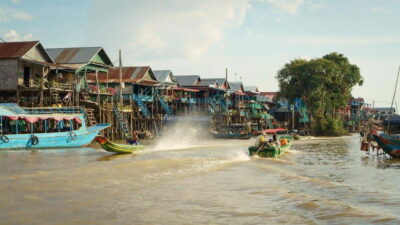
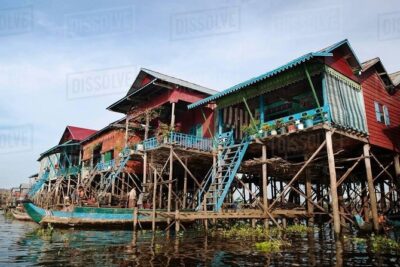
- Kampong Phluk is a working community: Homes, schools, shops, and other buildings adapt to seasonal water levels, using floating structures and tall stilts.
- The private setup suits flexible sightseeing: Only your group participates, with hotel pickup and drop-off in an air-conditioned vehicle.
- The guide can shape the day: Mr. Oun Kosorl and Mr. K received especially warm praise for temple explanations and their personable approach.
- Budget for entrance fees: The advertised price is $45 per person, but the Angkor Pass is listed at $37 per person and the floating village admission is also excluded.
Why this pairing works so well
Many Siem Reap outings focus almost entirely on the famous temples near Angkor Wat. This one takes a different route. It begins at the Roluos group, an early center of Khmer power, then finishes with Kampong Phluk on Tonle Sap Lake.
I like that contrast. At the temples, you study stone plans, sacred symbols, and royal ambition. At Kampong Phluk, you see how people organize ordinary life around changing water levels. One part is archaeological, the other is social and practical.
The schedule also gives enough time to avoid a rushed glance at each place. Lolei receives about an hour, Preah Ko about an hour, Bakong two hours, and the floating village about three hours. The total can run from six to eight hours, so you should keep much of the day free.
The tradeoff is that this is not a short add-on to a busy temple morning. You are committing most of a day, and the extra admissions can make the final cost noticeably higher than the headline price.
More Tonle Sap floating village trips:
- From Siem Reap: Kampong Phluk Floating Village Tour by Boat
★ 4.9 · 6,979 reviews - Sunset tour of Kampong Phluk stilts home village on the Tonle Sap
★ 5.0 · 4,865 reviews - Siem Reap: Kampong Phluk Floating Village Tour with Boat
★ 4.9 · 3,843 reviews
Lolei, the northern temple of the Roluos group
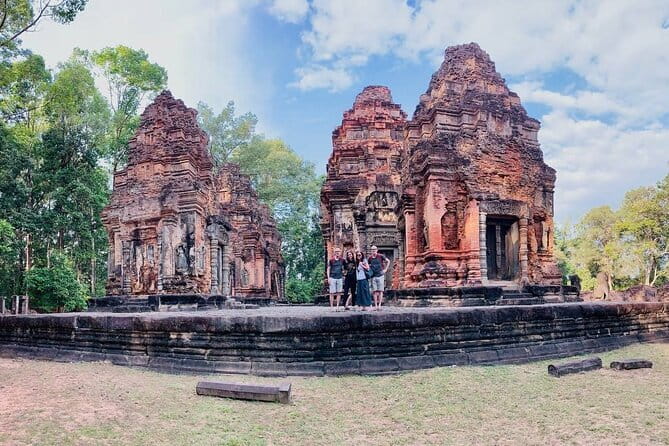
Lolei is the first stop, with about one hour planned for the visit. It is the northernmost of the three Roluos temples, along with Preah Ko and Bakong, and dates from the late ninth century.
Its value comes from sequence. Lolei helps you see that Angkorian temple building did not begin with the vast, polished monuments most people know. The Roluos group represents an earlier phase, when Khmer rulers were developing ideas that later became far more elaborate.
The admission ticket is not included. That is worth noting before you book, since the tour price does not cover every entrance charge. You will want to confirm the current ticket arrangements when making your reservation.
An hour is a sensible amount of time for Lolei. It gives you room to listen to the guide and compare the site with the two temples that follow, without making the oldest part of the day feel like a long archaeology lecture.
Preah Ko and the beginnings of Hariharalaya
Preah Ko follows Lolei and receives another hour. It was the first temple built in Hariharalaya, an ancient city about 15 kilometers southeast of the main Angkor temple group.
That detail gives the stop real weight. You are not simply visiting three unrelated ruins. You are following the remains of an early royal center and seeing how the Khmer religious and architectural tradition took shape there.
Preah Ko admission is listed as free. The short visit works well as a bridge between Lolei and Bakong, especially if your guide explains how the sites relate to one another.
I would pay close attention to the order of the temples rather than judging each one only by size. Preah Ko is important because it belongs to the beginning of the Hariharalaya story. It helps explain why Bakong matters so much.
Bakong, the temple mountain that changed Khmer design
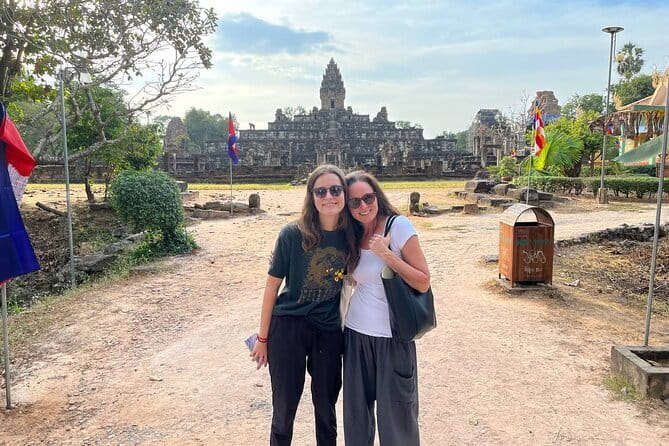
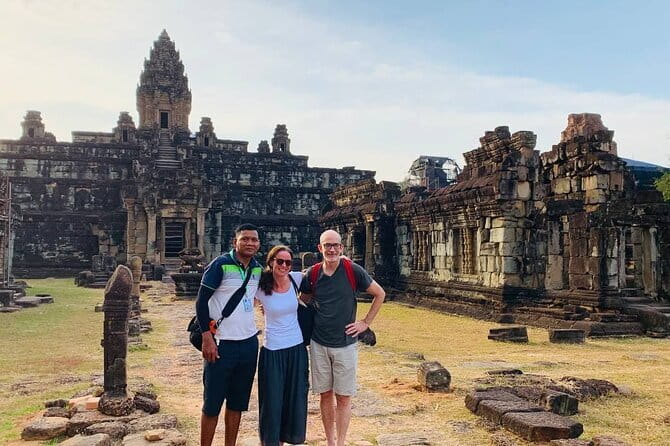
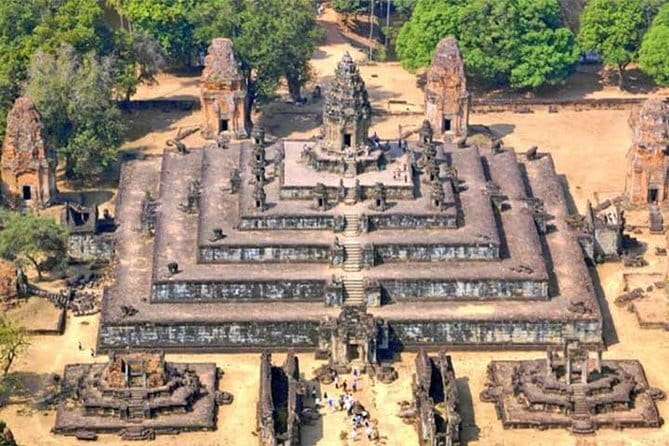
Bakong is the main temple stop, and the tour allows about two hours here. Built in 881 AD by King Indravarman I, it was the first Khmer temple mountain made of sandstone.
Its design represents Mount Meru, the sacred mountain at the center of Hindu and Buddhist cosmology. The temple uses five sandstone levels, with moats and enclosing walls that reinforce the image of a sacred mountain set apart from the ordinary world.
I especially like the chance to see Bakong as a prototype. Later Khmer rulers built much larger and more famous monuments, but Bakong shows an early version of the temple-mountain idea that became central to Angkorian architecture. If you visit Angkor Wat first, this stop can make the later monument easier to understand.
Look for the early Naga causeway, described as the earliest known example in Khmer architecture. The stone serpents are not just decoration. They mark a ceremonial approach and add meaning to the path toward the temple.
The lower levels also preserve large stone guardians, including elephants and lions. These figures give the complex a strong physical presence and help you picture how the temple was protected symbolically as well as enclosed architecturally.
Two hours is useful here. Bakong has enough structure and historical importance to reward a slow walk, while the guide can connect its moats, walls, terraces, causeway, and guardians into one clear explanation.
Still, Bakong is not Angkor Wat. If you expect a huge central complex filled with extensive galleries, you may find the scale more modest. Its appeal is its early design and importance, not sheer size.
A few more trips worth weighing up
- Angkor Wat Sunrise or Sunset Tour with Guide from Siem Reap
★ 5.0 · 12,109 reviews - Siem Reap: Angkor Wat: Small-Group Sunrise or Sunset Tour
★ 5.0 · 9,444 reviews - Siem Reap: Angkor Wat 2-Day Tour with Sunrise and Sunset
★ 4.9 · 4,429 reviews - Siem Reap: Full-Day Angkor Wat Guided Tour with Sunset
★ 4.9 · 3,803 reviews
Kampong Phluk and the seasonal life of Tonle Sap
The final stop lasts about three hours and takes you to Kampong Phluk Floating Village. Tonle Sap Lake is the largest lake in Southeast Asia and covers five Cambodian provinces.
The important point here is that this is not simply a row of houses beside water. The whole community infrastructure is shaped by the lake. Homes, schools, shops, and other parts of daily life must adapt as water levels rise and fall through the seasons.
The village includes two main types of structures. Some buildings float directly on the water. Others stand on tall stilts, rising high above the ground during the dry season. That difference helps you understand how people respond to the same place under changing conditions.
A boat ride along the river is part of the experience described by the tour details and feedback. It gives you a practical view of how the village is reached and organized. One particularly memorable part noted in the feedback was a visit to a grade school where children were learning English.
That kind of stop can be meaningful, but you should approach it with care and respect. The village is a home and workplace, not a stage set built only for sightseeing. You may see difficult living conditions, and the contrast between the scenic boat route and the hard practical demands of water-based life can be uncomfortable.
That discomfort is part of the value, provided you remain observant and considerate. The best guide will explain what you are seeing without reducing the community to a quick photo opportunity. Mr. K was praised for discussing both Siem Reap’s past and the difficult realities of life in the floating village, while still treating residents as people rather than curiosities.
Weather can affect this portion of the day. One account described poor weather making the visit less fortunate, so bring a flexible attitude. The experience depends on conditions on the water, and three hours is a substantial block of time to spend outdoors.
What the private vehicle and guide add
Pickup and drop-off are included, and transport is by air-conditioned vehicle. In Siem Reap’s heat, that matters. After walking around the temples, a cool vehicle gives you a useful break before the next stop.
The tour is private, meaning only your group participates. That arrangement is valuable if you want to ask questions, pause for explanations, or move at a comfortable pace. It also makes the day more suitable for families or small groups with different interests.
You receive an English-speaking guide and cold drinking water. Those are simple inclusions, but both help during a long day that combines walking, driving, and a boat trip.
The guide is the most important variable. Mr. Oun Kosorl was praised for making temple history engaging, and Mr. K was described as charming, insightful, and informative. The available feedback is limited, so I would not treat those names as a guarantee for every booking, but their praise shows how much the experience depends on the person leading it.
Is $45 a fair price?
At $45 per person, the tour offers a private guide, hotel pickup and drop-off, an air-conditioned vehicle, and cold water for roughly six to eight hours. For a private day with four major stops, that is a reasonable starting price.
The headline figure does not tell the whole budget story. The Angkor Pass is listed separately at $37 per person, and admission to Lolei is not included. Kampong Phluk admission is also excluded. The details do not give a separate amount for the village ticket, so you should ask for the current total before committing.
That means the actual expense can be much higher than $45. Still, the value is strongest for a small group that would otherwise need to arrange transport and hire a guide separately. The private vehicle and door-to-door service save planning time, while the guide provides context at places that can be difficult to understand on your own.
Group discounts are available, though no discount amount is stated. If you are traveling with several people, ask how the final per-person price changes. For a solo visitor, the extra cost of a private tour may be harder to justify.
Who should choose this day trip?
I would recommend it to you if you want more than the headline Angkor monuments. Bakong gives you an early and architecturally important temple, while Kampong Phluk shows a community organized around water rather than stone.
It also suits you if you value local context. The school visit and the boat ride can make the floating village feel more connected to daily life, though the experience should be approached respectfully.
Families and small groups may appreciate the private format, air-conditioned transport, and included pickup. People who prefer a relaxed pace should also like the generous time at Bakong and the village.
You may want a different plan if you have only one short day in Siem Reap and want to concentrate on Angkor Wat, Bayon, and Ta Prohm. This tour does not list those famous sites. It also may not suit you if you dislike long outings, variable weather, or added admission fees.
The tour is usually booked about 12 days in advance. That pattern suggests planning ahead, especially if you have a fixed schedule in Siem Reap. Confirmation arrives at booking, and a mobile ticket is available.
Booking, cancellation, and practical checks
Free cancellation is available if you cancel at least 24 hours before the experience begins. Cancel within 24 hours, or make changes during that period, and you will not receive a refund.
Most people can participate, according to the supplied information. No separate accessibility details are provided, so ask the operator directly if you have mobility needs or concerns about the temple surfaces, boat transfer, or village visit.
Before booking, I would confirm three items: the current Angkor Pass process, the exact Kampong Phluk admission charge, and which guide is assigned. Those answers will give you a clearer picture of the final cost and the kind of commentary you can expect.
Should you book the Bakong and Floating Village Tour?
Book it if you want a well-rounded Siem Reap day that joins early Khmer architecture with present-day life on Tonle Sap. Bakong is the strongest reason to go, especially if you want to understand the temple-mountain design before seeing later monuments.
The floating village adds a very different kind of insight. It can be moving and eye-opening, but it is not a polished attraction and weather may affect the boat portion. Go with patience, listen carefully, and treat the community with respect.
Skip it if your priority is only the major Angkor monuments, or if the added $37 Angkor Pass and separate village fee push the budget too far. For small groups that want private transport, an English-speaking guide, and a full day beyond the usual temple circuit, the tour offers solid value.
FAQ
How much does the tour cost?
The listed tour price is $45 per person. The Angkor Pass is not included and is listed at $37 per person. Lolei and Kampong Phluk admission fees are also not included.
How long does the experience last?
The tour lasts approximately six to eight hours. The planned visits include one hour at Lolei, one hour at Preah Ko, two hours at Bakong, and three hours at Kampong Phluk.
Is hotel pickup included?
Yes. Pickup and drop-off are included in the tour.
Is transportation air-conditioned?
Yes. The tour uses an air-conditioned vehicle.
Is the tour private?
Yes. Only your group participates in this private tour or activity.
What temples are included?
The temple portion includes Lolei, Preah Ko, and Prasat Bakong. These are part of the Roluos group and the early Hariharalaya area.
Is an English-speaking guide included?
Yes. An English-speaking tour guide is included. Cold drinking water is also provided.
Are entrance tickets included?
No. The Angkor Pass is excluded and listed at $37 per person. Admission for Lolei and Kampong Phluk is also not included, while Preah Ko and Bakong are listed as free.
Can I cancel for a refund?
Yes, if you cancel at least 24 hours before the experience start time. Cancellations or changes made within 24 hours are not refunded or accepted.
Just added around Siem Reap
- Private Battambang Full-Day Guided Tour★ 4.5 · 3 reviews
- Kulen Mountain, Beng Mealea and Banteay Srei Full Day Tour★ 5.0 · 3 reviews
- Kompong Pluk Tour★ 5.0 · 3 reviews
- Private 3 Day Tour to Discover the ancient temples★ 5.0 · 3 reviews
- Kulen National Park Ticket -Waterfall & 1000 Lingas★ 5.0 · 3 reviews
- Cambodia: Absolute Traditional Dance Show with Buffet Dinner★ 5.0 · 3 reviews
- Border Transfer (Siem Reap to Laos/Laos to Siem Reap)★ 3.5 · 3 reviews
- Beng Melea, Rolous Group & Kompong Phluk Floating Village★ 5.0 · 3 reviews
Tonle Sap Floating Village Tours, compared.
Sunset tour of Kampong Phluk stilts home village on the Tonle Sap
Read our review →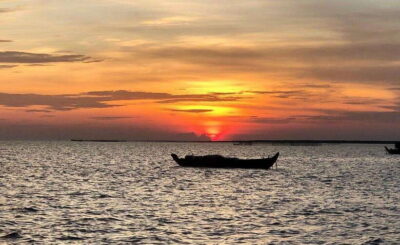
Kampong Phluk Floating Village Tour with Boat
Read our review →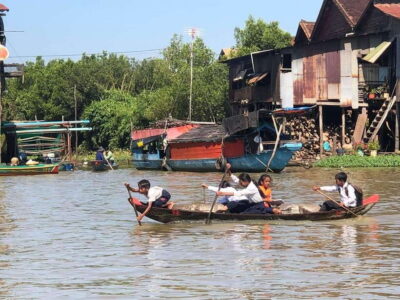
Siem Reap Floating Village Kampong Phluk Sunset with Boat
Read our review →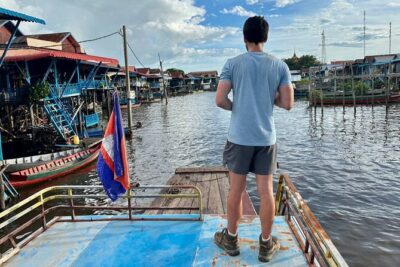
Kompong Phluk Floating Village Half-Day Tour ( Morning / Sunset )
Read our review →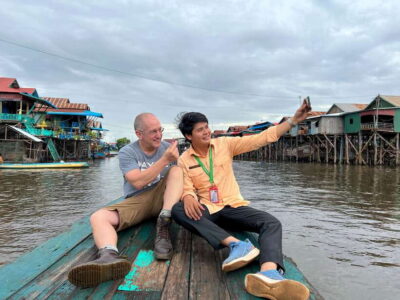
Kulen Mountain, Beng Mealea and Tonle Sap Tour
Read our review →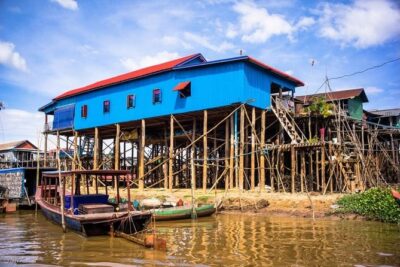
Tonle Sap Lake & Kampong Phluk Village Half-Day Tour
Read our review →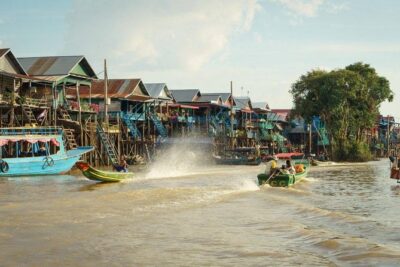
Browse the lists this tour appears in