
Reviewed · TOURS
Cambodia 7 Days Tour from Siem Reap to Battambang and Phnom Penh
Cambodia rewards curious eyes. This seven-day private tour links the country’s great temple sites with floating villages, rural roads, colonial Battambang, and Phnom Penh’s difficult but essential history. I like that you see much more than Angkor Wat, and I like that private transport, an English-speaking guide, breakfasts, water, and entrance fees are included.
The strongest part is the mix of major sights and less familiar stops, especially Banteay Chhmar, the bamboo train, Phnom Sampeou, and Udong. The main drawback is the pace. Angkor day is long, Phnom Penh is packed with stops, and several road journeys leave little free time.
In This Review
- Five things to know before booking
- What the seven-day route does well
- Arrival in Siem Reap and the first night
- Angkor Thom and Bayon: a powerful first temple day
- Ta Prohm and Angkor Wat: the day’s main event
- Tonle Sap, Kampong Phluk, and Siem Reap’s living culture
- Battambang’s bamboo train and countryside
- Ek Phnom, Phnom Sampeou, and the bat flight
- Udong and the road to Phnom Penh
- Phnom Penh’s royal quarter and national symbols
- Tuol Sleng and Choeung Ek: Cambodia’s necessary history
- Cost, hotels, and what you receive
- Who should book this Cambodia tour?
- FAQ
- Where does the tour start?
- Where does the tour end?
- How long is the experience?
- Is this a private tour?
- What accommodation is included?
- Is breakfast included?
- Are temple and attraction admission fees included?
- Is an English-speaking guide provided?
- Is single-room accommodation available?
Five things to know before booking
- Angkor Wat is only one part of a full temple day: Angkor Thom, Bayon, Ta Prohm, Phnom Bakheng, and several smaller monuments are included.
- The route shows three very different Cambodia experiences: Siem Reap’s temple zone, Battambang’s countryside and old buildings, and Phnom Penh’s royal and modern capital.
- Private touring gives you flexibility: Only your own group takes part, with transport and an English-speaking guide.
- The history is not softened: Tuol Sleng and Choeung Ek provide a serious look at the Khmer Rouge period.
- Accommodation is offered at three levels: Three-star, four-star, or five-star hotel options are listed, with a 40 percent single-room supplement.
- The price includes useful basics: At $1,025.05 per person, the package covers six nights, six breakfasts, admission fees, transport, and drinking water.
What the seven-day route does well
This tour is built for someone who wants Cambodia’s main story in one trip. You begin with the Angkor kingdom, move through the Tonle Sap region and western countryside, then finish with Cambodia’s royal traditions and twentieth-century history in Phnom Penh.
That range is the real value. A shorter Siem Reap visit can show you magnificent temples, but it may leave Cambodia feeling like one enormous archaeological park. This route adds working villages, craft production, local markets, Buddhist sites, rural scenery, and places tied to national memory.
You also avoid the trouble of arranging separate transfers between Siem Reap, Battambang, and Phnom Penh. The guide and driver remain central to the trip, and praised guide names include Sara, Vany, Chany, and Meng. Driver Art is specifically noted for careful driving. Those details matter on a route with several long road sections.
Still, this is not a slow trip. The schedule often starts after breakfast and moves through a long list of stops. You should expect early starts, time in the vehicle, heat at temple sites, and only modest blocks of unplanned time.
A few more trips worth weighing up
- Cambodia 7 Days Private Tour from Angkor Temples to Coastline
★ 5.0 · 8 reviews
Arrival in Siem Reap and the first night
Your guide and driver meet you at Siem Reap Angkor International Airport and transfer you into Siem Reap city. The arrival transfer is listed at about two hours, although the actual time will depend on the airport, traffic, and hotel location.
The first evening is deliberately light. You check into one of the listed Siem Reap hotels or a similar property, with choices ranging from Royal Crown Hotel & Spa at three-star level to Regency Angkor Hotel at four-star level and Angkor Paradise Hotel at five-star level.
That simple arrival is useful. You have time to recover from a flight before the demanding temple day. Since the tour begins and ends at different airports, check your flight details carefully. Arrival is at Siem Reap Angkor International Airport, while departure is scheduled from Techo International Airport near Phnom Penh.
Angkor Thom and Bayon: a powerful first temple day
Day two is the tour’s biggest archaeological day. It begins at the South Gate of Angkor Thom, the dramatic entrance to the former royal city. The gate, causeway, and sculpted figures provide a quick introduction to Khmer religious imagery before you enter the walled complex.
Bayon is next, with about 70 minutes scheduled. Its towers carry the famous calm faces associated with the temple. The site is less immediately grand than Angkor Wat, but I find it more intimate and puzzling. You move through narrow passages, galleries, and towers where faces appear from several directions.
Baphuon follows, with 45 minutes. Its tall sandstone base and long approach make it feel different from Bayon. Phimeanakas, within the former Royal Palace area, receives about half an hour. These stops help you see Angkor Thom as a royal city, not merely a collection of isolated temples.
The Terraces of the Elephants and the Leper King continue the royal theme. Their carved surfaces once formed part of public ceremonial spaces. Forty minutes at the first and 30 minutes at the second should allow a useful look, but not a slow study of every carving.
Ta Prohm and Angkor Wat: the day’s main event
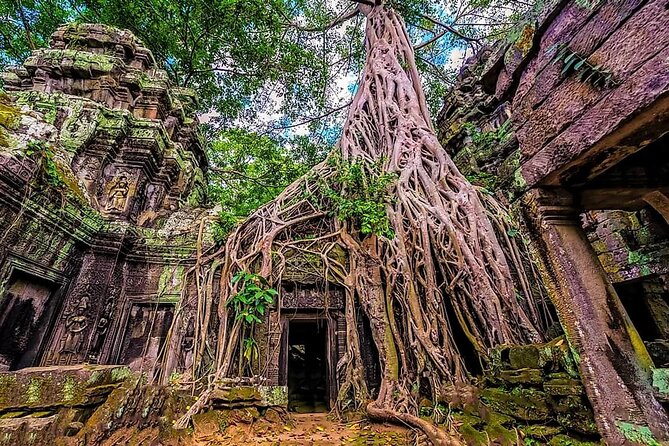
Ta Prohm gets two hours, and that is sensible. The temple is famous for trees growing around its stonework, but its appeal is not only photographic. You can also see courtyards, doorways, galleries, and carved surfaces that show how a living religious site was gradually overtaken by the forest.
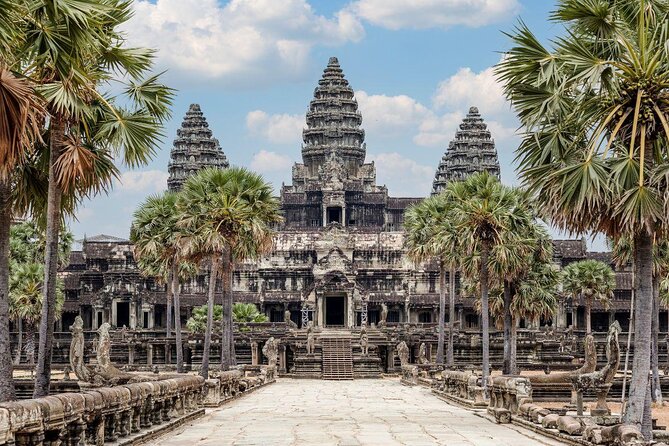
The schedule then gives Angkor Wat two hours. That is enough for an organized first visit, though you may wish you had longer. Angkor Wat rewards attention to its galleries, proportions, towers, and reliefs, not just a quick walk to the central view.
Phnom Bakheng is scheduled for one hour. It sits on a 60-meter hill and is associated with Shiva. The climb and elevated position give it a different feel from the flat temple complexes below. Your guide can help make sense of the site, but the time may pass quickly if the walk is slow.
This is a demanding day, with roughly eight hours of listed sightseeing before transfers and meal breaks. Wear practical shoes, carry the supplied water, and treat the schedule as a broad plan rather than a guarantee of equal time at every monument. The price includes the entrance fees, which removes one common source of hassle.
A completely different kind of day out from Siem Reap:
- Angkor Wat Sunrise or Sunset Tour with Guide from Siem Reap
★ 5.0 · 12,109 reviews - Siem Reap: Angkor Wat: Small-Group Sunrise or Sunset Tour
★ 5.0 · 9,444 reviews - From Siem Reap: Kampong Phluk Floating Village Tour by Boat
★ 4.9 · 6,979 reviews - Sunset tour of Kampong Phluk stilts home village on the Tonle Sap
★ 5.0 · 4,865 reviews
Tonle Sap, Kampong Phluk, and Siem Reap’s living culture
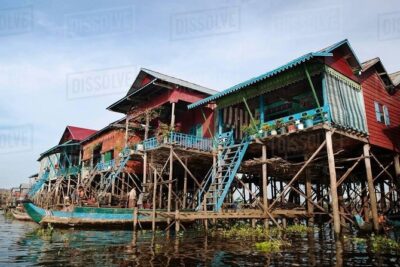
Day three shifts from stone temples to water and local life. Tonle Sap is Southeast Asia’s largest freshwater lake, and its seasonal changes shape fishing, transport, and settlement patterns around the water.
The visit to Kampong Phluk Floating Village takes about three hours, with two hours listed for Tonle Sap itself. The village is also associated with a mangrove forest. This part of the tour gives you a needed change of pace after Angkor, although conditions on the lake can affect exactly what you see.
Artisans Angkor follows with an hour. This Cambodian social business creates rural employment while reviving traditional Khmer crafts. It is a useful stop for understanding how cultural skills can support present-day livelihoods, rather than treating craftsmanship as something that exists only in museums.
Wat Bo is one of Siem Reap’s older pagodas and has nineteenth-century wall paintings. Some scenes show more than strictly religious subjects, making the temple a worthwhile contrast to the polished grandeur of Angkor.
The Royal Residence is a brief stop of 30 minutes. It is the King’s official Siem Reap residence when he visits the city, so access and viewing may be limited. The day ends with another night in Siem Reap.
Battambang’s bamboo train and countryside
Day four takes you to Battambang, Cambodia’s second-largest city. The route gives you a more rural and local view of the country, with colonial buildings and traditional wooden houses along the way.
The bamboo train, or norry, is the day’s most playful experience. It is a simple platform running on railway tracks, and the listed ride lasts about two hours. The appeal is its basic design and the chance to see countryside travel in a form very different from a modern tour bus.
Battambang Central Market is listed as a stop, though the schedule displays an unusually long duration of one day and 21 hours. That is almost certainly a timetable error, so ask the operator how much market time is actually planned. The market itself should be useful for seeing ordinary shopping and local produce, but it is not clear how much time will be spent there.
Wat Tahm-rai-saw, also called the White Elephant Pagoda, provides a short architectural and religious stop. The Cambodia Peace Gallery then offers a more reflective hour. Its focus is recovery and Cambodian participation in peace efforts, which gives the day a wider frame than temples and scenic rides.
Ek Phnom, Phnom Sampeou, and the bat flight
Outside Battambang, Wat Ek Phnom is a partly collapsed eleventh-century temple surrounded by remains of a laterite wall and an ancient reservoir. Its damaged state is part of its character. You do not visit for polished restoration, but for atmosphere and a sense of how old religious sites sit within the countryside.
Phnom Sampeou is scheduled for two hours. The mountain is known as Ship Mountain because of its shape and rises about 100 meters. It combines scenery with important local stories and sites connected to Cambodia’s painful past.
The day finishes at the Battambang Bat Caves. Near sunset, millions of bats can stream from the caves into the sky. This is one of the tour’s most memorable natural moments, but it depends on timing and conditions. The best experience comes from reaching the viewing area before the bats begin to emerge.
The Ta Dumbong Kro Aung statue rounds out the Battambang visit. The figure is tied to the legend behind the city’s name, involving a cow herder, a magical black stick, and a displaced king. It is a small stop, but useful for connecting the modern city with local folklore.
Your Battambang hotel is offered at three-star, four-star, or five-star level. The listed choices include Classy Hotel & Spa, Cambana La Riviere Hotel, and Maisons Wat Kor or similar properties.
Udong and the road to Phnom Penh
Day five is mainly a transfer day from Battambang toward Phnom Penh, with stops that make the journey worthwhile. Pursat is listed as a brief itinerary point, then the route continues to Udong Mountain.
Udong served as Cambodia’s royal capital from the seventeenth to the nineteenth centuries. Its two mounds are connected by a ridge, and the site gives you a useful bridge between Angkor’s earlier power and Phnom Penh’s later importance.
A meditation center is also included, identified by a location code rather than a familiar name. Its primary purpose is Vipassana meditation, but you can walk through the grounds and enter the main temple. The visit lasts about 35 minutes, so expect a short introduction rather than a full meditation session.
By the end of this day, you reach Phnom Penh and check into a city hotel. The options range from Mahasakor Inn to Sun & Moon Urban Hotel and Sun & Moon Riverside. The change from provincial Cambodia to the capital is noticeable, and the following day is packed.
Phnom Penh’s royal quarter and national symbols
Day six begins with the Khmer Rouge period and continues through royal, religious, and civic Phnom Penh. The itinerary lists an initial Phnom Penh briefing that refers to Choeung Ek, then later includes both Tuol Sleng and Choeung Ek in detail. Since the site appears twice in the schedule, confirm whether the first entry is simply a planning note.
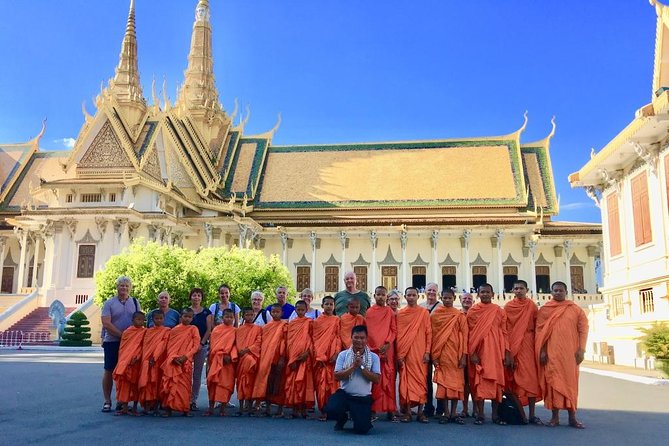
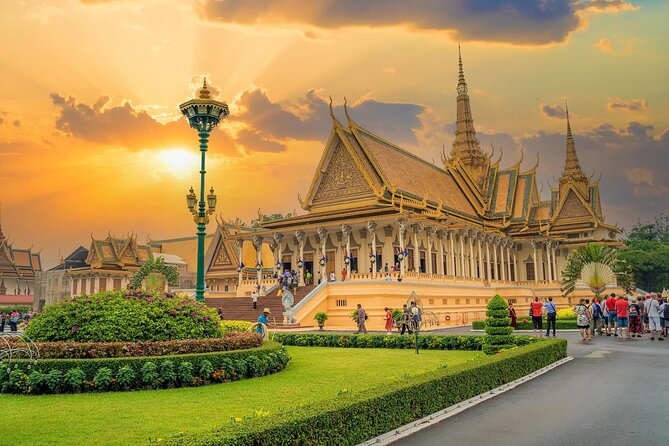
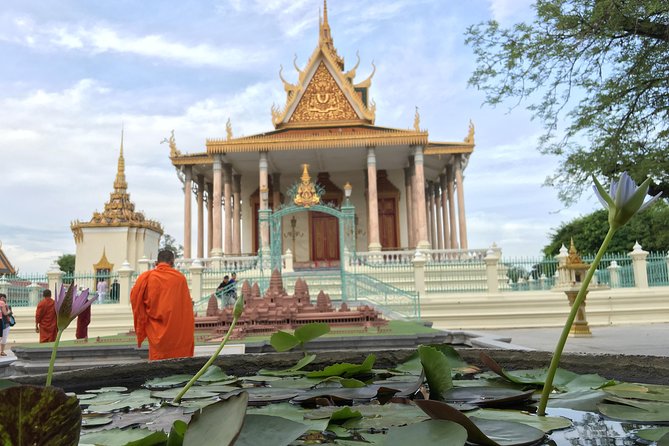
The Royal Palace and Silver Pagoda form the city’s grandest historic pair. The palace dates from the period after King Norodom moved the royal capital to Phnom Penh in 1886. The Silver Pagoda, set within a garden beside the palace, offers a quieter counterpoint to the city streets.
Wat Phnom sits on a 27-meter wooded hill and is linked to the legend of Lady Penh, whose discovery of Buddha images is tied to the city’s name. Wat Ounalom, one of Phnom Penh’s five original monasteries, adds another important Buddhist stop near the riverfront.
The Independence Monument commemorates independence from France in 1953. Nearby, the memorial to King Father Norodom Sihanouk adds a modern royal landmark to the day.
Tuol Sleng and Choeung Ek: Cambodia’s necessary history
Tuol Sleng Genocide Museum occupies the former Security Prison 21, a school converted into a detention and interrogation center during the Khmer Rouge period. The scheduled visit lasts 90 minutes. It is a serious, emotionally difficult stop, and you should not rush through it or treat it as just another attraction.
Choeung Ek, about 17 kilometers south of Phnom Penh, was an orchard and mass burial site for people killed between 1975 and 1979. Another 90 minutes is planned here. Together, the two sites explain different parts of the same period: imprisonment and interrogation at Tuol Sleng, then execution and burial at Choeung Ek.
The tour does not hide Cambodia’s pain, and that is one of its strengths. The Peace Gallery in Battambang also helps keep the story from ending only in horror by showing the country’s work toward peace and recovery.
Central Market closes the day. Built in 1937 beneath a domed structure with four branching halls, it is a practical place to see food, clothing, souvenirs, and daily commerce. If you want to buy crafts, remember that arranging postage can be difficult. One unusual purchase described in the trip details was a one-meter Cambodian tro, or traditional stringed instrument, which could not fit in ordinary luggage and required parcel shipping.
Cost, hotels, and what you receive
The listed cost is $1,025.05 per person. For six nights and seven days, that is a reasonable package price if you value private transport and a guide, especially because entrance fees, six breakfasts, and drinking water are included.
The exact value depends on the hotel category you choose. Double or twin accommodation is included, while a single room adds 40 percent of the total tour price per person. Tips for the guide and driver are not included, so budget for those separately.
The private format is important. You do not share the activity with unrelated passengers, which makes it easier to ask questions, adjust the pace where possible, and manage temple fatigue. It also means your group carries the full cost of the vehicle and guide rather than sharing it across a large coach.
The strongest service reports center on the guides and drivers. Sara is praised for detailed explanations and humor, Art for careful driving, Vany for temple and cultural insight, Chany for helping a solo participant feel comfortable, and Meng for a calm, patient manner. Guide quality can shape a temple visit more than another half-hour at a monument.
Who should book this Cambodia tour?
I would choose this tour if you want a broad first look at Cambodia and prefer having the route arranged for you. It suits couples, families, and small private groups that want temples, countryside, markets, royal sites, and difficult history in one continuous trip.
I would think twice if you dislike long sightseeing days or need lots of free time. Angkor day and Phnom Penh day are full, and the schedule contains enough stops that some visits will feel brief.
Before paying, confirm the exact hotels, the Battambang Central Market timing, the duplicated Choeung Ek entry, and the departure airport transfer. Cancellation terms are also strict near departure: six days’ notice is required for a full refund, two to six days allows 50 percent, and less than two days brings no refund.
For the right pace, this is a useful and well-rounded Cambodia route. It gives you the great monuments, but also the ordinary roads, local stories, craft work, and national wounds that make the country more than a temple destination.
FAQ
Where does the tour start?
The tour starts with pickup at Siem Reap Angkor International Airport in Siem Reap, Cambodia.
Where does the tour end?
The final transfer is to Techo International Airport, identified as KTI, near Phnom Penh.
How long is the experience?
The tour lasts approximately seven days and includes six nights of accommodation.
Is this a private tour?
Yes. Only your own group participates in the private tour or activity.
What accommodation is included?
Accommodation is based on double or twin occupancy, with three-star, four-star, and five-star hotel options listed in Siem Reap, Battambang, and Phnom Penh.
Is breakfast included?
Yes. Six breakfasts are included.
Are temple and attraction admission fees included?
Yes. Entrance fees are included for the listed paid attractions.
Is an English-speaking guide provided?
Yes. The package includes an English-speaking tour guide, along with transport and drinking water.
Is single-room accommodation available?
Yes. A single-room stay is available for an additional charge of 40 percent of the total tour price per person.
Just added around Siem Reap
- Private Battambang Full-Day Guided Tour★ 4.5 · 3 reviews
- Kulen Mountain, Beng Mealea and Banteay Srei Full Day Tour★ 5.0 · 3 reviews
- Kompong Pluk Tour★ 5.0 · 3 reviews
- Private 3 Day Tour to Discover the ancient temples★ 5.0 · 3 reviews
- Cambodia: Absolute Traditional Dance Show with Buffet Dinner★ 5.0 · 3 reviews
- Kulen National Park Ticket -Waterfall & 1000 Lingas★ 5.0 · 3 reviews
- Border Transfer (Siem Reap to Laos/Laos to Siem Reap)★ 3.5 · 3 reviews
- Beng Melea, Rolous Group & Kompong Phluk Floating Village★ 5.0 · 3 reviews
Tours, compared.

Angkor Wat Sunrise or Sunset Tour with Guide from Siem Reap
Read our review →
Angkor Wat: Small-Group Sunrise or Sunset Tour
Read our review →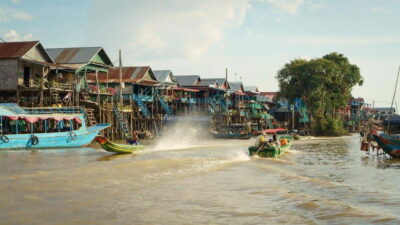
Sunset tour of Kampong Phluk stilts home village on the Tonle Sap
Read our review →
Angkor Wat 2-Day Tour with Sunrise and Sunset
Read our review →
Kampong Phluk Floating Village Tour with Boat
Read our review →
