
Reviewed · ANGKOR WAT TOURS
Full-Day Guided Bicycle Tour in Angkor Wat Temple
See Angkor by bicycle, not just by road. This eight-hour ride links Angkor Wat, Bayon, Ta Prohm, Angkor Thom, and lesser-known temple stops with quiet forest paths and village scenery. I like the small group size of 12 and the chance to move through the park at a slower, more personal pace. I also like that lunch, water, fruit, a bike, and a helmet are included.
The main catch is the extra entrance fee. The tour costs $55 per person, but the one-day Angkor pass costs another $37, bringing the practical total to $92. You also need to be comfortable cycling for most of a day, often in hot weather, though the route uses shaded roads and the pace is described as relaxed.
In This Review
- Key points at a glance
- What the $55 price really covers
- Starting through the Angkor checkpoint
- Kravan and Banteay Kdei before Ta Prohm
- Ta Prohm, where trees take over the stone
- Angkor Thom and Bayon’s stone faces
- A Cambodian lunch near the temples
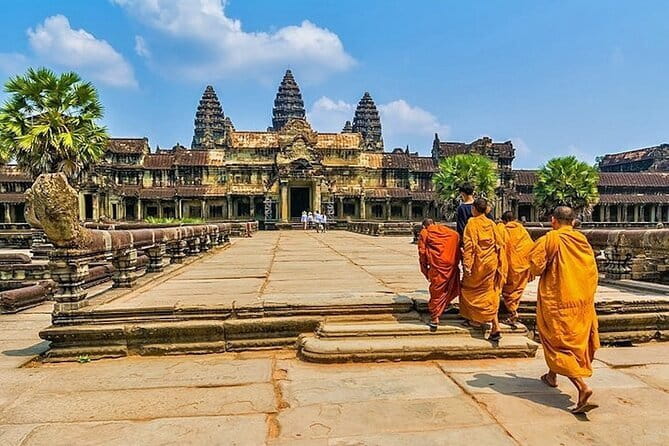
- Angkor Wat in the afternoon
- What the guide and group size add
- Who should book this ride?
- Practical details before you reserve
- Should you book the Angkor bicycle tour?
- FAQ
- How long does the bicycle tour last?
- How much does the tour cost?
- How much is the Angkor entry fee?
- Is hotel pickup included?
- Is lunch included?
- Are bicycles and helmets provided?
- Is drinking water provided?
- What temples and sites does the tour visit?
- How large is the group?
- What happens if bad weather cancels the tour?
Key points at a glance
- A full circuit on two wheels: Visit Ta Prohm, Bayon, Angkor Thom, Angkor Wat, and several quieter temples in one day.
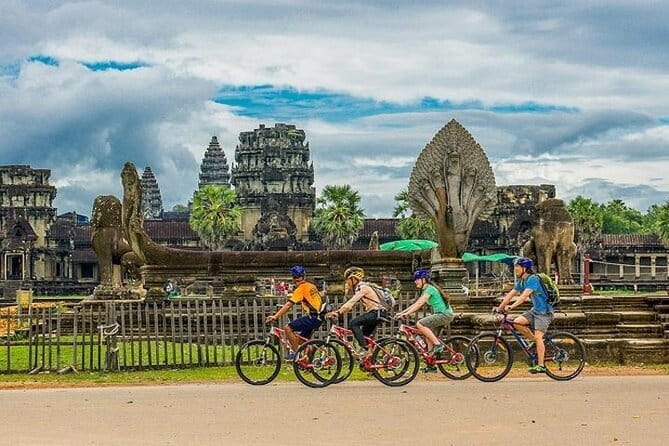
- Forest riding between temples: The route uses shaded, traffic-free trails through the Angkor Archaeological Park instead of keeping you in a vehicle.
- A small group capped at 12: This gives the guide a better chance to help with bike comfort, safety, and questions.
- Lunch and trail supplies included: You receive a local Cambodian lunch, snacks, seasonal fruit, and pure drinking water.
- The pass costs extra: Add $37 for a single-day Angkor entry ticket to the $55 tour price.
- Strong guide feedback: Vuthy is praised for his good humor and knowledge of Angkor and Cambodia, while Chuoy is praised for keeping the day lively and well organized.
What the $55 price really covers
At first glance, $55 is not the complete cost of the day. The tour price covers the cycling service and practical extras, but admission to every temple is excluded. Add the listed $37 single-day entry fee, and you should budget $92 per person before any alcoholic drinks or other purchases.
That total can still be fair for a full eight-hour outing. You are paying for hotel pickup and drop-off, an English-speaking cycling guide, a good-quality bicycle, a helmet, lunch, fruit, snacks, and drinking water. Those inclusions matter at Angkor, where a day of arranging transport, food, and temple visits on your own can become a string of small decisions.
I especially like that lunch is part of the plan. You do not have to stop and negotiate a meal in the middle of a busy sightseeing day. The meal is served at a local restaurant near the temples, giving you a proper pause before the afternoon visit to Angkor Wat.
The value is best for you if you want an active day and would otherwise hire private transport plus arrange meals and drinks separately. If you mainly want to see the temples with the least physical effort, a vehicle-based tour may be a better use of your money.
More Angkor Wat tours we have reviewed:
- Angkor Wat Sunrise or Sunset Tour with Guide from Siem Reap
★ 5.0 · 12,109 reviews - Siem Reap: Angkor Wat: Small-Group Sunrise or Sunset Tour
★ 5.0 · 9,444 reviews - Siem Reap: Angkor Wat 2-Day Tour with Sunrise and Sunset
★ 4.9 · 4,429 reviews
Starting through the Angkor checkpoint
The day begins with hotel pickup, followed by a bike fitting and safety briefing. That early setup is important. A bicycle that feels fine for ten minutes can feel very different after several hours, so take the fitting seriously and tell the guide if anything feels uncomfortable.
The ride begins after passing through the Angkor checkpoint. From there, the route follows a scenic shaded road through the forest. The point is not speed. You are moving from one temple area to the next under your own power, with the road itself becoming part of the experience.
The tour description emphasizes peaceful, traffic-free trails, jungle paths, and quiet villages. That makes this more than a bicycle used simply as transport between famous monuments. You get changing views between stops, along with a closer look at the countryside around the archaeological park.
Still, eight hours is a long day. The shade helps, but it does not remove the heat or the effort. You should book this if you are comfortable riding for much of a day and can manage repeated stops, walking around temple grounds, and getting back on the bike.
Kravan and Banteay Kdei before Ta Prohm
Before reaching Ta Prohm, the route includes Kravan Temple and Banteay Kdei. These stops help spread the day beyond Angkor’s best-known names.
Kravan is described as lesser known but beautiful. Its place early in the route gives you a quieter introduction to the temple zone before the larger crowds and more famous ruins. Banteay Kdei adds another ancient stop before Ta Prohm, so you are not using the first part of the morning for only one monument.
The first temple section lasts about three hours, including the cycling and visits. That is a substantial portion of the day, but it should not feel like a rushed checklist. You have time to arrive by bicycle, see the sites, and continue through the forest rather than jumping straight from hotel to monument.
Admission is not included at these sites. The one-day Angkor entry fee is listed separately at $37, and it covers the attractions included in the park visit according to the supplied tour information. Plan to have that cost settled before the sightseeing begins.
Ta Prohm, where trees take over the stone
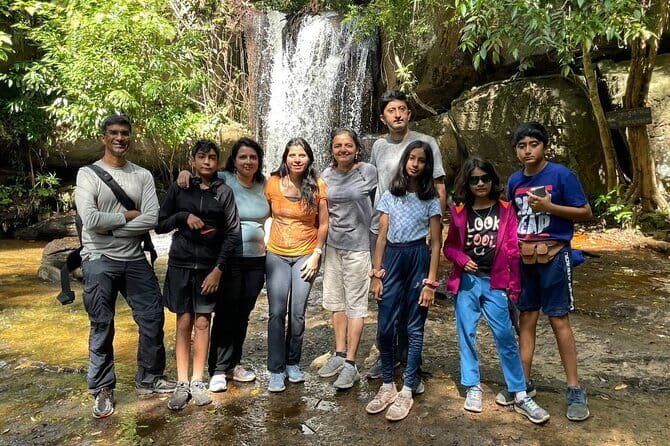
Ta Prohm is the first major temple highlight. It is famous for fig-tree roots wrapping around its walls and for jungle vines growing through the old stonework. The setting gives Ta Prohm a distinct mood that you do not get from looking at photographs alone.
I like the fact that the bicycle approach places Ta Prohm after two quieter temples. You ease into the park rather than rushing directly to the most photographed stop. The change from shaded trail to temple ruins also makes the arrival feel more pronounced.
This is one place where your guide can add real value. The tour includes an experienced English-speaking cycling guide, and the guide can help explain what you are seeing beyond the familiar tree-and-stone image. Vuthy, one of the named guides praised for the experience, is noted for being fun and well informed about Angkor Wat and Cambodia.
The tradeoff is that Ta Prohm is a famous stop, so it is not guaranteed to feel quiet. The route is designed to avoid some of the usual traffic, but the temple itself remains one of Angkor’s major attractions. The bicycle helps you reach it in a more atmospheric way, but it cannot turn a popular monument into a private visit.
A few more trips worth weighing up
- Siem Reap: Full-Day Angkor Wat Guided Tour with Sunset
★ 4.9 · 3,803 reviews - Full-Day Angkor Wat Sunrise Private Tour with Guide from Siem Reap
★ 5.0 · 2,920 reviews - Siem Reap: Angkor Wat Sunrise and Full-Day Sightseeing Tour
★ 4.9 · 2,828 reviews - Full-Day Guided Sunset Tour of Angkor Wat
★ 5.0 · 1,507 reviews
Angkor Thom and Bayon’s stone faces
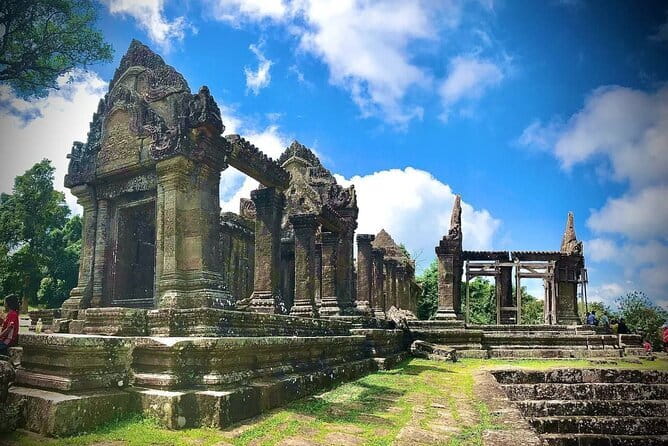
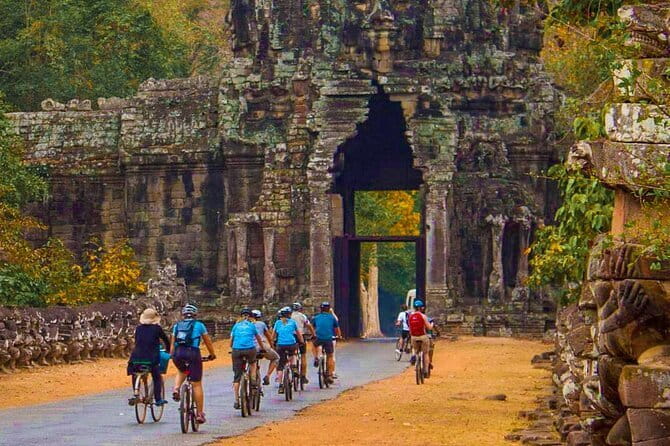
The next major section takes you into Angkor Thom, the ancient city enclosed by walls and entered through a grand stone gate. The gate is decorated with elephant carvings and towering faces, giving you an immediate sense that this was designed as a ceremonial entrance, not a simple doorway.
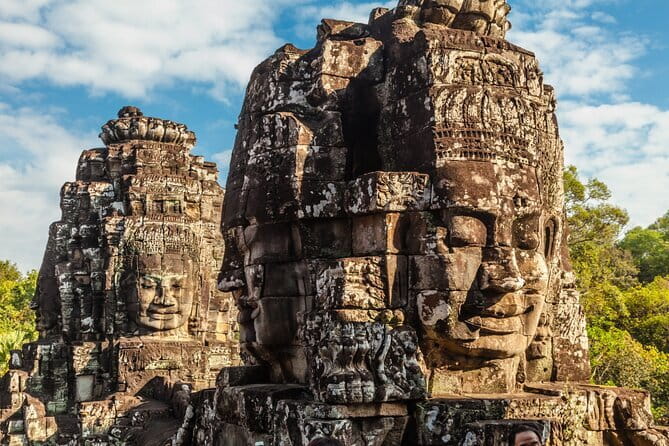
Inside, you visit Bayon Temple. Bayon is known for its calm smiling faces carved into the towers, and its central position within Angkor Thom makes it one of the essential stops in the park. The faces can look similar from a distance, but walking around the temple gives you changing angles and details.
The two-hour Angkor Thom section also includes the Terrace of the Elephants and the Terrace of the Leper King. Both are valued for their detailed bas-reliefs and their place in the old city’s story. These stops broaden the visit beyond Bayon’s famous faces and give the guide more material to explain.
This portion is a good example of why a bicycle can work well at Angkor. The tour links several places inside the old city without making you wait for a vehicle to load, unload, and park. You can keep the day moving while still stopping for the main architectural details.
The route also asks you to switch between cycling and exploring on foot. Temple grounds are not seen entirely from a saddle, so expect to park the bike and walk around at each stop. The guide’s role is useful here, particularly if you want context rather than just time for photographs.
A Cambodian lunch near the temples
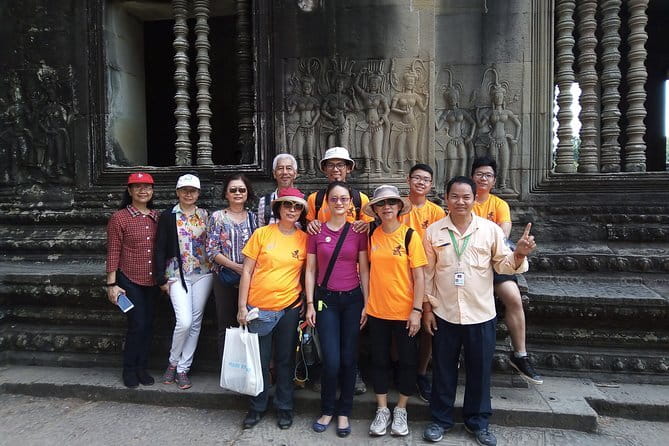
After the morning cycling and temple visits, you stop for lunch at a local restaurant near Angkor. Cambodian food is included, as are local snacks and seasonal fruit during the day.
This break is more than a line item in the price. A full day around Angkor can become tiring if you rely only on quick drinks or snacks. Sitting down for a meal gives you a clear pause before the afternoon’s main monument.
The information provided does not specify the exact menu, dietary options, or restaurant name. If you have food restrictions, ask about them when booking or before the day starts. Alcohol is not included, though it can be purchased at a local shop.
Pure drinking water is supplied. That is a useful inclusion on a hot cycling route, especially because you do not need to spend the day finding places to buy bottles. Even with supplied water, you should listen to your guide and take the planned breaks rather than treating the ride like a race.
Angkor Wat in the afternoon
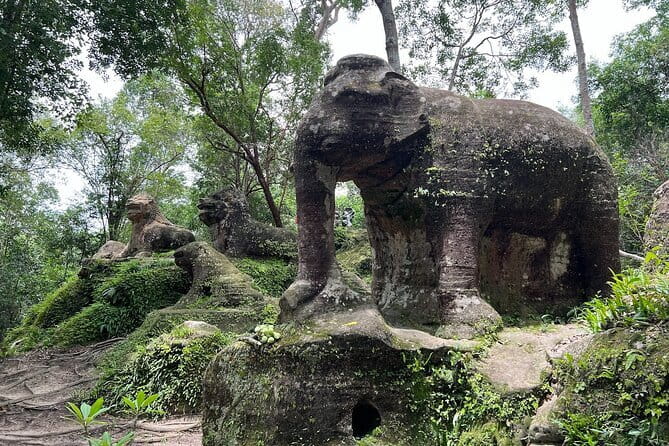
The final temple section is devoted to Angkor Wat, the largest religious monument in the world. The visit covers its architecture, history, symbolism, and overall design.
Placing Angkor Wat after lunch has both strengths and weaknesses. You reach the most famous monument after seeing smaller sites and Angkor Thom, so you have a wider sense of the park before arriving at its grandest complex. On the other hand, an afternoon visit may feel tiring after hours on the bike and at the temples.
The three-hour final section includes the Angkor Wat visit and the cycle back to your hotel. That gives you a generous amount of time for the monument, though the exact balance between cycling, walking, and explanation can vary with the group and conditions.
I like ending here rather than treating Angkor Wat as a quick morning photo stop. Its scale rewards a slower visit. Look beyond the main view and pay attention to the proportions, galleries, carvings, and long approach. A guide can help connect those features to the monument’s purpose and design.
The ride back closes the loop through the park and countryside. You finish with the same basic rhythm that defines the day: cycle, stop, listen, look, and continue.
What the guide and group size add
The maximum group size is 12 people. That is not a private tour, but it is small enough to keep the group together more easily than a large coach outing. It also gives the guide a better chance to notice an ill-fitting helmet, a struggling rider, or a question from the back of the group.
Guide quality matters a great deal on a temple day. Names associated with especially positive feedback include Vuthy and Chuoy. Vuthy is praised for being fun and full of information about Angkor Wat and Cambodia. Chuoy is praised for keeping the group laughing while still fitting a lot into one day.
That combination is worth noting. At Angkor, good guiding is not only about dates and names. It is also about pacing, clear directions, temple orientation, and knowing when the group needs a short pause. The supplied feedback repeatedly points to friendly guides, a well-planned route, and a good balance between major monuments and quieter riding.
The English guide is included. If you want a highly specialized archaeological lecture, the available information does not promise that level of detail. What you can expect is an English-speaking cycling guide who provides safety support, local information, and direction throughout the route.
Who should book this ride?
I would choose this tour if you want Angkor to feel like a full day in Cambodia rather than a series of vehicle drop-offs. It suits active sightseers who like the sound of forest riding, village scenery, and a slower route between monuments.
It is also a good match for anyone who wants both famous sites and less familiar stops. Kravan and Banteay Kdei add variety before Ta Prohm, while the ride through Angkor Thom connects Bayon with the terraces in a natural way.
You should think carefully before booking if you dislike cycling, struggle with long active days, or want complete control over how long you stay at each temple. The schedule includes several major stops, so you will need to follow the group’s general rhythm.
Most people can participate, according to the supplied information. The tour does not give a specific fitness requirement, but the eight-hour duration and repeated cycling sections make basic cycling comfort important. Good weather is also required. If poor weather cancels the outing, you are offered another date or a full refund.
Free cancellation is available if you cancel at least 24 hours before the start time. Changes or cancellations made less than 24 hours ahead are not accepted for a refund.
Practical details before you reserve
The tour operates Monday through Sunday from 8:00 AM to 5:00 PM during the stated operating period, which runs from July 20, 2023, through May 19, 2026. Confirmation is provided at booking, and a mobile ticket is available.
Hotel pickup and drop-off are included, but the supplied details do not specify the pickup radius or exact collection time. Make sure your hotel information is correct when reserving and confirm the morning timing if you need to coordinate another activity.
The bike and helmet are included, as are water, snacks, fruit, and lunch. Temple entry is not included, and the listed single-day ticket price is $37. Keep that separate from the $55 tour price when comparing this option with other ways to see Angkor.
The cancellation terms are fairly flexible, but the 24-hour deadline is firm. Since weather can affect a full day of cycling, that policy is worth reading before you commit.
Should you book the Angkor bicycle tour?
Book it if you want a more active and scenic day at Angkor, and if the idea of riding through shaded forest trails appeals to you as much as seeing the monuments. The strongest reasons are the carefully linked route, small group, included lunch and supplies, and guides such as Vuthy and Chuoy, who bring humor and useful local context.
Skip it if you want air-conditioned transport, a short temple visit, or a completely private schedule. Also remember that the real cost is $92 per person once you add the listed Angkor pass.
For fit and curious visitors, this is a good-value way to connect Angkor Wat’s famous monuments with the quieter roads between them. You see plenty in one day, but you also get a sense of the forest and countryside that a vehicle-only itinerary can miss.
FAQ
How long does the bicycle tour last?
The experience lasts about eight hours, including the temple visits, lunch, cycling, and return to your hotel.
How much does the tour cost?
The tour price is $55 per person. Angkor attraction entry fees are not included.
How much is the Angkor entry fee?
The listed single-day entry fee is $37 per person.
Is hotel pickup included?
Yes. Hotel pickup and drop-off are included.
Is lunch included?
Yes. Lunch at a local restaurant is included, along with local snacks and seasonal fruit.
Are bicycles and helmets provided?
Yes. A good-quality bicycle and helmet are included, followed by a bike fitting and safety briefing.
Is drinking water provided?
Yes. Pure drinking water is included.
What temples and sites does the tour visit?
The route includes Ta Prohm, Kravan Temple, Banteay Kdei, Bayon, Angkor Thom, the Terrace of the Elephants, the Terrace of the Leper King, and Angkor Wat.
How large is the group?
The tour has a maximum of 12 participants.
What happens if bad weather cancels the tour?
You are offered a different date or a full refund if poor weather causes the experience to be canceled.
Just added around Siem Reap
- Private Battambang Full-Day Guided Tour★ 4.5 · 3 reviews
- Kulen Mountain, Beng Mealea and Banteay Srei Full Day Tour★ 5.0 · 3 reviews
- Kompong Pluk Tour★ 5.0 · 3 reviews
- Private 3 Day Tour to Discover the ancient temples★ 5.0 · 3 reviews
- Cambodia: Absolute Traditional Dance Show with Buffet Dinner★ 5.0 · 3 reviews
- Kulen National Park Ticket -Waterfall & 1000 Lingas★ 5.0 · 3 reviews
- Border Transfer (Siem Reap to Laos/Laos to Siem Reap)★ 3.5 · 3 reviews
- Siem Reap Countryside Sunset Vespa Tour or Tuk Tuk★ 4.5 · 3 reviews
Angkor Wat Tours, compared.

Angkor Wat Sunrise or Sunset Tour with Guide from Siem Reap
Read our review →
Angkor Wat: Small-Group Sunrise or Sunset Tour
Read our review →
Angkor Wat 2-Day Tour with Sunrise and Sunset
Read our review →

Angkor Wat Sunrise tour with Small – Group and Guide tours
Read our review →
Angkor Wat Highlights and Sunrise Guided Tour from Siem Reap
Read our review →
Angkor Wat Sunset Small Group Tour with Lunch Included
Read our review →