
Reviewed · COOKING CLASSES
Khmer Cooking Class Full Day
Bring your appetite and a curious mind. This full-day Phnom Penh cooking class combines a local market visit with hands-on preparation of several Khmer dishes, giving you more than a meal and a recipe card. I like the market stop because it connects the food to the ingredients, and I like that each student gets a personal cooking station and wok. The chef works beside you, rather than simply cooking in front of you.
I also appreciate the practical finish: you eat what you prepare, take the recipes home, and receive a certificate. The main drawback is the length. At about eight hours, this is a full day devoted to food, with a long break between the morning and afternoon cooking sessions. If you only want a quick class, choose the half-day option instead.
In This Review
- Key points to know before booking
- Why the market visit is the right way to start
- A cool drink, a recipe, and a clear introduction
- 11:00am at your own wok
- Noon lunch made by you
- The afternoon return to the cooking station
- What makes the teaching useful at home
- Is $58 a fair price for eight hours?
- Practical details that affect your day
- Who should book this Khmer cooking class?
- Should you book the full-day course?
- FAQ
- Where does the Khmer cooking class start?
- What time does the full-day class begin?
- Where does the experience end?
- How long does the full-day course last?
- Is transportation included during the market visit?
- What happens at the market?
- Do I cook the food myself?
- What dishes will I learn to make?
- Are recipes and a certificate included?
Key points to know before booking
- The day begins at a local market: You shop for Cambodian fruits, vegetables, herbs, and spices with the chef before cooking.
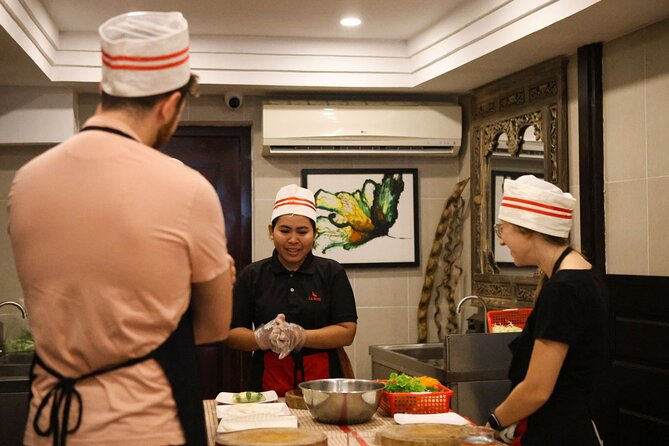
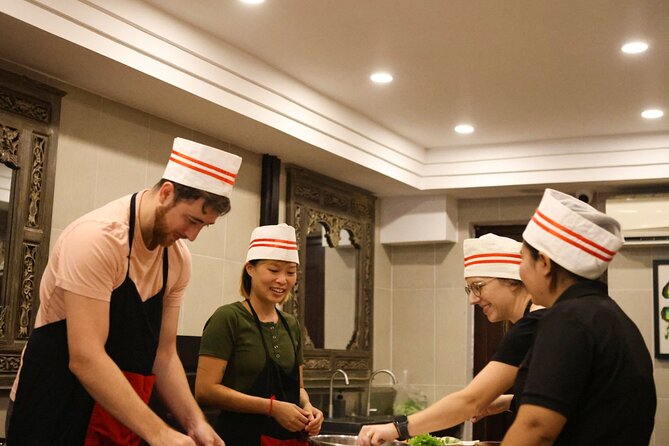
- You cook at your own station: Every student receives a cooking station and wok, with help from the chef throughout the process.
- The menu covers several Khmer favorites: Expect dishes such as spring rolls, mango salad, fish amok, curry, and dessert, with the exact menu subject to the class plan.
- The full-day schedule includes two cooking sessions: You prepare simpler dishes in the morning, then return to the utensils for recipes that need more time in the afternoon.
- The experience is private: Only your group participates, which can make it easier to ask questions or request menu changes.
- You take home useful souvenirs: Recipes and a certificate are provided, while lunch and the afternoon tasting come from your own cooking.
Why the market visit is the right way to start
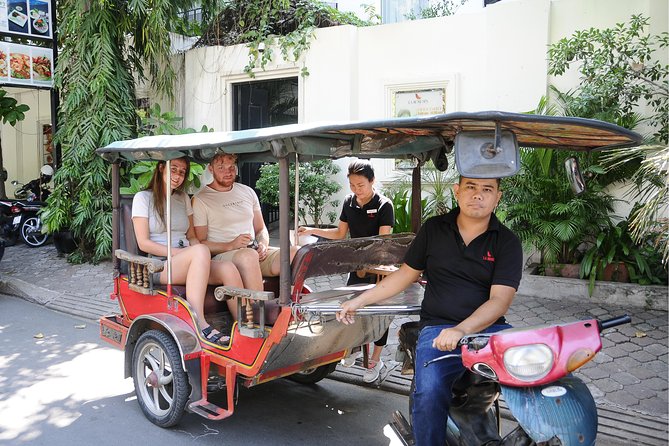
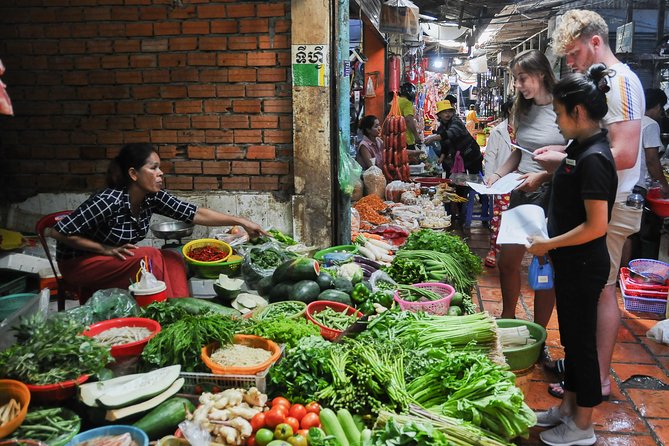
Meet at Banana Cooking Class at 9:00am on 4b Abdul Carime Street, also listed as Street 21. The day starts with a tuk-tuk ride to a nearby local market. This is not just a shopping errand. It gives you a first look at the raw materials behind Khmer cooking.
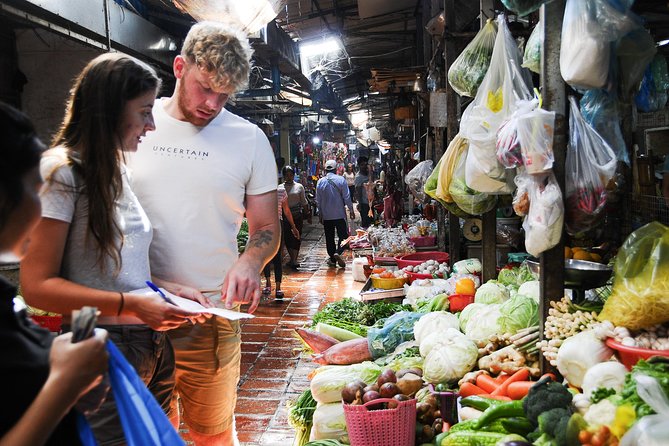
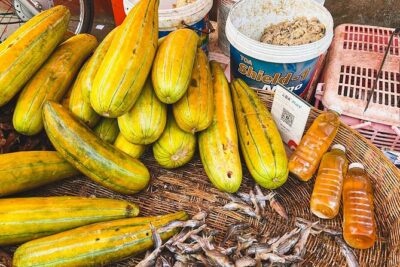
Your chef introduces Cambodian fruits, vegetables, herbs, and spices as you move through the market. That matters because many dishes make more sense when you see the ingredients before they reach the chopping board. You can connect the colors, smells, and shapes at the market with the recipes you prepare later.
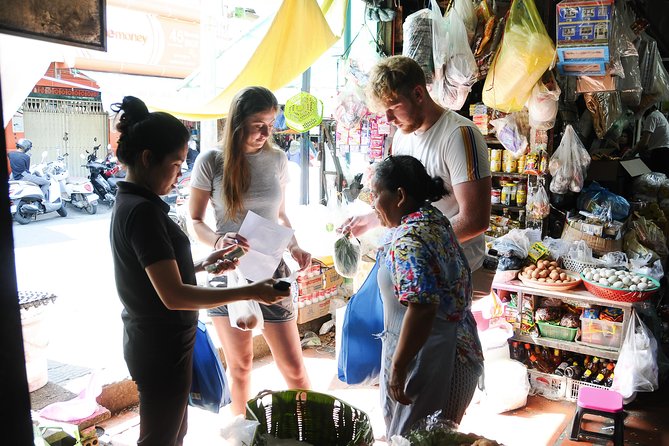
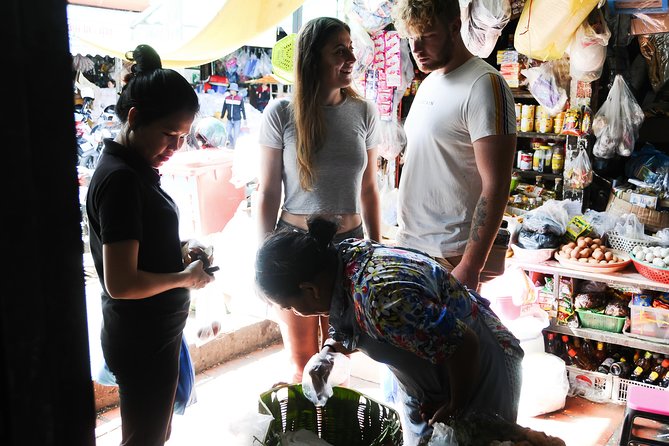
The chef also helps you purchase what the class needs. That removes much of the guesswork. You do not need to arrive with a working knowledge of Cambodian produce, and you are not left trying to identify unfamiliar ingredients on your own.
The market portion lasts about an hour. At 10:00am, you return by tuk-tuk to Banana Cooking Class. The ride is short enough to keep the morning moving, but it is also part of the Phnom Penh setting. You are not being transported between a series of polished tourist venues. The class links a normal food-shopping stop with the cooking lesson.
More Khmer cooking classes:
- Khmer Cooking Class Half Day (AM or PM)
★ 5.0 · 316 reviews - Cooking Class in Phnom Penh
★ 5.0 · 7 reviews - The Mekong Village Cooking Escape
★ 5.0 · 4 reviews
A cool drink, a recipe, and a clear introduction
Back at the cooking school around 10:15am, you receive a refreshing drink, a cold towel, and the recipes. That small pause is useful after the market and tuk-tuk ride, especially in Phnom Penh’s heat.
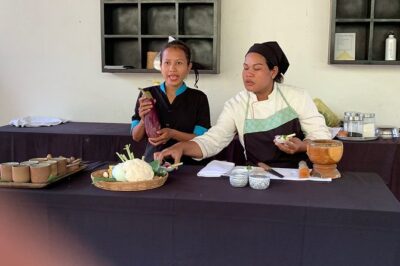
At 10:30am, the chef gives a theory lesson and cooking demonstration. You see the dishes prepared before you begin. This is a good arrangement for beginners because you can watch the order of the steps, the handling of ingredients, and the general technique before your own station becomes busy.
The class is designed to be interactive. The chef assists as you work and checks that everyone understands the instructions. English ability is specifically noted in the experience, and the classes have received praise for clear explanations in English. Chef Lom Ang Peark, also referred to as LomAng Peark in class feedback, is singled out for being friendly, patient, and able to answer questions clearly.
That personal attention is especially helpful when several dishes are being prepared. Khmer food can involve fresh herbs, spice mixtures, sauces, and different cooking times. A demonstration gives you the outline, but the chef’s help at your station is what keeps the lesson practical.
11:00am at your own wok
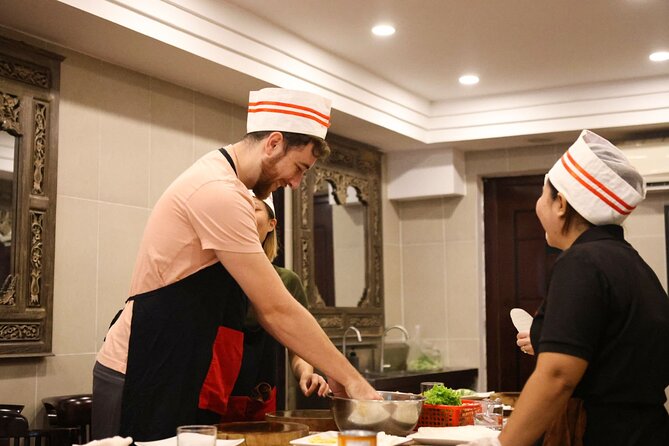
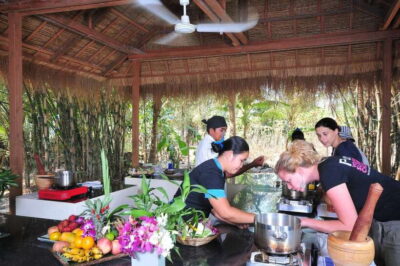
At 11:00am, you begin cooking. Each student has a separate cooking station and wok. This is one of the strongest features of the course because you are not merely watching a chef prepare food for a group.
You handle the utensils and prepare the dishes yourself, with guidance when needed. The class can therefore suit people who already cook at home, but it also works for beginners who want direct support. The chef can correct a step as you go, rather than leaving you to wonder later why the final dish turned out differently.
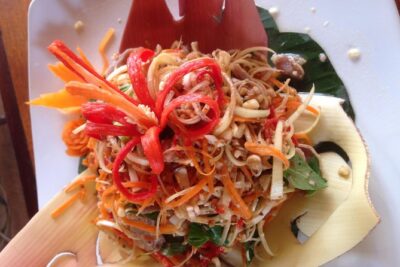
The morning menu includes dishes such as spring rolls and mango salad. Other classes or menu descriptions include green mango salad, Khmer yellow curry, and banana palm dessert. Fish amok is also named among the possible Khmer recipes. These are useful examples of the range involved: fresh salad, fried or assembled items, curry, dessert, and a signature Cambodian fish dish.
The exact menu may vary, so you should not book with the expectation that every named dish will appear on one particular day. Still, the format promises a broad introduction rather than one narrow recipe.
You also have some flexibility. A private class can make it easier to explain dietary needs or ask for a change to the menu. One full-day participant had dishes modified, and the chef prepared suitable alternatives. That does not mean every request is guaranteed, but it is a good reason to mention dietary restrictions when booking.
Noon lunch made by you
Around noon, you sit down to eat the food you have prepared. This is not a separate restaurant lunch added to the schedule. The meal is the result of your morning work.
That gives the class good value for a food-focused day. You are paying for instruction, ingredients, transport to the market, and the chance to eat several dishes. You also learn techniques that can be repeated at home, rather than simply sampling Cambodian food once.
The lunch timing is sensible. You have spent the morning shopping, watching demonstrations, and cooking, so the meal arrives after a substantial hands-on session. The schedule then leaves a long gap before the afternoon class. The supplied timetable does not specify the activities during that interval, so you should ask the operator if you need to know how the break is handled.
The long pause can be a benefit or a drawback. It gives you time to rest after lunch, but it also means the full-day class is not eight continuous hours of cooking. If your main aim is to cook as many recipes as possible, the break may feel slow. If you prefer a relaxed pace, it prevents the day from becoming a rushed kitchen marathon.
A few more trips worth weighing up
- Khmer Cooking Class at a Local’s Home in Krong Siem Reap
★ 5.0 · 2,731 reviews - Siem Reap: Khmer Cooking Class at a Local’s Home
★ 5.0 · 1,108 reviews - Award-Winning Cooking Class Experience with Professional Teacher
★ 5.0 · 745 reviews - Siem Reap: Cambodian Pottery Class
★ 4.9 · 339 reviews
The afternoon return to the cooking station
At 3:30pm, you return to the utensils for a second cooking session. The afternoon focuses on dishes that take more time to prepare. This two-stage design lets the class move beyond quick salads and simple preparations.
Recipes such as fish amok or a more involved curry fit naturally into this part of the day, though the precise afternoon menu is not guaranteed. The point is to show you how Cambodian cooking handles dishes that need longer preparation, careful seasoning, or more patient cooking.
You again work with chef assistance. That matters more in a longer recipe, where timing and technique can affect the result. The class is not presented as a formal lecture. You are expected to prepare the food, ask questions, and taste the results.
At 4:30pm, you eat the afternoon dishes and relax. By then, you have had two chances to cook and taste your own work. The experience is therefore as much about building confidence as it is about collecting recipes.
What makes the teaching useful at home
The best cooking class souvenir is something you can use after the holiday. This course provides the recipes, and the dishes are intended to be practical enough to prepare again at home.
The recipes cover several styles of Khmer food, so you are not taking home a single isolated dish. You may learn a salad, a curry, a spring roll preparation, a fish dish, and a dessert, depending on the day’s menu.
The cooking school also seems willing to adjust the lesson. Families with children have used the full-day course, and the chef has been praised for engaging children aged 7, 10, and 12. That makes the class a possible choice for a family, though eight hours is still a long commitment for younger children.
The private format helps here. Your group can work at its own pace, and the chef can respond to questions without having to manage a large mixed class. The class is listed as suitable for one private group, not a shared public session.
Is $58 a fair price for eight hours?
The price is $58 per person. For a full-day activity, that is a reasonable value if you want instruction rather than just lunch.
Your day includes the market visit, tuk-tuk transport to and from the market, a chef-led demonstration, two hands-on cooking sessions, ingredients, the food you prepare, recipes, and a completion certificate. You also get a private group format. Those inclusions make the price easier to justify than a short class with one dish.
The value depends on how much you use the teaching. If you simply want to eat Khmer food, a restaurant meal will cost less and take far less time. If you want to understand ingredients, practice techniques, and repeat the dishes at home, the class offers more lasting value.
I would especially consider it during a longer Phnom Penh stay. Since the course occupies roughly 9:00am to 5:00pm, it is not a good match for a day packed with museums, temples, and other sightseeing. It is best treated as the day’s main activity.
The class is booked, on average, about 28 days ahead. That does not guarantee that every date sells out, but it is a useful sign that you should reserve early if your Phnom Penh schedule is fixed.
Practical details that affect your day
The meeting point is Banana Cooking Class, 4b Abdul Carime Street, Street 21, in Phnom Penh. The experience ends back at the same meeting point. It starts at 9:00am, so plan your morning around arriving there on time.
A mobile ticket is accepted, and confirmation is received when you book. The location is near public transportation. The market transfer is by tuk-tuk, and the class returns by tuk-tuk after shopping.
The full-day course is approximately eight hours. A half-day option is also available if you want a shorter introduction. Because the supplied schedule specifically describes the full-day course, check the chosen option carefully when booking.
Free cancellation is available if you cancel at least 24 hours before the local start time. Cancellations made inside that period are not refunded, and late changes are not accepted. If you become ill, contact the operator as soon as possible. A prior participant who could not attend because of illness received a refund, although that should not be treated as a guarantee outside the stated policy.
Who should book this Khmer cooking class?
I would choose this class if you meet any of these descriptions:
- You want to learn Khmer food through both ingredients and cooking.
- You prefer doing the work yourself instead of watching a demonstration.
- You want recipes that can be used after returning home.
- You are visiting Phnom Penh with family and want a shared activity.
- You have dietary needs and value the possibility of menu adjustments.
- You can spare most of a day for a relaxed food experience.
I would think twice if your schedule is tight, if you dislike long cooking sessions, or if you are looking only for a quick introduction. The half-day course may suit you better in those cases.
The full-day option is also a stronger choice for people who want more than the most familiar Cambodian dishes. The afternoon session adds recipes that take more time, while the market visit gives you useful context before the cooking begins.
Should you book the full-day course?
Yes, if you want a hands-on food experience and have a full day available. The best reasons to book are the local market visit, the personal wok station, the chef’s assistance, and the recipes you can take home.
Chef Lom Ang Peark and the wider staff have been praised for friendly teaching, clear English, flexibility, and good work with children. The food itself receives consistently strong praise, especially the salads, curry, dessert, and classic Khmer preparations.
For the best match, book the full day when cooking is one of your main interests in Phnom Penh. Choose the half-day option if you want a shorter taste of Khmer cuisine. Either way, arrive ready to shop, chop, stir, taste, and accept that your lunch may look better than your first attempt at home.
FAQ
Where does the Khmer cooking class start?
The class starts at Banana Cooking Class, 4b Abdul Carime Street, also identified as Street 21, in Phnom Penh.
What time does the full-day class begin?
The full-day course begins at 9:00am.
Where does the experience end?
The class ends back at the Banana Cooking Class meeting point.
How long does the full-day course last?
The full-day course lasts approximately eight hours, with the scheduled day running from 9:00am until about 5:00pm.
Is transportation included during the market visit?
The itinerary includes tuk-tuk transport from the cooking class to the local market and back again.
What happens at the market?
The chef introduces you to Cambodian fruits, vegetables, herbs, and spices, then helps you purchase the ingredients needed for the class.
Do I cook the food myself?
Yes. Each student has an individual cooking station and wok, and the chef assists you as you prepare the dishes.
What dishes will I learn to make?
Possible Khmer dishes include spring rolls, mango salad, fish amok, curry, and dessert. The exact menu can vary.
Are recipes and a certificate included?
Yes. You receive the recipes to take home and a certificate of completion at the end of the class.
More Full-Day
- Phnom Penh Full Day Private Tour Included All Admission Tickets
★ 5.0 · 585 reviews - A Full Day Tour for Royal Palace, S21, Killing Fields & More
★ 5.0 · 115 reviews - Phnom Penh Vital Discovery-Full Day Tour (Including all services)
★ 5.0 · 67 reviews - Full-Day Phnom Penh Sightseeing Tour & Killing Field
★ 4.5 · 42 reviews
Just added around Phnom Penh
- Private Van Phnom Penh To Siem Reap English Speaking Driver★ 5.0 · 3 reviews
- Private Taxi Phnom Penh – Kampot Overland Transfer★ 5.0 · 3 reviews
- Half Day – Phnom Penh Food Tour★ 4.5 · 3 reviews
- Full-Day Amazing Phnom Penh City Tours★ 5.0 · 3 reviews
- Phnom Penh to Koh Rong/Koh Rong Sanloem by Car or Minivan & Boat★ 5.0 · 3 reviews
- Private Transfer From or to Phnom Penh <=> Sihanoukville★ 5.0 · 3 reviews
- Riverside Walking Tour with Snack, Drinks & Local Ferry Ride★ 5.0 · 3 reviews
- Day Tour In Phnom Penh With Bophany★ 5.0 · 3 reviews
Cooking Classes, compared.
Khmer Cooking Class at a Local’s Home in Krong Siem Reap
Read our review →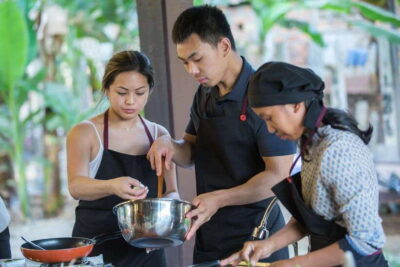
Award-Winning Cooking Class Experience with Professional Teacher
Read our review →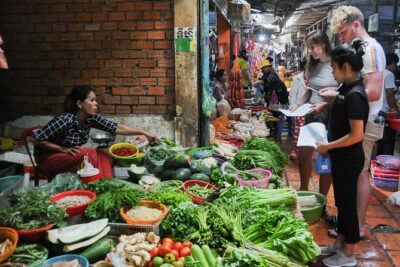
Browse the lists this tour appears in