
Reviewed · ANGKOR WAT TOURS
Private Tour in Angkor Wat by Tuk Tuk
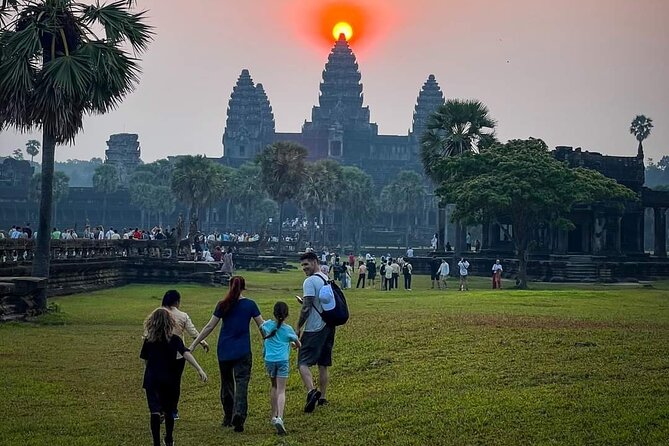
Sunrise gives Angkor Wat a proper entrance. This private tuk-tuk tour pairs an early start with five major temples, and I like the flexible 5-to-10-hour format and the chance to travel with an English-speaking local guide rather than follow a large group. I also like the private vehicle, bottled water, and cooler, especially in Siem Reap’s heat. The main catch is that the Angkor Archaeological Park admission fee is extra, and the full route can become a long morning.
The tour is built around the classic Angkor circuit, but it does not feel locked to a rigid script. You can arrange a one-day outing or ask about several days of sightseeing, and the driver can help shape the pace around your interests. Sok Saroom’s TukTuk Adventures receives especially strong praise for punctual service, friendly help, and useful suggestions about what to see.
In This Review
- Key points to know before booking
- A $45 private ride through Angkor
- The early start at Angkor Wat
- Bayon and the face towers
- Ta Keo, a stark climb in sandstone
- Ta Prohm, where nature frames the ruins
- Banteay Kdei and the softer final stop
- Why the tuk-tuk format works
- The guide can shape the whole day
- Timing, tickets, and useful planning details
- Who should book this Angkor outing?
- Should you book it?
- FAQ
- What does the $45 tour price include?
- Is the Angkor Archaeological Park entrance fee included?
- How long does the tour last?
- What temples are included?
- Does the tour begin early enough for sunrise?
- Are food and drinks included?
- Is this a private group experience?
Key points to know before booking
- Sunrise at Angkor Wat: The day begins early, with operating hours listed from 5:30 AM to 5:00 PM.
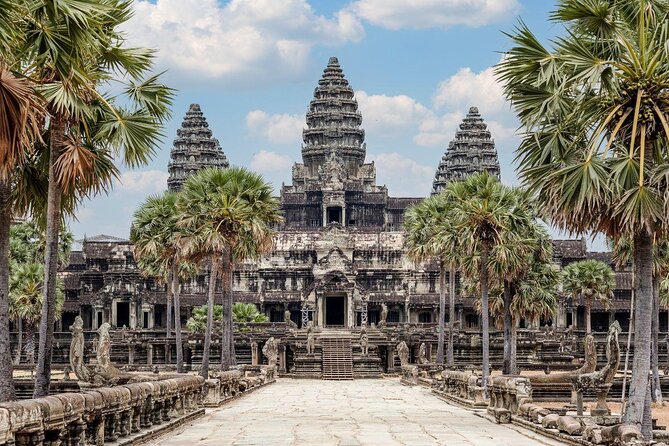
- Five major temple stops: The route covers Angkor Wat, Bayon, Ta Keo, Ta Prohm, and Banteay Kdei.
- Private tuk-tuk transport: Only your group participates, so you avoid a packed shared vehicle and can discuss the pace.
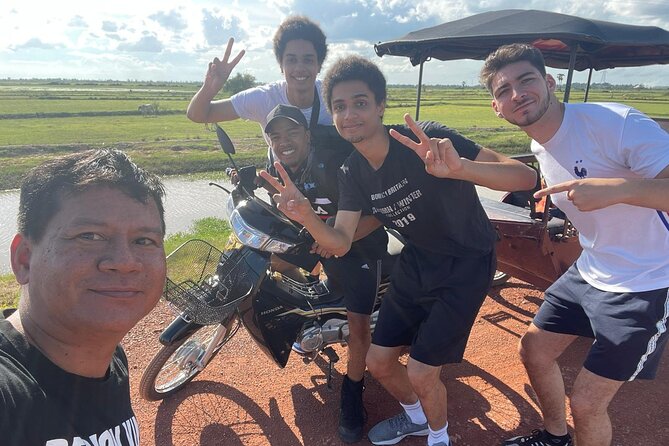
- A local English-speaking guide: Sok Saroom is praised for being punctual, friendly, and attentive to what visitors want to see.
- Cooler available by request: Beer, soft drinks, and snacks can be arranged in advance, but they are not included.
- Park admission costs extra: The quoted tour price is $45, while the Angkor Archaeological Park ticket is separate.
A $45 private ride through Angkor
At $45, this experience is priced as a private transport and guiding service, not as an all-inclusive day package. That distinction matters. Your fee covers private transportation, bottled water, local tax, and an English-speaking driver and guide. It does not cover food, drinks, or admission to the Angkor Archaeological Park.
The value comes from control. You are not sharing the tuk-tuk with strangers, and you can ask to spend more time at a favorite temple or move on when the heat and crowds begin to wear you down. For a couple, family, or small group, the price can be sensible because the vehicle and guide serve only your party.
You should budget for the park ticket separately. The supplied price information lists a one-day fee from US$11 to US$37, depending on the overall stay. Since that range is broad, confirm the current ticket amount before setting your final budget. The important point is simple: the $45 tour price is not the total cost of your Angkor day.
Food and drinks are also separate. The large cooler is a nice practical touch, but you need to request a custom supply of beers, soft drinks, and snacks before the outing. Bottled water is included, which is useful during a long temple circuit.
More Tuk Tuk Tours in Siem Reap
- Siem Reap: Angkor Wat Private Tuk-Tuk Tour
★ 4.9 · 2,222 reviews - Siem Reap Countryside Bike Tour / E-Bike or Tuk Tuk
★ 5.0 · 935 reviews - Angkor Sunrise Bike Tour / E-Bike or Tuk Tuk
★ 5.0 · 615 reviews
The early start at Angkor Wat
The first major stop is Angkor Wat, and the sunrise timing is the right choice. The temple’s towers and reflecting pools are at their most dramatic in the soft early light, before the day turns hot. The experience begins at a civil hour for a temple morning, with the published operating window starting at 5:30 AM.
Allow plenty of time here. The planned visit is about three hours, which is reasonable because Angkor Wat is not a quick photo stop. You have time to take in the outer grounds, walk toward the central structure, study the galleries, and look closely at the carved scenes. The site covers roughly 400 acres and is widely recognized as the world’s largest religious monument.
The scale can surprise you. From a distance, the famous towers make the temple look compact. Inside, the long galleries, courtyards, stairs, and changing sightlines require real walking. Comfortable shoes matter, and a slow pace helps you notice details that disappear when you rush from one famous view to the next.
A private guide is most useful here because the complex can feel confusing. You can ask for an explanation of the temple’s layout, symbolism, and carvings at the moment you need it. If you prefer quiet time for photographs, tell the guide. A private outing gives you more room to balance explanation with personal wandering.
The drawback is timing. Sunrise is popular, so the first stop may still feel busy. The tour gives you the best light, but not necessarily solitude. You should also expect a long morning if you use the full three-hour allotment and continue through all five stops.
Bayon and the face towers
Bayon follows with a planned two-hour visit. Its most famous feature is the collection of enormous carved faces looking out from the temple’s towers. The effect changes as you walk around them. A face that seems distant from one angle can feel close and watchful from another.
This stop also adds an important contrast to Angkor Wat. Bayon was the Angkor Empire’s singular Buddhist temple, and its design reflects a period of religious change. You are not just seeing another stone monument. You are seeing how royal belief and temple design shifted over time.
The carvings also help you picture medieval Cambodian life. Look for scenes that move beyond religious figures and royal power. The temple records ordinary activities and public events in stone, giving you a more human view of the empire.
Two hours is generous enough for a careful visit, though the inner levels can feel crowded and physically demanding. The private format helps here because you can ask Sok or your assigned guide to explain the most important areas without needing to keep pace with a busload of people.
Ta Keo, a stark climb in sandstone
Ta Keo receives another two-hour allocation, making it one of the longer stops. It is described as the first temple built entirely of sandstone, and that material gives the structure a firm, pared-back look compared with the more intricate carving at other sites.
This is a useful pause in the route because it shows a change in Khmer building methods. You can focus on the temple’s shape, terraces, and construction rather than expecting every wall to be filled with fine decoration. The monument marks an important point in architectural development.
Ta Keo may appeal most to you if you like structure and scale. It is less about a single famous image and more about seeing how a large temple rises in stages. The stone surfaces, high levels, and strong geometry make it feel different from Ta Prohm’s tangled roots or Banteay Kdei’s carved detail.
The practical issue is the heat. A two-hour stop at a largely stone-built monument can feel long under the midday sun. Use the private schedule to shorten the visit if your energy drops, or spend the time in a more measured way rather than treating the two-hour estimate as a requirement.
More Angkor Wat tours we have reviewed:
- Angkor Wat Sunrise or Sunset Tour with Guide from Siem Reap
★ 5.0 · 12,109 reviews - Siem Reap: Angkor Wat: Small-Group Sunrise or Sunset Tour
★ 5.0 · 9,444 reviews - Siem Reap: Angkor Wat 2-Day Tour with Sunrise and Sunset
★ 4.9 · 4,429 reviews - Siem Reap: Full-Day Angkor Wat Guided Tour with Sunset
★ 4.9 · 3,803 reviews
Ta Prohm, where nature frames the ruins
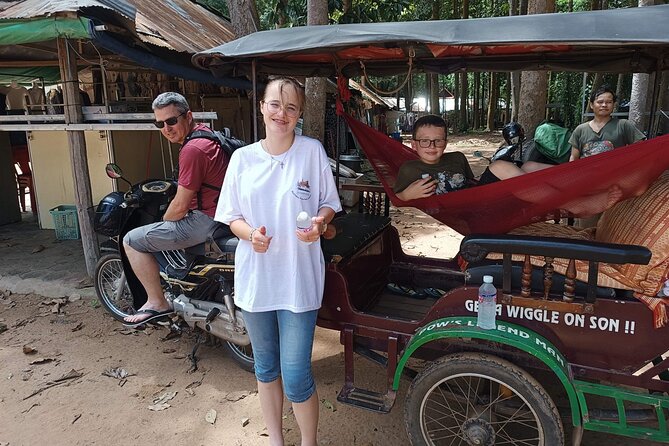
Ta Prohm is the route’s most atmospheric stop. Built in 1186 and first called Rajavihara, or Monastery of the King, it was a Buddhist temple dedicated to the mother of Jayavarman VII. Its identity comes from the way trees and roots press into the old stonework.
The setting makes Ta Prohm different from Angkor Wat and Bayon. At Angkor Wat, the design feels ordered and grand. At Bayon, carved faces dominate the experience. Ta Prohm gives you broken galleries, tree roots, shaded passages, and a stronger sense of time working on architecture.
The planned visit lasts about two hours. That gives you room to move beyond the first famous root-covered view. Look at the carvings, courtyards, and narrow passages as well as the trees. The most photographed sections can draw attention away from the rest of the temple.
The site is not a quiet nature walk. The roots and stone create the mood, but the route remains a major stop on the Angkor circuit. You may need patience around popular viewpoints. A private guide can help you spend less time waiting for one photograph and more time understanding the temple’s purpose.
Ta Prohm also provides a welcome change in temperature. Shaded areas can feel easier after the open stone terraces of earlier stops. Still, the ground can be uneven, so steady footwear is more useful than stylish footwear here.
Banteay Kdei and the softer final stop
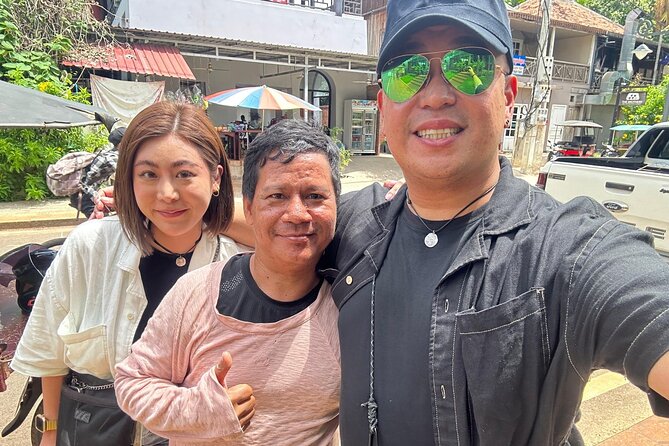
The final stop is Banteay Kdei, with about one hour planned. It is often praised for its Angkorian artistry and its pinkish stone, which gives the carvings a warmer color than the gray surfaces found elsewhere.
Banteay Kdei began in 967, and the temple is a good closing stop because it is smaller in scale than Angkor Wat. After several large compounds, you can slow down and look at carving quality without feeling you must cover another enormous complex.
One hour is enough for a focused visit, but it will not allow the same broad exploration possible at Angkor Wat. That is not a flaw if you treat Banteay Kdei as a final look at stonework and layout rather than another full-scale expedition.
The stop also makes the route feel more varied. You get the great centerpiece, the face towers, a major sandstone structure, a tree-covered ruin, and a smaller artistic site. For a first day in Angkor, that is a useful spread of styles and moods.
Why the tuk-tuk format works
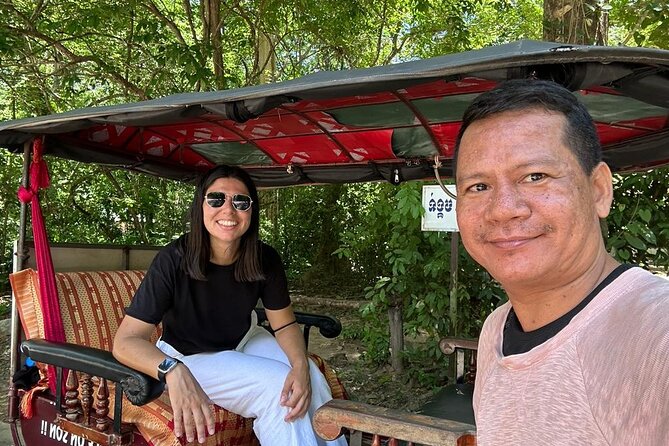
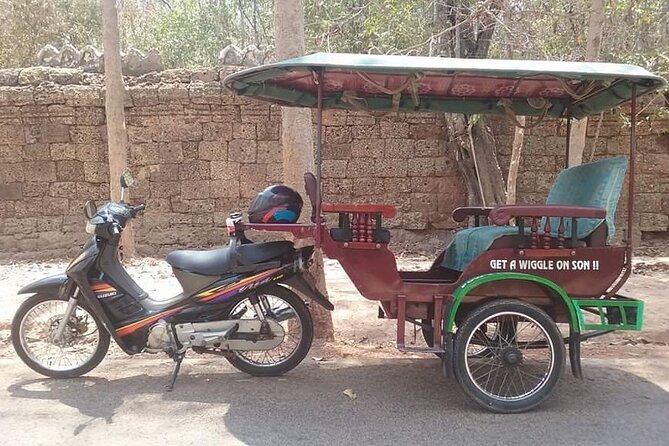
The tuk-tuk is a sensible way to move between temples in Siem Reap. You get open-air travel, private transportation, and a guide who can help shape the day. The vehicle is also fitted with a large cooler, which adds comfort during a route that can last up to ten hours.
The open sides have a benefit and a cost. You can feel the air as you travel between stops, but you are not in an enclosed, climate-controlled vehicle. The cooler and bottled water help, though you should still plan your clothing and sun protection carefully.
Private transport matters most at the end of the day. If you are tired after Angkor Wat, Bayon, Ta Keo, and Ta Prohm, you can discuss a shorter final visit. A fixed group schedule would give you less choice. Here, the published itinerary provides a framework, while the private arrangement allows some adjustment.
The tour is also suitable for different group types. Couples can keep the day intimate. Families can avoid coordinating with strangers. Friends can use the cooler for pre-arranged drinks and snacks. Solo visitors may value having a dedicated driver and guide, though the price may feel less economical when paid by one person.
The guide can shape the whole day
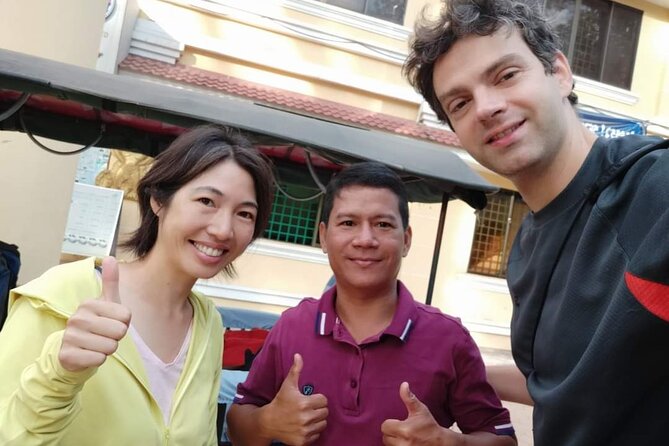
The strongest personal praise is directed toward Sok. He is described as friendly, punctual, attentive, and helpful with suggestions about what to see. Those qualities matter more than a polished script when you are spending several hours moving through a large temple complex.
A good guide should help you use your time well. At Angkor Wat, that means explaining the major areas without turning the visit into a lecture. At Bayon, it means pointing out the faces and scenes that are easy to miss. At Ta Prohm, it means helping you look beyond the most famous tree-root photograph.
The tour description identifies the guide as an experienced English-speaking driver and guide. You should still tell him what matters to you. Some people want architecture and religious context. Others want photography, quiet corners, or a broad overview. The private setting gives you a chance to make those preferences clear.
The flexibility also extends beyond one day. The provider offers single-day or multi-day arrangements. If five stops feel too ambitious, a second day could give you a calmer pace, though the supplied information does not specify a separate multi-day price.
Timing, tickets, and useful planning details
The listed service hours run from Monday through Sunday, 5:30 AM to 5:00 PM, for the stated booking period from October 28, 2023 through November 26, 2026. The sunrise plan fits the early opening, but confirm the exact pickup time when your booking is confirmed.
Confirmation is sent within 48 hours, subject to availability. Pickup is offered, and the experience uses a mobile ticket. These points make the arrangement fairly simple, but I would still keep the confirmation accessible on your phone and verify the meeting details before the early start.
The tour is described as suitable for most participants, with service animals allowed and public transportation nearby. No special physical requirements are stated. Even so, the itinerary includes several hours at large temple sites, uneven walking surfaces, stairs, and exposure to heat. You should judge your own comfort rather than assume the five-to-ten-hour estimate will feel easy.
Cancellation is free when you cancel at least 24 hours before the start time. A cancellation inside that window is not refunded, and late changes are not accepted. Because the day begins early, pay attention to the local cut-off time rather than waiting until the last evening.
Who should book this Angkor outing?
I would choose this tour if I wanted the classic Angkor sights with a private vehicle and a flexible pace. It suits first-time visitors who want help making sense of a huge archaeological park without committing to a large group.
It is also a good match for people who value personal service. Sok’s punctuality, friendly manner, and suggestions are central to the appeal. The experience works best when you communicate your interests and use the guide as a resource, not simply as a driver.
You may want a different plan if you dislike early mornings, prefer air-conditioned transport, or want admission and meals wrapped into one price. The open tuk-tuk, extra park fee, and possible ten-hour day are important considerations.
Should you book it?
Book this private Angkor Wat tuk-tuk tour if you want sunrise, the major temples, and direct help from a local English-speaking guide for $45 before park admission. The private format and adjustable pace give it better value than a rigid shared outing, especially for couples and small groups.
Go in with realistic expectations. The route is long, the ticket is extra, and sunrise does not guarantee empty temple grounds. If you prepare for the heat, arrange any cooler supplies in advance, and tell Sok what you want from the day, this is a practical and personable way to see Angkor’s essential sights.
FAQ
What does the $45 tour price include?
The price includes private transportation, bottled water, local tax, and an experienced English-speaking driver and guide.
Is the Angkor Archaeological Park entrance fee included?
No. The park admission fee is separate. The provided pricing information lists a one-day cost from US$11 to US$37, depending on the overall stay.
How long does the tour last?
The experience lasts approximately five to ten hours. The listed temple visits add up to about ten hours if you spend the full suggested time at every stop.
What temples are included?
The route includes Angkor Wat, Bayon Temple, Ta Keo, Ta Prohm Temple, and Banteay Kdei.
Does the tour begin early enough for sunrise?
Yes. The experience is designed to begin with sunrise at Angkor Wat, and the listed operating hours start at 5:30 AM.
Are food and drinks included?
No. Food and beverages are not included. You can request beer, soft drinks, and snacks for the tuk-tuk cooler before the tour.
Is this a private group experience?
Yes. Only your group participates, and private transportation is provided.
Just added around Siem Reap
- Private Battambang Full-Day Guided Tour★ 4.5 · 3 reviews
- Kulen Mountain, Beng Mealea and Banteay Srei Full Day Tour★ 5.0 · 3 reviews
- Kompong Pluk Tour★ 5.0 · 3 reviews
- Private 3 Day Tour to Discover the ancient temples★ 5.0 · 3 reviews
- Kulen National Park Ticket -Waterfall & 1000 Lingas★ 5.0 · 3 reviews
- Cambodia: Absolute Traditional Dance Show with Buffet Dinner★ 5.0 · 3 reviews
- Border Transfer (Siem Reap to Laos/Laos to Siem Reap)★ 3.5 · 3 reviews
- Best Taxi Siem Reap to Battambang – English Speaking Driver★ 4.5 · 3 reviews
Angkor Wat Tours, compared.

Angkor Wat Sunrise or Sunset Tour with Guide from Siem Reap
Read our review →
Angkor Wat: Small-Group Sunrise or Sunset Tour
Read our review →
Angkor Wat 2-Day Tour with Sunrise and Sunset
Read our review →

Angkor Wat Sunrise tour with Small – Group and Guide tours
Read our review →
Angkor Wat Highlights and Sunrise Guided Tour from Siem Reap
Read our review →
Angkor Wat Sunset Small Group Tour with Lunch Included
Read our review →
Full-Day Angkor Wat Sunrise Private Tour with Guide from Siem Reap
Read our review →Browse the lists this tour appears in